Homilies
Homilies
July 19, 2026
⭐⭐⭐ SSPX Consecrations


16th Sunday of Year A


Fr. Tony Kadavil
16th Sunday of Year A
The Coexistence of Good and Evil

The Illusion of Perfection: Scotts Weed B Gone commercial illustrates our desire for a selective herbicide to instantly eradicate bad elements. However, unlike Angels at the harvest, humans lack the flawless precision to judge hearts without uprooting the good.
The Internal Struggle: Dr. Jekyll and Mr. Hyde demonstrates the internal struggle between grace and sin. Jekyll’s tragic attempt to purge his dark side destroys his goodness. The Cherokee ‘Two Wolves’ legend reminds us that good and evil battle within every soul; we must simply nourish the good rather than judging others.
The Danger of Human Judgment: Finally, historical tragedies like the Holocaust and the Witch Trials reveal the catastrophic consequences when humans arrogantly attempt to safely eliminate societal weeds.

Deacon Peter McCulloch
16th Sunday of Year A
✍️ Weeds Among Wheat
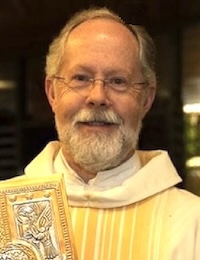
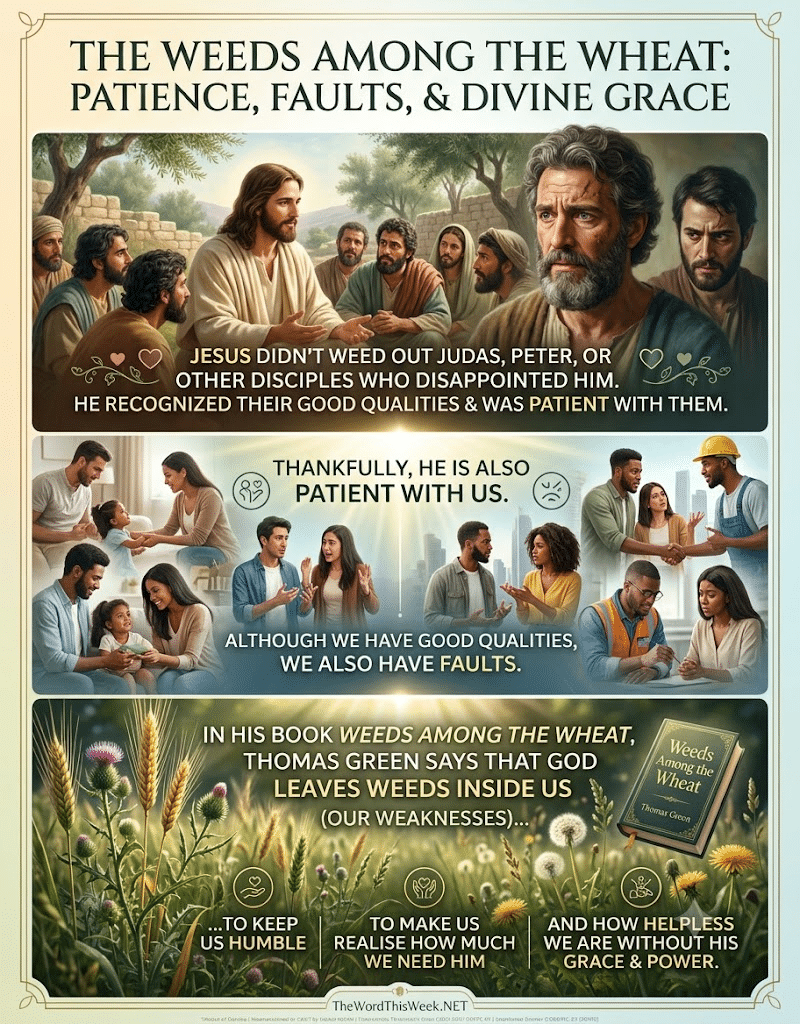
Deacon Peter’s homily on the Parable of the Weeds among the Wheat (Matthew 13:24-43) cautions against our tendency to misjudge others and rush to condemnation. Drawing on historical and literary examples—including the tragic misjudgment of a young man due to a stutter, the prejudice Mahatma Gandhi faced at church, and St. John Vianney’s initial academic failure—he highlights how easily human perception falters.
Deacon Peter concludes that this mixture of good and bad exists not only within society but within our own hearts. God patiently allows our flaws to persist to foster humility and reliance on His grace. Ultimately, we are called to patiently endure imperfections in ourselves and others, leaving the final judgment to Christ at the harvest.
Deacon Peter’s homily is the product of human reflection and prayer, not AI generation.
Bishop Robert Barron
16th Sunday of Year A
▶️ All Things Work Together for Good

Friends, we continue this weekend reading from the thirteenth chapter of Matthew’s Gospel, which is dedicated to the parables of Jesus. Today I want to focus on the thought-provoking and theologically rich parable of the wheat and the weeds. A man sows good seed on his field, and while he’s asleep, an enemy sows weeds among the wheat. But the man resists the impulse to pull them up, as it might uproot the wheat too: “Let them grow together until harvest.” This parable is getting at something very deep, and it has to do with the presence of evil in our world—and why God permits it.
Bishop Barron’s homily is the product of human reflection and prayer, not AI generation.
In the News
16th Sunday of Year A
SSPX Consecrations
As many of you may have heard, the Vatican has formally confirmed the excommunications of the bishops of the Society of Saint Pius X (SSPX), following illicit consecrations performed without a papal mandate. This is a schismatic act—a rupture from communion with the Successor of Peter.

Now, this is painful news. It is painful because these are men and women who love the traditional liturgy, who love the Church, who often love Christ very sincerely. And yet they have placed themselves outside of communion with the Bishop of Rome. That is what schism means. It is a wound in the Body of Christ.
Why does the Church draw such lines? Why is she sometimes so patient, and sometimes firm? Today’s readings can provide us answers.
Divine Patience vs. Permissiveness
Ecclesial Unity and the Authority of Peter
Internal Reflection: The Line Within Our Hearts
The Intercession of the Spirit and Our Threefold Call
Conclusion: The Eucharist as the Sacrament of Unity
Fr. Michael Chua
16th Sunday of Year A
✍️ Patience is Divine

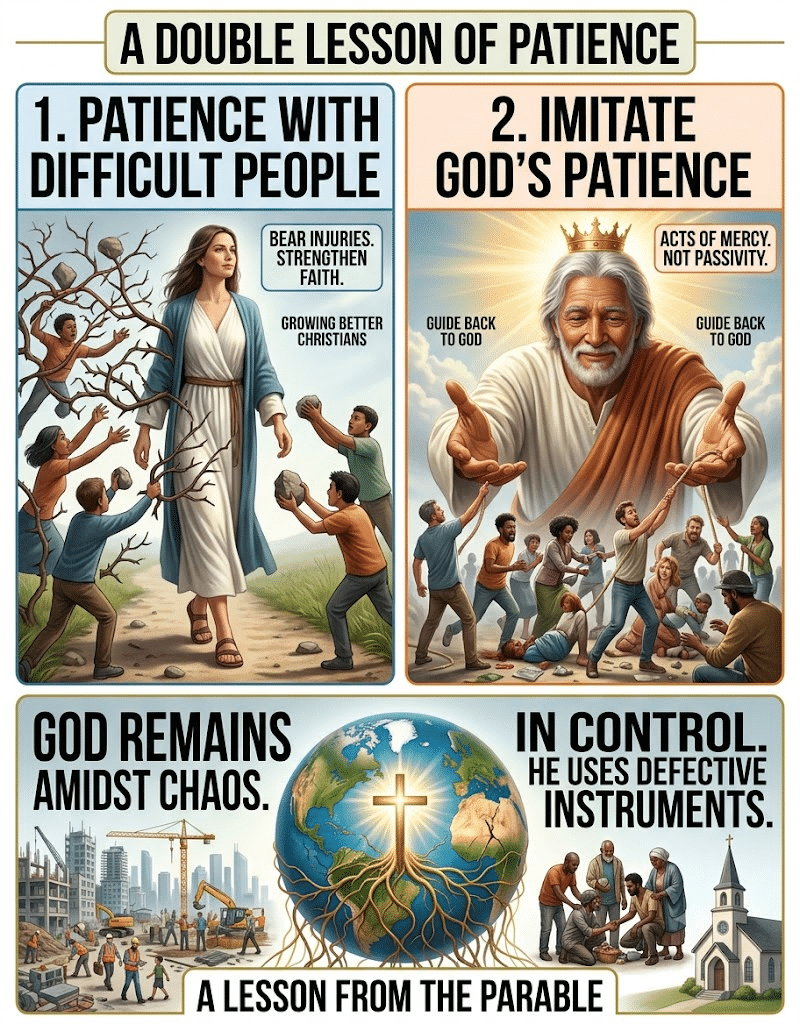
In this homily, Father Chua reflects on the parable of the wheat and the darnel to address the human impulse to violently root out trouble. Drawing from his pastoral experience, he warns that eager attempts to purge “undesirables”—whether through political atrocities like Hitler’s Final Solution or well-intentioned activism—ultimately cause more destruction.
Fr. Chua explains that Christ’s command to “let them both grow” is a call for spiritual prudence, not passivity. Because goodness and evil are intimately intertwined within every institution and individual, heavy-handed vigilance risks destroying potential virtue. Furthermore, God’s patience reflects infinite mercy, granting sinners time to repent before the final judgment. Believers must practice a double lesson of patience: enduring difficult people to grow in virtue, and praying fervently for their conversion. Ultimately, Chua reassures that amid perceived chaos, God remains in control, subverting life’s messiness and using the defective as instruments of grace.
Father Chua’s homily is the product of human reflection and prayer, not AI generation.
Dominican Blackfriars
16th Sunday of Year A
✍️ Dealing with the Darnell
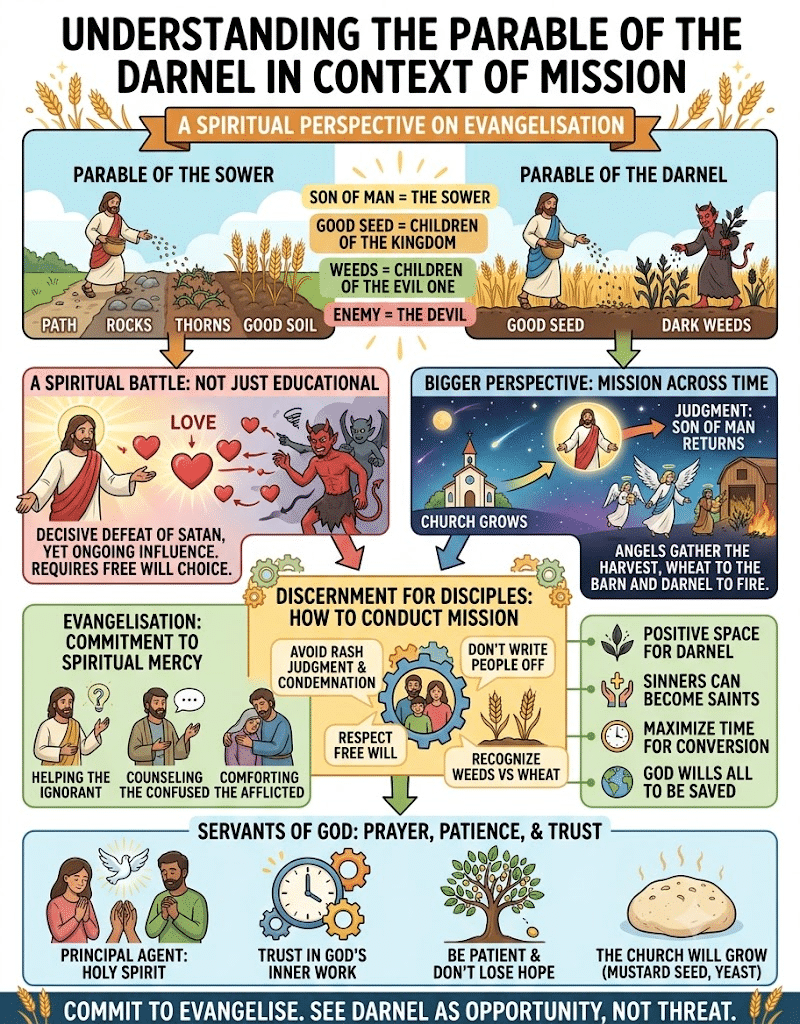
Following the Parable of the Sower, the Parable of the Darnel addresses the mixed human responses to evangelisation, framing mission as a spiritual interaction between God and souls. While the Sower highlights human obstacles to persevering in faith, the Darnel exposes the ongoing, tempting influence of the defeated Devil.
Jesus introduces a temporal perspective on mission, which unfolds until the final judgment. Disciples must avoid rash condemnation, which risks losing God’s mercy, yet they must still practice cautious spiritual discernment to appropriately minister to others.
Supernaturally, “darnel” can become wheat; sinners can become saints through God’s delayed timeline, which maximizes opportunities for conversion. Ultimately, believers are called to see the darnel as an opportunity rather than a threat. Relying on the Holy Spirit through prayer and patience, they can confidently witness to a growing Church.
The above homily is the product of human reflection and prayer, not AI generation.
Fr. Austin Fleming
16th Sunday of Year A
✍️ What’s that Seed?
Father Austin Fleming utilizes the everyday nuisance of backyard weeds to illustrate the destructive spiritual seeds sown by the evil one, visible daily across news and social media. Rather than focusing on external corruption, Fleming shifts the accountability inward, challenging believers to examine their own “seed bags”—which hold both intentions of goodwill and the weeds of jealousy, anger, and selfishness.
Reflecting on a prayer by his Jewish friend, Alden Solovy, Fleming emphasizes that every individual human thought, word, and deed acts as a seed that either hurts or heals. Christ calls us to exercise deep discernment so we do not inadvertently choke the spiritual life of those around us. Ultimately, Fleming points to Jesus as the ultimate seed who died to bring forth the harvest of grace shared in the Eucharist, prompting believers to actively sow seeds of holiness, wholeness, and blessing in the week ahead.
Fr. Austin’s homily is the product of human reflection and prayer, not AI generation.

Monsignor Peter Hahn
16th Sunday of Year A
▶️ The Mystery of the Mess:
Evil and Divine Patience
Msgr. Peter Hahn addresses the timeless question of why an infinitely loving God allows sin and suffering, utilizing the parable of the wheat and the weeds. Hahn emphasizes a fundamental yet often ignored reality: evil and suffering do not originate from God, but are the logical consequences of the devil’s rebellion and humanity’s original sin.
Nevertheless, this reality is a source of hope rather than despair. Grounded in the Easter Exsultet, Hahn explains that original sin is a “happy fault” because it prompted the Incarnation and our redemption. The Catechism affirms that God permits evil only out of respect for human freedom, possessing the infinite wisdom to bring greater good from it. While Christians must endure global and personal spiritual battles before the final harvest, Saint Paul reminds us that the Holy Spirit aids our weakness. Ultimately, believers are called to remain faithful “good wheat” until they shine forever in God’s kingdom.
Monsignor Hahn’s homily is the product of human reflection and prayer, not AI generation.
Fr. Charles E. Irvin
16th Sunday of Year A
✍️ When Good Intentions Go Wrong

Father Irving addresses the perplexing reality of a world caught between noble intentions and broken outcomes. Whether in global history or personal relationships, life consistently presents a strange mixture of good and evil. Irving notes that even the fall of Lucifer and the story of Adam and Eve underscore this profound mystery: free will allows creatures to defy God’s intent, a costly freedom that ultimately required the sacrifice of Christ.
Using the parable of the wheat and the darnel, Irving highlights that evil often masquerades as good early on, making human sorting impossible. Instead of a destructive “quick-fix,” God responds with patience and forbearance. Because humans are themselves a mixture of right and wrong, a sudden purging would destroy us all. Believers are called to mirror this divine patience, placing absolute faith in the Father’s ultimate plan to redeem the good and vanquish evil at the final harvest.
Fr. Irvin’s homily is the product of human reflection and prayer, not AI generation.
Fr. Joe Jagodensky, SDS
16th Sunday of Year A
✍️ Stuck in the Middle with You
In this uniquely conversational homily, Father Joe Jagodensky, SDS uses the playful imagery of a TV quiz show to dismantle rigid, oversimplified views of religion. Rather than forcing a single choice between “wheat, seed, or yeast,” he reveals that the true answer encompasses all three. Each element represents fundamental spiritual growth—maturing from childhood assumptions into a deeply owned, active faith.
Moving past empty obligations, Jagodensky explains that authentic religion isn’t a game of black-and-white choices or political divides. Evoking the 1970s rock song “Stuck in the Middle with You,” he frames our earthly existence as that complex “middle” spent alongside fellow human “clowns and jokers.” Through a passionate belief in uplifting principles, believers learn to “unstick” themselves from life’s chaos, relying on the transformative power of faith to quietly grow, mature, and build a meaningful life rooted in God.
Father Joe’s homily is the product of human reflection and prayer, not AI generation.

Fr. Langeh, CMF
16th Sunday of Year A
▶️ Transforming Yeast

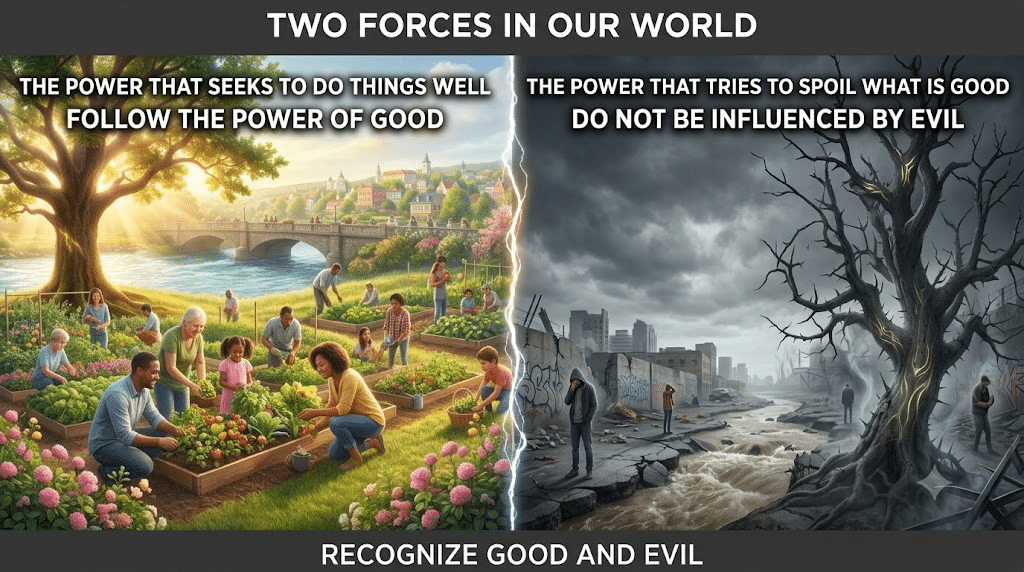
Father Jude Langeh addresses the perennial scandal of omnipresent evil, using the parables of the weeds, the mustard seed, and the yeast to illustrate the slow, unfolding nature of God’s Kingdom. Rather than immediately exterminating evil, God exercises immense patience, granting humanity necessary time to choose what is good. Langeh notes that while deceptive spiritual forces actively work to spoil what is right, good and evil remain distinct and will grow side by side within individuals and institutions until the final harvest.
Instead of prematurely labeling or uprooting others, Christians are called to stand alert against temptation, nurturing the seed of faith within the good soil of their hearts. As the transforming yeast of the world, believers are uniquely tasked with gradually infusing human history with Christ’s life-giving spirit, quietly converting daily life into nourishing service to their neighbors.
Fr. Langeh’s homily is the product of human reflection and prayer, not AI generation.
Msgr. Charles Pope
16th Sunday of Year A
✍️ Saint or Ain’t?
In this timely and challenging homily, Msgr. Charles Pope addresses the legitimate cries for Church reform while cautioning against an overzealous “puritanical clean sweep” that disregards God’s patience. Using the parable of the wheat and the weeds, he outlines a four-step path to balancing urgent reform with spiritual forbearance.
- Wake Up: Pope warns that the Church has been in a deep moral slumber, bickering over internal politics since the 1960s while Satan quietly sowed weeds and claimed the wider culture.
- Wise Up: Believers must recognize that Satan is a real, active enemy, but they must defeat him using the humility of the Cross rather than worldly aggression.
- Wait Up: While discipline has its place, the Lord counsels patience. Prematurely pulling weeds risks destroying the wheat; furthermore, withholding wrath gives sinners time to repent.
- Wash Up: God is no pushover, and a final harvest is guaranteed. Believers should leave judgment to Him and focus inward, purifying themselves to ensure they end up a saint rather than an “ain’t.”
Monsisgnor Pope’s homily is the product of human reflection and prayer, not AI generation.


Father Kevin Rettig

16th Sunday of Year A
▶️ The Wisdom of Mud
Father Kevin Rettig utilizes the imagery of mud—from childhood mud pies to therapeutic Dead Sea baths—to shift our perspective on human suffering and spiritual development. While adults often avoid mud as something dirty, Rettig notes that children intuitively understand our innate affinity with the earth.
Connecting this to the parables of growth, he points out that a tiny mustard seed must first plunge into the dirt to become a towering tree. Drawing on Goldie Hawn’s memoir, A Lotus Grows in the Mud, Rettig emphasizes that true wisdom, kindness, and compassion only blossom when we encounter life’s obstacles, loss, and pain. While we naturally prefer comfort, true spiritual growth stagnates when we are clean and comfortable. Ultimately, quoting Nathaniel Hawthorne, Rettig challenges believers to find God not just in pristine marble, but in the dreaded, healing mud of life where we are truly nourished.
Father Rettig’s homily is the product of human reflection and prayer, not AI generation.

Fr. George Smiga
16th Sunday of Year A
✍️ Bumblebees and Wheat

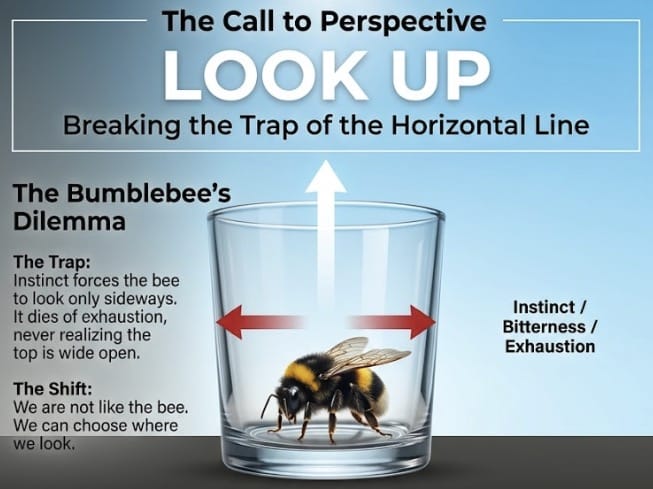
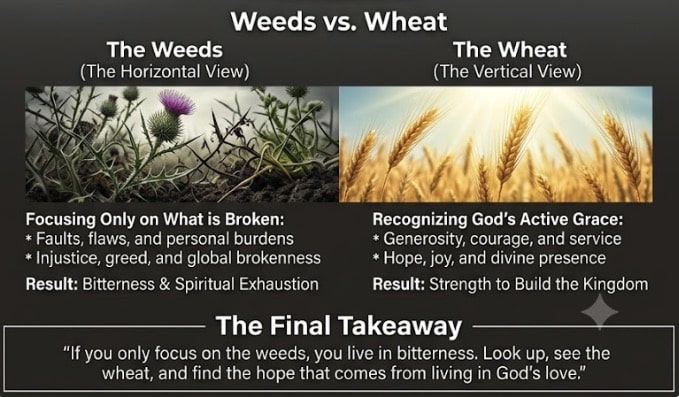
Father Smiga uses the illustration of a bumblebee trapped in an open glass tumbler to warn against a narrow, horizontal perspective on life. Because instinct prevents the bee from looking up, it exhausts itself searching the glass walls for an impossible exit. Smiga warns that Christians risk a similar self-destruction if they fixate exclusively on the “weeds” of our fallen world—the very real presence of poverty, injustice, and personal burdens.
While disciples must confront these challenges, Smiga insists they must do what the bumblebee cannot: look up and recognize the “wheat” of God’s grace. Goodness, generosity, and love surround us, serving as a constant source of divine hope and energy. By balancing a sobering awareness of life’s brokenness with an intentional focus on God’s active presence, believers escape the trap of bitterness and find the freedom to build His kingdom.
Father Smiga’s homily is the product of human reflection and prayer, not AI generation.
Additional Homilies
16th Sunday of Year A
Fr. Vincent Hawkswell | Archive
Love Involves Suffering (2023)
Fr. George Corrigan, OFM
Harvest Parables: Context
Harvest Parables: Wheat and Tares
Harvest Parables: Beyond Our Calling
Harvest Parables: Mustard Seed and Yeast
Msgr. Joseph Pellegrino (PDF) | Archive
The Christian Farmer’s Almanac
Fr. Tommy Lane | Archive
Only good things come from God 2023
Remove your weeds instead of judging others’ weeds 2008
Stories: Weeds among the wheat: God’s infinite mercy (a dialogue)
Fr. Michael Fallon, MSC | Archive
16th Sunday in Ordinary Time (PDF)
