Papal Homilies, Pope Francis, Pope Benedict, Pope John Paul II, Pope Leo
August 2, 2026
⭐⭐⭐ Pope Leo XIV



AT A GLANCE
- The Foundation of All Attributes: While “generosity” is rarely listed as a formal name for God in Scripture, it is the underlying current of all His traits. His omnipotence, justice, and mercy are not static concepts; they flow from His infinite, initiating generosity.
- The Covenant of Overabundance: God’s generosity is most perfectly revealed in His covenants. He does not just provide; He provides overabundantly, as seen in the twelve baskets of leftovers at the multiplication of the loaves and ultimately in the gift of Christ as the Bread of Life.
- A Divine Response to Human Poverty: God’s generosity is never an ostentatious display of power. It is a direct, loving response to the deepest depths of human abandonment, sin, hunger, and our universal desire for immortality.
- Inseparable Love: Because God’s generosity is absolute, Paul reminds us in Romans 8 that absolutely nothing in creation can separate us from this generous love manifested in Christ Jesus.
QUESTIONS FOR REFLECTION
- When hardship or tragedy strikes your life, is your first instinct to treat God as a “scapegoat” or a stingy merchant of happiness? How can you pivot your perspective to see His presence in those moments?
- The homily notes that God’s generosity is a response to human poverty and sin. In what areas of your own life do you currently feel the most “impoverished” or abandoned, and how are you keeping those areas closed off from God’s overabundant grace?
- St. Paul’s deep understanding of God’s generous love came through long hours of prayer. Does your current prayer life allow you the time and silence needed to internalize the sheer scale—the width, length, height, and depth—of God’s love for you?
ACTIONABLE TAKEAWAY
- Audit Your Blame, Acknowledge Your Freedom: The next time a minor frustration or major crisis occurs, pause before placing the blame on God. Distinctly separate the consequences of human free will or a broken world from the character of God, who remains a loving Father amidst the storm.
- Practice Overabundant Response: Because the Christian cannot help but feel generous in response to God, choose one specific relationship this week where you can give beyond what is strictly required—whether that is offering radical forgiveness, extra time, or unexpected material charity.
- Anchor in the Eucharist: Actively combat the modern culture of spiritual hunger by returning to the true source of overabundant food. Make a conscious effort to attend Adoration or approach the Mass this Sunday with the specific intention of letting Christ fill your deepest spiritual thirst.
18th Sunday of Year A

Theme of the Readings
FROM THE ARCHIVES (1999)
Although the word does not appear in the liturgical texts, generosity is perhaps the key to these texts. The generosity of God invites us to participate gratuitously in the messianic banquet: “He who has no money, come, buy and eat” (Is 55: 1). God’s generosity is revealed by Jesus Christ when he multiplied the loaves and fish for thousands of people, satisfied their hunger. Thereafter, the disciples still collected twelve baskets full of leftovers (Gospel). Before God’s generosity, Paul believed that there was nothing in heaven or on earth that could separate us from the love of the Father manifested in Jesus Christ (cf Rom 8: 38-39).
Doctrinal Messages
In the Holy Scriptures, many names are attributed of God. He is God, the Almighty. He is just, wise, and rich in mercy, etc. There is no text in which it is said that God is generous, but this divine trait underlies and fills all of the other attributes. Omnipotence, divine justice, and mercy emanate from his infinite generosity. We can thus say that God is extremely generous when manifesting his power, his justice, or his mercy.
In today’s first reading, God’s generosity is revealed in the context of a covenant. God takes the initiative and establishes a covenant with his people. God himself “pays” for the banquet with which he establishes the covenant. In the multiplication of the loaves, Christ underscores God’s generosity with the overabundance of food. In the Bread of Life Discourse, Jesus says: “I am the bread of life. No one who comes to me will ever hunger; no one who believes in me will ever thirst” (Jn 6: 35). Christ is this overabundant food, bread that never ends, given to us by the Father.
God’s generosity is not an ostentatious display of power or a decoy to impress and attract admiration. God’s generosity responds to human poverty, to a person’s deepest abandonment. A person’s most pressing need is subsistence, and God pours forth his generosity through the fertility of the soil and the fecundity of plants and animals. Man feels the burning desire for the divine, to be united with God, and God’s generosity fulfills this desire completely by revealing himself as the God of history and as the faithful spouse of the covenant. The individual, torn apart by sin and possessed of repentance, needs forgiveness, and God’s generosity opens the arms of his mercy to man as to a prodigal son. The path of life is long for man, and is filled with snares; this is why he seeks a strong hand to hold, a companion and friend to walk with. Thus God shows man his generosity in the Eucharist and the gift of the Holy Spirit. In the human heart burns the desire for immortal life, and God’s generosity reveals to us the risen Christ and our destiny as people who have risen with Christ. In the last analysis, we may assert that Jesus Christ from the Incarnation to the Ascension never ceased showing us the face of God, Father of generous love. Paul began to understand God’s generous love when Christ appeared to him on the road to Damascus. As the years went by, through the divine revelation assimilated over long hours of prayer, he progressively deepened in the infinite greatness of God’s love (longitude, latitude, height and depth). When faced with the extraordinary power of the generous love of the Father, Paul – and with him all of Christ’s disciples – reacts in a genuine and consistent manner. “For I am sure that neither death, nor life, nor angels, nor principalities, nor things present, nor things to come … will be able to separate us and the love of God, known to us in Christ Jesus our Lord” (Rom 8: 38-39). The Christian cannot help but feel generous in his response to God’s generosity.
Pastoral Suggestions
Among our Christian faithful, we often hear complaints against God. He is held responsible for the origin of all personal or collective evils. If an innocent person dies, God is responsible. If one’s son takes drugs or is HIV positive, it is God’s fault. If an accident happens to a loved one, the only reaction we can think of is to complain about God, who does not care for us. There is hardly an accident for which God is not blamed as being responsible. It is an easy way out of one’s own responsibility. It is an alibi for the misuse of human freedom. It is the “scapegoat” of many human errors, of many disturbances, of many violations of justice and dignity. Could God have ceased to be generous with man and become a stingy merchant of happiness? Could it perhaps be that we blame God for things that are only the consequence of man’s free action? Wouldn’t it be a lot better to open our eyes to a God who continues to show and manifest his generosity today, as in the past, in the individual and history?
Before the false image of God as the enemy of human happiness, Christians are called to proclaim God as the Father of our Lord Jesus Christ, whose generosity is as infinite as his love and mercy. We must meditate more on the generosity of God to make it easier for us to discover it, to appreciate it more and more, to be able to talk about it with deep conviction and warmth, and to bear witness to it. The saints, our brothers and sisters in the faith, tell us with their lives how they perceived God’s generosity, and they offer us concrete ways in which we can do the same.
SOURCE: YEAR A DICASTERY NOTES (1999)
Message of Pope Francis
AT A GLANCE
- God’s Logic vs. Human Logic: The miracle challenges us to move from a mindset of self-preservation (“let them fend for themselves”) to a mindset of kingdom responsibility (“what does Providence offer us to share?”).
- The Eucharistic Unity: The miracle demonstrates that the biblical worldview does not separate the spiritual from the material. The Christ who feeds our souls with the Bread of Life is the same Christ who ensures our daily earthly sustenance.
- Incarnational Compassion: True Christian compassion is not vague sentimentality; it is patire con (to suffer with), requiring us to actively bear the burdens and sorrows of others rather than looking the other way.
QUESTIONS FOR REFLECTION
- When faced with the overwhelming needs of the world or my local community, do I find myself retreating into the “practicality” of the disciples, assuming it is someone else’s problem to solve?
- Jesus asked the disciples to bring their meager five loaves and two fish to Him. What small, seemingly insufficient gifts or resources am I withholding from God because I doubt they can make a difference?
- How can I transition my reception of the Eucharist from a private devotional moment into a call to seek out and serve Christ in my weary and needy neighbors?
ACTIONABLE
TAKEAWAYS
- Audit Your Daily Encounters: Internal Awareness. Notice the moments today when you are tempted to say or think, “They can fend for themselves.” Catch yourself in that mindset and consciously reframe the situation by asking, “What does Providence expect me to share here?”
- Offer Your ‘Five Loaves’: Courageous Sharing. Identify one small, concrete resource you currently possess—whether it is fifteen minutes of undivided attention, a simple shared meal, or a modest financial contribution—and intentionally offer it to someone in need this week without worrying if it is “enough.”
- Practice ‘Patire Con’ Concrete Solidarity. Choose one piece of difficult news this week (local or global) or one personal struggle facing a neighbor. Instead of turning the page or looking away, spend a quiet moment in prayer intentionally carrying that person’s or community’s sorrow, asking God for the grace to truly suffer with them.
18th Sunday of Year A
The Logic of Compassion and the Miracle of Abundance
2 August 2020 Saint Peter’s Square (Angelus)
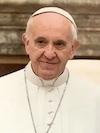
This Sunday’s Gospel presents to us the miracle of the multiplication of the loaves (see Matthew 14:13-21). The scene takes place in a deserted place, where Jesus had retired with His disciples. But the people found Him so as to listen to Him and to be healed: indeed, His words and His gestures restore and bring hope.
At sundown, the crowd was still present and the disciples, practical men, invited Jesus to send them away so that they could go and find something to eat. But He answered: “You give them something to eat” (v. 16).
Two Opposing Attitudes: Practicality vs. Providence
We can imagine the disciples’ faces! Jesus was well aware of what He was about to do, but He wanted to change their attitude: not to say, “send them away,” “let them fend for themselves,” “let them find something to eat,” but rather, “what does Providence offer us to share?”
These are two opposite ways of behaving. And Jesus wants to bring them to the second way of behaving because the first proposal is that of the practical person, but is not generous: “send them away so they can go and find, let them fend for themselves.” Jesus thinks another way.
God’s Logic: Taking Responsibility for Others
Jesus wants to use this situation to educate His friends, both then and now, about God’s logic. And what is God’s logic that we see here? The logic of taking responsibility for others. The logic of not washing one’s hands, the logic of not looking the other way. No. The logic of taking responsibility for others. That “let them fend for themselves” should not enter into the Christian vocabulary.
As soon as one of the Twelve says, realistically, “We have here only five loaves of bread and two fish”, Jesus answers, “Bring them here to me” (vv. 17-18). He takes the food in His hands, raises His eyes heavenward, recites the blessing and begins to break it and give the pieces to the disciples to hand out. And those loaves and fish did not run out; there was enough, and plenty left over for thousands of people.
A Sign of Charity: The Father’s Generosity
With this gesture, Jesus demonstrates His power; not in a spectacular way but as a sign of charity, of God the Father’s generosity toward His weary and needy children. He is immersed in the life of His people, He understands their fatigue and their limitations, but He does not allow anyone to be lost, or to lose out: He nourishes them with His word and provides food in plenty for sustenance.
The Eucharistic Link: Harmonizing the Spiritual and the Material
In this Gospel passage we can perceive a reference to the Eucharist, especially in the description of the blessing, the breaking of the bread, delivery to the disciples, and distribution to the people (v. 19). It is noteworthy how close the link is between the Eucharistic bread, nourishment for eternal life, and daily bread, necessary for earthly life.
Before offering Himself to the Father as the Bread of salvation, Jesus ensures there is food for those who follow Him and who, in order to be with Him, forgot to make provisions. At times the spiritual and the material are in opposition, but in reality spiritualism, like materialism, is alien to the Bible. It is not biblical language.
True Compassion: Suffering with Others
The compassion and tenderness that Jesus showed towards the crowds is not sentimentality, but rather the concrete manifestation of the love that cares for the people’s needs. And we are called to approach the Eucharistic table with these same attitudes of Jesus: compassion for the needs of others, this word that is repeated in the Gospel when Jesus sees a problem, an illness or these people without food… “He had compassion.” “He had compassion.”
Compassion is not a purely material feeling; true compassion is patire con [to suffer with], to take others’ sorrows on ourselves.
A Call to Self-Examination
Perhaps it would do us good today to ask ourselves:
- Do I feel compassion when I read news about war, about hunger, about the pandemic? So many things…
- Do I feel compassion toward those people?
- Do I feel compassion toward the people who are near to me?
- Am I capable of suffering with them, or do I look the other way, or think “they can fend for themselves”?
Let us not forget this word “compassion,” which is trust in the provident love of the Father, and means courageous sharing.
Message of Pope Benedict XVI
AT A GLANCE
- The Apostolic Mission: The multiplication of the loaves demonstrates that Christ entrusts the distribution of His gifts to the disciples, preparing them to bring the Word of life and the sacraments to the world.
- Incarnation and Redemption: By taking on human flesh, the Word of God enters into our physical reality to meet humanity directly, using words and examples suited to our nature.
- The True Hunger: While Christ is deeply attentive to our physical and material necessities, human beings ultimately possess a deeper spiritual hunger that can only be satisfied by feeding on the living God.
- Eucharist as Charity: The Eucharistic mystery is fundamentally linked to a service of charity, compelling believers to become active witnesses of God’s compassion toward their neighbors.
QUESTIONS FOR REFLECTION
- How can you transition from being a passive recipient of God’s blessings to an active distributor of His grace and truth in your community?
- Pope Benedict XVI notes that humanity “hungers for more” than physical sustenance. In what ways do you attempt to satisfy your deeper spiritual hunger with temporary material things?
- How does participating in the celebration of the Eucharist actively shape, challenge, and expand your daily compassion for those who are suffering locally and globally?
ACTIONABLE
TAKEAWAYS
- Commit to Fraternal Sharing: Evaluate your material possessions and resources this week. Intentionally choose a specific way to share what you have with someone in need, trusting that God multiplies small acts of generosity.
- Engage in the Service of Charity: Identify a local service initiative or global relief effort—particularly those addressing acute material poverty or famine—and contribute either your time or resources as an extension of your faith.
- Find God in All Things: Adopting the spirituality of St. Ignatius of Loyola, dedicate five minutes at the end of each day to examine where you encountered God’s presence in the ordinary events, creatures, and people around you.
18th Sunday of Year A
The Miracle of Sharing
and the Bread of Life
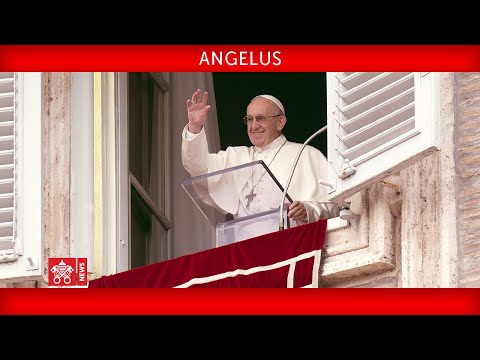
31 July 2011 | Castel Gandolfo

This Sunday’s Gospel describes the miracle of the multiplication of the loaves that Jesus worked for a great throng of people who had followed him to listen to him and to be healed of various illnesses (cf. Mt 14:14). As evening fell the disciples suggested to Jesus that he send the crowds away so that they might take some refreshment.
But the Lord had something else in mind: “You give them something to eat” (Mt 14:16). However they had “only five loaves… and two fish”. Jesus’ subsequent action evokes the sacrament of the Eucharist: “He looked up to heaven, and blessed, and broke and gave the loaves to the disciples, and the disciples gave them to the crowds” (Mt 14:19).
The Miracle and the Apostolic Mission
The miracle consists in the brotherly sharing of a few loaves which, entrusted to the power of God, not only sufficed for everyone but enough was left over to fill 12 baskets. The Lord asked this of the disciples so that it would be they who distributed the bread to the multitude; in this way he taught and prepared them for their future apostolic mission: in fact, they were to bring to all the nourishment of the Word of life and of the sacraments.
Incarnation and the Work of Redemption
In this miraculous sign the incarnation of God and the work of redemption are interwoven. Jesus, in fact, “went ashore” from the boat to meet the men and women (cf. Mt 14:14). St Maximus the Confessor said that the Word of God made himself present for our sake, by taking flesh, derived from us and conformed to us in all things save sin, in order to expose us to his teaching with words and examples suitable for us” (Ambigua 33: PG 91, 1285 C).
Divine Compassion and the True Hunger of Humanity
Here the Lord offers us an eloquent example of his compassion for people. We are reminded of all our brothers and sisters in the Horn of Africa who in these days are suffering the dramatic consequences of famine, exacerbated by war and by the lack of solid institutions. Christ is attentive to material needs but he wished to give more, because man always “hungers for more, he needs more” (Jesus of Nazareth, Doubleday, New York 2007, p. 267). God’s love is present in the bread of Christ; in the encounter with him “we feed on the living God himself, so to speak, we truly eat the ‘bread from Heaven’” (ibid. p. 268).
The Eucharistic Mystery and the Service of Charity
Dear friends, “in the Eucharist Jesus also makes us witnesses of God’s compassion towards all our brothers and sisters. The Eucharistic mystery thus gives rise to a service of charity towards neighbour” (Post-Synodal Apostolic Exhortation Sacramentum Caritatis, n. 88). St Ignatius of Loyola, the founder of the Society of Jesus whom the Church is commemorating today, also bore witness to this. Indeed Ignatius chose to live “finding God in all things, loving him in all creatures” (cf. Constitutions of the Society of Jesus, III, 1, 26).

Message of Pope Saint John Paul II
AT A GLANCE
- The Command to Proclaim: Just as Christ instructed the disciples to move the private message into the public light, the Church is called to proclaim the Gospel through the modern “housetops”—our global communications networks.
- The Answer to the Human Heart: Amidst profound existential questions about life, purpose, and suffering, the Church offers the only satisfying answer: Jesus Christ.
- Engagement, Not Retreat: While media culture often promotes relativism or entertainment over truth, the Church must not withdraw. Instead, we are called to an active, imaginative, and courageous engagement with all forms of media.
- A Prophetic Duty: Christian communicators have a specific vocation to challenge the false idols of our age (materialism, hedonism, consumerism) and boldly declare the truth of the Word made flesh.e.
QUESTIONS FOR REFLECTION
- Internalizing the Message: In my daily life, do I share the truth of the Gospel with the same urgency as I share personal news or opinions?
- Evaluating Media: How does my personal consumption of media (news, social platforms, entertainment) shape my understanding of “truth”? Do I allow the media to dictate my worldview, or do I filter it through the lens of faith?
- Identifying the “Housetops”: Where are my personal “housetops”? In what spaces—digital or physical—do I have the opportunity to speak of Christ, and how am I currently utilizing those spaces?
- Overcoming Fear: Am I hesitant to speak about my faith in public or online? What specifically do I fear, and how does the example of the Apostles encourage me to persist?
ACTIONABLE
TAKEAWAYS
- Curate for Truth: Be intentional about the content you support, share, and promote online. Use your personal digital presence to amplify messages that uphold human dignity and the Gospel, rather than those that thrive on division or falsehood.
- Speak with Intention: Identify one conversation or digital interaction this week where you can move beyond small talk to offer a perspective rooted in Christian hope or values.
- Practice Intellectual Courage: When you encounter media narratives that dismiss absolute truth or promote consumerism, take a moment to reflect on a specific scripture or teaching of the Church that contradicts that narrative. Use that as a foundation for your own internal stance.
- Pray for Media Professionals: Specifically pray for those working in journalism, technology, and entertainment—that they may be guided by the Holy Spirit to seek, speak, and defend the truth.
18th Sunday of Year A
“Preach from the housetops”:
The Gospel in the Age of Global Communication
27 May 2001 | 35th WORLD COMMUNICATIONS DAY
The theme chosen for World Communications Day 2001 echoes the words of Jesus himself. It could not be otherwise, for it is Christ alone whom we preach. We remember his words to his first disciples: “What I tell you in the dark, utter in the light; and what you hear whispered, proclaim upon the housetops” (Mt 10:27). In the secret of our heart, we have listened to the truth of Jesus; now we must proclaim that truth from the housetops.
In today’s world, housetops are almost always marked by a forest of transmitters and antennae sending and receiving messages of every kind to and from the four corners of the earth. It is vitally important to ensure that among these many messages the word of God is heard. To proclaim the faith from the housetops today means to speak Jesus’ word in and through the dynamic world of communications.
The Church’s Role in a Changing World
In all cultures and at all times—certainly in the midst of today’s global transformations—people ask the same basic questions about the meaning of life: Who am I? Where have I come from and where am I going? Why is there evil? What is there after this life? (cf. Fides et Ratio, 1). And in every age the Church offers the one ultimately satisfying answer to the deepest questions of the human heart—Jesus Christ himself, “who fully reveals man to himself and brings to light his high calling” (Gaudium et Spes, 22). Therefore, the voice of Christians can never fall silent, for the Lord has entrusted to us the word of salvation for which every human heart longs. The Gospel offers the pearl of great price for which all are searching (cf. Mt 13:45-46).
It follows that the Church cannot fail to be ever more deeply involved in the burgeoning world of communications. The global communications network is extending and growing more complex by the day, and the media are having an increasingly visible effect on culture and its transmission. Where once the media reported events, now events are often shaped to meet the requirements of the media. Thus, the relationship between reality and the media has grown more intricate, and this is a deeply ambivalent phenomenon. On the one hand, it can blur the distinction between truth and illusion; but on the other, it can open up unprecedented opportunities for making the truth more widely accessible to many more people. The task of the Church is to ensure that it is the latter which actually happens.
Navigating Media Culture and Evangelization
The world of the media can sometimes seem indifferent and even hostile to Christian faith and morality. This is partly because media culture is so deeply imbued with a typically postmodern sense that the only absolute truth is that there are no absolute truths or that, if there were, they would be inaccessible to human reason and therefore irrelevant. In such a view, what matters is not the truth but “the story”; if something is newsworthy or entertaining, the temptation to set aside considerations of truth becomes almost irresistible. As a result, the world of the media can sometimes seem no more friendly an environment for evangelization than the pagan world of the Apostles’ day. But just as the early witnesses to the Good News did not retreat when faced with opposition, neither should Christ’s followers do so today. The cry of Saint Paul echoes among us still: “Woe to me if I do not preach the Gospel” (1 Cor 9:16).
Yet, as much as the world of the media may at times seem at odds with the Christian message, it also offers unique opportunities for proclaiming the saving truth of Christ to the whole human family. Consider, for instance, satellite telecasts of religious ceremonies which often reach a global audience, or the positive capacities of the Internet to carry religious information and teaching beyond all barriers and frontiers. Such a wide audience would have been beyond the wildest imaginings of those who preached the Gospel before us. What is therefore needed in our time is an active and imaginative engagement of the media by the Church. Catholics should not be afraid to throw open the doors of social communications to Christ, so that his Good News may be heard from the housetops of the world!
The Mission Ad Gentes and the Prophetic Task
It is vital too that at the beginning of this new millennium we keep in mind the mission ad gentes which Christ has entrusted to the Church. An estimated two thirds of the world’s six billion people do not in any real sense know Jesus Christ; and many of them live in countries with ancient Christian roots, where entire groups of the baptized have lost a living sense of the faith, or no longer consider themselves members of the Church and live lives far removed from the Lord and his Gospel (cf. Redemptoris Missio, 33). Certainly, an effective response to this situation involves much more than the media; but in striving to meet the challenge Christians cannot possibly ignore the world of social communications. Indeed, media of every kind can play an essential role in direct evangelization and in bringing to people the truths and values which support and enhance human dignity. The Church’s presence in the media is in fact an important aspect of the inculturation of the Gospel demanded by the new evangelization to which the Holy Spirit is summoning the Church throughout the world.
As the whole Church seeks to heed the Spirit’s call, Christian communicators have “a prophetic task, a vocation: to speak out against the false gods and idols of the day—materialism, hedonism, consumerism, narrow nationalism…” (Ethics in Communications, 31). Above all, they have the duty and privilege to declare the truth—the glorious truth about human life and human destiny revealed in the Word made flesh. May Catholics involved in the world of social communications preach the truth of Jesus ever more boldly and joyfully from the housetops, so that all men and women may hear about the love which is the heart of God’s self-communication in Jesus Christ, the same yesterday, and today, and forever (cf. Heb 13:8).
IN BRIEF
Isaiah 55:1–3 — The Free Invitation to the Divine Banquet
This prophetic invitation prefigures the ultimate fulfillment of God’s covenantal promises, drawing close connection to the waters of Baptism and the spiritual nourishment of the Eucharist (CCC 1217, CCC 2769). The Lord extends a universal, free invitation to those who thirst and hunger, urging them to receive wine and milk without cost. According to the Catechism, this highlights the absolute gratuity of saving grace; human effort alone cannot purchase divine life. By commanding the people to “listen diligently” so that their souls may live, the text stresses that obedience to the Word of God opens the human heart to the new, everlasting covenant established in David’s line, offering true satisfaction that material wealth can never provide.
Romans 8:35, 37–39 — The Indissoluble Bond of Christ’s Love
St. Paul’s triumphant declaration underscores the absolute security of the believer enfolded in the redemptive love of Jesus Christ (CCC 402, CCC 828). The Catechism affirms that through the Holy Spirit, Christians are made “more than conquerors” over the trials of the world, including hardship, persecution, and death itself. Because Christ completely conquered sin and the grave through His passion, no created force—neither cosmic powers, present anxieties, nor future uncertainties—possesses the ability to separate the faithful from the definitive communion wrought by God’s love. This passage serves as a bedrock for Christian hope, teaching that the grace of justification triumphs entirely over human vulnerability and the brokenness of a fallen creation.
Matthew 14:13–21 — The Miracle of the Loaves and the Eucharistic Foreshadowing
The multiplication of the loaves serves as a pivotal sign that directly prefigures the superabundance of the unique bread of the Eucharist (CCC 1335, CCC 1329). Prompted by profound divine compassion for the crowds, Jesus mimics the precise Eucharistic actions: He takes the bread, raises His eyes to heaven, says the blessing, breaks the loaves, and hands them to the disciples to distribute. The Catechism explains that this miracle functions both as an anticipation of the Last Supper and a manifestation of the gathering of the Church. The twelve remaining baskets symbolize the inexhaustible fullness of Christ’s self-gift, which satisfies the deepest spiritual hunger of humanity and equips the apostles for their universal mission.
18th Sunday of Year A
Isaiah 55:1-3
No need to fill out form. Scroll down and look for YELLOW highlights.
Search Engine created by Jeff Pinyan
Romans 8:35, 37-39
No need to fill out form. Scroll down and look for YELLOW highlights.
Search Engine created by Jeff Pinyan
Matthew 14:13-21
No need to fill out form. Scroll down and look for YELLOW highlights.
Search Engine created by Jeff Pinyan