Children, Catholic Home School, Liturgy of the Word, Children’s Liturgy
Children, Catholic Home School, Liturgy of the Word, Children’s Liturgy
September 27, 2026



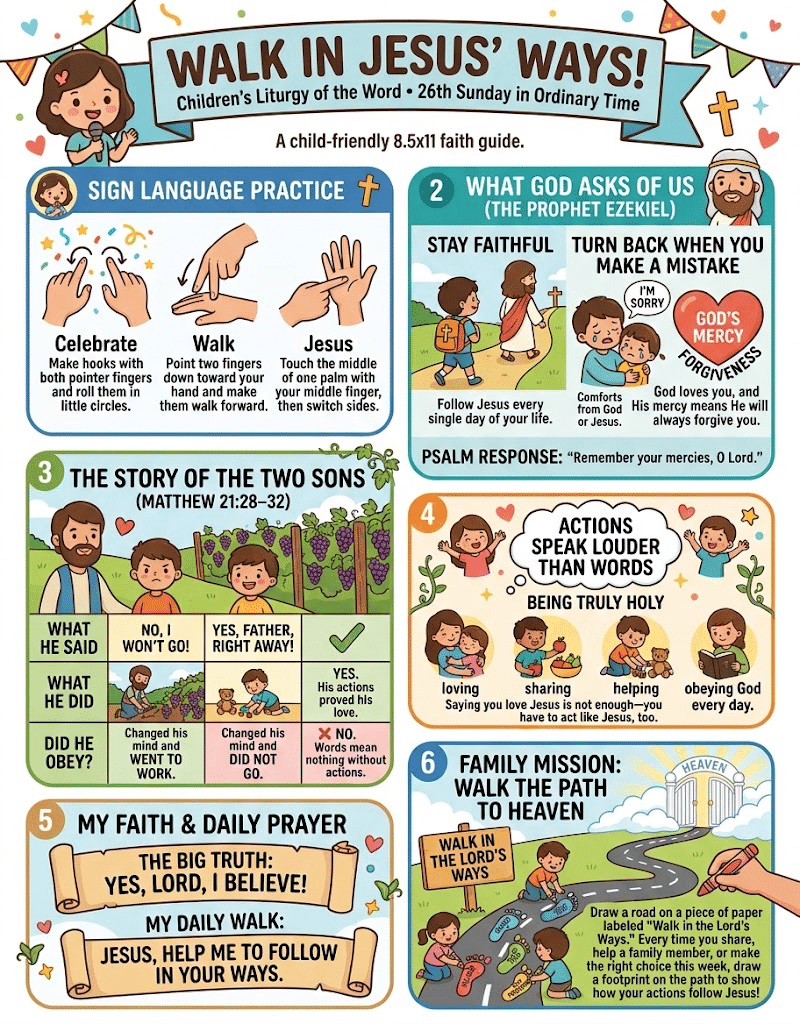
Key Theme: True Obedience
Focus: Repentance and Action
Verse to Remember: “Which of the two did his father’s will?” (Matthew 21:31)
THE MARK 10 MISSION (2026): A Catholic website that loves to share love for the Church, Sacred Liturgy and the Sacraments.









If you want this page to continue to be updated,
Please spread the word
on social media.
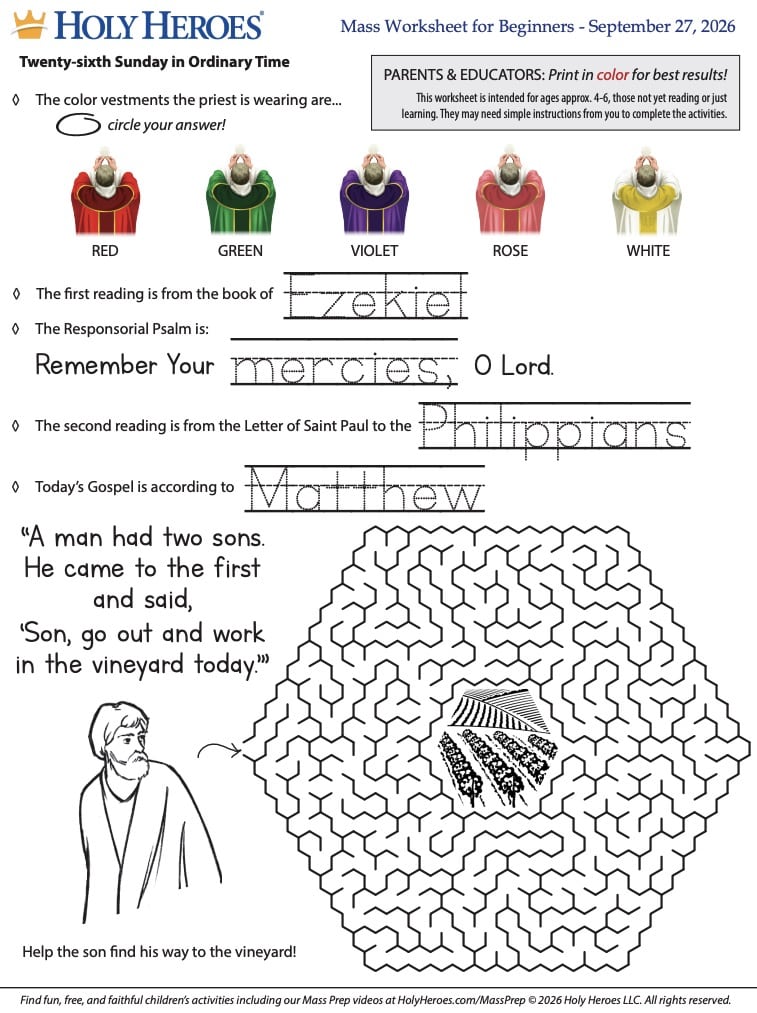
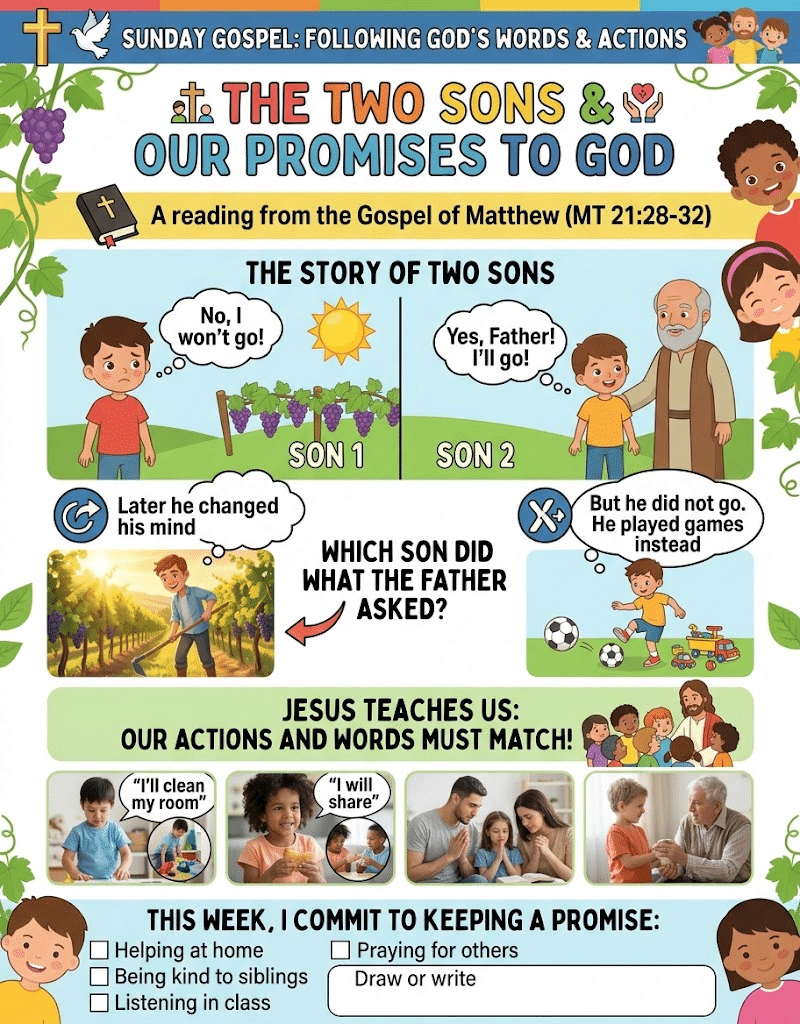
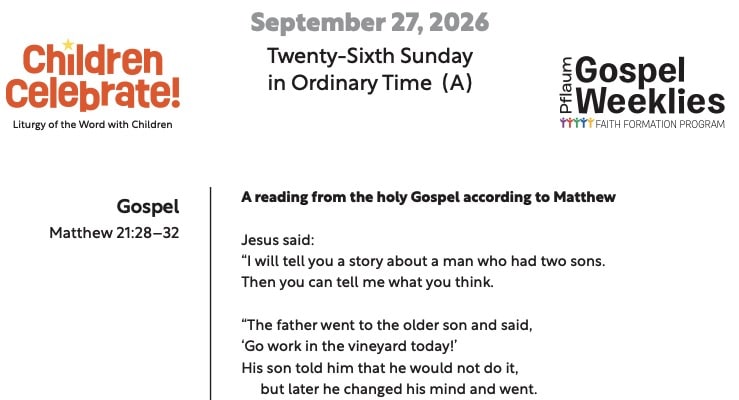
Matthew 21:28–32
Children’s Lectionary
26th Sunday of Year A


Bridging the Gospel and Young Hearts Through Music


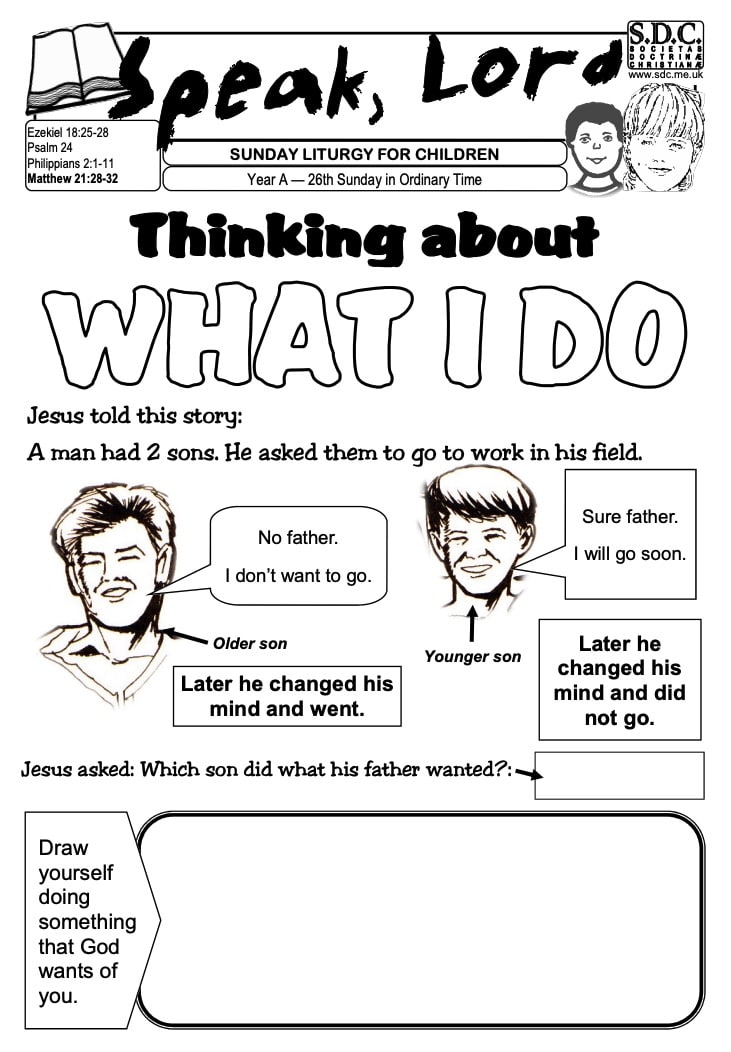
S.D.C. is a Catholic Society that works in the field of Catechesis and the spreading of the Word of God in different ways.
TWTW
AI GENERATED
WORKSHEETS





26th Sunday of Year A

KIDS HOMILY SONG (3:02) –
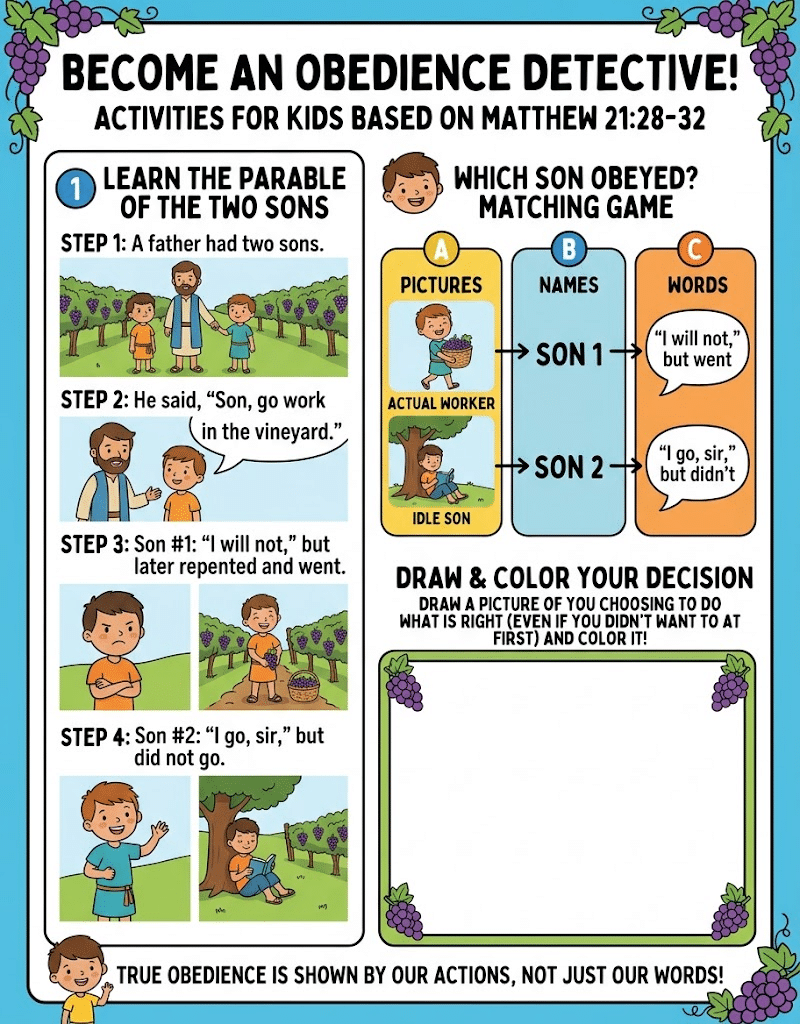
CHILDREN ACTIVITIES
BIBLE QUIZ
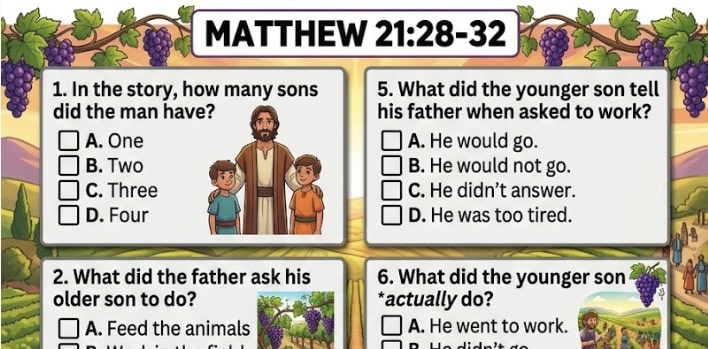
Non-profits have permission to use quiz (generated by AI for TWTW website).
SERMONS 4KIDS
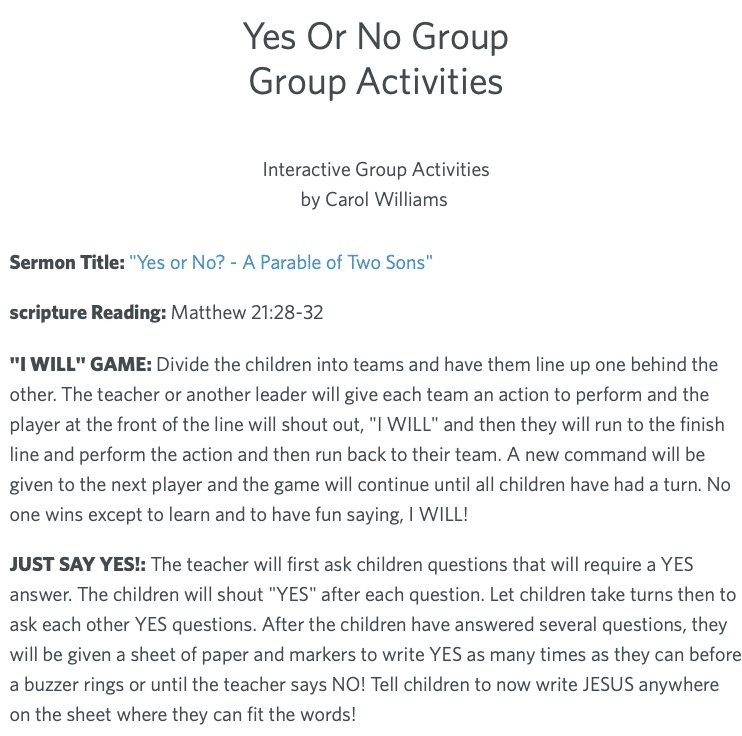
Who’s in Charge?

Core Truth: Authority means having the power to guide and direct. God holds ultimate authority, and He gave Jesus authority to guide our lives with unconditional love.
Age Group: Elementary (Grades 1–5)
Supplies: Poster board with the word AUTHORITY written across the top, magazines or printed pictures of authority figures, scissors, glue sticks, markers, and the 8.5×11 activity sheet.
1. Hook: The “Boss” Game & Object Introduction
- Play a quick round of “Simon Says” to demonstrate how someone gives directions and everyone follows.
- Hold up the poster board displaying the word AUTHORITY.
- Ask: “Has anyone ever heard this big word before? What do you think it means to have authority?”
- Define the word clearly: A person with authority has the power to direct others—they are the person “in charge,” making decisions to keep things safe, fair, and organized.
2. Explore: Authority All Around Us
Guide the children to think of everyday authority figures. As they answer, have volunteers glue corresponding magazine cutouts or photos onto the poster board.
- At Home (Parents & Caregivers): They decide family rules, bedtime, and meals to keep you healthy, safe, and loved.
- At School (Teachers & Principals): They set classroom rules, lead lessons, and make sure everyone gets a fair chance to learn.
- In the Community (Police Officers, Judges, Doctors): Police enforce the laws to keep neighborhoods safe; doctors give directions to help our bodies heal; judges ensure people follow community rules.
3. Bible Connection: “By What Authority?”
- Open to Matthew 21:23. Explain that while Jesus was teaching in the temple, the religious leaders (chief priests and elders) interrupted Him.
- Ask: “They challenged Jesus by asking, ‘By what authority do you do these things? Who gave you this authority?’ Why do you think they asked that?”
- Explain that Jesus had healed the sick, fed thousands, and taught with wisdom no one else had. The leaders felt threatened because they wanted to be the only ones in charge.
- Emphasize the answer Jesus pointed to: God the Father gave Jesus His authority. Jesus didn’t use authority to bully people or make selfish rules—He used it to heal, forgive, and show unconditional love.
4. Heart Check: Making the Choice
- Connect earthly authority to spiritual authority:
- We follow parents because they love and protect us.
- We respect police because they protect our towns.
- We listen to Jesus because He is God’s Son, who loves us completely.
- Having authority in our lives means putting God in charge. It is a daily choice to follow His guidance rather than just doing whatever we want.
5. Hands-On Activity Sheet & Closing Prayer
Distribute the 8.5×11 infographic activity sheet.
Give children time to review the panels, sketch any missing community helpers in the prompt boxes, and color the heart at the bottom to represent inviting God to lead their choices.
Closing Prayer:“Dear God, thank You for the people You put in charge to care for us—our parents, our teachers, and our leaders. Most of all, thank You for Jesus. Help us to recognize Your love and authority every day, and give us willing hearts to follow where You lead. Amen.”

Understanding the Two Sons
Q: Who do the two sons represent in Jesus’s parable?
A: The first son who said no but later repented and worked represents tax collectors, prostitutes, and sinners who listened to John the Baptist and Jesus Christ, while the second son who said yes but didn’t go represents self-righteous religious leaders who rejected their teachings despite claiming righteousness.
The Core Lesson
Q: What is the central teaching of this parable?
A: The parable teaches that willingness to change our minds and follow God’s will matters more than initial claims of obedience, as repentant sinners enter the kingdom of God ahead of self-righteous leaders who believe they are good while doing bad.
The Spiritual Trap
Q: What prevents people from accepting God’s will according to this parable?
A: The more we put faith in our own ideas or goals, the less we become willing to accept God’s desire for us, making self-righteousness a barrier to entering the kingdom.

OSV Lifelong Catechesis
26 Sunday
in Ordinary Time
Religion Teacher
26th Sunday of Year A


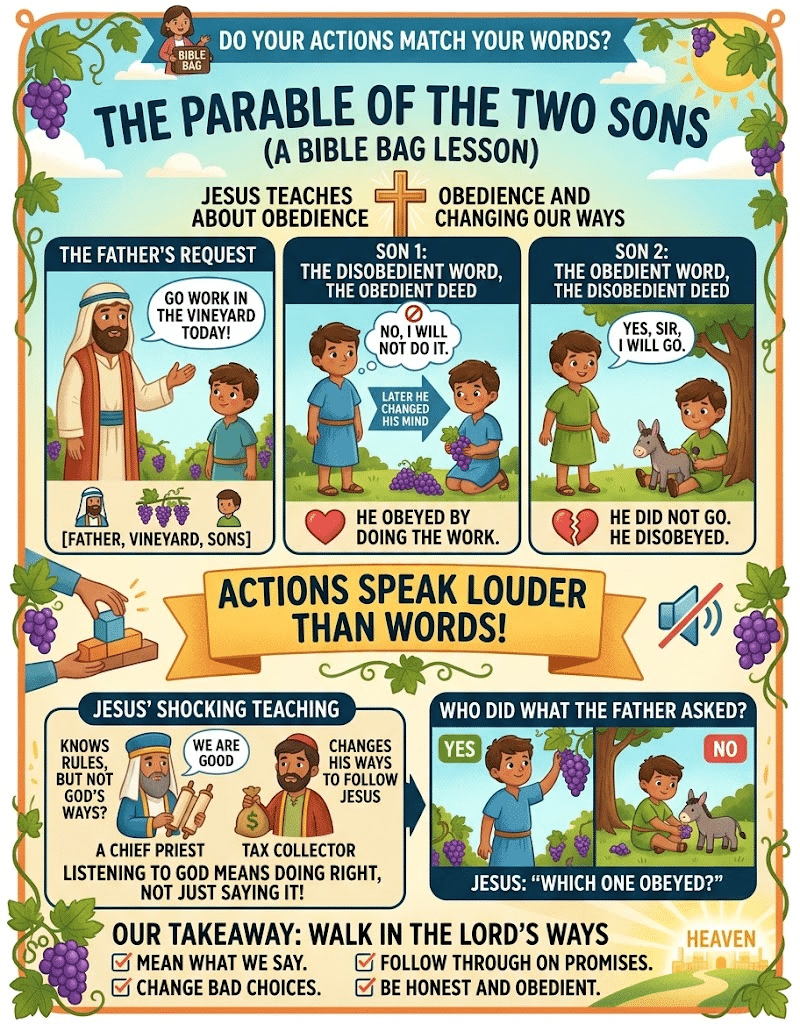
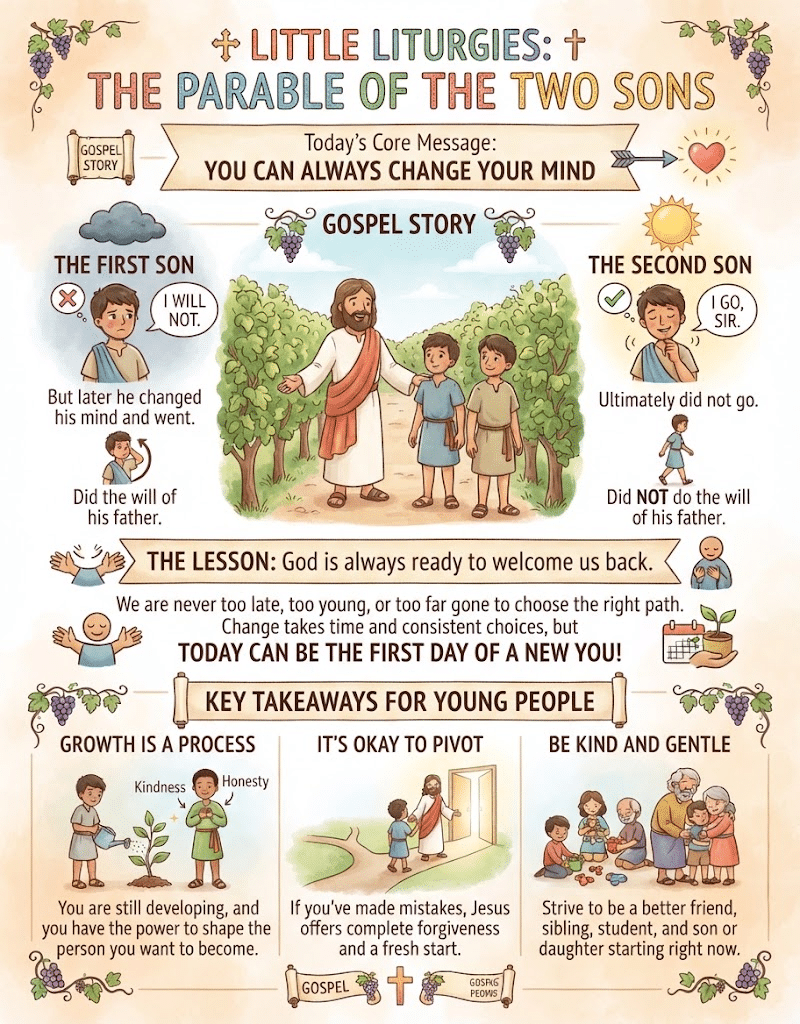
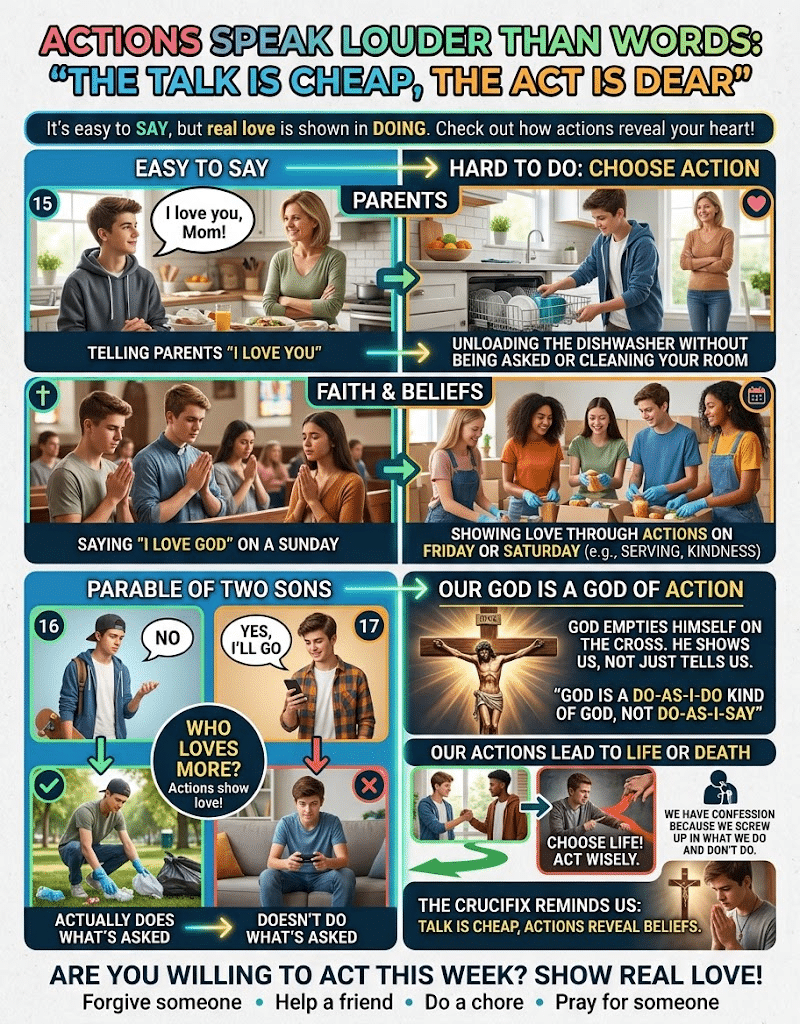
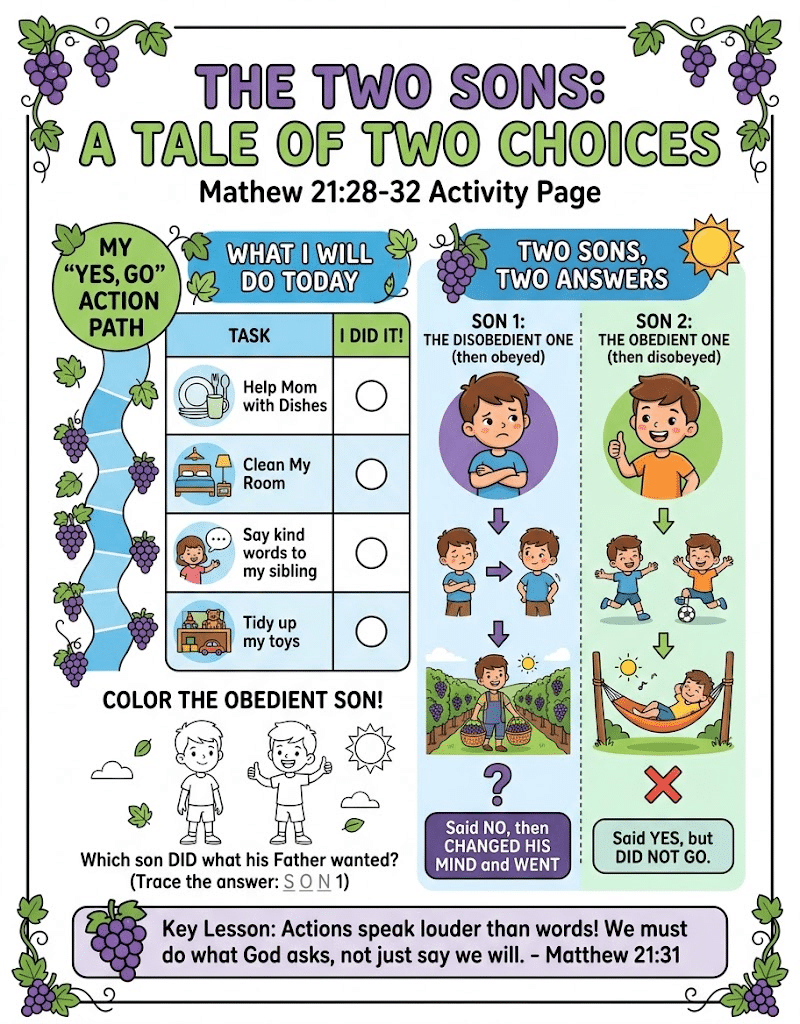
Infographic generated by AI for TWTW website.
Non-profits have permission to use it in their ministry.
Key Themes
- The Meaning of Repentance (Metanoia): Repentance is defined practically as a genuine change of mind that bears fruit in action. It is not merely emotional remorse, but an active realignment from disobedience to obedience.
- Words vs. Action in Obedience: Verbal allegiance without concrete execution is meaningless. The kingdom of God values the delayed, active obedience of the first son over the performative, empty promises of the second.
- The Pitfall of Self-Righteousness: Spiritual blindness often afflicts those who consider themselves inherently righteous. Assuming one is already in right standing with God prevents honest self-reflection and authentic conversion.
- Humility and Teachability: Genuine discipleship demands the ongoing humility to admit error, abandon stubbornness, and accept divine correction.
Theological Insights
- Biblical Context (Matthew 21:28–32): Jesus delivers this parable directly to the chief priests and elders in the Temple precincts during Holy Week. The context directly addresses authority and divine legitimacy following the Cleansing of the Temple.
- The Two Sons as Covenant Types:
- The first son represents the tax collectors, prostitutes, and outcasts who initially rebelled against God’s law but responded in faith and repentance to the preaching of John the Baptist and Jesus.
- The second son represents the religious leaders who professed strict covenantal devotion and verbal obedience to Yahweh, yet refused to accept the prophetic summons to repentance.
- Justification and Doing the Will of the Father: Jesus establishes that entry into the Kingdom of Heaven is not guaranteed by outward status, ancestral lineage, or pious speech, but by faith manifested in doing the will of the Father ($Matthew\ 7:21$).
- The Priority of the Outcast: By asserting that repentant sinners enter the Kingdom ahead of the religious establishment, Christ overturns human systems of merit, underscoring that grace is received through humble contrition rather than ritual presumption.
Videos for Children
Animated Bible Stories (Saddleback Kids)
Bible Crafts (Ministry to Children)
Object Lesson Sermons (Ministry to Children)
26th Sunday of Year A

LESSON NOTES (PDF)
Actions Speak Louder Than Words
In this children’s message, kids learn that living out our love and acting on what we say will go a long way. Jesus told a parable of two sons, to explain what obedience looks like. We demonstrate our love for God and one another by how we live our lives. Jesus was the best example of this, because He fulfilled HIs promises and died for us to show His love!


1. What would happen to human hearts if the words “I’m sorry” did not exist?
Hearts would never heal because there would be no way to seal emotional wounds.
2. How would relationships between parents and children be affected in a world without apologies?
Parents would never hug their children, and children would run away and never return home.
3. What would the word “friend” mean in a world without forgiveness?
It would mean “someone you used,” and the concept of having a “best friend” would not exist.
4. Why would there be very few roads between towns and cities without these words?
Because people would harbor resentment and would have no desire to travel to or visit places they disliked.
5. How would nations and global relations be impacted without the ability to apologize?
“Peace” would be an unfamiliar concept because nations would be perpetually in conflict and war.
6. What positive changes happen in family life once “I’m sorry” enters the world?
Parents can kiss their children good night, children can return to a safe and warm home, and siblings can enjoy each other’s company rather than holding onto hatred forever.
7. How does reconciliation foster modern connectivity and community?
It allows neighbors to live closely together in trust and enables towns and cities to connect through roads, transportation, and digital networks (the internet).
8. What theological connection does the text make between human apologies and God?
The text explains that true sorrow invites God’s forgiveness and life, restoring humanity’s friendship with God.
9. Why does the author describe “I’m sorry” as two “powerful words we should celebrate”?
Because they possess the power to break cycles of bitterness, mend broken relationships across all levels of society (family, community, and nations), and restore peace.
10. What is the central message of the passage?
Forgiveness and repentance are essential gifts from God; without the humility to apologize, human connection and society would completely fracture.
26th Sunday of Year A

READ THE STORY
AI-generated TWTW video, handout and questions
based on content from Word-Sunday.com. Free for non-profit ministry use.

DID YOU ENJOY THIS WEEK’S CONTENT?
Share the link below with a friend, teacher, or pastor
to get the latest updates.
https://thewordthisweek.net/?redirect_to=latest&cat=760119222
Spread the word on social media!
 Highlight text or double-click a paragraph anywhere on the site to ADD TO NOTES. You can also click ASK AI to copy your selection to the clipboard with a command prompt, ready for you to paste manually into the chat above.