Commentary Intro to Mass Readings Sunday Readings
CommentaryIntro to Mass Readings Sunday Readings
May 24, 2026
⭐⭐⭐ Hearers of the Word—PDF | VIDEO


PDF AIDS
Scripture Study for Catholics *


Fr. Francis Martin
REFLECTION
1ST READING
2ND READING
GOSPEL

Brant Pitre
PENTECOST AND
SPEAKING IN TONGUES

Kevin Aldrich

Pentecost Sunday (A)
Acts 2:1-11
Fr. Tim Peters, S.T.D explores the scriptural context and theological significance of the first reading according to the following thematic outline.
1. The Reversal of Sinai and the Birthday of the Church
- The Old Testament Context: Pentecost was originally a Jewish feast day, also known as Shavuot or the Feast of Weeks, celebrated 50 days after Passover to commemorate the first fruits of the wheat harvest (Leviticus 23:15-21, Deuteronomy 16:9-12). In Jewish tradition, it also marked the giving of the Law to Moses at Mount Sinai.
- The Tragedy at Sinai: When Moses received the Law on Mount Sinai, the event was marked by fire and the trembling of the mountain (Exodus 19:16-18). However, due to Israel's immediate apostasy with the golden calf, a civil war ensued, resulting in the death of 3,000 souls (Exodus 32:27-28).
- The New Testament Reversal: On the day of Pentecost, the Holy Spirit descended upon the 120 disciples gathered in the Upper Room in Jerusalem (Acts 1:13-15, Acts 2:1). Instead of the Law bringing death, the outpouring of the Holy Spirit brought immediate conversion and life, resulting in 3,000 souls being baptized and added to the Church (Acts 2:41).
- The Theological Meaning: The Church celebrates Pentecost as its birthday. It represents the transformation of history where the old covenant inaugurated in blood and judgment is fulfilled by the new covenant poured out in abundance through the Holy Spirit.
2. The Fire of Pentecost and the Reversal of Babel
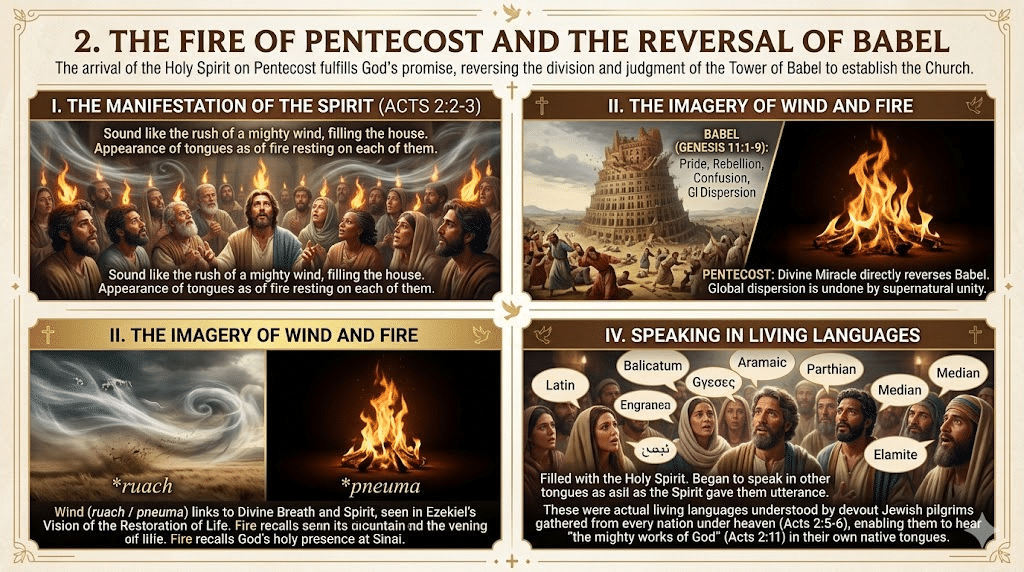
- The Manifestation of the Spirit: The arrival of the Holy Spirit was accompanied by a sound from heaven like the rush of a mighty wind, filling the house, and the appearance of tongues as of fire resting on each of them (Acts 2:2-3).
- The Imagery of Wind and Fire: The concept of wind directly connects to the Hebrew ruach and Greek pneuma, both meaning wind, breath, or spirit, as seen in the restoration of life in Ezekiel’s vision (Ezekiel 37:9-14). Fire recalls God’s holy presence at Sinai (Exodus 19:18).
- The Undoing of Babel: The miracle directly reverses the pride and judgment of the Tower of Babel (Genesis 11:1-9). Where humanity's rebellion led to the confusion of languages and global dispersion, the Holy Spirit brings supernatural unity.
- Speaking in Living Languages: The disciples were filled with the Holy Spirit and began to speak in other tongues as the Spirit gave them utterance (Acts 2:4). These were not unintelligible sounds but actual living languages understood by devout Jewish pilgrims gathered from every nation under heaven (Acts 2:5-6), enabling them to hear "the mighty works of God" in their own native tongues (Acts 2:11).
3. Prophetic Fulfillment and the Fulfillment of the Cross
- The Gathering of Nations: Because Jewish law required all adult males to travel to Jerusalem for Passover, Pentecost, and Tabernacles (Deuteronomy 16:16), the city was densely packed. Pilgrims from places as far as Mesopotamia, Egypt, and Rome witnessed these events (Acts 2:9-10).
- The Third Hour: When some mocked the disciples as being drunk on new wine, Peter stood with the Eleven to correct them, noting it was only the third hour of the day (Acts 2:13-15). The third hour (9:00 AM) was the hour of morning prayer and the offering of the unblemished lamb sacrifice (tamid). Critically, it marks the exact hour Jesus was nailed to the cross (Mark 15:25), anchoring the entire event to the Crucifixion.
- The Prophecy of Joel: Peter declared that the dramatic events fulfilled the prophecy of Joel, signaling that humanity had entered the "last days" (Acts 2:16-17, Joel 2:28-32). God promised to pour out His Spirit upon all flesh—sons, daughters, young, and old alike.
- Davidic Messianic Witness: Peter used corporate and personal culpability to convict the crowd regarding the crucifixion of Jesus (Acts 2:22-23), but explicitly pointed to the Resurrection by quoting Psalm 16 (Acts 2:25-28, Psalm 16:8-11). Because David's tomb was physically present nearby in Jerusalem, Peter argued that David was speaking prophetically not of himself, but of Christ, whose flesh did not see corruption (Acts 2:29-31). Peter further affirmed Christ's cosmic exaltation by quoting Psalm 110 (Acts 2:34-35, Psalm 110:1).
4. Conversion, Sacramental Life, and Charismatic Unity
- Cut to the Heart: Upon hearing Peter declare that God made the crucified Jesus both Lord and Christ, the multitude was "cut to the heart" and asked, "Brethren, what shall we do?" (Acts 2:36-37). This demonstrates the role of the Holy Spirit in prompting authentic personal conversion.
- The Mandate of Baptism: Peter responded with a definitive, non-optional command: "Repent, and be baptized every one of you in the name of Jesus Christ for the forgiveness of your sins; and you shall receive the gift of the Holy Spirit" (Acts 2:38). This reflects the structural, Trinitarian baptism commanded by Christ (Matthew 28:19), extending the promise specifically to believers and their children (Acts 2:39).
- The Four Pillars of Church Life: Those who accepted the message were baptized, and they immediately committed themselves to a distinct way of communal life rooted in four specific characteristics (Acts 2:42):
- The apostles' teaching (the authoritative truth passed down through their successors).
- Fellowship (koinonia, deep community life).
- The breaking of the bread (the celebration of the Holy Eucharist).
- The prayers.
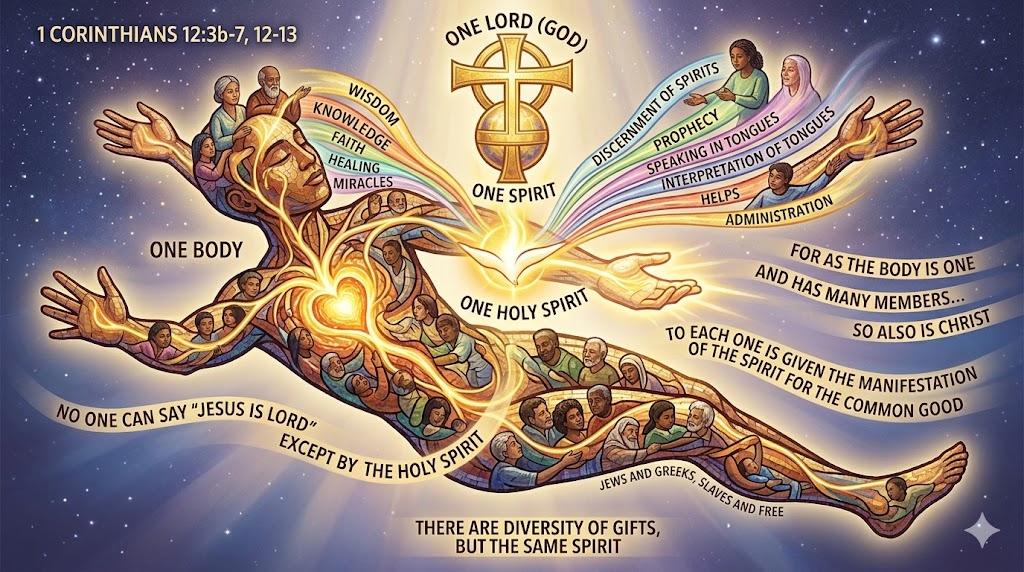
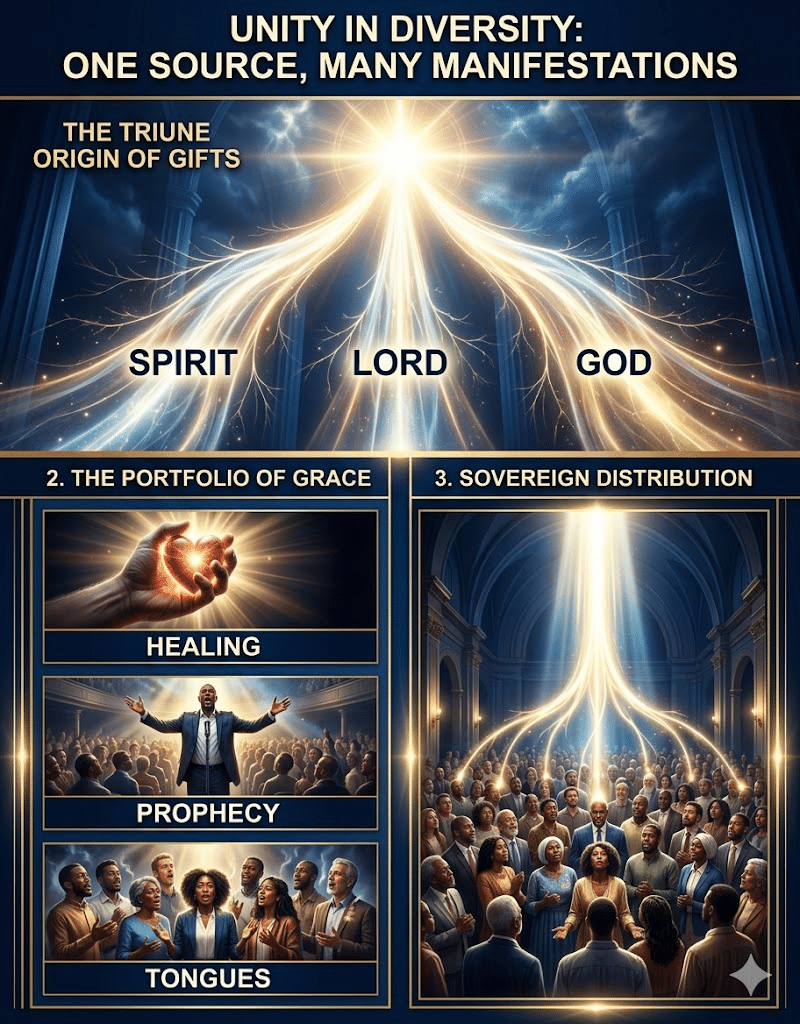
- The Variety of Spiritual Gifts: This communal unity is sustained through the Holy Spirit's diverse distribution of spiritual gifts (charismata) and service, as outlined by Paul (1 Corinthians 12:4-7). No one can authentically declare "Jesus is Lord" except by the Holy Spirit (1 Corinthians 12:3). These gifts—ranging from wisdom, knowledge, and faith, to healing, miracles, and prophecy (1 Corinthians 12:8-10)—are given for the common good to build up the one, unified Body of Christ (1 Corinthians 12:12-13).

INSIGHTS FOR HOMILY
PREPARATION
Acts 2:1-11

Gift of the Spirit
Unlock the transformative power of the Holy Spirit for your congregation by diving into the rich, historical, and theological insights of Larry Broding’s commentary. When preparing a homily for the Solemnity of Pentecost, it is easy to get swept up in the “rushing wind” without grounding the message in its profound biblical roots. Broding bridges the gap between the ancient Feast of Grain Harvest and the “new life” of the Church, offering preachers a roadmap to move beyond simple storytelling into deep, life-changing application.
Why this commentary matters for your homily:
- Deep Contextual Roots: Broding explains the shift from the agricultural “Feast of Fifty Days” to the celebration of the Law at Sinai, helping you connect the Old Covenant’s gift of the Law with the New Covenant’s gift of the Spirit.
- The Nuance of “The Breath of God”: By exploring the linguistic ties between ruah, pneuma, and spiritus, the commentary provides a beautiful metaphor for your sermon: that breathing and life are inseparable from God’s presence.
- A Shift in Posture: Broding highlights that the disciples were “sitting”—the traditional position of a student. This allows you to portray the early Church not just as a group of miracle-workers, but as humble students of the Spirit.
- Universal Mission: The commentary clarifies the “cosmopolitan flavor” of Jerusalem during the pilgrimage, emphasizing that the Pentecost miracle wasn’t just about tongues of fire, but about the universal reach of the Gospel message to every nation.
- Enlightenment and Passion: Learn to articulate the dual nature of the Spirit’s flame—providing both “fire in the mind” for insight and “fire in the belly” for the motivation to witness.
- Practical Stewardship: The commentary concludes with a challenging reflection on our responsibility as “instruments” of the Spirit, providing you with a poignant closing for your homily that asks: How do we spread God’s life-giving breath today?
Read Larry Broding’s full commentary to help your congregation experience the true breath of God, moving beyond a historical retelling of Pentecost to a profound encounter with the Living Spirit.
AI THOUGHT STARTERS
To strengthen key sections of your homily, here are questions you might ask the AI assistant (simply copy and paste a question into chat bot in the lower right corner of the page):
Biblical and Linguistic Foundations
- How do the various meanings of ruah, pneuma, and spiritus help explain the connection between physical breathing and the life of the soul in Acts 2:2?
- Pentecost refers to the Feast of Grain Harvest; how can I use this agricultural background to explain the “harvest of souls” that begins in Acts 2:41?
- The reception of the Law on Mt. Sinai refers to the Jewish tradition of the feast; what parallels can I draw between the fire on Sinai and the tongues of fire in Acts 2:3?
- Genesis 1:2 refers to God’s Spirit over the waters; how does this creation imagery enrich a homily about the “new creation” appearing in Acts 2:4?
Symbols and Spiritual Posture
- Acts 2:2 refers to the disciples sitting as they were filled; how does this specific posture suggest a model for how our modern parish should listen to the Holy Spirit?
- Fire in the mind suggests enlightenment while fire in the belly suggests passion; how can I structure a homily that calls for both intellectual growth and missionary zeal?
- Acts 2:3 refers to a wind-driven wildfire; what does this metaphor suggest about the speed and uncontrollable nature of the Gospel spreading through the early Church?
Universal Mission and Application
- Acts 2:5 refers to Jerusalem as a cosmopolitan pilgrimage stop; how can I apply this to our parish’s call to be a welcoming home for people of all backgrounds?
- The disciples breathing out God’s Spirit suggests that we are active instruments; what specific “mighty acts of God” from Acts 2:11 should we be proclaiming in our community today?
- Acts 2:6 refers to everyone hearing their own native language; how does this miracle suggest that the Church is called to meet people exactly where they are rather than waiting for them to come to us?

Pentecost Sunday (A)
1 Cor 12:3b-7, 12-13
Fr. Tim Peters, S.T.D explores the scriptural context and theological significance of the second reading according to the following thematic outline.
INSIGHTS FOR HOMILY
PREPARATION
1 Cor 12:3b-7, 12-13
Spiritual Gifts
In a world increasingly defined by fragmentation and cultural silos, the call to true unity can feel like a distant echo. Larry Broding’s commentary on St. Paul’s vision of the Body of Christ offers preachers a vital lens through which to view the diversity of their own parishes. Rather than seeing differences in language, tradition, or talent as obstacles to be overcome, Broding illuminates how the Holy Spirit utilizes these unique “spiritual gifts” as the very fabric of the Church’s strength. This commentary provides the theological depth and practical wisdom needed to transform a homily from a simple lesson on cooperation into a powerful summons to communal glory.
Why this commentary matters for your homily:
- Ancient Tension, Modern Context: Broding bridges the gap between the ethnic and class divisions of ancient Corinth and our own multicultural, media-saturated world, helping you address modern social tensions with biblical authority.
- The Purpose of “Spiritual Gifts”: The commentary emphasizes that gifts are not for self-glorification but for the “common good,” providing a clear homiletic focus on service rather than individual status.
- Encouragement Over Suppression: Broding highlights Paul’s radical stance—that every single person in the community has a gift that must be exercised, not hidden, offering you a way to empower every member of your congregation.
- The Litmus Test of Unity: By asking whether our gifts “unite or divide,” the commentary provides a ready-made framework for a poignant examination of conscience that you can share with your assembly.
- Focus on the Source: Broding keeps the focus where it belongs—on the Spirit as the giver—ensuring your homily directs the congregation’s praise toward God rather than human achievement.
- Building the Community: The commentary moves the listener from passive observation to active participation, asking how our specific service helps to “build up” the local Church as a visible sign of Christ’s Body.
Read Larry Broding’s full commentary to help your congregation celebrate their unique gifts while remaining one in the Body of Christ.
AI THOUGHT STARTERS
To strengthen key sections of your homily, here are questions you might ask the AI assistant (simply copy and paste a question into chat bot in the lower right corner of the page):
Historical Context and Cultural Tensions
- 1 Corinthians 12:4-6 refers to a variety of gifts but the same Spirit; how does this mirror the ethnic and class divisions found in ancient Corinth?
- Our multicultural world refers to racial and ethnic mixing that once led to “ghettos”; how can I use 1 Corinthians 12 to address modern cultural assimilation in my homily?
- Media avenues refer to the way our differences today are made more apparent or threatening; what does 1 Corinthians 12:7 suggest is the Holy Spirit’s remedy for this modern anxiety?
The Nature and Purpose of Charisms
- 1 Corinthians 12:7 refers to the manifestation of the Spirit given for the common good; what specific examples of “spiritual behaviors” suggest that these gifts are not for self-glorification?
- Paul refers to everyone in the community as having a gift; how does 1 Corinthians 12:11 suggest that no member of the parish should feel excluded from the Church’s mission?
- The exercise of gifts refers to an action that should not be suppressed; how can I encourage parishioners to identify their specific service as a way to give praise to God?
Unity in the Body of Christ
- 1 Corinthians 12:12 refers to the many parts forming one body; how does the tension between unity and diversity in Corinth suggest a path for resolving “cracks” in the face of the modern Church?
- The intention of our gifts refers to whether they unite or divide; how can I structure a homily that asks the congregation to evaluate their service based on 1 Corinthians 12:25-26?
- 1 Corinthians 12:13 refers to being baptized into one body; how does the historical reality of tradition and language barriers suggest that the Spirit is the only true source of unity?
- Building up the community refers to the ultimate goal of spiritual diversity; what questions does 1 Corinthians 12 suggest I should ask my assembly to help them move from “self” to “Body”?

Courtesy of Larry Broding
Pentecost Sunday (A)
John 20:19-23
Fr. Tim Peters, S.T.D explores the scriptural context and theological significance of the Gospel reading according to the following thematic outline.
INSIGHTS FOR HOMILY
PREPARATION
John 20:19-23
The Holy Spirit,
The Force of Forgiveness
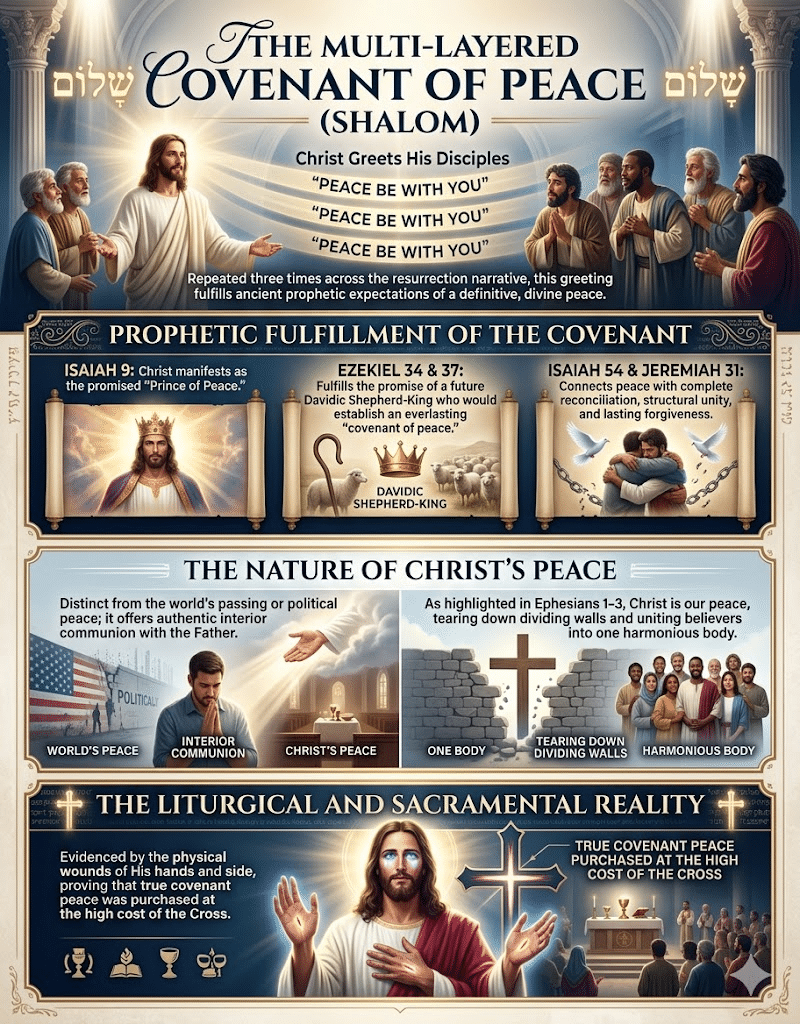
In a culture captivated by tales of “the Force” and the battle between light and dark, it is easy to view spiritual power as an impersonal, dualistic energy. Larry Broding’s commentary on the Gospel of John offers a refreshing and necessary correction for any preacher. By grounding the arrival of the Holy Spirit in the concrete reality of divine forgiveness rather than cinematic myth, Broding provides the theological tools to move a congregation from fear and social isolation to a life of “divine peace.” This commentary is an essential resource for those looking to explain how the breath of Christ creates a community of reconciliation that transcends the “dark sides” of human nature.
Why this commentary matters for your homily:
- Forgiveness as a Third Way: Broding contrasts the impersonal “Force” with the Holy Spirit, emphasizing that love and hope—rooted in forgiveness—have no dark side, providing a beautiful opening for a sermon on the uniqueness of Christian grace.
- Contextualizing Fear: By explaining the historical “excommunication” of John’s community from the synagogues, the commentary helps you preach to those in your pews who feel ostracized or socially persecuted today.
- The Nuance of Divine Peace: Broding illustrates how Jesus’ greeting of “Peace” was not just a pleasantry, but a functional shift from anxiety to “deep spiritual grounding” for a community in crisis.
- The “Pre-Forgiveness” of Christ: The commentary tackles the complex Greek grammar of John 20:23, clarifying that the Church proclaims a forgiveness already achieved on the Cross, steering the congregation away from sin-centeredness and toward mercy-centeredness.
- Spiritualizing the Pilgrimage: Broding offers a fascinating look at how the destruction of Jerusalem in 70 A.D. shifted the “Messianic mission” from a physical journey to an internal conversion—a perfect metaphor for the journey of repentance.
- The Sacrament of Breath: By linking the Greek pneuma to the physical act of breathing in and out, the commentary provides a visceral image of the Sacrament of Reconciliation as a way for the believer to “breathe in” the life-giving power of God.
Read Larry Broding’s full commentary to help your congregation breathe in the restorative power of Christ’s peace and forgiveness.
AI THOUGHT STARTERS
To strengthen key sections of your homily, here are questions you might ask the AI assistant (simply copy and paste a question into chat bot in the lower right corner of the page):
Historical Context and the Gospel of John
- John 20:19 refers to the disciples locking the doors for fear of the Jewish leaders; how does the social persecution and excommunication of John’s original community help explain this atmosphere of apprehension?
- The plural “sabbaths” in John 20:19 refers to the specific time frame of a week; how can I use this detail to emphasize the significance of the “first day” as a new beginning for the Church?
- Generic language refers to the way John uses the term “Jews” to indicate specific leadership groups rather than an entire people; how can I clarify this in my homily to avoid modern misunderstandings of the text?
- The destruction of Jerusalem in 70 A.D. refers to the end of the physical pilgrimage to the Temple; how does this historical event suggest a shift toward “spiritualizing the pilgrimage” within the local church community?
The Holy Spirit and Divine Peace
- John 20:21 refers to Jesus saying “Peace to you” twice; how does this repetition suggest a transition from desperate anxiety to a sense of deep spiritual grounding for the disciples?
- The “impersonal Force” of popular culture suggests a dual nature of light and dark; how does the Holy Spirit’s focus on love and hope prove that God’s power has no “dark side”?
- John 20:22 refers to Jesus breathing on the disciples; how does the connection between pneuma and physical breath suggest that receiving the Spirit is as essential to the soul as oxygen is to the body?
Forgiveness and the Sacramental Life
- The perfect tense of the verb in John 20:23 refers to forgiveness that began in the past and continues into the future; how does this suggest that the Cross is the permanent source of all mercy?
- John 20:23 refers to the power to “hold back” or “send away” sins; how does this commission suggest that the preacher’s role is to be a witness to a reconciliation that Christ has already achieved?
- The Sacrament of Penance refers back to the original context of Baptism in this verse; how can I use this connection to suggest that confession is a “never-ending conversion” and a constant road back to God?