Homilies
Homilies
May 10, 2026
⭐⭐⭐ Glass Ceiling Shattered


The Advocate, Spirit of Truth
6th Sunday of Easter (A)


SDS


CMF







PAPAL HOMILIES



RECOMMENDED
The Augustinian Province of St. Thomas of Villanova maintains a dedicated “Homilies” page with reflections grounded in the Confessions and the Rule of St. Augustine.
✍️ Augustinian Province – Weekly Homilies
📺 Fr. Paul Galetto
📺 Fr. Tom McCarthy
✍️ Fr. Kieran J. O’Mahony
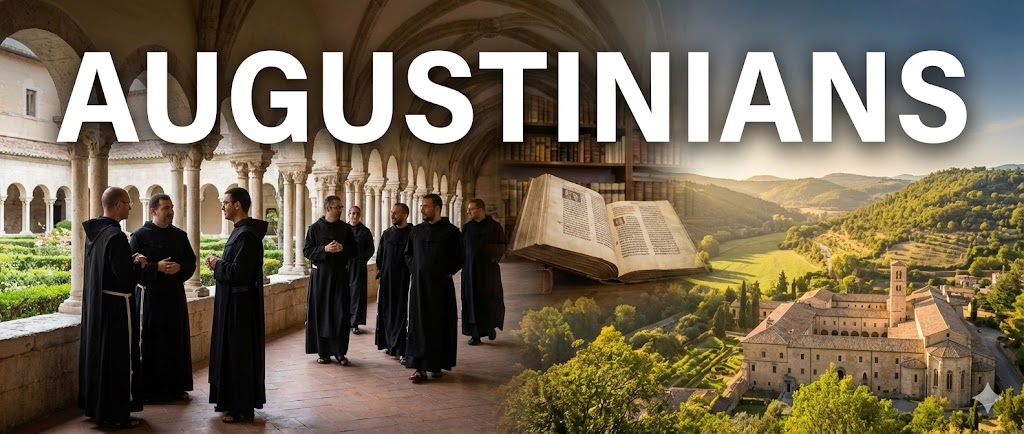
Core Charism: Interiority (searching for God within), community life (“one mind and one heart on the way to God”), and the restless heart that finds repose only in God.
6th Sunday of Easter (A)
Reading: John 14:18 (I will not leave you orphans)
Key Phrase: “Our hearts are restless until they rest in Thee.”
This Sunday’s Hook: The End of Spiritual Loneliness.
The Approach: Focus on the “Orphan” imagery. Application: Recognize that our desire for connection is actually a desire for the Holy Spirit. Find Christ in the “common life” of the parish.
Specific Opening: “St. Augustine wrote extensively about the loneliness of the human soul apart from its Creator. Today, Jesus gives us a radical promise: ‘I will not leave you orphans.’ We are no longer wandering seekers; through the Spirit, we have found a home and a Father.”
RECOMMENDED
Many Benedictine Abbeys publish the Abbot’s homilies online. Quarr Abbey and Saint Meinrad Archabbey are excellent sources for traditional Benedictine “Lectio” style preaching.
✍️ Saint Meinrad Archabbey Reflections
✍️ Monastery of Christ in the Desert
✍️ Mepkin Abbey

Core Charism: Ora et Labora (Prayer and Work), Stability, Hospitality, Lectio Divina, Listening with the “ear of the heart.”
6th Sunday of Easter (A)
Reading: John 14:15–21 (Keeping the Commandments)
Key Phrase: “Listen with the ear of your heart.”
This Sunday’s Hook: Obedience as an Act of Love.
The Approach: Link “If you love me, keep my commandments” to the Benedictine vow of obedience. Application: Create a “Rule of Life” at home that fosters peace and order, making space to hear the Advocate.
Specific Opening: “The first word of St. Benedict’s Rule is ‘Listen.’ Today, Jesus links love directly to listening—specifically, listening to His commands. In the monastery of our daily lives, how do we transform ‘rules’ into a rhythmic response of love for the Father?”
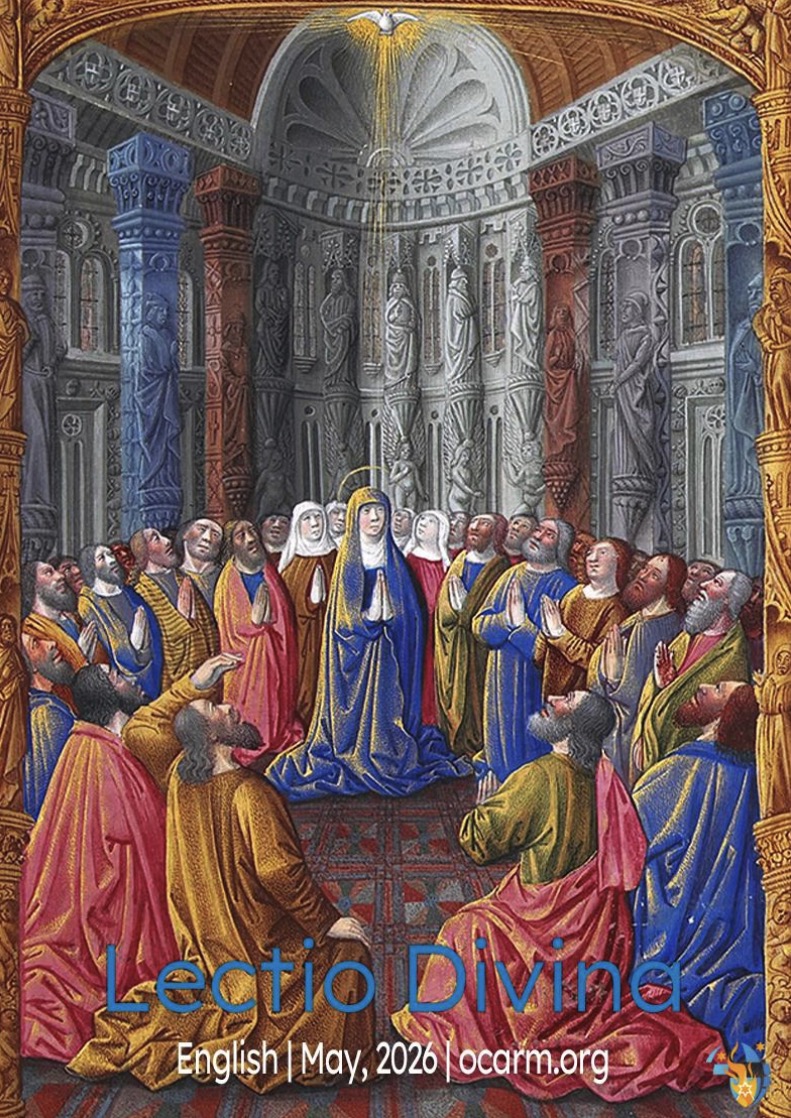
LECTIO DIVINA
MAY 2026 (PDF)
RECOMMENDED
The Carmelites offer a unique “Lectio Divina” style reflection for each Sunday through their international headquarters.
✍️ OCarm.org – Lectio Divina for Sundays
📺 Fr. Greg
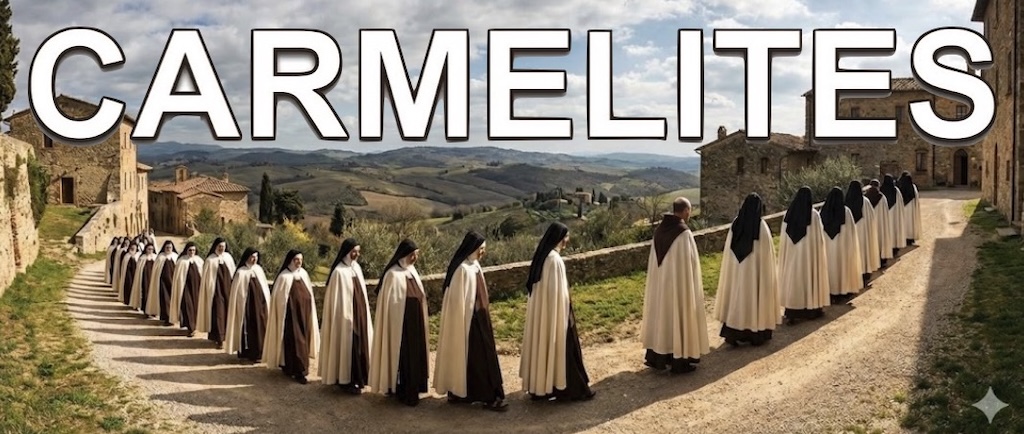
Core Charism: Contemplation, The Desert, Prayer as Friendship, The Dark Night, Elijah, St. Teresa of Avila.
6th Sunday of Easter (A)
Focus Reading: 1 Peter 2:4-9 (A Royal Priesthood in Darkness)
Key Phrase: Called Out of Darkness into Marvelous Light.
This Sunday’s Hook: The transition from the “dark night” of the world to the “marvelous light” of God’s presence is a journey of the soul.
The Approach with Application: Focusing on the contemplative union with God. The “Royal Priesthood” is interpreted as the soul’s ability to offer its own interior life as a sacrifice of praise. The application is the “Interior Castle”—moving from the outer courtyard of distraction to the center where the Cornerstone dwells.
Draft Opening: “St. John of the Cross spoke of the ‘luminous night’ where the soul finds its Beloved. St. Peter echoes this today, reminding us that we have been called out of the shadows of our own egos and into a ‘marvelous light.’ You are a chosen race, not because of your own power, but because of the fire of love God has lit within you.”
RECOMMENDED
The Dominicans have one of the most robust preaching websites called “Torch.” It features a new homily every week from a different friar.
✍️ English Dominican Friars – Torch
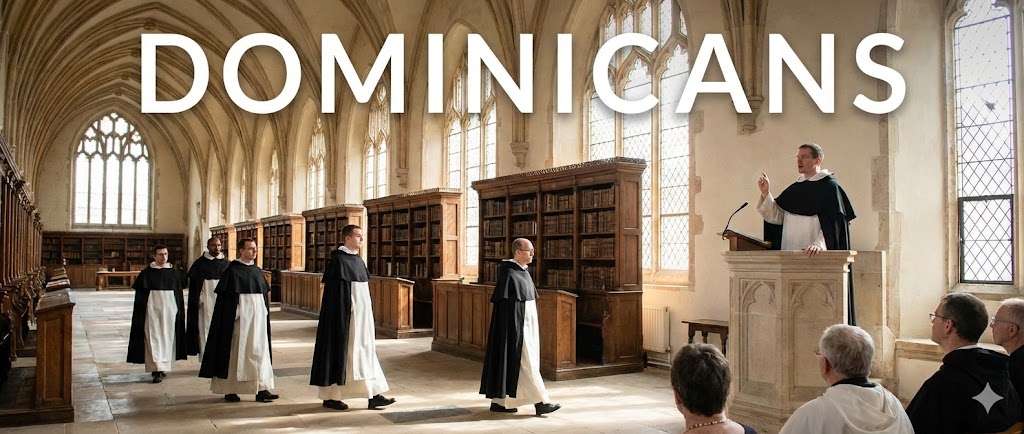
Core Charism: Veritas (Truth), Preaching, Study, Combatting Error with Clarity, Contemplation passed on to others.
6th Sunday of Easter (A)
Reading: 1 Peter 3:15–18 (Giving a reason for hope)
Key Phrase: “Contemplare et contemplata aliis tradere” (To contemplate and share the fruits of contemplation).
This Sunday’s Hook: The Intellectual Defense of Hope.
The Approach: Focus on the command to “be ready to give an explanation.” Application: Study the faith deeply so that your witness is both compassionate and intellectually rigorous.
Specific Opening: “To love God is to desire to know Him. Peter commands us today to ‘always be ready to give an explanation for the reason for your hope.’ Faith is not a blind leap into the dark; it is a step into the light of Truth that demands we use our minds as much as our hearts.”
RECOMMENDED
St. Anthony Messenger and the various provinces often provide “Franciscan Spirit” reflections that focus on the Gospel of the day.
✍️ Franciscan Media – Sunday Homily Helps
📺 Fr. Paul Galetto
📺 Fr. Tom McCarthy
✍️ Fr. Kieran J. O’Mahony

Core Charism: Poverty, Minority (being “lesser”), Fraternity, and finding God in the grit of humanity and creation.
6th Sunday of Easter (A)
Reading: Acts 8:5–8 (Joy in Samaria)
Key Phrase: “God is Joy.”
This Sunday’s Hook: The infectious nature of the Gospel.
The Approach: Focus on Philip entering a “marginal” space (Samaria) and bringing healing. Application: Look for where “great joy” is missing in your neighborhood and bring a simple, humble presence there.
Specific Opening: “Saint Francis often told his brothers to preach the Gospel at all times, and when necessary, use words. In Samaria, Philip didn’t just bring a lecture; he brought a healing presence that made the whole city erupt in joy. Is our faith something that makes people want to dance, or just something we check off a list?”


Core Charism: Ad Maiorem Dei Gloriam (For the Greater Glory of God), Discernment of Spirits, Finding God in All Things, Imaginative Contemplation.
6th Sunday of Easter (A)
Reading: John 14:15–21 (The Spirit of Truth)
Key Phrase: “Finding God in the Interior Movements.”
This Sunday’s Hook: The Advocate as a Discernment Partner.
The Approach: Analyze the “Spirit of Truth” that the world cannot accept. Application: Use the Daily Examen to recognize the “Paraclete” (the one who walks alongside) in the mundane decisions of the work week.
Specific Opening: “Ignatius of Loyola believed that the Holy Spirit works directly with the soul. In today’s Gospel, Jesus promises an ‘Advocate’—not a distant judge, but a companion for our interior journey. How do we distinguish that quiet voice of truth from the loud, competing distractions of our modern world?”
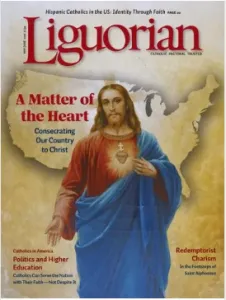
May/June 2026
RECOMMENDED
The Redemptorists of the Baltimore and Denver Provinces often provide weekly reflections, particularly through their “Missionaries of Hope” video series or Lenten booklets.
✍️ The Redemptorists (Baltimore Province) News & Reflections

Core Charism: Preaching “Plentiful Redemption” (Copiosa Redemptio), especially to the abandoned and sinners; Moral Theology (St. Alphonsus Liguori).
6th Sunday of Easter (A)
Reading: Acts 8:14–17 (The laying on of hands)
Key Phrase: “Copiosa Apud Eum Redemptio” (With Him is Plentiful Redemption).
This Sunday’s Hook: The Completeness of God’s Grace.
The Approach: Highlight that the Samaritans had received the Word, but Peter and John came to ensure they received the fullness of the Spirit. Application: Reach out to those who feel “half-saved” or forgotten by the Church.
Specific Opening: “St. Alphonsus Liguori wanted us to know that God’s love is never ‘bare bones’—it is overflowing. In Samaria, the Apostles made sure the people didn’t just hear about God, but were immersed in His Spirit. God doesn’t want to give you a fraction of His heart; He wants to give you the whole thing.”
Bishop Robert Barron

6th Sunday of Easter (A)
What are the Signs of the Holy Spirit?

As we approach Pentecost, Bishop Barron identifies the Holy Spirit as the animating “soul” of the Church, highlighting five distinct signs of His presence. First, the Spirit empowers bold speech, compelling believers to proclaim Christ publicly. Second, He acts with expulsive power, driving out darkness and occasionally manifesting through miraculous signs. Third, joy serves as the Spirit’s primary “flag,” marking a radiant, contagious life. Fourth, the Spirit sparks intellectual curiosity, prompting believers to study and defend their hope. Finally, and most importantly, the Spirit is the spirit of love, defined as willing the good of the other.
Fr. Michael Chua
2026 | 2023 | 2020 | 2017 | 2014 | 2011
6th Sunday of Easter (A)
Glass Ceiling Shattered

Father Michael Chua’s homily frames the Ascension and Pentecost as the divine force that shatters “glass ceilings”—the invisible cultural and religious barriers that restrict the Gospel. Drawing a parallel between modern social metaphors and the early Church, the text explores how the Holy Spirit empowered the deacon Philip to bridge the ancient Jewish-Samaritan divide. It highlights St. Peter’s call for a non-violent, reasoned defense of hope amidst persecution. Ultimately, the homily identifies the Holy Spirit as the “Spirit of Truth,” urging the Church to stand firm against contemporary moral confusion by upholding immutable, objective truth.

HOMILY HELPER
Dominican Blackfriars
2026 | 2023 | 2020 | 2017 | 2014 | 2011
6th Sunday of Easter (A)
Things Invisible
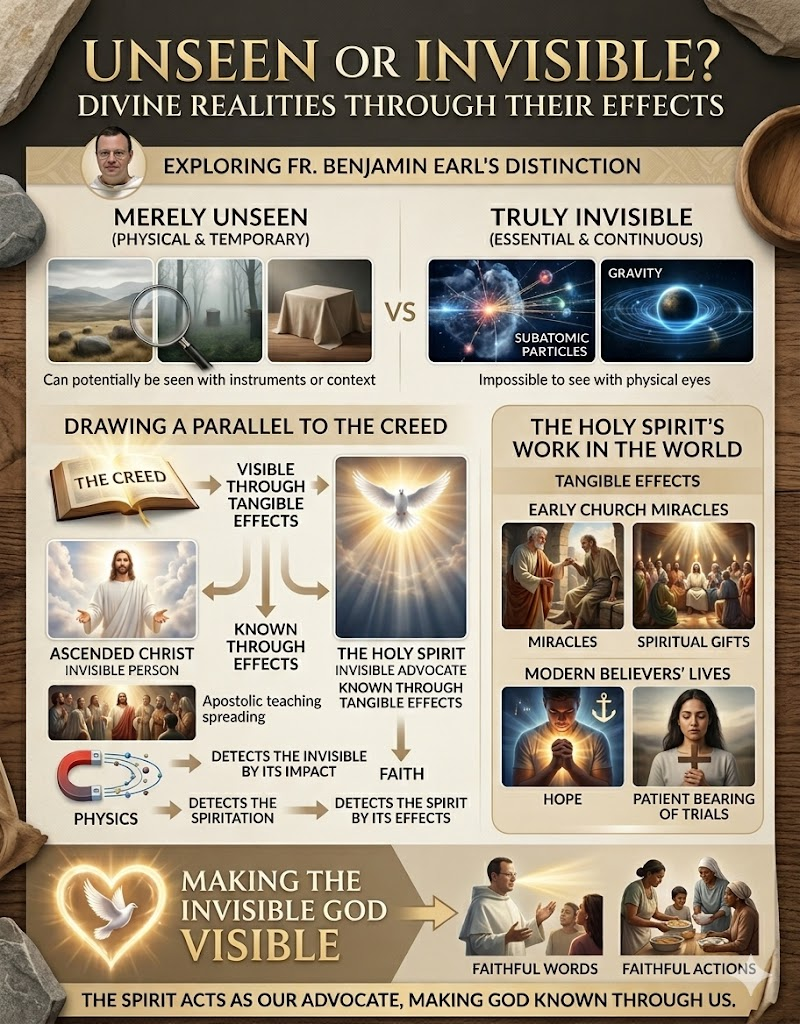
Fr. Benjamin Earl explores the distinction between things merely “unseen” and those truly “invisible” by nature, such as gravity or subatomic particles. Drawing a parallel to the Creed, he notes that while the ascended Christ and the Holy Spirit are invisible, they are known through their tangible effects. Just as physics detects particles by their impact, the world “sees” the Spirit through the miracles of the early Church and the “hope” and “patient bearing of trials” in modern believers. Ultimately, the Spirit acts as an advocate, making the invisible God visible through our faithful words and actions.
HOMILY HELPER
Fr. Austin Fleming
2026 | 2023 | 2020 | 2017 | 2014
6th Sunday of Easter (A)
Got Hope?
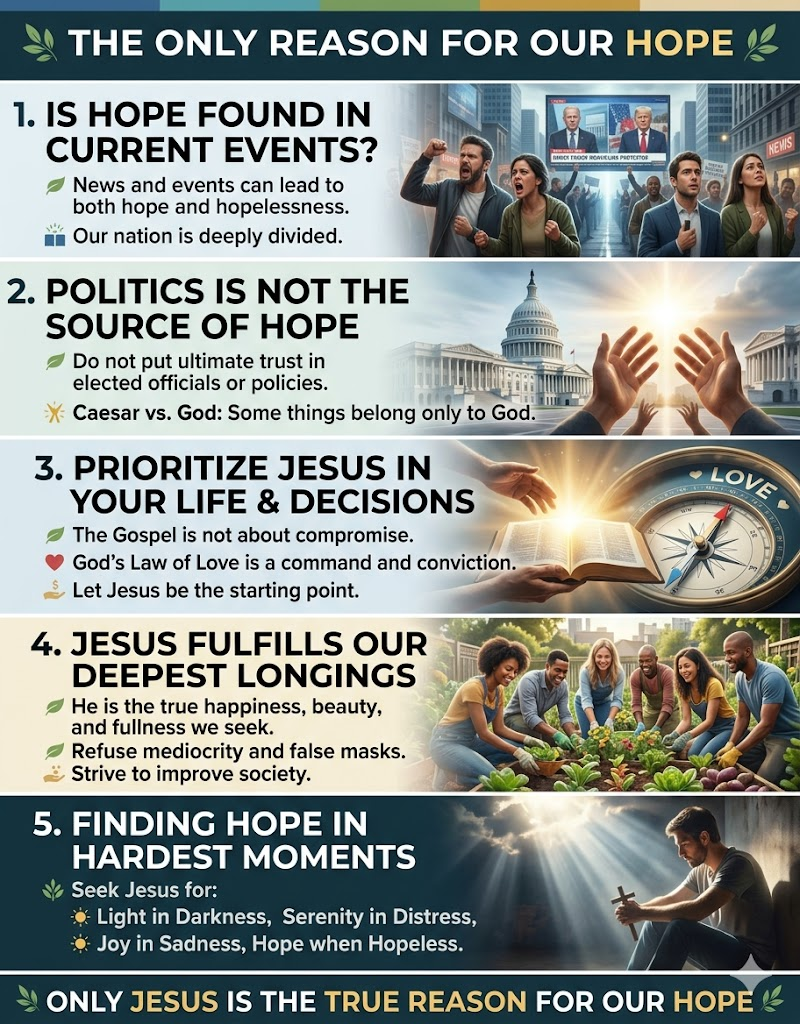
Fr. Austin Fleming addresses the “great divide” in contemporary society, noting how political allegiance often fragments our sense of hope. He challenges the tendency to “baptize” personal biases with scripture, asserting that for Christians, Jesus—not any elected official or legislative agenda—is the only valid starting point for deliberation. While acknowledging the necessity of navigating a complex world, Fleming argues that the law of love admits no compromise. Ultimately, he presents Jesus as the fulfillment of every human longing and the only sufficient explanation for the hope that sustains us through darkness, confusion, and distress.
HOMILY HELPER
Monsignor Peter Hahn

6th Sunday of Easter (A)
The Joy of Love
Msgr. Peter Hahn emphasizes that the joy and peace of the Easter season are found only in a “lived communion” with Christ, sustained by daily prayer and reflection. Drawing from the Last Supper discourse, he presents the Holy Spirit as the Advocate who seals our relationship with God. Msgr. Hahn identifies the Sacrament of Confirmation as the moment this power was definitively given to us, providing the seven gifts necessary to overcome universal temptations like anger and anxiety. Ultimately, he argues that we cannot live the faith through sheer willpower; rather, we must allow God to act through us.
HOMILY HELPER
Fr. Charles E. Irvin
6th Sunday of Easter (A)
Love and the Holy Spirit

Fr. Charles Irvin explores the mystery of love and the Holy Spirit, noting that both remain hidden until they are manifested through action. Challenging “dreamy” Hollywood depictions, he defines love as a concrete, self-sacrificial decision realized in deeds. Similarly, the Holy Spirit—the “Paraclete” who stands beside us—is known through His interior effects, specifically as an Advocate against the “sacraments of the devil” such as doubt and despair. Ultimately, Irvin posits that the Spirit empowers us to become advocates for others, making God’s invisible presence tangible through redemptive acts of service and consolation.
HOMILY HELPER
Fr. Joe Jagodensky, SDS
6th Sunday of Easter (A)
Mother’s Day Blessing

Fr. Joe Jagodensky offers a poetic and humorous reflection on the unique bond of motherhood, framing it as a relationship that mirrors God’s creative love. He traces the mother’s journey from the shared physical space of the womb to the “public showings” of refrigerator art and the tireless chauffeuring of childhood. Jagodensky argues that a mother’s influence—her mantras, choices, and guidance—becomes an indelible part of a child’s soul, lasting long after her death. Ultimately, he presents motherhood as a divine necessity, asking God to bless and strengthen all women who provide a mother’s touch in its various, often difficult, forms.

HOMILY HELPER
Fr. Langeh, CMF

6th Sunday of Easter (A)
Another Helper
Fr. Jude Langeh presents the Holy Spirit as the essential “Helper” who enlivens, unifies, and moves the Church, acting as its very heartbeat. This “Another Helper”—also identified as Advocate, Counselor, and Comforter—is the interior force that moulds believers into the image of Jesus, ensuring they are never left as orphans. Drawing from the Acts of the Apostles, Langeh emphasizes that ministry and Christian living are impossible without the Spirit’s liberating power. Ultimately, the Spirit is the defender who inspires our speech in adversity and continually renews the face of the earth.
HOMILY HELPER
Deacon Peter McCulloch
6th Sunday of Easter (A)
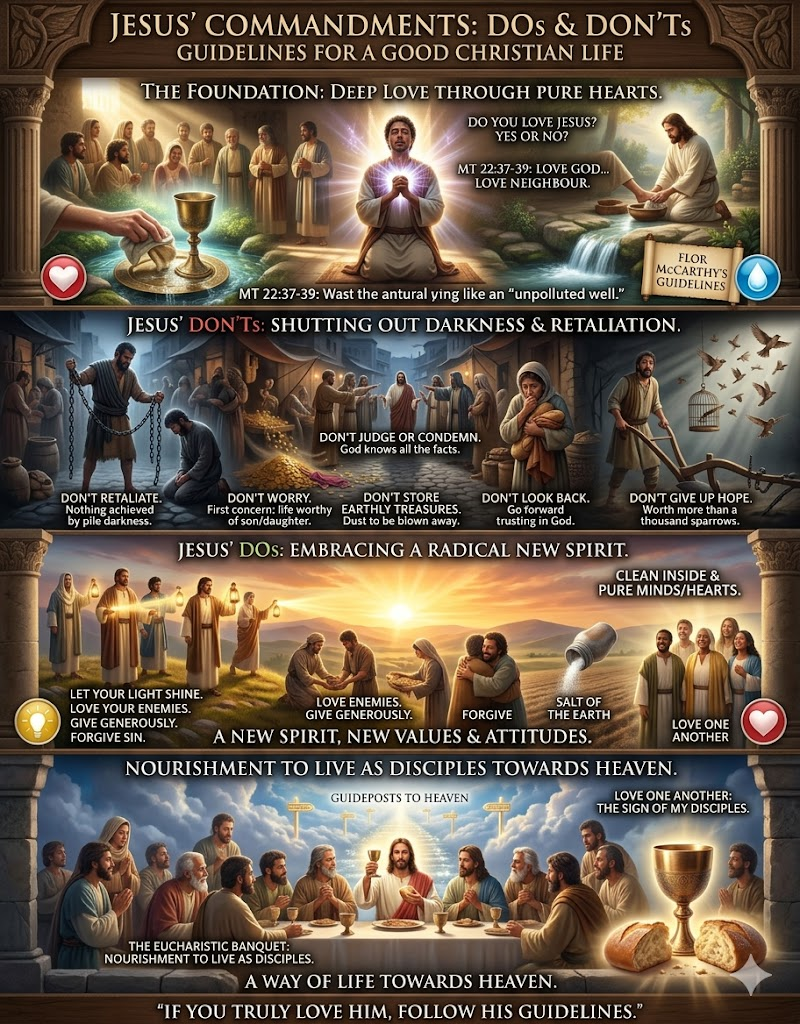
The DOs and DON’Ts of Jesus
Deacon Peter McCulloch challenges the notion of love as a mere “warm feeling,” defining it instead through the lens of Jesus’ specific mandates. Distinguishing the “commandments of Christ” from the Mosaic Law, McCulloch utilizes Flor McCarthy’s “Dos and Don’ts” to provide a practical framework for discipleship. These guidelines—ranging from the prohibition of judgment and worry to the active practice of forgiveness and Eucharistic participation—represent a “new spirit” of values. Ultimately, the homily asserts that true love for Jesus is verified by adopting these attitudes, which serve as essential markers on the path toward heaven.
HOMILY HELPER
Msgr. Charles Pope
6th Sunday of Easter (A)
Lessons of Love
Msgr. Pope reframes the Christian life not as a legalistic burden, but as a revolutionary transformation driven by the Holy Spirit. He identifies three stages of this journey: the power of love, the person of love, and the proof of love. He argues that keeping the commandments is the fruit of love, not its cause. When fueled by grace, love becomes extravagant, expanding our horizons to value what God values and exciting our desires to please Him. Ultimately, this is not a human achievement but the work of a Person—the Holy Spirit—whose presence is realized through a tangibly changed life.
HOMILY HELPER
Father Kevin Rettig

2026 HOMILIES | ARCHIVE: 2023 | 2020
6th Sunday of Easter (A)
Nothing Gold Can Stay

Fr. Kevin Rettig contrasts the “complicated doctrines” sought by religious legalists with the radical simplicity of Christ’s single command: “Love one another.” Using a humorous list of “lessons learned from my mother” and Robert Frost’s poetry, Rettig argues that while power, wealth, and rigid rules eventually fade, love is the only reality that stays. He candidly addresses historical failures of Christendom—Crusades, Inquisitions, and opulence—conceding that these “gold” pursuits are not the Church. Instead, the true Church is found in those who, like St. Francis, choose the “difficult and profound” path of selfless love.
HOMILY HELPER
Fr. George Smiga
6th Sunday of Easter (A)
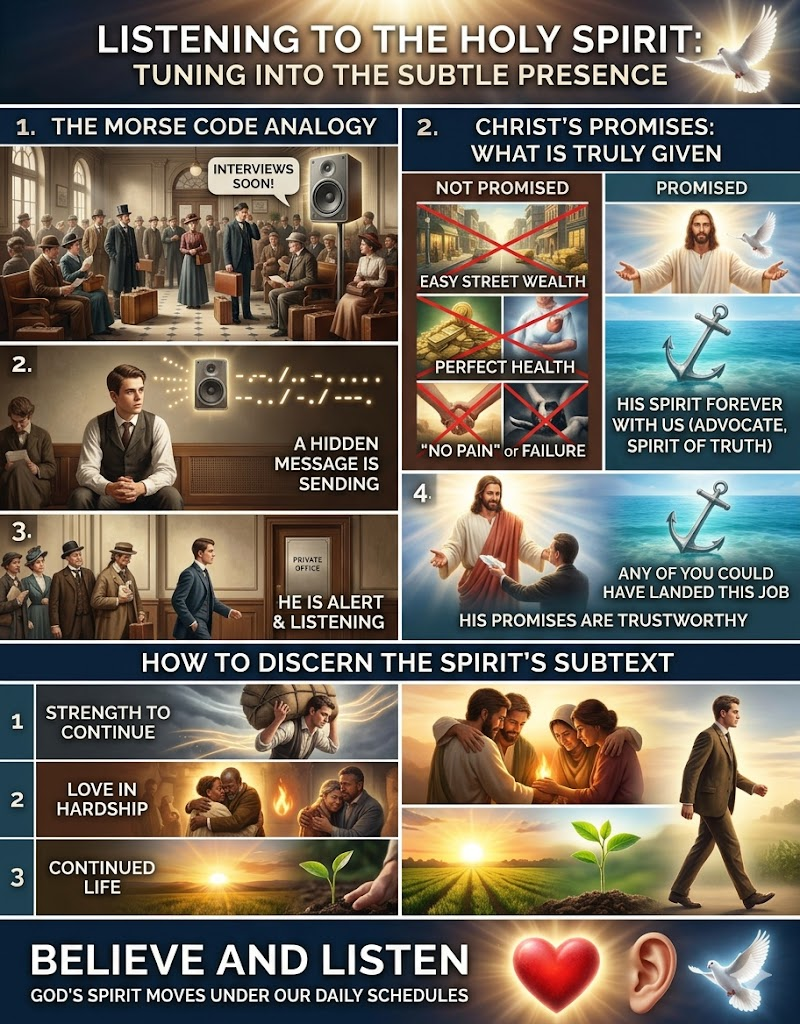
Listening to the Holy Spirit

Fr. George Smiga uses the analogy of a Morse code message hidden beneath loud public announcements to describe our relationship with the Holy Spirit. While Jesus promises the Spirit of Truth as a constant Advocate, Smiga notes that Christ never promised an easy life free from pain, divorce, or failure. Instead, the Spirit often speaks in the “subtext” of our lives—discernible not as the loudest sound, but as the quiet strength that allows us to move forward through hardship. To benefit from this gift, believers must remain alert and listen for the persistent message of God’s love sounding beneath the noise of daily preoccupations.
HOMILY HELPER
Additional Homilies
6th Sunday of Easter (A)