Catholic Digest, Homily Themes
Catholic Digest, Homily Themes
May 3, 2026









Theology, Apologetics & Evangelization
These channels focus on explaining and defending the Catholic faith, often engaging with modern culture and other viewpoints.
- Bishop Robert Barron (Word on Fire): One of the most influential voices in the Church, offering cultural commentary, movie reviews, and deep theological deep-dives.
- Ascension Presents: A powerhouse channel featuring popular figures like Fr. Mike Schmitz (known for the “Bible in a Year” and “Catechism in a Year” podcasts) and Fr. Josh Johnson, offering accessible videos on faith and life.
- Catholic Answers: The premier channel for Catholic apologetics, featuring live Q&A shows where apologists answer tough questions from callers.
- Pints with Aquinas (Matt Fradd): Long-form interviews and discussions on theology, philosophy, and culture, often over a drink.
- The Counsel of Trent (Trent Horn): Trent Horn, a Catholic Answers apologist, provides rebuttals to atheist and Protestant arguments, as well as commentary on current events.
- Jimmy Akin: A senior apologist at Catholic Answers known for his fairness and deep knowledge, covering everything from bizarre questions to deep theology.
- Breaking In The Habit (Fr. Casey Cole, OFM): A young Franciscan friar who offers fresh, accessible reflections on faith, vocations, and everyday life.
- Thomistic Institute: Excellent, high-quality animated videos and lectures explaining the philosophy and theology of St. Thomas Aquinas.
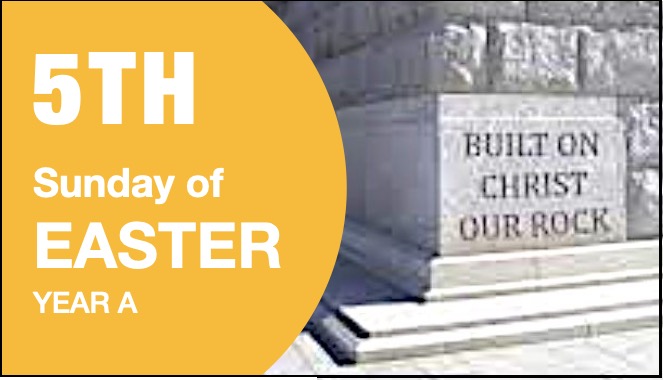
5th Sunday of Easter (A)
PRACTICAL
ACTIONS
Acts 6:1-7 | The Ministry of Service
- Audit Your “Complaints”: Identify one area in your workplace, parish, or family where you have been “murmuring” (complaining). Instead of venting, propose a solution or volunteer one hour of your time to address the root of the problem.
- Identify a “Widow”: In the biblical sense, this is anyone neglected by the system. Reach out to one person this week who lives alone or is often overlooked—a phone call, a hand-written note, or a meal can be your “deacon-like” service.
- Delegate for Prayer: If you are overwhelmed by chores or work to the point that you have no time for Scripture, delegate one task to someone else or say “no” to a non-essential commitment to reclaim 15 minutes for daily prayer.
1 Peter 2:4-9 | The Living Stone
- Consecrate Your Work: Since you are part of a “royal priesthood,” treat your workspace or home as an altar. Before starting a difficult task, say: “Lord, I offer this work to You as a spiritual sacrifice for the conversion of [Name] or [Intention].”
- The Cornerstone Check: When making a big decision this week, ask yourself: “Am I doing this because it aligns with Christ (the Cornerstone), or because I’m afraid of being ‘rejected by human beings’?” Choose the path that aligns with the Gospel.
- Proclaim Excellence: The text says we are called to “proclaim the praises” of God. Share one specific way God has brought you “out of darkness into his marvelous light” with a friend or family member who is currently struggling.
John 14:1-12 | The Way, Truth, and Life
- Combat “Troubled Hearts”: Whenever you feel a spike of anxiety today, immediately pray the Jesus Prayer: “Lord Jesus Christ, Son of God, have mercy on me, a sinner.” Repeat it until your heart settles on His promise of a “dwelling place.”
- Study the “Way”: If Jesus is the Truth, we must know it. Commit to reading the Catechism or a solid theological book for 10 minutes a day to better understand the “Way” you are following.
- Perform a “Greater Work”: Jesus promises we will do “greater works.” This often refers to the work of mercy. Perform one act of “impossible” forgiveness this week—forgive someone who hasn’t asked for it, or pray for someone who has treated you poorly.
5th Sunday of Easter (A)
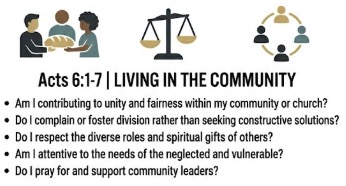
I. Living in Community
In this passage, the Apostles appoint deacons to ensure the neglected are cared for, balancing the ministry of the Word with practical charity.
- Neglect of the Vulnerable: In my daily life, do I overlook those who are “widows” or marginalized—the lonely, the elderly, or those who lack a voice?
- Murmuring and Discord: The deacons were appointed because of “complaining.” Do I contribute to gossip or divisiveness within my parish or community instead of seeking constructive solutions?
- Prioritization: Do I balance my life appropriately between prayer and action? If I am busy with “serving tables” (work/chores), do I neglect the Word? If I claim to be spiritual, do I neglect the practical needs of my neighbor?
- Integrity in Responsibility: When I am given a task, am I “reputable, filled with the Spirit and wisdom,” or do I perform my duties with a spirit of resentment or laziness?

II. Embracing Our Identity
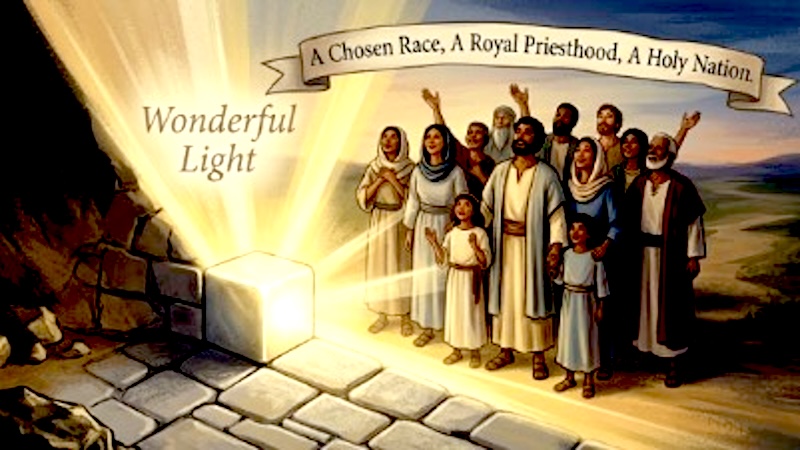
Peter describes believers as “living stones” built into a spiritual house, chosen by God to be a holy priesthood.
- Spiritual Foundation: Am I building my life on Christ, the “chosen and precious” cornerstone, or am I building on the shifting sands of secular approval and personal ego?
- Holy Priesthood: Do I exercise my “royal priesthood” by offering up my daily sacrifices, sufferings, and joys to God, or do I live a purely secular life with no reference to the divine?
- Stumbling Blocks: Do I, through my actions or lack of charity, become a “stone that causes people to stumble” and fall away from the faith?
- Identity in Christ: Do I truly believe I am part of a “chosen race” and “God’s own people,” or do I suffer from a spiritual amnesia that leads me to act like the rest of the world?
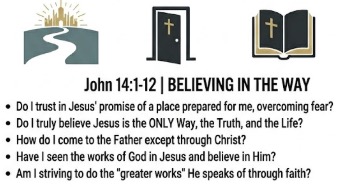
III. Believing in the Way
Jesus comforts his disciples, telling them not to let their hearts be troubled, and reveals His oneness with the Father.
- Anxiety vs. Trust: Do I “let my heart be troubled” by the world’s chaos, or do I truly trust in the “dwelling places” Christ has prepared for me?
- The Exclusive Claim: Do I live as if Jesus is truly the Way, the Truth, and the Life, or do I treat Him as just one of many options, compromising the Truth when it becomes inconvenient?
- Seeing the Father: Do I seek to see God’s hand in my life, or am I like Philip, constantly asking for “more proof” despite the many blessings I have already received?
- Greater Works: Jesus says those who believe will do “greater works than these.” Do I live with the expectation that God wants to work through me, or have I become spiritually stagnant and small-minded?
Non-profits have permission to copy and paste infographics into their publications.
5th Sunday of Easter (A)
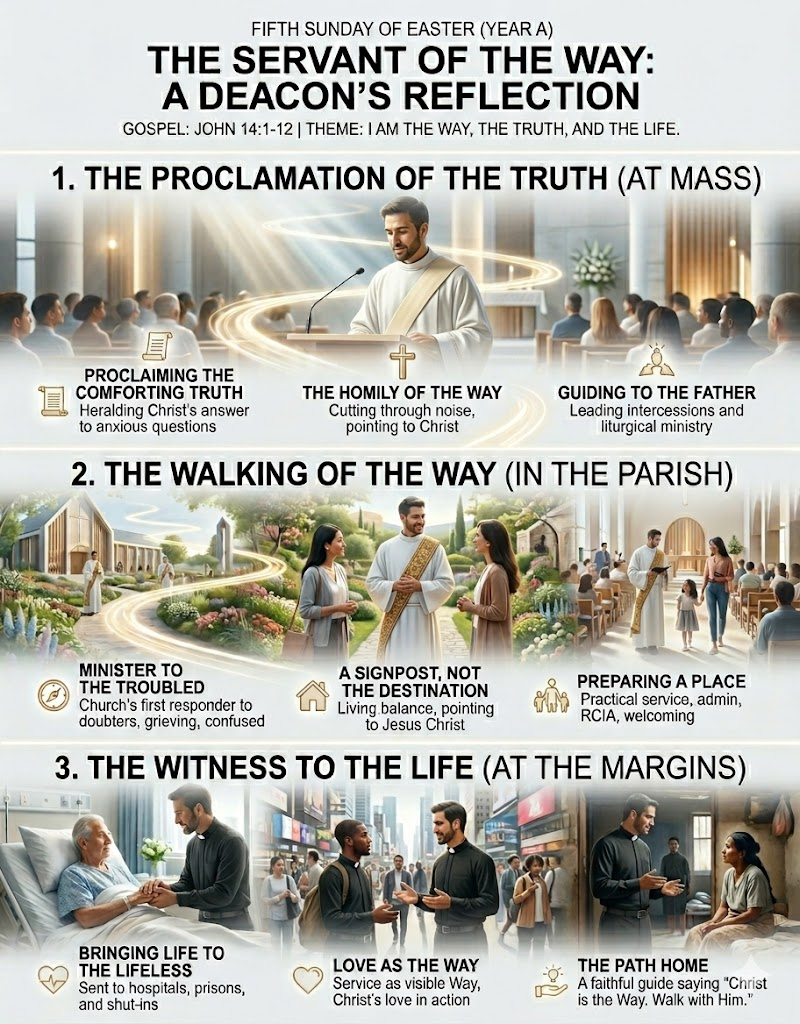
The Servant of the Way
Gospel: John 14:1–12
Theme: I am the Way, the Truth, and the Life.
McCulloch
(Diocese of Broken Bay)
In the intimate setting of the Last Supper, Jesus looks at his disciples, who are confused, anxious, and troubled by his talk of departure. In this moment of fear, he offers them a profound word
of comfort, not a set of directions, but a person: ‘Do not let your hearts be troubled… I am the Way, the Truth, and the Life. No one comes to the Father except through me.’
The disciples are lost. Thomas says, ‘Master, we do not know where you are going; how can we know the way?’ Philip says, ‘Master, show us the Father.’ They are asking for a roadmap and a destination. Jesus reveals that He is both.
The deacon, as a servant of the Word and a guide for the community, is ordained to be a living signpost to this Way. As St. Thomas Aquinas said, ‘To follow Christ is to walk in truth and love.’ The deacon’s entire ministry is to walk this path faithfully and to help others, especially thetroubled and the lost, to find their way home to the Father.
AT MASS
The Proclamation of the Truth
Jesus is the Truth, and the deacon’s first duty is to the proclamation of this Truth.
• Proclaiming the Comforting Truth: When the deacon proclaims this Gospel, he gives voice to the disciples’ anxious questions and to Christ’s definitive, comforting answer. He is the herald who, in the midst of the assembly’s troubled hearts, announces that we are not lost, for the Way has been given to us.
• The Homily of the Way: The deacon’s preaching must be a clear signpost. In a world full of confusing ways and distorted truths, his homily cuts through the noise. It points, not to his own wisdom, but to the singular, saving Truth of Christ.
• Guiding to the Father: ‘No one comes to the Father except through me,’ Jesus says. The deacon’s liturgical ministry, including leading the faithful in their intercessions and ministering the Cup of ‘Life,’ is a constant act of guiding the assembly along the way (Christ) to the destination(the Father).
IN THE PARISH
Jesus is the Way, the path itself
The deacon is a man who must walk this path in the midst of the parish.
• The Minister to the Troubled: The deacon’s pastoral ministry is a direct response to Christ’s command, ‘Do not let your hearts be troubled.’ He is the one who sits with the Thomases and Philips of the parish – the doubters, the grieving, the confused, the lost. He is the Church’s first responder to the troubled heart.
• A Signpost, Not the Destination: The deacon’s life is the signpost. By balancing his family, his secular work, and his ordained ministry, he shows the parish how ‘the Way’ is walked in the midst of the world. He points, not to himself, but to Jesus Christ.
• Preparing a Place: Jesus promises to prepare a place. The deacon’s practical and often unseen service in parish administration, in the RCIA, in baptismal prep is the humble work of ‘preparing a place’ in the Father’s ‘dwelling’ of the parish, ensuring all are welcomed.
AT THE MARGINS
The Witness to the Life
Jesus is the Life. The deacon’s ministry of diakonia is a profound witness to this Life, especially in places where life is diminished or threatened.
• Bringing Life to the Lifeless: The deacon is sent to the margins, to the places of spiritual and physical death: the hospital, the prison, the home of the shut-in. His presence is the proclamation of Life.
• Love as the Way: (Referring to St. Thomas: ‘walk in truth and love.’) For the person on the margins, the deacon’s act of service – the food he brings, the time he spends listening, and the hand he holds – is the Way made visible. It is the love of Christ in action, the most credible signpost.
• The Path Home: The deacon walks the path between the altar and the street, between the proclamation of the Truth and the service of Life. In doing so, his entire vocation becomes a faithful, patient, and loving guide, a living signpost that quietly says to all the troubled hearts of the world: ‘Christ is the Way. Walk with Him.’
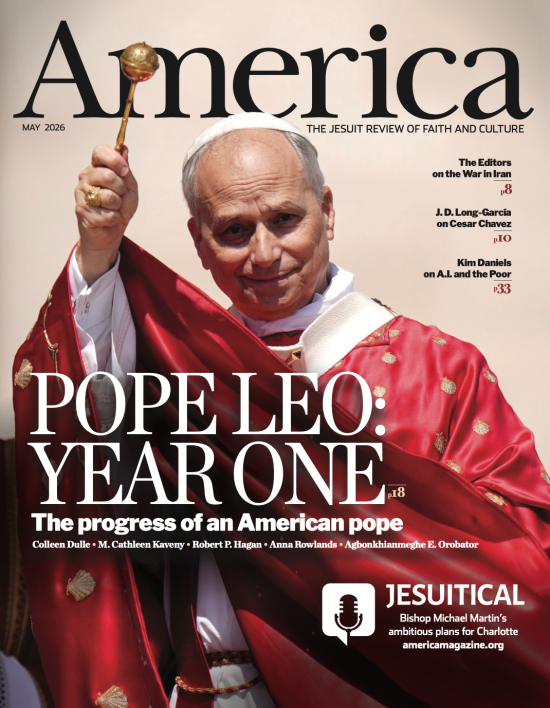
MAY 2026
PDF (68 pages)
America Magazine: Published by the Jesuits, this leading national review is highly regarded for its thoughtful, nuanced commentary on religion, politics, and contemporary culture.

APRIL 2026
Commonweal: An independent, lay-edited journal of opinion that provides rigorous intellectual perspectives on faith, society, the arts, and public policy.
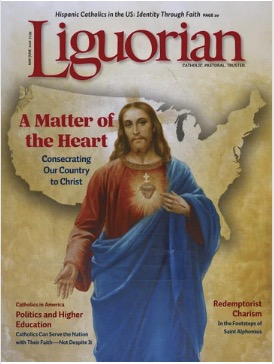
MAY-JUNE 2026
PDF (48 pages)
Liguorian is an award-winning Catholic magazine published since 1913 by the Redemptorists to provide spiritual guidance, pastoral messages, and inspiring stories, helping readers navigate modern life through faith. It acts as a trusted resource for Catholic spirituality, offering insights on faith, social justice, and daily Christian living.
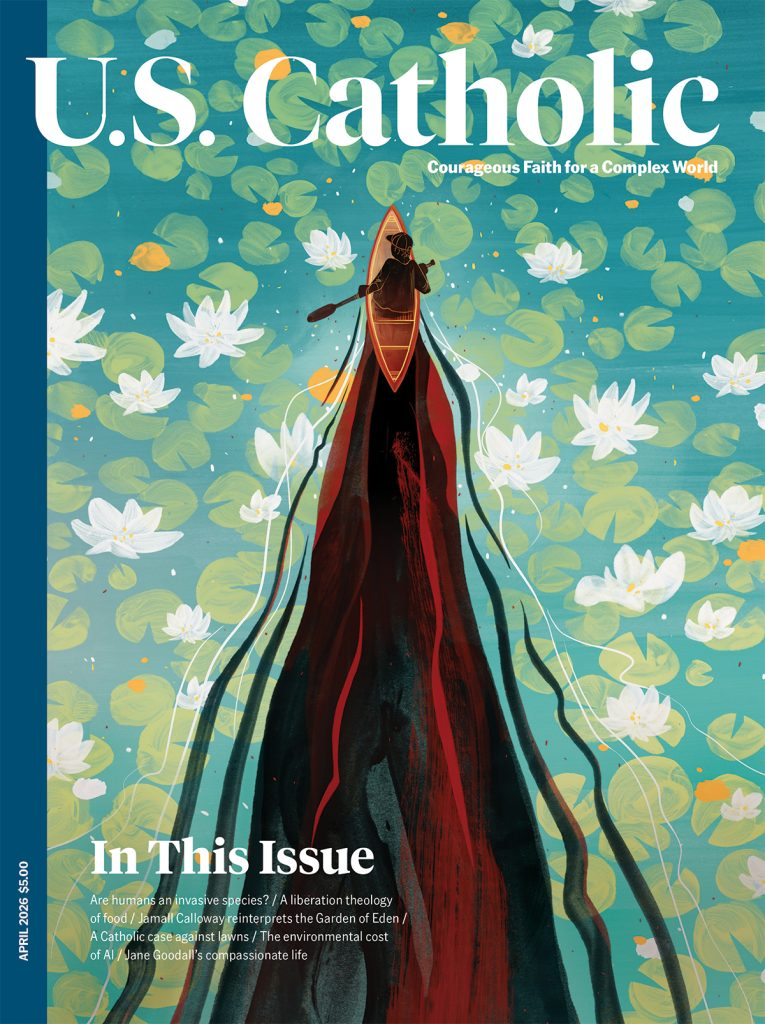
APRIL 2026
U.S. Catholic: This publication focuses on everyday faith, social justice, and practical insights for living out Catholic teachings in modern, daily life.

APRIL 2026
Magnificat: A beautifully designed monthly publication intended for daily use. It includes the texts of the daily Mass, morning and evening prayers, and spiritual reflections. Exploring its Spanish edition, Magnificat en Español, can also be an excellent way to weave language practice into a daily spiritual routine.
Catholic.com
5th Sunday of Easter (A)
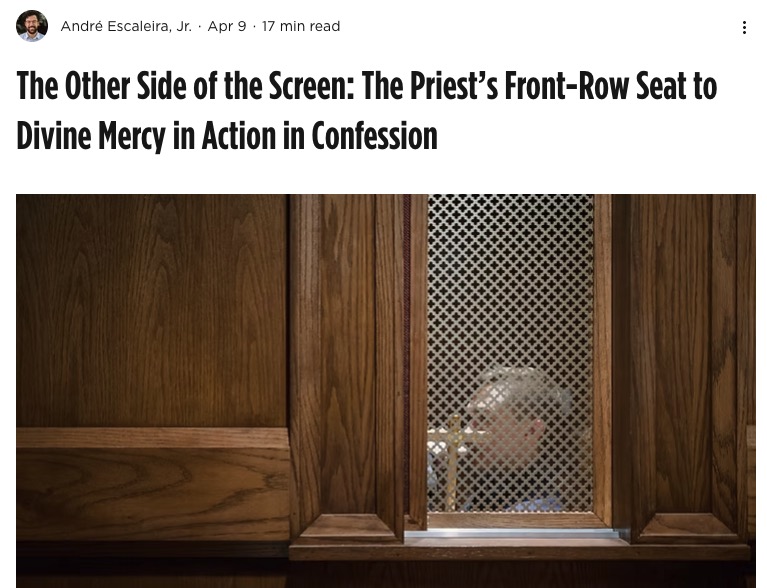
You find your way into a Catholic church, and it’s quiet. Really quiet. The lights are low, except for a small red dot of light shining above a side door. Over time, people go in and out. Maybe you do, too. Either way, it’s hard to miss, between the light and the line.
Many of us might be familiar with what happens in that closet-sized space — the confessional — as sinner after sinner comes before the Divine Mercy of Jesus, bursting forth from his Sacred Heart, which burns for merciful love of them, and asks God’s forgiveness for their faults through the priest on the other side of the screen.

Scroll to view all 50 states
Alabama
- One Voice (Diocese of Birmingham)
- The Catholic Week (Archdiocese of Mobile)
Alaska
- The North Star Catholic (Archdiocese of Anchorage-Juneau)
- The Alaskan Shepherd (Diocese of Fairbanks)
- Missionary Disciples (Diocese of Fairbanks)
Arizona
- Voice of the Southwest (Diocese of Gallup)
- The Catholic Sun (Diocese of Phoenix)
- New Outlook (Diocese of Tucson)
Arkansas
- Arkansas Catholic (Diocese of Little Rock)
California
- Angelus Magazine | DIGITAL (Archdiocese of Los Angeles)
- The Catholic Voice | DIGITAL (Diocese of Oakland)
- The Catholic Herald | DIGITAL (Diocese of Sacramento)
- Orange County Catholic (Diocese of Orange)
- Catholic Herald (Diocese of Sacramento)
- Inland Catholic Byte (Diocese of San Bernardino)
- The Southern Cross | DIGITAL (Diocese of San Diego)
- Catholic San Francisco (Archdiocese of San Francisco)
- San Francisco Católico (Archdiocese of San Francisco)
- The Valley Catholic | DIGITAL (Diocese of San Jose)
Colorado
- The Colorado Catholic Herald (Diocese of Colorado Springs)
- Denver Catholic (Archdiocese of Denver)
Connecticut
- Fairfield County Catholic (Diocese of Bridgeport)
- The Catholic Transcript | DIGITAL (Archdiocese of Hartford)
- Four County Catholic | DIGITAL (Diocese of Norwich)
Delaware
- The Dialog (Diocese of Wilmington)
Florida
- Florida Catholic | E-EDITIONS (Archdiocese of Miami; Dioceses of Orlando, Palm Beach, Pensacola–Tallahassee, St. Augustine, Saint Petersburg, Venice)
Georgia
- The Georgia Bulletin (Archdiocese of Atlanta)
- Southern Cross (Diocese of Savannah)
Hawaii
- Hawaii Catholic Herald (Diocese of Honolulu)
Idaho
- Idaho Catholic Register (Diocese of Boise)
Illinois
- The Messenger (Diocese of Belleville)
- Chicago Catholic (Archdiocese of Chicago)
- Catolico (Archdiocese of Chicago)
- Christ is Our Hope (Diocese of Joliet)
- The Catholic Post (Diocese of Peoria)
- The Observer (Diocese of Rockford)
- Catholic Times (Diocese of Springfield)
Indiana
- The Message (Diocese of Evansville)
- Today’s Catholic News (Diocese of Fort Wayne–South Bend)
- Northwest Indiana Catholic (Diocese of Gary)
- The Criterion (Archdiocese of Indianapolis)
- The Catholic Moment | DIGITAL (Diocese of Lafayette)
Iowa
- The Catholic Messenger (Diocese of Davenport)
- The Catholic Mirror | DIGITAL (Diocese of Des Moines)
- The Witness (Archdiocese of Dubuque)
- The Lumen (Diocese of Sioux City)
Kansas
- Southwest Kansas Register (Diocese of Dodge City)
- The Leaven (Archdiocese of Kansas City)
- The Register | DIGITAL (Diocese of Salina)
- Catholic Advance (Diocese of Wichita)
- Avance Católico (Diocese of Wichita)
Kentucky
- Messenger (Diocese of Covington)
- Cross Roads | DIGITAL (Diocese of Lexington)
- The Record | DIGITAL (Archdiocese of Louisville)
- Western Kentucky Catholic (Diocese of Owensboro)
Louisiana
- Church Today (Diocese of Alexandria)
- The Catholic Commentator (Diocese of Baton Rouge)
- Bayou Catholic (Diocese of Houma–Thibodaux)
- Clarion Herald (Archdiocese of New Orleans)
- The Catholic Connection | DIGITAL (Diocese of Shreveport)
Maryland / Washington, DC
- The Catholic Review (Archdiocese of Baltimore)
- Catholic Standard (Archdiocese of Washington)
- El Pregonero (Archdiocese of Washington)
Massachusetts
- The Pilot (Archdiocese of Boston)
- The Anchor (Diocese of Fall River)
- SOPHIA | DIGITAL (Diocese of Springfield)
- The Catholic Free Press | DIGITAL (Diocese of Worcester)
Michigan
- Detroit Catholic (Archdiocese of Detroit)
- FAITH along Michigan’s 45th Parallel | DIGITAL (Diocese of Gaylord)
- Faith Grand Rapids (Diocese of Grand Rapids)
- The Good News (Diocese of Kalamazoo)
- FAITH (Diocese of Lansing)
- The U.P. Catholic (Diocese of Marquette)
- Great Lakes Bay | DIGITAL (Diocese of Saginaw)
Minnesota
- Our Northland Diocese (Diocese of Crookston)
- The Northern Cross (Diocese of Duluth)
- The Prairie Catholic (Diocese of New Ulm)
- Central Minnesota Catholic | DIGITAL (Diocese of Saint Cloud)
- The Catholic Spirit (Archdiocese of Saint Paul and Minneapolis)
- The Courier | DIGITAL (Diocese of Winona-Rochester)
Mississippi
- Gulf Pine Catholic | DIGITAL (Diocese of Biloxi)
- Mississippi Catholic | DIGITAL (Diocese of Jackson)
Missouri
- Catholic Missourian | DIGITAL (Diocese of Jefferson City)
- The Catholic Key | DIGITAL (Diocese of Kansas City–Saint Joseph)
- The Mirror (Diocese of Springfield–Cape Girardeau)
- St. Louis Review (Archdiocese of St. Louis)
- Catholic St. Louis | DIGITAL (Archdiocese of St. Louis)
Montana
- The Harvest (Diocese of Great Falls–Billings)
Nebraska
- West Nebraska Catholic | DIGITAL (Diocese of Grand Island)
- Southern Nebraska Register (Diocese of Lincoln)
- The Catholic Voice (Archdiocese of Omaha)
Nevada
- Desert Clarion (Diocese of Las Vegas)
- High Desert Catholic | DIGITAL (Diocese of Reno)
New Hampshire
New Jersey
- Catholic Star Herald (Diocese of Camden)
- The Catholic Spirit | DIGITAL (Diocese of Metuchen)
- The Catholic Advocate (Archdiocese of Newark)
- The Beacon | DIGITAL (Diocese of Paterson)
- The Monitor (Diocese of Trenton)
New Mexico
- Voice of the Southwest (Diocese of Gallup)
- Agua Viva (Diocese of Las Cruces)
- People of God (Archdiocese of Santa Fe)
New York
- The Evangelist (Diocese of Albany)
- The Tablet (Diocese of Brooklyn)
- The Catholic Union / The Catholic Union and Times (Diocese of Buffalo)
- Western New York Catholic (Diocese of Buffalo)
- The Good Newsroom (Archdiocese of New York)
- North Country Catholic (Diocese of Ogdensburg)
- Catholic Courier (Diocese of Rochester)
- El Mensajero Católico (Diocese of Rochester)
- The Long Island Catholic (Diocese of Rockville Centre)
- The Catholic Sun (Diocese of Syracuse)
North Carolina
- Catholic News Herald (Diocese of Charlotte)
- NC Catholics | DIGITAL (Diocese of Raleigh)
North Dakota
- Dakota Catholic Action | DIGITAL (Diocese of Bismarck)
- New Earth Magazine | DIGITAL (Diocese of Fargo)
Ohio
- The Catholic Telegraph (Archdiocese of Cincinnati)
- Northeast Ohio Catholic (Diocese of Cleveland)
- Catholic Times | DIGITAL (Diocese of Columbus)
- Steubenville Register (Diocese of Steubenville)
- The Catholic Echo (Diocese of Youngstown)
Oklahoma
- Sooner Catholic | DIGITAL (Archdiocese of Oklahoma City)
- Eastern Oklahoma Catholic | DIGITAL (Diocese of Tulsa)
Oregon
- Catholic Sentinel / El Centinela (Diocese of Baker / Archdiocese of Portland)
- The Diocesan Chronicle (Diocese of Baker / Archdiocese of Portland)
- Harvest | DIGITAL (Diocese of Baker / Archdiocese of Portland)
Pennsylvania
- The A.D. Times | DIGITAL (Diocese of Allentown)
- Proclaim TV! | DIGITAL (Diocese of Altoona–Johnstown)
- The Catholic Accent | DIGITAL (Diocese of Greensburg)
- The Catholic Witness | DIGITAL (Diocese of Harrisburg)
- Catholic Philly (Archdiocese of Philadelphia)
- Pittsburgh Catholic | DIGITAL (Diocese of Pittsburgh)
- The Catholic Light (Diocese of Scranton)
Rhode Island
- Rhode Island Catholic (Diocese of Providence)
- El Católico de Rhode Island (Diocese of Providence)
South Carolina
- The Catholic Miscellany | DIGITAL (Diocese of Charleston)
South Dakota
- West River Catholic | DIGITAL (Diocese of Rapid City)
- The Bishop’s Bulletin | DIGITAL (Diocese of Sioux Falls)
Tennessee
- East Tennessee Catholic (Diocese of Knoxville)
- The West Tennessee Catholic (Diocese of Memphis)
- Faith West Tennessee (Diocese of Memphis)
- Catholic Awakenings | DIGITAL (Diocese of Nashville)
Texas
- The West Texas Catholic | DIGITAL (Diocese of Amarillo)
- Catholic Spirit (Diocese of Austin)
- East Texas Catholic | DIGITAL (Diocese of Beaumont)
- South Texas Catholic | DIGITAL (Diocese of Corpus Christi)
- The Texas Catholic (Diocese of Dallas)
- Revista Católica (Diocese of Dallas)
- The Rio Grande Catholic | DIGITAL (Diocese of El Paso)
- North Texas Catholic | DIGITAL (Diocese of Fort Worth)
- Texas Catholic Herald | DIGITAL (Archdiocese of Galveston–Houston)
- West Texas Angelus | DIGITAL (Diocese of San Angelo)
- Today’s Catholic Newspaper | DIGITAL (Archdiocese of San Antonio)
- Catholic East Texas | DIGITAL (Diocese of Tyler)
- The Catholic Lighthouse | DIGITAL (Diocese of Victoria)
Utah
- Intermountain Catholic (Diocese of Salt Lake City)
Vermont
- Vermont Catholic (Diocese of Burlington)
Virginia
- Arlington Catholic Herald (Diocese of Arlington)
- The Catholic Virginian (Diocese of Richmond)
Washington
- Northwest Catholic | DIGITAL (Archdiocese of Seattle)
- Inland Catholic | DIGITAL (Diocese of Spokane)
West Virginia
- The Catholic Spirit (Diocese of Wheeling–Charleston)
Wisconsin
- The Compass | DIGITAL (Diocese of Green Bay)
- Catholic Life | DIGITAL (Diocese of La Crosse)
- Madison Catholic Herald (Diocese of Madison)
- The Catholic Herald (Archdiocese of Milwaukee)
- The Superior Catholic Herald (Diocese of Superior)
Wyoming
- Wyoming Catholic Register (Diocese of Cheyenne)
FORMED is a premier on-demand digital streaming platform dedicated to Catholic media. It is frequently described as a “Catholic Netflix.” Created by the Augustine Institute—in collaboration with Ignatius Press and over 100 other Catholic content providers—FORMED provides a vast library of faith-based media designed to help individuals, families, and parishes learn and grow in their faith.
RECENTLY ADDED
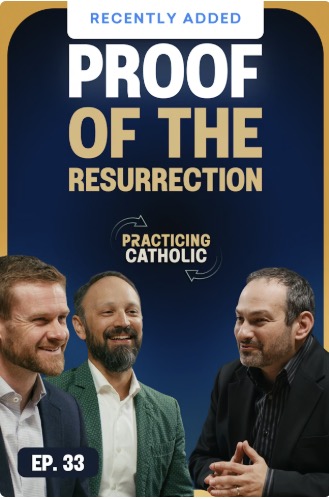
Many Catholic parishes purchase an annual subscription to FORMED for their congregation. If your local church has a subscription, you can usually sign up for a free account by entering your parish’s name or zip code on the site.
5th Sunday of Easter (A)
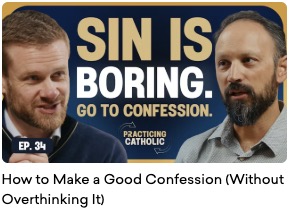
Confession can feel intimidating—but it doesn’t have to be. In this episode of Practicing Catholic, Taylor Kemp and Dr. Scott Hefelfinger walk through what the Sacrament of Confession really is, why it matters, and how to approach it with confidence. Whether it’s been a few weeks or a few decades, they offer practical, realistic tips to help you make a good confession without getting stuck trying to make a “perfect” one.
SOURCE: FORMED
5th Sunday of Easter (A)
The Sunday Homily: From Digital Dust to Priestly Proclamation
The emergence of priests using generative artificial to write homilies has sparked a predictable, perhaps even necessary, anxiety within the modern Church. If a machine can synthesize three years of lectionary commentary, Greek lexicons, and the writings of the Early Church Fathers into a polished five-minute script in mere seconds, what remains of the preacher’s ancient craft?
The fear is that the ambo might become a relay station for algorithms—a place of mechanical recitation rather than spiritual revelation. However, the answer to this technological tension lies not in the text itself, but in the liturgical architecture of the Eucharist.
Just as the gifts of bread and wine—the fruit of the earth and work of human hands—remain simple earthly sustenance until they are consecrated and transformed into the Bread of Life and the Cup of Eternal Salvation in the Mass, an AI-generated draft remains “not living or active.” It is a collection of cold data, a digital ghost, until the preacher takes, blesses, breaks, and gives it as his own.
I. The Taking
From Digital Dust to Divine Offering
The first movement of the Eucharist is the Taking of the gifts—the Offertory. In the context of homiletic preparation, this is the essential moment of discernment. When a preacher interacts with an AI-assisted draft, he is not merely “using” a productivity tool; he is taking a raw resource and setting it apart for a sacred purpose.
This process profoundly mirrors the primal act of creation found in Genesis. God took the dust of the ground and gave it form and structure. AI generation, in its most impressive state, is essentially this “divine dust”—a sophisticated, intricate arrangement of the world’s digital particles and human knowledge. But just as the dust of Eden remained a lifeless statue until a further act occurred, the AI draft is a “flat” document. It possesses grammatical perfection and logical structure, but it lacks an orientation toward a specific soul.
By taking the text, the preacher removes it from the realm of algorithmic probability and brings it into the realm of pastoral intentionality. He acts as the curator of grace, sifting through the machine’s suggestions, discarding the generic, and selecting the specific kernels that resonate with the lived experience of his particular community. In this “offertory” of preparation, the text begins its transition from a digital file to a liturgical offering. The preacher looks at the “dust” and decides which parts can be redeemed for the service of the Word.
II. The Blessing
The Epiclesis and the Breath of Life
In the liturgy, to Bless is to acknowledge God’s presence and invoke the Holy Spirit—the Epiclesis. For the preacher, this is where the “Human Delivery” begins to diverge entirely from the machine’s capabilities. AI is a master of syntax but a stranger to Spirit. It can mimic the language of faith with startling accuracy, but as Pope Leo XIV noted, it “will never be able to share faith.”
The soul is infused into the homily when the preacher takes that draft into the “quiet room” of prayer. Here, the preacher performs the vital role of the Creator over the dust: he breathes into the nostrils of the text the breath of life (Ruah). When he looks at the structure through the lens of his own vulnerability, his own struggles with the scripture, and his genuine pastoral love for his congregation, he is blessing the message.
He infuses the rigid structure with “heart and soul” by asking the heavy, human questions that a processor cannot compute: How will these words heal the grieving widow in the third pew? How will they challenge the complacent executive in the back? The Holy Spirit does not dwell in the server farms of a tech company; the Spirit works through the preacher’s physical presence, his tone of voice, and the weight of his lived relationship with the parish. It is only when the preacher’s own “breath of life” meets the “dust” of the AI’s structure that the homily ceases to be an essay and begins to become a living being.
III. The Breaking
The Fraction of the Word
The third action is the Breaking. In the Eucharist, the loaf must be broken to be shared; the “Fraction” signifies that the one Body is distributed to the many. Similarly, a homily must be broken to be heard. This is where the distinction between an academic paper and the “Proclamation” becomes absolute. A homily is not a static object meant to be read silently or archived as a PDF; it is meant to be a live, sacrificial event.
When the preacher stands at the ambo, he “breaks” the prepared text. He is not a narrator; he is a witness. He adjusts his pace based on the heavy silence of the room or the restless energy of the pews. He leans into a particular phrase because he sees a flicker of recognition or a tear in a parishioner’s eyes. He allows his own conviction to crack his voice or his own joy to brighten his face.
This “breaking” is the moment the text dies to its digital origin—its clinical, perfect state—and is reborn as a living encounter. The machine provides the “skeleton” of the message, the structural support of the argument, but the preacher’s physical presence and empathy provide the flesh. By breaking the prepared words in the presence of the people, the preacher allows the Word to be distributed effectively, ensuring it meets the people exactly where they are.
IV. The Giving
The Incarnational Reality
The central mystery of the Christian faith is that the Word became flesh, not just text. It became a person, not a program. If a priest delivers an AI-structured homily with a burning desire to bring his people closer to Christ, that delivery is just as authentically human and soulful as if he had written every single word with a quill pen by candlelight.
The “giving” is the bridge between the pulpit and the pew. It is the moment where the preacher’s “pastoral love” transforms a structured argument into a communal experience of grace. An AI can output a sequence of theological truths, but only a human can give of himself through those truths. The congregation does not encounter a logic gate; they encounter a man who has wrestled with the same God they have come to worship.
If the preacher has taken, blessed, and broken the word, then what the congregation receives is no longer a machine-made product. It is the living bread of the Word, mediated through a soul that is on fire for the Gospel. The technology becomes invisible in the face of the Proclamation.
Conclusion
The Vessel of Life
Ultimately, AI is a tool of “form,” but the preacher remains the vessel of “life.” AI can provide the “bones,” but it cannot provide the heartbeat. Without the fourfold action of the human steward—without the priest to breathe life into the digital dust—the AI homily remains a silent, static map.
The map is useful, but it is not the journey. It is only through the preacher’s breath, his vulnerability, and his physical presence at the ambo that the map becomes the journey. In the hands of a faithful preacher, the “dust” of the machine is transformed into a living word that can pierce the heart, nourish the soul, and lead the people of God toward the true Bread of Life.
TWTW used AI to assist him in writing this essay.
5th Sunday of Easter (A)
- MOVIES
- TV EPIDSODES
- SONGS
Mainstream movies that offer strong, theologically rich connections to this Sunday’s Gospel, though viewers should exercise discernment as these secular releases may contain mature themes. Videos may contain spoilers.
The Way (2010)


Directed by Emilio Estevez and starring Martin Sheen, this film follows an American doctor who travels to France to collect the remains of his adult son, who died early on the Camino de Santiago. In an act of grief and homage, he decides to walk the ancient spiritual trail himself.
Connections to the Gospel:
- “Do not let your hearts be troubled”: The film begins with profound grief. Tom’s heart is deeply troubled, and his pilgrimage is an active search for the peace Jesus promises his disciples in his farewell discourse.
- “I am the way”: The Camino literally translates to “The Way.” Tom slowly learns that the true “way” is not a physical trail to be conquered, but a spiritual path of surrender, vulnerability, and love.
- “In my Father’s house there are many dwelling places”: Along the journey, Tom reluctantly forms a walking group with a deeply flawed, diverse cast of characters. Their eventual communion beautifully illustrates that the Kingdom of God is expansive enough to welcome the broken and the searching.
A Hidden Life (2019)


Terrence Malick’s visually stunning masterpiece tells the true story of Blessed Franz Jägerstätter, an Austrian Catholic farmer who faced execution for refusing to swear an oath of allegiance to Adolf Hitler during World War II.
Connections to the Gospel:
- “I am the truth and the life”: When the entire world, including members of his own local church, urges Franz to compromise, he anchors his existence on the ultimate Truth of Christ. The film is a study in what it looks like to believe that true Life is found in God alone, regardless of earthly consequences.
- Trusting in the Prepared Place: Jesus tells the apostles he is going to prepare a place for them. Franz faces his martyrdom with the quiet, steadfast confidence of a man who firmly believes in that prepared place, allowing him to meet his end with an untroubled heart.
The Truman Show (1998)


For a slightly more modern, accessible option that resonates well with younger audiences and adults alike, this film follows Truman Burbank, a man who slowly discovers that his entire life is a fabricated reality television show controlled by a manipulative creator named Christof.
Connections to the Gospel:
“Do not let your hearts be troubled”: In the film’s climax, Truman has to literally walk on water (via a boat) through a terrifying, manufactured storm to reach the exit door of his fake world. To step through that door into the completely unknown real world requires an untroubled heart and an ultimate leap of faith, much like the faith Jesus is asking of his apostles on the night before he dies.
“I am the way and the truth and the life”: Truman is living a comfortable but entirely false existence. To find the “truth” and experience real “life,” he has to bravely reject the artificial world that has been constructed for him. Christ is reminding the disciples that true life is not found in the comfortable or the worldly, but in Him alone.
Episodes of popular television series that offer strong, theologically rich connections to this Sunday’s Gospel. Videos may contain spoilers.
The West Wing – “Noël”
(Season 2, Episode 10)

DOWN IN A HOLE (1:24)
In this highly acclaimed episode, White House Deputy Chief of Staff Josh Lyman is suffering from severe, unacknowledged PTSD after surviving a shooting. His heart is deeply troubled, and his trauma threatens to derail his life and career.
Connections to the Gospel:
- “I am the way”: At the end of the episode, his boss, Leo McGarry, tells him a famous parable about a man who falls into a deep hole. A doctor and a priest walk by and throw down prescriptions and prayers, but neither helps. Finally, a friend jumps into the hole with him. When the man asks why he did that, now they are both stuck, the friend replies: “Yeah, but I’ve been down here before, and I know the way out.” * Theological Link: This is a perfect modern articulation of the Incarnation and Jesus declaring, “I am the way.” Christ does not just shout instructions from Heaven; He jumps into the “hole” of human suffering with us. He is the friend who knows the way out, offering the ultimate cure for a troubled heart.
The Chosen – “Two by Two”
Season 3, Episode 2

THE CHOSEN (13:21) – This is the moment when Jesus’ learners become leaders. In this scene from Season 3 Episode 2, Jesus chooses 12 of his disciples to serve as apostles—official representatives and ambassadors of his kingdom. And with their new role comes their first major assignment: to go out in pairs throughout all of Israel to preach and do miracles.
This episode focuses on Jesus officially commissioning the twelve apostles and sending them out in pairs to preach and heal without Him.
Connections to the Gospel:
- “Whoever believes in me will do the works that I do”: The apostles are terrified of this assignment. They feel unqualified, sinful, and entirely unready to perform miracles or preach with authority. Jesus explicitly connects their belief in Him to their ability to carry out His exact works in the world.
- “Do not let your hearts be troubled”: Jesus has to actively calm their anxieties before they depart. He assures them that they do not need to rely on their own strength or earthly provisions, but entirely on the authority of the Father that He is sharing with them.
The Crown – “Moondust”
Season 3, Episode 7

COMMENTARY (11:18) — from the Diocese of Antwerp
This episode focuses on Prince Philip during the time of the 1969 Apollo 11 moon landing. He is experiencing a profound mid-life crisis and a deep spiritual emptiness. He becomes obsessed with the astronauts, believing their monumental earthly achievement holds the key to his malaise.
Connections to the Gospel:
- “I am the truth and the life”: Philip expects the astronauts to be enlightened beings, but upon meeting them, he realizes they are just ordinary men who followed a checklist. He discovers that human achievement, no matter how magnificent, cannot cure a troubled heart or provide the meaning of “life.”
- Finding the Prepared Place: The episode ends with Philip seeking out a group of priests at St. George’s House, a retreat center for clergy facing burnout. He confesses his loss of faith and humbly asks for their help. He stops looking toward the stars for an escape and realizes that the peace Jesus promises—the true “way”—is found through spiritual vulnerability and returning to his faith.
Though not written as “worship music,” the human experiences expressed in the following pop songs echo the universal truths contained in this Sunday’s Gospel. Listeners should exercise discernment, though, as some secular releases may contain mature themes.
Stand By Me
Ben E. King
Theological Connection: Relational Unity and Indwelling (John 14:20).
Why it fits: Verse 20 reveals a deep, abiding unity: “I am in my Father, and you are in me, and I am in you.” King’s classic speaks to the immense courage found in an unbroken, shared presence. When that abiding presence is established, the human heart can remain steadfast even if “the mountains should crumble to the sea.”
Bridge Over Troubled Water
Simon & Garfunkel

Theological Connection: The Spirit of Comfort and Peace (John 14:16-17).
Why it fits: The Spirit of truth is given to provide a peace the world cannot offer. The imagery of laying oneself down to act as a bridge over turbulent waters (“When you’re weary, feeling small… I will comfort you”) captures the sacrificial, intervening nature of the Advocate.
Lean on Me
Bill Withers

Theological Connection: The Promise of the Paraclete (John 14:16).
Why it fits: Jesus promises “another advocate” (the Parakletos—literally “one called alongside to help”). Withers’ lyrics (“Call on me brother, when you need a hand”) beautifully reflect the role of the Holy Spirit as an ever-present, stabilizing Comforter who comes alongside humanity in its weakness.
5th Sunday of Easter (A)
Download PDF (High Resolution)
Non-profits have permission to use in their ministry.
The Architecture of a Heart
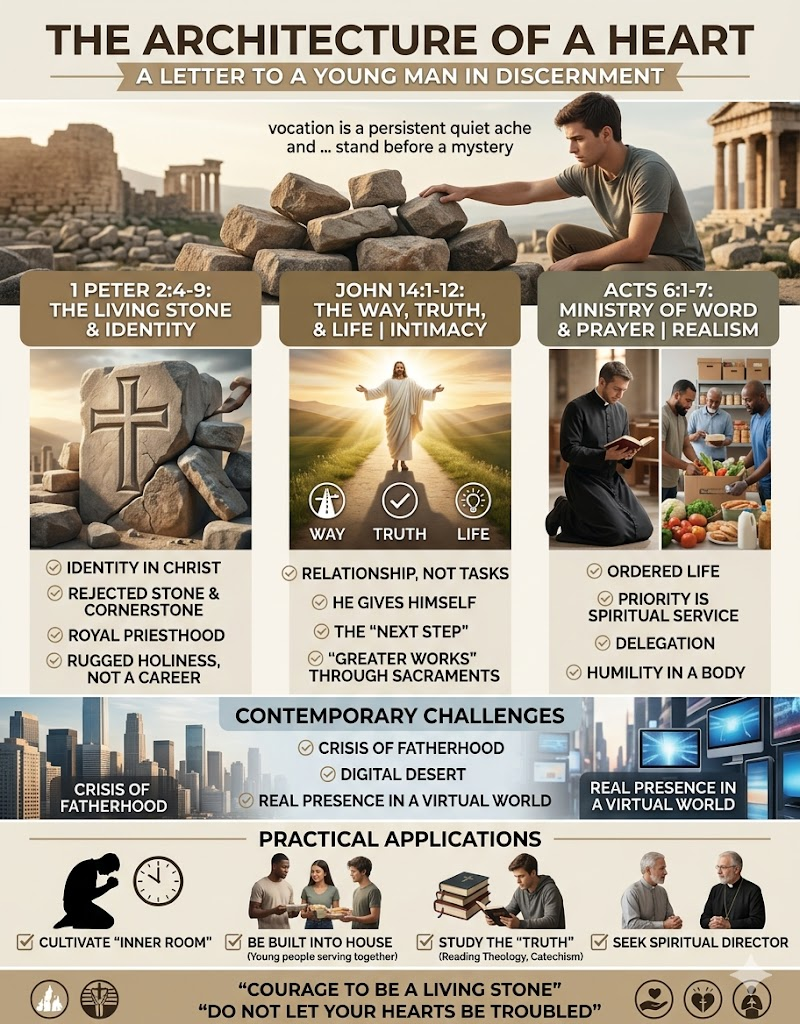
The question of a vocation is rarely a lightning bolt from a clear sky. More often, it is a persistent, quiet ache—a sense that the world’s standard scripts for “success” don’t quite fit the dimensions of your soul. If you find yourself looking at the priesthood, you are standing before a mystery that is as ancient as the Apostles and as urgent as the morning news.
To navigate this, we look to the blueprint provided by the Word of God, specifically the readings from Acts, 1 Peter, and the Gospel of John. These texts do not just offer historical context; they provide the theological and practical scaffolding for what it means to be a “man of God” in a world that often forgets God exists.
The Living Stone: Identity Before Action
In 1 Peter 2:4-9, we encounter the image of the Living Stone. For a young man in 2026, where identity is often fluid, digital, and performative, this image is a radical anchor. St. Peter describes Christ as the “rejected stone” who becomes the cornerstone.
Discernment begins here: with your identity in Christ. Before a priest is a “minister” or a “leader,” he is a “living stone” being built into a spiritual house. You are being called not to a career, but to an incorporation.
- The Rejected Stone: Do not be surprised if your peers, or even your family, find your discernment confusing or “wasteful.” To the world, giving up the pursuit of personal wealth or a biological family seems like a “rejection.” But in the economy of grace, what the world rejects, God uses as the cornerstone.
- The Royal Priesthood: Peter reminds us that we are a “chosen race” and a “holy nation.” Your call is to stand in the breach between heaven and earth. This requires a rugged holiness—not a fragile, “stained-glass” piety, but the strength of a stone that can bear the weight of others’ suffering.
The Way, the Truth, and the Life: The Intimacy of the Call
In John 14:1-12, Jesus speaks to hearts that are “troubled.” The Apostles were anxious about the future, much like a young man wondering where his life will lead. Jesus does not give them a map; He gives them Himself. “I am the way and the truth and the life.”
For the discern-er, this is the most vital practical application: Priesthood is not a set of tasks; it is a relationship.
- The Way: Often, we want the 20-year plan. Jesus offers only the next step. If you are following the “Way,” you are never lost, even if you don’t know the destination.
- The Greater Works: Jesus makes a staggering promise: “Whoever believes in me will do the works that I do, and will do greater ones than these.” This is the heart of the priestly mystery. Through the sacraments, a priest extends the healing, feeding, and forgiving work of Christ across time and space. When you consider the priesthood, you are considering a life where your hands become the conduits for “greater works” than you could ever achieve on your own.
The Ministry of the Word and Prayer: Acts 6 and the Reality of Service
Acts 6:1-7 provides a healthy dose of realism. The early Church was growing, and with growth came administrative headaches—specifically, the distribution of food to widows. The Apostles realized they could not do everything. They appointed deacons so they could focus on “prayer and the ministry of the word.”
This passage is a crucial lesson in the “ordered life.” A priest is a servant, yes, but his primary service is spiritual.
- The Danger of Social Work: There is a temptation today to view the priest as merely a community organizer or a non-profit CEO. While a priest must care for the poor (as the Apostles ensured was done), his unique “output” is the Word of God and the intercession of prayer.
- The Necessity of Delegation: Discerning the priesthood means realizing you cannot be all things to all people by your own strength. It requires the humility to work within a body—the Church—and to prioritize the spiritual nourishment of the people above all else.
Contemporary Challenges: Noise, Fatherhood, and Authenticity
Relating these biblical themes to life in the mid-2020s requires acknowledging the “noise.” We live in an era of constant connectivity, yet profound isolation.
- The Crisis of Fatherhood: The world is starving for spiritual fathers. The “royal priesthood” mentioned by St. Peter is a call to a supernatural fatherhood. A young man today must ask: Am I willing to forgo a single family to become a father to a parish?
- The Digital Desert: John 14 speaks of the “many dwelling places” in the Father’s house. In an age of virtual reality and “metaverses,” the priest offers something physical and real: the Eucharist, the oil of anointing, and the audible word of absolution. Your vocation is a call to be a “real” presence in a “virtual” world.

Practical Applications for Discernment
How do you move from reading these words to living them? Here are four practical pillars based on the scriptures discussed:
Cultivate the “Inner Room” (Prayer)
If the Apostles prioritized prayer (Acts 6), you must too. Discernment is impossible without silence.
- Application: Commit to 20 minutes of silent mental prayer daily. No podcasts, no music. Just you and the “Living Stone.” Ask Him: “Lord, what do You want me to do with the life You gave me?”
Be Built into the House (Community)
You cannot discern in a vacuum. St. Peter speaks of stones being “built” together.
- Application: Get involved in your parish or a young adult faith group. Serve. See if you actually like being with the “widows and orphans” (the marginalized). A vocation is confirmed by the Church, not just by your internal feelings.
Study the “Truth” (Intellectual Formation)
Jesus is the “Truth” (John 14).
- Application: Read the Catechism or the works of the Church Fathers. If the “ministry of the Word” is part of the call, you must first let that Word take root in your mind. Theology is not just for academics; it is the “map” for the Way.
Seek a Spiritual Director
The Apostles had Christ to guide them directly. You need a seasoned priest to help you hear His voice.
- Application: Find a priest you respect and ask for monthly spiritual direction. Be brutally honest about your fears, your sins, and your desires. A stone cannot see where it fits in the wall; the Architect (the director) can.
Conclusion: The Courage to be a Living Stone
The world does not need more “influencers” or “content creators”; it needs men who are willing to be “Living Stones.”
When Jesus says, “Do not let your hearts be troubled,” He isn’t promising an easy life. He is promising a meaningful one. The priesthood is a life of being “rejected” by the world’s standards, only to be “chosen and precious” in the eyes of God.
If you feel that pull toward the altar, do not be afraid of the weight of the stone. The One who is the Way will provide the strength; the One who is the Truth will provide the clarity; and the One who is the Life will make your life a “greater work” than you ever imagined possible. Stay close to the Word, stay constant in prayer, and let yourself be built into the spiritual house that Christ is raising up for the salvation of the world.
TWTW used AI to assist him in writing this essay.
5th Sunday of Easter (A)
From the Rubble to the Cornerstone: Redefining Addiction and Recovery
Addiction is fundamentally a crisis of direction. It is a state where the internal compass has been demagnetized, leaving the individual spinning in a cycle of “troubled hearts” and “stumbling blocks.” In the contemporary landscape—marked by the opioid epidemic, the isolation of the digital age, and a pervasive sense of displacement—the journey of recovery is often viewed through a purely clinical lens. However, the liturgical readings of John 14:1-12, 1 Peter 2:4-9, and Acts 6:1-7 offer a profound spiritual architecture for this journey. They move the conversation from “quitting a substance” to “becoming a living stone,” shifting the focus from what is being left behind to the “greater works” that lie ahead.
The Troubled Heart and
the Search for “The Way”
In John 14:1-12, Jesus speaks to a group of men whose world is about to dissolve. He begins with a command that feels impossible to someone in the throes of withdrawal or the despair of a relapse: “Do not let your hearts be troubled.” For the addict, the “troubled heart” is the baseline of existence. It is the anxiety of the next fix, the crushing weight of secrets, and the disorientation of having lost one’s place in the world.
When Thomas asks, “Master, we do not know where you are going; how can we know the way?” he gives voice to the central frustration of recovery. Most individuals struggling with addiction know they need to leave the “darkness,” but the “way” out is obscured by the fog of dependency.
Contemporary Application: Consider a young professional who has successfully hidden a stimulant addiction for years. When the facade finally crumbles, the “way” forward seems non-existent. They are faced with a labyrinth of insurance forms, rehab waitlists, and the terrifying prospect of a life without their chemical crutch. Christ’s response—“I am the way and the truth and the life”—is a radical simplification. It suggests that recovery is not found in a perfect manual or a flawless sequence of steps, but in the restoration of a relationship with Truth. Truth is the first casualty of addiction; recovery begins when the “Spirit of Truth” replaces the lies of the “troubled heart.”

From Stumbling Blocks to Living Stones: A Shift in Identity
The transition from active use to sustained recovery is beautifully articulated in 1 Peter 2:4-9. Peter describes Christ as the “living stone” that was “rejected by human beings.” He then warns of the “stone that will make people stumble.”
For the person in addiction, their own life has become the “stumbling block.” They trip over their own choices, their own past, and their own broken promises. Peter offers a staggering identity shift: the very person who was a “stumbling block” can become a “living stone” used to build something holy.
The Theology of Choice: Peter writes that we are a “chosen race, a royal priesthood, a holy nation.” In the culture of addiction, the individual is often labeled by their worst day—as a “junkie,” an “alcoholic,” or a “felon.” These labels are “rejected stones.” Recovery, in the Petrine sense, is the process of being “chosen” by God and “precious” in His sight, regardless of the rubble of the past.
Example: In many contemporary recovery communities, there is a practice of “telling one’s story.” When a man who has spent a decade in and out of prison stands up and speaks with clarity and grace, he is no longer a stumbling block to his family; he has become a “living stone.” He is a visible sign that the “darkness” Peter mentions is not a permanent residence. He has been called “out of darkness into his wonderful light,” and his life now serves as a foundational support for others beginning the climb.

The Daily Distribution:
The Practicality of Community
While John focuses on the heart and Peter focuses on identity, Acts 6:1-7 focuses on the logistics of love. The early Church faced a practical crisis: the “daily distribution” of food was being neglected for some, leading to “complaints.” The Apostles realized that they could not do everything; they needed a structure of support. They appointed the Seven Deacons to handle the practical needs so the “word of God” could continue to spread.
This passage is a perfect metaphor for the “holistic” nature of recovery. Addiction is not just a spiritual problem; it is a physical, social, and administrative disaster.
Practical Application: The Multidisciplinary Approach In contemporary recovery, we see the wisdom of Acts 6 in the way successful programs are structured.
- The Twelve Apostles (The Spiritual): This represents the prayer, the steps, and the spiritual awakening.
- The Seven Deacons (The Practical): This represents the medical doctors, the social workers, the vocational trainers, and the “daily distribution” of accountability.

Example: Recovery fails when it is lopsided. A person might have a spiritual breakthrough but still be “neglected” in their practical life—unemployed, in debt, or lacking stable housing. Acts 6 teaches us that for the “number of disciples to increase,” the community must organize to meet the practical needs of the marginalized. A modern “Deacon” in the recovery world might be the person who drives a newcomer to a meeting or the sponsor who helps a young man navigate a job interview. This “service at table” is what allows the “word of God” to take root in a life previously choked by chaos.
The Promise of “Greater Works”
Returning to John 14, Jesus makes an audacious claim: “Whoever believes in me will do the works that I do, and will do greater ones than these.” To a person in early recovery, whose “greater works” currently consist of just making it through twenty-four hours without a drink, this promise seems hyperbolic.
However, the “greater works” of a person in recovery are unique. A person who has been “raised from the dead” of a fentanyl overdose has a specific authority to speak to those still in the grave. They perform a “greater work” every time they choose a difficult truth over a convenient lie. They do the work of Christ when they “lay hands” on a struggling peer (Acts 8) or when they build a “spiritual house” (1 Peter 2) out of the wreckage of their former existence.
Conclusion:
Called Out of Darkness
The movement from Acts 6 to 1 Peter 2 to John 14 creates a complete map of recovery.
- Acts 6 reminds us that we need a community that handles the “daily distribution” of support and structure.
- 1 Peter 2 gives us a new identity—we are no longer stumbling blocks; we are “living stones” in a “royal priesthood.”
- John 14 gives us the ultimate destination—the “Father’s house” where there is room for everyone, and a “Way” that is paved with the person of Jesus Christ.
Recovery is the process of realizing that the stone the builders rejected—your broken, addicted, “orphaned” self—has been chosen by God to be the cornerstone of a new life. As the word of God spreads through the testimony of the recovered, the “number of disciples” increases, and the world witnesses the “greater works” of lives once lost, now found, and forever built on the Rock.in the city of Samaria, when the truth is spoken and the paralyzing lies are cast out, there is—at long last—great joy.
TWTW used AI to assist him in writing this essay.