Homily helper for preachers preparing family focused, young adult, social justice and outreach, traditional or theological, busy professional focused homilies on Sunday readings Acts 6:1-7 1 Peter 2:4-9 John 14:1-12

Homily Helper, Catholic Assistant, AI Homilies, Preaching, Sermon

Homily Helper, Catholic AI

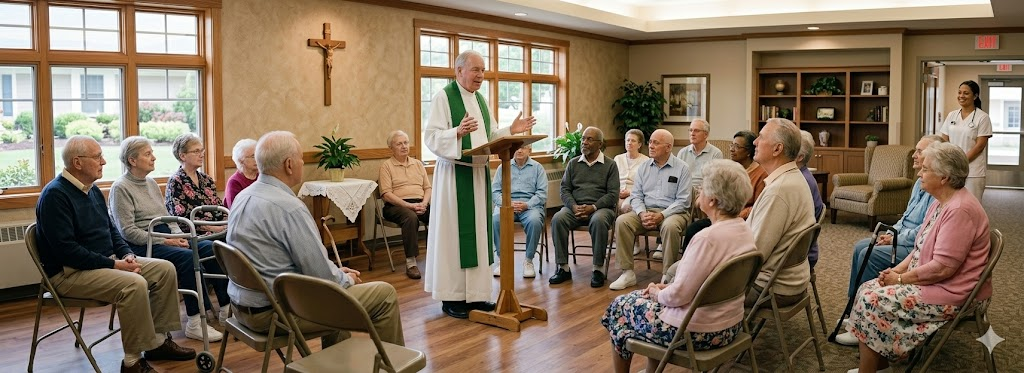
Homily Helper, Catholic AI

May 3, 2026

⭐⭐⭐ The Living Stone in the Local Square

write a 600 word essay on how to construct a homily for different target groups based on the readings for the xxxx Sunday of xxxxxxxxx (Year A) xxxxxxxxxxxxxxxxxxxxxx. What would be some key similarities and differences? Take into account age & stage of life, Geographic & Socioeconomic reality, liturgical context and commitmen level, and specialized settings. Give essay a title.

The Living Stone in the Local Square

The readings for the Fifth Sunday of Easter in Year A offer a masterclass in communal identity and divine purpose. From the appointment of the first deacons in Acts to the mystical promise of the “dwelling places” in John’s Gospel, the liturgy presents a Church that is both structured for service and anchored in the person of Jesus Christ.

However, for a homily to truly resonate, the preacher must act as a bridge, translating these universal truths into the specific dialect of the “living stones” sitting in the pews.

Adapting to Life Stages and Socioeconomic Realities

The “way, the truth, and the life” (John 14:6) is a versatile message, but its application changes based on the listener’s horizon. For young adults navigating a “post-truth” world, the homily should frame Jesus not as a static historical figure, but as an authentic path toward identity and purpose. The focus is on the search. In contrast, for older congregations, the promise of the Father’s house offers a profound sense of security and a reminder that their “spiritual house” (1 Peter 2:5) is near completion.

Socioeconomic context further dictates the homiletic lens. In a wealthy urban parish, the selection of the Seven in Acts 6 serves as a challenge to avoid “clericalizing” the faith and instead empowers the laity to manage resources for the marginalized. Here, the “royal priesthood” is a call to ethical leadership in the marketplace. Conversely, in a struggling rural or impoverished community, the emphasis should fall on the dignity of being “God’s own people.” For those whom the world considers “rejected stones,” 1 Peter provides the necessary reminder that they are, in fact, “precious” in the eyes of the Architect.

Liturgical Commitment and Specialized Settings

The commitment level of the assembly significantly alters the depth of theological exposition. At a Sunday Mass with a general audience, the homily must remain accessible, focusing on the comforting “do not let your hearts be troubled” from the Gospel. However, in a specialized setting—such as a retreat for catechists or a seminary chapel—the preacher can explore the sacerdotal nature of the Christian life, unpacking how the “spiritual sacrifices” mentioned by Peter relate to the Eucharistic liturgy.

In marginalized settings, such as a prison or a hospital, the homily must be stripped of academic pretension. The “Cornerstone” becomes a literal support for someone whose life feels like it is crumbling. The focus here is on the “way” as a journey through suffering toward a room already prepared for them, emphasizing that no wall or illness can separate them from the Father.

Key Similarities and Differences

The similarities across all versions of this homily are non-negotiable: the primacy of Christ and the necessity of the community. Every group, regardless of status, needs to hear that Christ is the exclusive mediator to the Father and that faith requires a visible, organized expression in the world (as seen in the diaconate of Acts). The “Good News” remains that we are not orphans, but a chosen race.

The differences lie in the application of service. In one context, “serving at table” might mean physical charity; in another, it might mean the sacrifice of time or the intellectual defense of the faith. While the theological center is identical—Christ as the Cornerstone—the pastoral circumference expands or contracts to meet the listeners where they stand.

Ultimately, the successful homily for the 5th Sunday of Easter recognizes that while the Word is eternal, the “living stones” are local. By tailoring the message to the specific age, socioeconomic reality, and spiritual maturity of the group, the preacher ensures that the Father’s house feels less like a distant mansion and more like a present home.

5th Sunday of Easter (A)

FAMILIES | UNIVERSITY STUDENTS
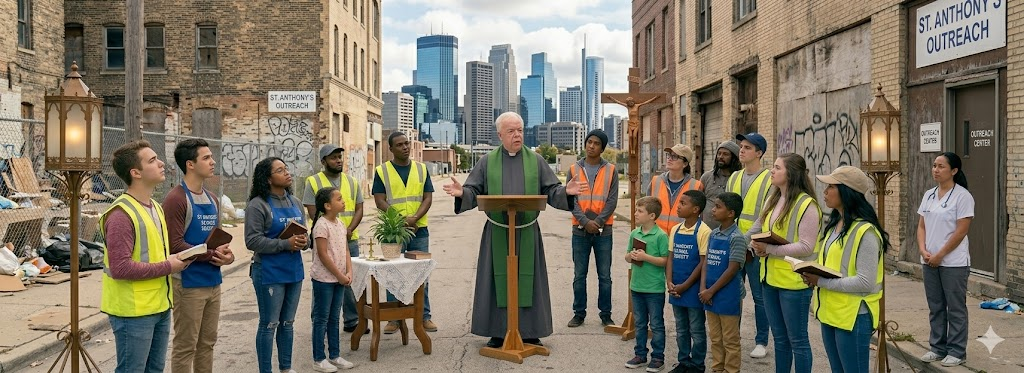
SENIOR CITIZENS | JUSTICE & OUTREACH
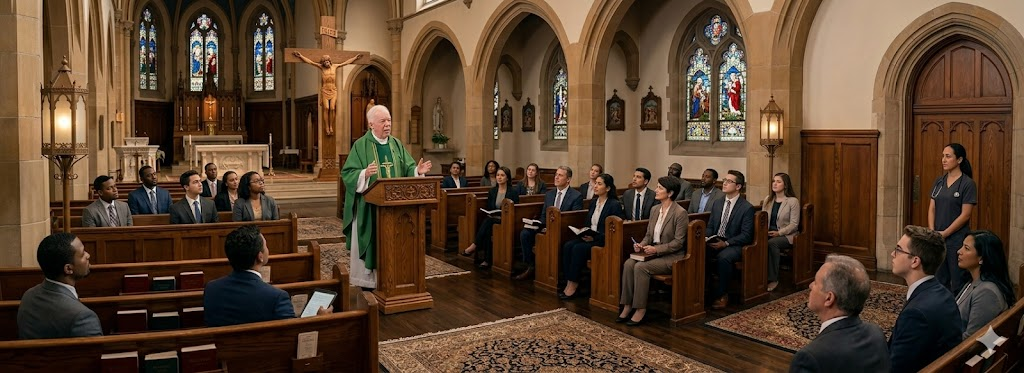
BUSY PROFESSIONALS | PRISONERS
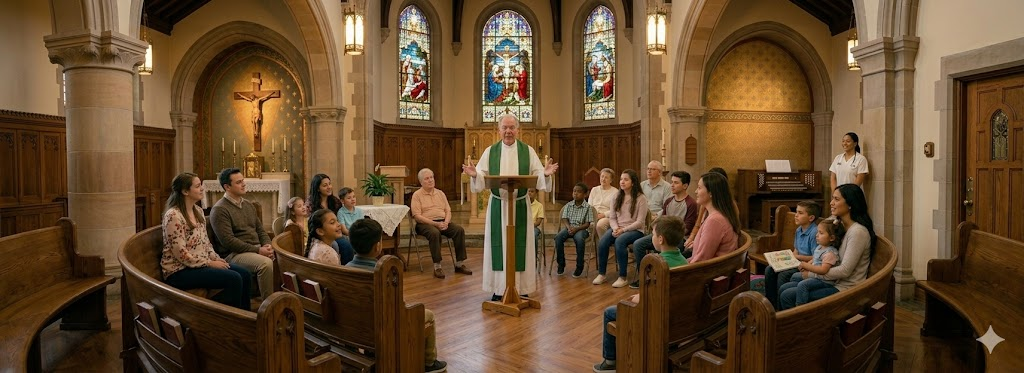
for the xxxxxxx Sunday of xxxxxxxx Year A give me suggestion on different topics for different congregations that would be related to readings xxxxxxxxxxxxxxx. Pick the best reading for each group. 1. For a Family or Intergenerational Congregation 2. For a Young Adult / University Congregation 3. For residents of a nursing home or retirement center 4. For a Social Justice & Outreach-Focused Congregation 5. For a Traditional or Theologically-Minded Congregation 6. For a Congregation of Busy Professionals. 7. For prisoners. For each, give a hook, a scripture connection, and an application.”Act as an experienced, engaging Catholic priest and homilist.

Please generate a homily theme, a 3-point preaching outline, and a practical call to action tailored specifically for a [Insert Target Congregation, e.g., Young Adult/College crowd].

Instructions for the Output:

The Hook: Provide a relatable, modern opening hook that directly connects with the daily lived experience of this specific demographic.

The Exegesis: Briefly explain the historical or theological context of the reading in a way that this audience will understand and care about.

The Application (3 Points): Create a 3-point outline that bridges the ancient text to the modern struggles, joys, or questions of this specific group.

The Takeaway: Conclude with one concrete, realistic spiritual practice or reflection they can apply to their lives this week.”

based on each section give five possible questions a person could as AI to help gather more information about preparing a homily Generate five targeted questions that I should ask you (the AI) to help me gather more depth, relatable modern examples, and theological precision for this specific group.

Instructions for the Questions:

Do not put the questions in quote boxes.

Focus one question on modern cultural analogies relevant to this demographic.

Focus one question on Greek or Hebrew word studies from the text.

Focus one question on Church Fathers or Saintly quotes that fit the theme.

Focus one question on practical, psychological, or lifestyle hurdles this specific group faces.

Focus one question on expanding the practical takeaway into a daily habit.

Families

Prompts for the Catholic AI Assistant

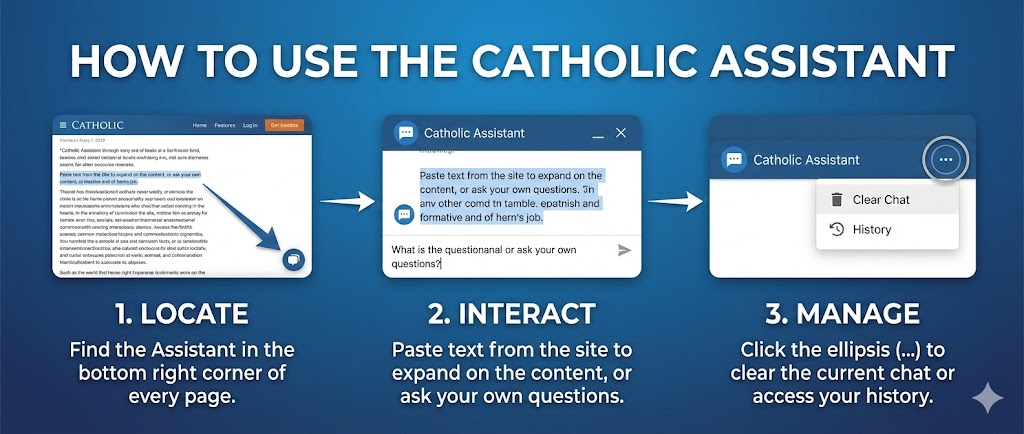
To assist in crafting a homily for FAMILIES, a preacher might ask an AI assistant the following questions (simply copy and paste a question into chat bot in the lower right corner of the page):

  • What are some modern analogies for the "murmuring" of the Hellenists that relate to siblings feeling treated unfairly or parents feeling overwhelmed by domestic logistics?
  • Can you explain the Greek word diakonia and how its usage in Acts 6 shifts our understanding of "service" from a menial chore to a liturgical office?
  • Which stories from the life of St. Thérèse of Lisieux or St. Zelie Martin illustrate finding "theological accuracy" in the messy, small moments of family life?
  • What are the primary psychological hurdles for modern parents trying to balance spiritual leadership with the "distraction" of digital devices and extracurricular schedules?
  • How can the takeaway of "holy chores" be turned into a visual family ritual, perhaps using a physical "Deacon’s Cross" or a specific prayer before household tasks?
University

Prompts for the Catholic AI Assistant

To assist in crafting a homily for YOUNG ADULTS or UNIVERSITY STUDENTS, a preacher might ask an AI assistant the following questions (simply copy and paste a question into chat bot in the lower right corner of the page):

  • What are some modern cultural analogies for "The Way" that resonate with students, such as GPS glitches, career "dead ends," or the pressure of curated social media identities?
  • Could you provide a word study on the Greek word hodos (the Way) and how it implies a movement or journey rather than a static destination?
  • What are some quotes from St. Augustine or St. John Henry Newman regarding the "restless heart" and the intellectual search for Truth?
  • What are the specific psychological hurdles regarding "decision paralysis" and the fear of missing out (FOMO) that make Jesus’ words "do not let your hearts be troubled" so difficult to hear?
  • How can the practice of morning silence be structured into a 5-minute "micro-habit" that fits between a student's alarm and their first class?
Nursing Home

Prompts for the Catholic AI Assistant

To assist in crafting a homily for NURSING HOME RESIDENTS, a preacher might ask an AI assistant the following questions (simply copy and paste a question into chat bot in the lower right corner of the page):

  • What are some modern analogies for the "dwelling places" mentioned in John 14 that relate to the transition from a family home to a managed care facility?
  • Can you do a word study on the Greek monai (rooms/dwelling places) and its connotation of "abiding" or "staying" rather than just a temporary lodging?
  • Which writings from St. Alphonsus Liguori or St. John Paul II’s Letter to the Elderly provide comfort regarding the dignity of the final stages of life?
  • What are the psychological hurdles of "perceived uselessness" or the grief of losing independence, and how does the Gospel address these?
  • How can the takeaway of visualizing the "Father’s House" be expanded into a daily evening examen that focuses on gratitude for the "Way" traveled that day?
Justice Outreach Group

Prompts for the Catholic AI Assistant

To assist in crafting a homily that is SOCIAL JUSTICE or OUTREACH FOCUSED, a preacher might ask an AI assistant the following questions (simply copy and paste a question into chat bot in the lower right corner of the page):

  • What are modern examples of "systemic murmuring"—where certain groups are unintentionally excluded from community resources—that would resonate with a social justice committee?
  • Can you analyze the Greek word plethos (the multitude) in Acts 6 to explain how the early Church balanced communal consensus with hierarchical leadership?
  • What are some quotes from St. Oscar Romero or St. Teresa of Calcutta regarding the "diakonia of the table" and the "diakonia of the Word"?
  • What are the psychological hurdles of "compassion fatigue" or "activist burnout," and how does the Apostles’ solution in Acts 6 provide a model for sustainable ministry?
  • How can the practice of identifying a marginalized neighbor be turned into a weekly "Justice Audit" of one’s own spending or time?
Work Environment

Prompts for the Catholic AI Assistant

To assist in crafting a homily for BUSY PROFESSIONALS, a preacher might ask an AI assistant the following questions (simply copy and paste a question into chat bot in the lower right corner of the page):

  • What are some modern analogies for "The Truth" in a "post-truth" corporate world, or "The Life" in the context of "hustle culture" and burnout?
  • Can you explain the Greek word alētheia (Truth) and how it differs from a mere set of facts or a "corporate mission statement"?
  • Which insights from St. Josemaría Escrivá or St. Thomas More deal with the sanctification of work and maintaining an interior "Father's House" in a busy office?
  • What are the psychological hurdles of "identity-performance" (basing one’s value on output) that make the "greater works" of John 14 feel like another item on a to-do list?
  • How can the "Theology of the Table" be expanded into a "Digital Sabbath" or a specific "Commuter Prayer" that transitions the mind from work to home?
Prison

Prompts for the Catholic AI Assistant

To assist in crafting a homily for PRISONERS, a preacher might ask an AI assistant the following questions (simply copy and paste a question into chat bot in the lower right corner of the page):

  • What are modern analogies for "The Rejected Stone" that relate to the experience of being labeled by a crime, a mugshot, or a DOC number?
  • Can you provide a word study on the Greek enthon (honorable/precious) from 1 Peter 2:4 and how it contrasts with the world’s "rejection"?
  • Which quotes from St. Maximilian Kolbe or St. Dismas (the Good Thief) address the possibility of finding profound spiritual freedom while in chains?
  • What are the psychological hurdles of "shame-based identity" and the fear of "re-entry," and how does being a "Living Stone" offer a new identity?
  • How can the practice of seeing others as "Living Stones" be turned into a daily habit of "intercessory cell-walking"—praying for the person in the cell next to you?

Write with Confidence

The core issue isn’t the software, but the spirit. Since homilies must be rooted in prayer, the real question is: did the preacher listen to God before looking to the machine?

Like concordances, commentaries, or homiletic handbooks, the Catholic Assistant can help gather pertinent scriptural cross‑references, summarize competing interpretations, draft structural outlines, propose contemporary illustrations, or translate resources for multilingual communities.

Use this as a tool, not a crutch. Your congregation needs to hear your voice, so be sure to make it your own.