Papal Homilies
April 26, 2026
⭐⭐⭐ The Gift of Priesthood – 1999


4th Sunday of Easter (A)

Message of the Holy Father Leo XIV for the 63rd World Day of Prayer for Vocations
The Inner Discovery of God’s Gift
APRIL 26, 2026
AT A GLANCE
- The Way of Beauty: The “Good Shepherd” is the beautiful shepherd. Following Him transfigures us, moving us beyond mere “goodness” to a luminous spiritual beauty that reflects Christ’s own mission.
- Interiority as Foundation: Vocation is not an external imposition but a project of love discovered in the depths of the soul. True discernment requires silence, contemplation, and “returning to oneself” to hear the Shepherd’s voice.
- Mutual Knowledge: Just as the Lord knows us intimately, we are called to know Him through a personal encounter—not abstract study—transforming our lives into an intimate dialogue with the Divine.
- Trust and Maturation: Like St. Joseph, we are called to trust God’s plan even when it disrupts our own. Vocation is a dynamic, lifelong process of growth, often requiring the “pruning” of trials to bear abundant fruit.ity.
QUESTIONS FOR REFLECTION
- In the “deafening noise of the world,” what specific spaces of silence have I created this week to listen for the Shepherd’s gaze?
- Do I view my life’s path as a “pre-established pattern” I must begrudgingly follow, or as a “project of love and happiness” designed by a God who knows me better than I know myself?
- When God’s plans disrupt my own—like they did for St. Joseph—is my first instinct to recoil in fear or to pronounce a faithful “fiat“?
- Does the “spiritual beauty” of Christ radiate from my life, or am I merely settling for a “coarse” goodness that lacks the light of His transfiguring love?
ACTIONABLE
TAKEAWAY
- Cultivate an “Interior Room”: Commit to five minutes of absolute silence daily—no phone, no music, no books—specifically to “return to yourself” and invite the Truth who dwells within to speak.
- Practice Eucharistic Contemplation: Spend time in Eucharistic adoration this week. Focus not on “asking” for things, but on “welcoming His gaze” to let His beauty transfigure your current worries.
- Identify Your “Pruning”: Reflect on a current trial or limitation you are facing. Instead of resisting it, “nail it to the glorious Cross” by asking the Holy Spirit how this situation is helping your vocation to mature.
- Foster a Favorable Environment: Actively encourage someone in your life—a child, a friend, or a fellow parishioner—by affirming a specific spiritual “beauty” or talent you see in them, helping to create the “fertile soil” where their vocation can blossom.

ROME REPORTS (1:11) – Near the end of his visit in Cameroon, Pope Leo XIV privately visited the Catholic Saint Paul Hospital in the city of Douala. The center is run by the archdiocese in the Bassa neighborhood that primarily serves women, children, and vulnerable people. (April 18, 2026)

Theme of the Readings
FROM THE ARCHIVES (2005)
As the gate to the sheepfold, Jesus is the metaphor that summarizes the message of the liturgy. Jesus says of himself: “I tell you most solemnly that I am the gate of the sheepfold” (Gospel). In the Acts of the Apostles, Peter exhorts his listeners: “You must repent … and every one of you must be baptized in the name of Jesus Christ for the forgiveness of your sins” (first reading). Again Peter, in his First Letter, writes: “You had gone astray like sheep, but now you have come back to the shepherd and guardian of your souls” (second reading), showing one of the functions of the gate, which is to protect the flock from anything that could harm it.

Doctrinal Messages
In chapter 10, St. John uses various images, which attempt to explain the reality of the Christian community and of the Church: sheepfold, gate, shepherd, hired man, etc. In this loveliest of allegories, the sheepfold is the community of believers in Christ. Jesus is both the gate of the sheepfold and the shepherd of the flock. And what about the “hired men”? The Pharisees (cf. 9:13)? The false doctors and “Christian” prophets who appear in some of the New Testament texts? These are hard questions to answer. With all this, today’s liturgy focuses on the image of Jesus Christ, the gate of the sheepfold.
The gate is the place through which one enters the sheepfold, the community of faith. This gate is Christ, dead and risen, who created a new flock through a new covenant in his blood. The Christian passes through this gate of salvation to the new community of faith by means of baptism. By baptism we are immersed in the paschal mystery of Jesus Christ, and are at the same time incorporated in the Church (cf. CIC 1213-1214). Anyone who wants to enter the fold, to belong to the Church, without going through the gate but getting in some other way is a “thief and a brigand”(Jn 10:1). Belonging to the Church at a merely sociological level is impossible, just as it is impossible to want to separate faith in Jesus Christ from faith and belonging to the Church: “Christ yes, but the Church no”.
Through the gate the sheep go out of the fold to seek good pasture. What is pasture for the Christian community? First of all, the living and effective word of the Scriptures, then the sacraments instituted by Jesus Christ for the salvation of believers and lastly, the good example of our brothers and sisters in the faith. The gate that gives access to these good pastures is Jesus Christ in his historical reality and in his glorious life, as the Word of God and the Father’s authentic “exegete”, the source and fundamental origin of all the sacraments, the archetype of the Christian way of life.
The door of the sheepfold is also a means to protect and defend those who are inside it. The risen Christ is the guardian of the sheep and defends them from any brigand or rapacious wolf that might roam around the fold. When the community of believers is protected by Christ, the only gate of the sheepfold, we can be certain that nothing bad will happen to the flock. It will not suffer any harm, even amidst trials and tribulations and the great problems caused by powerful enemies who would like attack it.
Pastoral Suggestions
In accordance with the wishes of Pope Paul VI, World Day of Prayer for Vocations is being celebrated in the Church today. We should bear in mind that the priest is not, of course, the gate of the sheepfold, but he is indeed the guardian who opens and closes it for the sheep. This is a favorable moment to address a theme so timely and so necessary for the future of the faith. We suggest a few topics for reflection:
1. Explain and help people understand that a Church without priests is not the Church that Jesus Christ wanted, nor would he have wanted a Church without lay people. Christ’s Church is constituted by hierarchy and laity, by shepherds and sheep. The former have been called to exercise the service of authority and the total gift of themselves for the latter, who in turn have been called to exercise the service of obedience and Christian effort in the world.
2. The priestly vocation is a gift of God, but one requiring everyone’s collaboration (the family, parish, associations, ecclesial movements), so that the gift may germinate in the hearts of those who are called. God’s seed will neither sprout nor grow if it does not find good and fertile soil. Have we sometimes wondered about the number of vocations to the priesthood which are “frustrated” because they cannot rely on a favorable environment?
3. Pray constantly for new priestly vocations. Pray for the new recruits who are beginning their course of formation, for those who are on the way, that they may continue preparing themselves in the best possible way to carry out their ministry. Pray for those who are already priests that they may always keep before their eyes “the shepherd and guardian of our souls.” Wouldn’t it be a wonderful idea to establish adoration for vocations in your parish one day a month?
SOURCE: YEAR A DICASTERY NOTES (2004-05)
Message of Pope Francis
AT A GLANCE
The Method of Communication
- The Shepherd: Proposes with patience and kindness, respecting your freedom.
- The Enemy: Imposes through force, seduction, and pressure.
The Timeline
- The Shepherd: Focuses entirely on the Present (“Now”) and how to love in the current moment.
- The Enemy: Traps you in past regrets or fuels anxiety about the future.
The Internal Direction
- The Shepherd: Opens a broad horizon of hope and possibility.
- The Enemy: Backs you into a wall or a corner, making you feel stuck.
The Core Question
- The Shepherd: Asks, “What is truly good for me?”
- The Enemy: Demands, “What do I feel like doing right now?”
The Lasting Fruit
- The Shepherd: Results in a deep, lasting peace and a sense of being known.
- The Enemy: Creates a frenzy or “dazzling illusion” followed by bitterness and self-accusation.
The Environment
- The Shepherd: Thrives in sunlight, truth, and transparency with others.
- The Enemy: Operates in darkness, falsehood, and isolation.
QUESTIONS FOR REFLECTION
- The “Now” Check: Are my current thoughts helping me love someone today, or am I chewing on a resentment from the past?
- The Freedom Check: Do I feel pressured and “assailed” by this thought, or is it a gentle invitation that I am free to accept or decline?
- The Fruit Check: After I followed that specific impulse yesterday, did I feel a “good peace,” or did I feel empty and accused of being “worth nothing”?
- The Ego Check: Is this desire about serving my immediate “tantrum” (wants), or is it about my ultimate “good” (needs)?
ACTIONABLE
TAKEAWAY
- Interrupt the Tantrum: When you feel a “frenzied” need to have something straight away, pause for 60 seconds. God doesn’t speak in tantrums; wait for the peace.
- Name the Accuser: If you hear a voice saying “You are worth nothing,” identify it immediately as the thief. Replace it by intentionally recalling your name, as the Shepherd does.
- Choose Transparency: If you are tempted to “close up” because “no one understands,” do the opposite: reach out to one trusted person and speak your truth in the light.
- Practice the “Creative Now”: Once an hour, ask: “What is the creative act of love I can do in this exact moment?” This grounds you in the Shepherd’s frequency.

MUSIC VIDEO (2:57)
Are You Hearing Voices?
3 May 2020 – Library of the Apostolic Palace
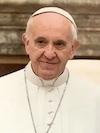
The fourth Sunday of Easter is dedicated to Jesus the Good Shepherd. The Gospel says that: “The sheep hear his voice, and he calls his own sheep by name and leads them out.” The Lord calls us by name; He calls us because he loves us. However, the Gospel says there are other voices that are not to be followed: those of strangers, thieves, and brigands who mean harm to the sheep.
These different voices resonate within us. There is the voice of God, who speaks kindly to the conscience, and there is the tempting voice that leads to evil. One can learn to discern these two voices: they speak two different languages. Just as we know how to distinguish one language from another, we can also distinguish the voice of God from the voice of the evil one.

Proposal vs. Imposition
The voice of God never forces us: God proposes himself; He does not impose himself. Instead, the evil voice seduces, assails, and forces: it arouses dazzling illusions, emotions that are tempting but transient. At first it flatters, it makes us believe that we are all-powerful, but then it leaves us empty inside and accuses us: “You are worth nothing.”
The voice of God, instead, corrects us with great patience, but always encourages us and consoles us: it always nourishes hope. God’s voice is a voice that has a horizon, whereas the voice of the evil one leads you to a wall; it backs you into a corner.
The Presence of the “Now”
Another difference: the voice of the enemy distracts us from the present and wants us to focus on fears of the future or sadness about the past. It brings to the surface bitterness and memories of wrongs suffered.
On the other hand, the voice of God speaks in the present: “Now you can do good, now you can exercise the creativity of love, now you can forego the regrets and remorse that hold your heart captive.” It inspires us and leads us ahead, but it speaks in the present: now.
The Ego vs. The True Good
The two voices raise different questions in us. The one that comes from God will be: “What is good for me?” Instead, the tempter will insist on: “What do I feel like doing?” The evil voice always revolves around the ego, its impulses, and its needs—everything straight away. It is like a child’s tantrums. The voice of God, however, never promises joy at a low price: it invites us to go beyond our ego in order to find true, good peace. Evil never brings peace; first it causes frenzy, and then it leaves bitterness.
Darkness vs. Transparency
Lastly, God’s voice and that of the tempter speak in different “environments.” The enemy prefers darkness, falsehood, and gossip; the Lord loves sunlight, truth, and sincere transparency.
The enemy will say to us: “Close yourself up in yourself, besides no one understands and listens to you, do not be trusting!” Goodness, on the contrary, invites us to open up, to be clear and trusting in God and in others.
Conclusion: A Call to Freedom
During this time, many thoughts and worries lead us to turn inwards into ourselves. Let us pay attention to the voices that reach our hearts. Let us ask ourselves where they come from. Let us ask for the grace to recognise and follow the voice of the Good Shepherd, who brings us out of the enclosures of selfishness and leads us to the pastures of true freedom.

Message of Pope Benedict XVI
AT A GLANCE
- The Indestructible Bond: We are united to Christ by a bond of love and reciprocal knowledge so strong that no one can snatch us from His hand.
- The Order of Grace: True discipleship follows a specific sequence—listening to the Word must always precede following the Master.
- The Vocation of Surrender: A true calling is realized only when we abandon our “narrow agendas” to immerse ourselves in the will of God.
- The Need for Pastors: Even in a technological world, the human heart requires physical shepherds to proclaim the Word and provide the Sacraments.
QUESTIONS FOR REFLECTION
- Listening vs. Hearing: In the “noise” of my technological daily life, what specific “other voices” are currently drowning out the voice of the Shepherd?
- The Narrow Agenda: What personal notions of “self-fulfillment” am I currently holding onto that might be blocking me from God’s actual will?
- Reciprocal Knowledge: Do I treat my relationship with Jesus as a set of rules to follow, or as a “bond of love” where I am truly known by name?
- Nurturing the Soil: How am I contributing to a “healthy family or community background” where new vocations can actually grow and mature?
ACTIONABLE
TAKEAWAY
- Prioritize the Ear: Before making any major decision this week, spend ten minutes in silence with the Sunday Gospel. Practice “listening” before “acting.”
- Adopt a Pastor: Commit to praying a daily Decade of the Rosary specifically for your parish priest and those currently in the seminary.
- Audit Your Agenda: Identify one “narrow agenda” item—a rigid plan or a selfish goal—and consciously offer it to God, saying: “Not my will, but Yours be done.”
- Promote the Call: Intentionally encourage one person in your life who displays the qualities of a good shepherd (patience, wisdom, charity) to consider how God might be calling them to serve.

ROME REPORTS (3:18) – God serves as a guiding Shepherd to people across the world, throughout history, and across various cultures.
Our Action Must Always Be Preceded By Our Attention
15 May 2011 | Giuliano Park – Mestre

The Liturgy of the Fourth Sunday of Easter presents to us one of the most beautiful images that has portrayed the Lord Jesus since the earliest centuries of the Church: the Good Shepherd. The Gospel of St John, in chapter 10, describes the special features of the relationship between Christ the Good Shepherd and his flock, a relationship so close that no one will ever be able to snatch sheep from his hand. Indeed, the sheep are united to him by a bond of love and of reciprocal knowledge, which guarantees to them the immeasurable gift of eternal life.
Listen and Follow
At the same time, the flock’s attitude to the Good Shepherd, Christ, is presented by the Evangelist with two specific verbs: “to listen” and “to follow.” These terms suggest the fundamental characteristics of those who live out the following of the Lord.
First of all by listening to his word, from which faith is born and by which it is nurtured. Only those who are attentive to the Lord’s voice can assess in their own conscience the right decisions for acting in accordance with God. Thus the following of Jesus derives from listening: we act as disciples only after hearing and inwardly accepting the Master’s teachings in order to put them into practice every day.

Prayer for Our Pastors
On this Sunday, therefore, it comes naturally to remember to God the pastors of the Church and those who are training to become pastors. I therefore invite you to say a special prayer for the bishops – including the Bishop of Rome! – for the parish priests, for all those who have responsibilities in the guidance of Christ’s flock, so that they may be faithful and wise in carrying out their ministry. In particular, let us pray for vocations to the priesthood on this World Day of Prayer for Vocations, so that effective workers in the Lord’s harvest may never be lacking.
The Heritage of Vocation
Seventy years ago, Venerable Pius XII established the Pontifical Work for Priestly Vocations. My Predecessor’s felicitous insight was based on the conviction that vocations grow and mature in the particular Churches, facilitated by a healthy family background and fortified by a spirit of faith, charity and devotion.
Abandoning the “Narrow Agenda”
In the Message I sent for this World Day, I stressed that a vocation is fulfilled when they “leave behind their own narrow agenda and their notions of self-fulfilment in order to immerse themselves in another will, the will of God, and to be guided by it.”
Proclaiming the Word in a Technological World
In these times too, in which the Lord’s voice risks being drowned by so many other voices, every ecclesial community is called to promote and to care for vocations to the priesthood and to the consecrated life. Men and women in fact always need God, also in our technological world, and there will always be a need for Pastors who proclaim his Word and bring them to encounter the Lord in the sacraments.
Message of Pope Saint John Paul II
AT A GLANCE
- A Bond of Mutual Knowledge: The relationship between the Good Shepherd and his flock is defined by profound communion, real knowledge, and a trust that allows the sheep to follow faithfully.
- The Eucharistic Spring: For the priest and the faithful alike, the Eucharist is the “crystal clear spring” that provides spiritual consolation and the strength for evangelization.
- Vocation as Grace and Freedom: A calling is both a gift of divine benevolence and a mystery rooted in human freedom, developed through a lifelong “dialogue of love.”
- Living Icons of Christ: Pastors are called to imitate the mystery they celebrate, becoming a “living icon” where Christ lives and acts through them.
QUESTIONS FOR REFLECTION
- The Shepherd’s Voice: Do I spend enough time in “long familiarity” with the Shepherd to actually recognize his voice amidst the noise of my daily life?
- The Gift of Priesthood: How has a priest been a minister of mercy in my own life? Do I take the time to thank God for the specific men who serve my parish?
- Fruit of Grace: When I think about my own vocation (marriage, single life, or ministry), do I see it as a dialogue of love with God or simply a career choice?
- Imitating the Mystery: In what areas of my life can I more truthfully say, “It is no longer I who live, but Christ who lives in me”?hem?
ACTIONABLE
TAKEAWAY
- Intercede for the New Laborers: Commit to praying one decade of the Rosary each day this week specifically for the fidelity and zeal of the newly ordained priests.
- Identify the Mystery: Choose one specific Christ-like quality—such as mercy or sacrifice—and find one concrete way to “imitate the mystery” in your workplace or home today.
- Nurture the Harvest: Speak a word of encouragement to a young person in your community who shows signs of a servant’s heart, inviting them to be open to God’s “dialogue of love.”
- Return to the Spring: Make a visit to the Blessed Sacrament for fifteen minutes of quiet adoration, asking the Good Shepherd to replenish your “enthusiasm and fresh energies.”

SERVUS DEI (6:17) – Discover the inspiring life of Saint John Paul II iin this Catholic lesson for kids. Learn how St. John Paul II ftaught the world to “Open Wide the Doors to Christ.”
The Gift of Priesthood
25 April 1999 | GOOD SHEPHERD SUNDAY
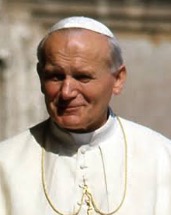
“I am the Good Shepherd…; I know my sheep and my sheep know me” (Gospel Acclamation).
As we continue our journey through the liturgical season of Easter, today we celebrate what is traditionally called “Good Shepherd Sunday.” Jesus applies to himself this image, rooted in the Old Testament and very dear to Christian tradition. Christ is the Good Shepherd who, by dying on the Cross, lays down his life for his sheep. Thus a profound communion is established between the Good Shepherd and his flock. Sheep and Shepherd are united by long familiarity, real knowledge and mutual attachment: he takes care of them; they trust him and follow him faithfully.

The Joy of New Laborers
Continuing a beautiful custom, for several years I have had the joy of ordaining new priests precisely on Good Shepherd Sunday. Today there are 31 of them. They will dedicate their enthusiasm and fresh energies to the service of the community of Rome and the universal Church. May the example of those who dedicated their lives to the care of vocations—like Bishop Plinio Pascoli—be a further incentive for everyone to grasp the importance of the gift of priesthood.
Ministers of Mercy and Mystery
Dear ordinands, through the ancient and evocative sacramental rite, you will become priests in order to be servants of the Christian people in a new and more profound way, in the image of the Good Shepherd. The Eucharist, the source and summit of the Christian life, will be the crystal clear spring that will constantly replenish your priestly spirituality. You will be able to draw from it the inspiration for your daily ministry, apostolic zeal for evangelization, and spiritual consolation in the inevitable moments of difficulty.
The Gift and Mystery of Vocation
A vocation to the priesthood is a great gift and a great mystery. A gift, first of all, of divine benevolence, because it is the fruit of grace. It is also a mystery because a vocation is rooted in the depths of conscience and of human freedom. It starts with a dialogue of love, which day after day moulds the priest’s personality through a formation process begun in the family, continued in the seminary, and extended throughout his life. Only through this uninterrupted journey can the priest become a living icon of Jesus.
Imitating the Mystery
The words I will address to you in a little while echo in my mind: “Imitate the mystery you celebrate.” Yes, dear ordinands, this mystery you dispense is really Christ himself. Imitate this mystery: imitate Christ, be Christ! May each of you be able to say with St. Paul: “It is no longer I who live, but Christ who lives in me” (Gal 2:20).
A Call to Universal Prayer
Let us pray that these new priests will be faithful to their mission, that each day they will renew their “yes” to Christ and be a sign of his love for every person. We also ask the Lord to inspire generous souls who are ready to dedicate themselves totally to the service of God’s kingdom. Mary, Mother of Christ and of the Church, accompany these sons of yours in their ministry and in their lives.