Homily Helper, Catholic AI
Homily Helper, Catholic AI
March 8, 2026
April 26, 2026
⭐⭐⭐ The Shepherd’s Frequency


4th Sunday of Easter (A)
- THE WORD IN FOCUS
- HOMILY HELPER

HOW TO ASK
FOR HELP FROM THE CATHOLIC ASSISTANT
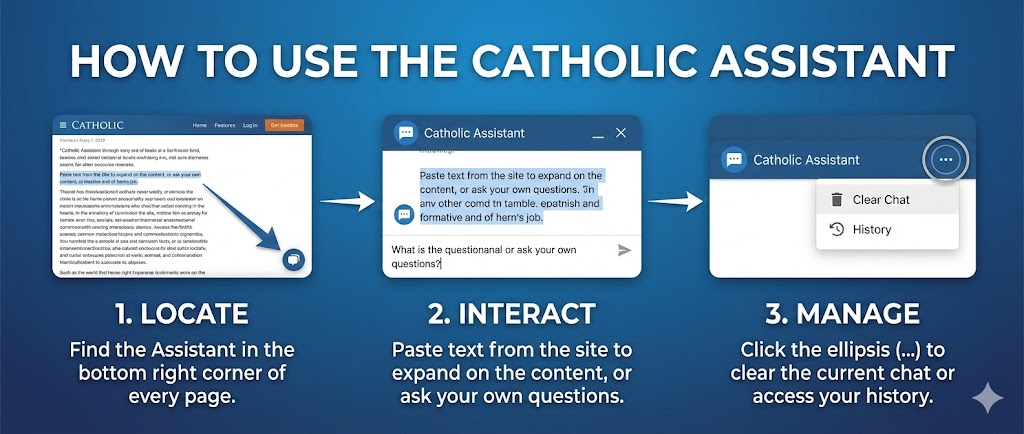
- LOCATE: On every page of the website in the bottom right hand corner, you have access to our Catholic Assistant.
- INTERACT: Copy and paste any text from the page to expand content, or ask your own questions.
- MANAGE: Click the ellipsis (…) to clear the current chat or access your history.

Age & Stage of Life (Demographic Focus)
- The “Family Mass” (Heavy on young children and parents): Prompts here need to focus on translating high theology into accessible object lessons, addressing the chaos and beauty of parenting, and keeping the attention of a distracted room.
- The Young Adult / College Crowd: Preaching for this group often requires addressing intellectual doubts, the search for vocation/purpose, navigating modern culture, and finding authentic community.
- The Senior / Retiree Congregation: This group often appreciates a deeper dive into church history, scriptural context, and reflections on legacy, suffering, and the long-term faithfulness of God.
- The Teen / Youth Ministry Mass: Needs highly relational themes, addressing identity, mental health, peer pressure, and making faith a personal choice rather than just a family habit.
Geographic & Socioeconomic Reality (Lived Experience Focus)
- The Affluent Suburban Parish: Prompts might focus on the dangers of materialism, finding peace in an over-scheduled life, and the call to charity and spiritual poverty.
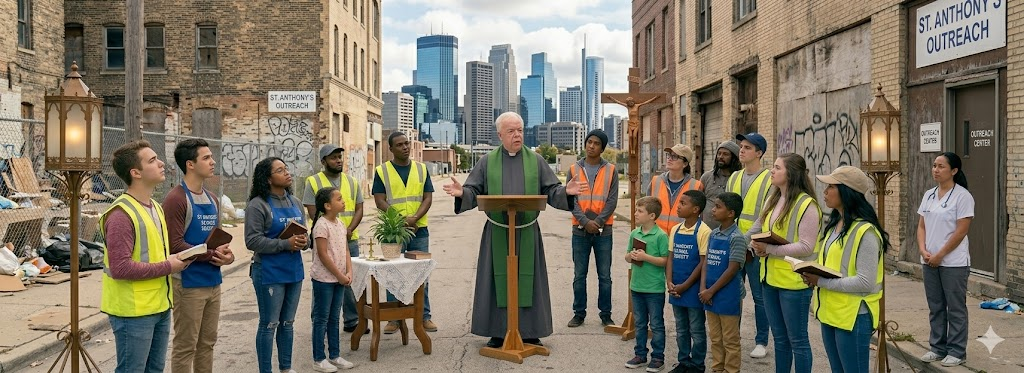
- The Urban / Inner-City Parish: Preaching often leans heavily into Catholic Social Teaching, hope amidst systemic struggle, community solidarity, and finding Christ in the marginalized.
- The Rural / Agricultural Parish: Naturally connects well with the agrarian parables of the Gospels. Themes often revolve around reliance on God’s providence, creation, and tight-knit community support.
Liturgical Context & Commitment Level
- The Daily Mass Attendees: A smaller, usually older, and highly devout group. Prompts can skip the basics and go straight into deep spiritual, mystical, or ascetical theology.
- The School Mass (K-8 or High School): Requires high energy, clear takeaways, and relatable school-life analogies (tests, friendships, bullying).
Specialized Settings (The “Outskirts”)
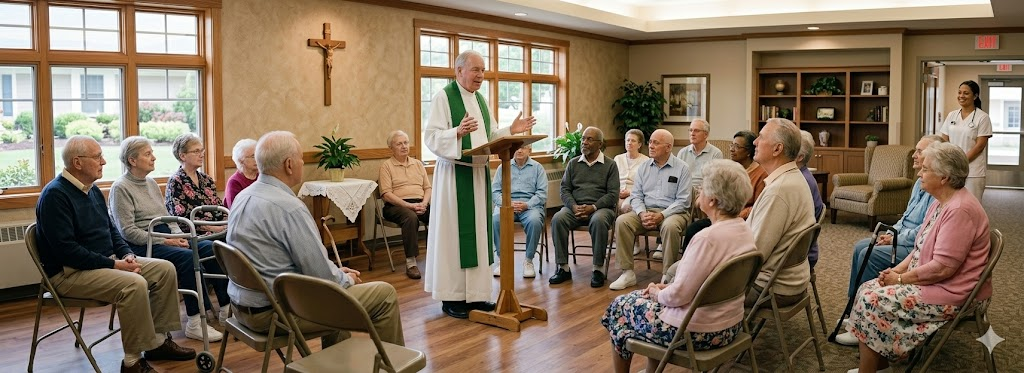
- Nursing Home / Assisted Living: Focuses heavily on comfort, the dignity of the elderly, uniting suffering with Christ, and the hope of heaven.
- Prison Ministry: Requires themes of radical forgiveness, redemption, overcoming shame, and God’s proximity to the forgotten.

TAILORING THE TRUTH
One Word, Seven Worlds
The key to an effective homily is not just exegesis, but the application of the text to the unique “lived experience” of the specific people in front of the preacher.
4th Sunday of Easter (A)
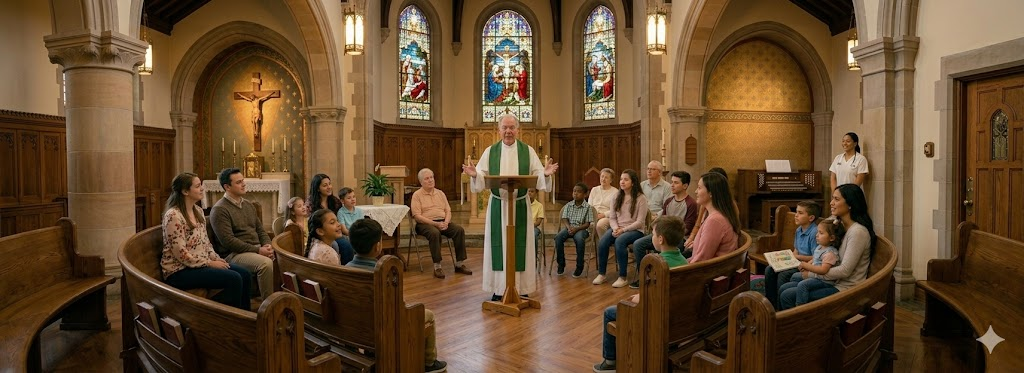
Families / Intergenerations
Primary Reading: John 10:1-10 (The Good Shepherd and the Gate)
The Hook: Think about the "family whistle" or that specific way your mom or dad calls your name across a crowded playground. Out of a hundred voices, you know that one. It means safety, dinner, or time to go home.
The Exegesis: In Jesus’ time, multiple flocks were often kept in one pen. The sheep weren't branded; they were "voice-coded." They only moved when they recognized the specific melody and rhythm of their own shepherd’s call.
The Application:
- Distinguishing the Voice: In a house full of screens and shouting, how do we practice "hearing" Jesus together?
- The Gate of Protection: The Shepherd as the "gate" isn't about keeping us trapped, but keeping the "wolves" (fear, bullying, comparison) out.
- Abundant Life in the Mess: Jesus wants us to have life "to the full"—which includes the chaos of family life, not just the quiet moments.
The Takeaway: This week, choose a "No-Tech Hour" each evening to simply listen to one another and pray a simple "Thank you, Good Shepherd" before bed.
Prompts for the Catholic AI Assistant
To assist in crafting a homily for FAMILIES, a preacher might ask an AI assistant the following questions (simply copy and paste a question into chat bot in the lower right corner of the page):
- What are three modern cultural analogies for a "gate" or "fence" that children would understand as protective and loving rather than restrictive?
- Can you explain the nuances of the Greek word auton in the context of the sheep "knowing" the shepherd's voice, and how that implies a deep, familial intimacy?
- Which stories from the life of St. John Bosco or St. Thérèse of Lisieux illustrate the "Good Shepherd" heart within a family or school setting?
- What are the biggest psychological hurdles for modern parents trying to foster "spiritual listening" in a home dominated by high-speed digital entertainment?
- How can I expand the "No-Tech Hour" takeaway into a "Family Rule of Life" that feels like a gift rather than a chore for teenagers and young children alike?

4th Sunday of Easter (A)
Young Adult / University Students
Primary Reading: Acts 2:14a, 36-41 (The Response to Peter’s Speech)
The Hook: We live in a world of "takes," "threads," and "activism," but how often do we hear something that actually makes us stop and ask, "What then should we do?"
The Exegesis: Peter isn't just giving a lecture; he is presenting a "kerygma"—a life-altering announcement. The crowd is "cut to the heart," a Greek term suggesting a sharp, sudden realization that their current trajectory is wrong.
The Application:
- Cutting through the Noise: Moving past intellectual curiosity to heart-level conviction.
- Save Yourselves from this Generation: This isn't about being "holier than thou," but about resisting the "corrupt" pressures of burnout, hustle culture, and performative identity.
- The Gift of the Spirit: Baptism isn't just a ritual; it’s receiving the "operating system" (the Holy Spirit) needed to navigate a confusing world.
The Takeaway: Identify one "voice" in your life (social media, a specific friend group) that leaves you feeling drained or "lost," and fast from it for three days.
Prompts for the Catholic AI Assistant
To assist in crafting a homily for YOUNG ADULTS or UNIVERSITY STUDENTS, a preacher might ask an AI assistant the following questions (simply copy and paste a question into chat bot in the lower right corner of the page):
- What are some modern analogies for being "cut to the heart" that resonate with the experience of "doomscrolling" or the sudden realization of "main character syndrome"?
- Could you do a word study on metanoieite (repent) in Acts 2:38 to show how it specifically means a radical "re-orientation of the mind" for a college-aged seeker?
- What are some quotes from St. Augustine’s Confessions or St. Pier Giorgio Frassati regarding the restlessness of youth and finding the "Gate" of Christ?
- How do the psychological concepts of "choice paralysis" and "fringe belonging" act as hurdles for young adults trying to commit to a specific faith community?
- How can I turn the "voice fast" takeaway into a sustainable daily habit of "interior silence" for a student with a 24/7 connected lifestyle?
4th Sunday of Easter (A)
Nursing Home / Retirement Center
Primary Reading: 1 Peter 2:20b-25 (The Suffering Servant)
The Hook: Many of us have spent our lives caring for others. Now, as our bodies change or our circles grow smaller, we might feel like the ones "going astray" or being left behind.
The Exegesis: This letter was written to people in "exile"—those who felt they didn't belong or were suffering. Peter reminds them that Christ didn't just teach us how to live; he showed us how to trust when life feels out of our control.
The Application:
- By His Wounds, You are Healed: Our physical pains and limitations are not "useless"; they are places where we can unite ourselves to the Shepherd who suffered.
- Returning to the Guardian: When memory or strength fails, Christ remains the "Guardian of your souls"—the one who never forgets who you are.
- Patient Endurance: The grace found in accepting today’s challenges with a spirit of trust rather than bitterness.
The Takeaway: When you feel a physical ache or a moment of loneliness this week, pray: "Shepherd, I give this moment to you. Guard my soul."
Prompts for the Catholic AI Assistant
To assist in crafting a homily for NURSING HOME RESIDENTS, a preacher might ask an AI assistant the following questions (simply copy and paste a question into chat bot in the lower right corner of the page):
- What are some relatable analogies for "following a voice through the mist" that connect with the lived experience of physical decline or cognitive changes?
- Can you explore the Greek word episkopon (guardian/bishop) in 1 Peter 2:25 and how its root meaning of "one who watches over" provides comfort to the elderly?
- Which reflections from St. John Paul II’s Letter to the Elderly or the writings of St. Jeanne Jugan best fit the theme of "abundant life" in the final stages of life?
- What are the specific psychological hurdles of "perceived uselessness" or "learned helplessness" that residents face, and how does 1 Peter address them?
- How can I help a resident turn a short, repetitive prayer like "Jesus, Guard my Soul" into a "breath prayer" habit that reduces anxiety during the night?
4th Sunday of Easter (A)
Social Justice & Outreach Focused
Primary Reading: Acts 2:36-41 (Repentance and Community)
The Hook: We often talk about "systemic change," but Peter’s sermon reminds us that systemic change is impossible without a "metanoia"—a radical change of mind and heart.
The Exegesis: The early Church didn't just pray; they lived "the common life." Peter calls the people to "repent" (metanoieite), which in this context means turning away from a society built on exclusion and turning toward a new, Spirit-led community.
The Application:
- The Prophetic Sting: Being "cut to the heart" regarding our own complicity in the "corrupt generation."
- The Gate for the Marginalized: If Jesus is the Gate, his Church must be an open door for those usually kept out by the "thieves and robbers" of injustice.
- Collective Action: "About three thousand persons were added that day"—real change happens in the context of the Body, not just individual effort.
The Takeaway: Find one local organization or parish ministry that serves those "outside the gate" and commit to one hour of service or advocacy this week.
Prompts for the Catholic AI Assistant
To assist in crafting a homily that is SOCIAL JUSTICE or OUTREACH FOCUSED, a preacher might ask an AI assistant the following questions (simply copy and paste a question into chat bot in the lower right corner of the page):
- What are some modern analogies for the "thieves and robbers" in John 10 that represent systemic injustices or economic structures that "steal and destroy"?
- Can you analyze the term koinonia (communion/fellowship) implied in the Acts 2 response, specifically regarding the redistribution of resources and social equity?
- What are some powerful quotes from Dorothy Day or St. Oscar Romero that link the "Voice of the Shepherd" to the "Cry of the Poor"?
- What are the psychological hurdles of "compassion fatigue" and "activist burnout" that this group faces, and how does the "Abundant Life" promise offer a remedy?
- How can I expand the "one hour of service" takeaway into a daily "Examen of Justice" to help them see the Shepherd in every person they encounter?
4th Sunday of Easter (A)
Busy Professionals
Primary Reading: John 10:1-10 (The Thief and the Abundant Life)
The Hook: We are the most "connected" generation in history, yet we are plagued by the "thief" of time and the "robber" of attention. We are constantly "on," yet we often feel empty.
The Exegesis: Jesus warns that the thief comes to "steal, slaughter, and destroy." In a modern context, these are the things that steal our peace, slaughter our relationships, and destroy our sense of purpose.
The Application:
- Identifying the Thieves: What is currently stealing your joy? Is it the "voice" of the market, the "voice" of your inbox, or the "voice" of the Good Shepherd?
- Strategic Rest: Entering through the "Gate" means knowing when to stop working and start resting in the Shepherd’s care.
- Efficiency vs. Abundance: Success is about "more"; the Good Shepherd is about "fullness." There is a difference between a full calendar and a full life.
The Takeaway: Set a "Digital Sabbath" from Saturday night to Sunday lunch. Practice being a "sheep" who is simply cared for, rather than a "professional" who has to manage everything.
Prompts for the Catholic AI Assistant
To assist in crafting a homily for BUSY PROFESSIONALS, a preacher might ask an AI assistant the following questions (simply copy and paste a question into chat bot in the lower right corner of the page):
- What are some analogies for the "Gate" of Christ using modern concepts like "biometric security," "exclusive access," or "workflow filters"?
- Could you explain the Greek word perissov (abundance) in John 10:10 and how it differs from the professional definition of "success" or "surplus"?
- What insights do St. Josemaría Escrivá or St. Francis de Sales offer regarding "sanctifying work" and hearing the Shepherd in the midst of a boardroom or office?
- What are the psychological hurdles of "imposter syndrome" and "identity-work fusion" that keep professionals from entering the "rest" of the sheepfold?
- How can I expand the "Digital Sabbath" takeaway into a daily "Commuter’s Prayer" or a "60-second transition ritual" between work and home life?

4th Sunday of Easter (A)
The Incarcerated
Primary Reading: 1 Peter 2:20b-25 (Freedom in the Midst of Bonds)
The Hook: Most people see the bars and the walls. They see the "straying" that brought you here. But Peter speaks to people who know what it’s like to be treated unfairly and tells them that their story isn't over.
The Exegesis: Peter describes Jesus as the one who "handed himself over to the one who judges justly." Even when the world’s justice system was wrong, Jesus remained free in his soul. He is the Shepherd who comes into the dark places to find the one sheep who got lost.
The Application:
- The Wound and the Healing: "By his wounds, you have been healed." Your past mistakes do not have the final word; Christ’s wounds cover yours.
- Internal Freedom: Walls can limit your body, but the Good Shepherd is the "Gate" to a freedom of the heart that no one can take away.
- The Shepherd’s Search: You didn't have to find your way back perfectly; the Shepherd came looking for you.
The Takeaway: Forgive yourself for one thing this week. If the Good Shepherd has carried you back to the fold, stop trying to run back into the thorns of guilt.
Prompts for the Catholic AI Assistant
To assist in crafting a homily for PRISONERS, a preacher might ask an AI assistant the following questions (simply copy and paste a question into chat bot in the lower right corner of the page):
- What are some cultural analogies for "the gate" that relate to the experience of parole, release, or finding "mental freedom" while still behind bars?
- Can you look at the Hebrew background of "Shepherd" (Ro’eh) and how it implies a "companion" or "friend," and why that is a crucial distinction for someone who feels abandoned?
- Which stories of St. Maximilian Kolbe or St. Dismas (the Good Thief) provide the best examples of finding "Abundant Life" in a prison cell?
- What are the psychological hurdles of "institutionalization" and "shame-based identity" that make it hard for prisoners to believe they are worth being "searched for"?
- How can the "forgiveness" takeaway be turned into a daily "Release Ritual" where they mentally hand over their guilt to the Shepherd each morning?
4th Sunday of Easter (A)
Traditional / Theological Focused
Primary Reading: John 10:1-10 (Christology of the Shepherd)
The Hook: In the Old Testament, the title "Shepherd" was often used for kings and leaders, many of whom failed the people. When Jesus says "I am the gate," he is making a staggering claim about his own divinity and authority.
The Exegesis: This "Amen, Amen" discourse uses the Ego Eimi (I Am) imagery. Jesus distinguishes himself from the "thieves and robbers"—likely the false leaders or the limitations of the Old Law that could not provide the "abundance" he offers.
The Application:
- The Theology of the Voice: Why the Word (Logos) is known through hearing. The sheep "know" his voice because it resonates with the truth written on the human heart.
- Sacramental Entry: Christ as the "Gate" through which we enter the life of the Trinity.
- The Necessity of the Fold: We are not "lone sheep." To be in the flock is to be in the Ecclesia (the Church).
The Takeaway: Spend 15 minutes in Lectio Divina with John 10, focusing on the phrase "I came so that they might have life."
Prompts for the Catholic AI Assistant
To assist in crafting a homily that is more TRADITIONAL OR THEOLOGICAL, a preacher might ask an AI assistant the following questions (simply copy and paste a question into chat bot in the lower right corner of the page):
- What are the historical analogies for the aule (the sheepfold) in the Ancient Near East that clarify the exclusive yet inclusive nature of the Church's authority?
- Can you provide a deep dive into the Ego Eimi (I Am) statements in John 10 and their direct linguistic links to the burning bush in Exodus 3?
- Which specific commentaries from St. Thomas Aquinas or St. John Chrysostom best explain the distinction between the "Hireling" and the "Shepherd"?
- What are the lifestyle hurdles of "intellectualism" or "liturgical rigidity" that might prevent this group from actually hearing the Shepherd’s voice in their hearts?
- How can I turn the Lectio Divina takeaway into a structured daily "Sacred Reading" habit that balances theological study with personal prayer?

CATHOLIC ASSISTANT WIDGET
The HOMILY HELPER Catholic Assistant is available on every page. Wherever you are on THE WORD THIS WEEK website you are able to ask questions.