Liturgy, Liturgy Notes, Liturgy Planner, Sunday Prep, Planning for Mass
Liturgy Notes, Liturgy Planner, Sunday Prep, Planning for Mass
June 7, 2026
⭐⭐⭐ TBD

⬅️  ➡️
➡️





Will be posted on May 31
for June 8, 2026 liturgy
The Church
Governments and Salvation of the World
Those Burdened by Adversity
Local Parish / Faith Community
RESOURCES
General Instruction of the Roman Missal
A Simple Guide to Liturgical Enviornment (DIocese of New Ulm PDF)
Common Questions on Liturgical Norms – by Father Edward McNamara, professor of liturgy at the Regina Apostolorum Pontifical Athenaeum

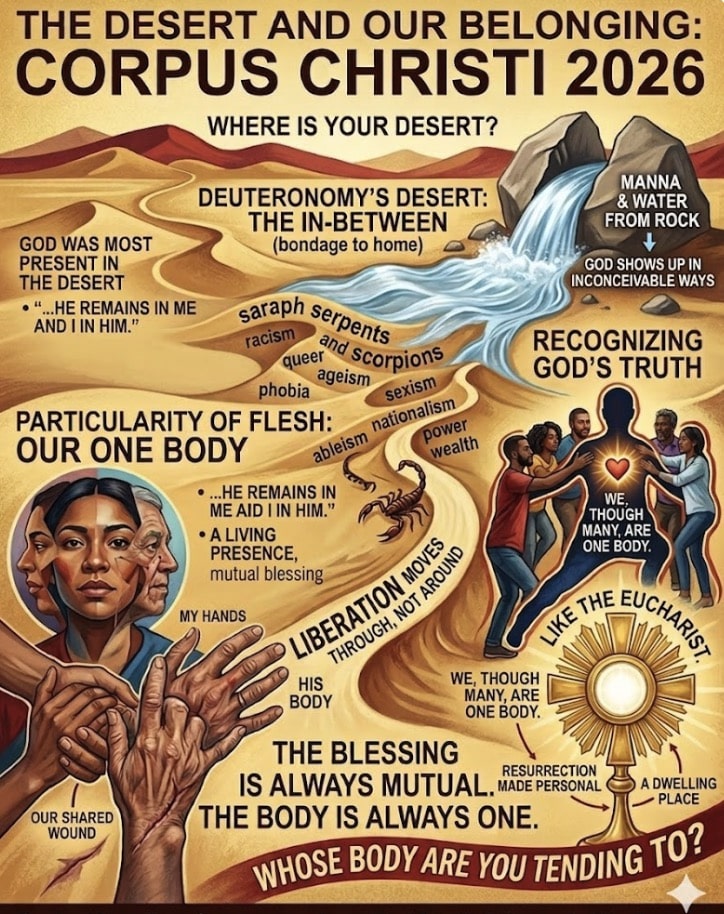
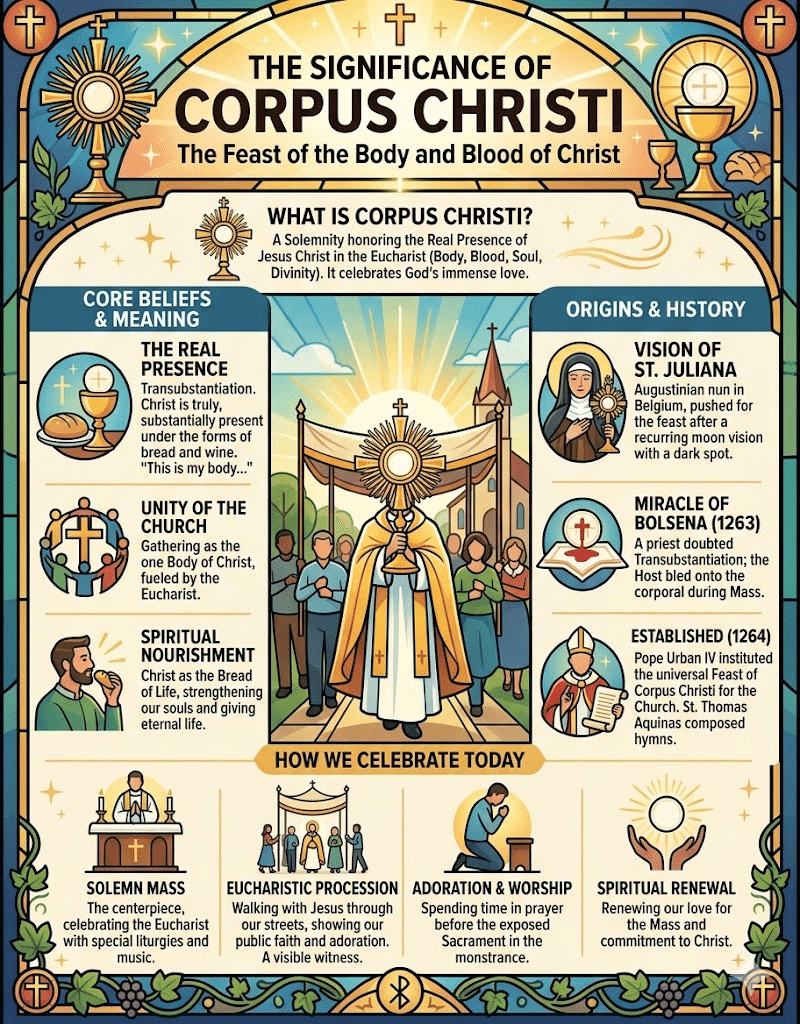
THE WORD THIS WEEK infographics are created using using GOOGLE’S AI Gemini 2.5 Pro. You are free to use the above infographic in any non-profit ministry. Please give credit to TheWordThisWeek.net and Catholic Women Preach video series.
Timestamped Summary
God's presence is intimately tied to human vulnerability, bodily experiences, and the act of giving and receiving love, as seen in the Eucharist and reflected in various personal and communal experiences.
- 00:00 The Solemnity of the Body and Blood of Christ celebrates God's presence in the Eucharist, where Jesus invites us to recognize His real presence in the form of bread and blood.
- 01:05 Caring for her terminally ill father taught Elise that receiving and giving love through bodily vulnerability requires courage, intimacy, and a deep sense of surrender.
- 02:33 Living with someone who initially struggled with one's queer relationship can foster authentic understanding, love, and transformation, even amidst differing views.
- 03:42 God shows up in desolate and oppressive situations, providing sustenance and liberation in unexpected ways, mirroring the experiences of those in between bondage and freedom.
- 04:48 Liberation from oppression may not be achieved through inclusion, but through embracing our shared humanity and particularity, where God is present in our wounded and embodied experiences.
- 05:37 Belonging to God is not something to be earned or achieved, but rather recognized as a truth, where God's ever-present love dwells in us, like in the Eucharist, making us one body.
- 06:23 The Eucharist is a living presence that shapes one's identity, where the act of giving and receiving is a mutual blessing, as reflected in the personal experience of Christ's resurrection.
- 07:00 The most faithful act can be tending to one's own body, love, and life as a sacred expression of God's creation, especially for marginalized communities like queers.

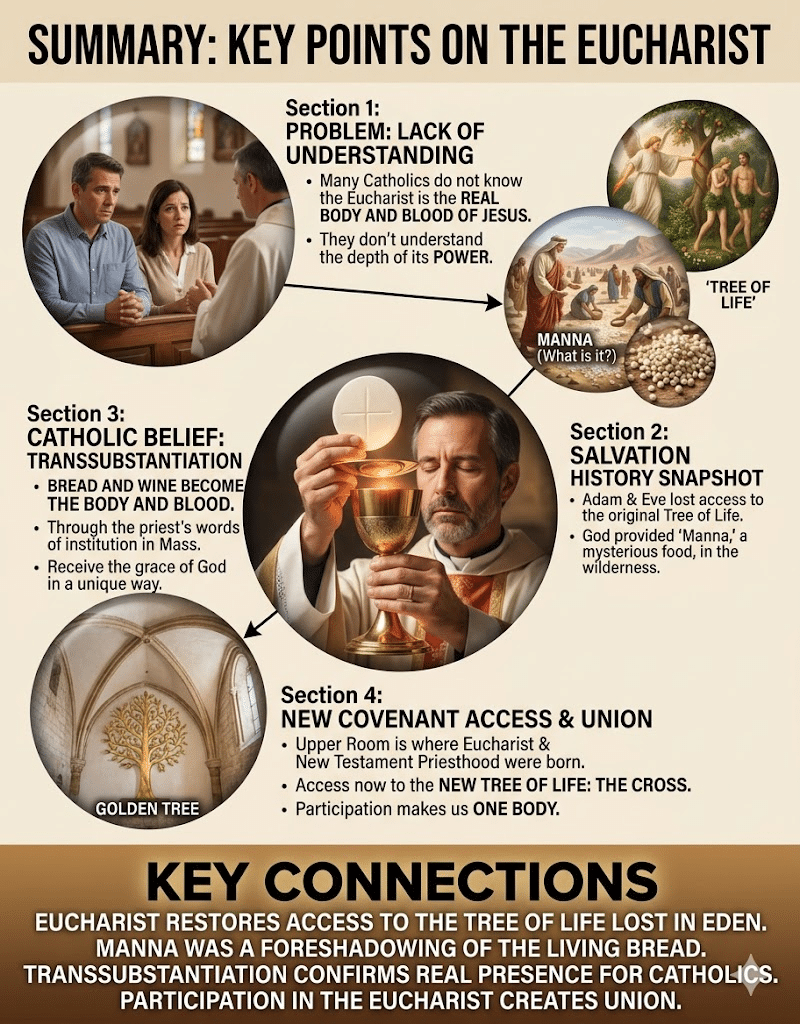
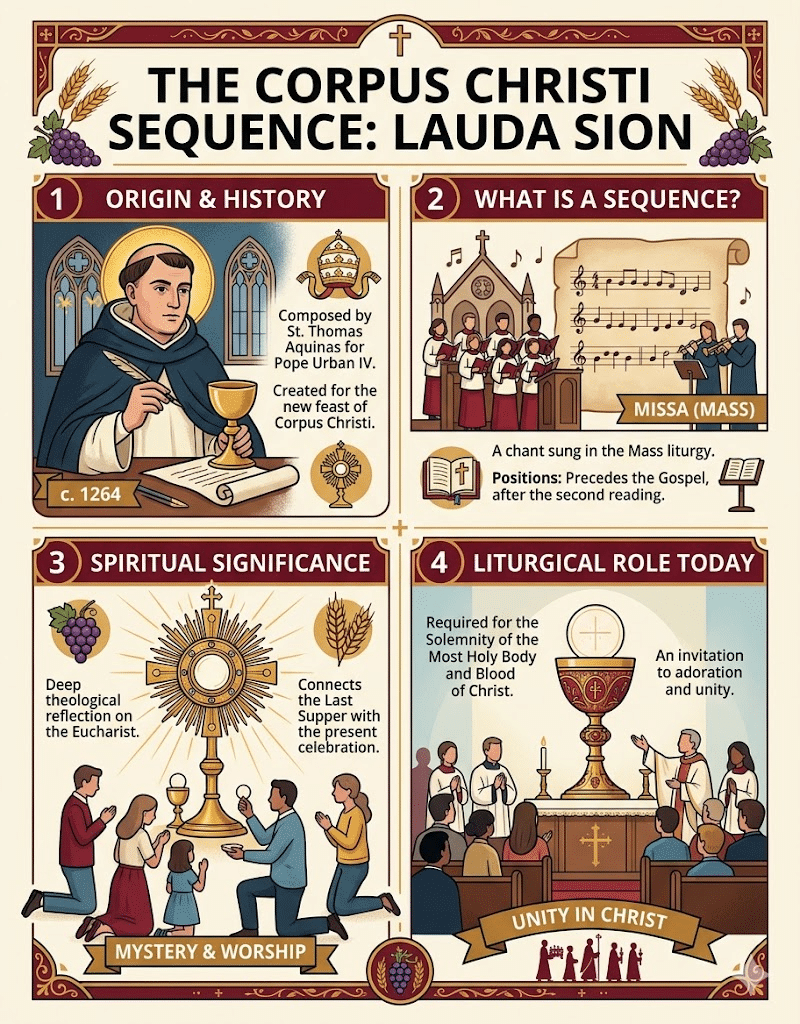
THE WORD THIS WEEK infographics are created using using GOOGLE’S AI Gemini 2.5 Pro. You are free to use the above infographic in any non-profit ministry. Please give credit to TheWordThisWeek.net and Sundays with Ascension video series "Encountering the Word."
Timestamped Summary
Through the Eucharist, Catholics believe that God provides His body, blood, soul, and divinity, offering a powerful source of grace and unity with Christ and with each other.
- 00:00 Catholics believe that through the Eucharist, God gives us His body, blood, soul, and divinity, providing a unique and powerful source of grace that is often misunderstood.
- 00:58 God blocked Adam and Eve from eating the fruit of the tree of life after they sinned, to prevent them from perpetuating a life of sin in a state of death.
- 01:45 God provided for His people in the wilderness during the Exodus by giving them manna, a mysterious food that met their needs.
- 02:38 Jesus says that unless you eat his body, which is the living bread from heaven, you have no life in yourself.
- 03:08 Jesus emphasizes that his flesh and blood are the true food and drink for eternal life, and those who receive them in the Eucharist will abide in him and live forever.
- 04:07 The early church fathers saw the cross of Jesus as the tree of life, whose fruit is his body and blood, now accessible to us through the Eucharist.
- 05:04 Catholics uniquely believe in transubstantiation, where the bread and wine become the literal body and blood of Christ through the words of institution in the Mass.
- 05:40 Through participating in the Eucharist, we become one with Christ and with each other, as the bread and wine totally become Christ's body and blood.
Video courtesy of the Diocese of Colorado Springs
↩️ ↪️ Bishop James Golka
Body and Blood of Christ (A)


THE WORD THIS WEEK infographics are created using using GOOGLE’S AI Gemini 2.5 Pro. You are free to use the above infographic in any non-profit ministry. Please give credit to TheWordThisWeek.net and Diocese of Colorado Springs video series.
Timestamped Summary
Actively participating in the Eucharist by bringing personal intentions to Mass and uniting them with the priest's prayers can increase the sacrament's spiritual impact and foster a deeper connection with God and the global Church.
- 00:00 Bishop Golka encourages a deeper understanding and participation in the Eucharist, suggesting bringing personal intentions to Mass to offer alongside the priest's published intention.
- 01:35 When everyone present at Mass offers their personal intention, the Mass can have a greater effect in the world than imaginable.
- 01:56 The reflection focuses on the significance and spiritual importance of the Most Holy Body and Blood of Christ.
- 01:54 The prayer "Our Father" is believed to honor and utilize the expressed intentions of the faithful.
- 01:59 Bringing a personal intention to Mass and sharing it with others makes the sacrament more meaningful and connects us with the global Church.
- 02:14 During the collection, put in something symbolic of your work, something you're grateful for, and an offering to give back to God.
- 02:32 By being more intentional during Mass, placing personal joys and struggles on the altar, and receiving communion, one can invite the Holy Spirit to bring transformation and healing.


THE WORD THIS WEEK infographics are created using using GOOGLE’S AI Gemini 2.5 Pro. You are free to use the above infographic in any non-profit ministry. Please give credit to TheWordThisWeek.net and Dominican Friars, Province of St. Albert the Great.
Timestamped Summary
Corpus Christi Sunday celebrates the Eucharist, in which Christ makes himself genuinely present among believers through bread and wine, uniting them with Him and transforming them into the mystical body of Christ.
- 00:00 Corpus Christi Sunday celebrates the Eucharist, or the body and blood of Christ, through the bread and cup of blessing that symbolize participation in Christ's body and blood.
- 00:57 The Eucharist, a gift of Christ's continuing presence, is reflected in the story of Moses and the manna in the desert, a mysterious food that provokes the question "what is it?"
- 01:50 Despite defining Jesus Christ as the word God incarnate, uncertainty remains about his true identity, but the Eucharist is clearly Christ making himself genuinely present among us.
- 02:26 Jesus is the living bread who nourishes us spiritually, and through the Eucharist, we are united with Him.
- 03:14 The priest recites the words of institution during the Eucharistic prayer, specifically before the consecration.
- 03:35 The priest calls upon the holy spirit to transform bread and wine, saying "make holy", rather than performing the miracle himself.
- 03:57 Through the power of the Holy Spirit, bread and wine become the actual body and blood of Christ, making Him really present among the assembly.
- 05:02 Receiving Christ's body and blood transforms believers into the mystical body of Christ, uniting them in a life lived in the spirit.
THE WORD THIS WEEK infographics are created using using GOOGLE’S AI Gemini 2.5 Pro. You are free to use the above infographic in any non-profit ministry. Please give credit to TheWordThisWeek.net and Dominican Friars, Province of St. Albert the Great.

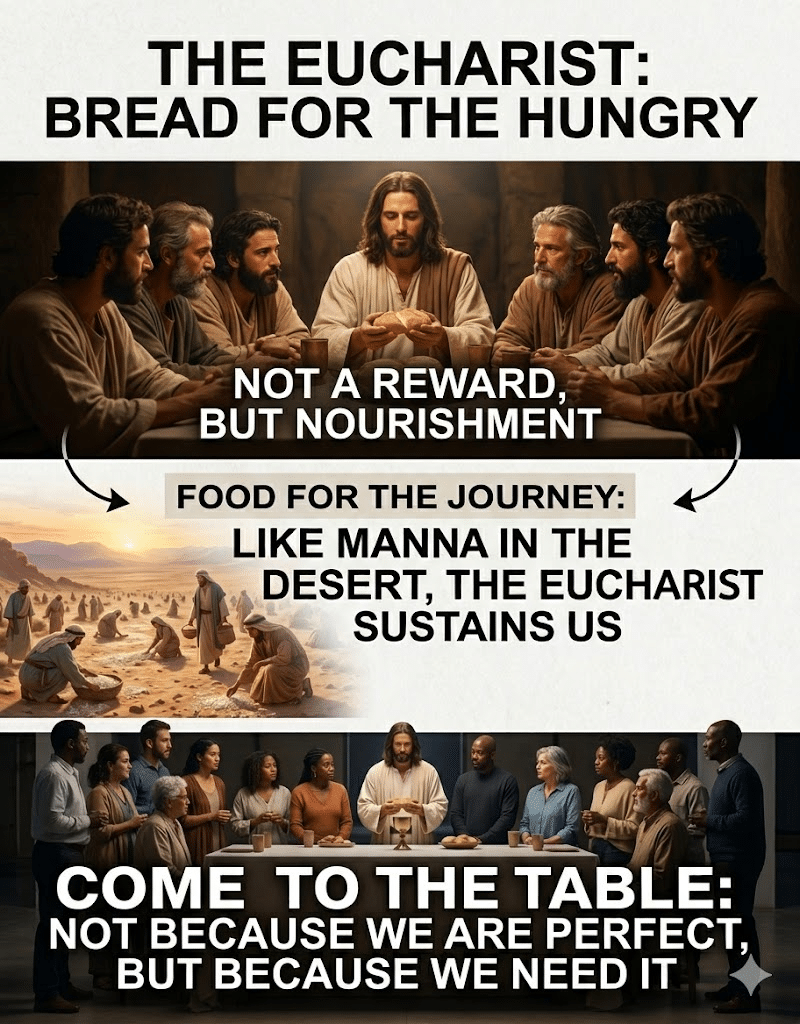
THE WORD THIS WEEK infographics are created using using GOOGLE’S AI Gemini 2.5 Pro. You are free to use the above infographic in any non-profit ministry. Please give credit to TheWordThisWeek.net and THE JESUIT POST.
Summary
The Eucharist is not a reward for good behavior, like ice cream. It’s bread for the hungry. Hi, I’m Fr. Brian Strassburger, and this is my One Minute Homily. Jesus tells his disciples that they must eat his flesh and drink his blood. And this is exactly what he gives us at the Last Supper when he takes bread and wine, blesses them, and shares them as his body and blood. We follow his instructions every time we go to Mass and share in the Eucharist. You might notice that Jesus did not tell his disciples to eat his body, but only if they had earned it, like a parent rewarding a kid for a good report card. That just doesn’t seem to be his intention. Rather, the Eucharist is like the manna that fed the Israelites in the desert: it’s food for the faithful on their journey. So as we continue on our own journey of faith, let’s respond to the invitation of Jesus to gather and share at the Eucharistic table. Not because we’re perfect, but because we need it.
Video courtesy of Frank Pavone at Priests for Life
↩️ ↪️ Priests for Life
Body and Blood of Christ (A)


THE WORD THIS WEEK infographics are created using using GOOGLE’S AI Gemini 2.5 Pro. You are free to use the above infographic in any non-profit ministry. Please give credit to TheWordThisWeek.net and PRIESTS FOR LIFE.
Timestamped Summary
The Eucharist, as a sacrament of life, provides a foundation for a pro-life commitment, emphasizing the value of human life, self-sacrifice, and surrender to God's will, and enabling believers to see the inherent dignity and worth of all human beings, including the unborn.
- 00:00 The Eucharist, as a sacrament of life, helps understand the pro-life commitment to defend unborn brothers and sisters, with Christ's sacrifice and resurrection restoring life and offering eternal life to all.
- 01:15 The Eucharist may not differ in appearance, smell, taste, or feel, but its truth is revealed through hearing the Lord's words, "This is my body."
- 01:34 Faith in the Eucharist enables us to see the unborn child, the poor, and the destitute as our neighbors.
- 01:53 The Eucharist emphasizes surrendering personal choices to God's will, contrasting with the pro-choice mentality that prioritizes individual rights over divine guidance.
- 02:37 Defending the unborn is a fundamental expression of love, where one sacrifices not the other person, but rather oneself for their good, contrary to the selfish logic of abortion.
Video courtesy of Society of Our Lady of the Most Holy Trinity
↩️ ↪️ SOLT Liturgy Prep
Body and Blood of Christ (A)

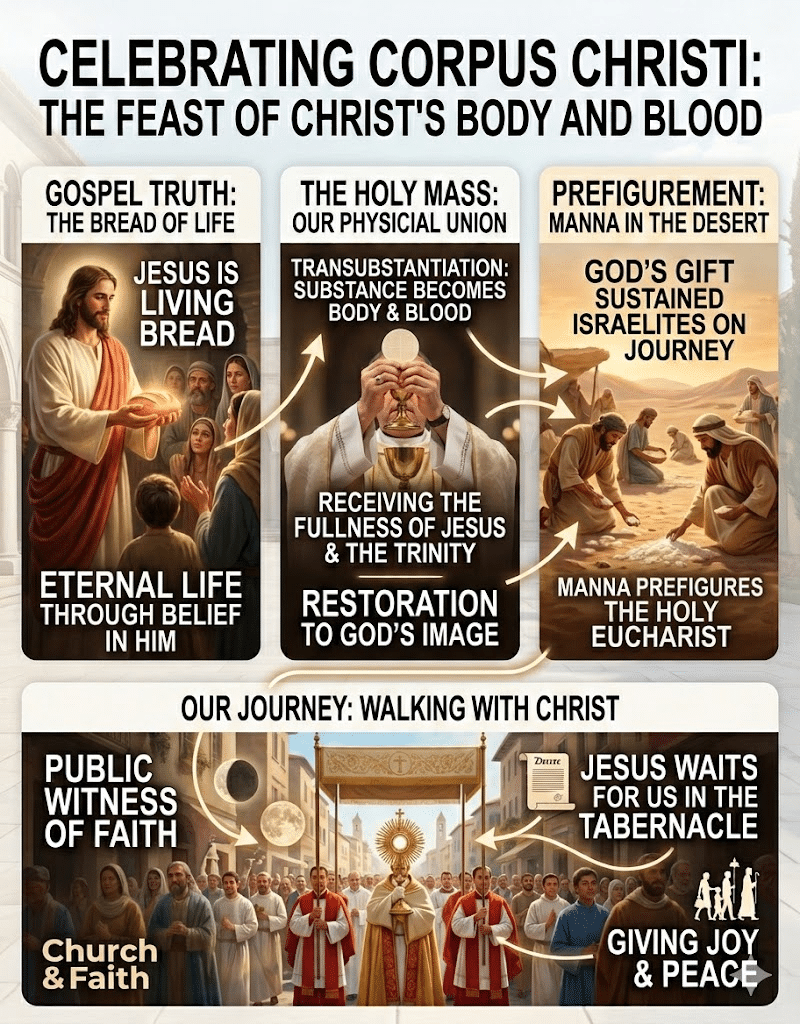
THE WORD THIS WEEK infographics are created using using GOOGLE’S AI Gemini 2.5 Pro. You are free to use the above infographic in any non-profit ministry. Please give credit to TheWordThisWeek.net and Society of Our Lady video series "Liturgy Prep."
Timestamped Summary
Corpus Christi celebrates the presence of Jesus Christ in the Eucharist, where He gives Himself to believers, blessing them with joy, peace, and spiritual sustenance.
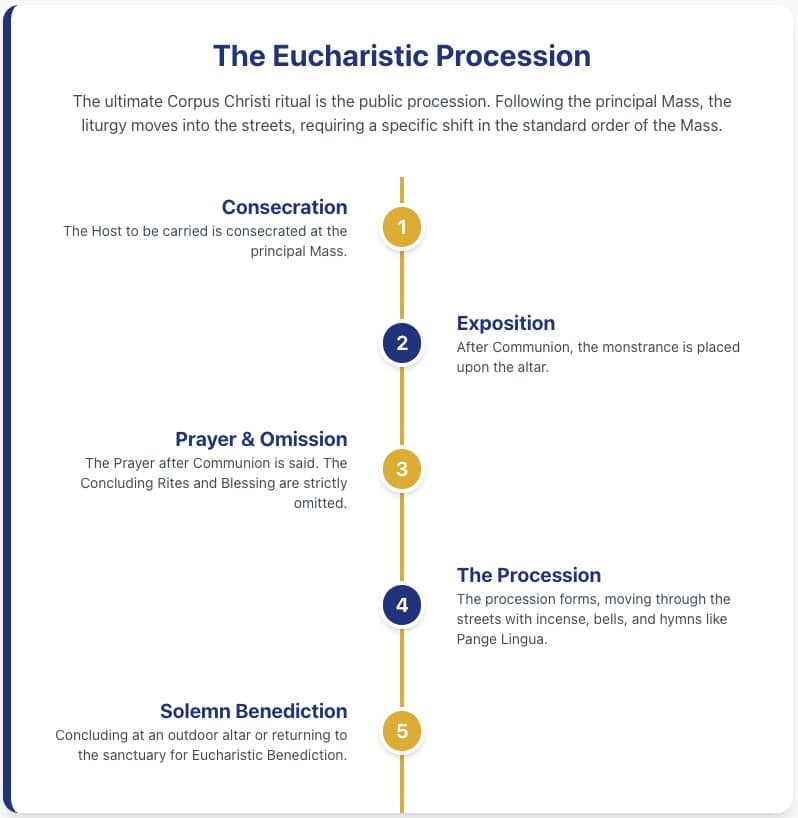
- 00:00 Jesus Christ's body and blood are celebrated on Corpus Christi, with Eucharistic processions symbolizing His presence and blessings, as He says, "I am the living bread that came down from heaven" in John 6.
- 00:57 In Holy Communion, we receive the fullness of Jesus' body, blood, soul, and divinity, as well as the fullness of the Father and the Holy Spirit.
- 01:32 He blesses us with deep joy and peace, restoring us to his original image and lightness.
- 01:39 God sustains us through life's trials with His body and blood, just as He provided manna to the Israelites on their journey to the promised land.
- 02:16 Jesus reaffirms his desire to walk with us through the Eucharist, where he gives himself to be one with us and remain forever, and we ask Mary to help prepare our souls to receive him worthily.
Video courtesy of Eternal Word Television Network
↩️ ↪️ The Word on the Word
Body and Blood of Christ (A)

THE WORD THIS WEEK infographics are created using using GOOGLE’S AI Gemini 2.5 Pro. You are free to use the above infographic in any non-profit ministry. Please give credit to TheWordThisWeek.net and EWTN video series "The Word on the Word."
Timestamped Summary
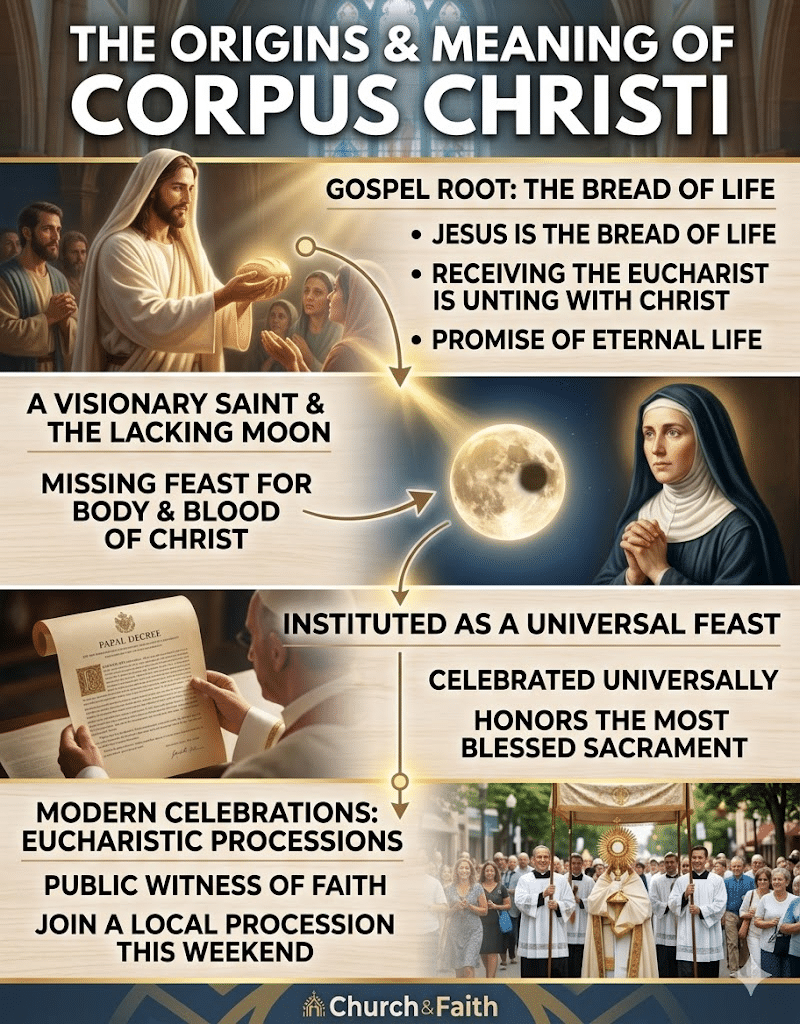
The Feast of Corpus Christi is a celebration honoring the union with Jesus Christ through receiving the Eucharist, which is believed to be His body and blood.
- 00:00 The Feast of Corpus Christi honors the union with Jesus Christ through receiving the Eucharist, which is His body and blood.
- 00:29 The feast of Corpus Christi, celebrating the Body and Blood of Christ, originated from Saint Juliana of Liege's visions and is marked by Eucharistic processions in Catholic churches.
Scroll down page for Fr. Lawrence Mick Infographic
Liturgy Notes

Body and Blood of Christ (A)


CATHOLIC SAINTS & FEASTS (5:57)


Body and Blood of Christ (A)
Corpus Christi Planning Notes
The Word and the Bread
Our first reading for this solemnity includes lines that will be familiar to people: “not by bread alone does one live, but by every word that comes forth from the mouth of the Lord.” Jesus quotes those lines in response to the temptation in the desert right after his baptism by John the Baptist. Neither Moses nor Jesus were referring directly to the Eucharist, but we might ask ourselves how well we live by “every word” that comes forth from the mouth of Jesus.
The Double Command at the Last Supper
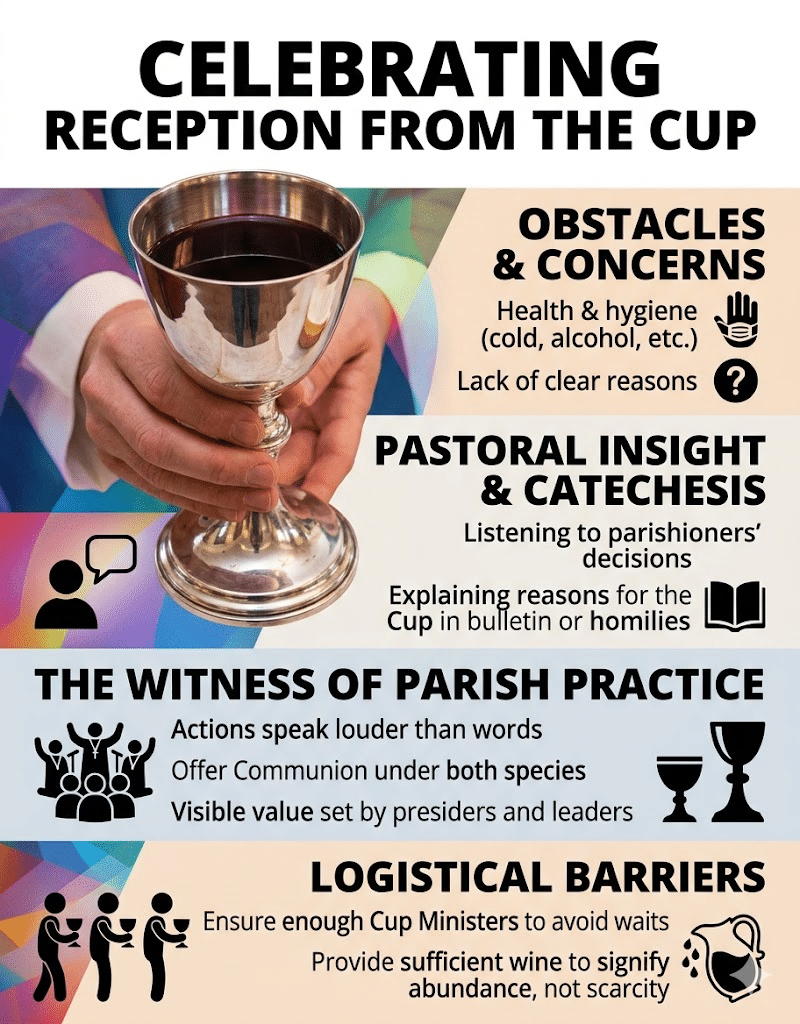
At the Last Supper, he spoke words that we recall in the midst of the Eucharistic Prayer at every Mass: “Take and eat ... this is my body. Take and drink ... this is the cup of my blood.” We do rather well at heeding his first command, but many Catholics still reject his second one, taking only the bread at Communion and passing by the cup.
There are probably many reasons for this behavior. One of the biggest is that we are still trying to recover from centuries when church leaders denied the cup to the faithful. Old habits die hard, and nowhere is this truer than in ritual behavior. Many Catholics grew up taking only the bread, and they simply continue that practice.
Obstacles to Receiving the Cup
Some people are concerned about health issues. Some may be alcoholic and need to avoid all alcohol. Some may have a cold and are simply being considerate of others. Some just don’t see any good reason to share the blood of Christ, whether through lack of catechesis or refusal to accept such education.
Strategies for Pastoral Understanding and Catechesis
It might be helpful for planners to query a number of parishioners who skip the cup as to why they make this decision—not in a judgmental way but just seeking to understand. That might give a more solid basis for efforts to lead parishioners to fully participate in this sacrament as Jesus intended.
If the issue is understanding why the church restored Communion from the cup, you can offer explanations in the bulletin or in homilies. If the concern is medical, you can provide statements from the Centers for Disease Control and Prevention that assure people that this is not a problem, etc.
The Witness of Parish Practices
Actions, of course, speak louder than words. Planners should also consider whether parish practices contribute to the problem. If Communion is offered under only one species at some Sunday Masses, this surely reinforces the sense that it doesn’t really matter. The same is true for daily Masses, funerals, weddings, and all other Masses. If presiders and parish leaders don’t clearly value Communion under both species, why would we be surprised if parishioners get that message?
Another indicator that Communion from the cup is not valued is having too few ministers of the cup at Masses. If this results in “traffic jams” during the Communion procession, many will simply skip the cup rather than wait behind a line of people.
And if there is regularly too little wine to last throughout the Communion procession, that also communicates a belief that it really is not important. (This may happen occasionally if you misjudge, but if it is happening often, increase the amount of wine in the cups to avoid running out.) Err on the side of plenty rather than scarcity.
Full Series: Cycle A Resources
OCP MUSIC

Body and Blood of Christ (A)
Entrance
The Feast Meant for Everyone (Tom Booth and Sarah Hart)
Breaking Bread #366
This thoughtful song is a reminder to us of how everyone is called to the table of the Lord.
Response & Acclaim
Response & Acclaim

Praise the Lord, Jerusalem (Tom Tomaszek)
Spirit & Psalm 2026: p. 220
Tom Tomaszek’s ballad-style setting of Psalm 147 is an apt Responsorial for this solemnity.
2026 PLAYLIST (152 VIDEOS)

Alleluia: Mass of Renewal (Curtis Stephan)
Spirit & Psalm 2026: p. 224
The verse text from John 6 is Jesus’ teaching on the Eucharist.
2026 PLAYLIST (152 VIDEOS)
Corpus Christi Sequence

Corpus Christi Sequence (James Poppleton)
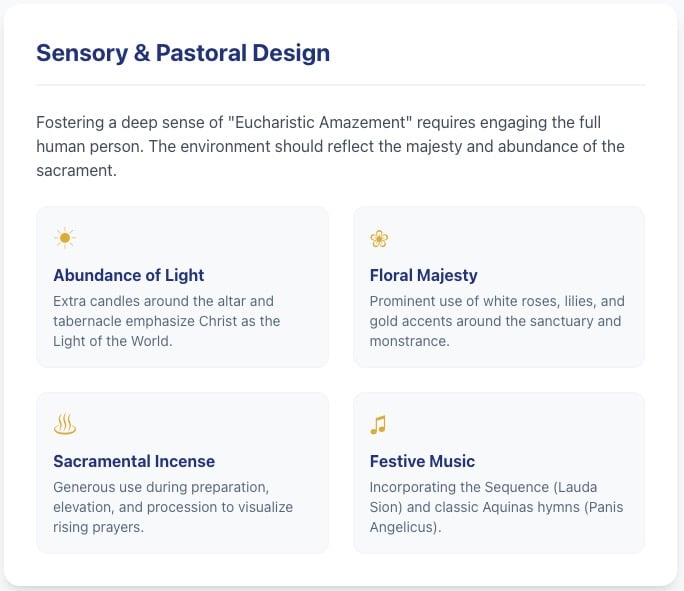
The Sequence (pre-Gospel song) is optional on this day. Those communities who wish to sing it will find this contemporary setting very accessible. You will find the sheet music in the link above.
Presentation & Preparation
Presentation and Preparation

Bread of Angels (Curtis Stephan)
Breaking Bread #378
This exquisite Eucharistic anthem is a thoughtful blending of old and new. Utilizing traditional text by St. Thomas Aquinas, Curtis also pays homage to the cherished “Panis Angelicus” by Cesar Franck.
Communion
Communion

In the Breaking of the Bread (Timothy R. Smith)
Spirit & Song #251; Breaking Bread #173
The Solemnity of Corpus Christi builds on our remembrance of the Lord’s Supper on Holy Thursday. So it is appropriate today recall the disciples’ Easter recognition of the Risen Jesus in the breaking of the bread.
THE COMMONS / LITURGY BLOG
Sending Forth
Sending Forth

All that We Have Seen (Sarah Hart)
Breaking Bread #391
We are sent into the world from this Eucharist to share what we have seen, heard and received. “We go forth to serve the Lord.”
Liturgy Blog is a weekly liturgy planning resource for musicians, liturgists, homilists, youth groups, faith sharing groups, and all who look to the liturgical readings for inspiration and nourishment. Join Ken Canedo as he breaks open the Scripture and suggests tracks from the Spirit & Song contemporary repertoire.
Top Two Online Resources for Lectors
Body and Blood of Christ (A)


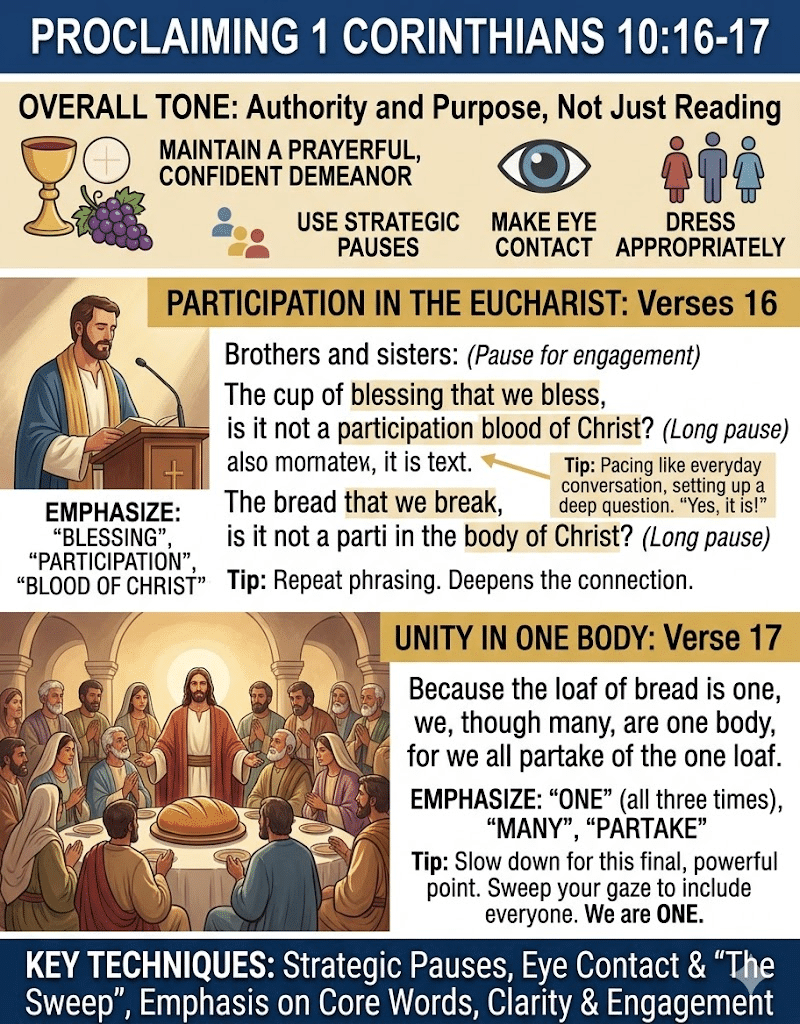
Infographic content courtesy of Greg Warnusz.
Body and Blood of Christ (A)
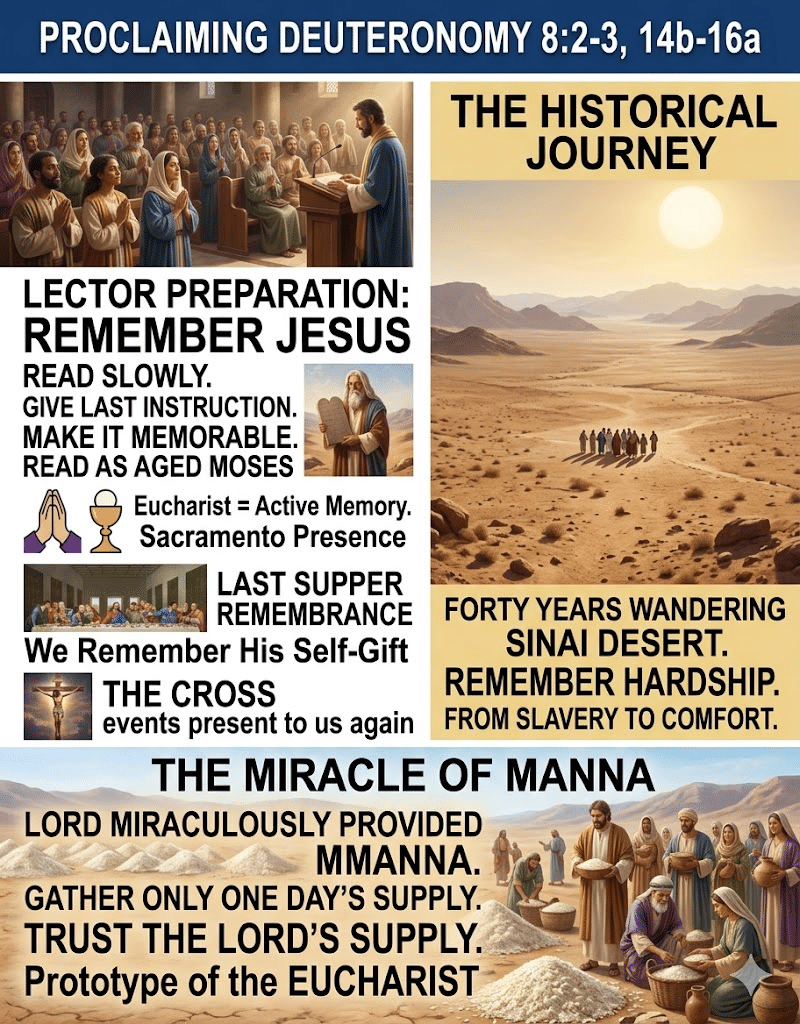

Body and Blood of Christ (A)

Infographic content courtesy of Greg Warnusz.
Body and Blood of Christ (A)
Catholic Lectionary Readings
UNITED STATES (USCCB) — Monthly Calendar / Sunday’s Readings