Homilies
Homilies
May 31, 2026
⭐⭐⭐ Search for Meaning



Glory and Praise For Ever!
Most Holy Trinity (A)
Click on above banner to SHOW/HIDE content.


SDS


CMF




PAPAL HOMILIES



RECOMMENDED
The Augustinian Province of St. Thomas of Villanova maintains a dedicated “Homilies” page with reflections grounded in the Confessions and the Rule of St. Augustine.
✍️ Augustinian Province – Weekly Homilies
📺 Fr. Paul Galetto
📺 Fr. Tom McCarthy
✍️ Fr. Kieran J. O’Mahony
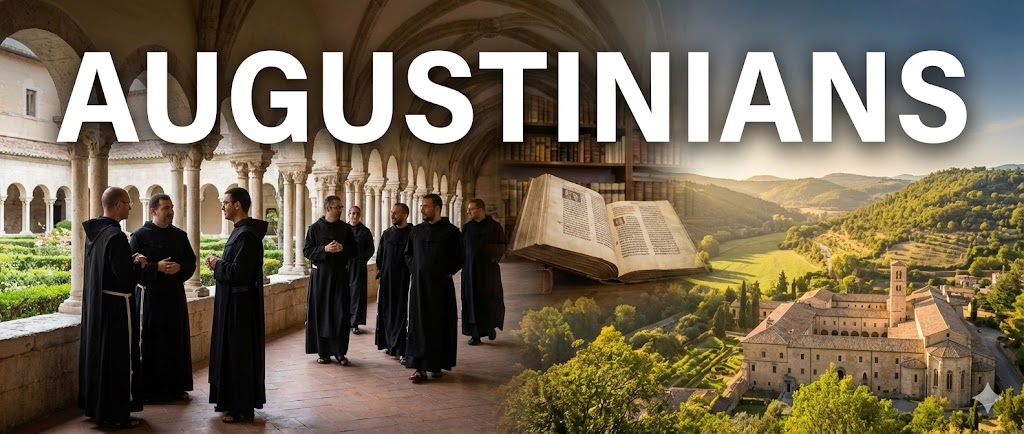
Core Charism: Interiority (searching for God within), community life (“one mind and one heart on the way to God”), and the restless heart that finds repose only in God.
Most Holy Trinity (A)
Primary Scripture: 2 Corinthians 13:11–13
Key Phrase: “The Lover, the Beloved, and the Love that binds them.”
This Sunday’s Hook: Our hearts are inherently restless until they find their rest in God, because we were created by a God who is Himself an eternal relationship of love. When we look deep within our own desire to love and be loved, we are actually tracing the fingerprints of the Holy Trinity.
Opening Draft (approx. 150 words): In his masterful work De Trinitate, St. Augustine searched for analogies to explain the deep mystery of the Triune God. He turned his gaze inward, realizing that because we are made in the image of God, our own minds and hearts reflect His nature. Augustine famously described the Trinity using the experience of human love: there is the Lover (the Father), the Beloved (the Son), and the Love itself that flows between them (the Holy Spirit). When St. Paul tells the Corinthians, “The grace of the Lord Jesus Christ and the love of God and the fellowship of the Holy Spirit be with all of you,” he is describing an interior reality. God is not a stranger outside of us; He is closer to us than we are to ourselves. Our deep, restless longing for community and connection is nothing less than the Trinity drawing us home into His interior life.
Homily Outline:
- The Restless Heart: Connecting our universal human longings with the communal nature of the Triune God.
- The Augustinian Analogy of Love: Explaining the Father, Son, and Spirit as Lover, Beloved, and the Bond of Love.
- The Grace of Fellowship: How the “fellowship of the Holy Spirit” creates authentic, interior unity among believers.
- Returning Inside: Moving away from external distractions to encounter the Trinity dwelling in the soul by grace.
Takeaway Application: Take 15 minutes of pure silence this week to sit with the reality that the Holy Trinity dwells inside your heart through your baptism.
RECOMMENDED
Many Benedictine Abbeys publish the Abbot’s homilies online. Quarr Abbey and Saint Meinrad Archabbey are excellent sources for traditional Benedictine “Lectio” style preaching.
✍️ Saint Meinrad Archabbey Reflections
✍️ Monastery of Christ in the Desert
✍️ Mepkin Abbey

Core Charism: Ora et Labora (Prayer and Work), Stability, Hospitality, Lectio Divina, Listening with the “ear of the heart.”
Most Holy Trinity (A)
Primary Scripture: 2 Corinthians 13:11–13
Key Phrase: “The peace of the Trinity mirrored in common life.”
This Sunday’s Hook: It is easy to talk about love in the abstract, but the real test of our faith happens in the daily, unglamorous reality of living together. St. Paul’s final words to the Corinthians show us that the peace of the Trinity is meant to be lived out right here, in the ordinary rhythm of our community.
Opening Draft (approx. 150 words): In the Prologue to his Rule, St. Benedict famously writes, “Listen carefully, my child, to the master’s instructions, and attend to them with the ear of your heart.” For a Benedictine, the Christian life is an intentional school of the Lord’s service, lived out in community. When we listen to St. Paul’s farewell to the Corinthians, we hear a pastoral rule of life: “Mend your ways, encourage one another, agree with one another, live in peace.” This is not sentimental advice; it is the difficult, daily work of monastic stability and hospitality. Why? Because the local parish, like a monastery, is called to be a living icon of the Holy Trinity. The Father, Son, and Holy Spirit live in perfect, eternal harmony. When we practice mutual forbearance, welcome the stranger, and seek peace in our families, the God of love and peace truly dwells among us.
Homily Outline:
- Listening with the Ear of the Heart: How the silence of prayer prepares us to hear the Triune God.
- The Trinity as the Ultimate Community: Breaking down how the relationship of Father, Son, and Spirit serves as the blueprint for parish and family life.
- Mending Our Ways: The Benedictine vow of conversatio morum (conversion of life) as a daily effort to live in peace with others.
- The Liturgical Blessing: Unpacking the famous Trinitarian blessing at the end of 2 Corinthians as our source of strength.
Takeaway Application: Identify one relationship in your home or parish where there is friction, and intentionally take the first step to “mend your ways” and offer peace this week.
LECTIO DIVINA
MAY 2026 (PDF)
RECOMMENDED
The Carmelites offer a unique “Lectio Divina” style reflection for each Sunday through their international headquarters.
✍️ OCarm.org – Lectio Divina for Sundays
📺 Fr. Greg
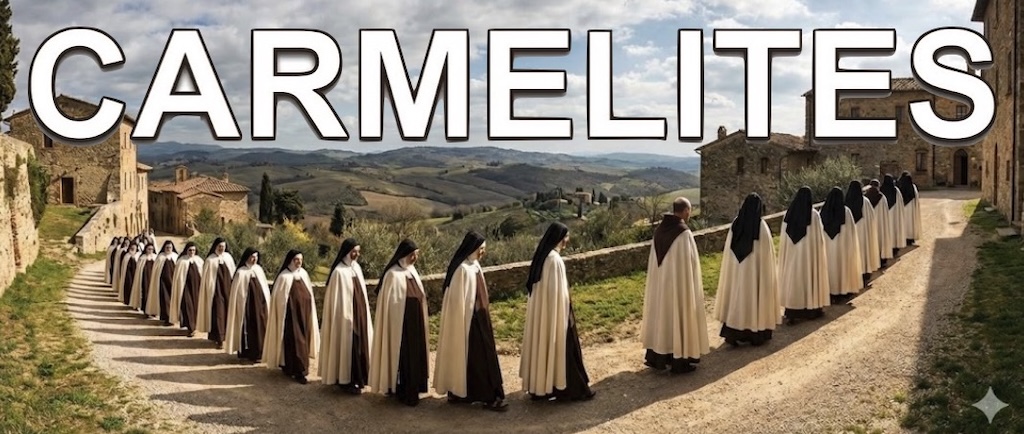
Core Charism: Contemplation, The Desert, Prayer as Friendship, The Dark Night, Elijah, St. Teresa of Avila.
Most Holy Trinity (A)
Primary Scripture: Exodus 34:4b-6, 8-9
Key Phrase: “Dwelling in the silent, hidden embrace of the Trinity.”
This Sunday’s Hook: The peak of the spiritual life is not found in knowing a lot of facts about God, but in allowing ourselves to be utterly consumed by His hidden presence. Like Moses standing in the cloud on Sinai, we must step into the sacred silence to encounter the God who dwells in the center of our souls.
Opening Draft (approx. 150 words): St. John of the Cross and St. Teresa of Avila speak of the soul as an interior castle, at the center of which dwells the Holy Trinity. Carmelite spirituality is an invitation to move past words, concepts, and images into a deep, contemplative union with the living God. When Moses climbs Mount Sinai early in the morning, he enters a thick, mysterious cloud. He cannot see God clearly, yet he bows down to the ground in absolute adoration as the Lord passes by. This is the prayer of quiet. God reveals Himself not in loud spectacles, but in the gentle breeze, as a God of kindness, fidelity, and mercy. Trinity Sunday invites us to move beyond intellectual definitions. It calls us to hide ourselves in the cleft of the rock, to enter the cloud of unknowing, and to let ourselves be loved by the Three who are One.
Homily Outline:
- The Ascent of the Mountain: Leaving behind worldly noise and attachments to seek the face of God.
- The Cloud of Unknowing: Embracing the truth that God is always greater than our theological concepts (Deus semper maior).
- The Dwelling Place of the King: Understanding that the Father, Son, and Spirit are intimately present in the center of the soul.
- Adoration in Spirit and Truth: How Moses’ posture of bowing down teaches us the essence of contemplative prayer.
Takeaway Application: Turn off your phone, car radio, and all background noise for a full day or a specific commute this week, offering that silence to God as an act of adoration.
RECOMMENDED
The Dominicans have one of the most robust preaching websites called “Torch.” It features a new homily every week from a different friar.
✍️ English Dominican Friars – Torch
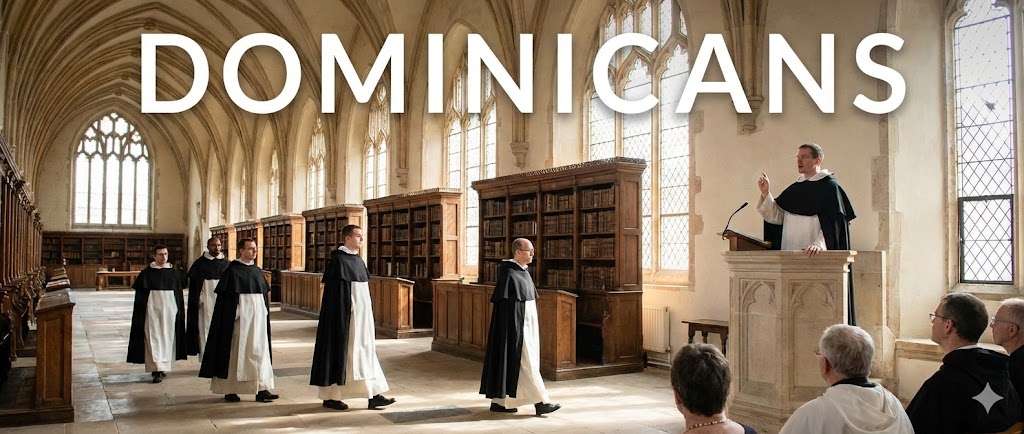
Core Charism: Veritas (Truth), Preaching, Study, Combatting Error with Clarity, Contemplation passed on to others.
Most Holy Trinity (A)
Primary Scripture: Exodus 34:4b-6, 8-9
Key Phrase: “Contemplating Truth, sharing the fruit of contemplation.”
This Sunday’s Hook: We often treat the doctrine of the Trinity like a difficult math problem to be solved, rather than a beautiful reality to be adored. Today, we climb the mountain with Moses to encounter the supreme Truth of who God is: a communion of persons whose very essence is mercy.
Opening Draft (approx. 150 words): The intellectual life of the Church is not a sterile exercise; it is an act of deep adoration. St. Thomas Aquinas famously noted that while we cannot fully comprehend the infinite nature of the Trinity in this life, our minds are made to stretch toward this supreme Truth. When Moses climbs Mount Sinai in our first reading, carrying the blank stone tablets, God does not give him an abstract philosophical treatise. Instead, the Lord passes before him and proclaims His own Name, revealing His inner character: “The Lord, a merciful and gracious God, slow to anger and rich in kindness and fidelity.” This is the theological foundation of our faith. To study God is to study Mercy itself. As Dominicans say, we contemplate so that we may hand on to others the fruits of our contemplation (contemplari et contemplata aliis tradere). Today, we study the Trinity to know Truth, and that Truth sets us free to love.
Homily Outline:
- The Mystery of God’s Name: Unpacking the revelation of Yahweh to Moses as a preview of Trinitarian love.
- Faith Seeking Understanding: A clear, accessible defense of why the Trinity matters—God is not a solitary monolith, but an eternal relationship.
- The Error of Condemnation: How true doctrine leads to salvation and mercy, while a distorted view of God leads to a mentality of condemnation (connecting to John 3:17).
- Preaching the Truth: Our responsibility to speak accurately and beautifully about God’s character in an age of skepticism.
Takeaway Application: Spend 10 minutes in silent adoration or reading a solid spiritual text this week to stretch your mind and heart toward divine Truth.
RECOMMENDED
St. Anthony Messenger and the various provinces often provide “Franciscan Spirit” reflections that focus on the Gospel of the day.
✍️ Franciscan Media – Sunday Homily Helps
📺 Fr. Paul Galetto
📺 Fr. Tom McCarthy
✍️ Fr. Kieran J. O’Mahony

Core Charism: Poverty, Minority (being “lesser”), Fraternity, and finding God in the grit of humanity and creation.
Most Holy Trinity (A)
Primary Scripture: John 3:16–17
Key Phrase: “The overflowing, humble self-giving of the Father.”
This Sunday’s Hook: Look around at creation, and you will see that true love cannot contain itself; it must overflow. Today, we gaze into the heart of the Trinity, not to solve a math puzzle, but to meet a God who is so poor in selfishness that He gives away everything He is.
Opening Draft: St. Francis of Assisi used to spend entire nights weeping and crying out, “Who are you, my most sweet God, and what am I, a worm?” Francis wasn’t practicing self-loathing; he was completely undone by the sheer humility of God. When we look at John 3:16, we often focus on our own salvation, but Franciscan spirituality invites us to look first at the heart of the Giver. The Trinity is not a static theological diagram; it is a dynamic, burning fire of relationship that refuses to keep its warmth to itself. The Father looks upon our broken, fragile world, and His response is a radical, poverty-embracing self-giving. He does not send a cosmic memo; He sends His Heart, wrapped in our flesh. This Sunday, we do not celebrate a distant monarch, but a Triune God whose majesty is found in His absolute, overflowing humility.
Homily Outline:
- Introduction: The Franciscan awe of a God who is Good, All Good, Supreme Good.
- The Overflowing Fountain: Exploring the Trinity as an eternal dance of love (perichoresis) that naturally spills over into creation and redemption.
- God’s Humility in the Incarnation: How John 3:16 reveals a God who doesn’t dominate but humbles Himself to meet us.
- The Call to Minoritas (Littleness): If God is a community of humble love, we are called to live in right, humble relationship with all creatures.
Takeaway Application: This week, mimic the Trinity by giving someone your time or resources anonymously, asking for nothing in return, simply to let love overflow.


Core Charism: Ad Maiorem Dei Gloriam (For the Greater Glory of God), Discernment of Spirits, Finding God in All Things, Imaginative Contemplation.
Most Holy Trinity (A)
Primary Scripture: John 3:16–18
Key Phrase: “The Trinity gazing upon the face of the earth.”
This Sunday’s Hook: In the Spiritual Exercises, St. Ignatius asks us to imagine the Three Divine Persons looking down at our chaotic world and deciding together to save it. Today, we are invited to see our concrete, messy lives through those very same eyes of divine compassion.
Opening Draft: In the second week of the Spiritual Exercises, St. Ignatius invites us to a profound contemplation. He asks us to imagine the Three Divine Persons of the Trinity sitting on the throne of Majesty. They look down upon the whole surface of the earth, seeing people breaking under burdens, weeping, fighting, dying, and descending into blindness. Instead of turning away in disgust or striking back in judgment, the Trinity is moved to absolute compassion. They say, “Let us work the redemption of the human race.” This is the exact heartbeat of today’s Gospel. John reminds us that God did not send the Son into the world to condemn the world, but that the world might be saved through Him. Ignatius teaches us that the Trinity is not passive; God is actively laboring in the messiness of human history right now, inviting us to join the work.
Homily Outline:
- The Divine Contemplation: Visualizing the Trinity looking at our specific city and parish today with deep affection, not judgment.
- The Mission of the Son: Understanding Jesus as the concrete manifestation of the Trinity’s desire to accompany us in our daily struggles.
- Discerning God’s Voice vs. Condemnation: How to recognize the difference between the enemy’s voice of condemnation (John 3:18) and the Holy Spirit’s voice of consolation.
- Contemplatives in Action: Sending the congregation forth as co-laborers with the Trinity.
Takeaway Application: Practice an evening Examen this week, specifically looking for where the Father, Son, and Holy Spirit were actively loving and laboring in your day.

Core Charism: Preaching “Plentiful Redemption” (Copiosa Redemptio), especially to the abandoned and sinners; Moral Theology (St. Alphonsus Liguori).
Most Holy Trinity (A)
Primary Scripture: John 3:16–17
Key Phrase: “Plentiful redemption for the most broken and abandoned.”
This Sunday’s Hook: If you have ever felt like you are too broken, too far gone, or too forgotten for God to care, today’s readings are a direct lifeline to your soul. Our God is not a severe judge waiting for you to trip up; He is a Father who empties heaven to buy back your life.
Opening Draft (approx. 150 words): St. Alphonsus Liguori founded the Redemptorists with one burning conviction: that God is madly in love with humanity, especially those who feel completely abandoned on the margins of society. Alphonsus fought bitterly against the heresy of Jansenism, which painted God as a cold, terrifying judge who saved only a select few. He countered it with the words of John 3:16: “For God so loved the world that he gave his only Son.” With Christ, there is copiosa redemptio—plentiful, abundant, overflowing redemption. The Trinity did not look down at our sins and plan a rescue mission out of obligation; it was born of a love that is fierce and unyielding. The Son came not to condemn you, but to lift the heavy burdens off your shoulders. No matter what your past looks like, you are targeted by the mercy of a Triune God.
Homily Outline:
- The Lie of the Accuser: Exposing the false image of a distant, angry God who desires condemnation.
- Plentiful Redemption Unpacked: Showing how the Father sends the Son, and the Son pours out the Spirit to bring total healing, not partial fixes.
- Preaching to the Margins: Reminding the parish that God’s love is explicitly directed toward the broken and marginalized.
- Responding to the Gift: Moving from a place of shame into the freedom of being a redeemed child of God.
Takeaway Application: Go to Confession or pray an act of contrition this week, resting entirely in the truth that Christ came to save you, not to condemn you.
Bishop Robert Barron

Most Holy Trinity (A)
The Father, the Son, and the Holy Spirit

Friends, we’ve come to Trinity Sunday, one of my favorite Sundays of the year. The Trinity is not just a little puzzle for theologians; it’s the heart of the matter, in many ways. Indeed, it’s central to the way we pray: Whenever we make the sign of the cross, we’re invoking the Trinity. It matters that we come to understand this doctrine more plainly, so that we might understand the meaning of our redemption.
Fr. Michael Chua
2026 | 2023 | 2020 | 2017 | 2014 | 2011
Most Holy Trinity (A)
The Holy Trinity Sends Greetings

Father Michael Chua’s homily defends the formal, Trinitarian liturgical greeting at Mass over casual alternatives like “Good morning.” Because the Mass is a sacred participation in Christ’s sacrifice rather than a secular gathering, its formal language properly reflects the solemnity of God. Exploring the greeting from 2 Corinthians 13:13, the homily unpacks Saint Paul’s unique word order. It begins with Christ’s grace, which offers salvation and access to the Father, and concludes with the communion (koinonia) of the Holy Spirit. This greeting establishes that the Mass is a divine invitation to enter the intimate, unified life of the Holy Trinity.

HOMILY HELPER
Suggestions for writing your own homily using insights and themes from Fr. Michael Chua’s homily.
Dominican Blackfriars
2026 | 2023 | 2020 | 2017 | 2014 | 2011
Most Holy Trinity (A)
Only One Man
Fr. Richard Finn’s homily defends the necessity of belief for salvation, refuting the idea that orthodoxy is a harsh divine test. Just as physical safety requires trusting a guide, humanity’s structural plight—alienation through original sin—demands absolute trust in Jesus Christ. Left alone, human hearts cannot overcome the propensity toward conflict or access eternal life. Christ saves humanity by bridging this chasm through His Passion and Resurrection. This mystery culminates in the Holy Spirit pouring the inner love of the Trinity into human hearts, transforming the doctrine of the Trinity from an abstract puzzle into the very mechanism of salvation.

HOMILY HELPER
Suggestions for writing your own homily using insights and themes from the Dominican Blackfriar homily.
Fr. Austin Fleming
Most Holy Trinity (A)
The Lover, the Beloved, the Love
Fr. Austin Fleming intentionally refutes the need to intellectualize or solve the mathematical puzzle of the Trinity, inviting the congregation into a holy surrender to mystery. Modern technology and data-driven culture train humanity to view mystery as a problem to be solved, which systematically drains wonder from existence. True human realities—like love, friendship, marriage, and hope—rely entirely on the unknown to maintain their beauty and depth. Rejecting mystery means rejecting the divine image within ourselves. Ultimately, the Trinity is not an abstract riddle but a living, relational reality that invites us to welcome and lose ourselves in the sacred mystery of the Eucharist.

HOMILY HELPER
Suggestions for writing your own homily using insights and themes from Fr. Austin Felming’s homily.
Monsignor Peter Hahn

Most Holy Trinity (A)
Holy Trinity: Seeking Answers and Hope After 12 Weeks of Covid (2020)
Preached after a twelve-week pandemic exile amid national disease and division, this homily frames the church as the ultimate refuge where structural brokenness is overcome through communion with the Triune God. Rejecting modern, individualistic caricatures of a detached deity, the text asserts that God’s very essence is an eternal, unchanging communion of infinite love. Because humanity is uniquely created in the divine image, the natural human longing for societal justice, unity, and peace can only be actualized by abiding in Him. Ultimately, while satanic forces actively divide and destroy, the Holy Spirit unites, transforming human hearts to reflect the Trinity’s perfect communal love.

HOMILY HELPER
Suggestions for writing your own homily using insights and themes from Msgr. Peter Hahn’s homily.
Fr. Charles E. Irvin
Most Holy Trinity (A)
Mental Images of Most Holy Trinity

The homily explores the mystery of the Holy Trinity through the framework of mental images and human relationships, noting that humanity learns effectively through visuals. While man-made idols fall into idolatry, Jesus Christ serves as the true icon of God, and humanity bears a scarred yet resilient divine image. This trinitarian reality is best understood not as an intellectual problem to be solved, but as a relational mystery to be lived. Reflecting the distinct yet perfectly unified Persons of the Trinity, human fulfillment is found in the deep need to belong within interdependent relationships, exemplified most perfectly in family life.
HOMILY HELPER
Suggestions for writing your own homily using insights and themes from Fr. Charles E. Irvin’s homily.
Fr. Joe Jagodensky, SDS
Most Holy Trinity (A)
Our Divine Posse, Horses & Cars

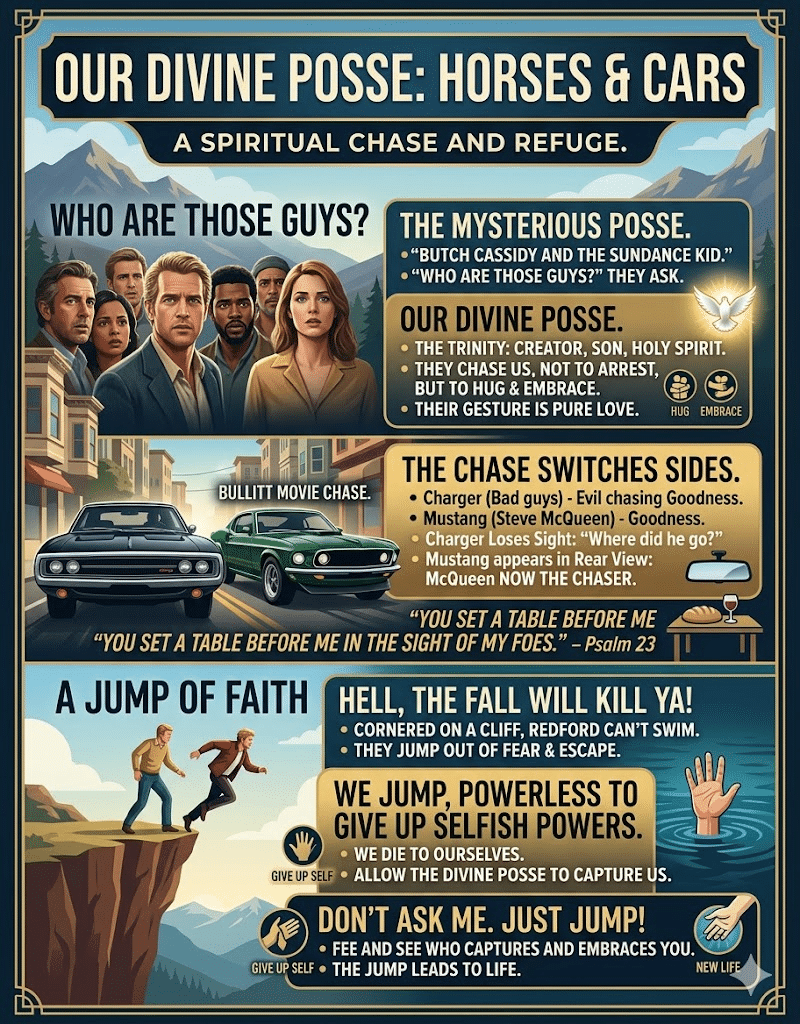
Using iconic cinematic car and horse chases, this homily dynamically reframes our relationship with the Triune God. The classic line “Who are those guys?” from Butch Cassidy and the Sundance Kid captures humanity’s ongoing bewilderment regarding the Father, Son, and Holy Spirit. Rather than an imposing authority seeking to arrest us for our sins, the Trinity is depicted as a relentless, loving “divine posse” chasing us down to offer an embrace. Evoking the intense car chase from Bullitt and the terrifying cliff jump of Butch and Sundance, the text illustrates that spiritual life requires surrendering our self-reliance and jumping into the scary, liberating depths of God’s power.
HOMILY HELPER
Suggestions for writing your own homily using insights and themes from Fr. Joe Jagodesky’s homily.
Fr. Langeh, CMF

Most Holy Trinity (A)
Unlocking the Puzzle
The homily frames the Holy Trinity as a profound puzzle that cannot be resolved through mathematics or human intellect alone, echoing Saint Augustine’s realization that it must be approached as a divine mystery. While strictly adhering to the first commandment’s decree of one true God, the text clarifies that the Father, Son, and Holy Spirit share the same single nature, substance, and being. Rather than separate deities, the distinct Persons represent the stages of salvation history. Ultimately, this structural puzzle is unlocked entirely through the key of love, which serves as a healing balm and a blueprint for harmony in a fractured world.
HOMILY HELPER
Deacon Peter McCulloch
Most Holy Trinity (A)
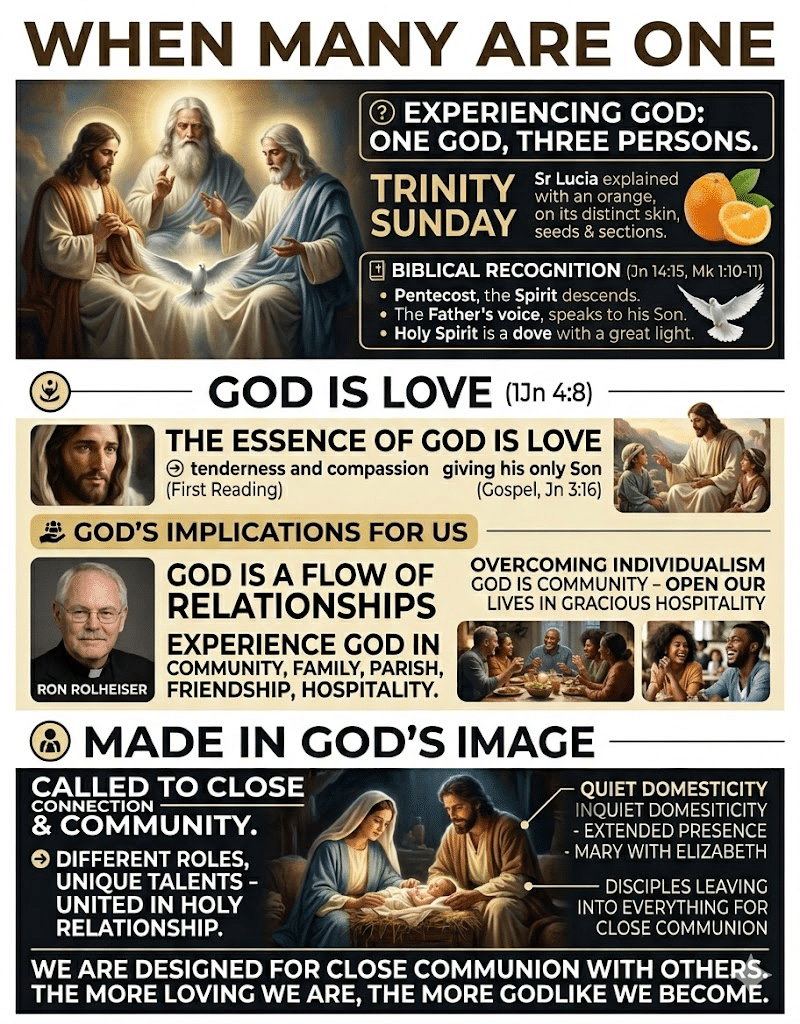
When Many Are One
The homily frames the Holy Trinity as a divine community of perpetual love that is meant to be experienced through relationships rather than mastered through academic study. Drawing on scripture and the analogy of an orange, the text defends the three distinct Persons in one God against the limits of human language. It argues that the greatest barrier to knowing God is not dogmatic confusion, but a modern culture of radical individualism that falsely claims self-sufficiency. Because humanity is made in the divine image, we are hardwired for close connection, becoming truly Godlike only when we reject isolation and practice hospitality.
HOMILY HELPER
Suggestions for writing your own homily using insights and themes from Fr. Pteer McCulloch’s homily.
Msgr. Charles Pope
Most Holy Trinity (A)
One and One and One are One
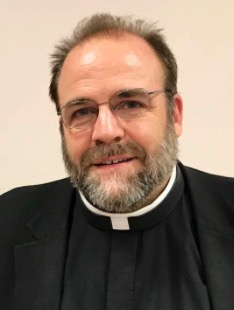
The homily frames the Holy Trinity as an uncontainable divine mystery that transcends human reason without contradicting it, noting that complete comprehension is impossible for finite minds. Rather than dividing the divine essence into thirds, the Father, Son, and Holy Spirit each possess the one divine nature fully and entirely. Exploring this “three-oneness,” the text highlights ancient scriptural hints from the Old Testament—including the plural grammar of Elohim and Abraham’s three visitors at Mamre—where singular and plural references uniquely intertwine. This trinitarian reality is ultimately experienced in human nature, which rejects radical individualism in favor of communal, interdependent relationships, mirrored most perfectly in the fruitful love of marriage.
HOMILY HELPER
Suggestions for writing your own homily using insights and themes from Msgr. Charles Pope’s homily.
Father Kevin Rettig

2026 HOMILIES | ARCHIVE: 2023 | 2020
Most Holy Trinity (A)
Puzzles
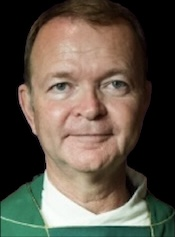
Fr. Kevin utilizes the master metaphor of a jigsaw puzzle to illustrate humanity’s lifelong search for meaning. As children, simple wooden puzzles teach us how disparate components form a cohesive whole, but adulthood introduces vast, intricate puzzles of emotion, suffering, and existential questioning. Faced with a chaotic jumble of joys and sorrows, we often experience frustration, feeling as though the pieces of life do not fit together or that we do not fit in. Ultimately, the text reveals that life’s fragmentation is an illusion born of distorted vision; in truth, reality is an undivided, interconnected masterpiece. The spiritual journey concludes when we surrender adult complications and bow in childlike worship before the beautifully uncomplicated mystery of God.
HOMILY HELPER
Suggestions for writing your own homily using insights and themes from Fr. Kevin Rettig’s homily.
Fr. George Smiga
Most Holy Trinity (A)
Avoiding Idolatry

Fr. George Smiga identifies idolatry as the most frequently condemned sin in Scripture, refuting the notion that it is merely an ancient practice of worshiping stone or wood. True idolatry occurs whenever we create a false god by shrinking the divine down to our own image, expecting God to think, choose, and evaluate the world exactly as we do. The Doctrine of the Trinity serves as an essential safeguard for divine transcendence, asserting a God who is simultaneously one and three—far greater than human comprehension. This transcendence offers the practical good news that we do not need to understand tragedy, and that nothing we do can ever stop God’s limitless love.
HOMILY HELPER
Suggestions for writing your own homily using insights and themes from Fr. George Smiga’s homily.
Additional Homilies
Most Holy Trinity (A)

Fr. Vincent Hawkswell | Archive
The Happiness of the Holy Trinity is Our Destiny
Fr. George Corrigan, OFM
God is Love
Msgr. Joseph Pellegrino | Archive
A Mystery of Power and Love
Fr. Tommy Lane | Archive
Drawn into the Love at the Heart of the Trinity through Baptism
Fr. Michael Fallon, MSC | Archive