Papal Homilies
June 14, 2026



NOTABLE QUOTES
Pope Francis
During his Angelus address on June 18, 2023, Pope Francis focused heavily on the closeness of the Father as revealed in the Gospel sending of the disciples.
“The kingdom of God, that is, his lordship of love, has come near; it comes in our midst. And this is not just one piece of news among others, no, but the fundamental reality of life: the closeness of God, the closeness of Jesus. Indeed, if the God of heaven is close, we are not alone on earth, and even in difficulty, we do not lose faith. Here is the first thing to say to people: God is not far away, but rather he is a Father.”
“Here is the heart of proclamation: freely given witness, service. I will tell you something: I am always puzzled by the “talkers” with their endless talk and no action… Do we know how to sit in the Father’s lap with prayer, by listening to the Word, partaking of the Sacraments? And finally, close to him, do we know how to instil courage in others, to make ourselves close to those who suffer and are alone?”
Pope Benedict XVI
On June 15, 2008, during a pastoral visit to Brindisi, Pope Benedict XVI delivered a homily parsing the deep connection between the “eagle’s wings” of Exodus, the mercy of Romans, and the compassionate mandate in Matthew.
“This is one of the great milestones in salvation history… in which the boundary between the Old and New Testaments disappears and the eternal plan of the God of the Covenant is manifest: the plan for the salvation of all men and women through the sanctification of a people.”
“Jesus’ style is unmistakable: it is the characteristic style of God who likes to do great things in a poor and humble manner… It is the logic of the Kingdom of God, not by chance represented by the tiny seed that becomes a great tree. Precisely with these humble beginnings the Lord encourages us so that in the humility of the Church today too, in the poverty of our Christian lives, we may see his presence.”
Commenting directly on Jesus looking out at the crowds in Matthew 9:36, Benedict observed:
“Christ’s love for his people, especially the lowly and the poor, can be felt in these words. Christian compassion has nothing to do with pietism or the culture of dependency. Rather, it is synonymous with solidarity and sharing and is enlivened by hope.”
St. John Paul II
In his broader reflections on Matthew 9:36 (“At the sight of the crowds, his heart was moved with pity”), St. John Paul II frequently wove this Year A Gospel into his teachings on the true nature of Christian mission, emphasizing that the Church’s apostolic work flows purely out of divine mercy.
“The mission of the Church is not an administrative necessity, nor is it a sociological conquest. It is the overflow of Christ’s own gaze of pity upon a humanity that is troubled and abandoned. To be an apostle is to see the world through the compassionate eyes of Christ and to understand that the harvest requires hearts willing to give without cost what they have received without cost.”
11th Sunday of Year A

Theme of the Readings
FROM THE ARCHIVES (1999)
A new phase in the long process of relations between human beings and God begins on Sinai: the choice and constitution of a people by God. This is what Exodus says: “You of all the nations shall be my very own.” With Jesus Christ a new people of God was established in history, founded on the Twelve: “Jesus summoned his twelve disciples…. These are the names of the twelve apostles: first, Simon….” The new people of God was constituted through the total offering of Jesus Christ on the Cross through which the Father reconciled us to him: “through our Lord Jesus Christ, through whom we have already gained our reconciliation.”
Doctrinal Messages
A people created by God and formed by man. In Egypt the various tribes which descended from Jacob did not form a single people under the Yahweh’s guidance. It is only on Sinai that God takes the initiative and makes the twelve tribes a people of his own through the covenant in the blood of the lamb. In continuity with the people of Israel, Jesus establishes a new people, choosing twelve disciples to represent the twelve tribes of Israel and serve as the basis of the new Christian people. Neither the people of Israel nor the Church, the new people of God, were established by themselves; if they exist, it is because God called them into existence. Without these people who left Egypt or without the Twelve, God could not have established a people of his own. He needs human persons to form his people and to accomplish his purpose in history.
The means with which God creates his people is the Covenant. It is a covenant between the king (God) and his servant (the people), with a series of clauses with which they promise one another fidelity. In this covenant between God and his people God’s fidelity is more than assured, but the fidelity of the people is not. For this reason it is constantly necessary to remember the covenant of fidelity to God and also the state in which both the tribes of Jacob and the Christians were living before they received baptism: they were oppressed, divided, hostile, hateful, and unredeemed. Is this not a more than sufficient reason for maintaining fidelity to the Covenant with generosity and hope?
God constituted the people of Israel and later the Church for a purpose. This purpose was on the one hand to proclaim and preserve monotheism through history, and on the other to make present and alive among men the universal and complete salvation that Jesus Christ brings to us all by the cross and resurrection. Jewish monotheism is completely fulfilled in the Christian mystery of the Trinity, with the ineffable assertion of three Persons in one God. Universal salvation is the task of the whole Church, which is the sign of man’s union with God and of human beings with one another (Lumen Gentium, n. 1). Divine sonship and human brotherhood constitute the Church’s essential message, and proclaiming this message is its raison d’être for being in the world.
Pastoral Suggestions
A single people. The current realities of society and of the Church stimulate pastoral promotion and the practice of unity in the midst of a diversity of races, political parties, legal structures, associations, and institutions. On these differences, the Church as an institution, with the bishops, priests and deacons, by virtue of their ministry of communion, must stand as a tall and luminous beacon of unity, solidarity, and generous service to all. In the midst of this diversity, they must be aware of the real difficulty of maintaining in a unity amidst legitimate differences existing between individuals in all fields of human labor. If conscience so dictates, people may and should belong to different parties while being members of one and the same Church; or accept immigrants from other countries in the parish community without their feeling humiliated or second class citizens or Christians. It would be good for different Church movements or associations to be present in the parishes and for everyone to participate in unity with love and respect, according to their individual charisms, in parish pastoral activities, in the sanctification and moral improvement of the faithful in the parish, etc.
A single mission. The Church, the parishes, the Church movements and the parish groups have a single objective, even if the means to achieve it are very different: to make the Gospel of Jesus Christ effective among human beings through the words, works, and testimony of good Christians. If Christ is preached, if Christ is known, it does not matter at all that this should be accomplished by someone who does not belong to my group or who uses methods that are different from mine. When Christ transforms people’s lives, I should be happy, even if God’s instrument is not me, but someone else. Today, the Church’s task is immense. How can we be wasting time with thoughts or even arguments as to whether this or that group acts this way or that, using methods I do not share, with activities that seem strange to me, whether they are more traditional or more liberal,…? As long unity of faith and of morality exists, there is room for everyone in the Church and everyone contributes to the Church’s lively and effective presence in the world.ubstantial difficulty. Almost as if the Eucharist were a womanly thing! Isn’t it a sign of masculinity to work from conviction and to pay no attention to the opinion of others?
SOURCE: YEAR A DICASTERY NOTES (1999)
Message of Pope Francis
AT A GLANCE
- The Reality of Immanence: The “Kingdom of Heaven” is not a distant future or an abstract concept; it is the immediate, loving lordship of God active in our midst.
- The Paternity of God: God is revealed fundamentally as a tender Father who accompanies us intimately, particularly through vulnerability, suffering, and weakness.
- The Model of Spiritual Childhood: True discipleship requires a posture of absolute trust, vulnerability, and dependence—resembling a child resting safely in a parent’s arms.
- The Priority of Witness over Words: Evangelization is validated not by eloquent speech, but by concrete, freely given acts of service, healing, and charity.
QUESTIONS FOR REFLECTION
- Resting in Providence: When you experience spiritual dryness or travel on “rugged paths,” do you instinctively reach for self-reliance, or do you allow yourself to sit in the Father’s lap through prayer and the Sacraments?
- Overcoming Fear: What specific fears are currently preventing you from opening up to others, making new friends, or stepping out in faith as a child of God?
- Gratitude and Generosity: Having received God’s love and mercy “without pay,” in what areas of your life are you holding back from giving just as freely to others?ing?
ACTIONABLE
TAKEAWAYS
- Audit Your Witness: Commit this week to reducing empty religious or moral talk. Focus instead on one silent, concrete deed of hope for someone in your circle who is struggling.
- Practice Radical Trust: Begin each morning by consciously surrendering a specific anxiety to God, repeating a simple prayer of childhood reliance: “Father, I am in your hands.”
- Seek the Vulnerable: Intentionally draw close to one person who is lonely, suffering, or geographically or socially distant. Offer them encouragement and presence without demanding anything in return.
11th Sunday of Year A
Living and Proclaiming the Kingdom
18 June 2023 – Saint Peter’s Square (Angelus)
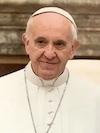
Today, in the Gospel, Jesus calls [the Apostles] by name — he calls them by name — and sends out the twelve Apostles. As he was sending them out, he asks them to proclaim just one thing: “Preach as you go, saying, ‘The kingdom of heaven is at hand’” (Mt 10:7). It is the same proclamation with which Jesus began his preaching: the kingdom of God, that is, his lordship of love, has come near; it comes in our midst. And this is not just one piece of news among others, no, but the fundamental reality of life: the closeness of God, the closeness of Jesus.
God is a Father Who is Near
Indeed, if the God of heaven is close, we are not alone on earth, and even in difficulty, we do not lose faith. Here is the first thing to say to people: God is not far away, but rather he is a Father. God is not distant, he is a Father, he knows you and he loves you; he wants to take you by the hand, even when you travel on steep and rugged paths, even when you fall and struggle to get up again and get back on track. He, the Lord, is there with you. Indeed, often in moments when you are at your weakest, you can feel his presence all the more strongly. He knows the path, he is with you, he is your Father! He is my Father! He is our Father!
Walking in Freedom from Fear as Children of God
Let us linger on this image because proclaiming that God is close is an invitation to think of oneself as a child, who walks hand in hand with his father: everything seems different. The large and mysterious world becomes familiar and secure because the child knows he is protected. He is not afraid, and learns how to open up: he meets other people, finds new friends, joyfully learns things that he did not know, and then returns home and tells everyone what he has seen, while the desire to become a grown-up and do the things he saw his father do, grows within him. This is why Jesus starts out from here. This is why God’s closeness is the first proclamation: by staying close to God, we conquer fear, we open ourselves to love, we grow in goodness and we feel the need and the joy to proclaim.
If we want to be good apostles, we have to be like children: sit “on God’s lap” and, from there, look at the world with trust and love, in order to bear witness that God is the Father, that he alone transforms our hearts and gives us that joy and that peace that we ourselves cannot attain.
Proclaiming Through Concrete Deeds of Love
To proclaim that God is near—but how can we do this? In the Gospel, Jesus advises not to say many words, but rather to perform many deeds of love and hope in the name of the Lord. Not saying many words, but performing deeds! “Heal the sick”, says the Lord, “raise the dead, cleanse lepers, cast out demons. You received without pay, give without pay” (Mt 10:8). Here is the heart of proclamation: freely given witness, service. I will tell you something: I am always puzzled by the “talkers” with their endless talk and no action.

Message of Pope Benedict XVI
AT A GLANCE
- he Eucharistic Source: The Eucharist is the source and summit of the Church, flowing directly from Christ’s Heart to bind the faithful into one Body.
- The Sinai-Pentecost Continuity: The Church’s “constitution” spans from the structural Covenant at Sinai to the fulfillment in the Twelve Apostles, ultimately manifesting universally at Pentecost.
- The Paradox of Humility: God establishes His Kingdom not through spectacular, terrifying cosmic signs, but through silent, humble, and discreet everyday gestures of love.
- The Holiness-Mission Co-Inherence: Holiness and mission are inseparable. The Church is a community of imperfect sinners transformed by divine love, whose resulting holiness inherently acts as a force that changes history.
- Authentic Christlike Compassion: Christian mission demands Jesus’ style of “compassion”—which is not patronizing pietism, but radical solidarity, sharing, and hope.physical and spiritual attitudes:latry.
QUESTIONS FOR REFLECTION
- Embracing Imperfection: The Apostles were chosen despite serious human limitations. Do you let your own flaws and sins keep you from answering Christ’s call, or do you trust Him to transform and use you anyway?
- Measuring Your Compassion: Does your response to the suffering and “harassed” people around you mirror Christ’s active solidarity, or does it lean toward passive pity and the culture of dependency?
- The Silence of the Seed: In a world driven by spectacle and instant results, are you patient enough to trust and invest in the slow, hidden growth of God’s grace within your parish and family?
ACTIONABLE
TAKEAWAYS
- Live the “Without Pay” Mandate: Identify a specific gift, talent, or resource you have received freely from God, and intentionally share it with someone this week without expecting anything in return.
- View the Family as a Seminary: Intentionally cultivate your home as a space for spiritual growth and vocation by establishing a regular rhythm of family prayer and reading the Word of God together.
- Commit to the Path of Daily Witness: Choose one ordinary, daily routine—whether at work, school, or home—and intentionally execute it with greater love and humility, remembering that giving your life in small ways is the most effective preaching.
11th Sunday of Year A
The Source and Summit: Holiness, Mission, and the Eucharist
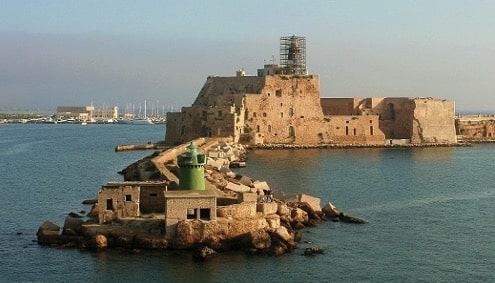
15 June 2008 | St Apollinaris Wharf, Port of Brindisi

On the Lord’s Day, in the middle of my Visit to Brindisi, we are celebrating the mystery which is the source and summit of the Church’s whole life. We are celebrating Christ in the Eucharist, the greatest gift that flowed from his divine and human Heart, the Bread of Life, broken and shared to enable us to become one with him and with one another.
I greet with affection all of you who have gathered at the port, this deeply symbolic place which calls to mind the missionary journeys of Peter and Paul. I rejoice to see the many young people who enlivened last night’s vigil in preparation for the Eucharistic celebration. And I also greet you, who are taking part in spirit by means of radio and television.
I address a special greeting to Archbishop Rocco Talucci, the Pastor of this beloved Church, and thank him for his words at the beginning of Holy Mass. I also greet the other Bishops of Apulia who have desired to be here with us with sentiments of fraternal communion. The presence of Metropolitan Gennadios gives me special pleasure and I offer him my cordial greeting, which I extend to all the Orthodox brethren and those of the other Denominations, from this Church of Brindisi which, because of her ecumenical vocation, invites us to pray and to work for the full unity of all Christians. With gratitude I greet the Civil and Military Authorities who are taking part in this liturgy, and wish them every good for their service. My affectionate thoughts then go to the priests and deacons, to the women and men religious and to all the faithful. I address a special greeting to the sick in hospital and to the prisoners in jail, to whom I assure my remembrance in prayer. Grace and peace on the part of the Lord to everyone and to the entire city of Brindisi!
The Divine Constitution: From Mount Sinai to the Twelve Apostles
The biblical texts we have heard on this 11th Sunday of Ordinary Time help us to understand the reality of the Church: the First Reading (cf. Ex 19: 2-6a) recalled the Covenant made on Mount Sinai, during the Exodus from Egypt; the Gospel (cf. Mt 9: 36-10: 8) consisted of the account of the call and mission of the Twelve Apostles. We find the “constitution” of the Church presented here: how can we fail to perceive the implicit invitation addressed to every Community to renew its own vocation and missionary drive?
In the First Reading the sacred author tells of God’s Covenant with Moses and with Israel on Sinai. This is one of the great milestones in salvation history, one of those moments that transcend history itself in which the boundary between the Old and New Testaments disappears and the eternal plan of the God of the Covenant is manifest: the plan for the salvation of all men and women through the sanctification of a people to which God proposes to become “my own possession among all peoples” (Ex 19: 5). In this perspective, the people is called to become a “holy nation”, not only in the moral sense, but first and above all in its own ontological reality, in its being as a people. Already in the Old Testament, how the identity of this people is to be understood is gradually made clear in the course of the salvific events; then it was fully revealed with the coming of Jesus Christ.
Today’s Gospel presents us with a decisive moment for this revelation. In fact, when Jesus called the Twelve he desired to refer symbolically to the 12 tribes of Israel, going back to the 12 sons of Jacob. Thus, by placing the Twelve at the centre of his new community, he makes it understood that he came to bring the heavenly Father’s design to completion, even if the new face of the Church was to appear only at Pentecost when the Twelve, “filled with the Holy Spirit” proclaimed the Gospel, and spoke in all the languages (Acts 2: 3-4). It was then that the universal Church was to be made manifest, gathered in a single Body of which the Risen Christ is Head yet, at the same time, sent by him to all the nations, even to the very ends of the earth (cf. Mt 28: 19).
The Logic of the Kingdom: Great Things in a Humble Manner
Jesus’ style is unmistakeable: it is the characteristic style of God who likes to do great things in a poor and humble manner. The solemnity of the accounts of the Covenant in the Book of Exodus leaves room in the Gospels for humble and discreet gestures which nevertheless contain an enormous potential for renewal. It is the logic of the Kingdom of God, not by chance represented by the tiny seed that becomes a great tree (cf. Mt 13: 31-32).
The Covenant of Sinai was accompanied by cosmic signs that terrified the Israelites; the beginnings of the Church in Galilee, on the contrary, were exempt from such manifestations and reflect the docility and compassion of Christ’s Heart although they foretold another battle, another upheaval, inspired by the forces of evil. Christ gave to the Twelve, we heard, “authority over unclean spirits, to cast them out, and to heal every disease and every infirmity” (Mt 10: 1). The Twelve must cooperate with Jesus in establishing the Kingdom of God, that is, his beneficial, life-giving lordship, and life in abundance for the whole of humanity.
The Church in essence, like Christ and together with him, is called and sent out to establish the Kingdom of life and to drive out the dominion of death so that the life of God may triumph in the world; so that God who is Love may triumph. Christ’s work is always silent, it is not spectacular; the great tree of true life grows even in the humility of being Church, of living the Gospel every day. Precisely with these humble beginnings the Lord encourages us so that in the humility of the Church today too, in the poverty of our Christian lives, we may see his presence and thus have the courage to go to meet him and make his love, this force of peace and of true life, present on our earth. So this was God’s plan: to spread over humanity and throughout the cosmos his love that generates life. It was not a spectacular process; it was a humble process, yet it brought with it the true power of the future and of history.
Holiness and Mission: Two Sides of the Same Coin
Thus it is a plan that the Lord desires to implement with respect for our freedom, for love, by its nature, cannot be imposed. The Church in Christ then is the place in which to accept and mediate God’s love. In this perspective it is clear that the Church’s holiness and missionary character are two sides of the same coin: only because she is holy, that is, filled with divine love, can the Church carry out her mission, and it is precisely in terms of this task that God chose her and sanctified her as his property. Our first duty, therefore, precisely in order to heal this world, is to be holy, configured to God; in this way we emanate a healing and transforming power that also acts on others, on history.
Your Ecclesial Community, dear brothers and sisters, involved as it is in the Diocesan Synod in this period, is measuring itself at this moment against the double term, “holiness-mission”—holiness is always a force that transforms others. In this regard, it is useful to reflect that the Twelve Apostles were not perfect men, chosen for their moral and religious irreproachability. They were indeed believers, full of enthusiasm and zeal but at the same time marked by their human limitations, which were sometimes even serious. Therefore Jesus did not call them because they were already holy, complete, perfect, but so that they might become so, so that they might thereby also transform history, as it is for us, as it is for all Christians.
In the Second Reading we heard the Apostle Paul’s synthesis: “God shows his love for us in that while we were yet sinners Christ died for us” (Rm 5: 8). The Church is the community of sinners who believe in God’s love, letting themselves be transformed by him and thus become holy, sanctifying the world.
The Style of Mission: Christlike Compassion and Solidarity
In the light of God’s providential words, today I have the joy of strengthening your Church on her way. It is a way of holiness and mission on which your Archbishop has invited you to reflect in his recent Pastoral Letter; it is a way he has thoroughly examined in the course of his Pastoral Visit and which he now intends to promote through the Diocesan Synod.
Today’s Gospel suggests to us the style of the mission, in other words the interior attitude that is expressed in life lived. It can only be Jesus’ style: that of “compassion”. The Evangelist highlights this by focusing attention on Christ looking at the crowd. He wrote: “When he saw the crowds, he had compassion for them, because they were harassed and helpless, like sheep without a shepherd” (Mt 9: 36). And after the call of the Twelve, this attitude is once again apparent in the order he gives them to go “to the lost sheep of the house of Israel” (Mt 10: 6).
Christ’s love for his people, especially the lowly and the poor, can be felt in these words. Christian compassion has nothing to do with pietism or the culture of dependency. Rather, it is synonymous with solidarity and sharing and is enlivened by hope. Were not Jesus’ words to the Apostles born from hope: “Preach as you go, saying, ‘the Kingdom of Heaven is at hand’” (Mt 10: 7)? This is hope founded on Christ’s coming and ultimately coincides with his Person and his mystery of salvation—where Christ is, there is the Kingdom of God, there is the newness of the world—as the theme of the Fourth Ecclesial Convention of Italy celebrated in Verona clearly recalled: the Risen Christ is the “hope of the world”.
Co-Workers in the Vineyard: A Shared Baptismal Mandate
Enlivened by the hope in which you have been saved, may you too, brothers and sisters of this ancient Church of Brindisi, be signs and instruments of the compassion and mercy of Christ. To the Archbishop and priests I fervently repeat the words of the divine Teacher: “Heal the sick, raise the dead, cleanse lepers, cast out demons. You received without pay, give without pay” (Mt 10: 8). This mandate is once again addressed in the first place to you today. The Spirit who acted in Christ and in the Twelve, is the same as the One who works in you and enables you to perform among your people, in this territory, signs of the Kingdom of love, justice and peace that is coming, indeed, that is already in the world.
Yet, through the grace of Baptism and Confirmation, all the members of the People of God participate in Jesus’ mission if in different ways. I am thinking of consecrated people who profess the vows of poverty, virginity and obedience; I am thinking of Christian married couples and of you, lay faithful committed to the Ecclesial Community and to society, both personally and as a group.
Dear brothers and sisters, Jesus’ desire to increase the number of workers in the Lord’s harvest (cf. Mt 9: 38) is addressed to you all. This desire, which is asking to be made a prayer, reminds us in the first place of seminarians and of the new Seminary in this Archdiocese; it makes us realize that in a broad sense the Church is one great “seminary”, beginning with the family and extending to the parish communities, the associations and movements of apostolic commitment. We are all, with the variety of our charisms and ministries, called to work in the Lord’s vineyard.
Conclusion: Entrusted to the Saints and the Blessed Mother
Dear brothers and sisters of Brindisi, continue in this spirit on the way on which you have set out. May your Patrons, St Leucius and St Oronzo, both of whom arrived from the East in the second century to water this land with the living water of the Word of God, watch over you. May the relics of St Theodore of Amasea, venerated in the Cathedral of Brindisi, remind you that giving one’s life for Christ is the most effective preaching. May St Lawrence, a son of this City who, in Francis of Assisi’s footsteps, became an apostle of peace in a Europe torn apart by wars and disputes, obtain for you the gift of authentic brotherhood.
I entrust you all to the protection of the Blessed Virgin Mary, Mother of Hope and Star of Evangelization. May the Blessed Virgin help you to remain in the love of Christ, so that you may bear abundant fruit for the glory of God the Father and the salvation of the world. Amen.e life in abundance. Amen.
Message of Pope Saint John Paul II
AT A GLANCE
- The Eucharist as the Source of Peace: The Eucharist is the ultimate memorial of Christ’s sacrifice, which roots out hatred, reconciles humanity with God, and serves as the true fountain of peace.
- The Divine Command to Remember: True peace requires an active, holy memory—treasuring past experiences and learning from history’s errors and collective sufferings rather than forgetting them.
- Christ’s Peace vs. Worldly Peace: True peace is not built on worldly compromises, political shrewdness, or force. It is a gift won through the Cross and the “weapons” of truth and love.
- Eucharistic Solidarity: Adoring Christ’s Body in the Blessed Sacrament demands active solidarity with the suffering and vulnerable members of His mystical body who are afflicted by war and violence.
QUESTIONS FOR REFLECTION
- When you receive or adore the Eucharist, do you view it simply as a personal devotion, or do you recognize it as a call to enter into solidarity with those suffering across the world?
- God commands His people to “Remember”. Are there recurring errors or past periods of trial in your own history that you need to bring before God to help direct your path today?
- Christ’s peace is won through sacrificial love, whereas the world’s peace is often built on compromises or self-interest. In what areas of your life are you relying on worldly compromises rather than Christlike truth to maintain harmony?
- How authentic is your witness to peace? Can those you live and work with daily see the “Prince of Peace” reflected in your language, attitudes, and reactions?
ACTIONABLE
TAKEAWAYS
- Foster Interior Peace Daily: Commit to a specific daily practice—such as silent prayer, scripture reading, or an evening examination of conscience—to uproot personal grievances and actively cultivate sentiments of peace in your heart.
- Offer Direct Intercessory Prayer: Intentionally dedicate a Holy Hour, a Rosary, or a specific Mass to pray for victims of war, ethnic conflicts, and persecution, begging the “Prince of Peace” for an end to violence.
- Share the “Bread of Hope”: Actively support local or international relief efforts that care for the most vulnerable, defense-less victims, and those facing despair, treating them as suffering members of Christ’s body.
- Pursue Non-Violent Reconciliation: Choose to oppose hostility with the “weapons of truth and love” by extending forgiveness or initiating a conversation to heal a broken, tense relationship in your immediate circle.
11th Sunday of Year A
The Eucharist: Source of True Peace and Remembrance
3 June 1999 | Solemnity of the Body and Blood of Christ
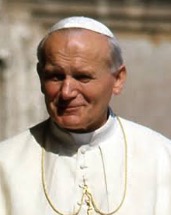
The Solemnity of Corpus Christi is a feast of praise and thanksgiving. On this day the Christian people gather round the altar to contemplate and adore the Eucharistic Mystery, the memorial of the sacrifice of Christ who has brought everyone salvation and peace. This year our solemn celebration and, in a while, the traditional procession which will take us from this square to St. Mary Major have a specific aim: they are meant as a heartfelt and unanimous prayer for peace...

The Command to Remember:
Learning From History
In the first reading the Lord’s command resounded: “Remember all the way which the Lord your God has led you” (Deuteronomy 8:2). “Remember…”! This is the first word. It is not an invitation, but a command that the Lord gives his people before leading them into the promised land. He commands them not to forget.
To have peace, which sums up all the good things promised by God, it is first necessary not to forget past experiences but to treasure them. From errors, too, we can learn a lesson to give better direction to our journey.
In looking at this century and the end of this millennium, how could we forget the terrible sufferings endured by humanity? We must not forget: on the contrary, we must remember. God our Father, help us to learn the right lessons from our history and that of those who have gone before us!
The Gift of Christ’s Peace vs.
the Peace of the World
History speaks of great yearning for peace, but also of the recurring disappointments humanity has had to suffer amid tears and blood. John XXIII, the Pope of Pacem in terris, died precisely today, 3 June, 36 years ago. What a unanimous chorus of praise welcomed that document which outlined the principles for building true peace in the world! But in recent years, how many times have we had to witness the outbreak of violent warfare in one part of the world or another.
The believer, however, does not give up. He knows he can always count on God’s help. In this regard, Jesus’ words at the Last Supper sound particularly eloquent: “Peace I leave with you; my peace I give to you; not as the world gives do I give to you” (John 14:27). Today we want once again to welcome and understand these words in depth. Let us enter into the spirit of the Upper Room to contemplate Christ, who under the appearances of bread and wine gives his Body and his Blood, anticipating Calvary in this sacrament. This is how he gave us peace. St. Paul would later remark: “He is our peace, who has made us both one, and has broken down the dividing wall of hostility… through the cross” (Ephesians 2:14, 16).
In giving himself, Christ gave us peace. His peace is not that of the world, often made of shrewdness and compromises, and of oppression and violence. Christ’s peace is the fruit of his Passover, that is, the fruit of his sacrifice which uproots hatred and violence and reconciles human beings with God and with one another; it is the trophy of his victory over sin and death, of his peaceful war against the evil of the world, a war fought and won with the weapons of truth and love.
It is not by chance that this greeting is frequently heard on the lips of the risen Christ. Appearing to the Apostles, he first shows the signs in his hands and side of the hard struggle he endured, and then he greets them: “Peace be with you!” (John 20:19, 21, 26). He communicates his peace to the disciples as a precious gift, not to keep jealously hidden, but to share with others through their witness.
The Eucharist as the Source of
True Life and Abiding In God
This evening, dear friends, as we carry the Eucharist, the sacrament of Christ our Passover in procession through the streets of Rome, we will be bringing the message of that peace which he left us and which the world cannot give. As we walk, we will ask ourselves about our personal witness to peace. It is not enough, in fact, to speak of peace if we do not strive to foster sentiments of peace in our hearts and to express them in our daily relations with those who live around us.
We will carry the Eucharist in procession and raise our heartfelt prayers to the “Prince of Peace” for the neighbouring land of the Balkans, where already too much innocent blood has been shed and where too many violations have been committed against the dignity and rights of individuals and peoples.
Our prayer this evening is strengthened by the hopeful prospects which are finally emerging.
“The bread which I shall give for the life of the world is my flesh” (John 6:51). In the Gospel passage we have just heard, these words of Jesus have helped us understand what the source of true peace is. Christ is our peace, the “bread” offered for the life of the world. He is the “bread” which God the Father prepared, so that humanity might have life and have it abundantly (cf. John 10:10).
God did not spare his Son, but gave him as the salvation of all, as the Bread we must eat if we wish to have life. Christ’s words are clear: to have life it is not enough to believe in God; it is necessary to dwell in him (cf. James 2:14). This is why the Word was made flesh, died and rose and gave us his Spirit; this is why he left us the Eucharist, so that we could live on him as he lives on the Father. The Eucharist is the sacrament of the gift Christ made of himself for us: he is the sacrament of love and peace, which is the fullness of life.
A Prayer for the Victims of War and
a Commitment to Peace
“Living bread, who gives life!”.
Lord Jesus, before you, our Passover and our peace, we commit ourselves to non-violently opposing man’s violence against man.
Prostrate at your feet, O Christ, today we want to share the bread of hope with our brothers and sisters in despair; the bread of peace with our brothers and sisters tortured by ethnic cleansing and war; the bread of life with our brothers and sisters threatened each day by weapons of destruction and death.
O Christ, we want to share the living Bread of your peace with the innocent and most defenceless victims.
“We offer you this sacrifice of praise for ourselves and those who are dear to us” (Roman Canon), so that you, O Christ, born of the Virgin Mary, Queen of Peace, may be for us, with the Father and the Holy Spirit, the source of life, love and peace.