Homilies
Homilies
June 21, 2026
⭐⭐⭐ Do Not Be Afraid


12th Sunday of Year A

Crossing the Moat of Fear
- Fr. Tony Kadavil, Fr. Tony’s Homilies – Anecdotes
- St. John Chrysostom, Homilies on the Gospel of Matthew, Homily 34
- St. Augustine, Sermons on Selected Lessons of the New Testament
- Catechism of the Catholic Church, paragraphs 1808, 2848 (on fortitude and overcoming fear)
- Pope St. John Paul II, Homily at the Inauguration of His Pontificate (October 22, 1978)
- Pope Benedict XVI, Jesus of Nazareth, Vol. 1 (on the Sermon on the Mount and discipleship)
- The Navarre Bible Commentary on St. Matthew’s Gospel
- Scott Hahn, Ignatius Catholic Study Bible: New Testament (commentary on Matthew 10 and Romans 5)
- Brant Pitre, The Case for Jesus and reflections on Matthew 10
- Word on Fire, Bishop Robert Barron, homily archives on the 12th Sunday in Ordinary Time, Year A
The Antidote to a Fearful Heart
- Fr. Tony Kadavil, Fr. Tony’s Homilies – Anecdotes
- The Catechism of the Catholic Church (paragraphs on hope and divine providence, nos. 301-314, 1817-1821)
- Saint Augustine, Sermons and The Psalms
- St. John Chrysostom, Homilies on the Gospel of Matthew (Homily 34)
- St. Thomas Aquinas, Summa Theologiae (II-II, q. 19 on Fear; q. 17 on Hope)
- Pope Benedict XVI, Spe Salvi (Encyclical on Christian Hope)
- Pope Francis, Evangelii Gaudium (on courageous evangelization)
- The Navarre Bible Commentary on Matthew and Romans
- Scott Hahn, Ignatius Catholic Study Bible: New Testament
Deacon Peter McCulloch
12th Sunday of Year A
✍️ Hypocrisy
This homily examines the evolution of the term “hypocrite”—from its origins in ancient Greek theater as a masked actor to its New Testament connotation of moral duplicity. The reflection explores the destructive nature of hypocrisy, noting its capacity to tear apart individuals, relationships, and the Church through deceit and fear. Drawing on the teachings of Jesus, who warned that all hidden things will eventually be exposed, the text calls believers to abandon the “masks” of false pretense. Instead, it advocates for a life of radical authenticity, honesty, and humility. By contrasting the inherent insecurity that drives hypocrisy with the trust found in a life rooted in faith, the homily concludes that true discipleship requires a commitment to living in the light of day, recognizing that while one may deceive the world, one cannot fool God.

Bishop Robert Barron
12th Sunday of Year A
🎙️ Fear No One

Bishop Robert Barron explores the challenging spiritual instructions found in the tenth chapter of the Gospel of Matthew. Focusing on the moment Jesus sends his disciples out on their mission, Bishop Barron emphasizes that Christ cannot be reduced to a conventional ethical teacher; rather, his message is radical, astonishing, and life-changing.
The sermon unpacks the divine mandate to fear nothing in the fulfillment of the Christian mission. Drawing thematic connections to the day’s readings—including the prophet Jeremiah’s reliance on the Lord as a “dread warrior” amidst intense persecution—Bishop Barron challenges listeners to let go of worldly anxieties and paralyzing fears. By anchoring oneself in God’s protective providence and ultimate justice, the believer is empowered to proclaim the truth boldly. Ultimately, the message serves as an encouraging wake-up call to trust in God completely over human opposition.
Fr. Michael Chua
12th Sunday of Year A
✍️ Do Not Be Afraid!
This homily explores the human experience of anxiety and the paralyzing effect it can have on our ability to discern truth and act in accordance with God’s will. Drawing upon the prophet Jeremiah’s struggle with persecution, Fr. Michael Chua demonstrates that when our personal values are aligned with God’s, the temporary discomforts and dangers of this world lose their power over us.
Central to the message is Christ’s repeated exhortation, “Do not be afraid.” Fr. Chua argues that Christians are called to boldly proclaim the Gospel even in the face of societal opposition, “cancel culture,” or martyrdom. True motivation for our actions must stem from a fear of God—who holds the power of salvation—rather than the fear of public judgment. By examining the life of the Blessed Mother, who remained steadfast at the foot of the Cross, the homily illustrates how to navigate profound suffering with sacrificial love. It concludes by reflecting on the historical and spiritual significance of entrusting our nations and our own lives to Mary, encouraging the faithful to persist in prayer and remain courageous witnesses to the Truth.

Dominican Blackfriars
12th Sunday of Year A
✍️ Beauty in the Midst of Horror
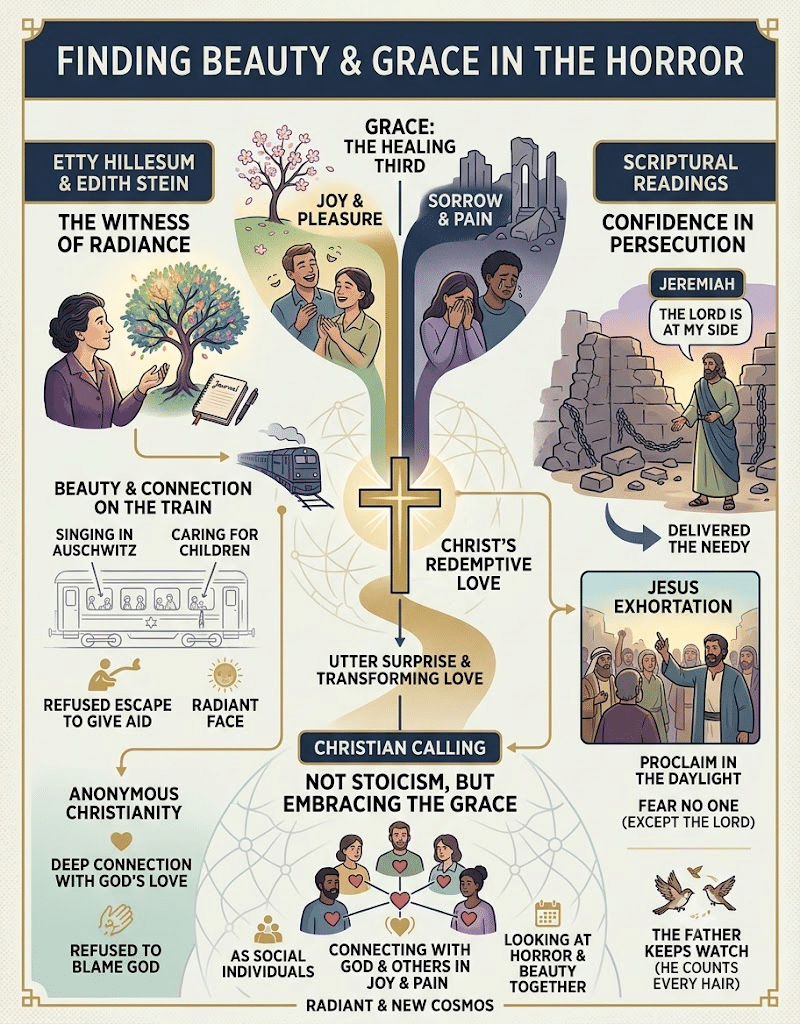
In this reflection, Fr. Dominic White O.P. examines the profound challenge of maintaining faith amidst suffering, contrasting the Christian call to discipleship with the emotional detachment of Stoicism. Through the life and witness of Etty Hillesum, a Dutch Jewish journalist who found profound beauty and divine presence even within the horrors of the Holocaust, Fr. White illustrates how spiritual maturity allows for the integration of joy and sorrow rather than mere dissociation.
Drawing parallels between the lament and trust of the prophet Jeremiah and the exhortations of Christ in the Gospel, the homily explores the “healing third”—the transforming love of God’s grace found in the Cross. Fr. White argues that Christians are not called to ignore the reality of pain or persecution, but to unite their unique sufferings with the Passion of Christ. By doing so, the faithful are empowered to move beyond a self-centered spirituality toward a communal, “social” life in God, capable of beholding both the horror and the beauty of the world through the radiant lens of the Resurrection.
Fr. Austin Fleming

12th Sunday of Year A
✍️ God’s Providence & Our Call
This homily from 2017 addresses the challenging reality of human suffering and the nature of God’s providence. It clarifies a vital distinction: Christ does not promise to prevent his followers from falling or experiencing pain, but rather assures us that the Father is never unaware of our suffering. Drawing on the example of Christ’s own Passion and death, the homily emphasizes that even when God permits us to endure hardship, He remains intimately present, offering His mercy as an eternal safety net.
Fr. Austin concludes with a call to communal responsibility. Just as God keeps a watchful eye on each individual, Christians are invited to act as “safety nets” for one another, extending care to those suffering from loneliness, poverty, and judgment. By participating in the Eucharist, the faithful are nurtured with the strength and grace needed to emulate this divine vigilance, actively looking out for the well-being of their neighbors and trusting in God’s promise of ultimate vindication and restoration in the Resurrection.

Monsignor Peter Hahn
12th Sunday of Year A
▶️ Homily for 12th Sunday of Year
In this homily, the reflection begins with the example of Deion “Coach Prime” Sanders, who, while facing a serious medical crisis, offered a powerful testimony of trust: “If He brought you to it, He will bring you through it.” Using this sentiment as a lens to examine the Christian life, the homily explores the profound tension between human weakness—often marked by fear, anxiety, and doubt—and the unwavering promise of God’s providence.
Drawing on the Gospel of Matthew and the example of the prophet Jeremiah, the message clarifies the nature of Christian fear. While we face real, daunting challenges in the world, the only true “fear” should be directed toward the loss of our souls, reminding the faithful that our ultimate origin and destiny lie beyond this world. The homily serves as a call to spiritual discipline, analogizing the life of faith to an athletic contest where, rather than relying on our own strength, we must depend on the grace of God. Ultimately, it encourages the congregation to transcend worldly insecurities by grounding their trust in the infinite, intimate love of a God who counts every hair on our heads and promises eternal life to those who remain steadfast in their faith.
Fr. Charles E. Irvin
12th Sunday of Year A
✍️ Defending Life in an Indifferent World

In his homily, Fr. Irvin explores the profound paradox of contemporary society: while our era champions individual rights and personal autonomy with unprecedented fervor, it simultaneously devalues human life through the widespread acceptance of abortion, euthanasia, and the neglect of the vulnerable. Drawing an analogy to the canaries used in coal mines, the message suggests that the way a society treats its most fragile members is a direct indicator of its own spiritual and moral health.
Central to this homily is the Gospel promise that, although a person may feel small, insignificant, or easily forgotten—much like a common sparrow—they are held in infinite regard by a God who knows the number of hairs on their head. The homily challenges the faithful to resist societal intimidation and the pressures to remain silent regarding the sanctity of life. By pointing to the crucifix as the ultimate testament to human worth, it calls Catholics to proclaim the dignity of every person from the “housetops.” Ultimately, the message serves as an exhortation to courage, grounding our identity not in the shifting opinions of the world, but in the truth that every human life is a beloved son or daughter of God, worthy of protection, dignity, and love.
Fr. Joe Jagodensky, SDS
12th Sunday of Year A
✍️ Bowling with Jesus

This reflection employs the unconventional metaphor of a ten-frame bowling game to map the trajectory of human life and spiritual commitment. By framing the game around the “beer frames”—the 3rd, 6th, and 9th frames—the author explores these moments as vital respites of community, celebration, and reflection amidst the demands of personal development, professional scrutiny, and the weight of responsibility. Through this lens, the narrative parallels the “formative years” of early frames with the vocational choices of Jesus’ disciples and the ultimate, singular burden of his sacrifice. Drawing on the evocative imagery of Roy Clark’s “Yesterday When I Was Young,” the essay juxtaposes the “heavy ball” of life’s regrets and burdens against the promise of the 10th frame, where the game concludes. Ultimately, the work suggests that while the “fun frames” offer necessary pauses, it is the totality of the game—the triumphs, the failures, and the community forged in the effort—that defines our purpose, concluding that we are all members of a divine bowling team, tasked with carrying the weight of our lives with grace and enduring hope.

Fr. Langeh, CMF
12th Sunday of Year A
▶️ Do Not Be Afraid

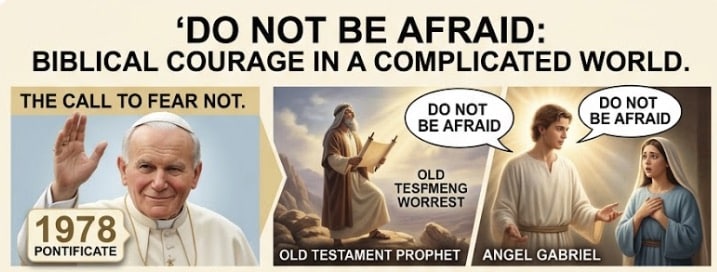
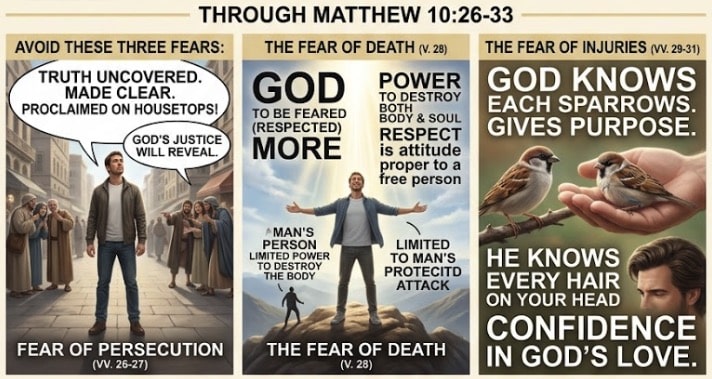
This homily explores the perennial biblical imperative “Do not be afraid,” tracing its significance from the exhortations of Old Testament prophets to the annunciation of Mary and the commissioning of the Twelve by Jesus. Drawing upon the exegesis of Dr. Yves I-Bing Cheng regarding Matthew 10:26-33, the narrative categorizes the specific anxieties Jesus addresses: the fear of persecution, the fear of death, and the fear of personal injury or insignificance. The author argues that these fears are transformed not through human resilience alone, but through a profound shift toward confidence in God’s justice, power, and providential love. By highlighting the example of the prophet Jeremiah and the promise of Christ’s advocacy before the Father, the piece posits that the Christian life is characterized by the courage to acknowledge Jesus amidst adversity. Ultimately, the reflection invites the believer to move beyond mere fear into a state of deep, respectful reliance on God, asserting that such faith serves as the anchor for true liberty and enduring purpose.
Msgr. Charles Pope
12th Sunday of Year A
✍️ Decide Now Whom You Will Fear
This homily examines the central human struggle of fear, arguing that while fear possesses a necessary evolutionary purpose, it is frequently misdirected toward passing, worldly concerns rather than the eternal reality of God. By interpreting Christ’s injunction in Matthew 10, the author distinguishes between the “wrong fear” of human judgment—which often manifests as a desperate quest for worldly approval and leads to silence or denial of faith—and the “right fear” of God. This proper fear is defined not as a crippling dread of punishment, but as a reverential, balanced recognition of God’s holiness and sovereignty, which serves as the essential preparation for the afterlife. The text asserts that our chosen object of fear determines our eternal outcome: fearing man leads to spiritual compromise and eventual alienation from the Divine, while fearing God grants the courage to acknowledge Christ before others. Ultimately, the work calls the reader to “get fear right,” suggesting that a holy, reverent awe of God is the only pathway to shedding worldly anxieties, enabling the believer to stand confidently before any man and secure their place in the Kingdom of Heaven.

Father Kevin Rettig
12th Sunday of Year A
▶️ There is No E-Flat
This homily addresses the pervasive human tendency toward anxiety by contrasting our internal fears with the reality of God’s providence. Using the anecdote of a panicked bassoonist who feared a broken key that would never be played, the author illustrates how much of our suffering is self-inflicted, stemming from troubles that exist only in our minds and never come to pass. Drawing on Christ’s exhortation to consider the sparrows and the flowers, the piece challenges the reader to move beyond the “involuntary atheism” of chronic worry and instead embrace the trust of an infant resting in its mother’s arms. By highlighting biblical passages that describe God with feminine imagery—emphasizing tenderness, warmth, and protective love—the author invites believers to surrender their burdens to a God who cares for them far beyond the capacity of any earthly parent. Ultimately, the reflection serves as a call to relinquish the “big shadows” cast by worry and to step into the sunlight of the present, trusting that, like the missing E-flat, many of our dreaded obstacles will never materialize.

Fr. George Smiga

12th Sunday of Year A
✍️ The Lesson of the Rattlesnake

This reflection utilizes the indigenous metaphor of the rattlesnake—which, when blinded by vulnerability and fear, strikes out and poisons itself—to illustrate the self-destructive nature of unchecked anxiety. Fr. Smiga distinguishes between the obvious, acute fears we experience in moments of crisis and the more insidious, “subtle fear” that operates beneath the surface of daily life.
By analyzing common patterns of paralysis, such as the avoidance of difficult conversations, the maintenance of unhealthy relationships, or the fear of self-expression, Fr. Smiga posits that chronic inaction is frequently a symptom of deep-seated fear. Arguing that all such fear is a form of bondage that robs the individual of freedom and purpose, the reflection directs the reader toward the promise of Christ’s message in the Gospel: the necessity of recognizing a “higher power.”
Ultimately, the homily concludes that while life presents genuine reasons for fear, these are conquered not by human effort alone, but by fully surrendering to God’s unyielding, perfect love—a presence that intimate knows our needs, counts the hairs on our heads, and provides the only true antidote to the paralysis of the spirit.

Additional Homilies
12th Sunday of Year A
Fr. Vincent Hawkswell | Archive
Outside Eden, God Does Not Abandon Us
Fr. George Corrigan, OFM
Fear and Trust: The Rooftops
Fear and Trust: The Cost
Fear and Trust: Choosing
Msgr. Joseph Pellegrino (PDF) | Archive
The Fear of the Lord
Fr. Tommy Lane | Archive
Do Not be Afraid: Jesus is Our Model in Coping with Anxiety
Declaring Ourselves for Jesus in the Presence of Others
Fr. Michael Fallon, MSC | Archive