Catholic Digest, Homily Themes
Catholic Digest, Homily Themes
Sunday, April 19, 2026
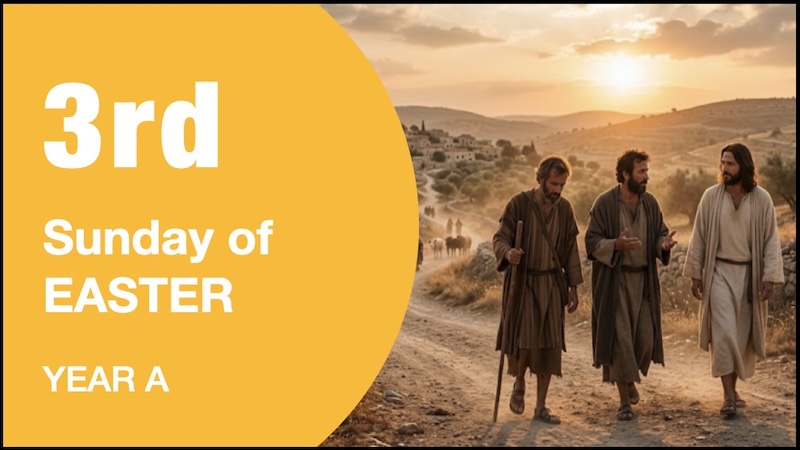
3rd Sunday of Easter (A)








PRACTICAL
ACTIONS
The Ministry of Presence (Luke 24)
- Practice “Emmaus Listening”: Identify someone in your life who is currently “downcast” or discouraged. Set aside 20 minutes to walk or sit with them, asking open-ended questions and listening to their story without immediately trying to “fix” it.
- Practice Intentional Hospitality: Invite someone over for a meal or a coffee who is not part of your inner circle. Treat the “stranger” as a guest of honor at your table.
- Recognize the “Breaking of the Bread”: Before your next meal, pause for a full minute of silence to acknowledge Christ’s presence in the simple act of eating and the community gathered there.
2. The Sojourner’s Discipline (1 Peter 1)
- Perform a “Perishable Audit”: Identify one material possession or digital habit that has become an “idol” or a source of anxiety. Fast from it for three days to remind yourself that you are a “sojourner” and your true home is not here.
- A Prayer of Ransom: Each morning this week, pray: “Lord, I thank you for ransoming me with your precious blood. Help me to live today as one who has been bought at a great price.”
- Act with Reverent Fear: Choose one task you usually rush through (work, chores, or parenting) and perform it with “reverent awe,” offering the quality of your work as a sacrifice to God.
3. The Boldness of Witness (Acts 2)
- Prepare Your “Proclamation”: Write down three sentences describing a time you saw God’s hand in your life (your “witness”). Be ready to share it if the opportunity arises naturally in conversation.
- Public Faith: Make a small, visible sign of your faith in a public space—such as saying grace in a restaurant or keeping a Bible on your desk—without being performative or defensive.
- Study the “Delivered Plan”: Spend 15 minutes reading the Old Testament prophecies mentioned in the Gospels (like those from Isaiah or the Psalms) to strengthen your own understanding of God’s long-term plan for redemption.
4. Immediate “To-Dos”
- Scripture Memory: Memorize 1 Peter 1:18-19: “You were ransomed… not with perishable things like silver or gold but with the precious blood of Christ.”
- Evening Review: At the end of each day, ask yourself: “Where did my heart ‘burn within me’ today, and did I recognize Jesus in that moment?”
Non-profits have permission to copy and paste infographics into their publications.
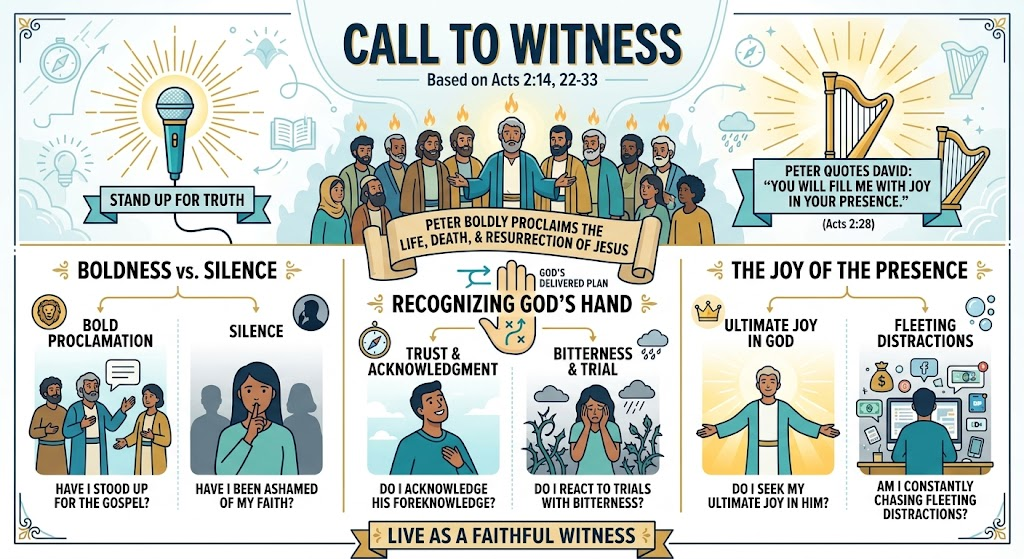
I. The Call to Witness (Acts 2:14, 22-33)
In his first sermon, Peter stands with the Eleven and boldly proclaims the life, death, and resurrection of Jesus as the fulfillment of God’s plan.
- Boldness vs. Silence: Have I been ashamed of my faith in public settings, or have I stood up for the truth of the Gospel when it was unpopular?
- Recognizing God’s Hand: Do I acknowledge “the delivered plan and foreknowledge of God” in my own life, or do I react to trials with bitterness and a lack of trust?
- The Joy of the Presence: Peter quotes David saying, “You will fill me with joy in your presence.” Do I seek my ultimate joy in God, or am I constantly chasing fleeting distractions?
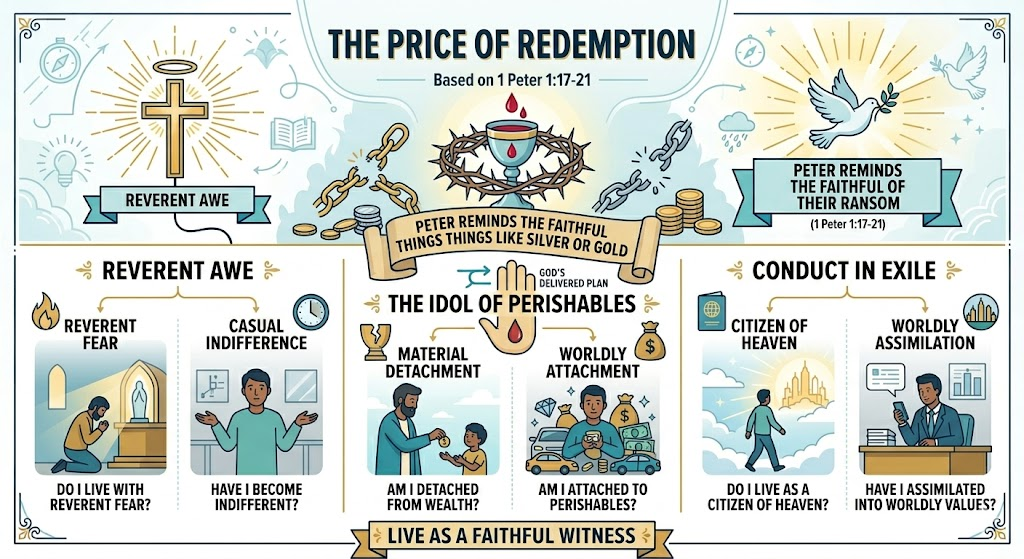
II. The Price of Redemption (1 Peter 1:17-21)
Peter reminds the faithful that they were ransomed not with perishable things like silver or gold, but with the precious blood of Christ.
- Reverent Awe: Do I live my life with a “reverent fear” of God, recognizing his holiness, or have I become casual and indifferent toward the sacred?
- The Idol of Perishables: Am I overly attached to “silver and gold”—material wealth, status, or possessions—forgetting that these cannot save me?
- Conduct in Exile: Peter describes our time on earth as a “sojourn.” Do I live as a citizen of heaven, or have I become so assimilated into worldly values that I am indistinguishable from those without faith?
- Gratitude for the Sacrifice: How often do I meditate on the “precious blood of Christ”? Do I take my redemption for granted?
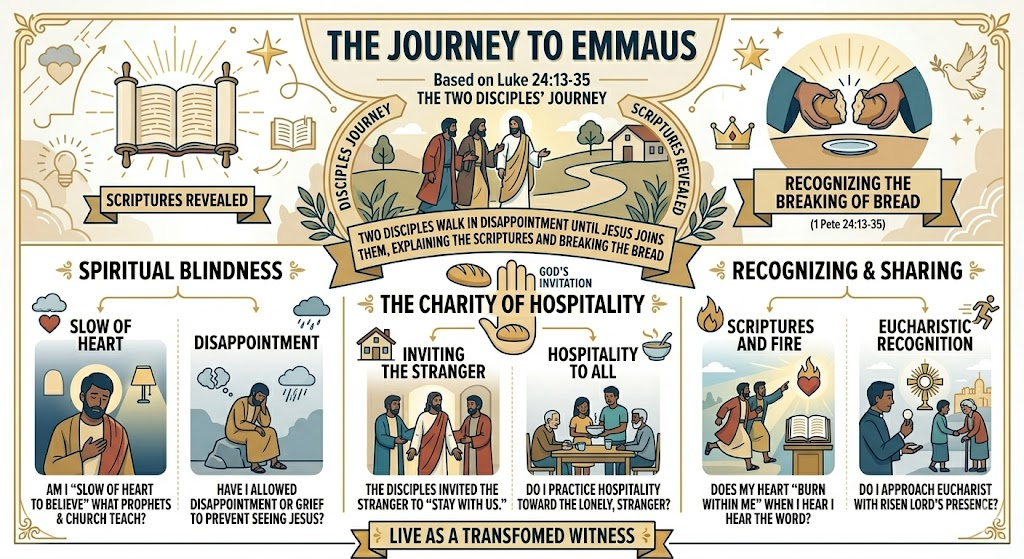
III. The Journey to Emmaus (Luke 24:13-35)
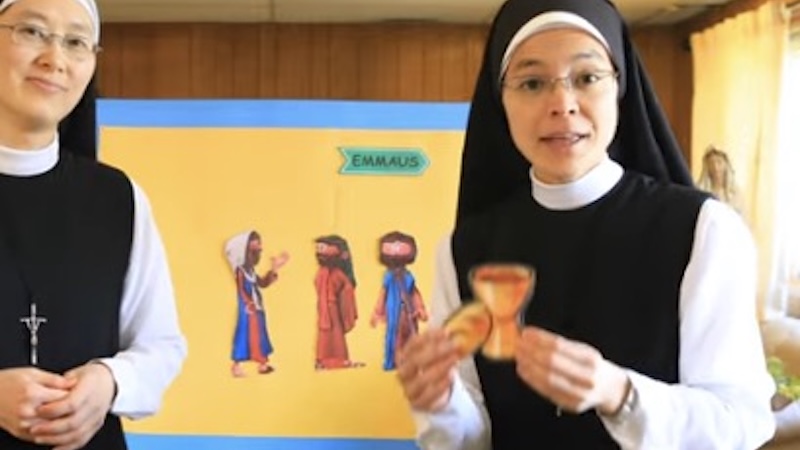
Two disciples walk in disappointment until Jesus joins them, explaining the Scriptures and breaking the bread.
- Spiritual Blindness: Am I “slow of heart to believe” what the prophets and the Church teach? Have I allowed disappointment or grief to prevent me from seeing Jesus walking beside me?
- The Charity of Hospitality: The disciples invited the stranger to “stay with us.” Do I practice hospitality toward the stranger, the lonely, or those who have nothing to offer me in return?
- Burning Hearts: When I hear the Scriptures read at Mass or in private study, does my heart “burn within me”? Or have I allowed the Word of God to become dry and academic?
- Recognizing the Breaking of Bread: Do I approach the Eucharist with the realization that it is the Risen Lord truly present? How has my participation in the Mass transformed my daily actions?
- Returning to Jerusalem: Once the disciples recognized Jesus, they immediately went back to share the news. Do I share my encounters with Christ with others, or do I keep my spiritual life hidden and private?
Three Theological Virtues

Virtue | Reflective Question based on the Readings |
Faith | Do I believe in the Resurrection as a historical reality that changes my today, or just a story from the past? (Acts 2) |
Hope | Is my hope set firmly on the grace to be revealed, or am I easily shaken by political or economic shifts? (1 Peter 1) |
Charity | Do I recognize Christ in the “stranger” on my own road, and am I willing to share my “table” with them? (Luke 24) |
Theology, Apologetics & Evangelization
These channels focus on explaining and defending the Catholic faith, often engaging with modern culture and other viewpoints.
- Bishop Robert Barron (Word on Fire): One of the most influential voices in the Church, offering cultural commentary, movie reviews, and deep theological deep-dives.
- Ascension Presents: A powerhouse channel featuring popular figures like Fr. Mike Schmitz (known for the “Bible in a Year” and “Catechism in a Year” podcasts) and Fr. Josh Johnson, offering accessible videos on faith and life.
- Catholic Answers: The premier channel for Catholic apologetics, featuring live Q&A shows where apologists answer tough questions from callers.
- Pints with Aquinas (Matt Fradd): Long-form interviews and discussions on theology, philosophy, and culture, often over a drink.
- The Counsel of Trent (Trent Horn): Trent Horn, a Catholic Answers apologist, provides rebuttals to atheist and Protestant arguments, as well as commentary on current events.
- Jimmy Akin: A senior apologist at Catholic Answers known for his fairness and deep knowledge, covering everything from bizarre questions to deep theology.
- Breaking In The Habit (Fr. Casey Cole, OFM): A young Franciscan friar who offers fresh, accessible reflections on faith, vocations, and everyday life.
- Thomistic Institute: Excellent, high-quality animated videos and lectures explaining the philosophy and theology of St. Thomas Aquinas.
Gospel: Luke 24:13–35
Theme: Were not our hearts burning within us?
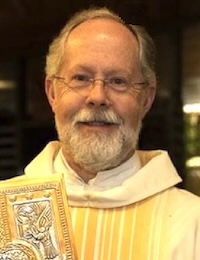
McCulloch
(Diocese of Broken Bay)
On the road to Emmaus, we meet two disciples who are filled with disillusion. Their hopes have been crucified, and they are walking awayfrom Jerusalem, away from the community, away from the crisis, away from the place of faith. They are weary, confused, and sadly downcast.
Into this despair, the Risen Christ enters, not in a burst of glory, but as an anonymous stranger, a quiet companion on the road. He does not begin with a proclamation; He begins with a question: ‘What are you talking about?’ He listens to their story of broken hope. Only then does He open the scriptures to them, and only later do they recognize Him in the breaking of the bread.
This is, perhaps, the most perfect icon of the diakonia. The deacon’s ministry is this quiet companionship. He is ordained to walk with those who are disillusioned and downcast, helping them recognize Christ in their midst. As St. Augustine said, ‘Our hearts must burn so that others may be set aflame.”
AT MASS
Opening the Word, Breaking the Bread
The disciples’ recognition came in two distinct, inseparable phases: their hearts burned at the Word, and their eyes were opened at the Table. The deacon is the minister who uniquely bridges these two actions at the altar.
- Minister of the ‘Burning Word’: The disciples’ hearts ‘burned within them’ while Jesus opened the scriptures. When the deacon proclaims the Gospel, he is not just reading a text; he is participating in this same act. His homily, born from his own burning heart, is meant to be that opening of the Word that sets the assembly’s hearts on fire.
- Minister of the ‘Opened Eyes’: The disciples’ eyes were opened in the breaking of the bread. The deacon stands at the altar, assisting as the bread is broken and serving as the ordinary minister of the Chalice. He is the living link between the ambo (Word) and the altar (Sacrament), helping the assembly to recognize the Lord who they just heard proclaimed.
- The Dismissal to Proclaim: The moment they recognize Jesus, the two disciples ‘set out at once’ and returnto Jerusalem to proclaim what they have discovered. The deacon’s dismissal, to ‘Go and announce the Gospel of the Lord!’ is the commissioning of the Emmaus disciple of today: ‘Go, return to the community, and tell them what you have seen!’
IN THE PARISH
The Ministry of Accompaniment
This Gospel is the blueprint for all catechesis and pastoral care, for Jesus ‘drew near and walked with them.’
- The Emmaus Road of the RCIA: The deacon’s work in the RCIA is a living Emmaus journey. He walks with seekers who often come with questions, doubts, and disillusionment, for months. He patiently opens the scriptures to them in catechesis, he listens to their stories, and he leads them to the moment their eyes are opened at the font and the altar.
- Quiet Companionship: In his parish life, the deacon is the one who ‘walks with.’ He sits with the grieving family, he visits the estranged parishioner, and he listens to the doubting. His is not always a ministry of ‘fixing,’ but of ‘being with’ – a quiet, steady presence that allows Jesus Christ to enter the conversation.
AT THE MARGINS
The Journey to the Disillusioned
The deacon is ordained to find those on their own road to Emmaus, those walking away from hope.
- Finding the Downcast: The deacon’s diakonia calls him to the margins, to the places of crushed hopes: the hospital waiting room, the home of the unemployed, the bedside of the addict, the quiet room of the lonely.
- Service as the Spark: His service is the ‘opening of the Word’ in a tangible form. A bag of groceries, a warm cup of coffee, a listening ear, and a simple act of advocacy – these are the sparks that can make a cold, weary heart begin to burn again with hope.
- Revealing the Lord in the Journey: In this ministry of listening, teaching, and serving, the deacon helps those he serves to recognize Christ. He is the living proof that the Lord has not abandoned them in their disillusionment, but is, in fact, the very stranger walking beside them on the journey. is service is a constant proclamation, made not just with his voice but with his life: ‘My Lord and my God!’

Current Magazines
Issues
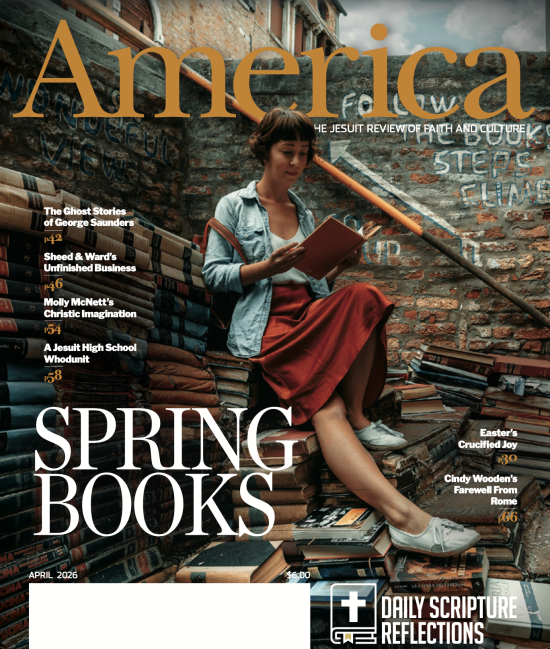
America Magazine: Published by the Jesuits, this leading national review is highly regarded for its thoughtful, nuanced commentary on religion, politics, and contemporary culture.

Commonweal: An independent, lay-edited journal of opinion that provides rigorous intellectual perspectives on faith, society, the arts, and public policy.
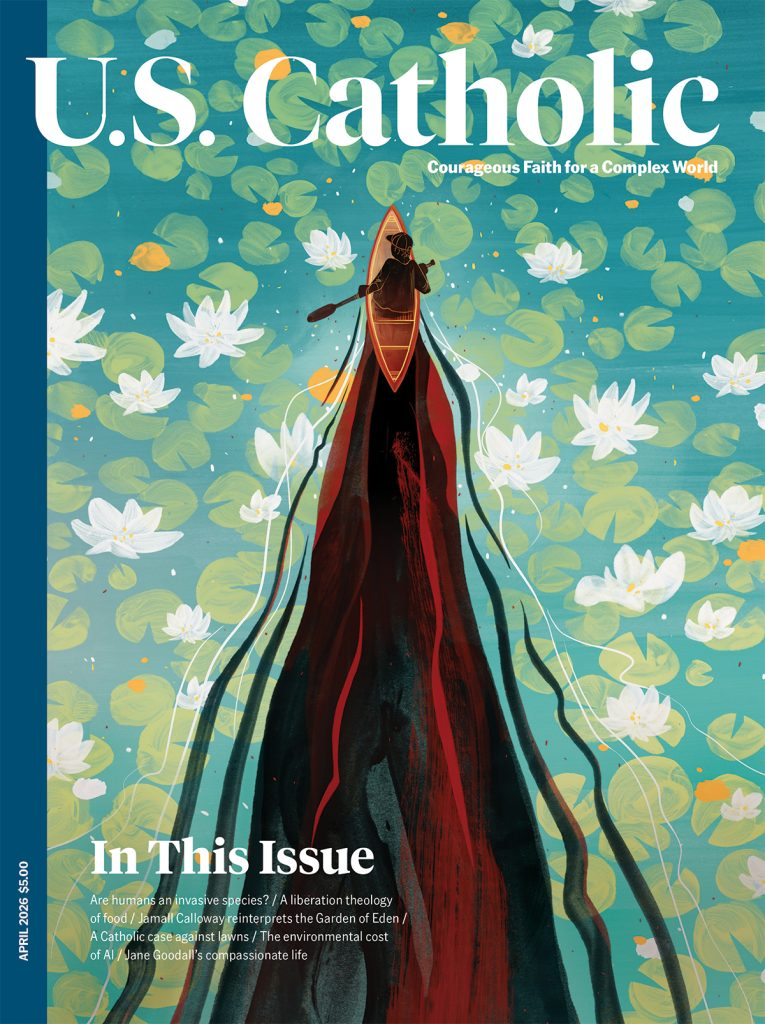
U.S. Catholic: This publication focuses on everyday faith, social justice, and practical insights for living out Catholic teachings in modern, daily life.

Magnificat: A beautifully designed monthly publication intended for daily use. It includes the texts of the daily Mass, morning and evening prayers, and spiritual reflections. Exploring its Spanish edition, Magnificat en Español, can also be an excellent way to weave language practice into a daily spiritual routine.
Catholic.com


Scroll to view all 50 states
Alabama
- One Voice (Diocese of Birmingham)
- The Catholic Week (Archdiocese of Mobile)
Alaska
- The North Star Catholic (Archdiocese of Anchorage-Juneau)
- The Alaskan Shepherd (Diocese of Fairbanks)
- Missionary Disciples (Diocese of Fairbanks)
Arizona
- Voice of the Southwest (Diocese of Gallup)
- The Catholic Sun (Diocese of Phoenix)
- New Outlook (Diocese of Tucson)
Arkansas
- Arkansas Catholic (Diocese of Little Rock)
California
- Angelus Magazine | DIGITAL (Archdiocese of Los Angeles)
- The Catholic Voice | DIGITAL (Diocese of Oakland)
- The Catholic Herald | DIGITAL (Diocese of Sacramento)
- Orange County Catholic (Diocese of Orange)
- Catholic Herald (Diocese of Sacramento)
- Inland Catholic Byte (Diocese of San Bernardino)
- The Southern Cross | DIGITAL (Diocese of San Diego)
- Catholic San Francisco (Archdiocese of San Francisco)
- San Francisco Católico (Archdiocese of San Francisco)
- The Valley Catholic | DIGITAL (Diocese of San Jose)
Colorado
- The Colorado Catholic Herald (Diocese of Colorado Springs)
- Denver Catholic (Archdiocese of Denver)
Connecticut
- Fairfield County Catholic (Diocese of Bridgeport)
- The Catholic Transcript | DIGITAL (Archdiocese of Hartford)
- Four County Catholic | DIGITAL (Diocese of Norwich)
Delaware
- The Dialog (Diocese of Wilmington)
Florida
- Florida Catholic | E-EDITIONS (Archdiocese of Miami; Dioceses of Orlando, Palm Beach, Pensacola–Tallahassee, St. Augustine, Saint Petersburg, Venice)
Georgia
- The Georgia Bulletin (Archdiocese of Atlanta)
- Southern Cross (Diocese of Savannah)
Hawaii
- Hawaii Catholic Herald (Diocese of Honolulu)
Idaho
- Idaho Catholic Register (Diocese of Boise)
Illinois
- The Messenger (Diocese of Belleville)
- Chicago Catholic (Archdiocese of Chicago)
- Catolico (Archdiocese of Chicago)
- Christ is Our Hope (Diocese of Joliet)
- The Catholic Post (Diocese of Peoria)
- The Observer (Diocese of Rockford)
- Catholic Times (Diocese of Springfield)
Indiana
- The Message (Diocese of Evansville)
- Today’s Catholic News (Diocese of Fort Wayne–South Bend)
- Northwest Indiana Catholic (Diocese of Gary)
- The Criterion (Archdiocese of Indianapolis)
- The Catholic Moment | DIGITAL (Diocese of Lafayette)
Iowa
- The Catholic Messenger (Diocese of Davenport)
- The Catholic Mirror | DIGITAL (Diocese of Des Moines)
- The Witness (Archdiocese of Dubuque)
- The Lumen (Diocese of Sioux City)
Kansas
- Southwest Kansas Register (Diocese of Dodge City)
- The Leaven (Archdiocese of Kansas City)
- The Register | DIGITAL (Diocese of Salina)
- Catholic Advance (Diocese of Wichita)
- Avance Católico (Diocese of Wichita)
Kentucky
- Messenger (Diocese of Covington)
- Cross Roads | DIGITAL (Diocese of Lexington)
- The Record | DIGITAL (Archdiocese of Louisville)
- Western Kentucky Catholic (Diocese of Owensboro)
Louisiana
- Church Today (Diocese of Alexandria)
- The Catholic Commentator (Diocese of Baton Rouge)
- Bayou Catholic (Diocese of Houma–Thibodaux)
- Clarion Herald (Archdiocese of New Orleans)
- The Catholic Connection | DIGITAL (Diocese of Shreveport)
Maryland / Washington, DC
- The Catholic Review (Archdiocese of Baltimore)
- Catholic Standard (Archdiocese of Washington)
- El Pregonero (Archdiocese of Washington)
Massachusetts
- The Pilot (Archdiocese of Boston)
- The Anchor (Diocese of Fall River)
- SOPHIA | DIGITAL (Diocese of Springfield)
- The Catholic Free Press | DIGITAL (Diocese of Worcester)
Michigan
- Detroit Catholic (Archdiocese of Detroit)
- FAITH along Michigan’s 45th Parallel | DIGITAL (Diocese of Gaylord)
- Faith Grand Rapids (Diocese of Grand Rapids)
- The Good News (Diocese of Kalamazoo)
- FAITH (Diocese of Lansing)
- The U.P. Catholic (Diocese of Marquette)
- Great Lakes Bay | DIGITAL (Diocese of Saginaw)
Minnesota
- Our Northland Diocese (Diocese of Crookston)
- The Northern Cross (Diocese of Duluth)
- The Prairie Catholic (Diocese of New Ulm)
- Central Minnesota Catholic | DIGITAL (Diocese of Saint Cloud)
- The Catholic Spirit (Archdiocese of Saint Paul and Minneapolis)
- The Courier | DIGITAL (Diocese of Winona-Rochester)
Mississippi
- Gulf Pine Catholic | DIGITAL (Diocese of Biloxi)
- Mississippi Catholic | DIGITAL (Diocese of Jackson)
Missouri
- Catholic Missourian | DIGITAL (Diocese of Jefferson City)
- The Catholic Key | DIGITAL (Diocese of Kansas City–Saint Joseph)
- The Mirror (Diocese of Springfield–Cape Girardeau)
- St. Louis Review (Archdiocese of St. Louis)
- Catholic St. Louis | DIGITAL (Archdiocese of St. Louis)
Montana
- The Harvest (Diocese of Great Falls–Billings)
Nebraska
- West Nebraska Catholic | DIGITAL (Diocese of Grand Island)
- Southern Nebraska Register (Diocese of Lincoln)
- The Catholic Voice (Archdiocese of Omaha)
Nevada
- Desert Clarion (Diocese of Las Vegas)
- High Desert Catholic | DIGITAL (Diocese of Reno)
New Hampshire
New Jersey
- Catholic Star Herald (Diocese of Camden)
- The Catholic Spirit | DIGITAL (Diocese of Metuchen)
- The Catholic Advocate (Archdiocese of Newark)
- The Beacon | DIGITAL (Diocese of Paterson)
- The Monitor (Diocese of Trenton)
New Mexico
- Voice of the Southwest (Diocese of Gallup)
- Agua Viva (Diocese of Las Cruces)
- People of God (Archdiocese of Santa Fe)
New York
- The Evangelist (Diocese of Albany)
- The Tablet (Diocese of Brooklyn)
- The Catholic Union / The Catholic Union and Times (Diocese of Buffalo)
- Western New York Catholic (Diocese of Buffalo)
- The Good Newsroom (Archdiocese of New York)
- North Country Catholic (Diocese of Ogdensburg)
- Catholic Courier (Diocese of Rochester)
- El Mensajero Católico (Diocese of Rochester)
- The Long Island Catholic (Diocese of Rockville Centre)
- The Catholic Sun (Diocese of Syracuse)
North Carolina
- Catholic News Herald (Diocese of Charlotte)
- NC Catholics | DIGITAL (Diocese of Raleigh)
North Dakota
- Dakota Catholic Action | DIGITAL (Diocese of Bismarck)
- New Earth Magazine | DIGITAL (Diocese of Fargo)
Ohio
- The Catholic Telegraph (Archdiocese of Cincinnati)
- Northeast Ohio Catholic | DIGITAL (Diocese of Cleveland)
- Catholic Times | DIGITAL (Diocese of Columbus)
- Steubenville Register (Diocese of Steubenville)
- The Catholic Echo (Diocese of Youngstown)
Oklahoma
- Sooner Catholic | DIGITAL (Archdiocese of Oklahoma City)
- Eastern Oklahoma Catholic | DIGITAL (Diocese of Tulsa)
Oregon
- Catholic Sentinel / El Centinela (Diocese of Baker / Archdiocese of Portland)
- The Diocesan Chronicle (Diocese of Baker / Archdiocese of Portland)
- Harvest | DIGITAL (Diocese of Baker / Archdiocese of Portland)
Pennsylvania
- The A.D. Times | DIGITAL (Diocese of Allentown)
- Proclaim TV! | DIGITAL (Diocese of Altoona–Johnstown)
- The Catholic Accent | DIGITAL (Diocese of Greensburg)
- The Catholic Witness | DIGITAL (Diocese of Harrisburg)
- Catholic Philly (Archdiocese of Philadelphia)
- Pittsburgh Catholic | DIGITAL (Diocese of Pittsburgh)
- The Catholic Light (Diocese of Scranton)
Rhode Island
- Rhode Island Catholic (Diocese of Providence)
- El Católico de Rhode Island (Diocese of Providence)
South Carolina
- The Catholic Miscellany | DIGITAL (Diocese of Charleston)
South Dakota
- West River Catholic | DIGITAL (Diocese of Rapid City)
- The Bishop’s Bulletin | DIGITAL (Diocese of Sioux Falls)
Tennessee
- East Tennessee Catholic (Diocese of Knoxville)
- The West Tennessee Catholic (Diocese of Memphis)
- Faith West Tennessee (Diocese of Memphis)
- Catholic Awakenings | DIGITAL (Diocese of Nashville)
Texas
- The West Texas Catholic | DIGITAL (Diocese of Amarillo)
- Catholic Spirit (Diocese of Austin)
- East Texas Catholic | DIGITAL (Diocese of Beaumont)
- South Texas Catholic | DIGITAL (Diocese of Corpus Christi)
- The Texas Catholic (Diocese of Dallas)
- Revista Católica (Diocese of Dallas)
- The Rio Grande Catholic | DIGITAL (Diocese of El Paso)
- North Texas Catholic | DIGITAL (Diocese of Fort Worth)
- Texas Catholic Herald | DIGITAL (Archdiocese of Galveston–Houston)
- West Texas Angelus | DIGITAL (Diocese of San Angelo)
- Today’s Catholic Newspaper | DIGITAL (Archdiocese of San Antonio)
- Catholic East Texas | DIGITAL (Diocese of Tyler)
- The Catholic Lighthouse | DIGITAL (Diocese of Victoria)
Utah
- Intermountain Catholic (Diocese of Salt Lake City)
Vermont
- Vermont Catholic (Diocese of Burlington)
Virginia
- Arlington Catholic Herald (Diocese of Arlington)
- The Catholic Virginian (Diocese of Richmond)
Washington
- Northwest Catholic | DIGITAL (Archdiocese of Seattle)
- Inland Catholic | DIGITAL (Diocese of Spokane)
West Virginia
- The Catholic Spirit (Diocese of Wheeling–Charleston)
Wisconsin
- The Compass | DIGITAL (Diocese of Green Bay)
- Catholic Life | DIGITAL (Diocese of La Crosse)
- Madison Catholic Herald (Diocese of Madison)
- The Catholic Herald (Archdiocese of Milwaukee)
- The Superior Catholic Herald (Diocese of Superior)
Wyoming
- Wyoming Catholic Register (Diocese of Cheyenne)
FORMED is a premier on-demand digital streaming platform dedicated to Catholic media. It is frequently described as a “Catholic Netflix.” Created by the Augustine Institute—in collaboration with Ignatius Press and over 100 other Catholic content providers—FORMED provides a vast library of faith-based media designed to help individuals, families, and parishes learn and grow in their faith.
RECENTLY ADDED
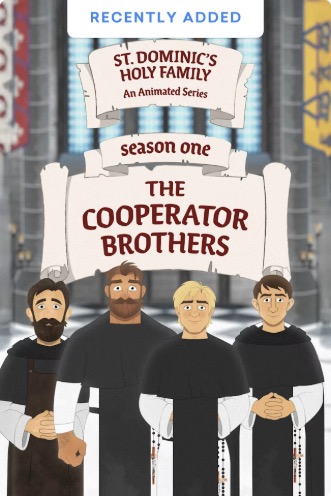
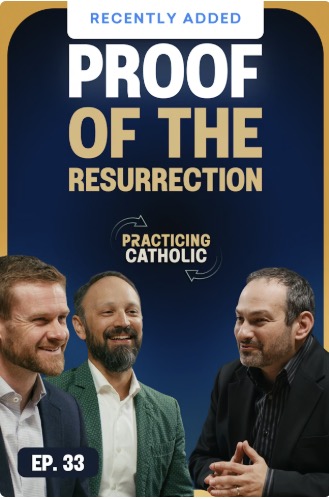
Many Catholic parishes purchase an annual subscription to FORMED for their congregation. If your local church has a subscription, you can usually sign up for a free account by entering your parish’s name or zip code on the site.
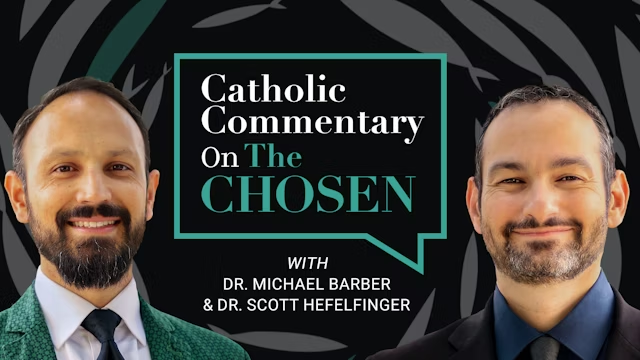
Catholic Commentary on The Chosen helps Catholics engage with the immensely popular TV series depicting the life of Christ. Using the fullness of the faith and authentic Catholic imagination, Dr. Michael Barber and Dr. Scott Hefelfinger help Catholics approach Scripture, creative license, and more in The Chosen.
This Week on Formed
SOURCE: FORMED