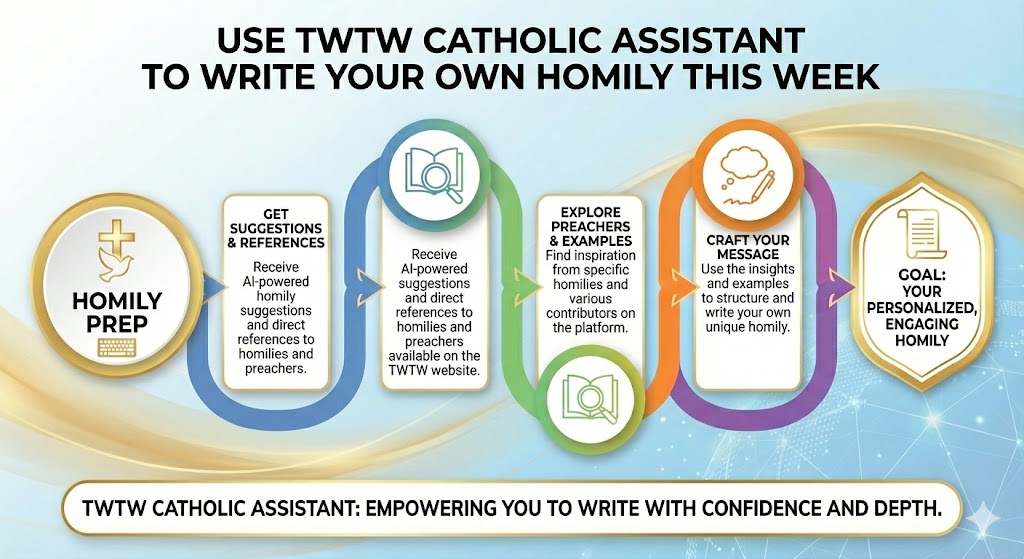
Homily Helper, Catholic AI
Homily Helper, Catholic AI
March 8, 2026
April 19, 2026
3rd Sunday of Easter (A)


- GETTING STARTED
- CHAT SPACE
- USE OF AI

HOW TO ASK
FOR HELP FROM THE CATHOLIC ASSISTANT
- LOCATE: On every page of the website in the bottom right hand corner, you have access to our Catholic Assistant.
- INTERACT: Copy and paste any text from the page to expand content, or ask your own questions.
- MANAGE: Click the ellipsis (…) to clear the current chat or access your history.
Age & Stage of Life (Demographic Focus)
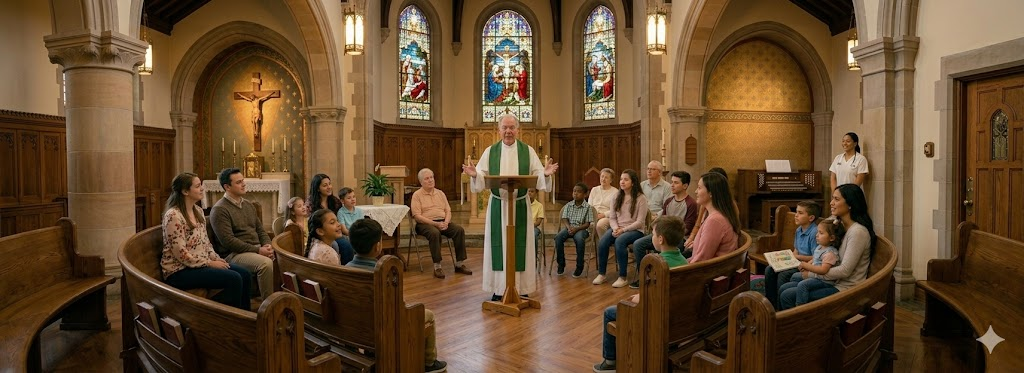
- The “Family Mass” (Heavy on young children and parents): Prompts here need to focus on translating high theology into accessible object lessons, addressing the chaos and beauty of parenting, and keeping the attention of a distracted room.
- The Young Adult / College Crowd: Preaching for this group often requires addressing intellectual doubts, the search for vocation/purpose, navigating modern culture, and finding authentic community.
- The Senior / Retiree Congregation: This group often appreciates a deeper dive into church history, scriptural context, and reflections on legacy, suffering, and the long-term faithfulness of God.
- The Teen / Youth Ministry Mass: Needs highly relational themes, addressing identity, mental health, peer pressure, and making faith a personal choice rather than just a family habit.
Geographic & Socioeconomic Reality (Lived Experience Focus)
- The Affluent Suburban Parish: Prompts might focus on the dangers of materialism, finding peace in an over-scheduled life, and the call to charity and spiritual poverty.
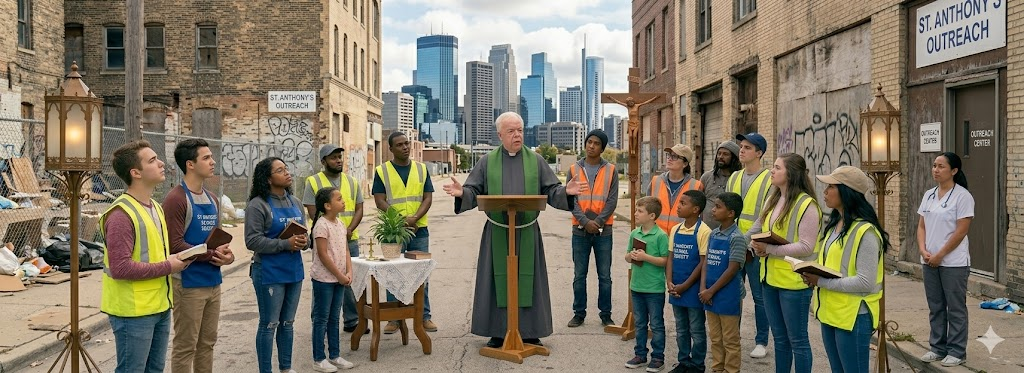
- The Urban / Inner-City Parish: Preaching often leans heavily into Catholic Social Teaching, hope amidst systemic struggle, community solidarity, and finding Christ in the marginalized.
- The Rural / Agricultural Parish: Naturally connects well with the agrarian parables of the Gospels. Themes often revolve around reliance on God’s providence, creation, and tight-knit community support.
Liturgical Context & Commitment Level
- The Daily Mass Attendees: A smaller, usually older, and highly devout group. Prompts can skip the basics and go straight into deep spiritual, mystical, or ascetical theology.
- The School Mass (K-8 or High School): Requires high energy, clear takeaways, and relatable school-life analogies (tests, friendships, bullying).
Specialized Settings (The “Outskirts”)
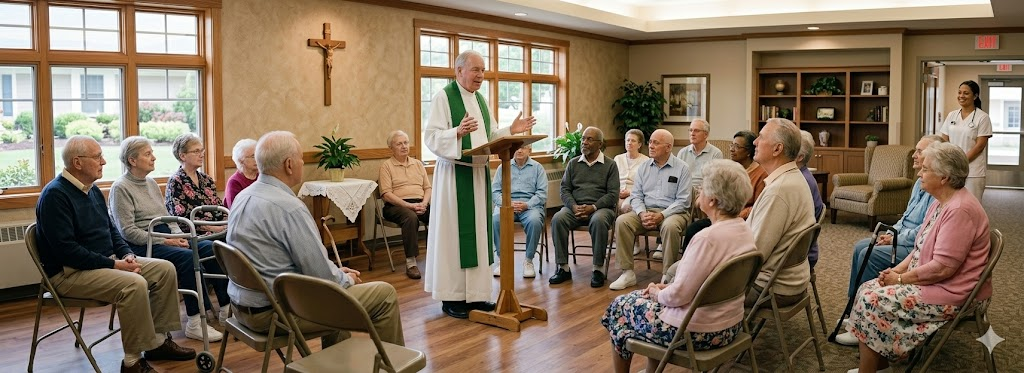
- Nursing Home / Assisted Living: Focuses heavily on comfort, the dignity of the elderly, uniting suffering with Christ, and the hope of heaven.
- Prison Ministry: Requires themes of radical forgiveness, redemption, overcoming shame, and God’s proximity to the forgotten.

Connecting Sunday’s Word
The key to an effective homily is not just exegesis, but the application of the text to the unique “lived experience” of the specific people in front of the preacher.
3rd Sunday of Easter (A)
Families / Intergenerations
Best Reading: Luke 24:13-35 (The Road to Emmaus)
Topic: "Finding Jesus in Our Everyday Mess"
The Hook: Start by asking a relatable question: "Who has ever looked for their glasses, only to find them on top of their head?" Talk about how we get so "stuck in the weeds" of our lists, school runs, and chores that we miss the miracle right in front of us.
The Scripture Connection: Show how the disciples were too "slow of heart" (Lk 24:25) and "blinded" by their own expectations and self-pity to see that the stranger walking beside them was Jesus.
The Application: 1. Recognize the Journey: Like the disciples, our family "walk" can be full of confusion and disappointment. That is okay. 2. Invite Jesus In: When we are overwhelmed, our "prayer" shouldn't just be words; it should be a deliberate act of "staying" with Him (Lk 24:29) in the mess. 3. Share the 'Aha!': The disciples only recognized Him at the table. The family meal is a sacred time where we are called to see Christ in each other and share how we saw Him "on the road" that week.
Prompts for the Catholic AI Assistant
To assist in crafting a homily for FAMILIES, a preacher might ask an AI assistant the following questions (simply copy and paste a question into chat bot in the lower right corner of the page):
- Expanding the Daily Habit How can the "Aha!" moment at the breaking of the bread be translated into a specific, five-minute "Emmaus Review" habit that a family can practice during their evening commute or at the dinner table to identify God's presence in their daily mess?
- Modern Cultural Analogies Can you provide three relatable, modern-day scenarios—specifically involving the "mental load" of parents or the chaos of household management—that mirror the "distracted walking" of the disciples on the road to Emmaus?
- Linguistic Word Studies Could you perform a word study on the Greek phrase bradeis tē kardia (slow of heart) in Luke 24:25 and the verb parebiastanto (they urged/constrained Him) in Luke 24:29 to show how these nuances apply to the internal disposition of a family today?
- Patristic and Saintly Wisdom What insights do St. Augustine or St. Gregory the Great offer regarding the "hiddenness" of Christ in the Emmaus narrative, and is there a quote from a saint known for family life, such as St. Zelie Martin, that connects "seeing God in the ordinary" to this text?
- Psychological and Lifestyle Hurdles What are the primary psychological barriers, such as "decision fatigue" or "anticipatory anxiety," that prevent modern families from experiencing the "burning hearts" described in the Gospel, and how can we address these hurdles from the pulpit?

3rd Sunday of Easter (A)
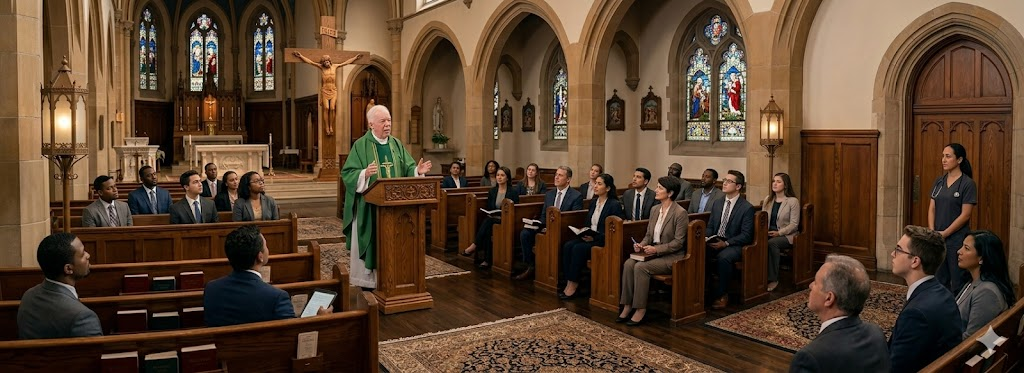
Young Adult / University Students
Best Reading: Acts 2:14, 22-33 (Peter’s Pentecost Speech)
Topic: "Cynicism, Proof, and the Power of Personal Witness"
The Hook: Talk about how our generation is defined by "receipts." We want verification, peer-reviewed data, and "social proof" before we believe anything. When it comes to faith, many of us feel like Thomas (the cynic) or like the crowd Peter addresses—needing a definitive answer.
The Scripture Connection: Explain how Peter doesn't just say, "Trust me." He offers a four-step argument: 1. Acknowledges the crowd. 2. Presents his thesis (the kerygma). 3. Quotes Scripture they already trust (Psalm 16). 4. Gives his personal witness. He connects an ancient text to their modern moment.
The Application: 1. Doubt is a Door: Thomas's "cynicism" (as Larry Broding calls it) led him to the greatest profession of faith. Do not be afraid of your questions, but use them to look deeper. 2. Direction over Definition: Our faith isn't about being able to perfectly "define" the Spirit (like the confusion in Acts 2:33); it is a "mindset" (Direction) through Jesus to God (1 Pet 1:21). 3. Be the Receipts: The Church today doesn't need slick marketing; it needs your messy, honest, personal witness. Your story of finding hope in the Risen Christ is the proof others are looking for.
Prompts for the Catholic AI Assistant
To assist in crafting a homily for YOUNG ADULTS or UNIVERSITY STUDENTS, a preacher might ask an AI assistant the following questions (simply copy and paste a question into chat bot in the lower right corner of the page):
- Expanding the Daily Habit How can the concept of "being the receipts" be turned into a practical daily habit, such as a "Witness Audit," where a young professional or student identifies one moment each day where they chose hope over cynicism and learns how to articulate that experience to a peer?
- Modern Cultural Analogies Can you provide examples of how "social proof" and "receipts" function in digital culture—such as peer reviews, blue checkmarks, or viral debunking—and help me draw a parallel between these modern verification methods and Peter’s use of public testimony in Acts 2:22?
- Linguistic Word Studies Could you analyze the Greek word metanoia (often translated as "repentance") in the context of Peter’s speech to show how it implies a "radical shift in mindset" or "change of direction" rather than just a feeling of guilt, specifically for a student population focused on intellectual growth?
- Patristic and Saintly Wisdom Which insights from St. Thomas Aquinas regarding the relationship between "faith and reason" or St. John Henry Newman’s Grammar of Assent best support the idea that personal witness and "illative sense" are valid forms of proof for a cynical generation?
- Psychological and Lifestyle Hurdles What are the specific psychological hurdles that lead to "performative cynicism" or "intellectual burnout" in university settings, and how can Peter's bold transition from a denier to a witness offer a roadmap for moving past the fear of being "canceled" for one's beliefs?
3rd Sunday of Easter (A)
Nursing Home / Retirement Center
Best Reading: 1 Peter 1:17-21 (A Living Hope)
Topic: "Holy Fear, Living Prayer, and a Safe Inheritance"
The Hook: Start with the very human and common fear in this demographic: the fear of "running out of time" or "being left behind." Our bodies are changing, and the world can feel confusing and alien.
The Scripture Connection: Frame "holy fear" not as terror, but as a profound "mindset" (Broding’s term) of God's presence as our Creator. Focus on the promise that our "inheritance" is not silver or gold that tarnishes, but is "kept safe" by God himself until the end.
The Application: 1. Your Life is Prayer: Prayer is not something you "do" in your room. Your entire journey, including your current physical limitations, can be a "living prayer," a practice for the eternal life in the Kingdom. 2. The Only True Security: Your dignity is not found in your independence or "status" (which Broding notes is "literally, not receiving face" in ancient society), but in the fact that you were ransomed by the "precious blood of Christ." 3. Safe Passage: Trust that your faith and hope in God are secure, not because of what you can do, but because of what He has already done through the Resurrection.
Prompts for the Catholic AI Assistant
To assist in crafting a homily for NURSING HOME RESIDENTS, a preacher might ask an AI assistant the following questions (simply copy and paste a question into chat bot in the lower right corner of the page):
- Expanding the Daily Habit How can the concept of "Life as Prayer" be developed into a practical daily habit for residents with limited mobility—perhaps a "Breath Prayer of Entrustment"—that allows them to transform moments of physical pain or loneliness into an active participation in the Resurrection?
- Modern Cultural Analogies Can you provide three analogies that contrast the "silver and gold" of worldly achievements—such as professional titles, real estate, or physical independence—with the concept of an "incorruptible inheritance" that remains accessible even when one's physical world has shrunk to a single room?
- Linguistic Word Studies Could you perform a word study on the Greek word phobos (fear/reverence) in 1 Peter 1:17 and papoikon (sojourner/stranger) to help explain how "holy fear" is actually a source of security and how being a "sojourner" provides a hopeful perspective on the temporary nature of a care facility?
- Patristic and Saintly Wisdom What insights did St. Polycarp offer regarding faith in old age, or are there specific reflections from St. John Paul II’s Letter to the Elderly that connect the "precious blood of Christ" to the inherent dignity of those who feel they have lost their "status" in society?
- Psychological and Lifestyle Hurdles What are the primary psychological hurdles associated with "relocation stress syndrome" or the "grief of lost autonomy," and how can the scriptural promise of being "ransomed from a futile way of life" be presented as a therapeutic remedy for feelings of uselessness?
3rd Sunday of Easter (A)
Social Justice & Outreach Focused
Best Reading: Acts 2:14, 22-33 (or the idea of Acts 2:42-47)
Topic: "Pentecost as a Social Reversal"
The Hook: Start with the concept of "exclusive clubs" or "members only" societies. Talk about how the world constantly builds walls based on status, wealth, political alignment, and background.
The Scripture Connection: Explain, as Larry Broding suggests, that Luke "turns the notion of the end time on its head." The popular view was that the Messiah would glorify the Jews and judge/exclude the Gentiles. Peter proclaims the opposite: God’s judgment is impartial (1 Pet 1:17), and the Spirit is poured out on all flesh. Salvation depends on faith, not bloodline.
The Application: 1. Impartial Witness: If God judges "without regard for one's status," we must do the same. Outreach isn't just a program; it's a commitment to seeing Christ in the marginalized. 2. Turning our Agenda Upside Down: Like the disciples' expectation of a political king, our own social or political agendas can become idols. We must let the Spirit (which causes confusion and "scorn" among the powerful, Acts 2:13) dictate our action. 3. The Church as "Practice for the Kingdom": The Church must be a model of this new, impartial unity. If we are divided, we are not a true witness to the Risen Lord who puts the world "in balance" (Shalom).
Prompts for the Catholic AI Assistant
To assist in crafting a homily that is SOCIAL JUSTICE or OUTREACH FOCUSED, a preacher might ask an AI assistant the following questions (simply copy and paste a question into chat bot in the lower right corner of the page):
- Expanding the Daily Habit How can the concept of "Impartial Witness" be turned into a daily habit, such as a "Status Audit" of our daily interactions, to help individuals recognize who they are unconsciously excluding and intentionally practice the "Shalom" or "balance" that Pentecost demands?
- Modern Cultural Analogies Can you provide examples of modern "exclusive clubs" or systemic "walls"—such as algorithmic echo chambers, gentrification, or zip-code-based resource allocation—that illustrate the "members only" mindset Peter’s Pentecost speech was designed to dismantle?
- Linguistic Word Studies Could you conduct a word study on the Greek term prosōpolēmptēs (impartial/not a respecter of persons) used in the context of 1 Peter 1:17 and Acts 10:34, and explain how the literal translation of "not taking a face" challenges our modern tendency toward performative activism?
- Patristic and Saintly Wisdom What did St. John Chrysostom or St. Basil the Great write regarding the "universal destination of goods" or the "impartiality of the Spirit," and how do their radical views on wealth and social status support the idea of the Church as a "practice for the Kingdom"?
- Psychological and Lifestyle Hurdles What are the psychological hurdles of "in-group bias" and "status anxiety" that prevent congregants from embracing social reversal, and how can the homily address the fear that "impartiality" for the marginalized feels like a loss of security for the privileged?
3rd Sunday of Easter (A)
Busy Professionals
Best Reading: 1 Peter 1:17-21 (A Living Hope)
Topic: "Phoning It In: Fighting Rote Prayer and Finding Purpose"
The Hook: Use Larry Broding's fantastic metaphor of an actor "phoning in" a shallow performance. Talk about how, in our high-pressure, metric-driven lives, we do this everywhere. We "phone it in" with our families, our marriages, and especially our prayer. We're physically present, but our minds are on our next meeting, list, or goal.
The Scripture Connection: Focus on the warning that prayer can become rote. Broding writes, "We might direct our words to God, but we forget he is present." The antidote is "holy fear"—the deep awareness that we are standing before our Creator. This changes our prayer from a chore to a source of purpose.
The Application: 1. Prayer is your 'Mindset' (brooding): Stop thinking of prayer as another item on your to-do list. It is a fundamental shift in awareness that grounds your entire day. 2. Ransomed from "Useless Behavior": Are your professional goals giving you true "status" and "face time," or are they a form of "useless behavior that your parents passed on" (1 Pet 1:18)? Let the Resurrection redefine your success. 3. Practice for the Kingdom: The way you live your life—with integrity, fairness, and true presence—is your "living prayer" and your practice for life in the Kingdom. Are you "living in the Light" or just in the "Light" of your smartphone screen?
Prompts for the Catholic AI Assistant
To assist in crafting a homily for BUSY PROFESSIONALS, a preacher might ask an AI assistant the following questions (simply copy and paste a question into chat bot in the lower right corner of the page):
- Expanding the Daily Habit How can the concept of "Prayer as a Mindset" be turned into a practical "Threshold Habit" for the workday—such as a specific prayer or reflection used when transitioning between meetings or opening a laptop—to ensure the professional is "living in the Light" rather than just the light of their screen?
- Modern Cultural Analogies Can you provide three analogies specifically tailored to corporate or high-pressure environments—such as "ghosting" in communication, "autopilot" during a commute, or "performative presence" in a Zoom meeting—that illustrate the spiritual danger of "phoning in" one's relationship with God?
- Linguistic Word Studies Could you perform a word study on the Greek word anastrophē (conduct/way of life) in 1 Peter 1:18, specifically looking at how it implies a "360-degree movement" or a "total orientation," to help professionals understand that "living prayer" is a constant state rather than a scheduled block of time?
- Patristic and Saintly Wisdom How does St. Josemaría Escrivá’s theology of "sanctifying ordinary work" or St. Francis de Sales’ advice to professionals in Introduction to the Devout Life complement the idea of being "ransomed from useless behavior," and what quotes can I use to show that professional excellence is part of one's "living prayer"?
- Psychological and Lifestyle Hurdles What are the psychological impacts of "continuous partial attention" and "hustle culture" on a person's ability to maintain "holy fear" (awareness of God's presence), and how can a professional distinguish between healthy productivity and the "futile ways" inherited from a competitive society?

3rd Sunday of Easter (A)
The Incarcerated
Best Reading: Luke 24:13-35 (Road to Emmaus)
Topic: "Locked Doors and Open Roads: How Jesus Meets Us in Our Worst Moments"
The Hook: Describe the feeling of total defeat and hopelessness. The disciples are walking away from Jerusalem (the center of faith and community), feeling like everything they built and hoped for has been crushed by the religious leaders. It is the feeling of having nowhere left to go.
The Scripture Connection: Show that Jesus does not wait for the disciples to "fix" themselves or return to faith. He comes near to them on their road of retreat. He "grabbed their attention" (Broding’s term) in their "self-pity" and "wallowing in their own pain."
The Application: 1. He is Already on Your Road: He is not a distant, perfect God. He is present right now in your discouragement, your confusion, and your isolation. 2. Reframe your Story: Let Jesus "interpret" your past and present suffering in a new way (Lk 24:26). Your current pain, like the suffering of the Christ, can be a necessary path toward true life and glory. 3. 'Stay With Us' is Your Prayer: When your hope feels crushed, your prayer doesn't have to be perfect or full of big words. It can simply be the plea of Cleopas: "Stay with us, Lord, because it is evening" (Lk 24:29). He will.
Prompts for the Catholic AI Assistant
To assist in crafting a homily for PRISONERS, a preacher might ask an AI assistant the following questions (simply copy and paste a question into chat bot in the lower right corner of the page):
- Expanding the Daily Habit How can the prayer "Stay with us, Lord, for it is evening" be turned into a daily "Evening Entrustment" habit for someone in a cell—specifically focusing on the transition from the noise of the day to the isolation of the night—to ensure they recognize Jesus as the one who "stays" when everyone else has left?
- Modern Cultural Analogies Can you provide three analogies that compare the "locked-in" feeling of a prison cell to the internal "emotional paralysis" or "tunnel vision" the disciples felt while walking away from Jerusalem, and how both can prevent a person from seeing a visitor who is standing right in front of them?
- Linguistic Word Studies Could you perform a word study on the Greek word skuthrōpoi (translated as "looking sad" or "downcast") in Luke 24:17, looking specifically for connotations of a "gloomy, darkened countenance," to help describe the heavy physical and spiritual "mask" people often wear when they feel they have no future?
- Patristic and Saintly Wisdom What insights from St. Maximilian Kolbe’s experience in Auschwitz or St. Paul’s "prison epistles" can be used to show how a "locked door" does not prevent the "burning heart" of a witness, and are there specific quotes about God’s "impartiality" (1 Pet 1:17) that affirm the dignity of those the world has cast out?
- Psychological and Lifestyle Hurdles What are the primary psychological hurdles of "institutionalization" or "learned helplessness" that make it difficult for an incarcerated person to believe they can "reframe their story," and how can the scriptural concept of the "road" be used to show that spiritual movement is possible even when physical movement is restricted?
3rd Sunday of Easter (A)
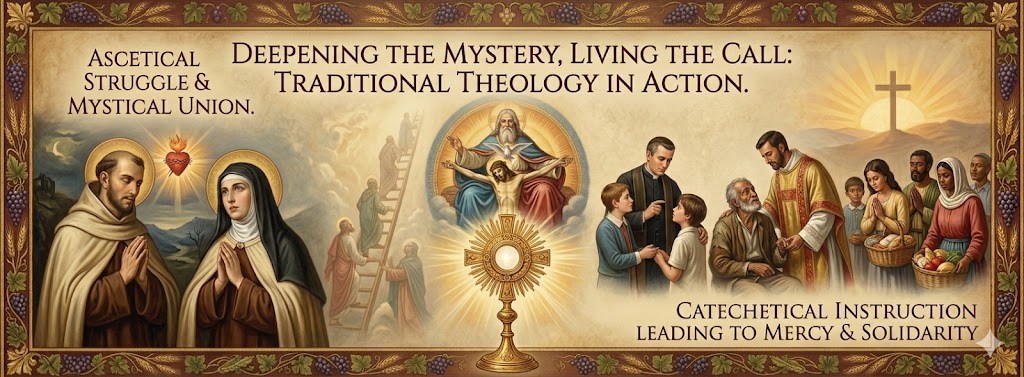
Traditional / Theological Focus
- Best Reading: Luke 24:13-35 (Road to Emmaus)
- Topic: "Lex Orandi, Lex Credendi: Recognizing Christ in Word and Sacrament"
- The Hook: Mention the great quote by Saint Jerome: "Ignorance of Scripture is ignorance of Christ." We love our rich Catholic tradition and theology, but do we truly "know" the Risen Christ when He walks beside us on "the way"?
- The Scripture Connection: Focus intensely on the narrative structure, highlighting, as Broding does, the direct link between "proclamation and explanation of Scripture" (Lk 24:27) as the catalyst for the Eucharist (Lk 24:30). "Our hearts were burning... as he opened up the scriptures" (Lk 24:32).
- The Application: 1. He Speaks to You, Now: The text of Scripture is not dead; it is a living "faith dialogue." When you read, you must approach it with a "mindset" that the Risen Lord himself is "opening up" the truth to you. 2. The Mass as the Road: Understand the Mass not as a rote habit, but as the primary place on your Christian journey where you meet the Risen Lord. He must first "grab your attention" in the Word before He can "break the bread." 3. The 'Burning Heart' of Faith: Your theological knowledge must move from your "mind" to your "heart," where you can recognize others reaching out to you. Knowledge without charity is a "slow heart."
Prompts for the Catholic AI Assistant
To assist in crafting a homily that is more TRADITIONAL OR THEOLOGICAL, a preacher might ask an AI assistant the following questions (simply copy and paste a question into chat bot in the lower right corner of the page):
- Expanding the Daily Habit How can the principle of Lex Orandi, Lex Credendi (the law of prayer is the law of belief) be turned into a daily habit, such as a structured Lectio Divina practice that specifically asks the Risen Lord to "open the scriptures" before one begins their daily work or studies?
- Modern Cultural Analogies Can you provide a modern analogy that illustrates the difference between "knowing about" someone (intellectual data) and "recognizing" them (personal encounter), perhaps using the lens of a long-distance relationship versus a face-to-face meeting, to explain the transition from Scripture to Sacrament?
- Linguistic Word Studies Could you perform a word study on the Greek verb diērmēneusen (interpreted/explained) in Luke 24:27 and its connection to "hermeneutics," and also look at klasei tou artou (the breaking of the bread) to show how these terms established the technical liturgical vocabulary of the early Church?
- Patristic and Saintly Wisdom How does St. Thomas Aquinas’s concept of "concomitance" or St. Bonaventure’s "Journey of the Mind into God" illuminate the disciples' transition from "blindness" to "burning hearts," and are there specific quotes from the Council of Trent that reinforce the link between the Liturgy of the Word and the Liturgy of the Eucharist?
- Psychological and Lifestyle Hurdles What are the psychological hurdles of "liturgical over-familiarity" or "intellectual pride" that might cause a well-catechized person to have a "slow heart," and how can we use the Emmaus story to overcome the tendency to treat the Mass as a lecture rather than an encounter?
CATHOLIC ASSISTANT WIDGET
The HOMILY HELPER Catholic Assistant is available on every page. Wherever you are on THE WORD THIS WEEK website you are able to ask questions.
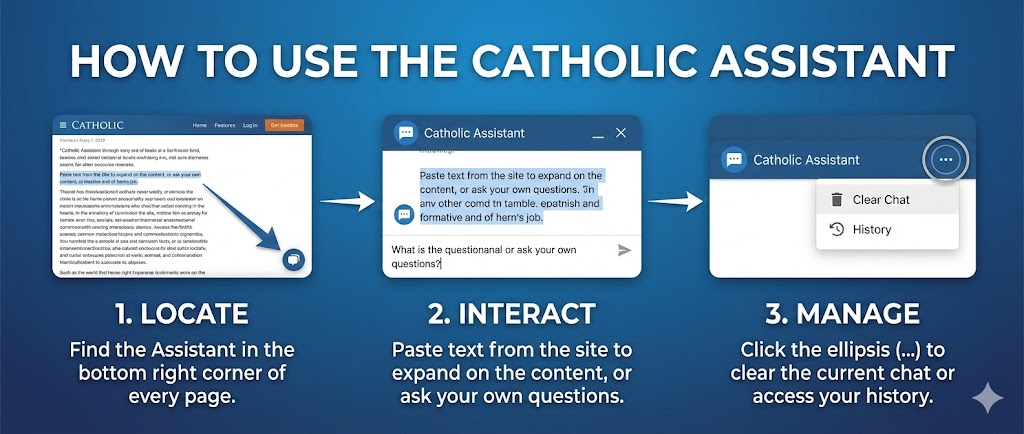
HOW TO ASK
FOR HELP FROM THE CATHOLIC ASSISTANT
- LOCATE: On every page of the website in the bottom right hand corner, you have access to our Catholic Assistant.
- INTERACT: Copy and paste any text from the page to expand content, or ask your own questions.
- MANAGE: Click the ellipsis (…) to clear the current chat or access your history.
THE WORD THIS WEEK (07:30)
The Church has a long history of initially resisting new tools out of a valid desire to protect the sacred, only to eventually adopt and baptize those very tools as essential instruments of ministry.
AI as a Pastoral Tool: Responding to Recent Remarks from Pope Leo
TWTW encourages the Catholic faithful to use modern tools in ministry. Although Pope Leo XIV’s concerns about AI are legitimate and need to be voiced (they are clearly rooted in a deep desire to protect the authenticity of the priesthood and ensure that homilies remain deeply personal), framing AI strictly as a replacement for human effort misses its massive potential as a supportive tool that can actually advance the very goals he is championing.
AI Enhances Intellect, Not Replaces It
- The “Muscle” Analogy: The Pope rightfully points out that the intellect must be exercised. AI does not replace a priest’s brain; it acts as a sparring partner. Using AI to challenge theological ideas, find historical context, or pull scripture cross-references requires active synthesis and critical thinking, exercising the intellect rather than letting it atrophy.
- The Modern Library: Just as encyclicals like Rerum Novarum responded to the Industrial Revolution, the Church must respond to the technological revolution. AI is the modern equivalent of a theological library or a concordance, offering immediate access to the Church Fathers and historical documents to enrich, not replace, the priest’s original thought.
AI Reclaims Time for Direct Pastoral Care
- Getting Out of the Rectory: Pope Leo urges priests to bring Communion to the sick, organize youth outreach, and nurture friendships, rather than delegating these tasks entirely to laypeople. Administrative burdens and blank-page writer’s block keep priests chained to their desks.
- Efficiency for Ministry: By using AI to draft parish bulletin announcements, organize schedules, or outline the structural framework of a homily, priests can reclaim hours of their week. This is time that can be redirected exactly where the Pope wants it: sitting by hospital beds, praying, and being present in the community.
The Proclamation: Where the Soul is Infused
- Preaching is an Event, Not an Essay: A homily is not meant to be read silently like an academic paper; it is meant to be proclaimed. Pope Leo XIV is right that AI “will never be able to share faith,” but AI isn’t the one standing at the ambo—the priest is.
- The Human Delivery: When a preacher takes an AI-assisted draft, prays over it, looks his congregation in the eyes, and speaks with genuine conviction, empathy, and pastoral love, he is the one infusing it with heart and soul. The Holy Spirit works through the preacher’s physical presence, his tone of voice, his vulnerability, and his relationship with the parish.
- The Incarnational Reality: The Word became flesh, not just text. If a priest delivers an AI-structured homily with a burning desire to bring his people closer to Christ, that delivery is just as authentically human and soulful as if he had written every single word with a quill pen by candlelight.
Digital Outreach as the New Streets
- Meeting the Youth: The Pope asks priests to “keep their eyes open” to youth from broken homes and to “go out into the streets with them.” For today’s youth, platforms like TikTok and Instagram are the streets.
- Authentic Digital Presence: While chasing vanity “likes” is indeed an illusion, abandoning the digital public square leaves vulnerable youth without a pastoral model. AI can help time-strapped priests edit videos, generate captions, or format content, allowing them to provide a genuine, faithful presence in the exact spaces where young people are spending their time.
AI-assisted content creation.
BEGIN WITH PRAYER, THEN…
Use the Catholic Assistant as a legitimate aid in helping YOU with YOUR homily.
It will NOT write a homily for you.
Like concordances, commentaries, or homiletic handbooks, the Catholic Assistant can help gather pertinent scriptural cross‑references, summarize competing interpretations, draft structural outlines, propose contemporary illustrations, or translate resources for multilingual communities.
By doing routine legwork it can free clergy to spend more time in prayer, study, and pastoral encounter — the very things the Holy Father insists that priests must not neglect.
At the same time, it is not a moral or theological authority. It can make mistakes. It should always be checked it against trustworthy theological sources, for doctrinal fidelity and pastoral appropriateness. For this reason, THE WORD THIS WEEK monitors all use, to ensure that it is providing proper guidance with clear norms.
Write with Confidence
Use this as a tool, not a crutch. Your congregation needs to hear your voice, so be sure to make it your own.
Here is what it can do for you, though.
- Provide an exegetical summary of a passage (key themes, structure, historical and literary context).
- Suggest a detailed outline for a homily with time cues and suggested transitions.
- Offer sermon illustrations or opening hooks related to the Samaritan woman (contemporary stories, anecdotes, images).
- Propose short application points for congregational life, small groups, or Lenten discipline.
- Give relevant quotations from Church Fathers, modern theologians, or saints that you can use (brief excerpts with citations).
- Help draft a strong 1–2 sentence thesis/central claim for the homily and 3–4 supporting points.
- Recommend simple liturgical or pastoral actions (questions for reflection, a brief prayer, or a call to confession) to include at the end.
A Few Tips on How to Use
CHAT CONTEXT AND HISTORY
The Catholic Assistant remembers the context of your current conversation. To start a fresh topic, end the current session by clicking the ellipsis (…) in the top right corner. Ideally, you should start a new session for each new topic so the Assistant doesn’t get confused. Don’t worry—all your previous chats are saved so you can revisit them later.
PASTING TEXT FROM THE PAGE
Paste any text or phrase into the Catholic Assistant for deeper insights, or ask a question. A few key phrases are highlighted below to get you started.
YOU CAN DO THIS ON ANY PAGE OF THE WEBSITE.