Homily helper for preachers preparing family focused, young adult, social justice and outreach, traditional or theological, busy professional focused homilies on Acts 8:5-8, 14-17 1 Peter 3:15-18 John 14:15-21

Homily Helper, Catholic Assistant, AI Homilies, Preaching, Sermon

Homily Helper, Catholic AI

Homily Helper, Catholic AI

May 10, 2026

⭐⭐⭐ Homilies of Hope

⬅️ ➡️

write a 600 word essay on how to construct a homily for different target groups based on the readings for the xxxx Sunday of xxxxxxxxx (Year A) xxxxxxxxxxxxxxxxxxxxxx. What would be some key similarities and differences? Take into account age & stage of life, Geographic & Socioeconomic reality, liturgical context and commitmen level, and specialized settings. Give essay a title.

Homilies
of Hope

Constructing an effective homily requires a delicate balance of deep theological insight and pastoral attentiveness. The readings for the 6th Sunday of Easter (Year A) provide a rich, coherent tapestry for this task, focusing profoundly on the promised and active Holy Spirit.

A successful preacher must synthesize these texts—Philip’s mission in Samaria (Acts 8:5-8, 14-17), the call to gentle apologetics (1 Peter 3:15-18), and Jesus’ promise of the Paraclete (John 14:15-21)—while carefully adapting the message to the unique “stage, place, and space” of the target audience.

Key Similarities: The One Spirit and the Source of Hope

At their core, a homily for any target group on this Sunday must revolve around the unified action of the Holy Spirit. The readings present a consistent theological arc: the Spirit is promised (Paraclete), the Spirit is received (Apostolic laying of hands), and the Spirit is active in the lives of believers, enabling them to “give an answer” (apologia) and live a life that vindicates Christ’s teaching. The overarching similarity is that true hope, true obedience (loving commandments), and effective mission all stem from a common source: the Spirit of Truth “with you” and “in you.” The ultimate goal is to lead the congregation into a deeper realization of their unity with the Trinity—”I am in my Father and you are in me and I in you.”

Key Differences: Tailoring the Bridge of the Spirit

While the core message remains constant, the application of these truths must diverge significantly based on pastoral context. The differences lie not in the doctrine, but in the rhetoric, imagery, and practical challenges addressed by the homily.

Age and Stage of Life

For children, concrete imagery is essential. Focus on the tangible “signs” in Acts: Philip healing the sick and driving out demons, connecting it to Jesus. “The Holy Spirit is like a secret super-power inside you, helping you to be kind and do good, just like God helped Philip.” In John, “Loving Jesus means being a helper, like cleaning up your toys.”

Conversely, teens and young adults crave authenticity and relevance. Preach 1 Peter: “Be ready to give an answer (apologia) for your hope.” Challenge them to see intellectual rigor and gentleness as a unified witness. Connect it to John: “Love isn’t a feeling; it’s action. Keeping commandments shows true love for Christ in a world of mixed messages. The Spirit helps you know what’s true.”

Geographic and Socioeconomic Reality: A Milwaukee Context

In an urban setting like Milwaukee, the reading from Acts, describing Philip going outside familiar territory to preach to Samaritans, provides a potent missionary challenge. For a parish in the city’s inner core, address the socioeconomic realities: “How is our parish reaching outside our own demographic and geographical ‘Samaria’ to preach Christ? Are we open to the Spirit’s miracles of reconciliation, justice, and healing in a segregated city?” Use John’s promise: “To those feeling orphaned by systemic failure or poverty, the Spirit is the ultimate Advocate and Comforter, the divine presence ‘in you’ that no circumstance can take away.”

Liturgical Context and Commitment Level

A homily at a Mass with a Baptism should integrate Acts. Contrast the Samaritan converts who “had only been baptized in the name of the Lord Jesus” with the arrival of Peter and John, using it to explain the theological importance of Confirmation—the unique “reception of the Holy Spirit” through Apostolic laying of hands, making the candidate a fully initiated witness.

For a Mass with many occasional attendees, focus on 1 Peter and the “reason for hope.” Preach on the transformative power of the Spirit as a lived reality, making the message attractive and accessible. “If you ever feel lost or alone, Jesus didn’t leave you an orphan. The Holy Spirit is your constant companion.”

Specialized Settings: A Hospital Ministry

In specialized settings, the focus must shift to immediate pastoral needs. A homily in a hospital should center on Acts and John. Use the descriptions of healing and physical restoration in Samaria. “God is still a healer, and we see his Spirit working through the skill and care of the medical team around you.” Connect this to John’s comfort: “In sickness, you are never alone. You are not an orphan. The Holy Spirit is the Paraclete—the ‘one called alongside’ to be your Helper and Advocate, providing strength, peace, and comfort in your deepest need.” Refer to 1 Peter only briefly, on the power of “suffering for good.”

Conclusion

Constructing an effective homily requires pastoral wisdom and rhetorical flexibility. The readings for the 6th Sunday of Easter provide a singular theological focus on the Holy Spirit, but the preacher’s success depends on translating this one truth into multiple unique languages that resonate with the distinct experiences of the congregation. By prayerfully relying on the Spirit to lead and use their talents, a preacher can construct a homily of hope that truly “falls upon” their audience—even if only “one person is in the house”—turning ancient words into living truth for every diverse person seeking to meet the Restorer and live as a Spirit-led people.

6th Sunday of Easter (A)

FAMILIES | UNIVERSITY STUDENTS
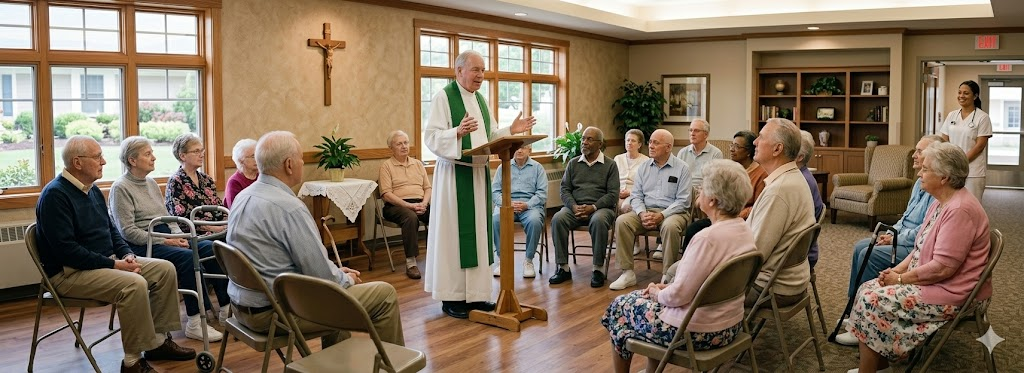
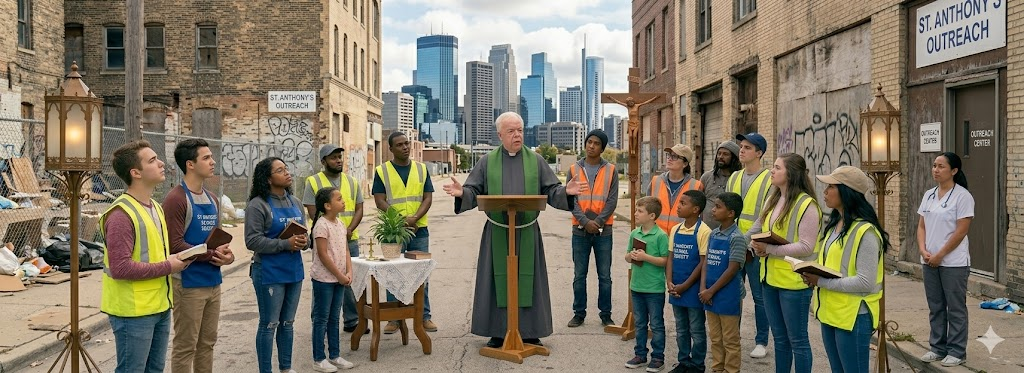
SENIOR CITIZENS | JUSTICE & OUTREACH
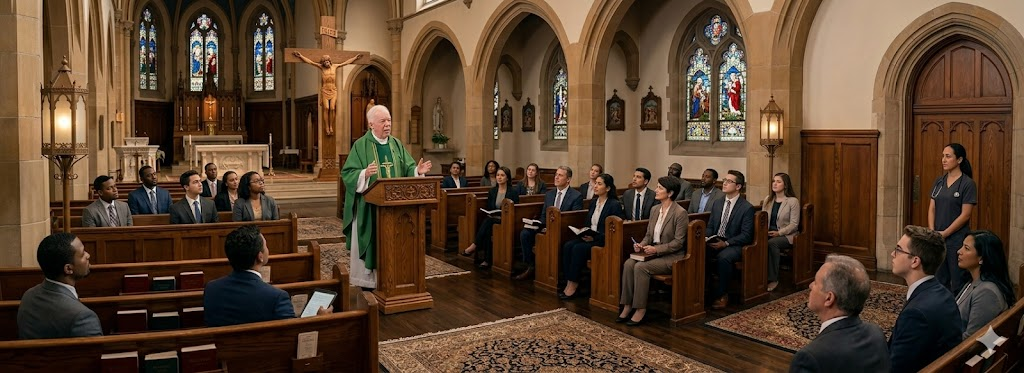
BUSY PROFESSIONALS | PRISONERS
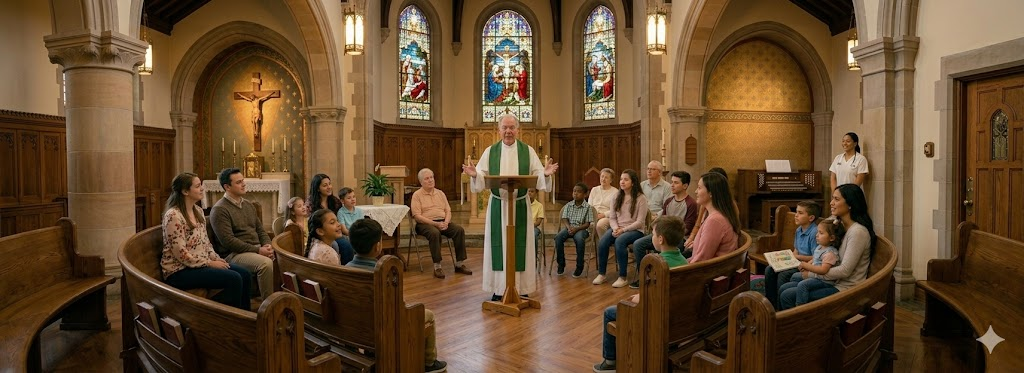
for the xxxxxxx Sunday of xxxxxxxx Year A give me suggestion on different topics for different congregations that would be related to readings xxxxxxxxxxxxxxx. Pick the best reading for each group. 1. For a Family or Intergenerational Congregation 2. For a Young Adult / University Congregation 3. For residents of a nursing home or retirement center 4. For a Social Justice & Outreach-Focused Congregation 5. For a Traditional or Theologically-Minded Congregation 6. For a Congregation of Busy Professionals. 7. For prisoners. For each, give a hook, a scripture connection, and an application.”Act as an experienced, engaging Catholic priest and homilist.

Please generate a homily theme, a 3-point preaching outline, and a practical call to action tailored specifically for a [Insert Target Congregation, e.g., Young Adult/College crowd].

Instructions for the Output:

The Hook: Provide a relatable, modern opening hook that directly connects with the daily lived experience of this specific demographic.

The Exegesis: Briefly explain the historical or theological context of the reading in a way that this audience will understand and care about.

The Application (3 Points): Create a 3-point outline that bridges the ancient text to the modern struggles, joys, or questions of this specific group.

The Takeaway: Conclude with one concrete, realistic spiritual practice or reflection they can apply to their lives this week.”

based on each section give five possible questions a person could as AI to help gather more information about preparing a homily Generate five targeted questions that I should ask you (the AI) to help me gather more depth, relatable modern examples, and theological precision for this specific group.

Instructions for the Questions:

Do not put the questions in quote boxes.

Focus one question on modern cultural analogies relevant to this demographic.

Focus one question on Greek or Hebrew word studies from the text.

Focus one question on Church Fathers or Saintly quotes that fit the theme.

Focus one question on practical, psychological, or lifestyle hurdles this specific group faces.

Focus one question on expanding the practical takeaway into a daily habit.

Download link to this page and the homilies page to GOOGLE LM. Then make the following prompt:

I you to suggest which homilies might be appropriate for each of the following venues; Families, University, Nursing Home, Justice Outreach Group, Work Environment, and Prison. The homilies I want you to look at are by Bishop Robert Barron, Fr. Michael Chua, Dominican Blackfriars, Fr. Austin Fleming, Msgr. Peter Hahn, Fr. Charles Irvin, Fr. Joe Jagodensky, Fr. Jude Langeh, Deacon Peter McCulloch, Msgr. Charles Pope, Fr. Kevin Rettig and Fr. George Smiga. After suggesting a homily, make suggestions on how it could be adapted for the venue.

Families

6th Sunday of Easter (A)

Preaching to Families

Best Reading: Acts 8:5-8, 14-17

Theme: "Spirit-Led to Spirit-Filled: The Whole Family belongs."

The Hook: Who here remembers their Confirmation day? For some, it might have been last week; for others, decades ago. But do you remember what happened? We focus so much on the party, the gifts, and getting a new name, but we sometimes forget that Confirmation is the moment the Church says: "You’ve been baptized into the family, but now you are Spirit-filled witnesses!" It's like turning on the power switch in a house that’s already wired.

The Exegesis: Acts 8 tells an anomaly in the early Church. Philip, a deacon, went to Samaria (outside territory!) and preached successfully. People believed and were baptized "in the name of the Lord Jesus," but they hadn’t yet received the Holy Spirit. In other words, they were part of the family, but they hadn’t been Spirit-filled for mission. The Church at Jerusalem had to send Peter and John to complete their initiation through the Apostolic laying of hands. This story emphasizes that being Christian isn't just about belonging; it’s about being empowered by the Spirit to work together as the whole family of God.

The Application (3-Point Preaching Outline):

  1. Belonging is Only the Beginning: Just like the Samaritans were part of the Church after baptism, our children belong from their Baptism day. But Acts 8 reminds us that membership isn't passive. We are preparing them, and ourselves, for the full reception of the Spirit.
  2. The Whole Family Needs the Spirit: Confirmation isn’t a graduation from Church. It's the beginning of Spirit-led mission. We need to encourage our confirmed teens and adults to use their gifts now—at Mass, in service, at home—showing that the whole body is filled with life.
  3. Collaborative Joy: Philip preached, Peter and John confirmed, and the result was "much joy in that city" [8:8]. Our families and our parish must collaborate. When adults support youth, and youth support elders, we reveal the Spirit’s power to bring people together, creating communities of genuine joy.

The Takeaway: This week, have a "Gifts Audit" at your family dinner table. Ask each person, including children: "What is one special talent God gave you to help others?" Pray that the Spirit helps your family use these gifts together.or someone else in the house, do it as a "Deacon"—a holy servant of the family.

Prompts for the Catholic AI Assistant

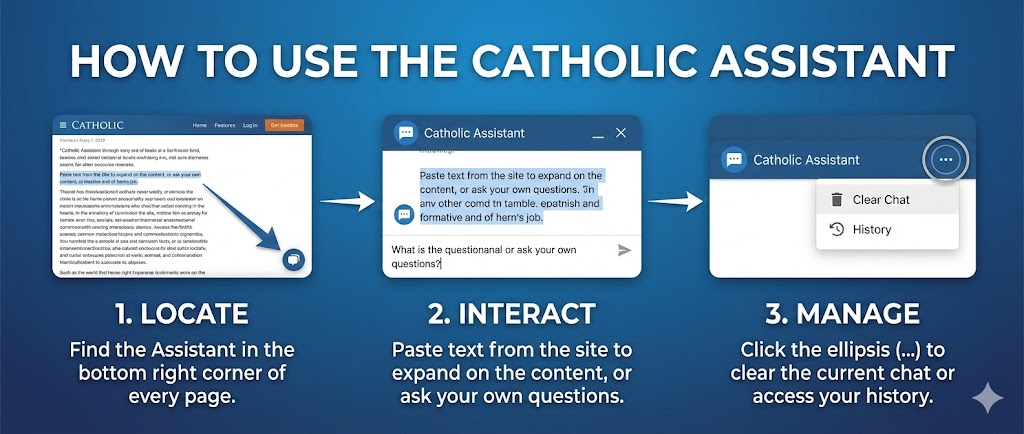
To assist in crafting a homily for FAMILIES, a preacher might ask an AI assistant the following questions (simply copy and paste a question into chat bot in the lower right corner of the page):

  • Can you provide a relatable modern analogy, perhaps linked to professional sports teams calling up minor league players or synergy in family dynamics, that explains the difference between being Spirit-led (like Philip) and Spirit-filled (the Samaritan Confirmation)?
  • Please perform a Greek word study on the phrase used for the laying on of hands in Acts 8:17 (epithesis tôn cheirôn) and explain its theological connection to the Sacrament of Confirmation for a mixed-age audience.
  • What quotes from St. John Paul II’s Familiaris Consortio or another Saint could help illustrate the theological necessity of the entire family collaborating in the Spirit’s mission?
  • What are some specific practical and psychological hurdles families face that prevent parents from recognizing and encouraging the spiritual gifts (charisms) of their teenage or young adult children?
  • How can I help families expand the suggested Gifts Audit takeaway into a daily habit of communal prayer or a shared mission journal?
University

6th Sunday of Easter (A)

Preaching to University Students

Best Reading: 1 Peter 3:15-18

Theme: "Giving an Answer: Gentle Apologetics in a Skeptical Age."

The Hook: If you are online for more than five minutes, you will inevitably see someone being absolutely roasted for what they believe. The world of campus debate, internet comments, and social media isn’t a gentle place. In fact, it’s often designed to shame you into silence. When someone challenges your faith—whether it's a classmate questioning the Resurrection or a colleague dismissive of Catholic social teaching—your gut reaction might be to get angry, defensive, or just shut down.

The Exegesis: 1 Peter was written to a persecuted, minority community facing daily social pressure. The author didn’t advise them to hide; he advised "calm" [3:14b] and readiness. His core command is apologia—from which we get "apologetics"—which means to offer a reasoned defense or explanation, like a defense attorney presenting a case. Critically, Peter couples this need for intellectual readiness with a demand for the manner of delivery: it must be done with "gentleness and respect", ensuring a "clear conscience". He tells us our behavior "in Christ" is our best vindication.

The Application (3-Point Preaching Outline):

  1. Hope is Revolutionary: Our world is anxious and cynical. If you live your life as if the Resurrection is true—with joy, resilience, and purpose—people will eventually ask you about the "hope that is in you". Your joyful life is the question; be ready with the answer.
  2. Intellectual Rigor is Mandatory: Love God with all your mind. We cannot offer a flimsy faith. Use your university years or early career not just to master your profession but to master your apologia. Know why the Church teaches what she does. Faith must be reasoned.
  3. Gentleness is Our Strength: Winning the argument but losing the soul is a failure. Peter suggests that a gentle, respectful answer put critics to shame more effectively than anger. When we answer gently, we show that the Holy Spirit, the Spirit of Truth, is truly "in us."

The Takeaway: This week, identify one difficult question or objection people have about the Catholic faith. Instead of avoiding it, spend 20 minutes researching a solid, faithful, and gentle Catholic answer to that specific point.

Prompts for the Catholic AI Assistant

To assist in crafting a homily for YOUNG ADULTS or UNIVERSITY STUDENTS, a preacher might ask an AI assistant the following questions (simply copy and paste a question into chat bot in the lower right corner of the page):

  • Can you suggest modern cultural analogies relevant to university debate culture, internet comments, or social media clapbacks that contrast with Peter's command to offer an apologia with gentleness and respect?
  • Please perform a brief Greek word study on apologia and praütês (gentleness), explaining how they must be synthesized in the character of a Christian intellectual.
  • Are there pertinent quotes from St. Justin Martyr (as an early Apologist) or St. Francis de Sales (as a master of gentleness) that link intellectual defense directly to personal sanctity?
  • What are the most common practical or lifestyle hurdles, such as the fear of intellectual embarrassment or the psychological dissonance between faith and academic theories, that prevent young adults from giving a reasoned defense of their hope?
  • How can I guide young adults to turn the practical takeaway of researching one question into a structured method of ongoing faith formation for themselves and their peers?
Nursing Home

6th Sunday of Easter (A)

Preaching to Seniors & Retirees

Best Reading: John 14:15-21

Theme: "I Will Not Leave You Orphans: The Advocate is Within."

The Hook: There is a specific kind of loneliness that comes with aging. You’ve moved from your family home, friends have passed away, and perhaps physical mobility isn’t what it used to be. The world can feel like it’s moving on without you. Sometimes, you might feel like you’ve been forgotten, or worse, like an "orphan," left on your own.

The Exegesis: In John 14, Jesus is giving his Last Supper discourse, preparing his disciples for his physical departure. He knows they are terrified. They are going to feel abandoned. He uses a tender, protective Greek word: orphanous—"I will not leave you orphans". His departure is not desertion; it's a transformation of presence. He promises the Paracletos, or "Paraclete", which means "one called alongside to help." While many define this legally (Advocate), the primary context here is "Helper" and "Comforter." Most importantly, this Helper isn’t just near; Jesus says, "It is in you".

The Application (3-Point Preaching Outline):

  1. You are Not Desolate: Jesus did not desert his disciples, and he has not deserted you. The physical absence of loved ones, or the physical constraints you face, cannot remove the presence of God. You are never truly alone.
  2. The Helper is in Your Heart: The Holy Spirit, the Comforter, is an inward reality. In moments of pain, confusion, or loneliness, you don’t need to look outside. The very power of God’s love is within you, "staying with you forever".
  3. Your Prayer is Power: While your outer activities may be restricted, your inner spiritual life can be profound. The indwelling Spirit supports you in prayer. Your quiet prayer for your family, your parish, and the world is a potent use of the divine Helper within you.

The Takeaway: This week, when you feel lonely, place your hand over your heart and repeat this simple prayer five times: "Come, Holy Spirit, my Helper. You are within me."e room Jesus is preparing for you and thank Him for being your "Way" home.

Prompts for the Catholic AI Assistant

To assist in crafting a homily for NURSING HOME RESIDENTS, a preacher might ask an AI assistant the following questions (simply copy and paste a question into chat bot in the lower right corner of the page):

  • Can you suggest a relatable modern analogy, perhaps linked to the experience of a homeowner transitioning into assisted living or the psychological feeling of becoming "invisible," that connects with Jesus' promise to not leave them orphanous [orphans]?
  • Please provide a theological word study on the Greek word orphanous, highlighting how Jesus defines his departure as a transformation of presence, not desertion, for those facing isolation.
  • What comforting or empowering quotes from St. Faustina regarding the interior life and trust, or St. Benedict concerning stability and presence, fit the theme of the Indwelling Advocate for an elderly population?
  • What are the specific practical or psychological hurdles this demographic faces, such as grieving the past life, coping with memory loss, or fighting despair, that obscure their awareness of the Spirit Within?
  • How can I help residents expand the suggested takeaway (the simple hand-over-heart prayer) into a regular physical and spiritual practice that aids memory and reduces anxiety?
Justice Outreach Group

6th Sunday of Easter (A)

Preaching to Justice Outreach Groups

Best Reading: Acts 8:5-8, 14-17

Theme: "The Joy in Samaria: Breaking Barriers for the Spirit."

The Hook: There is always a "Samaria." In ancient Israel, Samaria was the land of the "other"—demographically similar, but religiously and culturally alienated from Jerusalem. Today, our cities have their own Samarias: neighborhoods we avoid, marginalized communities we don’t understand, or economic groups we’ve written off. Our justice work often hits a wall when we encounter these barriers.

The Exegesis: Acts 8 details a spectacular evangelical breakthrough. Philip, one of the seven chosen to serve the poor (not an Apostle!), didn't wait for permission or stay in his comfort zone. He went into Samaria, preached Christ, and the result was "much joy" [8:8]. He worked with "healings and exorcisms" [8:7], proving his words with active compassion. Most dramatically, this work of the "laity" was so legitimate that the Apostles in Jerusalem sent Peter and John to validate and complete it through the reception of the Spirit. Acts 8 reveals that breaking barriers brings joy and that our outreach must be collaborative.

The Application (3-Point Preaching Outline):

  1. Go to Your Samaria: Preach Christ through action and word. Like Philip, our outreach must be physical (healings, addressing systemic issues) and spiritual (sharing the message). Effective evangelization requires going outside our own demographic.
  2. Collaborative Ministry is Mandatory: Philip initiated, Peter and John confirmed. Outreach cannot be a solo performance. We need to work together—parish clergy, laity, ministries—valuing the unique "charisms" each has. Spirit-led action points to a Spirit-filled community.
  3. The Goal is Spiritual Autonomy: We don’t just serve the marginalized; we want them to become "Spirit-filled." The reception of the Spirit implies they receive their own charisms for mission. The ultimate victory of social outreach is seeing the marginalized empowered by the Spirit to become agents of God’s love themselves.

The Takeaway: This week, identify the geographical or demographic area in your community that you feel is your parish's "Samaria." Pray specifically for the people in that area and identify

Prompts for the Catholic AI Assistant

To assist in crafting a homily that is SOCIAL JUSTICE or OUTREACH FOCUSED, a preacher might ask an AI assistant the following questions (simply copy and paste a question into chat bot in the lower right corner of the page):

  • Can you suggest relatable modern analogies, perhaps connecting to boundary-crossing in secular activism, community organizing, or the common pitfall of the "savior complex," that relate to Philip’s successful mission in Samaria?
  • Please provide a Greek word study on the phrase in Acts 8:6 that describes the crowds "paying attention" (proschon), explaining how their receptive listening is the necessary precursor to receiving spiritual joy.
  • What relevant quotes from St. Oscar Romero or St. Mother Teresa regarding seeing Christ in the "Samaritan" other can frame the theological requirement of collaboration between varied outreach ministries?
  • What specific practical, lifestyle, or even organizational hurdles cause compassion fatigue or a spiritual disconnect within this group, separating the parish's sacramental life from its mission in the field?
  • How can I help this congregation move the practical takeaway from a purely supportive model (giving to a partner) to a relational habit of mutual charism discovery between the parish and the marginalized?
Work Environment

6th Sunday of Easter (A)

Preaching to Busy Professionals

Best Reading: 1 Peter 3:15-18

Theme: "Clear Conscience, Gentle Resolve: Christian Character in the Workplace."

The Hook: In the professional world—from boardrooms to hospital floors—there is a constant, quiet pressure to compromise. You see unethical shortcuts, office politics, or decisions made solely on short-term metrics rather than human impact. Living as a Christian in this environment can make you feel scrutinized. When you stand up for what is right, or just choose to behave with integrity, your motivation might be analyzed, or worst of all, "maligned".

The Exegesis: 1 Peter provides the template for handling professional scrutiny. The author advises calm and fearlessness [3:14b] even when facing opposition for "good conduct". He tells us our best apologia, or "answer," is often the silent testimony of our "good behavior in Christ". The goal is to "keep your conscience clear", prioritizing inner ethical alignment with God over external approval. If we suffer professionally for doing good, 1 Peter says, we are "blessed" and walking in the "footsteps of Christ", transforming ethical struggle into a witness.

The Application (3-Point Preaching Outline):

  1. Integrity is Apologetics: Your competence and your ethics are your "answer." When you refuse to cut corners, treat subordinates with genuine respect, or maintain a gentle demeanor under stress, your colleagues will notice. Your good character reveals the "Spirit of Truth."
  2. Internal Clarity Trumps External Status: A professional reputation is valuable, but a "clear conscience" is priceless. Don’t chase a "pop star" status [as Broding notes regarding John Paul II's criticism] if it means abandoning ethical agenda. Your first commitment must be to God’s inner truth.
  3. A Gentle, Not defensive, Strength: When your work is maligned, do not answer with anger or arrogance. Peter calls us to "gentleness and respect." A professional with clear ethical resolve who remains calm and charitable is a profound sign of a Spirit-led life.

The Takeaway: This week, identify one high-pressure situation or difficult professional relationship where your ethics are challenged. Before you walk into it, pray for the grace to act wi

Prompts for the Catholic AI Assistant

To assist in crafting a homily for BUSY PROFESSIONALS, a preacher might ask an AI assistant the following questions (simply copy and paste a question into chat bot in the lower right corner of the page):

  • Can you suggest modern cultural analogies relevant to high-stakes ethical dilemmas in corporate boardrooms, navigating difficult hospital administrations, or office politics, that relate to Peter’s command for a clear conscience and gentle behavior?
  • Please provide a practical theological definition, based on 1 Peter 3:16, of what a "clear conscience" (syneidêsis agathê) entails for a Christian operating in a competitive secular professional environment.
  • What practical advice regarding integrity from St. Thomas More or St. Gianna Beretta Molla can help a modern professional view their ethical choices and daily work as a form of non-verbal apologia?
  • What are the common practical and lifestyle hurdles, such as the burnout culture, the pressure of "imposter syndrome," or the psychological temptation to maintain professional reputation at the expense of ethical agenda, that this group faces?
  • How can I help busy professionals expand the suggested takeaway (praying before high-pressure situations) into a daily professional habit that unites their ethical resolve with the charisms given by the Spirit?
Prison

6th Sunday of Easter (A)

Preaching to the Incarcerated

Best Reading: John 14:15-21

Theme: "The Advocate is with You: Finding Freedom in the Paraclete."

The Hook: Being a prisoner means being surrounded by other people, yet feeling deeply, profoundly alone. Every move you make is defined by rules created by others. You are separated from family, and your life can feel desolate, like you’ve been abandoned or forgotten. Your world is defined by physical walls.

The Exegesis: In John 14, Jesus is speaking to disciples who feel their entire world is about to crash. They feel they will be totally "desolate"—literally, "orphanous". He promises them a powerful new Helper, the Paracletos, or "Paraclete". Critically, this word "one called alongside to help," was often defined legally, like a "defense attorney." In prison, you understand the need for an advocate. Jesus promises the Holy Spirit is the ultimate Advocate. But unlike an attorney who leaves after the trial, the Paraclete "stay[s] with you forever" and is "in you" [14:17b]. The boundaries of prison cannot keep the Paraclete out.

The Application (3-Point Preaching Outline):

  1. You are Not an Orphan: The sentence you serve does not define your relationship with God. Jesus explicitly promised: "I will not leave you orphans." You have not been abandoned.
  2. The Counselor is Within: Physical confinement cannot stop the Holy Spirit. This Helper is not restricted by keys or guards. He is in your heart, offering you inward comfort and strength right now, in this moment.
  3. Real Freedom is Following Christ: Jesus connects love to commands. In prison, you might feel moral choice is gone. But your real freedom lies in choosing metanoia—a new heart-mind—and choosing, in your daily life in the block, to live as Christ commanded. This inner freedom is a life the Spirit makes possible, and no sentence can take it away.

The Takeaway: This week, when the block gets loud or you feel abandoned, close your eyes and repeat this prayer of true freedom: "I am in my Father, and you are in me, and I in you." [John 14:20] to Him.

Prompts for the Catholic AI Assistant

To assist in crafting a homily for PRISONERS, a preacher might ask an AI assistant the following questions (simply copy and paste a question into chat bot in the lower right corner of the page):

  • Can you suggest a relatable analogy, perhaps linked to the powerful difference between institutionalization (where you are defined by walls) and internal freedom, that connects with Jesus' promise that boundaries cannot keep the Advocate out?
  • Please perform a practical word study on the Parakletos, specifically distinguishing between a legal attorney who leaves when the trial is over and the divine "one called alongside" who stays within, even after the sentence is imposed.
  • What comforting or empowering quotes from St. Dismas (the Good Thief) or St. Paul (from his own prison letters) regarding internal freedom and the Spirit’s comfort can offer theological precision for inmates?
  • What are the common practical, psychological, or lifestyle hurdles prisoners face, such as institutional dehumanization, the danger of regret and despair, or the constant presence of violence, that hide the Indwelling Trinity from their awareness?
  • How can I help prisoners expand the suggested mantra takeaway [John 14:20] into a specific daily practice of moral choice, changing their "heart-mind" within the desolation of the block?

Write with Confidence

The core issue isn’t the software, but the spirit. Since homilies must be rooted in prayer, the real question is: did the preacher listen to God before looking to the machine?

Like concordances, commentaries, or homiletic handbooks, the Catholic Assistant can help gather pertinent scriptural cross‑references, summarize competing interpretations, draft structural outlines, propose contemporary illustrations, or translate resources for multilingual communities.

Use this as a tool, not a crutch. Your congregation needs to hear your voice, so be sure to make it your own.