Papal Homilies Leo XIV, Pope Francis, Benedict XVI, Sunday Readings
Papal Homilies Leo XIV, Pope Francis, Benedict XVI, Sunday Readings
Papal Homilies Leo XIV, Pope Francis, Benedict XVI, Sunday Readings
October 5, 2025
October 5, 2025




Click infographics to enlarge

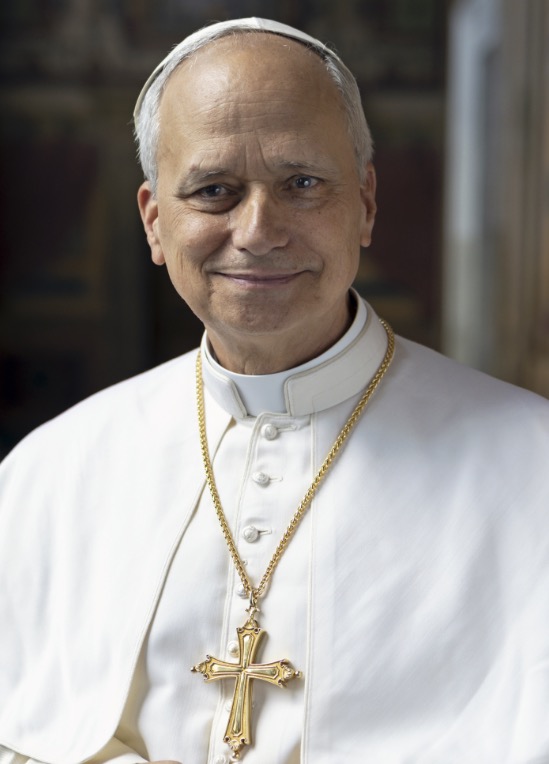
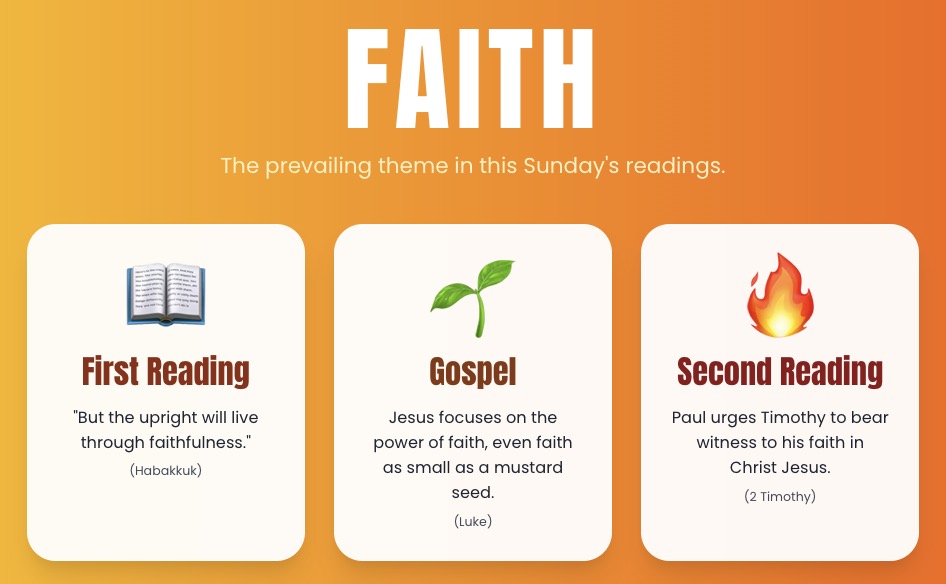
It seems evident that the prevailing theme this Sunday is faith, since it is mentioned in all three readings. At the end of the first reading we read, “But the upright will live through faithfulness,” a sentence that will be taken up by Paul and will repeated throughout the Church Fathers. In the Gospel, Jesus focuses on the power of faith, even of faith as small as a mustard seed. Finally, Paul urges Timothy to bear witness to his faith in Christ Jesus and accept with faith and love the message conveyed by him (Second Reading).
© 2000 Dicastery for the Clergy A | B | C
Doctrinal Messages

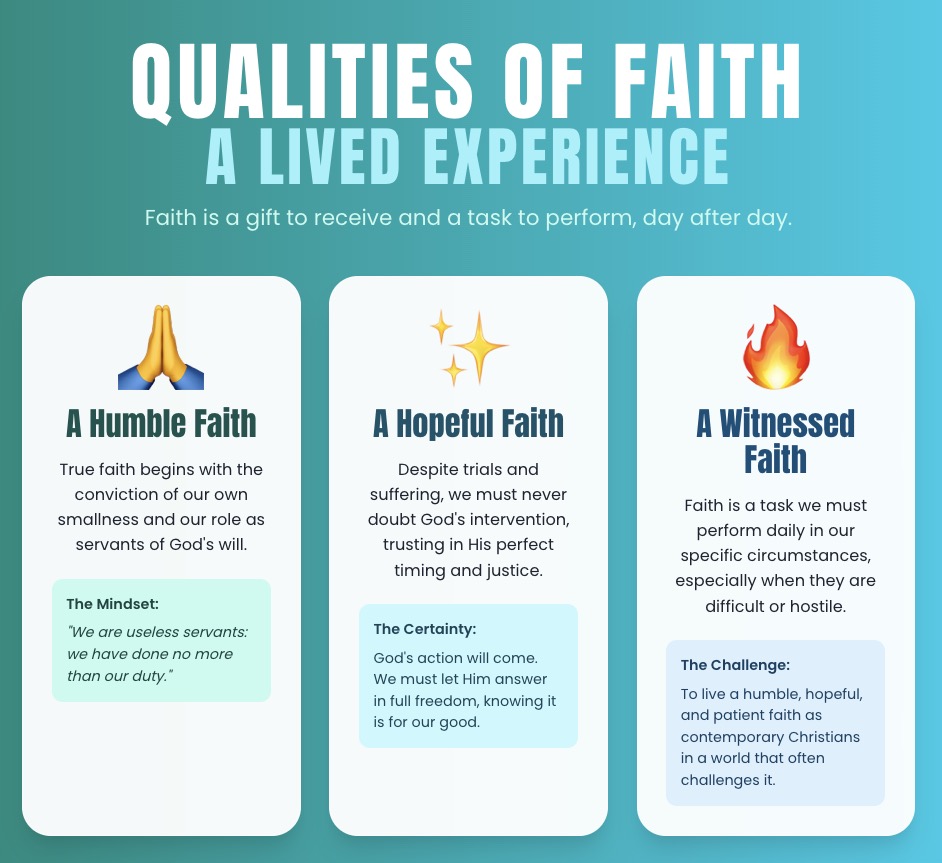
Click to enlarge
Pastoral Suggestions



Click to enlarge
Non-profit ministries have permission to copy/paste any infographics on this website into bulletins, presentations, or class/home school worksheets. A link and/or shoutout to THE WORD THIS WEEK and respective contributors would be greatly appreciated.

Pope Francis’ Homily
6 October 2019- Angelus , St Peters Square
Today’s Gospel page (cf. Luke 17:5-10) presents the theme of faith, introduced by the disciples’ question: “Increase our faith!” (see 6). A beautiful prayer, which we should pray often throughout the day: “Lord, increase our faith!”
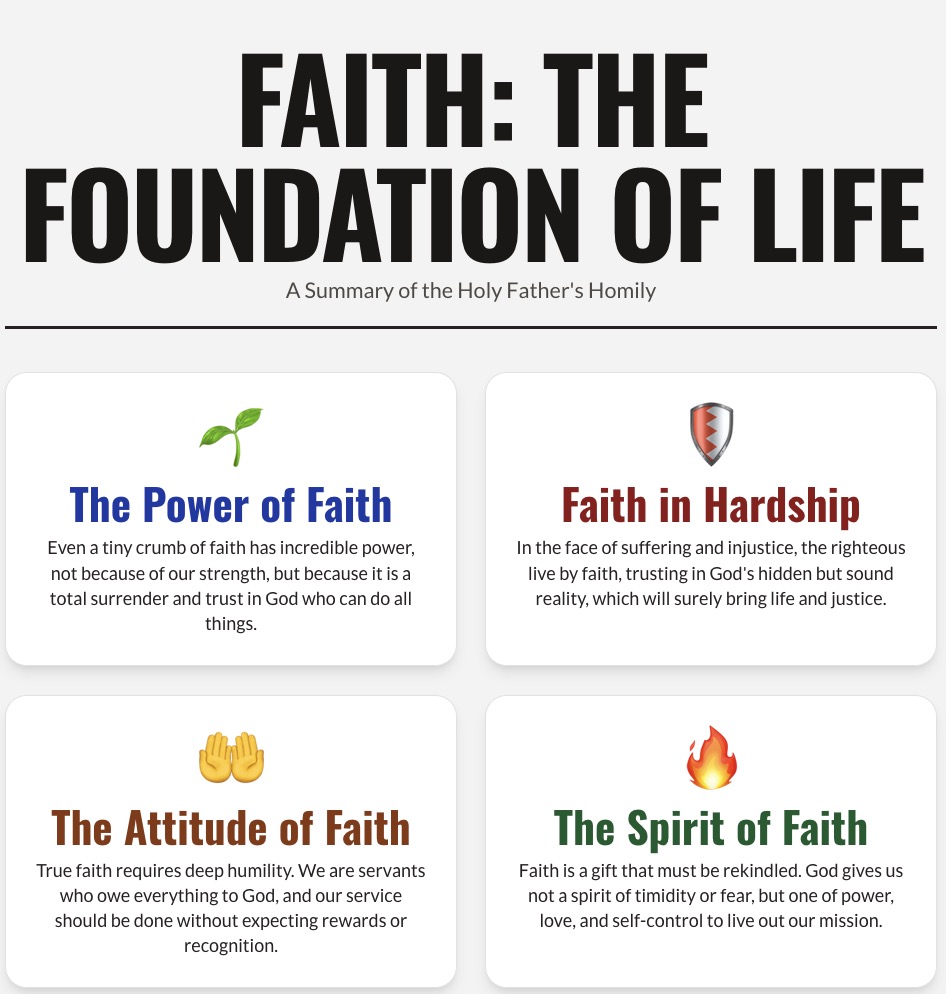
Jesus responds with two images: the mustard seed and the attentive servant. “If you had faith the size of a mustard seed, you could say to this mulberry tree: “Be uprooted planted in the sea”, and it would obey you” (v. 6). The mulberry tree is a sturdy tree, well rooted in the earth and resistant to the winds. Jesus, therefore, wants to make it clear that even if faith is as small as a mustard seed, ot has the strength to uproot even a mulberry, and then to transplant it into the sea, which is something even more unlikely: but nothing is impossible to those who have faith, because they do not rely on their own strength, but on God, who can do everything.
Faith compared to the mustard seed is a faith that is not proud and self-confident; and doesn’t pretend to be that of a great believer! It is a faith that in its humility feels a great need for God and in its smallness it abandons itself with total confidence to God. It is a faith that gives us the ability to look with hope at the ups and downs of life, which also helps us to accept defeats, and sufferings, in the knowledge that evil never has, nor never will never have, the last word.
How can we know if we really have faith, that is, if our faith, though tiny, is genuine, pure, and honest? Jesus explains this to us by pointing out that the measure of faith is service. And he does so with a parable that at first glance is a little disconcerting, because it presents the figure of an arrogant and indifferent master. But it is exactly what this master does brings that highlights the true heart of the parable, that is, the attitude of the availability of the servant. Jesus wants to say that this is how a person of faith is should be in relation to God: he is completely surrendering to Gods will, without expectations or pretensions.
This attitude towards God is also reflected in the way we behave in the community: it is reflected in the joy of being at the service of one another, already finding in this its own reward and not in the recognitions and advantages that can result from it. It is what Jesus teaches at the end of this story: “When you have done all you have been commanded, say: “We are useless servants. We have done what we were obliged to do.”
Useless servants, that is, with no expectations of being thanked, with no demands. “We are useless servants” is an expression of humility, and willingness that does so much good to the Church and reminds us of the correct attitude needed to work in the Church: that of humble service, of which Jesus has set the example, in washing the feet of his disciples (cf. John 13:3-17).
Click on infographics to enlarge
Pope Benedict’s Homily
6 October 2019- Angelus , St Peters Square
All the texts of this Sunday’s Liturgy speak to us of faith, which is the foundation of the whole of Christian life. Jesus taught his disciples to grow in faith, to believe and to entrust themselves increasingly to him, in order to build their own lives on the rock. For this reason they asked him “increase our faith!” (Lk 17: 5).
What they asked the Lord for is beautiful, it is the fundamental request: disciples do not ask for material gifts, they do not ask for privileges but for the grace of faith, which guides and illumines the whole of life; they ask for the grace to recognize God and to be in a close relationship with him, receiving from him all his gifts, even those of courage, love and hope.
Jesus, without directly answering their prayer, has recourse to a paradoxical image to express the incredible vitality of faith. Just as a lever raises something far heavier than its own weight, so faith, even a crumb of faith, can do unthinkable, extraordinary things, such as uproot a great tree and plant it in the sea (ibid.). Faith trusting in Christ, welcoming him, letting him transform us, following him to the very end makes humanly impossible things possible in every situation.

The Prophet Habbakuk also bears witness to this in the First Reading. He implores the Lord, starting with a dreadful situation of violence, iniquity and oppression. And even in this difficult, insecure situation, the Prophet introduces a vision that offers an inside view of the plan that God is outlining and bringing to fulfilment in history: “He whose soul is not upright in him shall fail, but the righteous shall live by his faith” (Hab 2: 4). The godless person, the one who does not behave in accordance with God, who trusts in his own power but is relying on a frail and inconsistent reality that will therefore give way, is destined to fall; the righteous person, on the other hand, trusts in a hidden but sound reality, he trusts in God and for this reason will have life…
“The second part of today’s Gospel (Luke 17:7-10) presents another teaching, a teaching about humility that, nevertheless, is closely connected with faith. Jesus invites us to be humble and offers the example of a servant who works in the fields. When he returns home the master asks him to continue working. According to the mentality of Jesus’ time the master had every right to do this. The servant owed the master his complete availability; and the master did not think himself obligated to him if he carried out his orders.
Jesus makes us aware that, before God, we find ourselves in a similar situation: we are God’s servants; we are not his creditors but we are always debtors in relation to him because we owe him everything, because everything is his gift. Accepting and doing his will is the way that we must live every day, in every moment of our life. Before God we must not present ourselves as those who believe that they have done a service and deserve a great recompense. This is an illusion that can arise in everyone, even in persons who do a much work in the Lord’s service, in the Church. We must instead be aware that we never do enough for God.

We must say, as Jesus suggests: ‘We are useless servants. We did what we were obliged to do’ (Luke 17:10). This is an attitude of humility that truly puts us in our place and permits the Lord to be very generous with us. In fact, in another passage of the Gospel, he promises us that ‘he will gird himself, have us sit at table and will serve us’ (cf. Luke 12:37). Dear Friends, if we do the Lord’s will every day, with humility, without expecting anything from him, Jesus himself will serve us, help us, encourage us, give us strength and peace.”
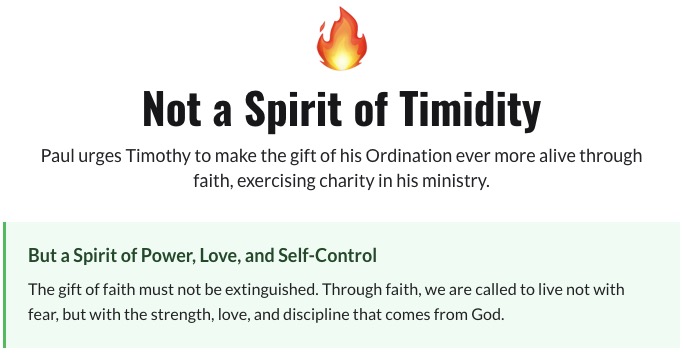
In today’s Second Reading the Apostle Paul too speaks of faith. Timothy is asked to have faith and, through it, to exercise charity. The disciple is also urged to rekindle in faith the gift of God that is in him through the laying on of Paul’s hands, in other words the gift of Ordination, received so that he might carry out the apostolic ministry as a collaborator of Paul (cf. 2 Tm 1: 6). He must not let this gift be extinguished but must make it ever more alive through faith. And the Apostle adds: “for God did not give us a spirit of timidity but a spirit of power and love and self-control” (v. 7).
Click on infographics to enlarge