JAN 19, 2025


Sunday Papal Homilies
Sunday Papal Homilies

TIP: You can rewind the livestream up to twelve hours, allowing you to catch up on any events or addresses you may have missed.

SOURCE: Vatican News – English
This livestream allows viewers to witness the Pope’s addresses during Papal Audiences, as well as other Vatican events and news. The livestream is part of the Vatican Media Center’s efforts to share the latest updates on Pope Francis, the Holy See, and the Church worldwide with a global audience.

The Dicastery for the Clergy deals with everything that concerns the priests and deacons of the diocesan clergy with regard to their persons, their pastoral ministry and what is necessary for its fruitful exercise. In these matters it offers the Bishops appropriate assistance.

Wedding at Cana
2nd Sunday of Year C
The image of the wedding occupies a central place in today’s liturgy. In the Gospel, reference is made to the wedding at Cana, but it is especially insinuated that Jesus is the bridegroom. Jerusalem will no longer be known as “forsaken” or “desolate”, but it will be called “The Married One”, and its country will have a bridegroom (first reading). The Christian community, Christ’s bride, enjoys the diversity of charisms that the one and only Spirit sheds upon it to put them at the service of all, and that are like the dowry of Christ, the bridegroom (second reading).
P. Antonio Izqeuirdo, L.C., Copyright © Dicastery for the Clergy
Doctrinal Messages
2nd Sunday of Year C
VATICAN
DAILY
BULLETIN
The Vatican Daily Bulletin is the official news source for the Pope’s activities and statements, providing accurate and up-to-date information. Published daily, it keeps the public informed about the Church’s activities and decisions.
Pastoral Suggestions
2nd Sunday of Year C
THE HOLY
FATHER
RELATED LINKS
THIS SUNDAY’S
QUOTES
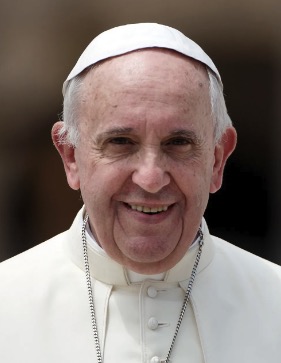
Pope Francis: “The Church is not an elite of the perfect, but a hospital for sinners.” [December 31, 2024] This quote emphasizes that the Church is not meant to be a place for only the morally flawless, but rather a community that supports and heals those who are in need of spiritual guidance and growth.
Pope Francis: “We cannot be Christians without being missionaries.” [January 1, 2025] The Pope highlights the importance of sharing the Christian faith and spreading its message to others as an essential part of being a true follower of Christ.
Pope Francis: “Let us not forget the victims of war, violence and injustice. Let us pray for them and work to build a more just and peaceful world.” [December 24, 2023] Pope Francis draws attention to the ongoing suffering caused by conflict, discrimination, and inequality, urging Christians to remember and support those affected while striving for a better future.
Pope Francis: “The Lord is patient with us, waiting for us to open our hearts to him. Let us not be afraid to welcome him and follow him with faith and love.” [January 6, 2024] This quote encourages Christians to trust in God’s understanding and compassion, while also embracing their faith and following Christ’s example with devotion.
Pope Francis: “Let us ask the Lord to grant us the grace to be always attentive to the signs of the times, so that we may know how to discern his call and respond with generosity.” [November 24, 2023] The Pope emphasizes the importance of staying mindful and aware of the world around us, and to be willing to answer God’s call for action with an open and giving heart.
Pope Francis
2nd Sunday of Year C

Jesus’ First Miracle
20 January 2019 | Saint Peter’s Square
- TEXT
- DISCUSSION GUIDE
Last Sunday, with the Feast of the Baptism of the Lord, we began the journey in the liturgical time called “Ordinary”; the time to follow Jesus in his public life, in the mission for which the Father sent him into the world. In today’s Gospel (cf. Jn 2:1-11) we find the narrative of Jesus’ first miracle. The first of these prodigious signs takes place in the village of Cana, in Galilee, during a marriage celebration. It is not by chance that there is a wedding at the beginning of Jesus’ public life, because in him, God espoused humanity: this is the Good News, even though those who invited him do not yet know that the Son of God is seated at their table and that he is the true bridegroom. Indeed all the mystery of the sign of Cana is based on the presence of this divine bridegroom, Jesus, who begins to reveal himself. Jesus manifests himself as the bridegroom of the People of God, announced by the prophets, and he reveals to us the depth of the relationship which unites us to him: it is a New Covenant of love.
In the context of the Covenant, the symbol of wine, which is at the heart of this miracle, is fully understood. Just as the feast is culminating, the wine runs out. Our Lady notices this and says to Jesus: “They have no wine” (v. 3). Because it would have been bad to continue the feast with water! An embarrassment for those people. Our Lady notices and, as she is a mother, she immediately turns to Jesus. The Scriptures, especially Prophets, point to wine as a typical element of the messianic banquet (Am 9:13-14; Joel 2:24; Is 25:6). Water is necessary to live but wine expresses the abundance of the banquet and the joy of the celebration. A feast without wine? I don’t know…. By transforming into wine the water from the stone jars used “for the Jewish rites of purification” (v. 6) — it was customary: to purify oneself before entering a home — Jesus effects an eloquent sign. He transforms the Law of Moses into Gospel, bearer of joy.
And then, let us turn to Mary. The words that Mary addresses to the servants crown the spousal picture of Cana: “Do whatever he tells you” (Jn 2:6). Today too, Our Lady tells all of us to “Do whatever he tells you”. These words are a precious legacy that our Mother left us. And indeed, the servants in Cana obey: “Jesus said to them, ‘Fill the jars with water.’ And they filled them up to the brim. He said to them, ‘Now draw some out and take it to the steward of the feast.’ So they took it” (vv. 7-8). Truly, a New Covenant is pledged at this wedding. And a new mission is entrusted to the servants of the Lord, namely, the entire Church: “Do whatever he tells you”. To serve the Lord means to listen and to put his Word into practice. It is the simple, essential recommendation of Jesus’ Mother. It is the programme for a Christian’s life.
I would like to highlight an experience which many of us have certainly had in life. When we are in difficult situations, when problems arise that we do not know how to resolve, when we feel a lot of anxiety and distress, when we lack joy, go to Our Lady and say: “We have no wine. The wine has run out: Look at the state I am in, look at my heart, look at my soul”. Say it to the Mother. And she will go to Jesus to say: Look at this one: he or she has no wine. And then, she will come back to us and say: “Do whatever he tells you”.
For each of us, drawing from the jar is tantamount to entrusting ourselves to the Word and to the Sacraments in order to experience God’s grace in our lives. Then we too, as the steward who tasted the water that had become wine, can say: “you have kept the good wine until now” (v. 10). Jesus always surprises us. Let us speak to the Mother so that she may speak to her Son and he will surprise us.
Opening Reflection
– Begin by discussing the transition from the Feast of the Baptism of the Lord into the Ordinary Time. How does this period encourage followers to engage in Jesus’ public life and mission?
Jesus’ First Miracle
– Read the Gospel passage John 2:1-11. What stands out to you about the setting of Jesus’ first miracle at a wedding?
– Why do you think Jesus chose a wedding as the scene for his first miracle? What significance does this have in terms of his relationship with humanity?
Symbolism of the Wedding and the New Covenant
– Discuss the symbolism of Jesus as the divine bridegroom. How does this imagery enhance our understanding of Jesus’ mission and relationship with the People of God?
– In the context of the New Covenant, discuss the role of wine. How is wine a symbol of abundance and joy in this miracle?
Mary’s Role and Response
– Reflect on Mary’s awareness of the situation and her words to the servants: “Do whatever he tells you.” What can we learn from her instruction?
– How does Mary’s intervention and Jesus’ response guide us in our own faith journeys?
Application of Obedience
– Consider the servants’ obedience in following Jesus’ instructions. How does this teach us about serving the Lord and listening to His Word?
– What does the act of filling the jars with water and witnessing the transformation into wine symbolize for us in living a Christian life today?
Personal Reflection and Trust
– Share a personal experience of a difficult situation where, like the wedding guests, you felt ‘out of wine’ or lacking joy. How can turning to Mary, as suggested in the sermon, provide comfort and assistance?
– Discuss how entrusting ourselves to God’s Word and Sacraments is similar to drawing from the jar.
Jesus’ Surprises and Our Faith
– Reflect on the steward’s reaction to the transformed wine. How does God’s ability to surprise us play a role in strengthening our faith?
– In what ways might Jesus be calling us to new understandings or surprises in our faith life today?
Concluding Reflection
– Reflect on how you can implement the lesson of “Do whatever he tells you” in your daily life. What steps can you take to be more attentive to God’s call and guidance?
Invite group members to share any final thoughts or insights gained from the discussion. Conclude with a prayer asking for Mary’s intercession and Jesus’ guidance on their journey.
THIS SUNDAY’S
QUOTES
Pope Benedict XVI: “The transformation of water into wine at the wedding feast of Cana is a sign of the messianic times, in which the Lord offers the gift of new and abundant life, a life that is no longer subject to the limitations of sickness, old age and death. It is the life of grace, which is given to us in baptism and which is nourished in the Eucharist.” (January 9, 2005)
Pope Benedict XVI: “We are all members of one body, each with our own gifts and talents, but all working together for the common good. It is only through the power of the Holy Spirit that we are able to use our gifts for the building up of the Church and the spread of the Gospel.” (January 23, 2005)
Pope Benedict XVI: “The glory of the Lord is revealed in the transformation of the humble and ordinary into something extraordinary. The miracle at Cana reminds us that God can take the most basic elements of our lives and transform them into something beautiful and life-giving.” (January 22, 2006)
Pope Benedict XVI: “The wedding feast at Cana is a symbol of the Church, the bride of Christ, where the water of our ordinary lives is transformed into the wine of new life in Christ. It is through our participation in the sacraments that we are able to experience this transformation and live in the joy of the Gospel.” (January 13, 2008)
Pope Benedict XVI: “The miracle at Cana is a sign of the abundance of God’s love and grace, which is always available to us if we open our hearts to receive it. It is a reminder that no matter how difficult our circumstances may be, God is always with us, ready to transform our lives with his love.” (January 2, 2011)
Pope Benedict XVI: “The wedding feast at Cana is a reminder that our lives are meant to be a celebration of God’s love and grace. It is through our participation in the sacraments and our commitment to living out the Gospel in our daily lives that we can experience the joy and fulfillment that comes from a relationship with Christ.” (January 6, 2013)
Pope Benedict XVI
2nd Sunday of Year C

The Events of the Wedding
20 January 2013 | Saint Peter’s Square
- TEXT
- DISCUSSION GUIDE
Today the liturgy proposes the Gospel episode of the wedding at Cana, recounted by John, an eyewitness of the event. This episode has been allocated to this Sunday which immediately follows the Christmas season because, together with the visit of the Magi from the East and the Baptism of Jesus, it forms the trilogy of the Epiphany, in other words the manifestation of Christ. The miracle of the wedding at Cana is in fact “the first of his signs” (Jn 2:11), that is, the first miracle that Jesus worked with which he showed his glory in public, inspiring faith in his disciples.
Let us briefly recall the events that occurred during that wedding feast in Cana of Galilee. It happened that there was not enough wine and Mary, the Mother of Jesus, pointed this out to her Son. He answered her that his hour had not yet come; but then acquiesced to Mary’s request and, having had the six large jars filled with water, he transformed the water into wine, an excellent wine, better than the previous one. With this “sign” Jesus revealed himself as the messianic Bridegroom come to establish with his people the new and eternal covenant, in accordance with the prophets’ words: “as the bridegroom rejoices over the bride, so shall your God rejoice over you” (Is 62:5). Moreover, wine is a symbol of this joy of love; but it also alludes to the blood that Jesus was to pour out at the end to seal his nuptial pact with humanity.
The Church is the Bride of Christ who makes her holy and beautiful with his grace. Nevertheless this bride formed of human beings is in constant need of purification. And one of the gravest sins that disfigure the Church’s face is that against her visible unity, the historical divisions that separated Christians and that have not yet been resolved. The annual Week of Prayer for Christian Unity is taking place in these very days, from 18 to 25 January, an event much appreciated by believers and communities, which reawakens in all the desire for, and spiritual commitment to, full communion.
Very important in this regard was the prayer vigil I celebrated about a month ago in this square with thousands of young people from all over Europe and with the ecumenical community of Taizé: a moment of grace in which we experienced the beauty of forming one in Christ. I encourage everyone to pray together so that we may achieve “what the Lord requires of us” (cf. Mic 6:6-8), as the theme of the Week this year says. The theme was suggested by several Christian communities in India, who invite the faithful as brothers and sisters in Christ, to work hard to achieve visible unity among Christians, and to overcome every type of unjust discrimination. Next Friday, at the end of these days of prayer, I shall preside at Vespers in the Basilica of St Paul Outside-the-Walls, in the presence of the Representatives of other Churches and Ecclesial Communities.
Introduction to the Wedding at Cana
1. Background of the Event: Discuss the significance of the Gospel episode of the wedding at Cana, why it’s part of the Epiphany trilogy, and its positioning after the Christmas season. Why is it significant that John, an eyewitness, recounts this event?
2. Understanding the First Miracle: Reflect on the meaning of Jesus’ first miracle at the wedding. Why did Jesus perform this miracle despite stating that his hour had not yet come? Discuss its implications for the manifestation of Jesus’ glory and how it inspired faith in his disciples.
The Symbolism and Significance
3. The Role of Mary: Analyze Mary’s role in the wedding at Cana and her influence on Jesus’ actions. What does this interaction tell us about her relationship with Jesus and her faith?
4. Symbolism of Wine: Explore the symbolism of wine in this story. What does wine represent in the context of joy, love, and the covenant between God and humanity? How does this connect to the prophets’ words in Isaiah 62:5?
5. Messianic Bridegroom: Discuss the concept of Jesus as the messianic Bridegroom. How does this miracle at Cana foreshadow the new and eternal covenant he establishes with his people?
The Church and Christian Unity
6. The Church as the Bride of Christ: Reflect on the notion that the Church is the Bride of Christ. Why is there a continuous need for purification within the Church? What are some of the challenges that disfigure the Church’s unity?
7. Week of Prayer for Christian Unity: Discuss the significance of the Week of Prayer for Christian Unity. How does this event encourage believers to strive for full communion and overcome historical divisions among Christians?
8. Prayer Vigil Experience: Reflect on the personal testimonies or effects of the prayer vigil mentioned, hosted with the ecumenical community of Taizé. How does such an event foster unity and the feeling of forming one in Christ?
9. Call to Action: How can individuals and communities contribute to achieving the unity and overcoming unjust discrimination emphasized during the Week of Prayer for Christian Unity? What practical steps can be taken?
Conclusion and Personal Reflection
10. Summary Thoughts: Summarize the key takeaways from the discussion. What insights were gained about Christ’s first miracle, the symbolism within the story, and the call for Christian unity?
11. Personal Application: Reflect personally on what this sermon means to you. How can you apply its teachings and insights into your life, faith journey, and community involvement?