


Holy See
- The Bible
- Catechism of the Catholic Church
- Codes of Canon Law
- Ecumenical Councils
- Official Acts of the Holy See
- Social Doctrine of the Church
- Abuse of Minors, the Church’s Response
- Press Office
- Vatican News – Radio Vaticana
- L’Osservatore Romano
- Vatican Websites
- Vatican City State
- Basilicas and Papal Chapels – Virtual Tours
- Liturgical Celebrations
- Tickets for Papal Audiences and Celebrations
33rd Sunday of Year A

Watchfulness
FROM THE ARCHIVES (1999)
To work to bear fruit in the kingdom of God; this sentence sums up the liturgy of this Sunday. To allow the talents one has received to bear fruit, whatever their number, to fulfill the task which we shall have to account for later (Gospel). To work to do good in fear of God, like the good and industrious woman in the book of Proverbs (First Reading). To work, not to sleep, as we are children of the day and light (a time in which one can work), and not of the night or of darkness (Second Reading).Doctrinal Messages
Doctrinal Messages
Work as a Divine Gift and Mission
Work is not divine punishment, nor a pressing activity to ensure one’s survival, but a gift of God in order for us to fulfill ourselves in the fullness of our humanity. Work is not optional either, but a duty and a right, a law inscribed by God in our certificate as human beings and baptized persons.
The Christian works in the likeness of God and Jesus Christ, who are always working (Jn 5:17). About Jesus, the Second Vatican Council tells us that, “He worked with a man’s hands.” Hence work indicates the human being’s superiority and dominion over creation, and the subordination of creation to the material and spiritual well-being of humanity. It is a sin against humanity to put creation before the person, though people must adopt a responsible attitude towards creation, bearing in mind the integral good of present and future human generations.
If work is a gift, so are the instruments (qualities, skills, aptitudes, circumstances, relations…) that God provides to each person to carry out that work. The spirituality of work enables us to see life as a mission, as the time measured out by God to fulfill the tasks that he has entrusted to us.
The Dimensions and
Sanctifying Power of Work
here is the believing dimension of work: I work because I believe. I believe that God has given me a job to perform in order to live; I especially believe in the redeeming value of work, together with the mystery of Christ the Redeemer.
Another dimension is the psychological one: work is the journey of the development of one’s aptitudes and qualities, it is a journey of gratification after a job well done, in essence it is a journey of personal fulfillment.
The ethical dimension cannot be missing. In other words, it is voluntary, and if possible joyful submission to the “natural” law of work, to having to use all our “talents” to better serve society and our fellow human beings, without any distinction based on creed or race.
Work is not only ability and fatigue; before all else it is the source of virtue and a journey towards holiness. Through work, the human spirit is increasingly perfected, it opens us up to divine providence which does not cease to be at work in the world, it recognizes its competence and at the same time its limitation and smallness before the greatness of the work of God the Creator and of Jesus Christ the Redeemer.
Pastoral Suggestions
The Vice of Laziness vs. Legitimate Rest
All people, especially Christians, must be enemies of laziness. Here we mean laziness in the sense of not doing what one is obliged to do, as voluntary and irresponsible wasting of time, as letting oneself be led by one’s inclination towards inactivity, “resting because one is tired of having rested.”
A legitimate rest, which everyone must seek, is one thing, while laziness is another, and everyone must try to reject it with determination. Legitimate rest is the will of God, laziness is a vice. Legitimate rest restores one’s strength, depleted by work; laziness only increases our tendency towards laziness.
There are many domains in which we can fall prey to laziness: students especially in their school work, with the result that they do not take their exams or fail them, consequently displeasing their parents; the members of a family by not being eager to do housework, which each member performs according to an explicit or implicit schedule within a given family; officials and professionals, in their professional work: arriving at work late, doing the least possible and taking the longest possible time, “illegal” excuses not to go to the office on a given day.
Watchfulness
What is it that calls Christians to watchfulness? First of all, we need a simple awareness of the attraction exercised by evil over all people, including Christians. In addition to this, we need to be able to discern and to separate good from evil, straw from wheat, wheat from weeds, so that we can choose the good and avoid evil in all circumstances.
The Social Fruit and
Community Mission of Work
One works first of all to share with one’s family the pay that one receives or the goods that are produced. Also, one may share with and help society, especially the neediest and those that have been abandoned by social institutions.
Working by studying, by educating oneself, by giving catechesis or other courses to share one’s faith is another example (something which parents, the educators of children and adolescents, cannot forego without causing detriment to the children…).
We can also work in the parish, which is the family of all those who belong to it, and in which everyone is necessary and has a task to perform.
We can work on large and small projects, our own or other people’s, to change our environment for the better through a joint and constant effort to achieve the desired level of moral and spiritual ecology. We can work to seek to create sources of employment for the many young people that cannot find, but would like to have access to, their first job.
SOURCE: YEAR A DICASTERY NOTES (1999)
P. Antonio Izqeuirdo, L.C., Copyright © Dicastery for the Clergy, The header image is an AI-generated visual concept illustrating the central themes, scripture quotes, and visual motifs from this week’s Mass readings.

33rd Sunday of Year A
The Entrusted Talents and
the Measure of Ability
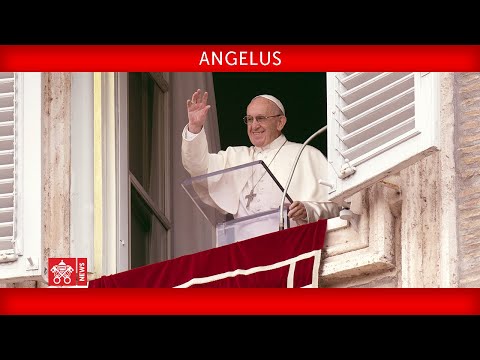
15 November 2020 | Saint Peter’s Square
On this penultimate Sunday of the liturgical year, the Gospel presents us the well-known Parable of the Talents (cf. Mt 25:14-30). It is part of Jesus’ discourse on the end times, which immediately precedes his passion, death and resurrection.
The parable describes a rich gentleman who has to go away and, foreseeing a long absence, entrusts his property to three of his servants: to the first he entrusts five talents; to the second, two; to the third, one.
Jesus specifies that the distribution is made “to each according to his ability” (v. 15). The Lord does so with all of us: he knows us well; he knows we are not all the same and does not wish to favour anyone to the detriment of the others, but entrusts an amount to each according to his or her abilities.The Oil of Charity: Faith Working Through Love
Fruitful Labor vs. Fear and Self-Justification
During the master’s absence, the first two servants are very busy, to the point of doubling the amount entrusted to them. It is not so with the third servant, who hides the talent in a hole: to avoid risks, he leaves it there, safe from thieves, but without making it bear fruit.
The moment comes for the return of the master, who calls the servants to settle accounts. The first two present the good fruit of their efforts; they have worked and the master praises them, compensates them and invites them to partake in his feast, in his joy.
The third, however, realizing he is at fault, immediately begins to justify himself, saying: “Master, I knew you to be a hard man, reaping where you did not sow, and gathering where you did not winnow; so I was afraid, and I went and hid your talent in the ground. Here you have what is yours” (vv. 24-25). He defends his laziness by accusing his master of being “hard”.
This is a habit that we have too: we defend ourselves, many times, by accusing others. But they are not at fault: the fault is ours; the flaw is ours. And this servant accuses others; he accuses the master in order to justify himself. We too, many times, do the same. So the master rebukes him: he calls the servant “wicked and slothful” (v. 26); he has the talent taken from him and has him cast out of his house.Living Today with Hope for Tomorrow
The Patrimony of Grace and the Day of the Poor
This parable applies to everyone but, as always, to Christians in particular. Today too, it is very topical: today is the Day of the Poor, in which the Church tells us Christians: “Stretch forth your hand to the poor. Hold out your hand to the poor. You are not alone in life: there are people who need you. Do not be selfish; hold out a hand to the poor”.
We have all received from God a “patrimony” as human beings, a human richness, whatever it may be. And as disciples of Christ we have also received the faith, the Gospel, the Holy Spirit, the Sacraments, and so many other things.
These gifts should be used to do good, to do good in this life, in service to God and to our brothers and sisters. And today the Church tells you, she tells us: “Use what God has given you and look at the poor. Look: there are so many of them; even in our cities, in the centre of our city, there are many. Do good!”.
Beyond Omission: Rejecting Indifference to Serve Christ
At times, we think that to be Christian means not to do harm. And not doing harm is good. But not doing good is not good. We must do good, come out of ourselves and look, look at those who are more in need. There is so much hunger, even in the heart of our cities; and many times we enter into that logic of indifference: the poor person is there, and we look the other way. Hold out your hand to the poor person: it is Christ.
Some say: “But these priests, these bishops who talk about the poor, the poor… We want them to talk to us about eternal life!”. Look, brother and sister, the poor are at the heart of the Gospel; it is Jesus who taught us to speak to the poor; it is Jesus who came for the poor. Hold out your hand to the poor. You have received many things, and you let your brother, your sister die of hunger?
Dear brothers and sisters, may each one say in his or her heart what Jesus tells us today; repeat in your heart: “Hold out your hand to the poor”. And Jesus tells us something else: “You know, I am the poor. I am the poor”.
November 15, 2020
33rd Sunday of Year A
Earthly Transience and the Final Destination
6 November 2006
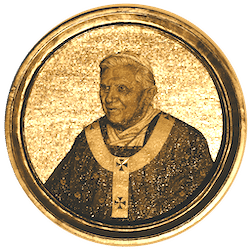
The word of God of this Sunday — the second to last Sunday of the liturgical year — warns us of the transience of our earthly existence and invites us to live it as a pilgrimage, keeping our gaze fixed on the destination for which God has created us.
Moreover, since he made us for himself (cf. St Augustine, Confessions 1, 1), he is our ultimate destination and the meaning of our existence.
Vigilance for the Lord’s Sudden Return
Death, followed by the Last Judgement, is an obligatory stage to pass through in order to reach this definitive reality.
The Apostle Paul says: “the day of the Lord will come like a thief in the night” (1 Thess 5:2), that is, without warning. May knowledge of the glorious return of the Lord Jesus spur us to live in an attitude of watchfulness, waiting for his manifestation and in constant remembrance of his first Coming.
The Master’s Departure and
the Entrusted Talents
In the well known Parable of the Talents — recounted by the Evangelist Matthew (cf. 25: 14-30) — Jesus tells the story of three servants to whom their master entrusted his property, before setting out on a long journey.
Two of them behaved impeccably, doubling the value of what they had received. On the contrary, the third buried the money he had received in a hole. On his return, the master asked his servants to account for what he had entrusted to them and while he was pleased with the first two he was disappointed with the third.
The Folly of Inaction and
the Call to Mission
Indeed, the servant who had hidden his talent and failed to make it increase in worth, had calculated badly. He behaved as if his master were never to return, as if there would never be a day on which he would be asked to account for his actions.
With this parable Jesus wanted to teach his disciples to make good use of his gifts: God calls every person and offers talents to all, at the same time entrusting each one with a mission to carry out. It would be foolish to presume that these gifts are an entitlement, just as failing to use them would mean failing to achieve our purpose in life.
St. Gregory the Great:
Charity as the Indispensable Talent
In commenting on this Gospel passage St Gregory the Great noted that the Lord does not let anyone lack the gift of his charity, of his love. He wrote: “brothers, it is necessary that you pay the utmost attention to preserving love in everything you must do” (Homilies on the Gospel, 9, 6).
After explaining that true charity consists in loving enemies as well as friends, he added: “if someone lacks this virtue, he loses every good he possesses, he is deprived of the talent he received and is cast out into the darkness” (ibid.).
Active Watchfulness and
the Fruits of Love
Dear brothers and sisters, let us accept the invitation to be watchful, of which the Scriptures frequently remind us! This is the attitude of those who know that the Lord will return and that he will wish to see the fruits of his love in us.
Charity is the fundamental good that no one can fail to bring to fruition and without which every other good is worthless (cf. 1 Cor 13:3). If Jesus loved us to the point of giving his life for us (cf. 1 Jn 3:16), how can we not love God with the whole of ourselves and love one another with real warmth? (cf. 1 Jn 4:11).
It is only by practising charity that we too will be able to share in the joy of Our Lord. May the Virgin Mary teach us active and joyful watchfulness on our journey towards the encounter with God.

November 13, 2013

33rd Sunday of Year A
3-Minute Catechism


Table of Contents with Paragraph Numbers
Paragraphs |
Part / Section / Chapter / Paragraph / Article |
1-25 |
|
1-3 |
|
4-10 |
|
11-12 |
|
13-17 |
|
18-22 |
|
23-25 |
|
26-1065 |
|
26-184 |
|
27-49 |
|
27-30 |
|
31-35 |
|
36-38 |
|
39-43 |
|
44-49 |
|
50-141 |
|
51-73 |
|
51-53 |
|
54-64 |
|
65-67 |
|
68-73 |
|
74-100 |
|
75-79 |
|
80-83 |
|
84-95 |
|
96-100 |
|
101-141 |
|
101-104 |
|
105-108 |
|
109-119 |
|
120-130 |
|
131-133 |
|
134-141 |
|
142-184 |
|
144-165 |
|
144-149 |
|
150-152 |
|
153-165 |
|
166-184 |
|
168-169 |
|
170-171 |
|
172-175 |
|
176-184 |
|
185-1065 |
|
185-197 |
|
198-421 |
|
199-421 |
|
199-231 |
|
200-202 |
|
203-213 |
|
214-221 |
|
222-227 |
|
228-231 |
|
232-267 |
|
232-237 |
|
238-248 |
|
249-256 |
|
257-260 |
|
261-267 |
|
268-278 |
|
275-278 |
|
279-324 |
|
282-289 |
|
290-292 |
|
293-294 |
|
295-301 |
|
302-314 |
|
315-324 |
|
325-355 |
|
328-336 |
|
337-349 |
|
350-354 |
|
355-384 |
|
356-361 |
|
362-368 |
|
369-373 |
|
374-379 |
|
380-384 |
|
385-421 |
|
386-390 |
|
391-395 |
|
396-409 |
|
410-412 |
|
413-421 |
|
422-682 |
|
430-455 |
|
430-435 |
|
436-440 |
|
441-445 |
|
446-451 |
|
452-455 |
|
456-570 |
|
456-483 |
|
456-460 |
|
461-463 |
|
464-469 |
|
470-478 |
|
479-483 |
|
484-512 |
|
484-486 |
|
487-507 |
|
508-511 |
|
512-570 |
|
514-521 |
|
522-534 |
|
535-560 |
|
561-570 |
|
571-630 |
|
574-594 |
|
577-582 |
|
583-586 |
|
587-591 |
|
592-594 |
|
595-630 |
|
595-598 |
|
599-605 |
|
606-618 |
|
619-623 |
|
624-628 |
|
629-630 |
|
631-658 |
|
632-635 |
|
636-637 |
|
638-658 |
|
639-647 |
|
648-650 |
|
651-655 |
|
656-658 |
|
659-667 |
|
665-667 |
|
668-682 |
|
668-677 |
|
678-679 |
|
680-686 |
|
683-1065 |
|
687-747 |
|
689-690 |
|
691-701 |
|
702-716 |
|
717-730 |
|
731-741 |
|
742-747 |
|
748-975 |
|
751-780 |
|
751-757 |
|
758-769 |
|
770-776 |
|
777-780 |
|
781-810 |
|
781-786 |
|
787-796 |
|
797-801 |
|
802-810 |
|
811-870 |
|
813-822 |
|
823-829 |
|
830-856 |
|
857-865 |
|
866-870 |
|
871-945 |
|
874-896 |
|
897-913 |
|
914-933 |
|
934-945 |
|
946-962 |
|
949-953 |
|
954-959 |
|
960-962 |
|
963-975 |
|
964-970 |
|
971 |
|
972 |
|
973-975 |
|
976-987 |
|
977-980 |
|
981-983 |
|
984-987 |
|
988-1019 |
|
992-1004 |
|
1005-1014 |
|
1015-1019 |
|
1020-1065 |
|
1021-1022 |
|
1023-1029 |
|
1030-1032 |
|
1033-1037 |
|
1038-1041 |
|
1042-1050 |
|
1051-1060 |
|
1061-1065 |
|
1066-1690 |
|
1076-1209 |
|
1077-1134 |
|
1077-1112 |
|
1077-1083 |
|
1084-1090 |
|
1091-1109 |
|
1110-1112 |
|
1113-1134 |
|
1114-1116 |
|
1117-1121 |
|
1122-1126 |
|
1127-1129 |
|
1130 |
|
1131-1134 |
|
1135-1209 |
|
1136-1199 |
|
1136-1144 |
|
1145-1162 |
|
1163-1178 |
|
1179-1186 |
|
1187-1199 |
|
1200-1209 |
|
1207-1209 |
|
1210-1690 |
|
1212-1419 |
|
1213-1284 |
|
1214-1216 |
|
1217-1228 |
|
1229-1245 |
|
1246-1255 |
|
1256 |
|
1257-1261 |
|
1262-1274 |
|
1275-1284 |
|
1285-1321 |
|
1286-1292 |
|
1293-1301 |
|
1302-1305 |
|
1306-1311 |
|
1312-1314 |
|
1315-1321 |
|
1322-1419 |
|
1324-1327 |
|
1328-1332 |
|
1333-1344 |
|
1345-1355 |
|
1356-1381 |
|
1382-1401 |
|
1402-1405 |
|
1406-1419 |
|
1420-1532 |
|
1422-1498 |
|
1423-1424 |
|
1425-1426 |
|
1427-1429 |
|
1430-1433 |
|
1424-1439 |
|
1440-1449 |
|
1450-1460 |
|
1461-1467 |
|
1468-1470 |
|
1471-1479 |
|
1480-1484 |
|
1485-1498 |
|
1499-1532 |
|
1500-1513 |
|
1514-1516 |
|
1517-1519 |
|
1520-1523 |
|
1524-1525 |
|
1526-1532 |
|
1533-1666 |
|
1536-1600 |
|
1537-1538 |
|
1539-1553 |
|
1554-1571 |
|
1572-1574 |
|
1575-1576 |
|
1577-1580 |
|
1581-1589 |
|
1590-1600 |
|
1601-1666 |
|
1602-1620 |
|
1621-1624 |
|
1625-1637 |
|
1638-1642 |
|
1643-1654 |
|
1655-1658 |
|
1659-1666 |
|
1667-1690 |
|
1667-1679 |
|
1677-1679 |
|
1680-1690 |
|
1681-1683 |
|
1684-1690 |
|
1691-2557 |
|
1699-2051 |
|
1700-1876 |
|
1701-1715 |
|
1710-1715 |
|
1716-1729 |
|
1716-1717 |
|
1718-1719 |
|
1720-1724 |
|
1725-1729 |
|
1730-1748 |
|
1731-1738 |
|
1739-1742 |
|
1743-1748 |
|
1749-1761 |
|
1750-1754 |
|
1755-1756 |
|
1757-1761 |
|
1762-1775 |
|
1763-1766 |
|
1767-1770 |
|
1771-1775 |
|
1776-1802 |
|
1777-1782 |
|
1783-1785 |
|
1786-1789 |
|
1790-1794 |
|
1795-1802 |
|
1803-1845 |
|
1804-1811 |
|
1812-1829 |
|
1830-1832 |
|
1833-1845 |
|
1846-1876 |
|
1846-1848 |
|
1849-1851 |
|
1852-1853 |
|
1854-1864 |
|
1865-1869 |
|
1870-1876 |
|
1877-1948 |
|
1878-1896 |
|
1878-1885 |
|
1886-1889 |
|
1890-1896 |
|
1897-1927 |
|
1897-1904 |
|
1905-1912 |
|
1913-1917 |
|
1918-1927 |
|
1928-1948 |
|
1929-1933 |
|
1934-1938 |
|
1939-1942 |
|
1943-1948 |
|
1949-2051 |
|
1950-1986 |
|
1954-1960 |
|
1961-1964 |
|
1965-1974 |
|
1975-1986 |
|
1987-2029 |
|
1987-1995 |
|
1996-2005 |
|
2006-2011 |
|
2012-2016 |
|
2017-2029 |
|
2030-2051 |
|
2032-2040 |
|
2041-2043 |
|
2044-2046 |
|
2047-2051 |
|
2052-2557 |
|
2075-2082 |
|
2083-2195 |
|
2084-2141 |
|
2084-2094 |
|
2095-2109 |
|
2110-2128 |
|
2129-2132 |
|
2133-2141 |
|
2142-2167 |
|
2142-2149 |
|
2150-2155 |
|
2156-2159 |
|
2160-2167 |
|
2168-2195 |
|
2168-2173 |
|
2174-2188 |
|
2189-2195 |
|
2196-2257 |
|
2197-2257 |
|
2201-2206 |
|
2207-2213 |
|
2214-2231 |
|
2232-2233 |
|
2234-2246 |
|
2247-2257 |
|
2258-2330 |
|
2259-2283 |
|
2284-2301 |
|
2302-2317 |
|
2318-2330 |
|
2331-2400 |
|
2331-2336 |
|
2337-2359 |
|
2360-2379 |
|
2380-2391 |
|
2392-2400 |
|
2401-2463 |
|
2402-2406 |
|
2407-2418 |
|
2419-2425 |
|
2426-2436 |
|
2437-2442 |
|
2443-2449 |
|
2450-2463 |
|
2464-2513 |
|
2465-2470 |
|
2471-2474 |
|
2475-2487 |
|
2488-2492 |
|
2493-2499 |
|
2500-2503 |
|
2504-2513 |
|
2514-2533 |
|
2517-2519 |
|
2520-2527 |
|
2528-2533 |
|
2534-2557 |
|
2535-2540 |
|
2541-2543 |
|
2544-2547 |
|
2548-2550 |
|
2551-2557 |
|
2558-2865 |
|
2558-2758 |
|
2559-2565 |
|
2566-2649 |
|
2566-2567 |
|
2568-2597 |
|
2590-2597 |
|
2598-2622 |
|
2620-2622 |
|
2623-2649 |
|
2626-2628 |
|
2629-2633 |
|
2634-2636 |
|
2637-2638 |
|
2639-2643 |
|
2644-2649 |
|
2650-2696 |
|
2652-2662 |
|
2661-2662 |
|
2663-2682 |
|
2680-2682 |
|
2683-2696 |
|
2692-2696 |
|
2697-2758 |
|
2700-2724 |
|
2700-2704 |
|
2705-2708 |
|
2709-2719 |
|
2720-2724 |
|
2725-2745 |
|
2726-2728 |
|
2729-2733 |
|
2734-2741 |
|
2742-2745 |
|
2746-2758 |
|
2752-2758 |
|
2759-2865 |
|
2761-2776 |
|
2762-2764 |
|
2765-2766 |
|
2767-2772 |
|
2773-2776 |
|
2777-2802 |
|
2777-2778 |
|
2779-2785 |
|
2786-2793 |
|
2794-2796 |
|
2797-2802 |
|
2803-2854 |
|
2807-2815 |
|
2816-2821 |
|
2822-2827 |
|
2828-2837 |
|
2838-2845 |
|
2846-2849 |
|
2850-2854 |
|
2855-2865 |
|
2857-2865 |
|
33rd Sunday of Year A

Matthew 25:14-30
Search Engine created by Jeff Pinyan
 Highlight text or double-click a paragraph anywhere on the site to ADD TO NOTES. You can also click ASK AI to copy your selection to the clipboard with a command prompt, ready for you to paste manually into the chat above.