JAN 26, 2025


Sunday Papal Homilies
Sunday Papal Homilies
TIP: You can rewind the livestream up to twelve hours, allowing you to catch up on any events or addresses you may have missed.

SOURCE: Vatican News – English
This livestream allows viewers to witness the Pope’s addresses during Papal Audiences, as well as other Vatican events and news. The livestream is part of the Vatican Media Center’s efforts to share the latest updates on Pope Francis, the Holy See, and the Church worldwide with a global audience.

The Dicastery for the Clergy deals with everything that concerns the priests and deacons of the diocesan clergy with regard to their persons, their pastoral ministry and what is necessary for its fruitful exercise. In these matters it offers the Bishops appropriate assistance.

Word of God
3rd Sunday of Year C
Both the first reading and the Gospel speak about the Book of Scriptures. Ezra, in the first reading, reads the Book of the Law before the people, “translating and giving the meaning; so the reading was understood.” In the synagogue of Nazareth, Jesus stands up to read, one Sabbath day, the scroll of the prophet Isaiah, which was handed to him by the sacristan of the synagogue (Gospel). To turn the Scripture into reality and life, God placed in the Church the Apostles, the prophets, the teachers, the gift of tongues, the gift of interpretation, etc., so that the Word of God might be alive, so that it might be life-giving and remain forever.
P. Antonio Izqeuirdo, L.C., Copyright © Dicastery for the Clergy
Doctrinal Messages
3rd Sunday of Year C
VATICAN
DAILY
BULLETIN
The Vatican Daily Bulletin is the official news source for the Pope’s activities and statements, providing accurate and up-to-date information. Published daily, it keeps the public informed about the Church’s activities and decisions.
Pastoral Suggestions
3rd Sunday of Year C
THE HOLY
FATHER
RELATED LINKS
THIS SUNDAY’S
QUOTES
On Nehemiah 8:2-4a, 5-6, 8-10: “The Word of God has the power to transform hearts and lives, leading us from sadness and weeping to joy and celebration.” (Homily, January 26, 2014)
On Nehemiah 8:2-4a, 5-6, 8-10: “True joy is found in the encounter with God’s Word, which enlightens our hearts and guides us on the path of life.” (Homily, January 24, 2016)
On 1 Corinthians 12:12-30: “As members of the Church, we are called to be united in our diversity, recognizing that each person’s unique gifts contribute to the harmony of the whole.” (Homily, January 18, 2015)
On 1 Corinthians 12:12-30: “When we unite our gifts and talents in service to one another, we become a living witness to the power of the Holy Spirit at work in our midst.” (Homily, January 22, 2023)
On Luke 1:1-4; 4:14-21: “Jesus’ proclamation in the synagogue reminds us of our own mission to bring good news to the poor, healing to the brokenhearted, and freedom to those oppressed.” (Homily, February 2, 2014)
On Luke 1:1-4; 4:14-21: “The Gospel is a living and effective word, inviting us to put our faith into action and be instruments of God’s love and mercy in the world.” (Homily, January 25, 2015)
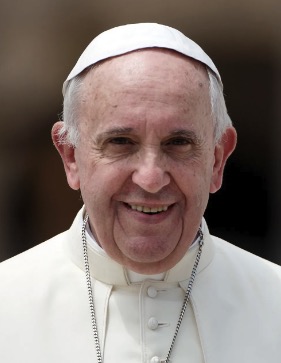
Pope Francis
3rd Sunday of Year C

Word of God Sunday
23 January 2022 | Saint Peter’s Square
- TEXT
- DISCUSSION GUIDE
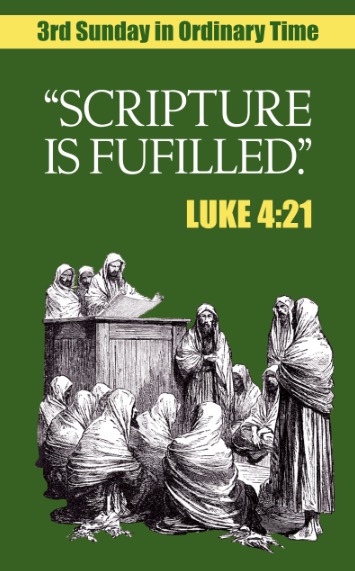
In the Gospel of today’s liturgy, we see Jesus beginning his preaching (cf. Lk 4:14-21): it is Jesus’ first sermon. He goes to Nazareth, where he grew up, and participates in prayer in the synagogue. He gets up to read and, in the scroll of the prophet Isaiah, he finds the passage regarding the Messiah who proclaims a message of consolation and liberation for the poor and oppressed (cf. Is 61:1-2). At the end of the reading, “the eyes of all… were fixed on him” (v. 20). And Jesus begins by saying: “Today this scripture has been fulfilled” (v. 21). Let us dwell on this today. It is the first word of Jesus’ preaching recorded in the Gospel of Luke. Pronounced by the Lord, it indicates a “today” that runs through all ages and always remains valid. The Word of God is always “today”. It begins with a “today”: when you read the Word of God, a “today” begins in your soul, if you understand it well. Today. Isaiah’s prophecy dates back to earlier centuries, but Jesus, “in the power of the Spirit” (v. 14), makes it relevant and, above all, brings it to fulfilment, and shows how to receive the Word of God: today. It is not like ancient history, no: today. It speaks to your heart today.
Jesus’ fellow countrymen are struck by his word. Even though, clouded by prejudice, they do not believe him, they realize that his teaching is different from that of the other teachers (cf. v. 22): they sense that there is more to Jesus. What is there? There is the anointing of the Holy Spirit. Sometimes it happens that our sermons and our teachings remain generic, abstract; they do not touch the soul and the life of the people. And why? Because they lack the power of this today; what Jesus “fills with meaning” in the power of the Spirit, is today. He is speaking to you today. Yes, at times one hears impeccable conferences, well-constructed speeches, which however, do not move the heart and so everything remains as before. Even many homilies — I say this with respect but with pain — are abstract, and instead of awakening the soul, they put it to sleep. When the faithful start looking at their watches — “when will this end?” — they put the soul to sleep. Preaching runs this risk: without the anointing of the Spirit, it impoverishes the Word of God, and deteriorates to moralism or abstract concepts; it presents the Gospel with detachment, as if it were outside time, far from reality. And this is not the way. But a word in which the power of today does not pulsate, is not worthy of Jesus and does not help people’s lives. This is why those who preach, please, should be the first to experience the today of Jesus, in order to be able to communicate it in the today of others. And if they want to give lectures, conferences, let them do so, but elsewhere, not at the time of the homily where they must give the Word in a way that rouses hearts.
Dear brothers and sisters, on this Sunday of the Word of God, I would like to thank the preachers and proclaimers of the Gospel who remain faithful to the Word that rouses the heart, who remain faithful to “today”. Let us pray for them, that they may live the today of Jesus, the sweet power of his Spirit that makes the Scriptures come alive. The Word of God, is indeed living and active (cf. Heb 4:12); it changes us, it enters into our affairs, it illuminates our daily lives, it comforts and brings order. Let us remember: the Word of God transforms an ordinary day into the today in which God speaks to us . So, let us pick up the Gospel and choose a small passage to read and re-read each day. Keep the Gospel in your pocket or in your bag, to read it on your travels, at any time, and to read it calmly. In time, we will discover that these words are made especially for us, for our life. They will help us welcome each day with a better, more serene outlook because when the Gospel enters into today’s world, it fills it with God. I would like to make a suggestion. On the Sundays of this liturgical year, the Gospel of Luke, the Gospel of mercy, is proclaimed. Why not also read it personally, all of it, one small passage each day? A short passage. Let us familiarize ourselves with the Gospel. It will bring us the newness and joy of God!
The Word of God is also the beacon that guides the synodal journey that has begun throughout the Church. As we strive to listen to each other with attention and discernment — because it is not about conducting an inquiry on opinions, no, but about discerning the Word, there — let us listen together to the Word of God and to the Holy Spirit. And may Our Lady obtain for us the perseverance to nourish ourselves with the Gospel every day.
1. Understanding the “Today” of Jesus
– What does the sermon suggest about the meaning of “today” in the context of Jesus’ preaching?
– In what ways does this idea of “today” challenge our perception of the Scriptures as ancient texts?
– How can we make the Word of God feel relevant and immediate in our personal lives?
2. The Power of Spirit-filled Preaching
– How does the sermon contrast Spirit-filled preaching with generic teaching?
– What elements do you believe are necessary for a sermon to be impactful and transformative?
– Can you recall a time when a sermon or teaching deeply moved you? What made it powerful?
3. The Role of Preachers and Proclaimers
– According to the sermon, what qualities should preachers possess to effectively communicate God’s Word?
– How can those who preach ensure they embody and transmit the “today” of the Gospel?
– How might congregants support their ministers or pastors in maintaining a Spirit-filled ministry?
4. Engaging Personally with the Gospel
– The speaker encourages daily reading and engagement with the Gospel. How can we incorporate this practice into our routines?
– What are some practical steps we can take to deepen our understanding and connection with Scripture?
– How might reading the Gospel regularly impact our perception of God and our daily lives?
5. Listening to the Word and Each Other
– How does the sermon connect the Word of God with the synodal journey and the practice of listening within the Church?
– Why is it important to discern the Word in our community discussions, rather than conducting “inquiries on opinions”?
– In what ways can we foster a spirit of discernment and attentive listening in our small groups or church communities?
Application and Reflection
– Spend a moment reflecting on a specific passage from the Gospel of Luke. How does this passage speak to your life today?
– Commit to reading and reflecting on a small Gospel passage daily. Share your experiences and insights in the next group meeting.
– Discuss how your small group can support each other in staying engaged with the Gospel and its teachings.
THIS SUNDAY’S
QUOTES
On Nehemiah 8:2-4a, 5-6, 8-10: “The Word of God is a source of joy and strength for the people of God, who find in it the nourishment for their journey.” (Homily, April 15, 2007)
On Nehemiah 8:2-4a, 5-6, 8-10: “The faithful listening to the Word of God leads us to conversion and transformation, as we open our hearts to the Lord’s will for our lives.” (Homily, January 27, 2008)
On 1 Corinthians 12:12-30: “As members of Christ’s body, we are called to unity in diversity, where each one’s gifts contribute to the building up of the whole community.” (Homily, January 25, 2009)
On 1 Corinthians 12:12-30: “Our unity in Christ transcends all divisions and differences, for we are all baptized into one body, the Church, to share in the same Spirit.” (Homily, January 20, 2008
On Luke 1:1-4; 4:14-21: “The mission of the Church is to proclaim the Good News to the poor, to heal the brokenhearted, and to bring freedom to those oppressed by sin and darkness.” (Homily, February 3, 2008)
On Luke 1:1-4; 4:14-21: “The Gospel is not merely a historical account but a living and effective word that challenges us to follow Jesus and to share in his mission of love and mercy.” (Homily, January 18, 2009)
Pope Benedict XVI
3rd Sunday of Year C

The Spirit of the Lord
20 January 2013 | Saint Peter’s Square
- TEXT
- DISCUSSION GUIDE
Today’s Liturgy brings together two separate passages of Luke’s Gospel and presents them to us. The first (1:1-4) is the Prologue, addressed to a certain “Theophilus”. Since this name in Greek means “friend of God” we can see in him every believer who opens himself to God and wants to know the Gospel. Instead the second passage (4:14-21) presents Jesus who, “in the power of the Spirit”, goes to the Synagogue in Nazareth on the Sabbath. As a strict observer, the Lord does not disregard the pattern of the weekly liturgy and joins the assembly of his fellow citizens in prayer and in listening to the Scriptures. The ritual provides for the reading of a text from the Torah or the Prophets, followed by a commentary. That day Jesus stood up to read and found a passage from the Prophet Isaiah that begins this way: “The spirit of the Lord God is upon me, because the Lord has anointed me to bring good tidings to the afflicted” (61:1-2). Origen’s comment was: “It is no coincidence that he opened the scroll and found the chapter of the reading that prophesies about him, this, too, was the work of God’s providence” (Homilies on the Gospel of Luke, 32, 3). In fact when the reading was over in a silence charged with attention, Jesus said, “Today this scripture has [now] been fulfilled in your hearing” (Lk 4:21). St Cyril of Alexandria says that “today”, placed between the first and the final coming of Christ, is related to the believer’s ability to listen and to repent (cf. PG 69, 1241). But in an even more radical sense, Jesus himself is “the today” of salvation in history, because he brings to completion the work of redemption. The word “today”, very dear to St Luke (cf. 19:9, 23:43), brings us back to the Christological title preferred by the Evangelist himself, namely: “Saviour” (sōtēr). Already in the infancy narratives, it is present in the words of the Angel to the shepherds: “For to you is born this day in the city of David a Saviour, who is Christ the Lord” (Lk 2:11).
Dear friends, this Gospel passage also challenges us “today”. First of all, it makes us think about how we live Sunday, a day of rest and a day for the family. Above all, it is the day to devote to the Lord, by participating in the Eucharist, in which we are nourished by the Body and Blood of Christ and by his life-giving Word. Second, in our diversified and distracted time, this Gospel passage invites us to ask ourselves whether we are able to listen. Before we can speak of God and with God we must listen to him, and the liturgy of the Church is the “school” of this listening to the Lord who speaks to us. Finally, he tells us that every moment can be the propitious “day” for our conversion. Every day (kathçmeran) can become the today of our salvation, because salvation is a story that is ongoing for the Church and for every disciple of Christ. This is the Christian meaning of “carpe diem”: seize the day in which God is calling you to give you salvation!
Understanding Theophilus
– Discuss the significance of the name “Theophilus” meaning “friend of God.” How might this apply to you or your group as believers?
– Reflect on the nature of Scripture as a message addressed to all who open themselves to God.
Jesus in the Synagogue
– Explore the significance of Jesus attending the synagogue and participating in the Sabbath liturgy.
– How does Jesus’ choice of the passage from Isaiah (61:1-2) serve as a proclamation of his mission?
The Role of Providence
– Consider Origen’s comment on the providence involved in Jesus finding and reading the passage from Isaiah. Discuss how divine providence might be at work in your own life.
Fulfillment of Scripture
– What does Jesus mean when he says, “Today this scripture has been fulfilled in your hearing”? Discuss the implications of Jesus as the fulfillment of salvation history.
– Examine St. Cyril of Alexandria’s interpretation of “today” as it relates to listening and repentance.
Christ as Saviour
– Discuss how St. Luke emphasizes Jesus as “Saviour,” and the significance of this title in the context of the sermon.
– How does this role of Jesus as Saviour influence your understanding of the Gospel?
Living ‘Today’
– Reflect on how this Gospel passage challenges us to rethink how we spend Sundays.
– Discuss the importance of the Eucharist and listening to God’s Word in your spiritual lives.
– Examine your ability to listen in our modern, distracted world. How can the Church’s liturgy aid in developing this skill?
Every Day as a Day of Salvation
– Explore what it means for every day to be the “today” of our salvation.
– How can you embrace the Christian principle of “carpe diem” in the context of your faith?
– Share ways you might seize each day as an opportunity for personal conversion and spiritual growth.
Application and Action
– Encourage participants to set a personal goal for integrating these lessons into their daily lives.
– Share one practical step you can take this week to live out the message of this sermon.
– Close with a prayer asking for guidance to listen, act, and embrace each day as an opportunity for transformation in Christ.