May 18, 2025


Papal Homilies
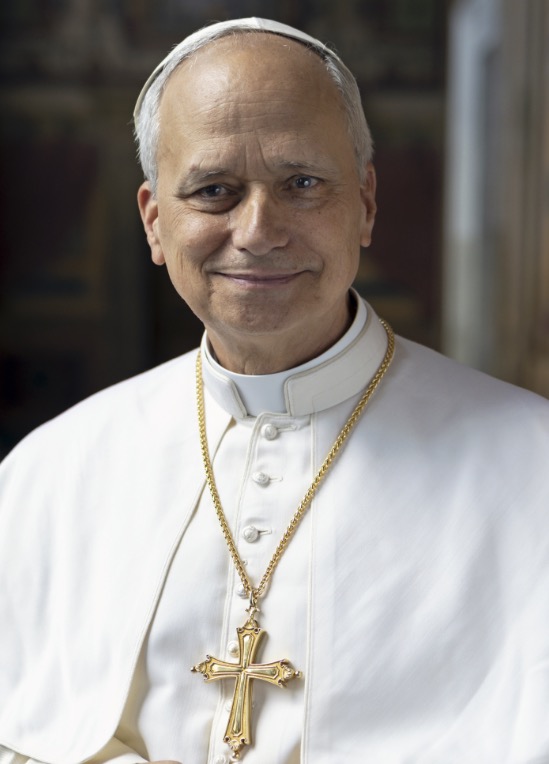

CATHOLIC NEWS SERVICE (2:40) – PART ONE Then-Father Robert Prevost (now Pope Leo XIV) reads from his address to the world Synod of Bishops on the New Evangelization in 2012. Father Prevost discusses the need for the church to adequately respond to the challenges posed by modern mass media. (November 8, 2012)
Future Pope Leo XIV on
the New Evangelization
November 2012 – World Synod of Bishops
The Community in Mission blog (Msgr. Charles Pope, Archdiocese of Washington) has a transcript and two short videos (above) of Pope Leo XIV, then Bishop Prevost’s intervention at the synod on evangelization in 2012. Great stuff! really worth a read or a listen. We learn a lot about where he stood, at least then, on critical issues.

CATHOLIC NEWS SERVICE (2:40) – PART TWO Then-Father Robert Prevost (now Pope Leo XIV) reads from his address to the world Synod of Bishops on the New Evangelization in 2012. Father Prevost discusses the need for the church to adequately respond to the challenges posed by modern mass media. (November 8, 2012)
Future Pope Leo XIV on
the New Evangelization
November 2012 – World Synod of Bishops
The Community in Mission blog (Msgr. Charles Pope, Archdiocese of Washington) has a transcript and two short videos (above) of Pope Leo XIV, then Bishop Prevost’s intervention at the synod on evangelization in 2012. Great stuff! really worth a read or a listen. We learn a lot about where he stood, at least then, on critical issues.

Vatican Livestream
This livestream allows viewers to witness the Pope’s addresses during Papal Audiences, as well as other Vatican events and news. The livestream is part of the Vatican Media Center’s efforts to share the latest updates on Pope Leo XIV, the Holy See, and the Church worldwide with a global audience.


Homiletic Suggestions (2025)
edited by Father Gaetano Piccolo (SI)
FROM THE ARCHIVES
The Church
5th Sunday of Easter C
The Church was born out of Easter. On this Sunday, the liturgical texts revolve around the theme of the Church. Above all else, in the Gospel we are offered charity as the substance of the Church “It is by your love for one another, that everyone will recognize you as my disciples.” This Church, love and communion, is fulfilled historically in the small communities in the early Christian times, for example in the communities founded by Paul and Barnabas during their first missionary journey (first reading). This historical Church is a reflection of, as well as the driving force towards, the eternal Church, the definitive and endless home of God among people (second reading).
P. Antonio Izqeuirdo, L.C., © Dicastery for the Clergy A | B | C
Doctrinal Messages
Pastoral Suggestions
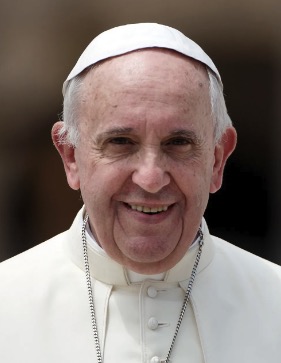
Francis
5th Sunday of Easter C
The New Things of God
28 April 2013 – St Peter’s Basilica
HOLY MASS AND CONFERRAL OF THE SACRAMENT OF CONFIRMATION
In the second reading, we listened to the beautiful vision of Saint John: new heavens and a new earth, and then the Holy City coming down from God. All is new, changed into good, beauty and truth; there are no more tears or mourning… This is the work of the Holy Spirit: he brings us the new things of God. He comes to us and makes all things new; he changes us. The Spirit changes us! And Saint John’s vision reminds us that all of us are journeying towards the heavenly Jerusalem, the ultimate newness which awaits us and all reality, the happy day when we will see the Lord’s face – that marvelous face, the most beautiful face of the Lord Jesus – and be with him for ever, in his love.
You see, the new things of God are not like the novelties of this world, all of which are temporary; they come and go, and we keep looking for more. The new things which God gives to our lives are lasting, not only in the future, when we will be with him, but today as well. God is even now making all things new; the Holy Spirit is truly transforming us, and through us he also wants to transform the world in which we live. Let us open the doors to the Spirit, let ourselves be guided by him, and allow God’s constant help to make us new men and women, inspired by the love of God which the Holy Spirit bestows on us! How beautiful it would be if each of you, every evening, could say: Today at school, at home, at work, guided by God, I showed a sign of love towards one of my friends, my parents, an older person! How beautiful!
2. A second thought. In the first reading Paul and Barnabas say that “we must undergo many trials if we are to enter the kingdom of God” (Acts 14:22). The journey of the Church, and our own personal journeys as Christians, are not always easy; they meet with difficulties and trials. To follow the Lord, to let his Spirit transform the shadowy parts of our lives, our ungodly ways of acting, and cleanse us of our sins, is to set out on a path with many obstacles, both in the world around us but also within us, in the heart. But difficulties and trials are part of the path that leads to God’s glory, just as they were for Jesus, who was glorified on the cross; we will always encounter them in life! Do not be discouraged! We have the power of the Holy Spirit to overcome these trials!
Benedict XVI
5th Sunday of Easter C
New Commandment
2 May 2010 | PASTORAL VISIT TO TURIN
We are in the Easter Season which is the time of Jesus’ glorification. The Gospel we have just heard reminds us that this glorification is brought about in the Passion. In the Paschal Mystery, passion and glorification are closely bound together and form an indissoluble unity. When Judas leaves the Upper Room to carry out his scheme of betrayal that will lead to the Master’s death, Jesus says: “now is the Son of man glorified, and in him God is glorified” (Jn 13: 31): the glorification of Jesus begins at that very moment. The Evangelist John makes it quite clear: he does not in fact say that Jesus was glorified only after his Passion, through his Resurrection; rather he shows that precisely with the Passion his glorification began. In it Jesus manifests his glory, which is the glory of love, which gives itself totally. He loved the Father, doing his will to the very end, with a perfect gift of self; he loved humanity, giving his life for us. Thus he was already glorified in his Passion and God was glorified in him. But the Passion as a very real and profound expression of his love is only a beginning. This is why Jesus says that his glorification is also to come (cf. ibid., 13: 32). Then, when he announces his departure from this world (cf. ibid., 13: 33), the Lord gives his disciples a new commandment, as it were a testament, so that they might continue his presence among them in a new way: “A new commandment I give to you, that you love one another; even as I have loved you, that you also love one another” (Jn 13: 34). If we love each other, Jesus will continue to be present in our midst, to be glorified in this world.
Jesus speaks of a “new commandment”. But what is new about it? In the Old Testament, God had already given the commandment of love; but this commandment has become new now because Jesus makes a very important addition to it: “As I have loved you, that you also love one another”. What is new is precisely this “loving as Jesus loved”. All our loving is preceded by his love and refers to this love, it fits into this love and is achieved precisely through this love. The Old Testament did not present any model of love; it only formulated the precept of love. Instead, Jesus gave himself to us as a model and source of love a boundless, universal love that could transform all negative circumstances and all obstacles into opportunities to progress in love. And in this City’s Saints we see the fulfilment of this love, always from the source of Jesus’ love.
SOURCE: The Holy See Archive at the Vatican Website © Libreria Editrice Vaticana If you are unable to access the Vatican website, click here to check if it is down.

Saint John Paul II
5th Sunday of Easter C
The Intimacy of the
Upper Room
13 May 2001 | PRIESTLY ORDINATIONS
1. “By this all men will know that you are my disciples, if you have love for one another” (Jn 13: 35).
The Gospel for the Fifth Sunday in the Easter Season takes us back to the intimacy of the Upper Room. There Christ, during the Last Supper, instituted the sacrament of the Eucharist and the Priesthood of the New Covenant, and bequeathed to his disciples the “new commandment” of love. We relive today the intense spiritual atmosphere of that extraordinary hour. The Lord’s words to his disciples are addressed particularly to you, dear candidates for the priesthood, who are invited to receive his testament of love and service this morning.
We gather around you with affection. Close to you first of all are your relatives and friends, to whom I extend my most cordial greeting. The whole diocesan community of Rome, in which you carried out your formation, is gathered round you in spirit. The rectors and directors of formation of the Pontifical Roman Major Seminary, of the Almo Collegio Capranica, of the Redemptoris Mater Seminary, of the Seminary of the Oblates Sons of Our Lady of Divine Love, of the Identes Missionary Institute and of the Institute of the Sons of St Anne.
With special recognition I turn to those who have supervised your formation. The Cardinal Vicar spoke on their behalf at the beginning of this celebration. Through him, to whom I am deeply grateful, I would like to extend my warm gratitude to those in the Dioccese who actively work in the vocational field.
2. “Now is the Son of man glorified, and in him God is glorified” (Jn 13: 31).
While the liturgy urges us to dwell in the Upper Room in interior contemplation, let us once again listen to the Evangelist John who, ever attentive to the echoes of Christ’s heart, cites the words he spoke after Judas Iscariot went out. Jesus speaks of the glory that the Father and the Son render to each other in the Easter mystery.
Dear deacons, today Christ invites you to enter into his glory and not to seek any other glory outside of it. For you too, this is a decisive “hour”. Indeed, ordination is the moment when Christ, through consecration in the Holy Spirit, associates you in a special way with his priesthood for the world’s salvation. Each of you is chosen to glorify God in persona Christi Capitis. Like Christ and united with him, you will glorify God and will be glorified by him, offering yourselves for the world’s salvation (cf. Jn 6: 51), loving to the end the persons whom the Father entrusts to you (cf. Jn 13: 3) and washing one another’s feet (cf. Jn 13: 14).
The Lord presents his commandment to you in a new way: “as I have loved you, that you also love one another” (Jn 13: 34). It is a gift and a commandment for you: a gift of Christ’s yoke that is easy and light (cf. Mt 11: 30); a commitment always to take this yoke upon yourselves first, humbly becoming models for the flock (cf. 1 Pt 5: 3) entrusted to you by the Good Shepherd. You must constantly turn to him for help. You must always be inspired by his example.
SOURCE: The Holy See Archive at the Vatican Website © Libreria Editrice Vaticana If you are unable to access the Vatican website, click here to check if it is down.

5th Sunday of Easter C