May 11, 2025

4th Sunday of Easter - Year C
Papal homilies from Pope Francis and Benedict XVI on the Sunday Readings with Dicastery for the Clergy notes’ Sunday Theme, Doctrinal Messages and Pastoral Suggestions.

Papal Homilies

Pope Leo
XIV

Saint
John Paul II

FIRST REMARKSFIRST MASSLIVESTREAM
YouTube player

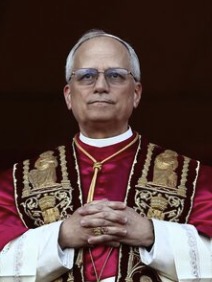
Peace Be With You

8 May 2025 –  St Peter’s Basilica

The first words of Pope Leo XiV to the Church.

READ MORE

YouTube player

VATICAN NEWS (2:03) – From the Sistine Chapel, Holy Mass with the Cardinals, presided by Pope Leo XIV at the conclusion of the Conclave

YouTube player

This livestream allows viewers to witness the Pope’s addresses during Papal Audiences, as well as other Vatican events and news. The livestream is part of the Vatican Media Center’s efforts to share the latest updates on Pope Francis, the Holy See, and the Church worldwide with a global audience.


FROM THE ARCHIVES

The Good Shepherd

4th Sunday of Easter C

The Good Shepherd! This is the symbol of Jesus Christ that today’s liturgy emphasizes. He is the Good Shepherd who knows his sheep and gives his life for them (Gospel). He is the Good Shepherd who wants to save all, both the sheep and the pagan women, and who offers his life to everyone (first reading). He is the Good Shepherd who feeds his sheep not only on this earth, but also in heaven, leading them to springs of living water (second reading).

P. Antonio Izqeuirdo, L.C., © Dicastery for the Clergy A | B | C

Doctrinal Messages

The mirabilia of the Good Shepherd

The mirabilia of the Good Shepherd. In the history of Israel, there are many references to the mirabilia Dei, the great wonders that God worked for his people. It is also valid to speak of the mirabilia Boni Pastoris. Let us look at some such wonders indicated in the liturgical texts.

1) I know my sheep. The communitarian and social nature of faith in no way diminishes the personal nature of the relationship between the Good Shepherd and each one of his sheep. "Knowing" in the Hebrew language also implies "loving", wanting the good of the person, feeling affection for that person. In other words, one can get to "know" another person only within the realm of a close personal relationship. When people are "known" by Jesus Christ in such a way, they also enter the world of Jesus Christ’s closeness, they listen to him with attention and follow him with faithfulness, joy and gratitude. In the Gospel according to John, on the other hand, knowing is almost equivalent to believing. Jesus Christ has confidence in, he trusts, his sheep because he loves them and feels loved by them. And above all, the sheep trust Christ, and recognize him as their Lord and Savior.

2) I give you eternal life. The greatest gift that God has given us is life. But this life lasts only a few years, after which… Will death overcome us? Will we go back to the nothingness from which God took us when he created us? This is a question that finds its answer in the risen Christ. He is the Lord of Life, the Living One. And since he is the Lord of Life, he may dispose of it and give it to those who love and trust him. Christ lets us share in his very life, the life that is not subject to the dominion of death: eternal life. In the Book of Revelation we read, "The Lamb (the dead and risen Christ) who is at the heart of the throne will be their shepherd and will guide them to springs of living water!" Eternal life is the same life as that of Christ, which is already present in us through baptism and grace, and will acquire its fullness in the hereafter of our earthly existence. Since our earthly life is a precious gift of the Father, eternal life is a wonderful gift of the risen Christ.

3) No one can take them away from me. No human, angelic or diabolical power is above the power of the risen Christ, a power he has received from the almighty Father. To want to take Jesus Christ’s sheep from him would be tantamount to taking them away from God, the Father of our Lord Jesus Christ. It would be absurd! People may make a clean break with this life, but they cannot snatch eternal life from God’s hands. As the Catechism teaches us, angels are at the service of God: "With their whole beings, the angels are servants and messengers of God" (CCC 329), and at the service of man, "From infancy to death human life is surrounded by their watchful care and intercession" (CCC 336).

Finally, although the devil is a powerful figure, for he is a pure spirit, he cannot prevent the building up of the Kingdom of God, he cannot take God’s sheep away, because "the power of Satan is, nonetheless, not infinite" (CCC 395). We alone, with our freedom, can escape from Christ’s flock and flee from the Father’s good hands. The text of the Acts of the Apostles bears witness to this: "When they saw the crowds, the Jews, filled with jealousy, used blasphemies to contradict everything Paul said." What tremendous power is the power of freedom, that can render useless the mirabilia of the Good Shepherd!

P. Antonio Izqeuirdo, L.C., © Dicastery for the Clergy

Two ways of fulfilling the mission

Two ways of fulfilling the mission. In the Acts of the Apostles (first reading), the mission is fulfilled by means of preaching. The apostles preached Jesus Christ, especially the great mystery of his Death and Resurrection, and the nets begin to fill with fish. The preaching is so effective that the Jewish authorities get scared and put the apostles in prison. "In reply, Peter and the apostles said, ‘Obedience to God comes before obedience to men.’" Will those who have received the same mission as Jesus Christ be able to give it up? Can it be equaled to any other mission in life? The apostles feel that it is impossible, and they are not afraid to pay any price to fulfill their mission. The second way of carrying out the mission is by means of adoration, especially the attitude of adoration towards Jesus, the Sacrificed Lamb. "Worthy is the Lamb that was sacrificed to receive power, riches, wisdom, strength, honor, glory and blessing" (second reading). In order for the mission of the apostles to be fully implemented, preaching must lead to adoration. To know that Christ has died and risen for us without adoring him as our Lord and God is to leave the mission unaccomplished. To separate these two realities or excessively neglect one of them would be equivalent to a sort of apostolic and pastoral Monophysitism.

P. Antonio Izqeuirdo, L.C., © Dicastery for the Clergy

The mission in the global village

xxxxxxxxxxxxx

P. Antonio Izqeuirdo, L.C., © Dicastery for the Clergy

A patient God, a God who can wait

xxxxxxxxxxxxxxxxxx

P. Antonio Izqeuirdo, L.C., © Dicastery for the Clergy

Pastoral Suggestions

Do not be afraid of the Good Shepherd

Do not be afraid of the Good Shepherd! The mystery of Christ goes beyond the human mind. For this reason, the New Testament resorts to many figures and symbols to express some of its infinite richness. We are told about Christ the teacher and prophet, God and Lord, light and life, alpha and omega, the Savior and Emmanuel, etc. One of the sweetest names of Christ is the Good Shepherd. It is a name that children like very much, and that in no way is displeasing to adults, because the allegory of the Good Shepherd in the Gospel according to John is the equivalent of the parable of the prodigal son in the Gospel according to Luke. Who can possibly be afraid of Christ, the Good Shepherd, if the only thing he seeks and worries about is our greatest good? It’s true that some truths of our faith may seem difficult to us, but do not be afraid of difficulties, for the Good Shepherd will help you to understand them a bit more, to accept them with love and joy, like a magnificent gift, and especially to live them out with passion and self-giving. Some moral teachings of Christianity may be difficult to accept, harsh, they may go against the natural flow of things, but the Good Shepherd, who feeds you with such truths, will give you the strength to assimilate them and put them into practice in your daily life. Sometimes you may go astray or you may grow weak on the path of life, but do not be afraid to go back to Christ, for he will carry you on his shoulders and will be happy to have you back. Do not be afraid! The Good Shepherd is ready for anything, because he loves you, because he wants what is good for you.

P. Antonio Izqeuirdo, L.C., © Dicastery for the Clergy

Possible martyrdom: gift and freedom

Possible martyrdom: gift and freedom! The Christian vocation bears the vocation to martyrdom within itself. It is sometimes a very real possibility for all Christians, wherever they may be. And let us not think that martyrs are only possible in Latin America, Asia, Africa and Eastern Europe. Every year, many have professed their faith with martyrdom in different continents. In the world there are many people who die violently, but they are not martyrs; this is a gift of the crucified Christ who sits at the right hand of the Father. If the Crucified One does not attract us to martyrdom, if he does not grant us this supreme likeness to him, we will never be able to be martyrs. The divine gift is completed by the gift of human freedom, for martyrdom is an act of sovereign freedom. No one is forced to die as a martyr. One can become a martyr only if one is free and truly loves. There is hard and bloody martyrdom, which is possible for all but actually happens only for a few. And there is the non-bloody form of martyrdom, which is possible and real for all: the martyrdom of the duty fulfilled, of the coherence between faith and life, of constant witness, of always living in truth, of loving enemies (political, ideological, religious, in the parish…). Whatever your martyrdom, drink its cup through Christ and with Christ.

P. Antonio Izqeuirdo, L.C., © Dicastery for the Clergy


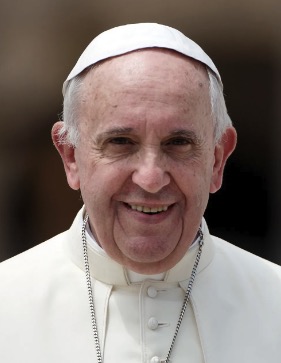
Francis

4th Sunday of Easter C

Ordination of Priests

21 April 2013 –  St Peter’s Basilica

The homily delivered by the Holy Father is based on the one that appears in the Pontificale Romanum for the ordination of priests, with one or two personal additions.

Beloved brothers and sisters: because these our sons, who are your relatives and friends, are now to be advanced to the Order of priests, consider carefully the nature of the rank in the Church to which they are about to be raised.

It is true that God has made his entire holy people a royal priesthood in Christ. Nevertheless, our great Priest himself, Jesus Christ, chose certain disciples to carry out publicly in his name, and on behalf of mankind, a priestly office in the Church. For Christ was sent by the Father and he in turn sent the Apostles into the world, so that through them and their successors, the Bishops, he might continue to exercise his office of Teacher, Priest, and Shepherd. Indeed, priests are established co-workers of the Order of Bishops, with whom they are joined in the priestly office and with whom they are called to the service of the people of God.

After mature deliberation and prayer, these, our brothers, are now to be ordained to the priesthood in the Order of the presbyterate so as to serve Christ the Teacher, Priest, and Shepherd, by whose ministry his body, that is, the Church, is built and grows into the people of God, a holy temple.
READ MORE


Catechism of
the Catholic Church

Benedict
XVI

Saint
John Paul II

Benedict XVI

4th Sunday of Easter C

2007 Ordinations
for the Diocese of Rome

29 April 2007 |  St Peter’s Basilica

Today, the Fourth Sunday of Easter traditionally known as “Good Shepherd Sunday”, has a special significance for us who are gathered in this Vatican Basilica. It is an absolutely unique day especially for you, dear deacons, upon whom, as Bishop and Pastor of Rome, I am pleased to confer priestly Ordination. In this way you join our “presbyterium”.

Together with the Cardinal Vicar, the Auxiliary Bishops and the priests of the Diocese, I thank the Lord for the gift of your priesthood which enriches our Community with 22 new Pastors.

The theological density of the brief Gospel passage which has just been proclaimed helps us to perceive better the meaning and value of this solemn Celebration.

Jesus speaks of himself as the Good Shepherd who gives eternal life to his sheep (cf. Jn 10: 28). This image of the shepherd is deeply rooted in the Old Testament and dear to Christian tradition. The Prophets attributed to David the title: “Shepherd of Israel”, which hence possesses an indisputable messianic importance (cf. Ex 34: 23).

Jesus is the true Shepherd of Israel, since he is the Son of Man who desired to share the condition of human beings to give them new life and lead them to salvation.

READ MORE

SOURCE: The Holy See Archive at the Vatican Website © Libreria Editrice Vaticana If you are unable to access the Vatican website, click here to check if it is down.


4th Sunday of Easter C

First Reading

READING 1 | READING 2 | GOSPEL

Acts 13:14, 43-52

No need to fill out form. Scroll down for YELLOW highlights. Search Engine created by Jeff Pinyan

Courtesy of Catholic Cross Reference Online

Second Reading

READING 1 | READING 2 | GOSPEL

Revelation 7:9, 14b-17

No need to fill out form. Scroll down for YELLOW highlights. Search Engine created by Jeff Pinyan

Courtesy of Catholic Cross Reference Online

Gospel Reading

READING 1 | READING 2 | GOSPEL

John 10:27-30

No need to fill out form. Scroll down for YELLOW highlights. Search Engine created by Jeff Pinyan

Courtesy of Catholic Cross Reference Online