May 4, 2025

3rd Sunday of Easter - Year C
Papal homilies from Pope Francis and Benedict XVI on the Sunday Readings with Dicastery for the Clergy notes’ Sunday Theme, Doctrinal Messages and Pastoral Suggestions.

Papal Homilies

YouTube player

SOURCE: Vatican News – English

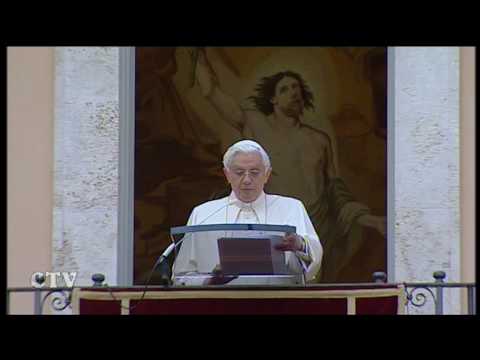
This livestream allows viewers to witness the Pope’s addresses during Papal Audiences, as well as other Vatican events and news. The livestream is part of the Vatican Media Center’s efforts to share the latest updates on Pope Francis, the Holy See, and the Church worldwide with a global audience.

Dicastery of the Clergy
notes will return next Sunday

3rd Sunday of Easter C

First Reading

READING 1 | READING 2 | GOSPEL

Acts 5:27-32, 40b-41

No need to fill out form. Scroll down for YELLOW highlights. Search Engine created by Jeff Pinyan

Courtesy of Catholic Cross Reference Online

Second Reading

READING 1 | READING 2 | GOSPEL

Revelation 5:11-14

No need to fill out form. Scroll down for YELLOW highlights. Search Engine created by Jeff Pinyan

Courtesy of Catholic Cross Reference Online

Gospel Reading

READING 1 | READING 2 | GOSPEL

John 21:1-19 

No need to fill out form. Scroll down for YELLOW highlights. Search Engine created by Jeff Pinyan

Courtesy of Catholic Cross Reference Online

Mission

3rd Sunday of Easter C

After Jesus Christ’s Resurrection, the time of the mission has come for the apostles. The one hundred and fifty-three fish caught miraculously represents the full and universal nature of the mission of the disciples and of the Church. The risen Christ tells Peter three times what his mission should be: “Feed my lambs” (Gospel). After Pentecost, the disciples began to put into practice the mission that they had received, preaching the Good News of Jesus Christ (first reading). Part of the mission is not only for people to know Christ, but also for them to adore him as their Lord and God (second reading).

P. Antonio Izqeuirdo, L.C., © Dicastery for the Clergy A | B | C


Doctrinal Messages

3rd Sunday of Easter C

The mission of the Church

The mission of the Church. Each evangelist in his own way shows the universal mission of the Church, as a fundamental part of Jesus’ message. In today’s Gospel, Saint John makes use of the symbols in his own way. The sea as an image of the world, of all people, was common in the time of Jesus and of the evangelist; the image of the ship, i.e. the ship of state, was equally common, at least among the Greeks and Romans. In basing themselves on some texts of the New Testament (Lk 5:3; Mt 8:23; Mk 1:17; Jn 21:1-4) the early Christians spoke about the ship of the Church. There is another symbol used exclusively by John. I’m referring to the number of fish caught: one hundred fifty-three. In Jesus’ contemporary culture, the symbol of a number had a great value and was used rather frequently. The number 153 implies fullness, wholeness. It is usually explained in two ways: 1+5+3 is equal to 9, which is a multiple of 3 and thus stresses the greatest degree of plenitude. Another way of explaining the full and whole value of this number is as follows: 144 is the multiple of 12; if we add 9 to 144 we get 153. It’s a way to emphasize wholeness even more. In summary, the mission of the Church, in the sea of the world, is none other than to be fishermen of all people with no exceptions, and lead them to the safe harbor of faith and eternity. This image of the ship and of fishing is then complemented by another: that of the shepherd and his sheep. Jesus Christ, the Good Shepherd, tells Peter, "Feed my sheep." Ezekiel had talked about God as the Shepherd of Israel; now Jesus resorts to the same image to speak of himself as Shepherd of the Church, and entrusts Peter with his mission. The Good Shepherd is he who takes care of, loves, protects and feeds his sheep and defends them from the wolves to the point of giving his life for them. Peter’s mission and the mission of the shepherds in the Church is to see to it that all the sheep attain God’s salvation.

P. Antonio Izqeuirdo, L.C., © Dicastery for the Clergy

Two ways of fulfilling the mission

Two ways of fulfilling the mission. In the Acts of the Apostles (first reading), the mission is fulfilled by means of preaching. The apostles preached Jesus Christ, especially the great mystery of his Death and Resurrection, and the nets begin to fill with fish. The preaching is so effective that the Jewish authorities get scared and put the apostles in prison. "In reply, Peter and the apostles said, ‘Obedience to God comes before obedience to men.’" Will those who have received the same mission as Jesus Christ be able to give it up? Can it be equaled to any other mission in life? The apostles feel that it is impossible, and they are not afraid to pay any price to fulfill their mission. The second way of carrying out the mission is by means of adoration, especially the attitude of adoration towards Jesus, the Sacrificed Lamb. "Worthy is the Lamb that was sacrificed to receive power, riches, wisdom, strength, honor, glory and blessing" (second reading). In order for the mission of the apostles to be fully implemented, preaching must lead to adoration. To know that Christ has died and risen for us without adoring him as our Lord and God is to leave the mission unaccomplished. To separate these two realities or excessively neglect one of them would be equivalent to a sort of apostolic and pastoral Monophysitism.

P. Antonio Izqeuirdo, L.C., © Dicastery for the Clergy

The mission in the global village

xxxxxxxxxxxxx

P. Antonio Izqeuirdo, L.C., © Dicastery for the Clergy

A patient God, a God who can wait

xxxxxxxxxxxxxxxxxx

P. Antonio Izqeuirdo, L.C., © Dicastery for the Clergy


Pastoral Suggestions

3rd Sunday of Easter C
The mission in the global village

The mission in the global village. In our day and age, the world has become a global village. The mass media, the world of finance and that of ideas know no boundaries. A pontifical ceremony may be watched simultaneously in any corner of the globe, wherever there is a television set, and thanks to the Internet, one can engage in a chat on any subject with men and women thousands of miles away from home. By means of all these instruments, Christians come into contact with people who have a different view of life, who live according to other models of existence, who practice another religion and accept other beliefs. This phenomenon may arouse a certain state of crisis in Christians, it may even make them fall into a certain religious relativism. Equally, however, it may be a wonderful chance for them to put into practice, on a very large scale and with the most advanced means, the universal mission of the Church. When has the Church had more means to preach Christ? Perhaps we are faced with the most imposing historical challenge in the universal work of the Church. This great universal mission is not carried out by a few missionaries in non-evangelized lands; it may be carried out by any Christian, even you, from your home or from your office. It may clearly be seen that the universal mission of the Church requires that each Christian be someone who believes in his faith, and is prepared to explain it to anyone who may ask about it, in the street, at the office or on the Internet.nts.

P. Antonio Izqeuirdo, L.C., © Dicastery for the Clergy

The practice of adoration

The practice of adoration. I think that over the past decades, the practice of adoration has decreased among the faithful. Perhaps, much emphasis has been placed on the liturgical assembly, and less on the Person around whom the assembly gathers. Or the festive nature of the sacraments has been stressed more than the aspect of adoration. Also, sometimes emphasis has been placed on Jesus Christ the friend, the teacher and model as a person like us, while the figure of Jesus Christ as our Lord and God has been left to the side. These or other reasons have diminished the Christian sense of adoration. The beginning of the Third Millennium, centered on the mystery of the Incarnation of the Word, is a wonderful opportunity to renew and recover the spirit of adoration due towards Jesus Christ. The Catechism says, "As faith in the real presence of Christ in his Eucharist deepened, the Church became conscious of the meaning of silent adoration of the Lord present under the Eucharistic species" (CCC 1379). Doesn’t the consciousness of this presence of Jesus Christ God in the Eucharist have to be enlivened and revived? At number 2145, the Catechism adds, "Preaching and catechizing should be permeated with adoration and respect for the name of our Lord Jesus Christ." A moment of reflection for catechists and preachers! To renew itself, the world needs a more adoring Church.

P. Antonio Izqeuirdo, L.C., © Dicastery for the Clergy


Pope Francis

3rd Sunday of Easter C

YouTube player

Proclamation,
Witness, Worship

14 April 2013 – Basilica of Saint Paul Outside-the-Walls

The Bishop of Rome Francis presides over the celebration of the Eucharist for the THIRD SUNDAY OF EASTER during which he takes possession of the St. Paul’s Basilica.

It is a joy for me to celebrate Mass with you in this Basilica. I greet the Archpriest, Cardinal James Harvey, and I thank him for the words that he has addressed to me. Along with him, I greet and thank the various institutions that form part of this Basilica, and all of you. We are at the tomb of Saint Paul, a great yet humble Apostle of the Lord, who proclaimed him by word, bore witness to him by martyrdom and worshipped him with all his heart. These are the three key ideas on which I would like to reflect in the light of the word of God that we have heard: proclamation, witness, worship.

In the First Reading, what strikes us is the strength of Peter and the other Apostles. In response to the order to be silent, no longer to teach in the name of Jesus, no longer to proclaim his message, they respond clearly: “We must obey God, rather than men”…
READ MORE


Benedict XVI

3rd Sunday of Easter C

YouTube player

“Cast the Net…”

21 April 2007 | PASTORAL VISIT TO VIGEVANO AND PAVIA (ITALY)

“Cast the net… and you will find some” (Jn 21: 6).

We have heard Jesus’ words once again in the Gospel passage just proclaimed. They are part of the account of the third appearance of the Risen One to the disciples, on the shores of the Sea of Tiberias, which tells of the miraculous catch.

After the “scandal” of the Cross, the disciples had returned to their land and their work as fishermen, to the activities they had carried out before they met Jesus. They had returned to their previous life and this suggests the atmosphere of dispersion and bewilderment that prevailed in their communities (cf. Mk 14: 27; Mt 26: 31)…

READ MORE

SOURCE: The Holy See Archive at the Vatican Website © Libreria Editrice Vaticana If you are unable to access the Vatican website, click here to check if it is down.