APR 27, 2025


Papal Homilies
TIP: You can rewind the livestream up to twelve hours, allowing you to catch up on any events or addresses you may have missed.

SOURCE: Vatican News – English
This livestream allows viewers to witness the Pope’s addresses during Papal Audiences, as well as other Vatican events and news. The livestream is part of the Vatican Media Center’s efforts to share the latest updates on Pope Francis, the Holy See, and the Church worldwide with a global audience.

Divine Mercy Sunday

Fr. Gaetano Piccolo (SI)
The Dicastery for the Clergy deals with everything that concerns the priests and deacons of the diocesan clergy with regard to their persons, their pastoral ministry and what is necessary for its fruitful exercise. In these matters it offers the Bishops appropriate assistance.

“Christ the Living One”
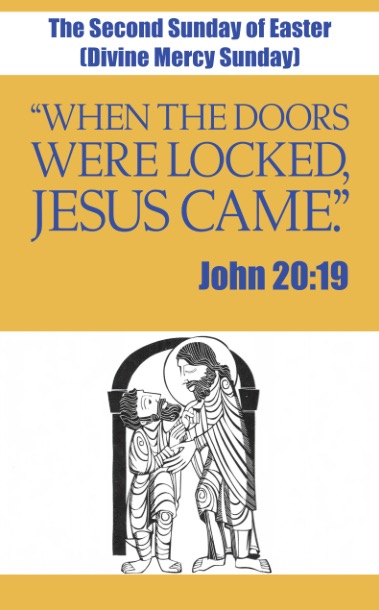
Divine Mercy Sunday
“Christ the Living One.” This is how he is “seen” by the visionary of Patmos, this is how he introduces himself to the disciples closed up in a house for fear of the Jews, this is how he is experienced by the early Christians of Jerusalem. “I am the Living One, I was dead and look – I am alive for ever and ever,” says the human figure to Saint John in a vision (second reading). The Living One appears to the fearful disciples to pour peace into their hearts, to entrust the mission to them and grant them the Spirit (Gospel). The Living One continues to work signs and miracles among the people through his apostles (first reading).
P. Antonio Izqeuirdo, L.C., © Dicastery for the Clergy A | B | C
Doctrinal Messages
Divine Mercy Sunday
VATICAN
DAILY
BULLETIN
The Vatican Daily Bulletin is the official news source for the Pope’s activities and statements, providing accurate and up-to-date information. Published daily, it keeps the public informed about the Church’s activities and decisions.
Pastoral Suggestions
Divine Mercy Sunday
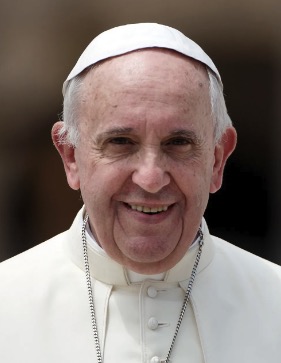
Pope Francis
Divine Mercy Sunday

Peace Be with You
24 April 2022 | SUNDAY OF DIVINE MERCY – St Peter’s Basilica
Today the risen Lord appears to the disciples. To those who had abandoned him he offers his mercy and shows his wounds. The words he speaks to them are punctuated with a greeting that we hear three times in the Gospel: “Peace be with you!” (Jn 20:19.21.26). Peace be with you! These are the words of the risen Jesus as he encounters every human weakness and error. Let us reflect on the three times Jesus says those words. In them, we will discover three aspects of God’s mercy towards us. Those words first give joy, then grant forgiveness and finally offer comfort in every difficulty.
First, God’s mercy gives joy, a special joy, the joy of knowing that we have been freely forgiven. When, on the evening of Easter, the disciples see Jesus and hear him say for the first time, “Peace be with you”, they rejoice (v. 20). They were locked behind closed doors out of fear; but they were also closed in on themselves, burdened by a sense of failure. They were disciples who had abandoned their Master; at the moment of his arrest, they had run away. Peter even denied him three times, and one of their number — one from among them! — had betrayed him. They had good reason to feel not only afraid, but useless; they had failed. In the past, certainly, they had made courageous choices. They had followed the Master with enthusiasm, commitment and generosity. Yet in the end, everything had happened so fast. Fear prevailed and they committed the great sin: they left Jesus alone at his most tragic hour. Before Easter, they had thought that they were destined for greatness; they argued about who would be the greatest among them … Now they have hit rock bottom.

Benedict XVI
Divine Mercy Sunday
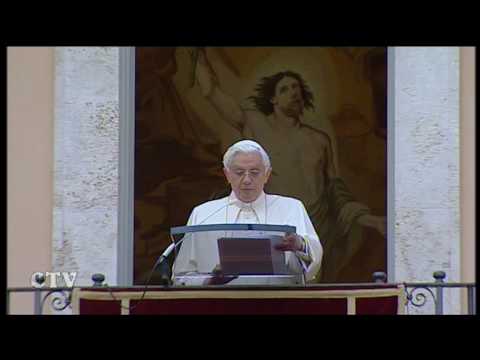
In Albis
11 April 2010 | Castel Gandolfo
his Sunday concludes the Octave of Easter. It is a unique day “made by the Lord”, distinguished by the outstanding event of the Resurrection and the joy of the disciples at seeing Jesus. Since antiquity this Sunday has been called in albis from the Latin name, alba, which was given to the white vestments the neophytes put on for their Baptism on Easter night and took off eight days later, that is, today. Venerable John Paul II entitled this same Sunday “Divine Mercy Sunday” on the occasion of the canonization of Sr Mary Faustina Kowalska on 30 April 2000.
The Gospel passage from St John (20: 19-31) is full of mercy and divine goodness. Is recounts that after the Resurrection Jesus visited his disciples, passing through the closed doors of the Upper Room. St Augustine explains that “the shutting of doors presented no obstacle to the matter of that body, wherein the Godhead resided. He indeed could enter without their being opened, by whose birth the virginity of his mother remained inviolate” (In ev. Jo. 121, 4: CCL 36/7, 667); and St Gregory the Great added that after his Resurrection the Redeemer appeared with a Body by its nature incorruptible and tangible, but in a state of glory (cf. Hom. in Evang. 21, 1: CCL 141, 219). Jesus showed the signs of his Passion even to the point of allowing Doubting Thomas to touch him; but how can a disciple possibly doubt? Actually God’s indulgence enables us to profit even from Thomas’ disbelief, as well as from the believing disciples. Indeed, in touching the Lord’s wounds, the hesitant disciple not only heals his own diffidence but also ours.
SOURCE: The Holy See Archive at the Vatican Website © Libreria Editrice Vaticana If you are unable to access the Vatican website, click here to check if it is down.