

Theology of the Body
Life Recovery Notes
Vocations

Christology
Simeon and the prophetess Anna, acting – in the words of Pope John Paul II – as “representatives of the Old Covenant” – recognize Jesus’ Lordship as Messiah in this culmination of their watchful waiting. When Simeon receives Jesus, he blesses him, and prophesies Jesus’ future as Savior, proclaiming him the Light of the world
Ecclesiology

SOURCE: Wikipedia
Sacramental Theology
We must strive to perceive the presence of the Savior all around us and rejoice with Simeon’s joy. Christ is present in every heart that is given to God, every Sacrament of the Church, every reading of the Holy Scripture, and He is especially present to us within our hearts. Our hearts must be that temple in which we discover the presence of the Christ Child and we must take Him into our lives rejoicing in how close He is.
Theodicy
“And you yourself a sword shall pierce, so that the thoughts of many hearts may be revealed.” St. Gregory of Nyssa tells us that these words do not mean Our Lady’s sorrows will reveal the sorrows of others, but rather that Our Lady’s and Our Lord’s suffering will provide the universal occasion for our understanding of human suffering. When we look upon their pains, we begin to see the sense of our own. Shared suffering, literally “com-passion,” does not take away our woes, but it surely lessens them, and even can give them their meaning. Suffering with another is a supreme occasion to express a genuine love, a love that seeks the good of the one loved rather than one’s own pleasure or advantage.
SOURCE: Catholic Answers Magazine
Catholic Culture

The Feast of the Holy Family of Jesus, Mary and Joseph is normally celebrated on the Sunday after Christmas. This feast developed at the beginning of the 19thcentury in Canada and then spread to the entire Church in 1920. At first, it was celebrated on the Sunday after Epiphany. It is a Feast that seeks to portray the Holy Family of Nazareth as the “true model of life” (cf. Opening Prayer) from which our families can draw inspiration and know where to find help and comfort.
SOURCE: CCCB_CECC
Climate & Environment

Feast of the Holy Family – Year B
Family is rooted in the unconditional love of God made manifest in and through parents. What makes a family “holy” is not so much the amount of time we spend in prayer, although that is in itself of paramount importance. But it is also how we go out of ourselves, in order to enter into communion with others and with nature itself. The model for that selflessness is the Trinity itself, each generating and communicating new life. Life-giving love is the source, is in our very DNA, and is also our destiny.
While we may be tempted to idealize the simple, humble lifestyle of the Holy Family in Nazareth, depicted so often as other-worldly, few of us would likely be willing to choose to submit to those conditions. In fact, a large percentage of the people on our planet currently live in situations very similar to those of Nazareth two thousand years ago. This is in contrast to the minority who dwell in a manner that demands and promotes high levels of consumption, waste, and pollution.
It is in the family where we can learn to get along, to cooperate. The atmosphere of a loving home provides a safe space to enter into conversation, share thoughts and feelings, consult others, agree and disagree amicably, and search together for harmony, not uniformity. While fulfilling such a vision can often be a challenge, we can nevertheless strive to follow the Holy Family’s example.
SOURCE: Catholic Climate Covenant
Pro-Life

“The Sanctuary of Life”
The family is the “Sanctuary of Life” and the basic cell of society. The Holy Family, of course, is unique. One member is God, another is sinless, and the third is a saint. But the great lesson of today is that although God could have come into the world in any way he pleased, he chose to become a member of a family, obedient to his earthly parents, and yet totally devoted to the Heavenly Father’s will, as we all must be.
He also shared the vulnerability that comes with being a member of a human family. “Herod is going to search for the child in order to destroy him.” St. Joseph here plays the unspeakable role of protecting God. His readiness to do so, in the person of his child, speaks to every father about the role of protector, and to our whole society about the need we have for good fathers. The culture of life depends just as much on fathers making the right choices as on mothers doing so.
Strong families are an integral aspect of the Culture of Life. Today’s preaching can focus on that fact. It is precisely the breakdown of family structure that increases the temptation to abort, or to resort to euthanasia or a lack of proper care for the elderly. On the other hand, the communion of persons that comes from giving oneself away to the other in selfless love is what creates the proper context for saying a generous “yes” to life. A helpful lesson to point out from the very word “family” is that it stands for “Forget About Me; I Love You.”
SOURCE: Priests for Life
African Americans

Addiction & Recovery

Maintain Relationships
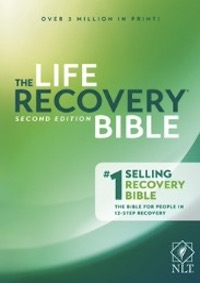
Col 3:12-13 Our addictions have probably destroyed or severely strained all our important relationships, and we have a lot of work to do on this front. We need to make amends where necessary, seek forgiveness from those we have hurt, and forgive those who have hurt us. Obviously, there are some situations where we cannot, or should not, directly involve the people we have harmed. In such cases Paul urges caution, telling us to be gentle and not to hold grudges. As we seek to make amends, our actions are to be governed by the principle of selfless love.
Universality of God’s Plan of Salvation
Luke 2:29-32 It was a rare thing for a Jew to declare that the Messiah would bring deliverance to the whole world, not just the Jews. God reaches out to all people, not just one ethnic group. He gives light, life, and contentment to all who put their faith in him through Jesus Christ. God will accept any who turn to him for help, regardless of background or situation in life. He is the universal Savior. With faith in Jesus we can go through life and death “in peace,” as did Simeon.
The Power of Faith
Luke 2:36-38 Anna modeled how the power of faith can bring meaning to life for people in recovery. After many years of widowhood, Anna did not allow bitterness to set in. Instead, she found that her singleness gave her more opportunities to serve God in the Temple. She overcame adversity by drawing closer to God through prayer and fasting, and she was given the gift of prophecy. Anna accepted God’s plan for her, which included a glimpse of the Messiah she had been longing for. Decades of unwanted singleness can drive many of us to find love in all the wrong places. We must trust God in that area of life as well.
SOURCE: The Life Recovery Bible, Stephen Arterburn, David Stoop

Vocations


Your cousin asks you to witness her wedding. Your father wants you to talk to your mother about their marital difficulties. Your brother is upset and asks you to hear his confession. You want to buy a piece of property from your aunt. Your sister asks you for a loan to make the down payment on a new home or to co-sign for her mortgage.
What seems convenient or helpful at the moment can become complicated or even harmful. The ethical guidelines of many professional organizations require members at least to exercise caution or even avoid certain dual relationships — for example, a doctor treating her own children, an attorney representing a family member in court, a supervisor dating anyone under his or her supervision. An invitation to a priest may not even be for ministry per se, but it can still create a complicated relationship that deserves careful discernment before proceeding.
So, should a priest minister to members of his family? It depends on the priest, the other person(s), the family and the situation.
Work
Reflecting Godly Virtues at Work
When Christians “put to death” (Col. 3:5) the person they used to be, they are then to put on the person God wants them to be, the person God is recreating in the image of Christ (Col. 3:10). This does not consist in hiding one’s self away for constant prayer and worship (though we are all called to pray and worship, and some may be called to do that as a full-time vocation). Rather, it means reflecting God’s own virtues of “compassion, kindness, humility, meekness and patience” (Col. 3:12) in whatever we do.
An encouraging word comes from Paul’s exhortation to “put up with one another” (Col. 3:13, as it may be translated). Most translations read “bear with one another,” but this does not fully capture Paul’s point. He seems to be saying that there are all kinds of people in the church (and we can readily apply this to the workplace as well) with whom we won’t naturally get along. Our interests and personalities are so different there can be no instinctive bonding. But we put up with them anyway. We seek their good, we forgive their sins, and we endure their irritating idiosyncrasies. Many of the character traits Paul extols in his letters can be summarized in the phrase “He/she works well with others.” Paul himself mentions co-workers Tychicus, Onesimus, Aristarchus, Mark, Justus, Epaphras, Luke, Demas, Nympha, and Archippus (Col. 4: 7–17). Being a “team player” is not simply a résumé-enhancing cliché. It is a foundational Christian virtue. Both putting to death the old and putting on the new are immensely relevant to daily work. Christians are meant to show the new life of Christ in the midst of a dying world, and the workplace is perhaps the main forum where that type of display can take place.
- Christians may be tempted, for example, to fit in at work by participating in the gossip and the complaining that permeates many workplaces. It is likely that every workplace has people whose on- and off-hours actions make for juicy stories. It is not lying, is it, to repeat the stories?
- It is likely that every workplace has unfair policies, bad bosses, nonfunctional processes, and poor channels of communication. It is not slander, is it, to complain about those grievances?
SOURCE: Theology of Work Project
 Highlight text or double-click a paragraph anywhere on the site to ADD TO NOTES. You can also click ASK AI to copy your selection to the clipboard with a command prompt, ready for you to paste manually into the chat above.