The Deacon, Deacon’s Digest, FREE resource bulletin
The Deacon, Deacon’s Digest, FREE resource bulletin
February 15, 2026
February 15, 2026
6th Sunday of Year A


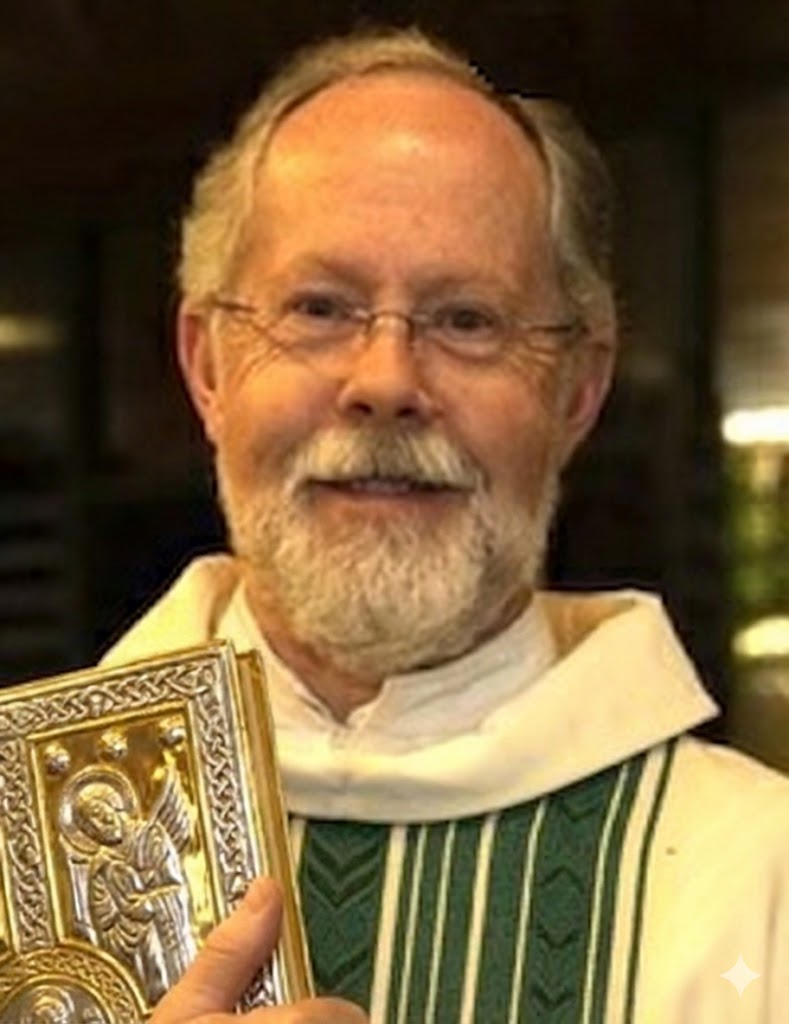
Deacon Peter
McCulloch
(Diocese of Broken Bay)
In the Sermon on the Mount, Jesus issues a stunning clarification: “I have not come to abolish the law… but to fulfill it.” He then proceeds to turn the law inside out, by revealing that the commandments are not just a ceiling (a list of external actions to avoid), but a floor, a foundation for a much more radical call.
He moves the law from a matter of external compliance to one of internal disposition. It’s not just “you shall not kill,” but “you shall not be angry.” It’s not just “you shall not commit adultery,” but “you shall not look with lust.” He reveals that the heart of the law is, and has always been, love.
The deacon, as a servant of both Word and Charity, is the man ordained to live in this space between commandment and compassion. His ministry is to help the Church to live this new fulfilled law. As St. Augustine said, “Love, and do what you will, for the soul trained in love will do nothing to offend it.”
The ‘Heart’ at Mass
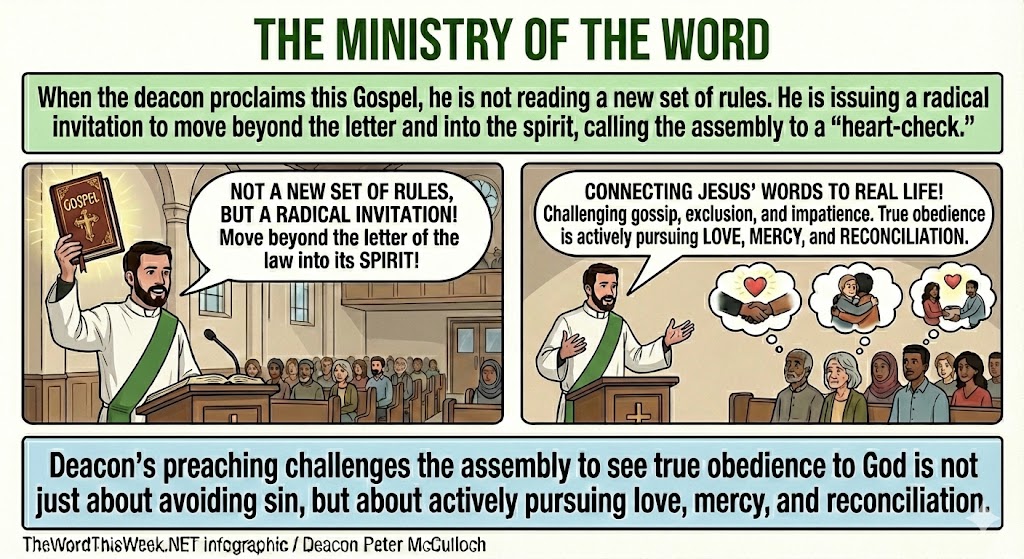
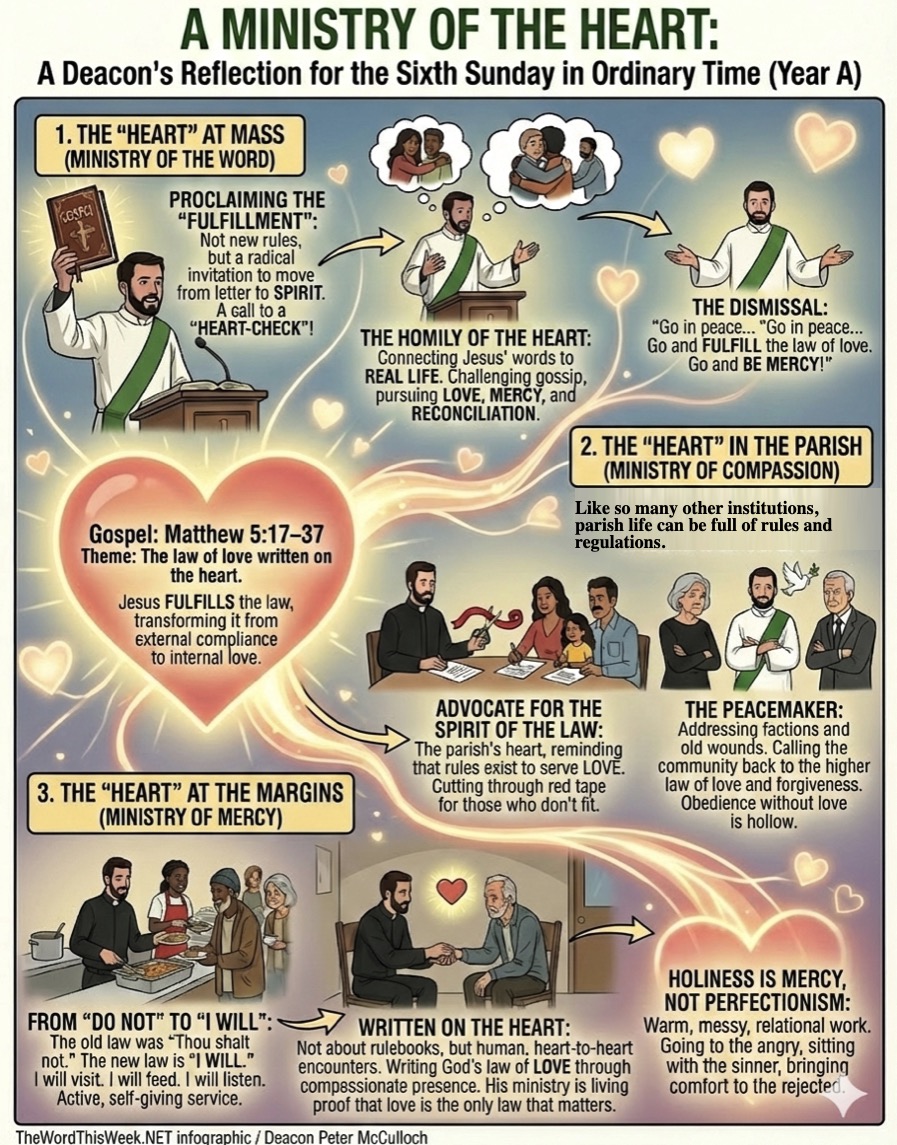
At Mass, the deacon is the herald of this “higher righteousness.”
Proclaiming the “Fulfillment”: When the deacon proclaims this Gospel, he is not reading a new set of rules. He is issuing a radical invitation to move beyond the letter and into the spirit. He is calling the entire assembly to have a “heart-check.”
The Homily of the Heart: The deacon’s preaching on this text is meant to be practical. He is called to connect the anger Jesus speaks of to the all-too-real gossip, exclusion, or impatience within the parish community. He must challenge the assembly to see that true obedience to God is not just about avoiding sin, but about actively pursuing love, mercy, and reconciliation.
The Dismissal: The deacon’s dismissal, “Go in peace, glorifying the Lord by your life,” becomes a direct commission: “Go and fulfill the law of love. Go and be mercy.”
The ‘Heart’ in the Parish
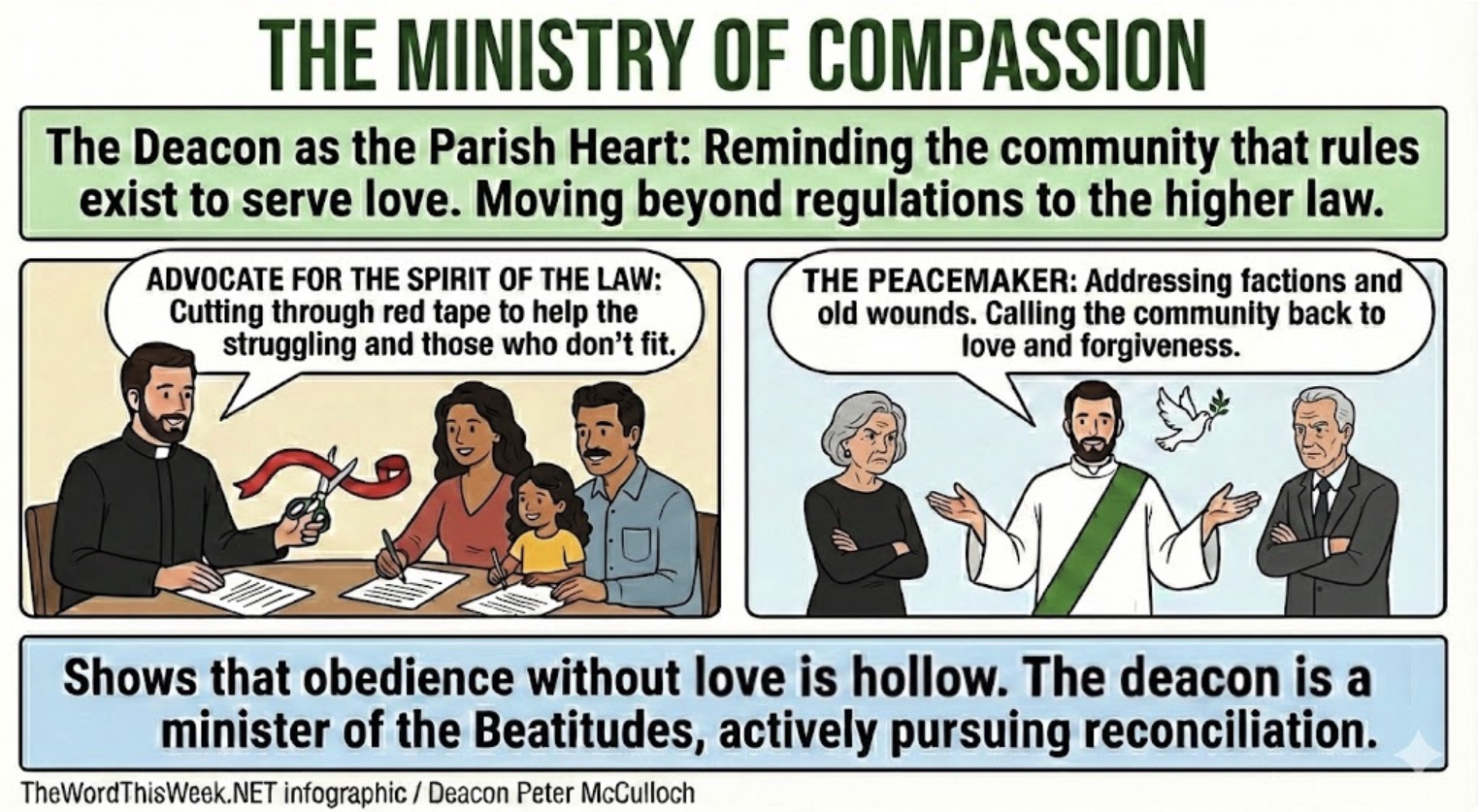
Like so many other institutions, parish life can be full of rules and regulations. The deacon, as the animator of charity, is the parish’s heart, constantly reminding the people why these rules exist: to serve love.
Advocate for the Spirit of the Law: The deacon is often the one who stands with the person who doesn’t seem to fit. He is the advocate for the struggling family seeking a sacrament, the voice that cuts through red tape to get help for someone in crisis. He shows that obedience without love is a hollow, clanging cymbal.
The Peacemaker: Jesus links anger directly to God’s law against killing. The deacon, as a minister of the Beatitudes, is called to be a peacemaker in the parish, the one who addresses the “anger” of factions, disagreements, and old wounds, and calls the community back to the higher law of love and forgiveness.
The ‘Heart’ at the Margins
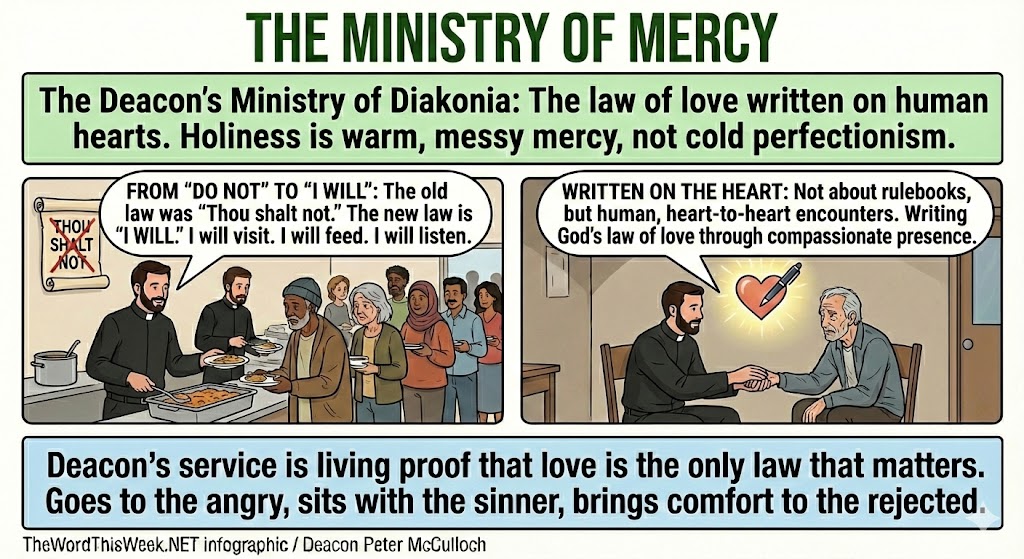
This is where the fulfilled law becomes most tangible. The deacon’s ministry of diakonia is the law of love “written… on human hearts.”
Holiness is Mercy, Not Perfectionism: The deacon’s life reminds the Church that holiness is not cold, sterile perfection. It is the warm, messy, relational work of mercy. He is the one who goes to the “angry” in the prison, who sits with the sinner in the recovery meeting, and who brings comfort to those who society rejects.
From “Do Not” to “I Will”: The old law was often a “thou shalt not.” The deacon’s ministry is a constant “I will.” I will visit you. I will feed you. I will listen to you. This active, self-giving service is the fulfillment of the law.
Written on the Heart: The deacon’s service is not about handing out rulebooks. It’s about a human, heart-to-heart encounter. When he sits with the grieving, listens to the forgotten, or advocates for the voiceless, he is, through his compassionate presence, writing the law of God’s love directly onto the heart of the person he serves. His ministry is living proof that love is the only law that matters.
Basic Norms & Guidelines for Deacons



The Deacon Bridges the
Altar and the Marketplace
This 15-minute podcast episode explores the Sixth Sunday in Ordinary Time through the unique lens of the permanent deacon. The hosts dismantle the idea of religion as a safety checklist, using Jesus’ Sermon on the Mount to argue for a shift from compliance to spiritual fulfillment. By examining the National Directory and reflections from Deacon Peter McCulloch, the conversation positions the deacon as a “living signpost” connecting the altar to the secular world. The episode highlights how deacons, often balancing families and careers, model how to internalize the law of love, challenging listeners to actively choose mercy over mere rule-following in their daily lives.
FEATURED: Deacon Peter McCulloch’s reflection and the National Directory for Permanent Deacons (USCCB)
The Building Code Analogy: Compliance vs. Fulfillment
TONYA (0:00 – 0:06) You know, I was staring at a building code the other day. I’m doing some renovations, and there’s this massive checklist.
ANDREW (0:07 – 0:07) Oh, yeah.
TONYA (0:07 – 0:18) Yeah. Do not use this wire. Do not put a stud more than 16 inches apart. Do not block the exit. And it just hit me. This is exactly how a lot of us treat religion.
ANDREW (0:19 – 0:19) Like a safety inspection.
TONYA (0:20 – 0:32) Exactly. It feels like this low ceiling. You walk in and it’s just a big list of do nots.
Don’t cross this line. Don’t hit your head. And if you just, you know, keep your head down and follow the code, the building won’t collapse.
ANDREW (0:32 – 0:33) And you won’t get fined.
TONYA (0:33 – 0:36) Right. It feels safe, but it also feels incredibly cramped.
ANDREW (0:36 – 0:44) That’s a great image. It’s the compliance mindset. We think that as long as we aren’t actively, you know, burning the house down, we’re good.
TONYA (0:44 – 1:02) Totally. But today, we’re doing a deep dive into a set of readings for the sixth Sunday in Ordinary Time Year A. Specifically, that just takes a sledgehammer to that ceiling.
We’re looking at a moment where Jesus basically looks at that building code and says, that ceiling you’re so worried about hitting, that’s actually just the floor.
ANDREW (1:03 – 1:08) It’s a huge paradigm shift. We’re moving from just compliance to fulfillment.
TONYA (1:08 – 1:09) Right.

The Lens of the Deacon
ANDREW (1:09 – 1:17) And to help us navigate this, we’re not just looking at the theology. We actually have a specific guide for this deep dive. We’re talking about the deacon.
TONYA (1:17 – 1:27) The deacon. Now, I have to be honest, and I think I speak for a lot of people here. For a lot of us, the deacon is just, well, the guy in the diagonal stole who reads the gospel.
ANDREW (1:27 – 1:29) Or maybe the guy who does the announcements.
TONYA (1:29 – 1:37) Yeah, exactly. And that’s why we have the sources we have today. We’re pulling from the National Directory for the Formation, Ministry, and Life of Permanent Deacons.
ANDREW (1:37 – 1:40) Which is pretty much the operating manual for deacons in the U.S. Right.
TONYA (1:40 – 1:49) And we’re also looking at a reflection from a deacon, Peter McCulloch, called the Deacon Digest, and of course, the Sunday readings themselves, Serac, First Corinthians, and Matthew.
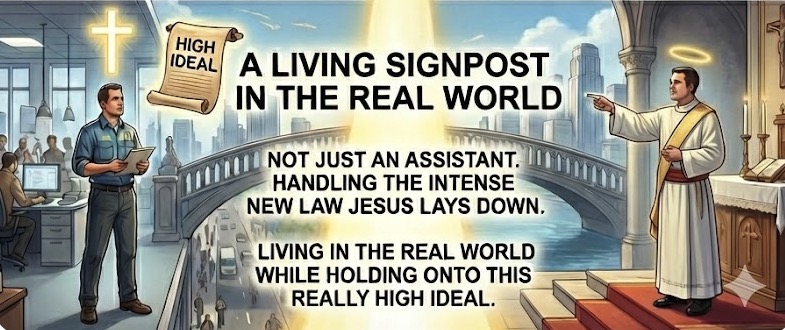
ANDREW (1:50 – 2:01) And our thesis today is that the deacon isn’t just a liturgical assistant. He’s actually the living signpost for how to handle this intense new law that Jesus lays down.
TONYA (2:01 – 2:07) He’s the guy who has to live in the real world while holding onto this really high ideal. So let’s get into the text.
ANDREW (2:08 – 2:08) Let’s do it.
Sirach 15: Agency and Radical Choice
TONYA (2:08 – 2:18) We have to start with a setup. The first reading is from Serac, chapter 15, and it does not mess around. It presents this idea of radical choice.
ANDREW (2:18 – 2:23) It’s incredibly stark. Serac says that God has set before us fire and water.
TONYA (2:24 – 2:26) Fire and water. So elemental.
ANDREW (2:26 – 2:29) And it says, to whichever you choose, stretch forth your hand.
TONYA (2:29 – 2:36) That phrase, stretch forth your hand, it sounds so active. It’s not like fire or water just happens to you. You have to reach for it.
ANDREW (2:36 – 2:46) That is the key. The text says, no one does he command to act unjustly. It’s a massive theological stake in the ground.
It means we’re not puppets.
TONYA (2:46 – 2:47) We have agency.
ANDREW (2:47 – 2:51) We have agency. We’re not just forced to sin by our circumstances or our background.
TONYA (2:51 – 2:59) Which sounds empowering, right? I have the power. But then you realize what that agency is up against because we flip to the gospel, Matthew, chapter five.

The Sermon on the Mount
Moving the Goalposts Inward
ANDREW (3:00 – 3:00) Put a sermon on the mouth.
TONYA (3:00 – 3:03) And honestly, this is where I start sweating.
ANDREW (3:03 – 3:06) This is the hard teaching. This is where the rubber meets the road.
TONYA (3:06 – 3:18) Jesus starts by saying, do not think that I have come to abolish the law. I have come not to abolish, but to fulfill. And then he starts listing these examples that just seem, well, impossible.
ANDREW (3:18 – 3:28) Let’s pause on that word fulfill. It’s so easy to just gloss over it. In his reflection, Deacon McCulloch points out that Jesus is effectively moving the goalposts.
TONYA (3:29 – 3:31) But not further down the field. He’s moving them inward.
ANDREW (3:32 – 3:33) Inward, exactly.
TONYA (3:33 – 3:33) Right.
ANDREW (3:33 – 3:35) From external action to internal disposition.
TONYA (3:35 – 3:36) OK, give us an example.
ANDREW (3:36 – 3:41) OK, so take the first one Jesus gives. You have heard it said, you shall not kill.
TONYA (3:41 – 3:46) Which, frankly, is a low bar. I haven’t killed anyone today, so I’m feeling pretty righteous.
ANDREW (3:46 – 3:54) Congratulations. But Jesus says, but I say to you, whoever is angry with his brother will be liable to judgment. And if you even call someone raka.
TONYA (3:55 – 3:56) Which means what? Like you idiot.
ANDREW (3:57 – 4:02) You empty-headed fool. It’s this term of pure contempt. If you do that, you’re in danger of Gehenna.
TONYA (4:02 – 4:09) That is terrifying. Suddenly, the fact that I rolled my eyes at my coworker implies I’ve broken the commandment against murder.
ANDREW (4:09 – 4:27) Because you’ve harbored the spirit of murder, which is contempt. You’ve mentally just deleted that person’s dignity. Wow.
And he does the same with adultery. It’s not enough to physically avoid the act. You can’t even look with lust.
It’s not enough to not swear a false oath. Your yes just has to mean yes.
TONYA (4:27 – 4:38) It feels like he’s asking for perfection. And when I read this, I don’t feel inspired. I feel, I don’t know, doomed.
The gap between me and what God expects just got a million miles wide.

The Herald of the Gospel
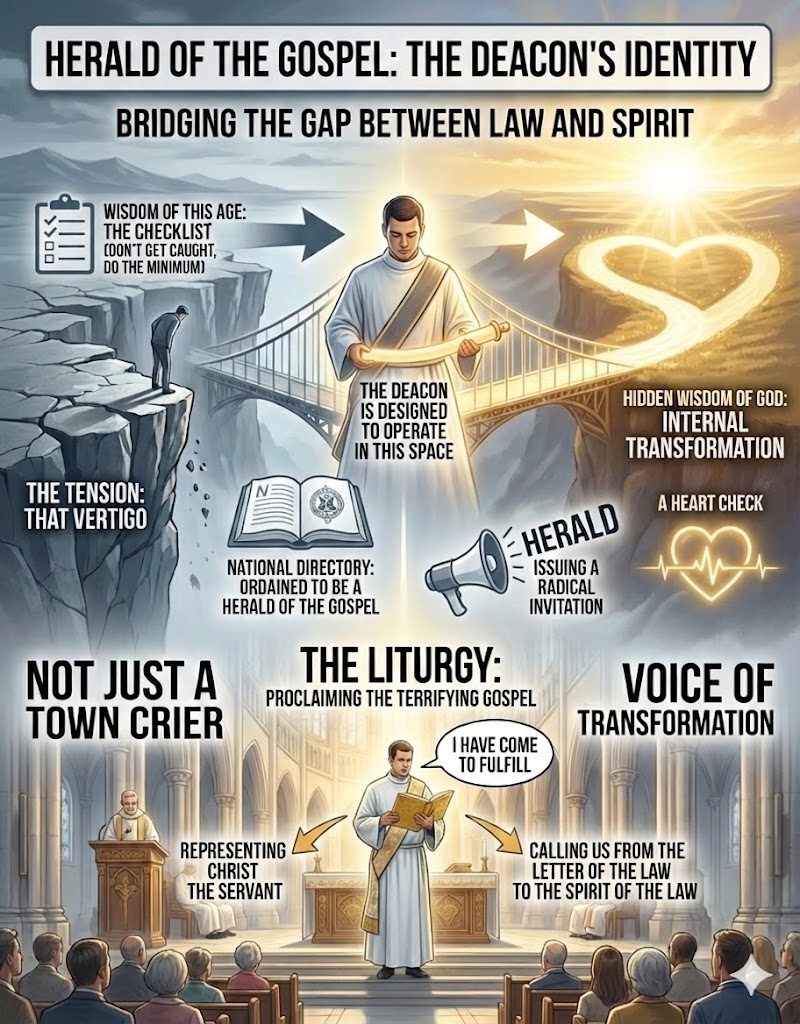
ANDREW (4:38 – 4:49) Who can actually live this? That tension you’re feeling. That vertigo.
That is exactly the space where the deacon is designed to operate. And this brings us to that second reading from 1 Corinthians.
TONYA (4:49 – 4:50) Right. Paul talking about wisdom.
ANDREW (4:51 – 4:56) Paul writes about wisdom not of this age. The wisdom of this age is the checklist. It’s don’t get caught.
TONYA (4:56 – 4:57) Do the minimum.
ANDREW (4:57 – 5:05) Right. But the hidden wisdom of God is this internal transformation. The deacon is the figure ordained to bridge that gap.
TONYA (5:05 – 5:12) Okay. Connect the dots for me. How does the guy in the diagonal stool help me deal with the fact that I’m spiritually murdering people with my anger?
ANDREW (5:12 – 5:19) So we have to look at the deacon’s identity as defined in the national directory. He’s ordained to be a herald of the gospel.
TONYA (5:19 – 5:20) A herald.
ANDREW (5:20 – 5:26) Now think about the liturgy. Who reads this specific terrifying gospel we just talked about?
TONYA (5:26 – 5:31) The deacon does. If he’s present, the priest sits down and the deacon proclaims it.
ANDREW (5:31 – 5:40) Right. But the directory and Deacon McCulloch both emphasize he isn’t just a town crier reading a scroll. He is issuing a radical invitation.
TONYA (5:40 – 5:40) To what?
ANDREW (5:41 – 5:52) To a heart check. When the deacon stands there and reads, I have come to fulfill, he is representing Christ the servant. He is the voice calling us from the letter of the law to the spirit of the law.
Preaching from the Marketplace
TONYA (5:52 – 5:59) And this gets really specific when we look at the homily, right? The directory says a deacon’s preaching should be different from a priest’s.
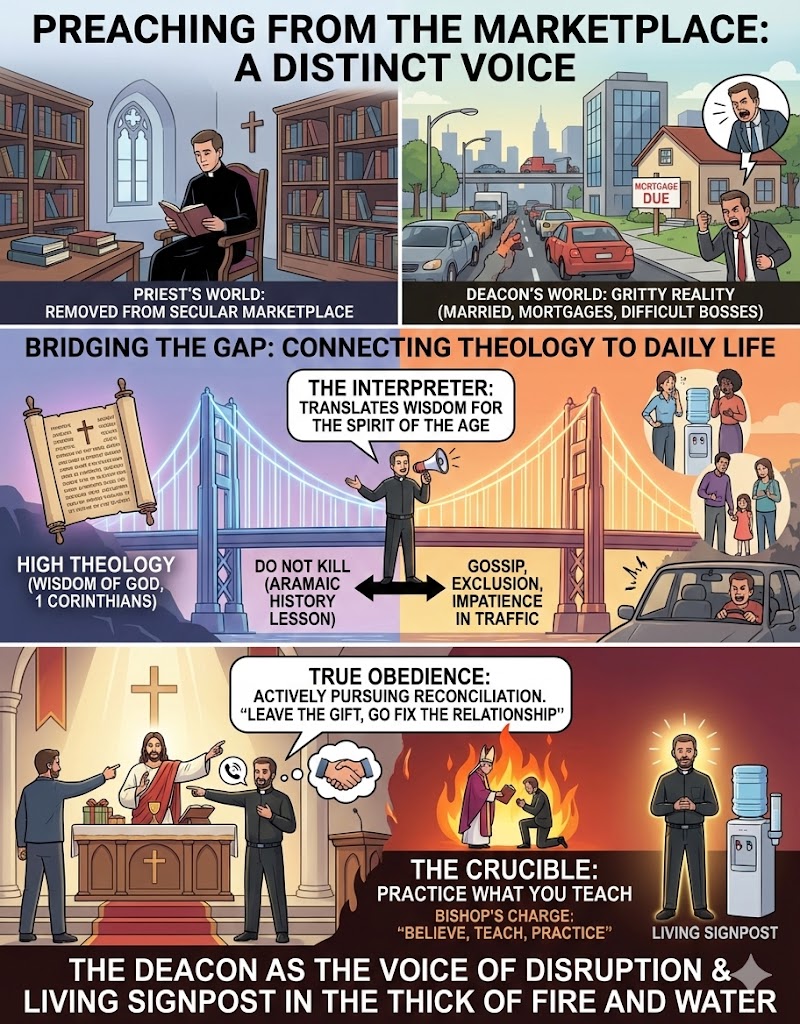
ANDREW (5:59 – 6:13) Yes. Very distinct. See, priests are often, well not always, a bit removed from the secular marketplace.
But deacons, most are married. They have mortgages. They have difficult bosses.
Their preaching is supposed to bridge that high theology with that gritty reality.
TONYA (6:13 – 6:20) So when he’s preaching on this do not kill versus do not be angry passage, he shouldn’t be giving a history lesson on Aramaic.
ANDREW (6:20 – 6:32) Exactly. He should be connecting do not kill to the gossip in the parish council meeting. Or the exclusion of that one family that doesn’t quite fit in.
Or the impatience you feel in the parking lot.
TONYA (6:32 – 6:32) He’s an interpreter.
ANDREW (6:33 – 6:39) He’s an interpreter. He takes the wisdom of God from Corinthians and translates it for the spirit of the age.
TONYA (6:39 – 6:42) It’s easy to be holy in a monastery. It’s hard to be holy in traffic.
ANDREW (6:43 – 6:58) And Deacon Peter puts it this way. The deacon challenges the assembly. That true obedience isn’t checking boxes.
It’s actively pursuing reconciliation. Remember, in the gospel, Jesus says if you’re at the altar, and you remember your brother has something against you.
TONYA (6:58 – 7:00) Leave the gift. That’s such a disruption.
ANDREW (7:01 – 7:10) It’s a massive disruption. Imagine stopping mass to go make a phone call. Jesus is saying, stop the religious performance, go fix the relationship, then come back.
TONYA (7:10 – 7:12) And the deacon is the voice of that disruption.
ANDREW (7:13 – 7:19) He is. In fact, at their ordination, the bishop hands them the book of the gospels and says something very specific.
TONYA (7:19 – 7:28) I remember this from the source. Give me chills. The bishop says, believe what you read, teach what you believe, and practice what you teach.
ANDREW (7:28 – 7:38) Practice what you teach. That is the crucible. That means the deacon has to live this fulfilled law first.
He has to be the guy who doesn’t gossip at the water cooler.
TONYA (7:39 – 7:40) He has to be the living signpost.
ANDREW (7:41 – 7:41) Exactly.
TONYA (7:41 – 7:47) But that’s incredibly hard, especially because, like you said, these guys are in the real world. They’re in the thick of the fire and water.

The Peacemaker: Navigating Anger and Politics
ANDREW (7:48 – 7:54) That’s the beauty of it. The National Directory spends a lot of time on the deacon’s state of life. Most are in the marketplace.
TONYA (7:55 – 7:58) They’re the church’s undercover agents in the secular world.
ANDREW (7:58 – 8:08) You could say that. And this brings us right back to Sirach. Fire and water are set before you.
The deacon is making that choice in the break room at work, not just in the sanctuary.
TONYA (8:09 – 8:15) Right. When the office culture turns toxic, the deacon is there, modeling how to choose life over death.
ANDREW (8:15 – 8:18) And the Deacon Digest calls the deacon the peacemaker.
TONYA (8:18 – 8:22) The peacemaker. That connects directly to the anger passage in Matthew again.
ANDREW (8:22 – 8:31) It does. I mean, think about a typical parish. It’s a community of human beings, so naturally it’s a mess.
There are factions, old wounds.
TONYA (8:32 – 8:35) Oh, there is definitely anger. Church politics can be brutal.
ANDREW (8:35 – 8:47) And the deacon’s job is to address that anger. He’s the one who navigates between the factions, calls the community back to forgiveness. He reminds them that if you hold your brother in contempt, you’re liable to judgment.
TONYA (8:47 – 8:50) So he’s almost like a diplomat for the Holy Spirit.
ANDREW (8:50 – 8:56) A diplomat, but also an advocate for those who don’t fit. You know, the church has red tape sometimes.
TONYA (8:56 – 8:57) All institutions do.
ANDREW (8:57 – 9:11) They do. But the deacon is often the first point of contact for the struggling family or the person who feels marginalized. The directory is very clear about the deacon’s obligation to social justice, the preferential option for the poor.
TONYA (9:11 – 9:17) Deacon Peter had that great line about this. He said the deacon shows that obedience without love is a hollow clanging symbol.
ANDREW (9:18 – 9:27) Yes. If we just follow the rules but don’t have charity, we’ve missed the fulfillment Jesus is talking about. The deacon prevents the law from becoming cold.
TONYA (9:27 – 9:43) I want to push on that coldness idea because I’m still stuck on that part of Matthew 5. Jesus says, if your right eye causes you to sin, tear it out. That sounds pretty cold.
Sounds harsh. So doesn’t that make the deacon the enforcer? Is he the sin police?
Medic, Not Enforcer: The Law of Love
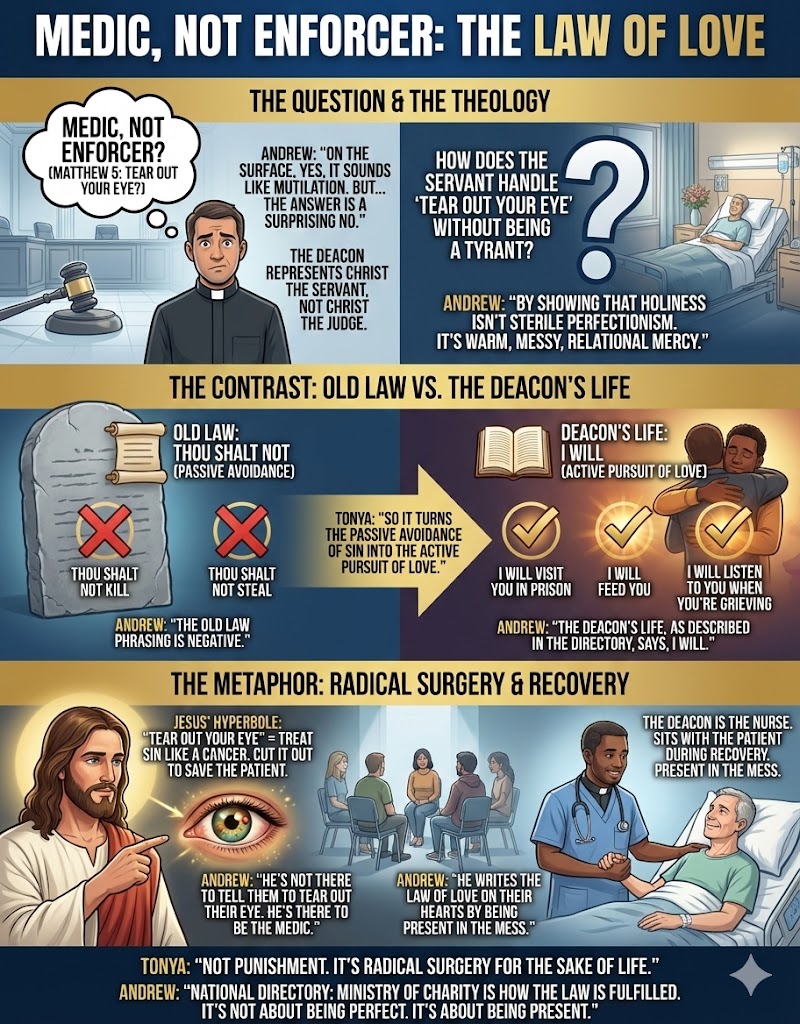
ANDREW (9:44 – 9:58) That is such an important question. Because on the surface, yes, it sounds like mutilation. But if we look at the theology of the diaconate, the answer is a surprising no.
The deacon represents Christ the servant, not Christ the judge.
TONYA (9:59 – 10:03) So how does the servant handle the tear out your eye stuff without being a tyrant?
ANDREW (10:03 – 10:10) By showing that holiness isn’t sterile perfectionism. It’s what the reflection calls warm, messy, relational mercy.
TONYA (10:10 – 10:10) Okay.
ANDREW (10:10 – 10:14) Think about the contrast. The old law phrasing is negative. Thou shalt not.
TONYA (10:14 – 10:15) Thou shalt not kill. Thou shalt not steal.
ANDREW (10:15 – 10:19) But the deacon’s life, as described in the directory, says, I will.
TONYA (10:19 – 10:20) I will.
ANDREW (10:20 – 10:24) I will visit you in prison. I will feed you. I will listen to you when you’re grieving.
TONYA (10:24 – 10:28) I see. So it turns the passive avoidance of sin into the active pursuit of love.
ANDREW (10:29 – 10:41) Exactly. The source material paints this picture of the deacon sitting with someone in a recovery meeting or visiting person in prison who is literally angry and liable to judgment by society.
TONYA (10:41 – 10:43) He’s not there to tell them to tear out their eye.
ANDREW (10:44 – 10:53) No, he’s there to be the medic. When Jesus talks about tearing out the eye, he’s using hyperbole to say, treat sin like a cancer. Cut it out to save the patient.
TONYA (10:53 – 10:56) And the deacon is the nurse holding your hand.
ANDREW (10:56 – 11:03) The deacon is the one who sits with the patient during recovery. He writes the law of love on their hearts by being present in the mess.
TONYA (11:03 – 11:08) That distinction is so helpful. It’s not punishment. It’s radical surgery for the sake of life.
ANDREW (11:08 – 11:16) Right. And the national directory says this ministry of charity is how the law is fulfilled. It’s not about being perfect.
It’s about being present.

Liturgy and Service: The Bridge at the Altar
TONYA (11:17 – 11:27) That makes the new law feel a lot less like a ceiling. But it begs the question, where does the deacon get the strength for this? I mean, dealing with broken people is draining.
ANDREW (11:27 – 11:36) The burnout rate would be incredibly high without the third pillar. We’ve talked about the ministry of the word and charity, but the directory emphasizes the ministry of liturgy.
TONYA (11:36 – 11:37) This is the part about the altar.
ANDREW (11:38 – 11:44) Yes. And the sources give us a very specific visual. At the mass, where does the deacon stand?
TONYA (11:45 – 11:46) To the right of the priest.
ANDREW (11:46 – 11:50) And at the end of the Eucharistic prayer, the big amen moment, what is he doing?
TONYA (11:51 – 11:54) He’s holding up the chalice, the cup, while the priest holds up the paten.
ANDREW (11:54 – 12:06) That symbolism is crucial. The directory states that the deacon sacramentalizes service. His service at the table of the Lord is intrinsically linked to his service at the table of the poor.
TONYA (12:06 – 12:08) So he can’t just be a social worker.
ANDREW (12:08 – 12:19) No, his service flows from the liturgy. He brings the needs of the people to the altar. And then he takes the grace from the altar back out to the people.
He’s a bridge.
TONYA (12:20 – 12:25) There’s one more liturgical moment that stood out to me from the Deacon Digest. It’s at the very end, the dismissal.
The Dismissal: A Command to Go
ANDREW (12:26 – 12:27) Ah, yes. Go in peace.
TONYA (12:28 – 12:31) Usually, I just think that means, okay, mass is over, race you to the donut line.
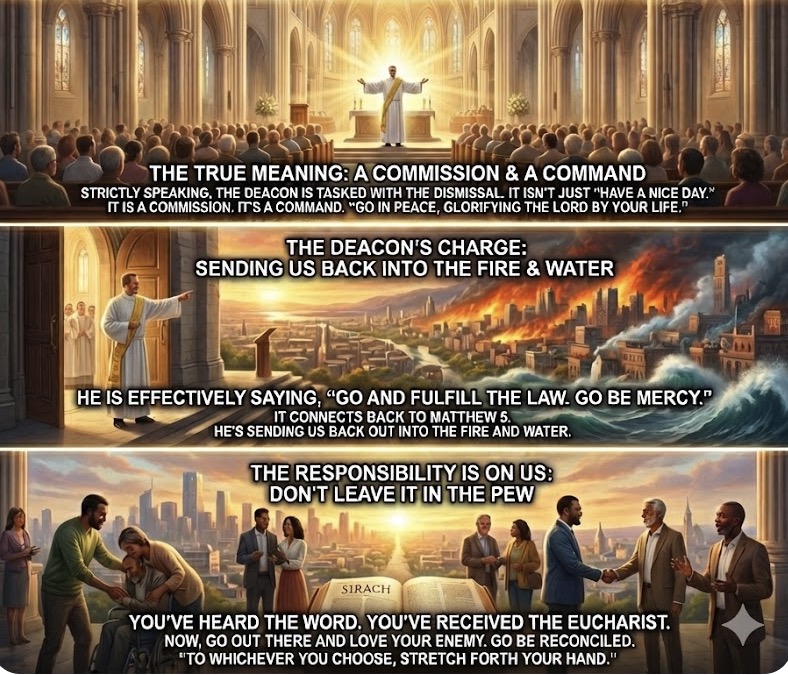
ANDREW (12:31 – 12:40) We all do. But strictly speaking, the deacon is the one tasked with the dismissal. And Deacon Peter argues this isn’t just have a nice day.
It is a commission.
TONYA (12:41 – 12:41) It’s a command.
ANDREW (12:42 – 12:52) It connects right back to Matthew 5. When the deacon says, go in peace, glorifying the Lord by your life, he is effectively saying, go and fulfill the law. Go and be mercy.
TONYA (12:52 – 12:54) He’s sending us back out into the fire and water.
ANDREW (12:54 – 13:05) Exactly. He’s saying, you’ve heard the word. You’ve received the Eucharist.
Now, don’t just avoid sin. Go out there and love your enemy. Go be reconciled with your brother.
Go make your yes mean yes.
TONYA (13:06 – 13:10) It puts the responsibility right back on us. We don’t get to leave it in the pew.
ANDREW (13:10 – 13:16) It does. And that brings us right back to Serac. To whichever you choose, stretch forth your hand.
The Challenge to Choose
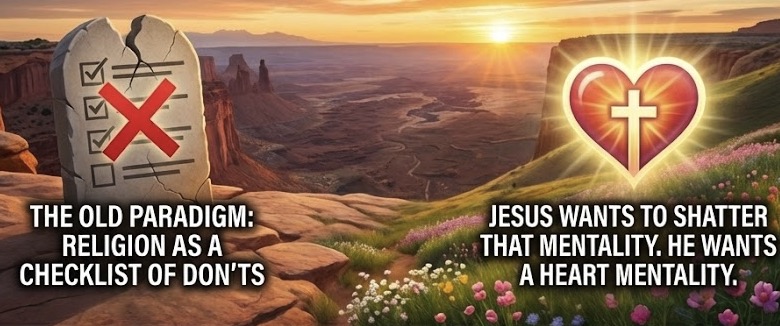
TONYA (13:16 – 13:22) So let’s unpack this. We started this deep dive talking about rules, about religion feeling like a checklist of don’ts.
ANDREW (13:23 – 13:30) And we’ve seen through the lens of the deacon that Jesus wants to shatter that checklist mentality. He wants to replace it with a heart mentality.
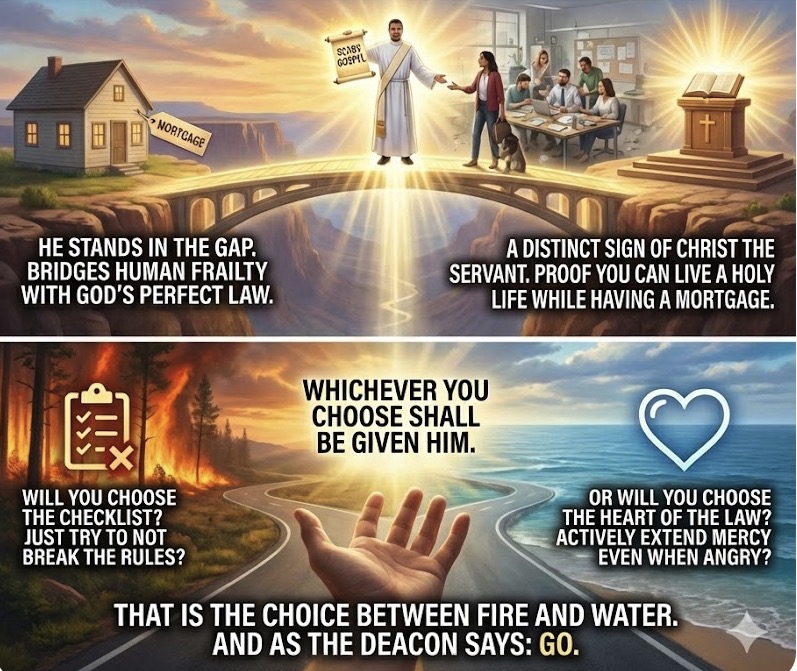
TONYA (13:30 – 13:37) And the deacon is the living signpost for that. He stands in the gap. He reads the scary gospel.
But then he goes out and lives the messy charity.
ANDREW (13:37 – 13:46) He bridges our human frailty with God’s perfect law. And he shows us that the gap isn’t crossed by our own perfectionism, but by service and mercy.
TONYA (13:47 – 13:57) I think that’s the aha moment for me. The deacon isn’t just an assistant priest. He’s a distinct sign of Christ the servant.
He’s proof that you can live a holy life while having a mortgage.
ANDREW (13:58 – 14:07) And that is a powerful witness for the rest of us in the pews. It removes our excuses. If the deacon can choose water instead of fire in the marketplace, so can we.
TONYA (14:07 – 14:14) So here is the challenge for you listening today. We go back to Sirach. Whichever you choose shall be given him.
ANDREW (14:14 – 14:28) The deacon’s life asks you a question. When you are in your workplace tomorrow, or dealing with a family crisis, or just sitting in a traffic jam, will you choose the checklist? Will you just try to not break the rules?
TONYA (14:28 – 14:32) Or will you choose the heart of the law? Will you choose to actively extend mercy even when you’re angry?
ANDREW (14:33 – 14:38) That is the choice between fire and water. And as the deacon says at the end of Mass, go.
TONYA (14:38 – 14:39) Thanks for diving deep with us today.
ANDREW (14:39 – 14:40) It was a pleasure.
The National Directory for the Formation, Ministry, and Life of Permanent Deacons in the United States of America

For a deacon serving at Ash Wednesday Mass, your responsibilities include standard diaconal duties alongside several unique rubrics, most notably the omission of the Penitential Act and the Imposition of Ashes.
Here is a chronological guide to your specific duties:
1. Introductory Rites
- No Penitential Act: There is no Penitential Act (Confiteor/Kyrie) on Ash Wednesday. After the Sign of the Cross and Greeting, the priest typically moves directly to the Collect (Opening Prayer). You should not invite the people to “acknowledge our sins.”
2. Liturgy of the Word
- Gospel: You proclaim the Gospel as usual.
- Homily: If you are preaching, your homily should naturally transition into the Blessing of Ashes, rather than ending with a hard stop.
3. Blessing & Imposition of Ashes
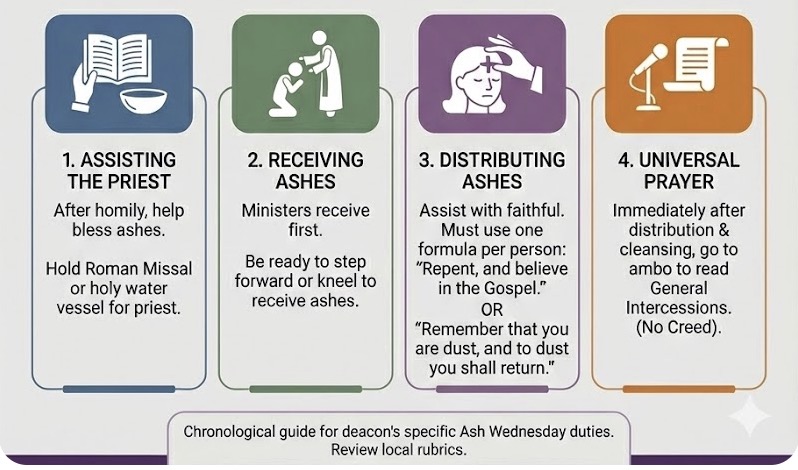
- Assisting the Priest: After the homily, the priest blesses the ashes. You may be required to hold the Roman Missal or the vessel of holy water for him.
- Receiving Ashes: The priest will typically impose ashes on you and the other ministers first. You should be ready to step forward or kneel to receive them.
- Distributing Ashes: You assist in imposing ashes on the faithful. You must say one of the two scriptural formulas for each person (do not say nothing):
- “Repent, and believe in the Gospel.”
- “Remember that you are dust, and to dust you shall return.”
- Universal Prayer: Immediately after the distribution is finished (and hands are cleansed), you go to the ambo to read the Universal Prayer (General Intercessions). There is no Creed on Ash Wednesday.
4. Liturgy of the Eucharist
- Preparation: You prepare the altar as usual.
- Hand Cleansing: It is practical to have a lemon slice, wet wipe, or soapy water available at the credence table to clean your thumb after distributing ashes before you handle the sacred vessels and the bread/wine.
5. Concluding Rites
- Prayer Over the People: During Lent, the priest often uses the “Prayer over the People” instead of the standard blessing. If he does, you instruct the assembly by saying:
- “Bow down for the blessing.”
- Dismissal: You offer the dismissal as usual. A common choice for Lent is “Go in peace, glorifying the Lord by your life.”
Vesture: You wear violet vestments (stole and dalmatic).