
Bible Study
Bible Study
Bible Study
Videos

Matt Zemanek


Fr. Bryan Kujawa

SOURCE: Fr. Bryan Kujawa’s Archives. Switch videos using icon in the upper right corner.
How to Choose a Catholic Study Bible

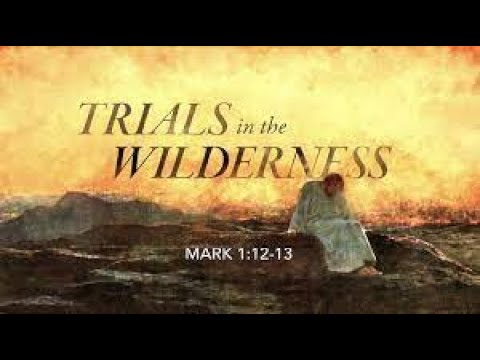
Keith Nester

SOURCE: YouTube Video Playlist
The Rainbow
EXCERPT: The beginning of God’s Covenant with humanity, symbolized by the rainbow, has unfortunately been perverted in our culture and associated with acceptance of sin. This is a tactic of the devil, who seeks to distort and corrupt the things of God for his own purposes. It is tragic that as Christians, we have sometimes had to distance ourselves from this symbol due to its misrepresentation. Nevertheless, when I see the rainbow, I am reminded of God’s promise to start anew. This is what baptism is all about – a fresh start, a new birth, and the wiping away of the old.

Jeff
Cavins

Bulletin
Study Guide

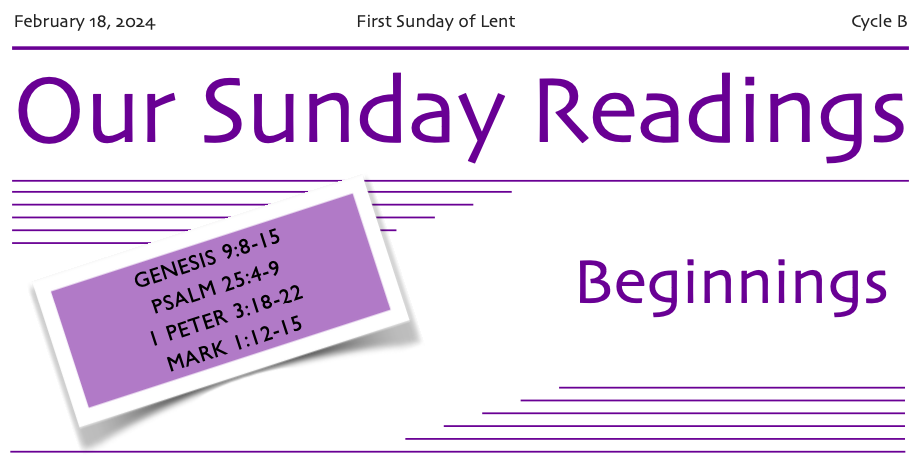

Outlines and Backgrounds

Outlines and Backgrounds

OUTLINE
I. God establishes a covenant with Noah and his descendants (Gn 9:8-9)
A. God promises never to destroy the Earth by a flood again
B. God commands Noah and his family to be fruitful and multiply
II. God sets a sign for the covenant (Gn 9:12-13)
A. The rainbow is designated as a sign of the covenant
B. The rainbow serves as a reminder of God's promise to all generations
III. God reaffirms the covenant with Noah (Gn 9:14-15)
A. God promises to remember and keep His covenant
B. The covenant applies to every living creature on Earth
Historical Context

This passage unfolds after the Great Flood, a catastrophic event that wiped out most life on Earth. Noah, a righteous man, obeyed God's instructions to build an ark and gather animals in pairs. After the floodwaters receded, Noah and his family, along with the animals, exited the ark and started a new chapter of life. The establishment of the covenant in Genesis 9:8-15 marks a significant moment in human history as it outlines God's commitment to humanity and His promise to never unleash such a devastating flood again.
Cultural Context

The ancient Near Eastern context heavily influenced the cultural understanding of covenants during the time Genesis was written. Covenants were common agreements made between two parties, often in a legal context. In this passage, God establishes a covenant with Noah, which demonstrated His commitment to maintaining a relationship with His creation. The concept of a covenant signified a binding agreement, and the rainbow served as a visible symbol of God's faithfulness and promise to protect and preserve all life. The inclusion of every living creature in the covenant emphasizes God's compassion and care for all creation
SOURCE: Content written in collaboration with OpenAI's GPT-3.5 model.

OUTLINE
I. Christ suffered for sins once for all
- He died for the unrighteous, bringing them to God
II. Christ's victory over death and proclamation to the spirits in prison
- After being made alive in the Spirit, Jesus proclaimed His victory over death to imprisoned spirits
- These spirits were disobedient during the time of Noah's flood
III. Water's symbolism of baptism and salvation
- Just as the floodwaters saved Noah and his family, baptism now saves believers
- Baptism is not a removal of dirt from the body, but a pledge of a clear conscience toward God
Historical Context
This passage in 1 Peter was written during a time when Christians faced persecution in the Roman Empire. The letter serves to encourage and strengthen believers to endure suffering for their faith. Peter references the story of Noah and the flood, drawing parallels between the salvation brought through water in Noah's time and the salvation brought through baptism in the present.
Cultural Context
In the ancient Roman world, baptism was a significant ceremony that marked one's entrance into a new religious community. By equating baptism with salvation, Peter emphasizes the transformative power of faith in Christ. The mention of spirits in prison reflects the early Christian belief that Jesus, after His crucifixion, proclaimed His victory over death to imprisoned souls in the afterlife. This concept likely resonated with new Christians who were familiar with ideas of spirits and the netherworld prevalent in their Greco-Roman cultural milieueyes.
SOURCE: Content written in collaboration with OpenAI's GPT-3.5 model.

OUTLINE
I. Jesus driven to the wilderness by the Spirit - Mark 1:12
A. The Spirit leads Jesus to the wilderness
B. Purpose of the wilderness - preparation and testing
II. Tempted by Satan for forty days - Mark 1:13
A. Jesus remains in the wilderness for forty days and is tempted by Satan
B. Satan's efforts to distract and challenge Jesus
C. Jesus resists temptation and remains faithful to God
III. Jesus proclaims the Good News of God - Mark 1:14-15
A. After John the Baptist's arrest, Jesus begins His ministry in Galilee
B. Jesus preaches the Good News of God's kingdom
C. Repentance and belief in the Gospel as requirements for salvation
Historical Context
A. Timeframe: Early 1st century AD
B. Roman occupation of Israel during Jesus' life
C. Roman rulers: Emperor Tiberius (14–37 AD) and Governor Pontius Pilate (26–36 AD).
Cultural Context
A. Jewish religious beliefs and practices
1. Belief in a coming Messiah
2. Importance of adherence to the Law of Moses
3. Temple worship in Jerusalem
B. Influence of Roman culture and its impact on the region
1. Roman laws and governance system
2. Greco-Roman religious influences
3. Taxation and economic impact on individuals and society
SOURCE: Content written in collaboration with OpenAI's GPT-3.5 model.
Wikipedia
Key Words

BIBLE
STUDY
Gospel Reading
First Reading
Word
Sunday
Word-Sunday
by Larry Broding
1st Reading: Noah’s Covenant
2nd Reading: Christ’s Power In And Through Death
Gospel: The Temptation
Questions for
Small Groups
Discussion Questions
Small Group Questions
1st Sunday of Lent B
Vince Contreras

In the 2nd reading, what inference does St. Peter draw about baptism from the story of Noah? By what power does he say this is accomplished?
What is the significance of the number “forty” in Mark 1:13? What other great events in salvation history
revolve around this number (Genesis 7:11-12; Exodus 25:15-18; Numbers 15:26-35; 1 Kings 19:1-8)?
What is the common preaching theme of John the Baptist (Mark 1:2-4), Jesus (verse 15), and the first disciples (Acts 2:37-38)? What does it mean to “repent”?
Why do you think it is important for us to hear about Jesus’ temptation by Satan in the wilderness? What benefit is it for us to undergo our own temptations (Hebrews 12:3-11; James 1:2-4)?
Besides Satan, where do temptations come from (1 John 2:15-17; Romans 7:15-25a)?
After his temptation, Jesus was ministered to by angels (verse 13). When we have successfully resisted temptation, are we able to see how God sustains and rewards us? How?
Both John the Baptist (Mark 1:6) and Jesus followed practices of self-discipline for religious reasons. What self-disciplining practices do you use for religious reasons? How have they influenced your own “change of heart” (repentance)?
SOURCE: SundayScriptureStudy.com / used with permission
Small Group Questions
1st Sunday of Lent B
Anne Osdieck

FIRST READING
1. Why do you think God chose a rainbow to be a sign of this covenant? Was it a sign for future generations, us included, as well as Noah’s family?
SECOND READING
2. Compare Noah with Christ: Noah brings people out of the flood into a new creation; Christ to a new life or transformative experience through the waters of baptism.ur actions?
GOSPEL
3. “He was among the wild beasts, and the angels ministered to him.” What are the “wild beasts” today? Are they personal wild beasts or community ones? Climate crises? Pandemic? Racial discrimination? What angels minister to you? To whom do you yourself minister?
SOURCE: Sunday Web Site at Saint Louis University
Small Group Questions
1st Sunday of Lent B
Fr. Clement
Thibodeau
Discuss the experiences that for you have been times when you had to confront the dimensions of your life that were not yet fully surrendered to God. Has there been for you a time of testing where you know now that God was refining you so that you would more completely give yourself over to God’s love? Identify the persons who were like angels comforting you during these trials.
Tell stories from your experience that illustrate how God works to support us through the love and comfort that comes from family, friends, and parish community, as we exercise our discipleship. Who are the people who represent God’s angels to you today whenever you need assurance and comfort?
Imagine out loud what Jesus’ initial preaching would be like today if he began his public ministry in Gardiner or Grand Isle, Maine, at the beginning of Lent. What does the Church need to hear from the Lord at this particular time in its journey of faith? Spell out some of the elements of the
message that Mark would have us hear today
SOURCE: Portland Diocese
Small Group Questions
1st Sunday of Lent B
Fr. Eamon Tobin

In the Great Flood, God cleanses creation polluted
by sin. How do we pollute creation today? How aware
are you of environmental issues? Do you recycle? Do
you conserve water and use reusable items?
In the second reading, Peter speaks of baptism.
What does being a baptized Catholic mean to you? Do
you know the date of your Baptism? If not, consider
finding it out.
Some, if not many people find it hard to believe that Jesus was really tempted to go against his Father’s will for his life. Any comments on this? Does the reality of Jesus’ temptations make it easier to believe that Jesus was like us in all things except sin?
Jesus’ temptations reminds us that the spiritual life is indeed spiritual warfare. Our nobler or Christ self is engaged in a fierce battle with the world the flesh and the devil. How does this play out in your life? If possible be concrete. For example, a part of us may not want to forgive a hurt or share our blessings with others.
 Highlight text or double-click a paragraph anywhere on the site to ADD TO NOTES. You can also click ASK AI to copy your selection to the clipboard with a command prompt, ready for you to paste manually into the chat above.