
Featured
Videos


Commentary
Highlights


Fr. George
Corrigan
OFM

Fr. Corrigan, OFM

This page is an easy place to access the commentaries that I have prepared for the Gospel of Mark. The commentaries are arranged by Liturgical Year B order. It is not a complete coverage of the Gospel… but who knows… maybe one day. You are free to download and use for Bible Study, to evangelize, or anything that gives Glory to God. Enjoy.
Michal E.
Hunt

Catena
Aurea
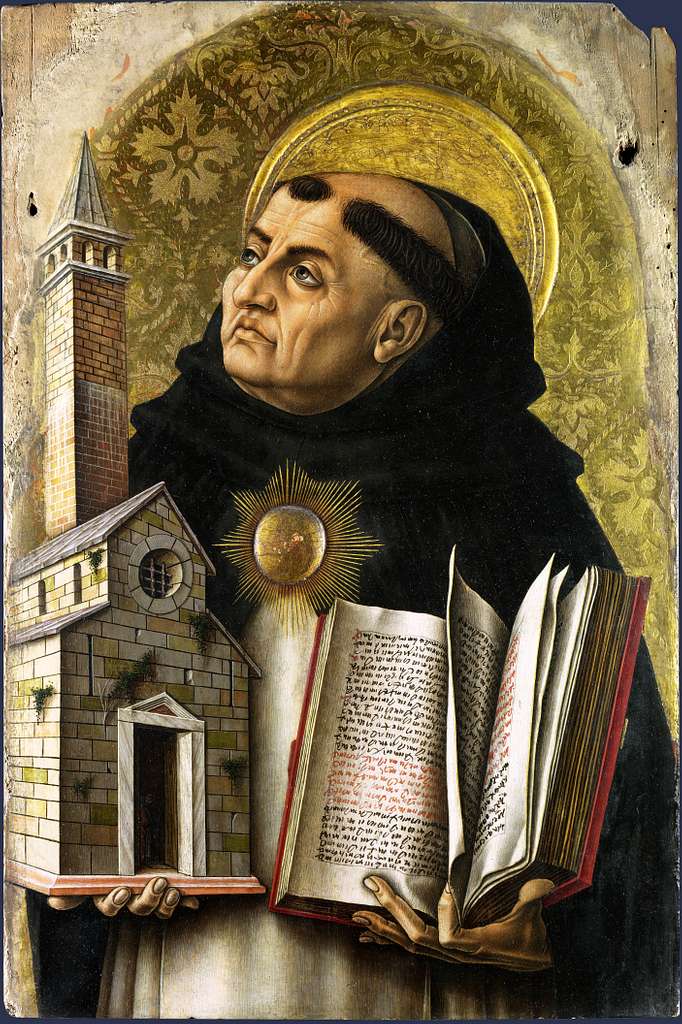
Compiled by
St. Thomas
Aquinas
Thomas Aquinas compiled this opus from sermons and commentaries on the Gospels written by the early Church Fathers, arranging their thoughts in such a way that they form a continuous commentary on each Gospel.
1:12–13
12. And immediately the spirit driveth him into the wilderness.
13. And he was there in the wilderness forty days, tempted of Satan; and was with the wild beasts; and the angels ministered unto him.
CHRYSOSTOM. (Hom in Matt. xiii) Because all that Christ did and suffered was for our teaching, He began after His baptism to dwell in the wilderness, and fought against the devil, that every baptized person might patiently sustain greater temptations after His baptism, nor be troubled, as if this which happened to Him was contrary to His expectation, but might bear up against all things, and come off conqueror. For although God allows that we should be tempted for many other reasons, yet for this cause also He allows it, that we may know, that man when tempted is placed in a station of greater honour. For the Devil approaches not save where he has beheld one set in a place of greater honour; and therefore it is said, And immediately the Spirit drove him into the wilderness. And the reason why He does not simply say, that He went into the wilderness, but was driven, is, that thou mayest understand that it was done according to the word of Divine Providence. By which also He shews, that no man should thrust himself into temptation, but that those who from some other state are as it were driven into temptation, remain conquerors.
BEDE. (in Marc. i. 5) And that no one might doubt, by what spirit he said that Christ was driven into the wilderness, Luke has on purpose premised, that Jesus being full of the Spirit returned from Jordan, (Luke 4:12) and then has added, and was led by the Spirit into the wilderness; lest the evil spirit should be thought to have any power over Him, who, being full of the Holy Spirit, departed whither He was willing to go, and did what He was willing to do.
CHRYSOSTOM. (in Mat. Hom. xiii) But the Spirit drove Him into the wilderness, because He designed to provoke the devil to tempt Him, and thus gave Him an opportunity not only by hunger, but also by the place. For then most of all does the devil thrust himself in, when he sees men remaining solitary.
BEDE. (ubi sup.) But He retires into the desert that He may teach us that, leaving the allurements of the world, and the company of the wicked, we should in all things obey the Divine commands. He is left alone and tempted by the devil, that He might teach us, that all that will live godly in Christ Jesus shall suffer persecution; (2 Tim. 3:12) whence it follows, And he was in the wilderness forty days and forty nights, and was tempted of Satan. But He was tempted forty days and forty nights, that He might shew us, that as long as we live here and serve God, whether prosperity smile upon us, which is meant by the day, or adversity smite us, which agrees with the figure of night, at all times our adversary is at hand, who ceases not to trouble our way by temptations. For the forty days and forty nights imply the whole time of this world, for the globe in which we are serving God is divided into four quarters. Again, there are Ten Commandments, by observing which we fight against our enemy, but four times ten are forty.
There follows, and he was with the wild beasts.
PSEUDO-CHRYSOSTOM. (Vict. Ant. e Cat. in Marc.) But He says this to shew of what nature was the wilderness, for it was impassable by man and full of wild beasts. It goes on; and angels ministered unto him. For after temptation, and a victory against the devil, He worked the salvation of man. And thus the Apostle says, Angels are sent to minister for them who shall be heirs of salvation. (Heb. 1:14) We must also observe, that to those who conquer in temptation angels stand near and minister.
BEDE. (ubi sup.) Consider also that Christ dwells among the wild beasts as man, but, as God, uses the ministry of Angels. Thus, when in the solitude of a holy life we bear with unpolluted mind the bestial manners of men, we merit to have the ministry of Angels, by whom, when freed from the body, we shall be transferred to everlasting happiness.
PSEUDO-JEROME. Or, then the beasts dwell with us in peace, as in the ark clean animals with the unclean, when the flesh lusts not against the spirit. After this, ministering Angels are sent to us, that they may give answers and comforts to hearts that watch.
1:14–15
14. Now after that John was put in prison, Jesus came into Galilee, preaching the Gospel of the kingdom of God,
15. And saying, The time is fulfilled, and the kingdom of God is at hand: repent ye, and believe the Gospel.
PSEUDO-CHRYSOSTOM. (Vict. Ant. e Cat. 1 Marc.) The Evangelist Mark follows Matthew in his order, and therefore after having said that Angels minister, he subjoins, But after that John was put into prison, Jesus came, &c. After the temptation and the ministry of Angels, He goes back into Galilee, teaching us not to resist the violence of evil men.
THEOPHYLACT. And to shew us that in persecutions we ought to retire, and not to await them; but when we fall into them, we must sustain them.
PSEUDO-CHRYSOSTOM. (Vict. Ant. e Cat. in Marc.) He retired also that He might keep Himself for teaching and for healing, before He suffered, and after fulfilling all these things, might become obedient unto death.
BEDE. (ubi sup.) John being put in prison, fitly does the Lord begin to preach: wherefore there follows, Preaching the Gospel, &c. For when the Law ceases, the Gospel arises in its steps.
PSEUDO-JEROME. When the shadow ceases, the truth comes on; first, John in prison, the Law in Judæa; then, Jesus in Galilee, Paul among the Gentiles preaching the Gospel of the kingdom. For to an earthly kingdom succeeds poverty, to the poverty of Christians is given an everlasting kingdom; but earthly honour is like the foam of water, or smoke, or sleep.
BEDE. (ubi sup.) Let no one, however, suppose that the putting of John in prison took place immediately after the forty days’ temptation and the fast of the Lord; for whosoever reads the Gospel of John will find, that the Lord taught many things before the putting of John in prison, and also did many miracles; for you have in his Gospel, This beginning of miracles did Jesus; (John 2:11) and afterwards, for John was not yet cast into prison. (John 3:24) Now it is said, that when John read the books of Matthew, Mark, and Luke, he approved indeed the text of the history, and affirmed that they had spoken truth, but said that they had composed the history of only one year after John was cast into prison, in which year also he suffered. Passing over then the year of which the transactions had been published by the three others, he related the events of the former period, before John was cast into prison. When therefore Mark had said that Jesus came into Galilee, preaching the Gospel of the kingdom, he subjoins, saying, Since the time is fulfilled, &c.
PSEUDO-CHRYSOSTOM. (Vict. Ant. Cat. in Marc.) Since then the time was fulfilled, when the fulness of time was come, and God sent his Son, it was fitting that the race of man should obtain the last dispensation of God. And therefore he says, for the kingdom of heaven is at hand. (Orig. in Matt. tom. x. 14. v. Orig. de Orat. 25, 26. in Matt. t. 12 14). But the kingdom of God is essentially the same as the kingdom of heaven, though they differ in idea. For by the kingdom of God is to be understood that in which God reigns; (non occ. v. Chrys, in Matt. Hom. 19. in c. 6:9.). and this in truth is in the region of the living, where, seeing God face to face, they will abide in the good things now promised to them; whether by this region one chooses to understand Love, or some other confirmatione of those who put on the likeness of things above, which are signified by the heavens. () For it is clear enough that the kingdom of God is confined neither by place nor by time.
THEOPHYLACT. Or else, the Lord means that the time of the Law is completed; as if He said, Up to this time the Law was at work; from this time the kingdom of God will work, that is, a conversation according to the Gospel, which is with reason likened to the kingdom of heaven. For when you see a man clothed in flesh living according to the Gospel, do you not say that he has the kingdom of heaven, which is not meat and drink, but righteousness and peace and joy in the Holy Ghost? (Rom. 14:17)
The next word is, Repent.
PSEUDO-JEROME. For he must repent, who would keep close to eternal good, that is, to the kingdom of God. For he who would have the kernel, breaks the shell; the sweetness of the apple makes up for the bitterness of its root; the hope of gain makes the dangers of the sea pleasant; the hope of health takes away from the painfulness of medicine. They are able worthily to proclaim the preaching of Christ who have deserved to attain to the reward of forgiveness; and therefore after He has said, Repent, He subjoins, and believe the Gospel. For unless ye have believed, ye shall not understand.
BEDE. (ubi sup.) Repent, therefore, and believe; that is, renounce dead works; for of what use is believing without good works? The merit of good works does not, however, bring to faith, but faith begins, that good works may follow.
ORIGINAL: e-Catholic 2000
STCB Notes


Sermon
Writer

Mark 1:9-15 Exegesis
RICHARD NIELL DONOVAN was a Disciples of Christ clergyman who published SermonWriter, for a paid subscription, from 1997-2020. After he died, his family has generously provided his resources without subscription.