Bible Study ✨
DECEMBER 8, 2024
DECEMBER 8, 2024
Sunday Readings Bible Study
Sunday Readings Bible Study
- VIDEO
SERIES - LECTIONARY
OUTLINES - LECTOR
PREP - DISCUSSION
QUESTIONS - FIRST
READING - SECOND
READING - GOSPEL
DESERT
This week’s drop
cap acrostic.
⬇️ Outside the Chapel
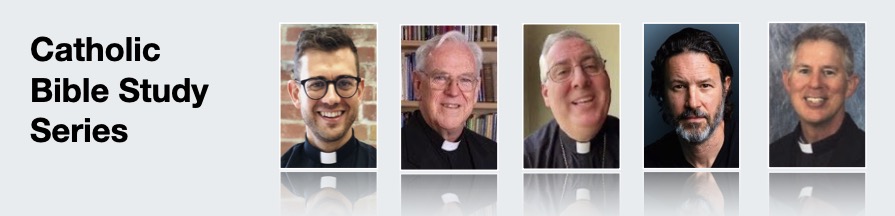
Fr. Rob
Alyssa and
Justine
During Advent, the significance of spiritual preparation for Jesus’ arrival is highlighted by focusing on key aspects: John the Baptist’s message of repentance, contemplating cherished Christmas customs, and recognizing the necessity of authentic transformation and generosity in our daily lives.
SOURCE: Outside the Chapel

⬇️ Fr. Geoffrey Plant
Fr. Geoffrey
Plant
Embodying the spirit of anticipation during Advent, the Christian community reflects on the imminent return of Christ and examines the crucial role of John the Baptist in preparing the way for Jesus’ ministry. This preparation unfolded amidst significant historical and political upheaval, ultimately underscoring the global scope of salvation foreseen in scriptural prophecies.
SOURCE: Fr. Geoffrey Plant

⬇️ Luke’s Gospel for All Ages
Bishop Mark
0’Connell
Setting the groundwork for the New Testament, the Old Testament underscores John the Baptist’s vital role as a precursor to Jesus’ arrival. By fervently advocating repentance and personal transformation, John prepares the way for the Messiah, guiding followers to recognize and accept the life-altering impact of Christ’s divine presence.

⬇️ Centre for Christian Spirituality
Bishop D. Walker
Fr John Frauenfelder
Mrs Virginia Ryan
Emphasizing the significance of self-examination, absolution, and imparting the essence of Christmas amidst seasonal disturbances, John the Baptist’s message of repentance in the wilderness is crucial in preparing hearts and minds to welcome Jesus. This call serves as a reminder to prioritize spiritual growth during a time when material concerns can overshadow the true meaning of the season.

⬇️ Unpacking the Mass
Kieth
Nester
Repentance and Reflection epitomize the essence of Advent, as it serves as a gentle reminder to devote oneself to introspection, spiritual cleansing, and aligning one’s heart with the divine will of God in anticipation of the coming of Christ.
SOURCE: Unpacking the Mass

⬇️ Fr. Tim Peters
Fr. Tim
Peters
The arrival and infancy of Jesus serve as fulfillment of biblical prophecies, confirming his identity as the Messiah. Recognizing his divine significance through faith, prayer, and repentance becomes essential in embracing the transformative power of his message, underscoring the ultimate role of Jesus in salvation history.
SOURCE: Fr. Tim Peters


INTRO | READING 1 | READING 2 | GOSPEL
Fr. Andrew Ricci’s Podcast
Fr. Andrew, ordained in 1997 as a priest for the Diocese of Superior, serves as the Rector of the Cathedral of Christ the King.
1st Reading – Baruch 5:1-9
- The prophet encourages the people to take off the robe of mourning and misery and put on the splendor of glory from God.
- God has commanded; he is leading the people in joy and bringing them back in glory.
Psalm 126:1-6
- “The Lord has done great things for us; we are filled with joy.”
- The people who sow in tears shall reap rejoicing.
2nd Reading – Philippians 1:4-6,8-11
- Paul confidently prays with joy for the people that they will continue their good work until the day of Christ Jesus.
- This good work includes love, knowledge, discernment, purity and the fruit of righteousness.
Gospel – Luke 3:1-6
- Luke sets the context of John the Baptist with the names of history, such as Tiberius Caesar, Pontius Pilate and the high priesthood of Annas and Caiaphas.
- John’s ministry is understood in light of the words of Isaiah…prepare the way of the Lord!
SOURCE: Study, Pray, Serve
FIRST
READING
The Book of Baruch promises the restoration of Jerusalem and urges the people to rejoice, for God will lead them with mercy and righteousness.
Clipart by Fr. Richard Lonsdale
INTRO | READING 1 | READING 2 | GOSPEL
Baruch 5:1-9
The content provided below has been generated using Artificial Intelligence for the WORD THIS WEEK. While it complements Fr. Andrew’s podcast and can enhance your study, please note that it is not officially associated with him or the podcast.
RESTORATION

Baruch’s Proclamation of Restoration ✨
I. Baruch’s Proclamation of Hope
– Baruch urges Jerusalem to take off garments of mourning and distress (Baruch 5:1)
– He tells Jerusalem to put on the beauty of the glory of God forever (Baruch 5:2)
II. Jerusalem’s Restoration
– Baruch is instructed to lead God’s people into Jerusalem (Baruch 5:3)
– The presence of God will shine forth upon Jerusalem’s mountain (Baruch 5:4)
III. Encouragement for Exiled Israel
– Exiled Israel is called to look toward the East from where salvation will come (Baruch 5:5)
– They are promised to be remembered and gathered by God with gladness and mercy, despite previous punishment for iniquities (Baruch 5:6-9).
SECOND
READING
Paul expresses gratitude for the Philippians’ partnership in spreading the Gospel, confident that God will continue His good work in them until Christ’s return.
Clipart by Fr. Richard Lonsdale
INTRO | READING 1 | READING 2 | GOSPEL
Philippians 1:4-6,8-11
The content provided below has been generated using Artificial Intelligence for the WORD THIS WEEK. While it complements Fr. Andrew’s podcast and can enhance your study, please note that it is not officially associated with him or the podcast.
GROWTH

Paul’s Prayer for Spiritual Growth ✨
I. Paul’s Thankfulness and Prayer for the Philippians
– Paul always prays with joy for the Philippians (Philippians 1:4)
– He is confident that God, who began a good work in them, will carry it on to completion (Philippians 1:6)
II. Paul’s Affection for the Philippians
– Paul longs for all of them with the affection of Christ Jesus (Philippians 1:8)
– He prays that the Philippians’ love may abound more and more in knowledge and depth of insight (Philippians 1:9)
III. Paul’s Desire for Spiritual Growth
– Paul wants the Philippians to be able to discern what is best and be pure and blameless until the day of Christ (Philippians 1:10)
– He seeks that they may be filled with the fruit of righteousness that comes through Jesus Christ, to the glory and praise of God (Philippians 1:11)
GOSPEL
John the Baptist fulfills Isaiah’s prophecy, preparing the way for Jesus by preaching repentance and announcing the coming of the Lord.
Clipart by Fr. Richard Lonsdale
INTRO | READING 1 | READING 2 | GOSPEL
Luke 3:1-6
The content provided below has been generated using Artificial Intelligence for the WORD THIS WEEK. While it complements Fr. Andrew’s podcast and can enhance your study, please note that it is not officially associated with him or the podcast.
PREPARATION

Prepare the Way of the Lord ✨
I. Introduction of John the Baptist
– During the reigns of Tiberius Caesar, Herod Antipas, and Pontius Pilate (Luke 3:1)
– John appeared in the wilderness, preaching a baptism of repentance (Luke 3:3)
II. Fulfillment of Prophecy
– John fulfills Isaiah’s prophecy, preparing the way for the Lord (Luke 3:4-5)
– All humanity will see the salvation of God through John’s message (Luke 3:6)

Lector Prep
A close look at upcoming Sunday readings, focusing on the lector’s understanding and proclamation
Greg has has served the church with his website since 1999 helping lectors prepare to proclaim the Scriptures in our Sunday assemblies.
For each Sunday’s first and second readings (and occasionally for the gospel), the Notes give the historical and theological background, plus suggestions on oral interpretation.

⬇️ Bulletin Inserts and Study Guides
OUR SUNDAY READINGS by Edrianne Ezell*
SCRIPTURE STUDY by Vince Contreras*
LECTIONARY COMMENTARY by Fr. Tobin*
ECHOING GOD’S WORD by Fr. Thibodeau*
WEEKDAY READINGS by Kieran J. O’Mahony*
⬇️ Handouts for Children
SDC WORKSHEET for children
CATHOLIC KIDS BULLETIN
CATHOLIC MOM resources
⬇️ Carmelite Lectio Divina
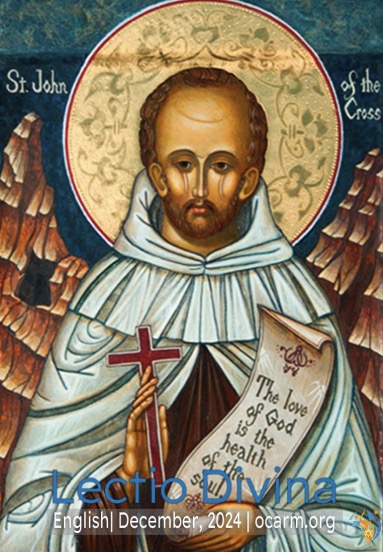
74 page PDF with refections and prayers for each day of the month.
Lectio Divina December 2024 (PDF)
Lectio Divina December 2024 [Mobi]
Lectio Divina December 2024 [ePub]
Source: Carmelites
⬇️ More Resources
ADVENT E-BOOK 2024

First Reading
HISTORY
Baruch 5:1-9 presents a vivid image of hope and restoration for the exiled people of Jerusalem. This prophetic message arises in the wake of the Babylonian exile, a pivotal event that shaped the Jewish identity and their understanding of divine promise. Written during this period, the text articulates a profound longing for the return to their homeland and the restoration of their once-glorious city.
Historical figures such as Nebuchadnezzar, the Babylonian king responsible for the destruction of Jerusalem in 586 BCE, loom large in this context. The Babylonian exile marked a significant blow to Jewish autonomy and faith, leading to a period of despair. Baruch, understood to be a companion of Jeremiah, serves as both a scribe and prophet, articulating these struggles and the need for communal hope.
The intended audience of this passage includes the Jewish exiles who were grappling with their identity amidst foreign domination and cultural dilution. Baruch’s message resonates deeply, emphasizing that God will ultimately guide them home, symbolizing not just physical return but spiritual restoration as well. This work is a testament to the resilience of faith in times of adversity and the enduring belief in divine redemption.
SOCIETY
Baruch 5:1-9 conveys a message of comfort and hope, addressing the exiled people of Israel during a time of profound societal upheaval. The sociocultural context of this passage is rooted in the Babylonian exile, where the Israelites were stripped of their homeland, identity, and religious practices. In this environment, prevailing customs emphasized loyalty to the land and the temple, central elements of Jewish identity that had been disrupted.
The passage speaks to the collective experience of the exiles, embodying a communal call to shift their perspectives from despair to anticipation of restoration. By invoking imagery of a path being made straight and the valleys being filled, the text reflects the traditional Jewish belief in God’s promise of deliverance and redemption. The cultural understanding of prophecy plays a vital role in how the original audience received this message, as the exiles would resonate with the hope conveyed through prophetic assurance.
Moreover, the emphasis on God’s guidance in this context served to reinforce the importance of communal identity and collective memory. It urged the people to maintain faith in their heritage and future, showcasing how social and cultural dynamics profoundly shaped their belief systems. For the exiles, Baruch’s words became a rallying cry that fostered resilience and unity amidst uncertain circumstances.
THEOLOGY
Baruch 5:1-9 speaks of the transformation and hope for the people of Israel, emphasizing God’s promise to lead them back from exile and restore their dignity. In the Roman Catholic theological context, this passage resonates with the theme of redemption and divine mercy. The call to “put on the robe of righteousness” symbolizes a renewal of spirit and identity, reflecting the sacramental life within the Church, particularly through the Sacrament of Reconciliation. In this sacrament, Catholics experience God’s forgiving love, restoring their relationship with Him and the Church community.
For contemporary Catholics, Baruch’s message serves as a compelling reminder of hope and renewal amidst life’s challenges. For instance, during difficult times such as loss or personal failure, the promise of God’s restoration encourages believers to seek healing and strength. This can manifest in communal prayer, participation in Mass, or engaging in social justice initiatives, echoing the call to uplift the marginalized, just as Baruch highlights the return of the exiled.
Moreover, the themes of preparation and anticipation found in Baruch can guide Catholics during liturgical seasons like Advent. By focusing on spiritual renewal and reflection, they can embody the hope given in Baruch, becoming messengers of God’s love and reconciliation in a world in need of healing.

The Joyful Journey to Jerusalem
✨ SYNOPSIS: Jewish and Christian traditions connect Baruch, a companion of Jeremiah, as the author of the Book of Baruch. The book focuses on the Jews in Babylon. It stresses the importance of repentance for their return to Jerusalem. The text emphasizes the promise of the exiles' return. It also encourages reflection on the spiritual journey of believers toward the heavenly Jerusalem.
Baruch illustrates the faithful remnant joyfully returning home. They are told to replace mourning garments with a "robe of righteousness" and a "crown of glory." This symbolizes a renewal of the covenant. Their transformation reveals God's justice and glory to other nations.
The later verses contain an eschatological promise. This promise extends beyond the Old Covenant to include the entire world. It parallels themes found in the prophets and connects with St. John's vision of the New Jerusalem in Revelation. Christ embodies peace, justice, and divine glory. He invites believers to follow His example for spiritual renewal and the fulfillment of the promise of Heaven. St. Irenaeus also wrote about the New Jerusalem in Revelation.
Above is an AI-generated summary, expressed through concise and compact statements, of content from Michel E. Hunt's commentary at Agape Bible Study Copyright © 2015; revised 2024
Second Reading
HISTORY
Philippians 1:4-6, 8-11 offers significant insight into the early Christian community and its historical context. The Apostle Paul, a former Pharisee and fervent persecutor of Christians, is the author of this letter. Imprisoned while writing from Rome, Paul addresses the Philippian Church, which he established during his second missionary journey. The city of Philippi was a Roman colony in Macedonia, populated primarily by Gentiles, and served as a strategic military and trade hub. This unique setting influenced the theological and social messages within the text.
Paul expresses gratitude for the Philippians and their partnership in the gospel. His reflection underscores the deep bonds of fellowship cultivated among early Christians amidst challenges posed by the Roman Empire, which often viewed the rising Christian faith with suspicion. The significance of joy, love, and abounding knowledge in these verses highlights the importance of community support in navigating external pressures.
Paul’s plea for spiritual growth and discernment emphasizes the necessity for believers to remain steadfast in their faith. This appeal was not merely a personal request but a call to action for the entire community, encouraging them to live in a manner worthy of the gospel, which was essential in the politically charged environment of the time.
SOCIETY
Philippians 1:4-6, 8-11 encapsulates Paul’s deep affection for the Christian community in Philippi, reflecting a sociocultural landscape imbued with diverse beliefs and practices. The city was a Roman colony, and its inhabitants were influenced by both Greco-Roman culture and emerging Christian ideals. This duality shaped their understanding of community, faith, and loyalty.
In this context, the prevailing customs of civic duty and loyalty to the Roman Empire can be seen in stark contrast to the communal bonds fostered within the Christian fellowship. Paul’s emphasis on prayer and mutual support illustrates a departure from individualism, promoting interdependence among believers. His expression of gratitude and joy reveals the strength of their relationships, highlighting how communal identity was crucial for early Christians navigating a society that often marginalized their beliefs.
Furthermore, Paul’s mention of love, discernment, and righteousness speaks to ancient Greek values while reinterpreting them through a Christian lens. This infusion of new meaning into familiar concepts encouraged the Philippians to embody a transformative faith that transcended cultural boundaries. By addressing these sociocultural dynamics, Paul’s message becomes not only a personal encouragement but also a call for the community to live out their faith authentically amidst their cultural milieu.
THEOLOGY
Philippians 1:4-6, 8-11 serves as a profound expression of St. Paul’s love and gratitude for the community in Philippi. Within the Roman Catholic theological context, these verses highlight the importance of communal faith and the transformative power of God’s grace in the lives of believers. Paul expresses confidence that God, who began a good work in them, will bring it to completion. This underscores the Catholic belief in the ongoing nature of salvation—a process of continual conversion and growth in holiness.
In contemporary application, Catholics are encouraged to embrace the transformative journey of faith articulated by Paul. This means actively participating in the sacraments and the community of the Church, fostering relationships built on love and mutual support. For instance, engaging in parish activities or social justice initiatives can help deepen one’s faith while contributing positively to society.
Moreover, St. Paul’s prayer for love and discernment invites modern Catholics to cultivate a spirit of compassion and understanding. In a world often marked by division, practicing love and empathy can lead to constructive dialogues and actions. Living out these principles not only strengthens personal faith but also embodies the Church’s mission to bear witness to Christ’s love in everyday life.
Gospel
HISTORY
The text references Emperor Tiberius, the Roman ruler during Jesus’ ministry, who maintained control over the vast empire through bureaucracy and military force. Additionally, Pontius Pilate, the Roman governor of Judea, is mentioned as a figure of authority in the region. His role in the crucifixion of Jesus highlights the Roman Empire’s influence in religious and political affairs.
The passage also introduces Herod, tetrarch of Galilee, and his brother Philip, tetrarch of Iturea and Traconitis. These regional rulers represented the complex political dynamics within the Roman Empire and their presence in the text underlines the challenges faced by John the Baptist and Jesus as they navigated these power structures.
Luke, the author of this Gospel, was a well-educated physician and a Gentile convert to Christianity. His Gospel was likely written to provide a comprehensive account of Jesus’ life and teachings to a primarily Gentile audience. Understanding this background helps readers recognize the author’s intention to connect the story of Jesus to the larger historical and political context.
SOCIETY
John’s ministry in the wilderness symbolizes his connection to the Old Testament prophets, who often received divine revelations in similar settings. The Jewish people held these prophets in high regard, and John’s preaching echoed their messages of repentance and spiritual transformation.
Moreover, the practice of baptism, as introduced by John, marks a significant departure from Jewish customs of the time. Traditionally, ritual bathing was reserved for specific situations, such as purification ceremonies for priests. John’s baptism, however, was open to all who sought repentance, emphasizing the universal nature of his message and its relevance to people from all walks of life.
John’s call for repentance also highlights the growing discontent among the Jewish population, who longed for liberation from political oppression and spiritual stagnation. This social context underscores the urgency and significance of John’s message, as it resonated with people’s desire for change and renewal.
THEOLOGY
John’s message of repentance resonates with Catholic teachings on the Sacrament of Reconciliation. Like John, the Church emphasizes the need for ongoing conversion and the forgiveness of sins as essential aspects of the Christian life. Furthermore, John’s baptism serves as a forerunner to the Christian Sacrament of Baptism, which initiates believers into the life of Christ and the Church.
In a modern-day context, Catholics can draw inspiration from John the Baptist’s humility, courage, and unwavering commitment to his mission. As a witness to the light of Christ, John challenges contemporary Catholics to bear witness to their faith and stand firm in the face of adversity.
Additionally, John’s call for repentance and spiritual preparation can inspire Catholics to engage in ongoing spiritual growth and renewal, especially during liturgical seasons such as Advent and Lent. By reflecting on John’s message, Catholics can deepen their understanding of their faith and its relevance in their daily lives.
Thank you for the newest layout. It’s much easier to find what I need. I don’t remember the authors’ names but they are missing still.