
Larry
Broding


Us vs. Them. One group against another. Controversy always raises its ugly head when people separate themselves from others. While separation might be for the best of intentions, the distance that results causes a change in view point. This change can cause misunderstanding, ill feelings, and incitement to violence. When one human being turns his or her back on another, the seeds of evil are sown.
How have you exercised your freedoms responsibly? How have your public duty and service helped the good of others?
Someone once said, “The character of the community depends upon the quality of its leadership.” Some leaders seek their own good over others. Their rhetoric and example scandalize and causes separation. Those who open their hearts to God and others unite by word and deed. Consider Caiaphas against Jesus. Who do we follow? Whose leadership do we emulate? Remember, it’s a matter of style that can wound or heal.
We all have moments and places where we exercise leadership and responsibility. Reflect on your leadership as a parent, worker, or volunteer this past week. What successes have you had? What failures? Thank God for your successes and pray for openness in your failures.
SOURCE: Word-Sunday Permission for use. All materials are the property of Larry Broding (Copyright 1999-2022). Viewers may copy any material for use in any non-profit ministry. Materials may not be sold or used for personal financial gain.
When is religious practice good enough? This is a practical question that has no real answer. For, when we ask the question, we place faith into another compartment of our lives. And implicitly, we place ourselves above God., since God is just Lord of Sunday or prayer time. Not Lord of all.
When is religious practice good enough? Obviously this is the wrong question. The right one is simple: Lord, how can I serve you and your people?
How have you served God and his people lately? What are the practical limits of that service? Who set those limits, you or God? Explain.
SOURCE: Word-Sunday Permission for use. All materials are the property of Larry Broding (Copyright 1999-2022). Viewers may copy any material for use in any non-profit ministry. Materials may not be sold or used for personal financial gain.
When have you seen a recent act of humility? What makes that act unique?
Humility is knowing one’s place before God.
How do you prepare yourself to enter into the presence of God? What is your spirit of prayer?
SOURCE: Word-Sunday Permission for use. All materials are the property of Larry Broding (Copyright 1999-2022). Viewers may copy any material for use in any non-profit ministry. Materials may not be sold or used for personal financial gain.
Paul and his fellow missionaries had fond memories in Thessalonika, despite the local opposition. They approached their students with warmth, for the neophytes quickly took hold of the faith. [2:7b-9] And the power of the gospel which fed Paul’s faith was clearly evident in the community. [2:13]
We may have fond memories of a simpler, more powerful time of faith: a retreat, early participation in a renewal movement, or the beginnings of a friendship based upon shared values. As important as these memories are, they cannot replace the faith experience we have today. Such memories feed our faith and give us hope. But we should not reduce our faith life to the recreation of long ago events. God gives us today to believe, not yesterday or tomorrow. Let us cherish our memories, plan for tomorrow, but pray today.
What memories feed your faith? How do they help your prayer life today?
SOURCE: Word-Sunday Permission for use. All materials are the property of Larry Broding (Copyright 1999-2022). Viewers may copy any material for use in any non-profit ministry. Materials may not be sold or used for personal financial gain.
Bulletin Insert Edrianne
Ezel


1st Reading

2nd Reading
Gospel
Questions for Small Groups

First Reading
1. What was the sin of the Old Testament religious leaders as described by Malachi in the 1st Reading? What were some of the results of these sins?
Second Reading
2. In the 2nd Reading, what sort of example did St. Paul and his fellow missionaries give to the Thessalonians? What was the fruit of their example in their lives?
Gospel

3. What was the seat of Moses? Given Jesus’ remarks about the Pharisees in Matthew 21—22, what is surprising about his remarks in Matthew 23:3? How does he limit his commendation of them?
4. As Jesus sees it, what is the main evil of the Pharisee? How are his disciples to avoid fallinginto the same evil? Why would it be important that the disciples not allow themselves to be called “rabbi”? What distinction was Jesus trying to make between his followers and the Pharisees?
5. Compare the path of greatness followed by some of the Pharisees with that taught by Jesus (Matthew 23:5-12). What do these two views of greatness teach us about the two views of the kingdom of God?
6. What do you expect from your religious leaders and teachers? If you are a parent, catechist or other religious teacher, how well do you practice what you preach?
7. Regarding Matthew 23:12, what are some of the episodes of your life that illustrate the truth of this passage to yourself? How have you been humbled? What did you learn from these events (see James 4:6 and Luke 1:52)?
SOURCE: SundayScriptureStudy.com / used with permission

First Reading
In the final verse Malachi also turns to those who ‘intermarried’. He interpreted this as weakening God’s family and introducing other God’s into the family – a breaking of the ‘covenant’. What would you suggest today is the source of decline in ‘religious practice’?
Second Reading
St Paul, while traveling far and wide as a missionary, continued his trade as a ‘Tent maker’. He worked ‘night and day’ so as not to burden anyone. While they missed him, Paul pointed to the true source of their growth ‘the word of God at work in you’. How could you spend more time with the ‘Word of God’. Who could help you?
Gospel
Pharisees were now more public in their leadership – even being referred to as ‘Rabbi’ – teacher. Jesus continues his critique of religious leaders being ‘hypocritical’. Literally ‘two faces – actor’. Preaching and practice must go together. Are there any areas of your life where you are ‘acting’-Wearing ‘two faces’?

Jesus reminds his disciples and the Church today to not follow the Pharisees or scribes. Be an example to follow. Interpret laws sensitively so as not to load heavy burdens. Be alongside to shoulder the weight of discipleship. Do not seek glory or status. Point toward God (not self) as the true teacher. What aspect of Jesus’ leadership challenge speaks personally to you?
Service and humility are to be the trademarks of the Christian community. Is there an attitude of ‘seeking’ rather than ‘service’ in your ministry? How could you show respect to leaders and also develop a culture of equality and expectation of ‘leading by example’ in your community? Is a
humble word of correction to a leader friend needed?
SOURCE: Living the Word resources are created by Fr Frank Bird a Marist priest and Mrs Bev McDonald, ACSD, distributed by Marist Laity Auckland, NZ

First Reading
1. Am I a faithful member of God’s people? A faithful servant and pastor?
2. Do the questions of Mal 2:10 help me reflect on my community of faith?
Second Reading
3. Who has been a really good “pastor” to you? What image or metaphor comes to mind to describe this person?
4. We are all pastors in some sense. What is your experience of not just serving but really loving the people in your care?
5. How did you come to realise that the Gospel is not some human thinking but God’s message?
Gospel
6. When our actions match our words about gospel values, then our words carry more weight. Recall people whom you admired for this quality. Perhaps your own experience at times confirms this.
2. Jesus also has hard words for those whose priority lies in cultivating flattery and attention. Even for the people hon- oured such words and gestures can have an empty feeling. How much better for us to be comfortable in our own skin, recognising our goodness, and acknowledging our limitations.
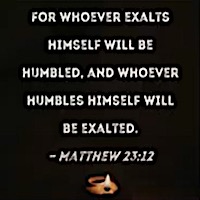
3. Our passage ends with a paradox. Those who exalt themselves will be humbled and those who humble themselves will be exalted. For Jesus, the way to greatness and a full life is through service of others. When have you found the way of service brought unexpected rewards?
SOURCE: Hearers of the Word

First Reading
The officials in this reading were responsible for an erosion of faith among the people. In general what do you think are some contemporary issues that erode people’s faith? In particular what erodes your own faith? What increases it?
Second Reading
What makes Paul such an effective minister, according to this reading? Explain. In whose message are you going to be more interested one given by someone who cares about you, or one given by someone who doesn’t know your name?
Gospel
Jesus says, “let the greatest among you become as the youngest and the leader as one who serves.” Jesus instituted an office of service. “Wide belts,” places of honor and titles helped the scribes and Pharisees increase their social status but were those things a help for serving others better? What helps you serve?
SOURCE: Sunday Web Site at Saint Louis University
Gospel
1. How can we best honor the vocation and the ministry of our priests without placing them on some pedestal that will put them outside the reach of the community they are meant to serve? Do priests and deacons and bishops need to be above the community of the faithful in order to exercise an effective leadership? Is there some way they can be among the people and still be effective leaders?
2. Can you describe a Christian community where the clergy are truly acting in persona Christi when they preside at the liturgy and are still being humble members of the assembly? How can we preserve our authentic tradition of having the leaders represent Christ without their having to assume positions of privilege outside the rank-and-file?
3. Do you think some men have become priests primarily because they felt it was a way to rise above the other members of their family? Do you suppose that there are fewer priests today partly because the role of priest is not so honored any more in society? If we were to dress the priests up again in all their former finery, cassocks, and surplices, do you think we would have more vocations to the priesthood?
Christian Action
Pray for priests. Pray for your parish priest(s). Talk to a priest in a supportive way about his vocation in the Church. Tell him how much his ministry means to the Church. Tell your family, your children, what the ordained priesthood means to you and to the whole Church.
SOURCE: Portland Diocese

First Reading
NA
Second Reading
Paul showed great affection for his communities and yet he often chastised them for their failings. As parents, teachers, leaders, managers, etc., what suggestions do you have for balancing these two roles?
Gospel
Are there forms of Phariseeism present in today’s Church? If so, how do they manifest themselves? How might a spirit of Phariseeism manifest itself in us?
What qualities in leaders turn you off the most? What qualities attract you the most?
To whom is it easy for you to offer service? To whom might you offer it to begrudgingly?
Responding to God’s Word
Name one way you can act on this Sunday’s readings. Suggestion: Pray for leaders, including yourself, that all may have a deep desire to follow the humble servant leadership style of Jesus.
SOURCE: Ascension Catholic Parish, Melbourne, FL
Kay
Murdy

Together with God’s Word
31st Sunday of Year A
TO KNOW: Jesus denounced the hypocritical behavior of the scribes and Pharisees. Although he acknowledged that their teaching authority rested on the “chair of Moses” (the “chair of Peter” is a similar term for Church authority), he warned his disciples not to follow their example.
READ MORE
TO LOVE: Are my religious practices motivated by a need for other people’s admiration?
TO SERVE: Lord Jesus, teach me to do all things out of a desire to serve you.

Matt
Zemanek
St. Timothy Catholic Church, Laguna Niguel, CA


Fr. Geoffrey
Plant


Fr. Bryan
Kujawa
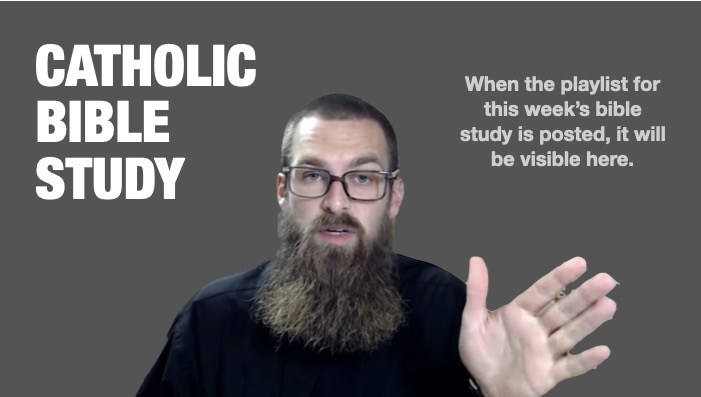

Click on image to view Fr. Bryan’s playlist. Each week he posts three videos. You can switch between them by clicking on the upper right hand corner once video starts playing.
FIRST READING & PSALM
2ND READING
GOSPEL