

THEME OF READINGS:
DOCTRINAL MESSAGES:
PASTORAL SUGGESTIONS:
- Give morality a religious basis
- Option in life for love
Brant
Pitre

Michal E.
Hunt

Fr. George
Corrigan
OFM


Fr. Kieran
O’Mahony
OSA

PDF & Video Commentary
30th Sunday of Year A

Fr. Francis
Martin

The Word Proclaimed Institute
30th Sunday of Year A

Catholic
Climate
Covenant

Catholic Climate Covenant
30th Sunday of Year A
30th Sunday – Cycle A

Pope Francis reminds us that relationships are key to our growth, both physically and spiritually: with God, with other people, and with other creatures that are part of Gods’ creation. Developing these relationships and building community require really listening to one another. Good listening increases the trust, openness, and understanding that create authentic community. People who truly listen to one another are drawn together in a special bond. Effective listening can promote spiritual growth, toward wholeness – and holiness.
The human person grows more, matures more and is sanctified more to the extent that he or she enters into relationships going out from themselves to live in communion with God, with others and with all creatures. In this way, they make their own that trinitarian dynamism which God imprinted in them when they were created…. Everything is interconnected, and this invites us to develop a spirituality of that global solidarity which flows from the mystery of the Trinity. (240)
St. Charles
Borromeo
Notes

Parish Bible Study Notes
30th Sunday of Year A

30th Sunday of Year A


Together with God’s Word
30th Sunday of Year A
TO KNOW: The order of the commandments must be noted: love for one another is firmly grounded in the love of God. To be truly religious is to love God and to love human beings made in God’s own image.
READ MORE
TO LOVE: Have I obeyed the commandment to love God and my neighbor? Do I have a healthy self-love?
TO SERVE: Lord Jesus, fill me with great love for you so that it will overflow to others.






Sunday Scripture Questions
30th Sunday of Year A
FIRST READING – Is 45:1, 4-6
1. We hear from a section of the Book of Exodus where God is giving instruction to his people regarding their conduct among themselves. Specific prescriptions aside, what seems to be the overall attitude that God expects us to have toward our neighbor?
SECOND READING – 1 Thes 1:1-5b
2. Saint Paul reminds the Thessalonians how much they have grown in their faith by imitating his example. What are some of the ways their faith has become evident? How much do you strive to imitate Jesus and the Saints?
GOSPEL – Mt 22:15-21

3. Why do you suppose Jesus declares these two commandments the greatest? How would you say the Ten Commandments relate to these two?
4. What does Jesus’ response to the scribe teach you about Jesus? About the kingdom of God (see 1 John 2:7-11)?
5. Why do you think Jesus emphasized loving God with our heart, soul, and mind? How is loving God related to loving people (1 John 4:20-21)?
6. What does it mean to love your neighbor as yourself? How do you love your self? How does that apply to the way you love your neighbor (Matthew 7:12; Ephesians 5:29)?
SOURCE: SundayScriptureStudy.com / used with permission




1st Reading

2nd Reading

Gospel


Cultural Nuances and Undertones
Fr. A Paul


Applying the Readings to Daily Life



30th Sunday of Year A
Gospel Connections
30th Sunday of Year A
30th Sunday of Year A
2nd Reading Connections
30th Sunday of Year A
30th Sunday of Year A
GENERAL

Richard Niell Donovan, a retired Disciples of Christ clergyman, published Sermon writer for more than two decades. When Dick died in 2020, his wife, Dale, has graciously kept the website online free of charge.
Matthew 22:34-40
Biblical Commentary
Mt 21-22. THE CONTEXT
MATTHEW 22:34-36. WHICH IS THE GREATEST COMMANDMENT?
MATTHEW 22:37-40. THE FIRST—AND THE SECOND COMMANDMENTS
Sermons
Loving God and One Another
Like Tevye, the Pharisees were concerned with tradition. Like Tevye, the Pharisees knew that without Israel’s traditions life would be as shaky as a fiddler on the roof. Like Tevye, they knew the importance of knowing who we are and what God expects of us.
The Christian Shema
A church member signed up for a religion class at the local college. He was hoping to borrow some of the books in his syllabus. With that, he handed me a four-page bibliography. I kid you not – four pages!


Center for Excellence in Preaching



Episcopal Church, USA
Conflict is part of every day. There are some conflicts that need to be reduced. Other conflicts are part of the human condition.
What does not help is ignoring conflicts – whether they are conflicts to be solved, or conflicts to be learnt from.
The gospel texts are replete with dynamics of conflict: occupation; internal conflict between people about whether one should or shouldn’t work for an occupying force; conflict about the inclusion of others; conflict about the role of leadership and the role of popular voices.

Jesus: Stirrer of Trouble
30th Sunday in Ordinary Time.
Sometimes, in arguments, we are not arguing for the sake of an idea, but arguing for the sake of winning. Or, arguing for the sake of condemning, or castigating, or exiling, or worse.
In popular descriptions of Jesus, he is named as a Prince of Peace. However, he is also a Stirrer of Trouble. And here, he demonstrates that he is not afraid of conflict, in fact, sometimes he heightens it. He was confident in his intellectual capacity, and confident, also, that intellectual capacity must serve something useful, rather than just determine dominance.
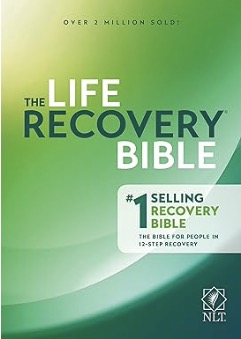
NLT Life Recovery Bible, 2nd Edition: Addiction Bible
Life Recovery Bible Notes
A Two Point Summary
of the Twelve Steps
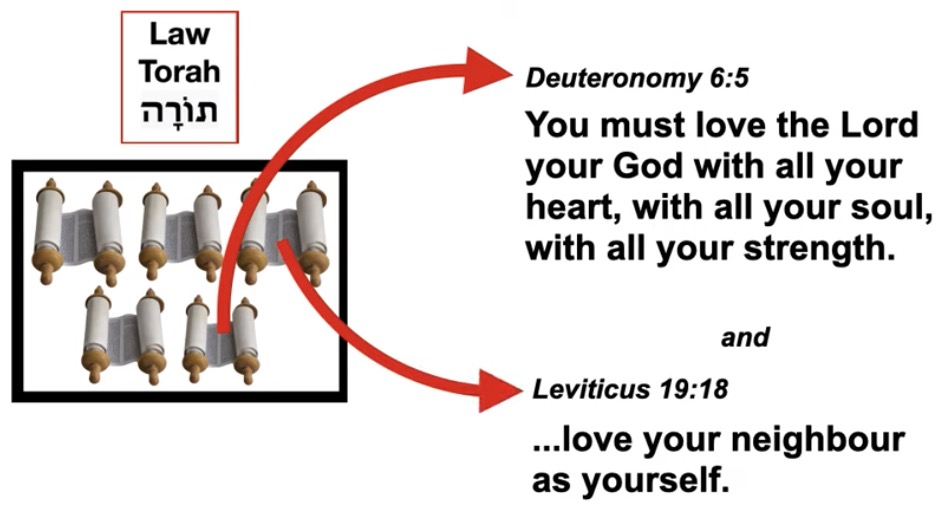
Matthew 22:33-40 To simplify our priorities, Jesus narrowed the six hundred–plus regulations of the law of Moses into two foundational commandments: Love God with everything we are and have; love our neighbors as ourselves. To do these is to obey every other law.
A better two-point summary of the Twelve Steps could not be found. When we love God with our very life, we will not want to do anything to disgrace him or make him angry. Loving others should make us aware of the pain others feel when we engage in our addictions. Our concern and love for them should make us think twice before causing them to suffer.