
Michal Hunt

Brant Pitre
Fr. Francis Martin

Theology of the Body
Life Recovery Notes
Preaching on Abortion
Brant
Pitre


Topical
Studies
Topical Studies
Addiction & Recovery | Theology of the Body | Catechism Themes | Climate & Environment | Conflict & Peace | Justice | Pro-Life | Theology of Work


Proverbs 10:6 In this and many of the proverbs Solomon contrasts good and evil people by the way they live and the consequences they suffer. This basic principle is repeated often: Moral living is good for us. One key to doing what is right is having an accurate self-concept. As we begin to see ourselves as God sees us, we see that we are loved and valued, and we will want to apply the principles of wisdom to our lives.
1 Thes 5:1-11 Paul warns us that God will hold all people accountable for their attitudes and actions. This day of the Lord will come unexpectedly, so we need to stay alert and ready at all times. This is especially important for those of us who procrastinate, thinking we can start recovery anytime. God wants us to act immediately to receive his forgiveness and power to help us change. Those of us who belong to God will give evidence of our faith by acting in ways that testify to God’s work in our lives. If we entrust our lives to God and seek to follow his will, we have nothing to fear. If we continue to do things our own way, rejecting God’s plan of salvation, this day of accountability will be our day of doom.
SOURCE: The Life Recovery Bible, Stephen Arterburn, David Stoop

Proverbs 31:30 The reading from the book of Proverbs provides important insight into the difference between what we might call “surface-love” and “heart-love.” Addressed to men, Proverbs presents this just warning: “Charm is deceptive and beauty fleeting; the woman who fears the Lord is to be praised.” Our culture today is fixated on the deceptive and the fleeting, molding us to prize a person’s outward charm and beauty above all.
SOURCE: Christopher West

Catholic Answers
Fr. Vincent Hawkswell
Doctrinal Homily Outlines
Fr. Clement Thibodeau
Fr. Daniel Mahan
Fr. Mike Schmitz

Most of us were taught that the Parable of the Talents is about using our gifts to work for the Kingdom. Others, however, believe that the parable is a condemnation of an economic system that has low-wage workers earning money for investors and the wealthy who benefit from their toil. So, the servant with one talent represents the heroes who refuse to participate in an unjust system.
Like the worthy wife whose good management provides her family with all they need, we are called to promote a just economic system for all. Such a system would, in turn, promote environ- mental justice that would benefit the poor and most vulnerable.
SOURCE: Catholic Climate Covenant

Polarisation is often seen to be on the rise in the 21st century. Is it really? Is it framed as a negative in modern politics or workplaces? Do we value the benefit of seeing a range of views or opinions? Or do we think of the usefulness in telling it like it is, and dividing the world into two camps? In this story there are three recipients of the talents. Salvation is not a polar choice, but rather a scale upon which we, and our actions, are judged.
If we read the metaphor as the man going on the journey being god, and the slaves being us, then it also poses some awkward questions about the language Jesus used to describe God, and the way in which we view the idea of a ‘master’ as a result. Those who receive the talents do so from a master who is comfortable describing himself as ‘harsh’. How does that sound to us today?
SOURCE: Spirituality of Conflict

The Gospel parable is about a man entrusting his servants with his property, and the point it makes concerns the need for fidelity in caring for what belongs to the master. God our master has left us with the earth, not to do with it what we want but to care for it even as we live off of its abundant riches.
God created the land to support living things: What will happen when God returns to find so much land strip-mined, strip-cleared, eroded, and burdened with toxic waste?
SOURCE: Gerald Daring, The Sunday Website at Saint Louis University


We all have talents, the use of which will be judged at the end of time. In preaching about the use of our talents in a fruitful way, we can preach about the wide variety of talents that are applied to the effort to defend and promote the sacredness of human life. A wide variety of activities comprise the pro-life movement. People provide alternatives to abortion, legal advice, counseling, medical services, adoption services, employment searches, housing, education and the many other services of pregnancy help centers accessed through hotline numbers and websites. There is also the wide range of healing ministries for those who have had abortions. Moreover, the pro-life effort is advanced through research, medical expertise, litigation, lobbying, media work, writing, speaking, grassroots activism, and much more. In short, there is room for everyone in the movement. The greatest fruit of our talents would be to be able to present to the Lord the lives saved through our efforts.
SOURCE: Priests for Life
One of Jesus’ most significant parables regarding work is set in the context of investments (Matt. 25:14-30). A rich man delegates the management of his wealth to his servants, much as investors in today’s markets do. He gives five talents (a large unit of money)[1] to the first servant, two talents to the second, and one talent to the third. Two of the servants earn 100 percent returns by trading with the funds, but the third servant hides the money in the ground and earns nothing. The rich man returns, rewards the two who made money, but severely punishes the servant who did nothing.
The meaning of the parable extends far beyond financial investments. God has given each person a wide variety of gifts, and he expects us to employ those gifts in his service. It is not acceptable merely to put those gifts on a closet shelf and ignore them. Like the three servants, we do not have gifts of the same degree. The return God expects of us is commensurate with the gifts we have been given. The servant who received one talent was not condemned for failing to reach the five-talent goal; he was condemned because he did nothing with what he was given. The gifts we receive from God include skills, abilities, family connections, social positions, education, experiences, and more. The point of the parable is that we are to use whatever we have been given for God’s purposes. The severe consequences to the unproductive servant, far beyond anything triggered by mere business mediocrity, tell us that we are to invest our lives, not waste them.
SOURCE: Theology of Work Project
Michal E.
Hunt

Fr. George
Corrigan
OFM

Fr. Corrigan, OFM
Fr. Kieran
O’Mahony
OSA


Fr. Francis
Martin

Fr. Francis Martin
33rd Sunday of Year A

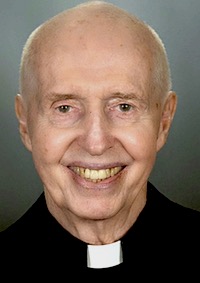
Fr. Francis Martin +August 11, 2017, served as Professor and then Professor Emeritus of New Testament at the Dominican House of Studies in Washington, D.C. He also taught at the Gregorian University in Rome, the Ecole Biblique in Jerusalem, Catholic University in Washington, D.C., Franciscan University of Steubenville), and the John Paul II Institute for Studies on Marriage and Family in Washington, D.C.
Navarre Bible Commentary

Navarre Bible Commentary
33rd Sunday of Year A