Commentary Intro to Mass Readings for Sunday
CommentaryIntro to Mass Readings for Sunday
March 15, 2026
April 12, 2026
2nd Sunday of Easter (A)






2nd Sunday of Easter (A)
KEY CONCEPTS
Visual guides based on the Biblical Study video series of Father Tim Peters, S.T.D.
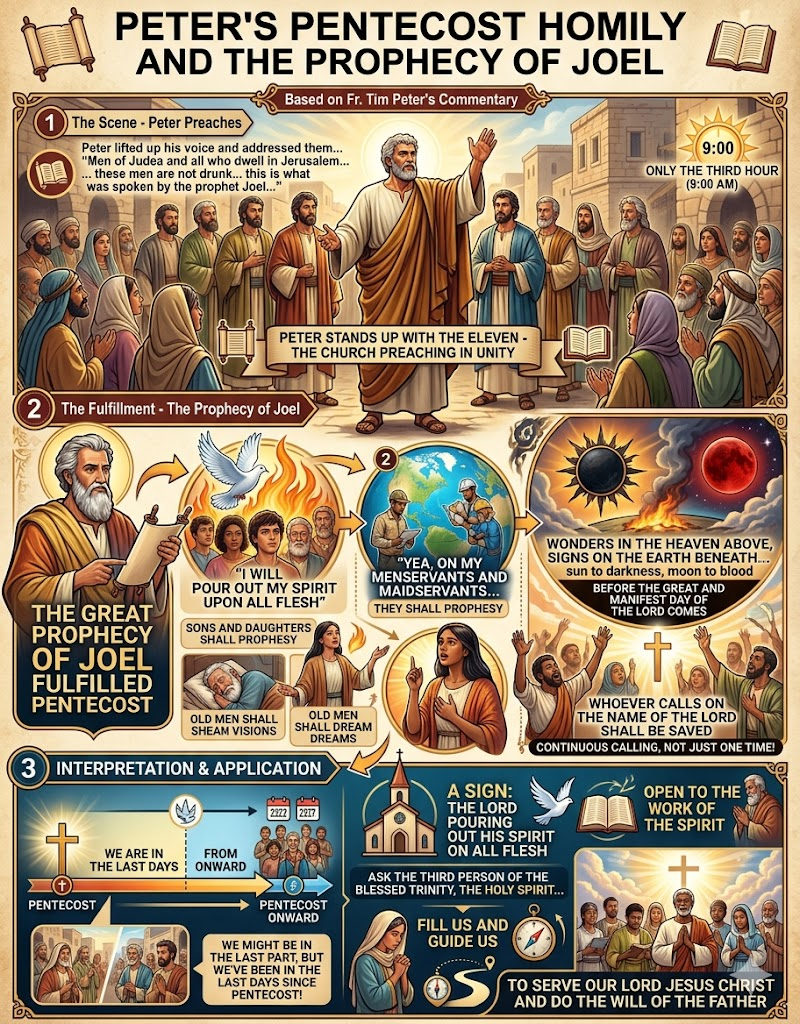
Design Credits: This visual summary was developed by Gemini 3 Flash using the Nano Banana 2 engine. Although curated for accuracy and narrative precision, this AI-generated work based on Fr. Tim's teaching may have a few typographic inconsistencies or visual redundancies. Non-profits have permission to use this in their ministry.
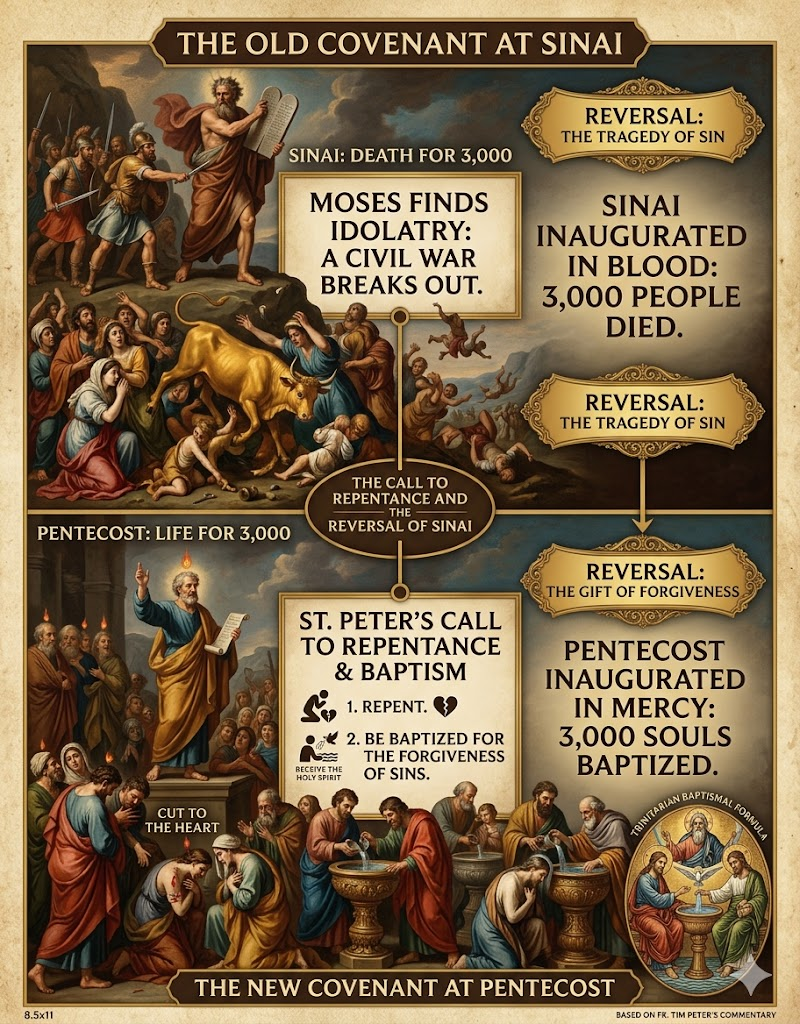
Design Credits: This visual summary was developed by Gemini 3 Flash using the Nano Banana 2 engine. Although curated for accuracy and narrative precision, this AI-generated work based on Fr. Tim's teaching may have a few typographic inconsistencies or visual redundancies. Non-profits have permission to use this in their ministry.

Design Credits: This visual summary was developed by Gemini 3 Flash using the Nano Banana 2 engine. Although curated for accuracy and narrative precision, this AI-generated work based on Fr. Tim's teaching may have a few typographic inconsistencies or visual redundancies. Non-profits have permission to use this in their ministry.

Design Credits: This visual summary was developed by Gemini 3 Flash using the Nano Banana 2 engine. Although curated for accuracy and narrative precision, this AI-generated work based on Fr. Tim's teaching may have a few typographic inconsistencies or visual redundancies. Non-profits have permission to use this in their ministry.
Click banners for infographics related to Fr. Peters’ lecture.
2nd Sunday of Easter (A)
INSIGHTS FOR HOMILY
PREPARATION
Acts 2:42-47

Living As One
Preaching on the early days of the Church in Acts can sometimes feel like presenting an unattainable ideal to a modern parish. However, Larry Broding’s commentary invites you to explore the genuine, magnetic drawing power of the first Christian community. By breaking down the early Church’s explosive growth, Broding offers a compelling vision of unity and devotion that will deeply resonate with your parishioners and revitalize their understanding of parish life.
Why this commentary matters for your homily:
- Uncover the True Catalyst for Evangelization: Help your congregation see that while the “wonders and signs” of the apostles sparked awe, it was the undeniable spirit of unity, Christian love, and common concern that truly drew people in.
- Highlight the Pillars of Discipleship: Give your parishioners a practical blueprint for their faith by exploring the early believers’ steadfast devotion to apostolic teaching, fellowship, and shared worship.
- Challenge Modern Attachments: Speak powerfully on the radical generosity of the early Church—where believers sold property and possessions for the needy—inspiring your own community to evaluate how they care for the vulnerable among them.
- Preach the Power of Contagious Joy: Move beyond obligation and highlight the profound joy that pervaded the lives of the early Christians, emphasizing that the Lord Himself is the ultimate source of our unity.
- Built-In Reflection for Your Flock: Leverage Broding’s poignant questions to directly challenge your listeners, asking them how they express their Christian joy through prayer, study, and fellowship, and how that joy reflects the Lord’s active presence in their lives.
Read Larry Broding’s full commentary to help your congregation embrace the infectious joy of the early believers and transform your parish into a living, united testament of the Lord’s enduring love.
GO DEEPER
CATHOLIC AI PROMPTS FOR HOMILY PREPARATION
To assist in crafting a homily that is both theologically rigorous and pastorally sensitive, a preacher might ask an AI assistant the following questions (simply copy and paste a question into chat bot in the lower right corner of the page):
To assist in developing a homily on the early Christian community in Acts 2:42-47, a preacher could ask an AI assistant these ten questions based on Larry Broding’s commentary:
- Defining Devotion: “Broding mentions that ‘were constantly attending’ denotes a specific type of devotion and time. Can you provide a deeper word study on the Greek proskartereo to help me explain what ‘showing a real commitment’ looks like for a modern parishioner?”
- The Ideal vs. The Reality: “The commentary calls these verses the ‘ideal possible’ in the Christian community. How can I frame this in my homily so that it inspires my congregation without making them feel discouraged by how far we are from this Acts 2 model?”
- The Power of Unity: “Broding suggests that unity was a ‘calling card’ for evangelization. What are some practical, modern ways a parish can demonstrate this ‘common concern’ that would draw in those currently outside the Church?”
- Sacrament and Domestic Church: “The commentary distinguishes between Temple worship and the ‘Lord’s Supper in the homes.’ How can I use this to encourage families to see their homes as a primary place for sharing the faith and Christian joy?”
- Radical Generosity: “In 2:44, the neophytes sold real estate for the needy. How can I preach on this radical detachment from possessions in a way that challenges our modern consumerist mindset?”
- The Psychology of ‘Awe’: “Broding notes that the wonders and signs caused ‘awe.’ How can I help my congregation rediscover a sense of ‘awe’ in the Sacraments today, even when we don’t see miraculous physical signs daily?”
- Evangelization through Joy: “The commentary points to ‘love and joy’ as the main reasons for the community’s growth. Can you find a quote from Pope Francis or St. John Paul II about joy being the primary tool of evangelization to support this point?”
- The Sequence of Growth: “According to the commentary, the Lord gave the unity that led to growth. How can I explain that church growth is a result of internal spiritual health rather than just clever marketing or programming?”
- Fellowship and Study: “Broding identifies ‘fellowship’ and ‘study’ as core pillars. What are three specific initiatives a preacher could suggest during a homily to help parishioners move beyond just attending Mass to engaging in these two activities?”
- A Reflective Conclusion: “Can you help me expand on Broding’s closing question—’How is your joy a reflection of the Lord’s activity?’—into a brief meditation for the end of my homily?”

2nd Sunday of Easter (A)
KEY CONCEPTS
Visual guides based on the Biblical Study video series of Father Tim Peters, S.T.D.

Design Credits: This visual summary was developed by Gemini 3 Flash using the Nano Banana 2 engine. Although curated for accuracy and narrative precision, this AI-generated work based on Fr. Tim's teaching may have a few typographic inconsistencies or visual redundancies. Non-profits have permission to use this in their ministry.

Design Credits: This visual summary was developed by Gemini 3 Flash using the Nano Banana 2 engine. Although curated for accuracy and narrative precision, this AI-generated work based on Fr. Tim's teaching may have a few typographic inconsistencies or visual redundancies. Non-profits have permission to use this in their ministry.

Design Credits: This visual summary was developed by Gemini 3 Flash using the Nano Banana 2 engine. Although curated for accuracy and narrative precision, this AI-generated work based on Fr. Tim's teaching may have a few typographic inconsistencies or visual redundancies. Non-profits have permission to use this in their ministry.

Design Credits: This visual summary was developed by Gemini 3 Flash using the Nano Banana 2 engine. Although curated for accuracy and narrative precision, this AI-generated work based on Fr. Tim's teaching may have a few typographic inconsistencies or visual redundancies. Non-profits have permission to use this in their ministry.
Click banners for infographics related to Fr. Peters’ lecture.
2nd Sunday of Easter (A)
INSIGHTS FOR HOMILY
PREPARATION
1 Peter 1:3-9
Cost-Benefit Ratio of Faith
When framing a homily on the challenges and rewards of a life of faith, it can be powerful to connect ancient wisdom with modern mindsets. Larry Broding’s commentary provides a masterful translation of the message of 1 Peter for a 21st-century audience that often prioritizes comfort over commitment. He reintroduces the ancient perspective on Christian suffering as a refiner’s fire rather than an obstacle, making this difficult and counter-cultural concept preachable and relevant. This commentary offers the intellectual rigor and pastoral insight needed to help preachers guide their communities through this crucial aspect of spiritual formation.
Why this commentary matters for your homily:
- Decodes “Realized Eschatology”: Broding breaks down complex theological concepts into accessible, pastoral language, helping you explain how the resurrected life is already actively working within your parishioners, even as we wait for Christ’s return in glory.
- Deepens the Meaning of Baptism: It provides a clear, compelling framework to remind your congregation that their baptism wasn’t just a symbolic past event, but a radical, transformative entry into Christ’s new life—death to self, life in God.
- Bridges Heavenly Mindsets and Earthly Ethics: The commentary perfectly sets up the crucial pastoral pivot from lofty theological truths (“seek the upward things”) to the practical, daily call for upright, moral living in a modern world.
Read Larry Broding’s full commentary to help your congregation grasp the profound reality of their baptism and inspire them to view their daily lives through the eyes of God.
GO DEEPER
CATHOLIC AI PROMPTS FOR HOMILY PREPARATION
To assist in crafting a homily that is both theologically rigorous and pastorally sensitive, a preacher might ask an AI assistant the following questions (simply copy and paste a question into chat bot in the lower right corner of the page):
- Metaphorical Development: “Broding uses the ‘cost-benefit ratio’ as a business fad analogy. How can I use this to start my homily and transition into the spiritual ‘balance sheet’ of 1 Peter?”
- Exploring Anastasis: “How does the literal translation of resurrection as ‘standing up’ change the way we view Christ’s victory? Can you find other New Testament passages where this active ‘standing’ is significant?”
- The Theology of Baptism: “The commentary links ‘rebirth’ to Baptism. How can I explain the ‘living hope’ received at the font as something fundamentally different from optimistic thinking or positive vibes?”
- Generational Sacrifice: “Broding mentions that Americans ‘admire sacrifice, as long as it is someone else’s.’ How can I challenge my congregation to embrace personal sacrifice without sounding overly harsh or discouraging?”
- Refining Gold: “Can you help me find the specific process of how gold was refined in the ancient world? I want to use this to illustrate how the ‘furnace of life’ removes impurities from our faith.”
- The ‘Safe-Kept’ Inheritance: “In 1:4-5, the inheritance is ‘kept safe’ by God. How can I preach this to people who are anxious about their financial or physical security in an unstable world?”
- Patriotism vs. Worship: “The commentary mentions early Christians refusing to burn incense to the emperor. How can I apply this to modern situations where ‘patriotic acts’ or social norms might conflict with our primary allegiance to Christ?”
- Character over Comfort: “Broding says the measure of life is character derived from the journey. Can you help me find a quote from a Saint or the Catechism that supports the idea of life being a ‘testing ground’ for the Kingdom?”
- Salvation in the End Time: “Verse 1:5 refers to salvation at the ‘end time.’ How can I explain the tension between being ‘already saved’ through Baptism and the ‘not yet’ of final salvation?”
- Concluding Reflection: “Can you help me draft a concluding prayer or reflection based on Broding’s final question: ‘How is faith worth the risk?'”
2nd Sunday of Easter (A)
KEY CONCEPTS
Visual guides based on the Biblical Study video series of Father Tim Peters, S.T.D.

Design Credits: This visual summary was developed by Gemini 3 Flash using the Nano Banana 2 engine. Although curated for accuracy and narrative precision, this AI-generated work based on Fr. Tim's teaching may have a few typographic inconsistencies or visual redundancies. Non-profits have permission to use this in their ministry.

Design Credits: This visual summary was developed by Gemini 3 Flash using the Nano Banana 2 engine. Although curated for accuracy and narrative precision, this AI-generated work based on Fr. Tim's teaching may have a few typographic inconsistencies or visual redundancies. Non-profits have permission to use this in their ministry.
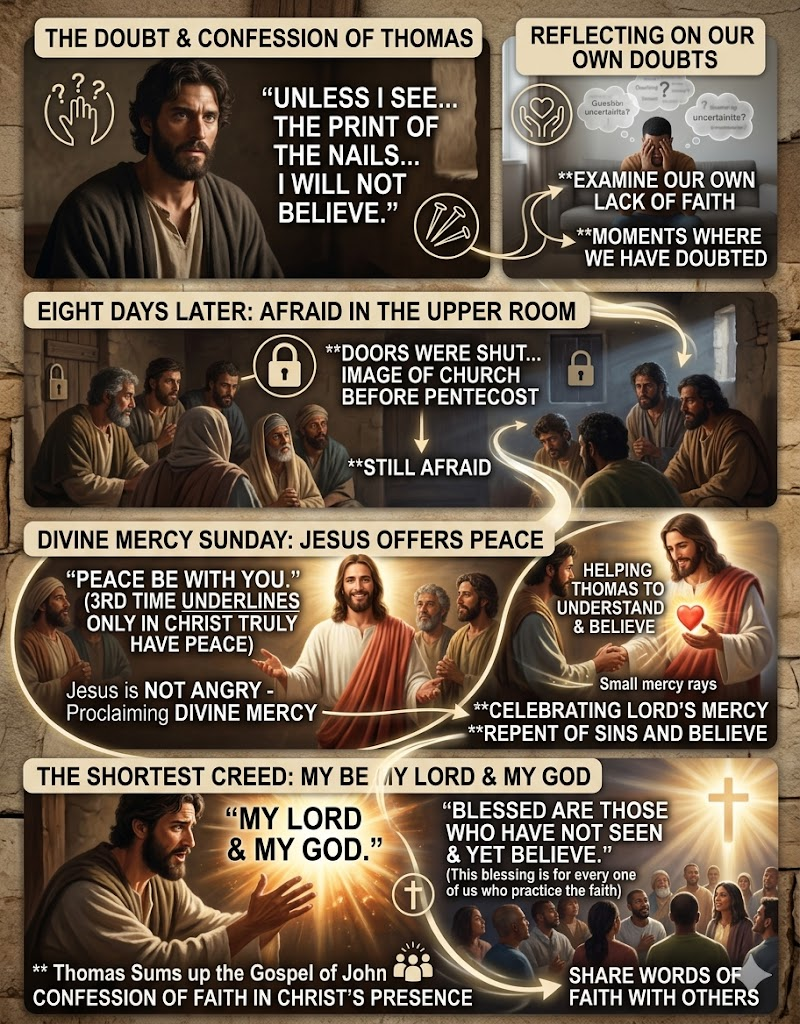
Design Credits: This visual summary was developed by Gemini 3 Flash using the Nano Banana 2 engine. Although curated for accuracy and narrative precision, this AI-generated work based on Fr. Tim's teaching may have a few typographic inconsistencies or visual redundancies. Non-profits have permission to use this in their ministry.
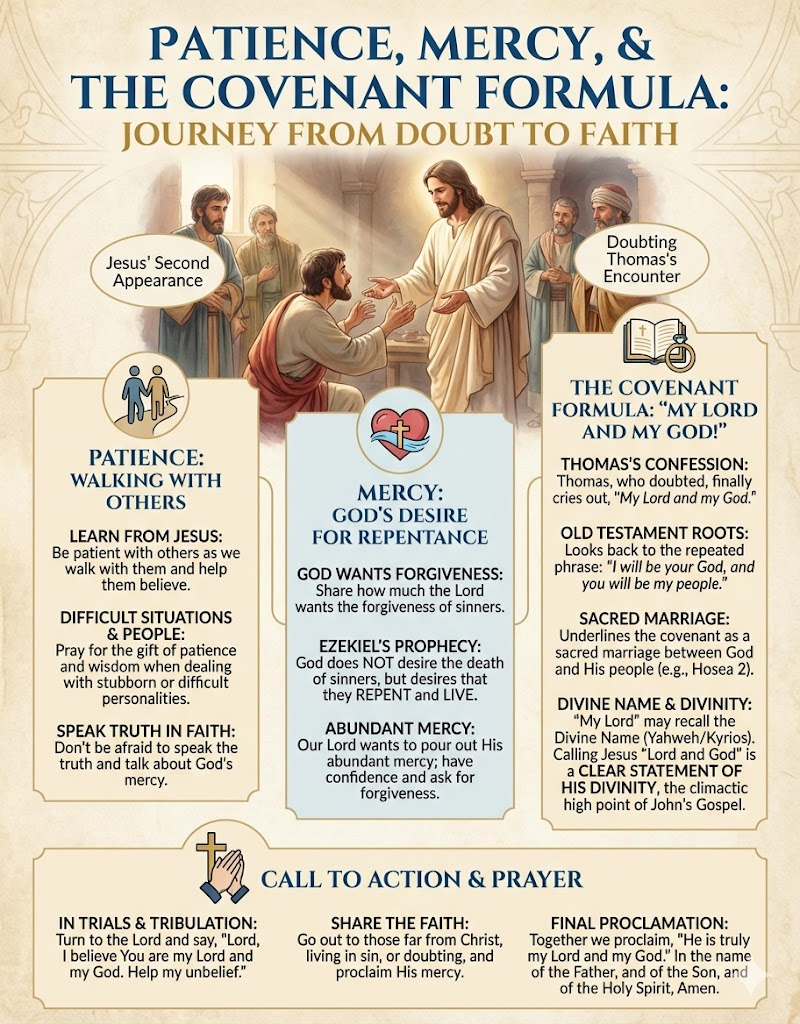
Design Credits: This visual summary was developed by Gemini 3 Flash using the Nano Banana 2 engine. Although curated for accuracy and narrative precision, this AI-generated work based on Fr. Tim's teaching may still have a few typographic inconsistencies or visual redundancies. Non-profits have permission to use this in their ministry.
Click banners for infographics related to Fr. Peters’ lecture.
2nd Sunday of Easter (A)
INSIGHTS FOR HOMILY
PREPARATION
John 20:19-31
God’s Gift of Peace
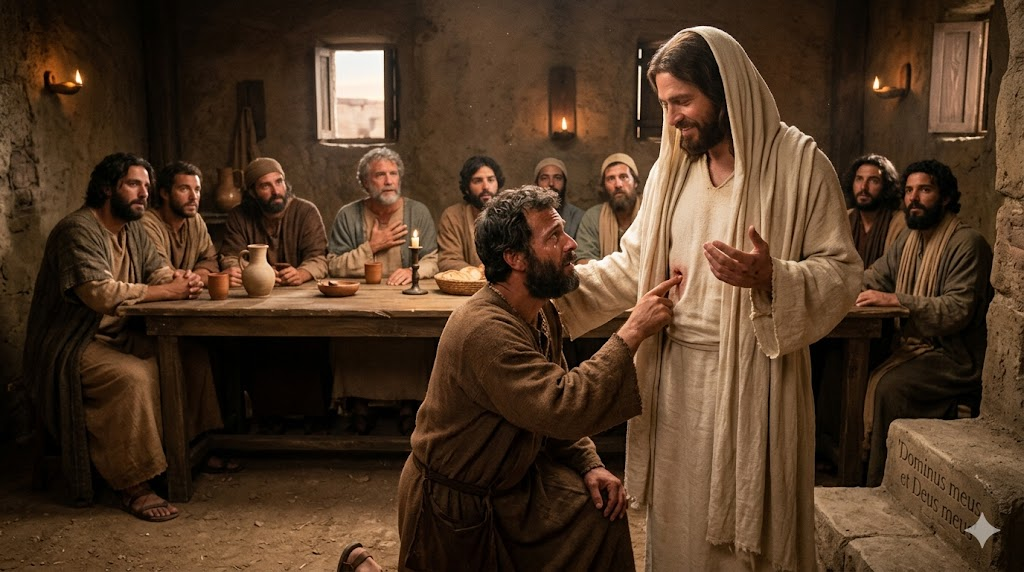
Are your parishioners searching for true peace, or just a temporary break from life’s daily conflicts? In his insightful commentary, Larry Broding dives into the profound reality of Christ’s post-resurrection appearances to unpack the difference between a mere void of violence and the transformative Shalom that Jesus offers. By exploring the historical context of the disciples hiding behind locked doors, Broding provides preachers with a rich, theological foundation to help their communities move from fear to the sheer joy of God’s presence.
Why this commentary matters for your homily:
- Illuminates Cultural Context: It reveals the social significance of the locked doors. In a 1st-century Jewish community built on open access, locking doors was a stark symbol of suspicion and isolation, highlighting the immense fear the disciples felt.
- Redefines Peace: It elevates the concept of Shalom from a simple greeting to a profound theological reality—it is the balance and joy that comes when God is actively working in the world and in our spirits.
- Connects to Creation: It beautifully links Jesus breathing the Holy Spirit on the disciples to Genesis 2:7, illustrating that this act is not just a passing of authority, but the impartation of a newly risen, re-created life.
- Clarifies Radical Forgiveness: It offers a vivid analogy for the forgiveness of sins—like loosening a knot—challenging believers to forgive completely and permanently, never bringing the sin up again.
- Integrates the Catechism: It grounds the reflection in Church teaching (CCC 645-647), articulating the mystery of Christ’s glorified body that is at once tangible and completely unconstrained by space and time.
Read Larry Broding’s full commentary to help your congregation step out from behind their own locked doors of fear and fully embrace the living, breathing peace of the risen Christ.
GO DEEPER
CATHOLIC AI PROMPTS FOR HOMILY PREPARATION
To assist in crafting a homily that is both theologically rigorous and pastorally sensitive, a preacher might ask an AI assistant the following questions (simply copy and paste a question into chat bot in the lower right corner of the page):
- Linguistic Context of “Jews”: “Broding notes that John uses ‘Jews’ as a generic term for the Jewish leadership. How can I explain this distinction to my congregation to ensure the text is understood in its specific historical and political context without sounding anti-Semitic?”
- The Theology of “Pre-Forgiveness”: “Regarding verse 20:23, the commentary highlights that the past tense indicates sins ‘have been sent away’ already. How can I use this to preach on the Sacrament of Reconciliation as a celebration of God’s already-accomplished victory rather than a focus on our own shame?”
- The Symbolism of Locked Doors: “Broding points out that locked doors were culturally suspicious and signaled a total break from the community. How can I use this to describe the ‘locked doors’ of the modern heart—fear, trauma, or isolation—that Jesus enters anyway?”
- The Deep Meaning of “Shalom”: “How can I expand on the definition of Shalom as ‘God putting the world in balance’? Can you provide examples of ‘spiritual imbalance’ (cynicism, doubt, war) that the peace of the Risen Christ specifically addresses?”
- New Creation Imagery: “The commentary links ‘breathed on’ in verse 22 to Genesis 2:7. How can I develop the theme of the Resurrection as a ‘New Creation’ where the Holy Spirit gives us a completely different kind of ‘breath’ or life?”
- The Nature of the Risen Body: “Based on CCC 645-647, how can I describe Jesus’ body as being both ‘tangible’ and ‘not limited by space’? How does this help us understand our own future hope for the resurrection of the body?”
- Skepticism vs. Cynicism: “Broding distinguishes between Thomas’s skepticism and his ‘cynicism.’ How can I preach on the difference between someone who has honest questions and someone who has closed their heart to the possibility of joy?”
- The Two Senses of “Believe”: “The commentary mentions believing in (trust) and believing about (truth). How can I structure a homily that speaks to both the person who lacks intellectual knowledge of the faith and the person who knows the facts but lacks personal trust?”
- The Mission of “Sending”: “Jesus sends his followers into the ‘cultural world’ just as the Father sent Him into the ‘physical world.’ What are some specific ‘cultural worlds’ today—media, politics, the workplace—where we are called to bring Christ’s forgiveness?”
- The Road to Peace: “Broding asks, ‘Why does the Christian walk lead through forgiveness to peace?’ Can you help me draft a concluding reflection that connects our willingness to forgive others with our own ability to experience Christ’s Shalom?”