MAR 30, 2025


Homilies
Homilies


The Catholic AI assistant (specifically trained for this website), located at the bottom right-hand corner, offers insights into this Sunday’s Readings, gives guidance on the Mass, and answers questions about the Catholic Faith.


Sunday Podcast (USCCB)
4th Sunday of Lent C


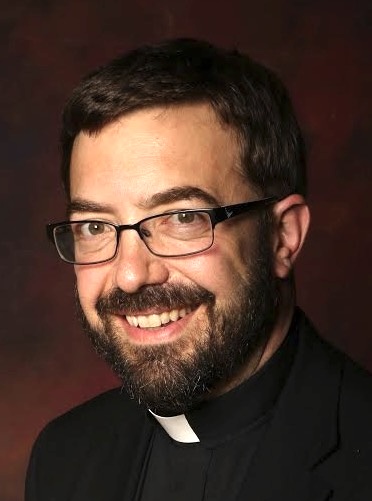
Fr. Andrew Ricci
4th Sunday of Lent C
Study, Pray, Serve (2022)
Fr. Andrew Ricci, ordained in 1997, is a priest for the Diocese of Superior. He is the Rector of the Cathedral of Christ the King.

The Father’s Response to his Children
The parable of the Prodigal Son offers powerful insights into the spiritual life. May the lessons we learn inspire us to return to our Heavenly Father and accept his gifts of grace and reconciliation.
Key Points from the Readings
1st Reading – Joshua 5:9a,10-12
- The people of Israel no longer eat manna; they now eat the produce of the land of Canaan.
- This marks a new transition as the the Lord has “removed the reproach of Egypt” from them.
Psalm – 34:2-7
- “Taste and see the goodness of the Lord.”
- The Lord, who brings blessings and deliverance, is the source of our hope and joy.
2nd Reading – 2nd Corinthians 5:17-21
- Whoever is in Christ is a new creation.
- As ambassadors for Christ we are given the ministry of reconciliation with one another.
Gospel – Luke 15:1-3,11-32
- The parable of the Prodigal Son reveals God’s goodness, patience, and desire for our reconciliation.
- The Father reaches out to both his wayward younger son and his angry, stubborn older son.
SOURCE: Study, Pray, Serve


Bulletin Inserts




Carmelite Lectio Divina
Reflections and Prayers
92 page PDF with refections and prayers for each day of the month.
Lectio Divina March 2025 (PDF)
Lectio Divina March 2025 [Mobi]
Lectio Divina March 2025 [ePub]
“Lectio divina is an authentic source of Christian spirituality recommended by our Rule. We therefore practise it every day, so that we may develop a deep and genuine love for it, and so that we may grow in the surpassing knowledge of Christ. In this way we shall put into practice the Apostle Paul’s commandment, which is mentioned in our Rule: “The sword of the Spirit, too, which is the word of God, is to dwell abundantly in your mouth and in your hearts; and whatever things you have to do, let them be done in the word of the Lord.” (Carmelite Constitutions (2019), n. 85.)
Source: Carmelites

Bible Study Notes

- The Jerome Biblical Commentary,
- The New Jerome Biblical Commentary, and
- The Navarre Bible.
SOURCE: St. Charles Borromeo Catholic Church (Picayune, MS)
Life’s Transitions

Life transitions are difficult. Some are joyful, like moving into a new job or a better house, the arrival of children or grandchildren. Some are painful, like the loss of a spouse or employment. These transitions require personal change in new and uncontrollable directions. Sometimes the best way to face these transitions is to celebrate them.
In the first reading, Joshua prepared the people to enter the Promised Land. The days of nomadic survival were over; the time of conquest and settlement were at hand. Just the people celebrated Passover before they passed through the Red Sea to freedom, the people ate the Passover before they crossed the Jordan River into Palestine. So, Passover became a transition ritual. It bid farewell to life in the desert (represented by the manna that disappeared)…
4th Sunday of Lent C
The Catholic AI assistant (specifically trained for this website), located at the bottom right-hand corner, offers further insights into the Sunday’s Readings. Simply copy & paste any text on this page into it for a more in depth analysis. OR simply ask your own questions.
Passover
Joshua 5:9a, 10-12
1ST READING
Key Points

I. The Celebration of Passover
- Joshua 5:9a: The LORD’s declaration to Joshua: the reproach of Egypt has been lifted from the Israelites.
II. The First Passover in the Promised Land
- Joshua 5:10: The encampment at Gilgal, on the plains of Jericho.
- Celebration of the Passover on the fourteenth day of the month, during the evening.
III. The Consumption of Unleavened Bread and Roasted Grain
- Joshua 5:11: Description of the Israelites’ consumption of the produce of the land: unleavened bread and roasted grain.
IV. The Cessation of Manna and Resumption of Regular Provisions
- Joshua 5:12: The end of the manna that was provided since their departure from Egypt.
- Commencement of consuming the produce of Canaan, marking the end of the journey and the beginning of their new life in the Promised Land.
Clipart by Fr. Richard Lonsdale; pop-up links direct to Catholic centered content on Google AI search
4th Sunday of Lent C
1ST READING
Hearers of the Word

Click on slide to watch video by Fr. Kieran J. O’Mahony
4th Sunday of Lent C
1ST READING
Context
HISTORY
Joshua 5:9a, 10-12 recounts the events following the Israelites’ crossing of the Jordan River into the Promised Land under Joshua’s leadership. The historical and political context of this passage is rooted in the ancient Near Eastern world, particularly in the transition of power from Moses to Joshua and the Israelites’ journey to claim their inheritance.
The book of Joshua was likely composed during the late 7th to early 6th century BCE, several centuries after the actual events took place. Its primary purpose was to provide a historical account of Israel’s conquest of Canaan while emphasizing the faithfulness of God in fulfilling His covenant with Abraham. The intended audience was the Israelites themselves, who sought to understand their past and reinforce their national identity.
As Joshua led the Israelites into Canaan, they faced the challenge of adapting to a new land and solidifying their relationship with God. Joshua 5:9a alludes to the removal of the “reproach of Egypt,” signifying the spiritual rebirth and purification of the people as they enter the Promised Land. The verses that follow describe their first Passover celebration in Canaan and the cessation of the manna that had sustained them throughout their wilderness journey. These details highlight the importance of obedience and covenant renewal as the Israelites navigate the next chapter of their history.
4th Sunday of Lent C
SOCIETY
Joshua 5:9a, 10-12 unfolds in a sociological and cultural context defined by the Israelites’ transition from a nomadic lifestyle to a settled one in the Promised Land. The passage sheds light on the customs, beliefs, and practices that shaped their identity as a people and informed their understanding of God’s covenant.
The Israelites’ celebration of Passover in the new land signifies their commitment to maintaining their cultural heritage and preserving the traditions that define them as a nation. This feast commemorates their liberation from slavery in Egypt, highlighting the importance of collective memory and shared experiences in shaping their identity. The event serves as a reminder of God’s faithfulness and the ongoing covenantal relationship between Him and His people.
As they prepare for their first Passover in Canaan, the Israelites face the challenge of adapting to new agricultural practices and sustaining themselves on the produce of the land. This shift away from the divine provision of manna underscores the sociological changes they must navigate as they embrace a new way of life. The passage emphasizes the importance of self-sufficiency and the need to rely on their own resources as they establish their place in the Promised Land.
4th Sunday of Lent C
THEOLOGY
Joshua 5:9a, 10-12 holds significant theological relevance within the Roman Catholic tradition, emphasizing themes of renewal, covenant, and the fulfillment of God’s promises. These themes offer valuable insights for contemporary Catholics as they navigate their faith journey.
The passage highlights the spiritual renewal of the Israelites as they enter the Promised Land, marking a new chapter in their relationship with God. This concept resonates with the Catholic understanding of the continuous process of conversion and growth in faith. Through sacraments like Baptism and Reconciliation, Catholics experience the transformative power of God’s grace and the call to ongoing spiritual renewal.
The celebration of Passover in the passage underscores the enduring nature of God’s covenant with His people. Similarly, Catholics celebrate the Eucharist as the “new covenant” established by Jesus Christ, through which they participate in God’s saving love. This connection between the Israelites’ covenantal feast and the Catholic liturgy emphasizes the continuity of salvation history and the unity of the Old and New Testaments.
4th Sunday of Lent C
1ST READING
Wikipedia
4th Sunday of Lent C
1ST READING
Agape Bible Study

The Israelites celebrate the Passover in the Promised Land
EXCERPT: This event took place after Joshua had led the children of Israel to cross the Jordan River into Canaan when God parted the waters and the people crossed over on dry ground (Josh 3:14-17). It was a miracle that recalled the parting of the water in the miracle crossing of the Red Sea in their exodus from Egypt (Ex 14:15-22). The “plain of Jericho” is the steppe-like region west of the Jordan River. God commanded the Israelites to keep the Passover sacrifice annually in remembrance of the day He saved those obedient children of Israel from the death of the tenth plague (Ex 12:14, 43-51; Lev 23:5; Num 28:16).
there on the fourteenth day of the month, at evening [between the twilights = noon], in the plain of Jericho.
The liturgical worship service began at noon, and at the end of the service, they slaughtered the Passover lambs and goat kids. In Jesus’s time, the slaughtering of the Passover victims took place between the third and ninth hours (3-5 PM) according to Jewish priest and historian Flavius Josephus: So these high priests, upon the coming of their feast which is called the Passover, when they slay their sacrifices, from the ninth hour [3 PM] till the eleventh [5 PM], but so that a company not less than ten belong to every sacrifice (for it is not lawful for them to feast singly by themselves), and many of us are twenty in a company … (Josephus, Wars of the Jews, 6.9.3 [423]). If Passover fell on a Friday, the slaughtering of the victims was an hour earlier(Mishnah: Pesahim, 5:1D).
11 On the very next day after the Passover, they ate what the land produced, unleavened bread, and roasted ears of corn [grain]. 12 The manna stopped the day after they had eaten the produce of the land. The Israelites from that year onwards ate the produce of Canaan and had no more manna.
The gift of the manna that began after crossing the Red Sea on the Exodus out of Egypt (Ex 16:4-36) stopped on the day after the Passover sacrifice in the Promised Land, on the fifteenth of Nisan that was the celebration of the Feast of Unleavened Bread (Ex 13:14; Lev 23:6-7; Num 28:16-25). According to the Jewish Mishnah and the first century AD Jewish priest/historian Flavius Josephus, the Passover sacrifices began at noon on the fourteenth of Nisan. The people were to consume the sacred meal of the Passover victims after sundown in the Feast of Unleavened Bread. Since the next day started at sunset, the meal celebrated by Joshua and the people was on the night of the fifteenth was the first night of the Feast of Unleavened Bread. Eating the Passover victims not only remembered the first meal of the Passover before the Exodus out of Egypt (Ex 12:1-20), but this event also signaled the renewal of the covenant and sacred meal in the ratification of the Sinai Covenant in Exodus 24:3-11. The end of the gift of manna is the signal that the desert-wandering period of Israel’s history was over. The people of God would not receive “bread from Heaven” again until the first night of the Feast of Unleavened Bread at the Last Supper. At that meal, Jesus turned unleavened bread into His flesh and wine into His blood in the inaugural sacred meal of a New Covenant (Lk 22:15, 19-20; promised in Jer 31:31-34). It is a sacred meal that you and I continue to consume in the celebration of the Eucharist.
SOURCE: Agape Bible Study Copyright © 2015; revised 2024 (Used with permission.)
Bible Study Notes
- The Jerome Biblical Commentary,
- The New Jerome Biblical Commentary, and
- The Navarre Bible.
SOURCE: St. Charles Borromeo Catholic Church (Picayune, MS)
An Answer To
A Cliche
“Life’s not fair!” How many times have we heard that phrase? Life’s inequities are matters of fact, not opinions that can be debated.
The root of life’s inequities is sin. Life isn’t fair because we are all sinners, living together in a moral universe. Sin denies us rights and entitlements. Life isn’t fair because we fail one another.
What’s the answer to this dilemma? Should we remain on this merry-go-round of hurt and cynicism and resentment that builds walls between us? In these short verses from Second Corinthians, Paul gave us God’s answer to the problem: reconciliation. He forgave us. We experience that forgiveness in a relationship with Jesus Christ. But he offers more than forgiveness. He offers us intimacy. When we are in Christ, we are as close to the Father as his Son is.
What is our responsibility for such closeness? Evangelization. We are to tell others about the Good News of God’s reconciliation. More important, we are to live that evangelization. We are to forgive others.
Life isn’t far. That’s why God gave us forgiveness.
4th Sunday of Lent C
The Catholic AI assistant (specifically trained for this website), located at the bottom right-hand corner, offers further insights into the Sunday’s Readings. Simply copy & paste any text on this page into it for a more in depth analysis. OR simply ask your own questions.
Transformation
2 Corinthians 5:17-21
2ND READING
Key Points

I. New Creation in Christ
- 2 Corinthians 5:17: Believers in Christ become new creations; the old life is gone, and a new life begins.
II. God’s Reconciliation Through Christ
- 2 Corinthians 5:18-19: God reconciles the world to Himself through Christ, not counting people’s sins against them.
- The message of reconciliation is entrusted to believers, who serve as Christ’s ambassadors.
III. The Appeal for Reconciliation
- 2 Corinthians 5:20: Believers plead on Christ’s behalf for others to be reconciled to God.
IV. Christ’s Sinless Sacrifice
- 2 Corinthians 5:21: Jesus, who knew no sin, became sin for our sake, so that we might become the righteousness of God through Him.
Clipart by Fr. Richard Lonsdale; pop-up links direct to Catholic centered content on Google AI search
4th Sunday of Lent C
2ND READING
Hearers of the Word

Click on slide to watch video by Fr. Kieran J. O’Mahony
Theology of the Body

4th Sunday of Lent C
2ND READING
Context
HISTORY
2 Corinthians 5:17-21 is situated within the historical and political context of the early Christian community in Corinth, a cosmopolitan city grappling with various theological and ethical challenges. The author, the Apostle Paul, addresses these concerns to reconcile the Corinthian believers with one another and strengthen their faith in Christ.
At the time of its composition, the Corinthian church faced internal divisions and external pressures from Jewish and Roman authorities. Paul, himself a former persecutor of Christians, sought to clarify the meaning of Jesus’ crucifixion and resurrection, emphasizing the transformative power of faith in Christ. He reminds the Corinthians that they are part of a new creation, reconciled to God through the selfless love of Christ.
The intended audience is the diverse group of believers in Corinth, many of whom struggled to balance their Christian identity with the prevailing cultural influences of the ancient world. Paul’s background as a Jewish scholar and convert to Christianity offered a unique perspective on the relationship between Judaism and the emerging Christian faith. His teachings in this passage encourage the Corinthians to embrace their newfound identity in Christ and serve as ambassadors of God’s reconciling love.
4th Sunday of Lent C
SOCIETY
2 Corinthians 5:17-21 reflects the sociological and cultural context of the early Christian community in Corinth, which was heavily influenced by Jewish traditions, Roman rule, and Greek philosophy. This passage, focusing on themes of transformation and reconciliation, provides insight into how these cultural factors shaped the message and its relevance to the original audience.
Corinth was a diverse city, with a blend of Jewish, Greek, and Roman influences. This mixture of cultures presented challenges for early Christians, who were striving to define their identity and values within the broader social context. Paul’s emphasis on being a “new creation” in Christ (2 Corinthians 5:17) speaks to this struggle, encouraging the Corinthian believers to embrace their transformed lives and prioritize their Christian identity over cultural divisions.
The passage also addresses the concept of reconciliation, a crucial aspect of community life in Corinth. Social and cultural norms valued harmony and unity, which often meant that relationships between Jews and Gentiles were strained. Paul’s teaching on Christ’s reconciling work (2 Corinthians 5:18-19) challenges these boundaries, urging the Corinthians to become ambassadors of God’s love and to prioritize unity within their diverse community.
4th Sunday of Lent C
THEOLOGY
2 Corinthians 5:17-21 holds deep theological significance within the Roman Catholic tradition, emphasizing themes of transformation and reconciliation that remain relevant for contemporary Catholics. These themes provide valuable insights for today’s believers as they navigate their faith journey.
The passage highlights the concept of “new creation” (2 Corinthians 5:17), which resonates with the Catholic understanding of baptism as the sacrament of rebirth. Through baptism, Catholics are cleansed of original sin and become adopted children of God, marking the beginning of their spiritual transformation. This new life in Christ calls Catholics to live in accordance with Gospel values and contribute to the establishment of God’s Kingdom on earth.
The teaching on reconciliation in the passage also aligns with Catholic theology, particularly the sacrament of reconciliation (confession). Catholics are encouraged to participate in this sacrament to receive forgiveness for their sins and experience the healing power of God’s mercy. By participating in reconciliation, contemporary Catholics continue the work of Christ’s ambassadors, promoting unity and peace within the Church and beyond.
4th Sunday of Lent C
2ND READING
Wikipedia
4th Sunday of Lent C
2ND READING
Agape Bible Study
Our Ministry of Reconciliation
EXCERPT: St. Paul’s message to the Christians at Corinth (and to us) is that God in Christ has reconciled us to Himself. In verse 17, Paul comments on the contrast between the “before and after” in one’s life. The life before one’s conversion experience and the profound change that takes place in the Sacrament of Baptism when one becomes a “new creation” and a spiritually reborn child in the family of God. Through the grace imparted in the Sacrament of Christian Baptism, a person becomes a member of Christ’s Body to live with and in Christ, and with the promise of eternal life for those who remain faithful (Mk 16:16).
The point is that God, who created all things through Christ Jesus (Jn 1:3), has restored his work that was deformed by sin, through re-creating the goodness of His creation in God the Son (Col 1:15-20). The central figure of the “new creation” (Gal 6:15), which extends to the whole universe (Col 1:19; 2 Pt 3:13; Rev 21:1), is the reborn humanity created through Jesus (Eph 2:15) in the Sacrament of Christian Baptism. Those reborn through water and the Holy Spirit become destined to lead a new life. No longer members of the family of Adam, they are destined to lead a sanctified life in the family of God that promises the gift of eternal salvation (Jn 3:3, 5; Mk 16:16).
The transforming life experience of Christian Baptism prepares us for becoming Christ’s ambassadors to the world in sharing the Gospel of salvation. But to be effective in our ministry of reconciliation, we must be conscious of the need for continual conversion and reconciliation in our lives if we want to be righteous witnesses who are fit to carry forth the Gospel of salvation to others.
SOURCE: Agape Bible Study Copyright © 2015; revised 2024 (Used with permission.)
Bible Study Notes
- The Jerome Biblical Commentary,
- The New Jerome Biblical Commentary, and
- The Navarre Bible.
SOURCE: St. Charles Borromeo Catholic Church (Picayune, MS)
Second Chances
Lk 15:2 The religious leaders objected to the fact Jesus built his ministry upon the tax collector and the sinner. Many urban Jewish leaders stressed purity in worship and lifestyle. Such an outlook encouraged exclusion. The rural background of Jesus gave him a wider vision of ministry.
Lk 15:11 “the property belonging to (me)” is literally “the property falls to (me)”
Lk 15:18-19 “Standing up . . . ” also has the meaning of “rising up,” code words for resurrection.
Lk 15:19 “threw his arms around him” is literally “fell on his neck” The father embraced his son so tightly, his head fell on the neck and shoulders of his son.
Lk 15:22 “Quick!” This adverb modified the fetching the robe, the ring, and the sandals.
“the best one” is literally “the first one.” The robe was not only the finest. It represented the place of highest honor in the family. The family ring also indicated an honored status.
Lk 15:23 “Get the wheat-fed calf.” Wheat was the grain of the rich. Barley was the grain of the poor. Not only was this calf raised for a special occasion, it was raised for the best flavor. No expense was spared on this calf
Lk 15:24, 32 “he was lost” The word “lost” does not mean “to lose one’s way.” Its meaning lies closer to the word “destroy.” The “lost” were those who acted in a self-destructive way. “Lost” in this sense parallels “death.”
The Pharisees criticized Jesus for the focus of his ministry: the outcasts. In response, Jesus told a parable of the lost, the righteous, the loving father of both, and the great party that brought all three together. [1-3]
According to Jewish custom, a younger son received one-third of an inheritance at the death of the father, but it could be divided during the father’s lifetime. In the parable, the younger son not only “cashed out” his inheritance in an economic sense; he rejected his cultural and religious birthright when he moved from his home (Israel) to a foreign country. To use another economic saying, the younger son “sold (Judaism) out.” [11-12]
When the young man spent his inheritance foolishly, he found that he was truly a foreigner, someone without a home. To survive, he was willing to work as a swine herder; since Jews considered pigs unclean, the young man made himself unclean. Now he was truly alone, for no Jew even living in a foreign country would help him. The local pagans even despised him; they would not feed him pig food. [13-16]
Repenting, the son decided to return home and accept any punishment given him. But, instead of punishment, the son received a party with a place of honor from his father. The father rejoiced, for his son, dead to the family and the community, was now alive. [17-24] The early followers of Jesus could see themselves at the celebration; the ritual was baptism itself, the sign of repentance, rebirth, and new life with the Father…
4th Sunday of Lent C
The Catholic AI assistant (specifically trained for this website), located at the bottom right-hand corner, offers further insights into the Sunday’s Readings. Simply copy & paste any text on this page into it for a more in depth analysis. OR simply ask your own questions.
The Prodigal Son
Luke 15:1-3, 11-32
GOSPEL READING
Key Points

I. Setting the Scene: Grumbling Over Jesus’ Company
- Luke 15:1-3: Tax collectors and sinners gather around Jesus.
- Pharisees and scribes grumble about His company.
II. The Parable of the Lost Son
- Luke 15:11-12: A man’s younger son requests his inheritance, then leaves for a distant country.
III. The Son’s Life in the Distant Country
- Luke 15:13-16: The son squanders his inheritance and experiences a severe famine.
- He ends up working as a servant to a Gentile and envying the pigs’ food.
IV. The Son’s Repentance and Return
- Luke 15:17-19: The son comes to his senses and returns to his father.
- He confesses his sins and asks to be treated like a servant.
V. The Father’s Reception and Celebration
- Luke 15:20-24: The father welcomes and restores his son as a beloved child, throwing a lavish celebration.
VI. The Older Brother’s Resentment
- Luke 15:25-28: The older brother resents the celebration and refuses to enter the house.
VII. The Father’s Response to the Older Brother
- Luke 15:29-31: The father reminds the older brother of his continued love and blessings.
- He emphasizes the importance of celebrating the lost son’s return and repentance.
VIII. Conclusion: Repentance and Reconciliation
- Luke 15:32: Celebration in heaven over one repentant sinner; reaffirming God’s joy in the salvation of the lost.
Clipart by Fr. Richard Lonsdale; pop-up links direct to Catholic centered content on Google AI search
4th Sunday of Lent C
GOSPEL READING
Hearers of the Word

Click on slide to watch video by Fr. Kieran J. O’Mahony
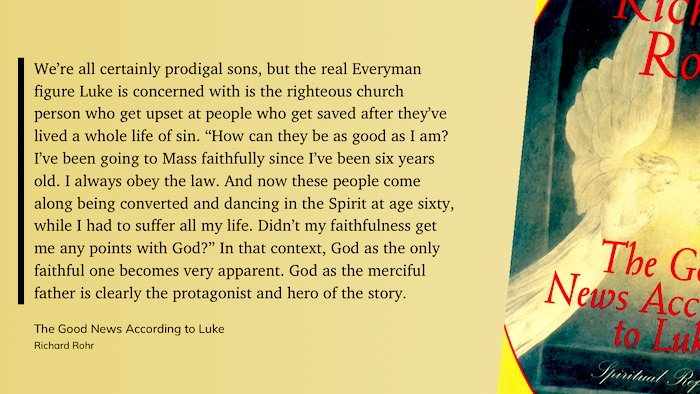
Richard Rohr
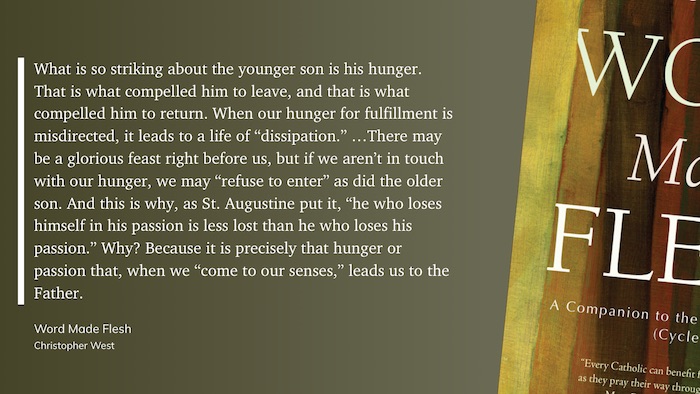
Christopher West
4th Sunday of Lent C
GOSPEL READING
Context
HISTORY
Luke 15:1-3, 11-32 presents the parable of the Prodigal Son within the historical and political context of first-century Palestine, offering insight into the social and religious dynamics of the time. The author, Luke, wrote this Gospel for a Gentile audience, addressing concerns related to salvation, forgiveness, and the inclusive nature of God’s love.
During this period, Jewish society was divided into different groups, including the Pharisees, who emphasized strict adherence to the law, and the “sinners,” those who did not conform to societal expectations. Jesus’ dining with sinners (Luke 15:2) challenges these divisions, reflecting the broader social and political tensions between those who held power and those who were marginalized.
The parable of the Prodigal Son serves as a response to the grumbling of the Pharisees and scribes, demonstrating God’s boundless mercy and love for all, including those who have strayed from the path of righteousness. The younger son’s journey from rebellion and squandering to repentance and redemption mirrors the spiritual journey of many individuals who seek forgiveness and reconciliation with God.
4th Sunday of Lent C
SOCIETY
The parable of the Prodigal Son (Luke 15:1-3, 11-32) is deeply rooted in the sociological and cultural context of first-century Palestine, addressing prevailing customs, beliefs, and practices that influenced its meaning and interpretation.
In Jewish society at the time, the concept of honor and shame played a significant role in shaping social relationships. The younger son’s request for his inheritance and subsequent departure would have brought shame upon his family. The father’s reaction, however, challenges societal norms, as he welcomes his son with open arms upon his return. This emphasizes the importance of forgiveness and reconciliation within the community, transcending societal expectations.
Furthermore, the division between the Pharisees, who strictly adhered to Jewish law, and the “sinners,” who were seen as transgressors, influenced the interpretation of the parable. Jesus’ association with sinners and his portrayal of the forgiving father in the parable challenge the religious and cultural boundaries that defined the social landscape of the time.
4th Sunday of Lent C
THEOLOGY
The parable of the Prodigal Son (Luke 15:1-3, 11-32) holds profound theological significance within the Roman Catholic tradition, emphasizing themes of mercy, repentance, and the unconditional love of God. These themes continue to resonate with contemporary Catholics, offering guidance and inspiration in their spiritual journey.
The Catholic Church recognizes the importance of the sacrament of reconciliation (confession), which mirrors the reconciliation between the father and his younger son in the parable. Through this sacrament, Catholics can experience the healing power of God’s mercy, as they confess their sins and receive absolution. This practice emphasizes the central message of the parable: God’s love and forgiveness are always available to those who seek it.
Moreover, the parable highlights the importance of humility and self-reflection in the Christian life. The younger son’s realization of his mistakes and subsequent repentance serve as a reminder for contemporary Catholics to examine their own lives, acknowledge their shortcomings, and seek God’s forgiveness. In doing so, they can grow in their faith and deepen their relationship with Christ.
4th Sunday of Lent C
GOSPEL READING
Wikipedia
4th Sunday of Lent C
GOSPEL READING
Agape Bible Study
The Parable of the Lost Son
EXCERPT: Verses 1-3 set the stage: Jesus was teaching the crowds of Jews who came to hear Him preach and see Him work miracles. The despised telones (the tax-collectors who served the Roman authorities) and other sinners drew near to hear Jesus. The Pharisees (the most influential religious party in Judea) and the scribes (the teachers of Mosaic Law) were high-status members of Jewish society who considered themselves among the “righteous.” They interpreted the Scriptures and the Law very rigidly, often neglecting to follow the example of God’s mercy and justice (Lk 11:39-52). They criticized Jesus for His interaction with what they considered the dregs of society.
Jews were obligated to keep themselves ritually clean and fit for worship by avoiding anything that might transmit ritual uncleanness. Unlike those acknowledged ritually “clean,” the “unclean” sinners were not fit to enter the Temple and offer God sacrifice and worship. This event is not the first time this group of self-professed “righteous” Jews criticized Jesus for the kind of company He kept. They made the same complaint against Him in Luke 5:30. Jesus answered their criticism by offering three parables of finding what was lost: The Parable of the Lost Sheep (Lk 15:3-8), the Parable of the Lost Coin (Lk 15:8-10), and the Parable of the Lost Son (Lk 15:11-32).
The Parable of the Lost Son only appears in the Gospel of St. Luke. It is also called the Parable of the Two Sons and the Parable of the Prodigal (wasteful) Son. However, a better title is probably the Parable of the Merciful Father since the father’s mercy is the story’s focus, and he is the pivotal figure. The Parable of the Lost Son is an answer to the criticism of Jesus’s interest in sinners. It is also an insightful commentary on human conduct, illustrating the conflict between free will and responsibility, estrangement and family love, and the theme of forgiveness and reconciliation. But above all, the parable teaches the gift of divine mercy to lost sinners, the kind of people seeking Jesus, and the restoration He promised to those who repented and accepted the coming of His Kingdom.
In verse 11, Jesus begins His parable with “a man had two sons.” He set the contrast in the story between the character of the two sons: the younger son who left home because he wanted the absolute freedom to live as he wished without any obligations except to himself, and the elder son, the father’s heir, who dutifully served the father and stayed at home. The parable divides into two parts: the estrangement of the younger son followed by his return and reconciliation with the father (verses 11-24) and the elder son’s anger when his brother returned (verses 25-31). As in all His parables, the elements of the story are symbolic. They point to Jesus’s teaching on our relationship with God and His Kingdom. Each of the people in the parable represents what is greater than the story presents:
| Symbolic Comparisons in the Parable of the Lost Son | |
| the loving father | God the Father |
| the father’s home | the “Kingdom” of the Old Covenant Church/Temple |
| the distant country | the secular world |
| the elder son | the religiously observant Jews |
| the younger son | the repentant sinner and the estranged Gentile nations of the world |
In Exodus 4:22, God instructed Moses to tell the Egyptian Pharaoh: “Israel is my firstborn son.” If Israel’s status is God’s firstborn son in the human family, then that makes all other non-Israelite members of the human family the younger sons. The people of the Sinai Covenant were collectively the “sons/daughters of God” (in Ex 4:22, the word “son” is in the singular as in Wis 18:13).
In the story, the father extends his love to both sons in the same way Father God extends His love toward the repentant sinner (symbolized by the younger son) and toward the angry older son despite his criticism of the father’s decision to welcome back his brother. The parable stresses God’s willingness to accept all repentant sinners into His Kingdom. As St. Luke mentioned in 7:29-30, tax collectors and sinners who were baptized with the baptism of John [the Baptist] acknowledged the righteousness of God; but the Pharisees and scholars of the Law [scribes], who were not baptized by him, rejected the plan of God for themselves. The younger son embodies men and women of every age, beginning with Adam and Eve, who were the first to disdain the “Father’s” gifts to run after what the Divine Father told them to avoid, losing the inheritance of grace and original justice. As Pope John Paul II wrote, “The parable indirectly touches upon every aspect of the breach in covenant love, every loss of grace, every sin (Dives in Misericordia, 5).
SOURCE: Agape Bible Study Copyright © 2015; revised 2024 (Used with permission.)

SCRIPTURE
SEARCH
FIRST READING (7)
SECOND READING (131)
GOSPEL (64)
This tool created by Jeff Pinyan uses the CCEL Early Church Fathers digital edition of the Philip Schaff collection.
4th Sunday of Lent C

Just Jr., A., Oden, T. C., Carson, D. A., & Oden, E. (Eds.). (2003). Ancient Christian Commentary on Scripture: New Testament III, Luke (Vol. 3). IVP Academic.
Catena Aurea
Luke 15: The Catena Aurea, which means “Golden Chain” in Latin, is a comprehensive biblical commentary comb is a 13th-century biblical commentary compiled by St. Thomas Aquinas. This anthology features insights from over eighty Church Fathers on the four Gospels.