MAR 30, 2025


Homilies
Homilies
- Bishop Barron
- MORE
- 1-MINUTE HOMILY
- 2-Minute Homily
- MSGR. Peter Hahn
- Fr. Jude Langeh
- FR. RUTTIG
- FR. MCCARTHY, OSA
BISHOP
BARRON
4th Sunday of Lent C


4th Sunday of Lent C


ONE MINUTE
HOMILY

4th Sunday of Lent C


TWO MINUTE
HOMILY

4th Sunday of Lent C


MSGR. PETER
HAHN
4th Sunday of Lent C


FR. JUDE
LANGEH, CMF


FR. KEVIN
RUTTIG

4th Sunday of Lent C


FR. TOM
McCARTHY, OSA

4th Sunday of Lent C


Deacon Peter McCulloch

Deacon of the
Diocese of Broken Bay, Australia
Now Featuring Google Notebook LM Podcasts
With each edition THE WORD THIS WEEK will provide conversations between two AI hosts for selected homilies, simulating a podcast-style discussion.
Each NotebookLM discussion is based on the provided homilies. The AI hosts summarize the material, and make connections between topics.
It’s important to remember that these generated discussions are not a comprehensive or objective view of a topic, but simply a reflection of the homilies that have been uploaded.
4th Sunday of Lent C
PODCAST: Deep Dive into Deacon Peter’s 2025 Homily (9:40)

RICK AMSBURY (5:38) – This is a modern adaptation from Media That Matters of the biblical story of The Prodigal Son.
The Greatest Story Ever Told
Click below to show/hide questions.
This discussion guide has been generated by the WORD THIS WEEK'S Catholic AI Assistant based on Deacon McCulloch's homily.

Introduction
Begin with a brief summary of the sermon, focusing on the story of the Prodigal Son and its analogy to God's unwavering love and forgiveness.
Understanding Prodigal Behavior
- Who in the story displayed 'prodigal' behavior, and what does 'prodigal' mean in this context?
- Compare the actions of both the younger and older sons. How did each of them waste what was valuable?
Reflection on Parental Love and Forgiveness
- Discuss the parents' reaction to their son’s return. What does this reveal about the nature of love and forgiveness?
- How does the imagery of the tree filled with white cloths enhance the message of unconditional acceptance?
Personal Reflection: Identifying with the Prodigal Sons
- In what ways do you identify with the younger son? Have there been times you’ve felt distant from God or family?
- Consider if there are moments where you've behaved like the older son, harboring resentment despite outward obedience.
Living the Parable
- Reflect on moments in life where you may have squandered God’s graces. How can you begin to change this?
- What steps can you take to open your heart more fully to God's love and mercy?
Encountering God’s Love
- How does the story of the Prodigal Son reflect God’s message of love and redemption?
- In what ways does the Cross represent God's ultimate call for us to return to Him?
The Consequences of Remaining Unchanged
- Discuss the dangers of hearing and receiving God’s word but walking away unchanged.
- Explore ways to integrate faith experiences more deeply into daily life.
Responding to God’s Invitation
- How can you ensure that you respond to God's invitation of love and forgiveness more fully?
- Discuss practical steps to deepen your relationship with God, such as prayer, community involvement, or spiritual discipline.
Conclusion
Wrap up the discussion by encouraging each participant to reflect on their personal journey of faith and identify specific ways they can act on the message of the Prodigal Son in their lives.
Homily Excerpt
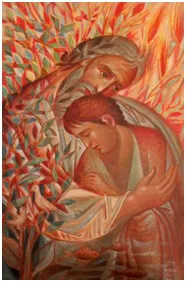
What is a prodigal son? The word ‘prodigal’ comes from the Latin word ‘prodigo’, which means to waste or squander. So, a prodigal son is someone who’s wasting something valuable. That’s something we should think about.
In today’s parable there are two sons. There’s the younger son who’s unhappy and wants to leave home. He asks his dad for his share of the estate. He goes into town and wastes it all.
… a prodigal son is someone who’s wasting something valuable. That’s something we should think about.
Then there’s the older son. He stays at home and works hard, but he’s also unhappy. He resents his family and he refuses to join the celebration.
So, who’s the real prodigal son? Well, they’ve both been wasting the many graces their father has given them. But in the end it’s the one who refuses to come in and accept his father’s love. The younger son has learnt his lesson. He has changed. But the older son hasn’t learnt how to love. He hasn’t learnt how to forgive. His heart is stubbornly closed.

WORD ON FIRE (10:03) – Engage in classic Catholic poetry with the warm voice of Jonathan Roumie, the actor who plays Jesus in “The Chosen” television series.
The Hound of Heaven
Click below to show/hide questions.

OXVISON FILMS (16:00) - This is a modern adaptation of the poem The Hound of Heaven written by Francis Thompson produced by Emblem Media LLC. The book was written by Brian and Sally Oxley, Sonja Oxley Peterson with Dr. Devin Brown. Illustrations by Tim Ladwig. television series.
This discussion guide has been generated by the WORD THIS WEEK'S Catholic AI Assistant based on Deacon McCulloch's homily.
Introduction
1. Begin by reflecting on a time when you felt like you really messed up your life. How did you feel, and what resources or support did you find helpful?
2. Discuss the story of Francis Thompson. What were the key moments in his life that illustrate his struggles and eventual redemption?
Francis Thompson’s Journey
1. Analyze Francis Thompson's early life. How do you think his upbringing influenced his later decisions?
2. Discuss the turning point in his life when the prostitute found him. What can we learn from the people God places in our lives at pivotal moments?
3. How did Francis's passion for writing influence his journey towards redemption?
Understanding 'The Hound of Heaven'
1. Read the excerpt from "The Hound of Heaven." What emotions and imagery stand out to you?
2. Explore the metaphor of God as the 'Hound of Heaven.' How does this imagery challenge or affirm your understanding of God's pursuit of humanity?
3. In what ways do you identify with the narrative of running from God
The Prodigal Son Connection
1. Compare Francis Thompson's story to the Parable of the Prodigal Son. What are the similarities and differences in their experiences of redemption and forgiveness?
2. How does the character of the father in the parable reflect God's nature as depicted in this sermon?
3. Reflect on times when you have experienced or witnessed profound forgiveness. How did it impact those involved?
God’s Relentless Love
1. Discuss the idea of God's immeasurable forgiveness as mentioned by Jesus to Peter. How does this concept resonate with you in your personal life?
2. In what ways does the sermon encourage you to view God differently, especially if you have ever perceived Him as distant or impersonal?
3. How can we embody the forgiving nature of God in our relationships with others?
Lent and Personal Reflection
1. How can the themes of this sermon inform your spiritual practices and reflections during Lent?
2. Identify practical steps you can take to stop "running" and instead embrace the love and grace that God offers.
3. Consider sharing personal goals or intentions for spiritual growth with the group. How can the group support each member's journey during this season?
Conclusion
Conclude the discussion by summarizing any key insights gained from the session. Encourage each participant to continue contemplating God's relentless love and mercy in their own lives.
Homily Excerpt

To be prodigal is to be recklessly wasteful. Francis Thompson had squandered the blessings of his early life, and fell into darkness and misery, just like the younger son in Jesus’ Parable of the Prodigal Son. And just like the Prodigal Son in today’s Gospel, Francis found unconditional love and forgiveness.
So many people today think of God as someone or something distant, perhaps like a mountain waiting to be discovered by intrepid religious searchers.
But that’s not God at all. He is so much more like Francis’ Hound of Heaven, tirelessly searching for the lost and the frightened, always eager to embrace them with his love.
He’s so much more like the father in Jesus’ famous parable, anxiously awaiting his child, and celebrating mightily when he arrives.

Prodigal Son in Key of F
Click below to show/hide questions.
This discussion guide has been generated by the WORD THIS WEEK'S Catholic AI Assistant based on Deacon Peter's homily.
Introduction
- Summarize the theme of the sermon: the Parable of the Prodigal Son, a story of loss, forgiveness, and love.
- Discuss the unique retelling by Todd and Jedd Hafer, highlighting the creative use of alliteration and vivid imagery.
- Consider Charles Dickens' view that this might be the greatest short story ever told.
Discussion Questions
Main Themes
- What are the main themes in the Parable of the Prodigal Son as described in the sermon?
- How does the theme of forgiveness manifest in the story? Who forgives whom, and why is this significant?
Prodigal Definition
- The sermon highlights different interpretations of being "prodigal." How does this definition apply to the younger son, the older son, and the father?
- Discuss your thoughts on the Eastern Orthodox Church's interpretation of this parable as the "Parable of the Loving Father."
Character Analysis
- Identify and discuss the roles of each character: the younger son, the older son, and the father.
- How do the characters' actions and attitudes reflect broader human experiences and religious teachings?
- What lessons do the younger and older sons learn by the end of the story?
Modern Application
- How do the themes of the parable relate to modern life and personal experiences?
- In what ways have you experienced being "prodigal" in your life, or how have you extended forgiveness?
Reflection on God's Nature
- How does the father's response in this parable reflect the nature of God as described in the sermon?
- Discuss the importance of realizing and returning to God’s mercy, as suggested in the sermon.
- Why might people struggle to return or stay connected to God's love, based on the sermon's insights?
Concluding Thoughts
- Reflect on the sermon's closing advice about focusing on divine love and forgiveness for a fulfilling future.
- How can understanding this parable influence one’s personal spiritual journey and community life?
Optional Activities
- Encourage group members to write their own brief "Prodigal Son" story using a focal word or theme.
- Create a list of actions that embody the father's extravagant love and discuss ways to practice them in daily life.
Homily Excerpt

According to Charles Dickens, the greatest short story ever told is Jesus’ Parable of the Prodigal Son. It’s a tale of loss, hurt, forgiveness and love, and it’s so well known that it’s refreshing when someone approaches it in a new way.
That’s what Todd and Jedd Hafer have done in their book Mischief from the Back Pew. They’ve given us another version of this story, which they call The Prodigal Son in the Key of F. Here it is, with a few modifications.
Feeling footloose and frisky, a feather-brained fellow forces his fine father to fork over his share of the family finances. He then flies off to foreign fields and fritters away his fortune, feasting fabulously with faithless floozies and fickle friends.
Fleeced by these foolish fellows and facing famine, he finds himself feeding farmyard animals. And feeling famished and frail, he feels forced to fill his frame with frightfully filthy foraged food.

THE WORD THIS WEEK invites you to check out the Catholic AI assistant (located at the bottom right-hand corner), a homily preparation resource you can use to clarify or develop the insights and themes of Deacon Peter’s homilies.
Fr. Austin Fleming
4th Sunday of Lent C

2010 HOMILY – The four pivotal words in this passage are these: “Coming to his senses...”
“Coming to his senses the son thought,
‘How many of my father’s hired workers
have more than enough to eat, but here am I,
dying from hunger?’”
If the story of the prodigal son were a comic strip
this is where there’d be a light bulb over his head,
indicating that he’d just had a great idea.
This discussion guide has been generated by the WORD THIS WEEK’S Catholic AI Assistant based on Father Austin’s homily. NEED HELP? Copy and paste a question into the chat bot in the lower right corner of the screen and have our Catholic Assistant help you.
Discussion Points:
1. The Prodigal Son’s Moment of Realization
– Discuss the metaphor of the light bulb indicating realization. How does this symbolize enlightenment or conversion?
– What led to the younger son’s moment of clarity? Reflect on embarrassment, hunger, and cleverness.
– How do these aspects relate to situations in your own life where you realized you needed to change direction?

2. The Motivations Behind Returning
– Discuss whether the son’s intentions to return home were more about self-preservation or repentance.
– How do human motives often blend self-interest with genuine contrition?
– Explore the father’s reaction. Why is it significant that the father doesn’t care about the son’s reasons for returning?
3. God’s Unconditional Love
– Reflect on the father’s readiness to welcome the son home. How does this mirror God’s love for us?
– How can we relate this to experiences where we found compassion and acceptance despite our mistakes?
– Discuss the implications of God waiting for us before we “come to our senses.” How does that shape our understanding of divine forgiveness?
4. Personal Reflection and Real-Life Application
– Identify personal areas of “foolishness” or poor decision-making. Where do you feel you need a change in your life?
– What light-bulb moments do you need in various aspects of your life: personal, work, family, or spiritual?
– Encourage sharing on questions such as what has been squandered, neglected, or what true needs remain unfed.
5. Examining Selfishness and Fulfillment
– Reflect on whether, like the younger son, you’ve been selfish with gifts or blessings. How can you cultivate a spirit of giving?
– Discuss fulfillment and the “hungers” within you—are they healthy, or do they require reevaluation?
6. Embracing Change and Seeking Forgiveness
– How can you leave behind behaviors or attitudes to find your “way home”?
– Share experiences of needing and seeking forgiveness. How does it feel to lower your defenses and accept love?
7. The Role of the Older Brother
– How does the older brother’s jealousy and stubbornness serve as a warning?
– Invite discussion on how one might avoid his fate, acknowledging light when it dawns on others as well as oneself.
8. Symbolic Feasts and Inclusion
– Consider the feast to which both brothers are invited. How does this parallel our own inclusion at God’s table?
Reflection Questions:
– How does this story encourage us to trust in God’s embrace rather than expect condemnation?
– In what aspects are you like the prodigal son, and in what ways do you resemble the older brother?
– How ready are you to “come to your senses” and fully embrace the invitation to return to God’s love?
Conclusion
End the session by sharing insights, emphasizing the reassurance of God’s unconditional welcome, and encouraging a collective sense of moving towards that light-bulb moment of conversion and renewal.
THE WORD THIS WEEK invites you to check out the Catholic AI assistant (located at the bottom right-hand corner), a homily preparation resource you can use to clarify or further develop the insights and themes of Fr. Fleming’s homily.
Dominican Blackfriars

4th Sunday of Lent C
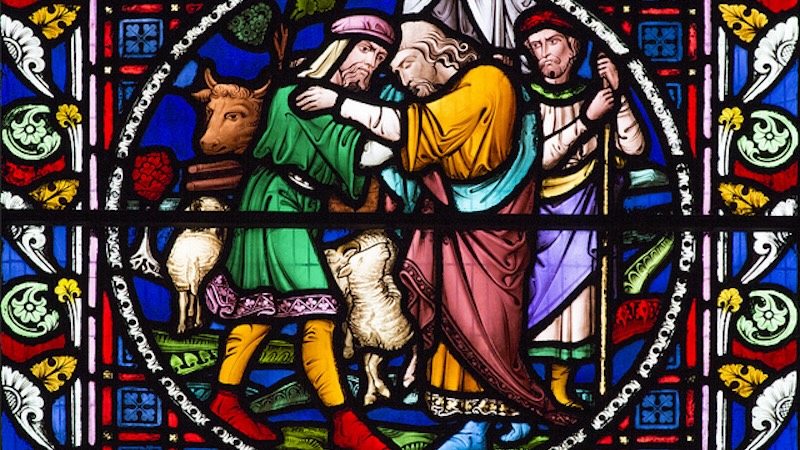
Image: from a stained glass window at the church of St Mary de Castro, Leicester, photographed by Fr Lawrence Lew OP
Click below to show/hide questions.
This discussion guide has been generated by the WORD THIS WEEK'S Catholic AI Assistant based on the Dominican Blackfriars' homily for this week. NEED HELP? Copy and paste a question into the chat bot in the lower right corner of the screen and have our Catholic Assistant help you.
Introduction to the Parable
- What is the central theme of the parable discussed in the sermon?
- How is mercy depicted through the characters of the father and the younger son?
2. Relationship Between Mercy and Justice
- How does the sermon describe the relationship between mercy and justice?
- Why is it significant that Jesus sets his ministry in the context of the Old Testament?
3. The Justice of God
- Discuss God's justice as described in the sermon. What is God's stance on evil and injustice?
- How does the sermon define the wrath of God?
4. Humanity’s Connection and Sin
- What does the sermon convey about the connectedness of humanity?
- How does collective sin affect humanity according to the sermon?
5. God’s Mercy and Covenants
- In what ways is God's mercy described as an expression of his goodness?
- Discuss the role of covenants in expressing God's mercy.
6. The New Humanity in Christ
- How does the sermon describe the formation of another humanity in Christ?
- What role does Jesus’ life, death, and resurrection play in this new creation?
7. Mercy as a Means to Justice
- How does the sermon explain the relationship between mercy and justice in the context of God’s goodness and wisdom?
- What are the implications for individuals in receiving mercy and living justly?
8. Lessons from the Prodigal Son
- How does the younger son’s story illustrate the themes of mercy and justice?
- What lesson does the elder son need to learn about justice and mercy?
9. Personal Reflection and Application
- How can we "taste and see that the Lord is good" in our own lives?
- In what ways are we invited to transition from the old humanity to a new life in Christ?
- Discuss how embracing mercy and pursuing justice can transform personal and community life.
10. Ongoing Transformation in Christ
- What does it mean to continually choose to root out the remnants of the old humanity?
- How can individuals and communities work towards being renewed in Christ’s righteousness?
11. Closing Reflection
- Reflect on the balance of mercy and justice in your own life. How can you apply the teachings of the sermon to your daily actions and relationships?
Homily Excerpt
Fourth Sunday of Lent. fr Andrew Brookes reflects on the relationship between justice and mercy.

What is today’s Gospel parable really about? Mercy is clearly central to the parable. The father is lavish in his mercy. The younger son receives more mercy than he expects. The elder son is chided for thinking the mercy shown is excessive and in some way unfair on him. This could be summed up as ‘Be merciful as your heavenly father is merciful.’
But Jesus is doing more than this. He is teaching about the relationship of mercy to justice, and as such showing more clearly what mercy is. The ministry of Jesus needs to be set in the context of the Old Testament, something Jesus came to fulfil…
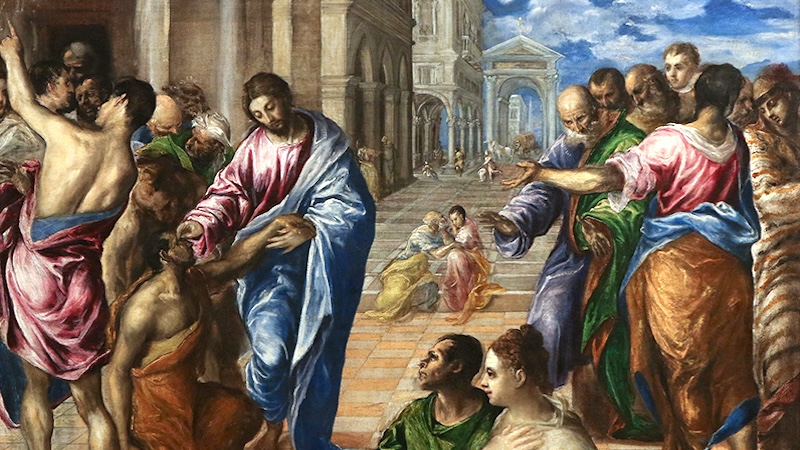
Cropped photograph by Fr Lawrence Lew OP of a painting of ‘Christ Healing the Blind’ by El Greco, c.1570, in the Metropolitan Museum of Art in New York City.
Click below to show/hide questions.
This discussion guide has been generated by the WORD THIS WEEK'S Catholic AI Assistant based on the Dominican Blackfriars' homily for this week. NEED HELP? Copy and paste a question into the chat bot in the lower right corner of the screen and have our Catholic Assistant help you.
Introduction
- Begin the discussion by talking about the concept of how quickly bad news spreads and its impact on society.
- Reflect on the historical events mentioned: the Tower of Siloam and Pilate's actions in the temple. How do these relate to modern incidents?
Exploring the Message
1. Disasters and Their Interpretations
- Discuss how disasters, both in biblical times and today, often lead people to question the morality or deserving nature of the victims.
- What are the parallels between how people interpret disasters in the past and in current events like the mentioned terrorist attack in New Zealand?
2. The Problem of Suffering
- Why do bad things happen to good people? Share personal experiences where this question might have arisen.
- Consider societal tendencies to accept or cope with bad things happening to "bad" people. How do our perspectives affect our understanding of justice?
3. The Call to Repentance
- Reflect on Jesus’ response that encourages repentance rather than judgment. How does this shift our focus from others' faults to our own spiritual growth?
- Discuss how repentance is relevant in the Lenten season and in everyday life.
Parable of the Fig Tree
1. Understanding the Parable
- Explain the cultural context of fig trees and vineyards during biblical times.
- Discuss the symbolism of the barren fig tree. What might it represent within the congregation or community?
2. The Role of the Gardener
- Consider the gardener’s role and intercession for the tree. How does this relate to God’s patience and grace?
- What lessons can we learn about nurturing and being patient with ourselves and others?
God's Nature and Name
1. Revelation to Moses
- Discuss the significance of God revealing His name to Moses as "I am who I am".
- How does this understanding of God challenge our preconceived notions of divine justice and mercy?
2. Jesus' Sacrifice and Our Response
- Reflect on Jesus’ journey to Jerusalem and His crucifixion as an act of love and salvation.
- Consider how we, as part of the vineyard, can respond to this love through our actions and fruitfulness.
Fruitfulness in Adversity
1. Personal and Public Disasters
- Discuss how personal or public disasters might serve as opportunities for spiritual growth and transformation.
- Reflect on ways these challenges could act as "manure" fostering deeper faith and fruitfulness.
2. Being Children of God
- Share thoughts on being children of God, perfected and made fruitful through adversities.
- How can the church or community support each other in becoming fruitful vines or fig trees bearing good fruit?
Conclusion
- Summarize the key takeaways from the discussion.
- Encourage the group to continue reflecting on how they might live out the sermon’s messages in their daily lives, focusing on repentance, fruitfulness, and embracing God's grace.
Homily Excerpt
Third Sunday of Lent (C) | Fr Peter Harries ponders the fruitfulness that might come from disaster and personal tragedy.
Bad news travels fast. The tower at Siloam in Jerusalem fell killing people. Shoddy building work? Perhaps? Some disturbance in the temple? Pilate’s solution as colonial ruler was to kill a few people – keep the locals in order by fear. Disasters happen and people, good and bad alike, get killed. We should plan to minimise known risks, although building regulations may be costly to enforce, and adequate policing expensive. The news of the terrorist attack in New Zealand last week horrified us all. Could it have been avoided is a question to be debated. Stricter gun laws? More web vigilance? Better profiling of extremists? The debate will continue.
In today’s gospel people arrive breathless with the latest bad news – they are specific incidents, not generalities. Did these Galileans deserve to die? Was their worship in the temple faulty? Were the Jerusalemites killed by the collapsed tower especially notorious sinners? Did these particular individuals rather than other individuals deserve to die – that seems to be the presumption. It is a frequently asked kind of question. Families in the hospital sometimes say to me about a patient that they are good people, that they have never done anybody any harm, that they don’t deserve to die young or with cancer. Why do bad things happen to good people?
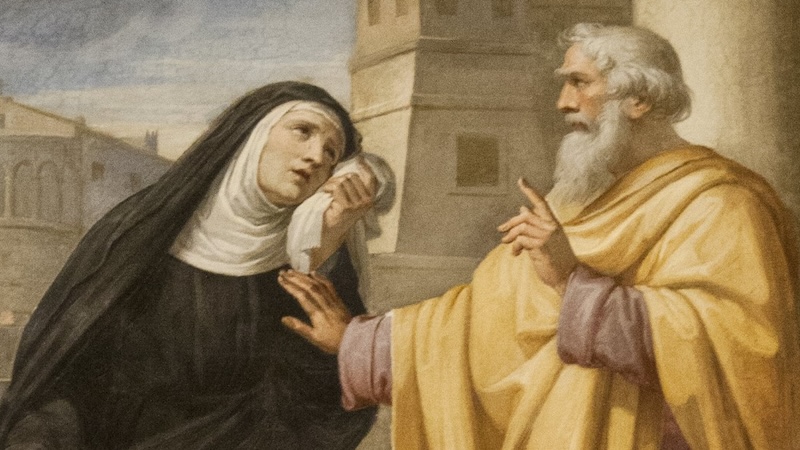
Image: detail from St Monica with her son at the Basilica of Sant’Agostino, Rome, photographed by Lawrence Lew OP.
Click below to show/hide questions.
This discussion guide has been generated by the WORD THIS WEEK'S Catholic AI Assistant based on the Dominican Blackfriars' homily for this week. NEED HELP? Copy and paste a question into the chat bot in the lower right corner of the screen and have our Catholic Assistant help you.
Discussion Questions
1. Imagination and Reflection
- What comes to mind when you think about the potential role of the prodigal son's mother in this story?
- How might imagining her presence change or add depth to the narrative?
2. Motherhood and Homecoming
- Consider the traditional celebration of Mothering Sunday and its historical context. How does this enhance our understanding of the maternal theme in the parable?
- How might the memories of a mother's care, love, and teachings influence the prodigal son's decision to return home?
3. Gratitude and Relationships
- Reflect on your personal experiences with your mother or a motherly figure in your life. How have they influenced your understanding of home and belonging?
- In what ways do you see gratitude playing a role in the relationship between the prodigal son and his imagined mother?
4. Humanity and Redemption
- Discuss the example of Keke Geladze and Joseph Stalin's relationship. What does this example illustrate about the enduring nature of a mother's love?
- How does the figure of a praying and hopeful mother highlight the theme of redemption in the parable?
5. Blessed Sorrows
- Why might a mother's sorrow over a wayward child be considered blessed?
- What promise does Jesus make that brings comfort to mourning mothers, and how can this be applied in the context of the parable?
6. Hope and Faith
- Reflect on St. Monica's persistent prayers for St. Augustine. How does her story inspire hope for mothers who mourn for their children's faith?
- How does the idea that a mother’s tears will not let her children perish give comfort or hope?
Application and Personal Reflection
- Identify ways in which the discussions have impacted your personal understanding of motherhood and faith.
- Consider how you can apply the theme of hope, patience, and prayer in your own life or in the relationships you observe around you.
- Encourage group members to share personal stories of recovery, learning, or reconciliation that might parallel the parable’s themes.
Closing Thoughts
Conclude the discussion with a reflection on how considering the role of the mother in the parable can deepen our understanding of the themes of love, patience, hope, and redemption. Invite participants to offer a prayer or a moment of silent reflection for mothers and their children, especially those experiencing distance and longing.
Homily Excerpt
Fourth Sunday of Lent. Fr Robert Verrill wonders about the prodigal son’s mother.
One question that comes to mind in the light of today’s Gospel is where does the mother figure in all this? In the Gospel parable, we hear how the prodigal son callously demands his inheritance from his father, and when everything goes wrong, it is the thought of his father than brings the prodigal son back to his senses. But no mention, however, is made of the prodigal son’s mother. Jesus leaves the mother’s role in this story to our imagination. But the mother’s role is something we would do well to think about, especially given that Laetare Sunday, the fourth Sunday of Lent is traditionally celebrated as Mothering Sunday.
The celebration of Mothering Sunday in England can be traced back to around the time of the Norman Conquest where the custom developed of visiting the church where one was baptized. Laetare Sunday was chosen for this occasion because of the maternal theme in the Introit: “Rejoice, Jerusalem, and all who love her. Be joyful, all who were in mourning; exult and be satisfied at her consoling breast.” In more recent times, Mothering Sunday has also become an opportunity to honour mothers in the family home as well as Mother Church since it was an occasion that brought the whole family together.
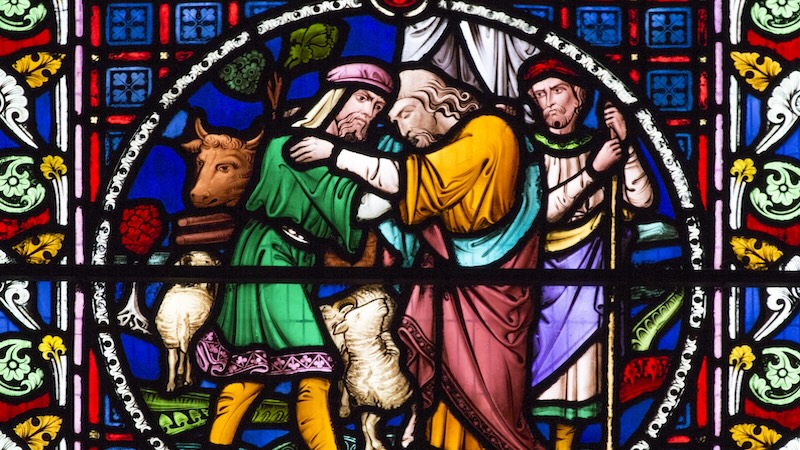
Image: from a stained glass window at the church of St Mary de Castro, Leicester, photographed by Fr Lawrence Lew OP
Click below to show/hide questions.
This discussion guide has been generated by the WORD THIS WEEK'S Catholic AI Assistant based on the Dominican Blackfriars' homily for this week. NEED HELP? Copy and paste a question into the chat bot in the lower right corner of the screen and have our Catholic Assistant help you.
1. Exploring the Parable
- How does the term 'prodigal' influence your understanding of this parable?
- Discuss the significance of wastefulness in the actions of both the younger son and the father.
- Why do you think the tradition focuses on the son's prodigality rather than the father's?
2. The Older Brother's Perspective
- What do you make of the older brother's reaction to his sibling’s return and his father's actions?
- How does the older brother’s sense of justice and fairness challenge or align with your own?
- Consider the older brother's focus on the father's extravagance. Is his frustration justified?
3. The Younger Brother's Recognition
- Why does the younger brother believe he is unworthy to be called a son?
- How does this reflect on our own understanding of repentance and forgiveness?
- What does the father's acceptance and celebration of the younger brother teach us about mercy?
4. Illustrating God’s Mercy
- Discuss the parallels between the parables of the Lost Sheep, the Lost Coin, and the Prodigal Son.
- How is God's mercy characterized in this parable, and what does it show about His response to human repentance?
- What does the "enormity of the offense" and the subsequent celebration teach us about the nature of God's love?
5. Human Offense and Divine Mercy
- How does the parable relate to the concept of original sin and the loss of friendship with God?
- What does St. Paul’s idea of reconciliation as a "new creation" add to your understanding of this story?
6. The Lenten Connection
- Consider how this parable is used to encourage reflection during Lent.
- How can we find joy ('Lætare') amid Lenten penance, as suggested in the sermon?
- Reflect on ways to deepen your understanding and experience of God's prodigal love during the Lenten season.
7. Personal Reflection and Application
- In what ways have you experienced or witnessed ‘prodigal’ mercy in your life or community?
- How might this parable inspire changes in your personal approach to forgiveness and generosity?
- Discuss practical steps you can take to share the message of God’s mercy and reconciliation with others.
Homily Excerpt
Fourth Sunday of Lent. Fr Gregory Pearson preaches on the extravagance of God’s mercy.
We call the parable we read in today’s Gospel the Parable of the Prodigal Son; it’s probably, along with the Good Samaritan, one of the best known of the parables we find in St Luke’s Gospel, and the name of the parable is so familiar (and the word ‘prodigal’ otherwise so rare in English) that it took me a long time as a child to work out that prodigal meant anything more specific than just ‘wayward’ or ‘naughty’. It’s striking, though, that the quality of the younger son which the tradition has latched onto (at least in most European languages) as characterising what’s wrong with his behaviour is his wastefulness or extravagance. It’s striking not least because, if the younger son’s actions are those of a spendthrift, then the father’s are hardly a model of financial caution. After all, the son only wastes his inheritance once, but the father, having given away in his lifetime the property his son was due to inherit, then lavishes expensive gifts and hosts an enormous party when that same son returns with nothing. If the son is a prodigal son, is not the father also a prodigal father?
THE WORD THIS WEEK invites you to check out the Catholic AI assistant (located at the bottom right-hand corner), a homily preparation resource you can use to clarify or further develop the insights and themes of the homilies above.
Fr. Charles E. Irvin
4th Sunday of Lent C


There are three characters that in this parable Jesus is asking us to examine. Actually, Jesus is presenting them to us so that we might take a look at ourselves in them. How does each one of these characters mirror us, reflect back to us our attitudes and our condition relative to God? Parables invite us to enter into the actors and see ourselves in them.
The first is the younger son. It’s important for us to pay attention to his fundamental condition in which we must see ourselves. The first thing to see is his radical departure from God our Father. When he asks for his inheritance, he isn’t just asking for a big sum of money. He is in effect saying to his father: “I’m treating you as if you’re dead. And I want to get now what I’m supposed to receive after you’re dead.”
How many people do you know who live and act as if God is dead… as if God may as well be dead? Or how often have we had an “attitude” toward God that was awfully close to that? It’s an attitude in which they have in effect said to God: “Drop dead. I’m getting on with what I can get out of life as if you don’t even exist.” If we’re honest, we should admit that we have had moments of total disregard for God and treated Him as if He doesn’t exist, as if He were dead.
Some people explain away tragedies by telling us that it is sinners who suffer tragedies. Tragedies, they claim, are God’s way of punishing us for our sins, justified punishments from God inflicted upon us for our sins. That, of course, may or may not be true. Why? Because bad things happen to good people –people who are totally innocent suffer terrible tragedies. Jesus makes it crystal clear that personal suffering and personal sin are not always connected. To be sure, most sins bring their own punishment with them. You can think of a whole lot of diseases, pains and illnesses, both physical and mental, that result from behavior that is, shall we say, unhealthy, unnatural, and even bizarre. Still, personal suffering does hit the innocent.
This discussion guide has been generated by the WORD THIS WEEK’S Catholic AI Assistant based on Fr. Irvin’s homily. NEED HELP? Copy and paste a question into the chat bot in the lower right corner of the screen and have our Catholic Assistant help you.
Introduction to the Parable
– Discussion Question: What is the purpose of Jesus using parables, and how do they help us reflect on our own lives?
– Reflective Activity: Share your initial thoughts on how parables create relatable scenarios that bridge ancient lessons to our modern lives.
2. The Younger Son
– Key Points to Consider:
– Radical departure from God and treating God as if He doesn’t exist.
– Consequences of living apart from God, such as spiritual poverty.
– Importance of admitting wrongs and overcoming denial.
– Discussion Questions:
– How might we see the attitude of the younger son in our own lives?
– In what ways do we live as though God doesn’t exist? Share examples or experiences.
– Why is admitting wrongs and overcoming denial one of the most challenging aspects of seeking forgiveness?
– Reflective Exercise:
– Reflect on a time when you had to overcome denial and admit you were wrong. What was the outcome?
3. The Elder Brother
– Key Points to Consider:
– The elder brother’s self-righteousness and resentment towards the father’s forgiveness.
– His inability to accept his own need for the father’s love and mercy.
– Discussion Questions:
– In what ways do we sometimes act like the elder brother, holding onto self-righteousness or resentment?
– Why do you think the elder brother found it difficult to accept the father’s actions?
– How can we overcome the barriers that prevent us from accepting God’s expansive forgiveness?
– Reflective Exercise:
– Consider someone you’ve struggled to forgive. What steps can you take to move towards reconciliation?
4. The Father’s Love
– Key Points to Consider:
– The father’s unconditional love, forgiveness, and acceptance.
– How the father’s character serves as a model for our own actions.
– Discussion Questions:
– What qualities of the father can we aim to embody in our own lives?
– How do we put limits on our capacity to forgive, and how can we expand those limits?
– How does the parable illustrate that forgiveness begins with recognizing and admitting our own wrongs?
– Reflective Exercise:
– Think about a time when you received unexpected forgiveness. How did it impact you, and how did it change your outlook on forgiveness?
5. General Reflections on Sin and Denial
– Discussion Questions:
– How does denial of sin affect our relationship with God and others?
– In what ways does society contribute to denial and the normalization of sin?
– How can we begin to recognize and admit our sins more readily?
– Reflective Exercise:
– Identify an area in your life where you might be living in denial of sin. What steps can you take to address it?
6. Finding Freedom
– Key Points to Consider:
– The ultimate desire of God for us to walk in freedom as His children.
– The role of Jesus Christ in helping us seek forgiveness and reconciliation with the Father.
– Discussion Questions:
– What does it mean to live in the “glorious freedom of the sons and daughters of God”?
– How can embracing God’s forgiveness lead to true freedom in our lives?
– What role does Jesus play in helping us achieve this freedom?
– Reflective Exercise:
– Spend some time in prayer or meditation, asking God to reveal the steps you need to take to come closer to Him and find true freedom.
7. Conclusion
– Summary Reflection:
– Reflect on the transformation journey of each character in the parable. How does this inform your understanding of forgiveness, redemption, and divine love?
– Actionable Steps:
– Identify one change you can make in your life to mirror the father’s attitude in the parable. How can this change positively impact your relationships with others and with God?
THE WORD THIS WEEK invites you to check out the Catholic AI assistant (located at the bottom right-hand corner), a homily preparation resource you can use to clarify or further develop the insights and themes of Fr. Irvin’s homily.
Fr. George Smiga
- When the Pigs Are Eating Better than You - March 21, 2004
- How to Enter the Feast - March 18, 2007
- Augustine and Pelagius - March 14, 2010
- A Parable of Love and Jealousy- March 10, 2013
- The Spoiled Son - March 6, 2016
- Accepting God’s Love - March 31, 2019
4th Sunday of Lent C

2016 HOMILY – Parables can be interpreted in different ways. We normally see the father in today’s parable as a figure of God who warmly welcomes back the prodigal son. When we read the parable this way, it is a parable of forgiveness, God’s forgiveness to us. This is a beautiful and valid reading of the parable. But it is not the only one. We can also see the father not as a figure of God but simply as a human father, and when we read the parable that way, its meaning changes. It is no longer a parable of God’s forgiveness. It becomes a parable of family dysfunction.
Why, for example, does the father divide up the estate when the younger son asks him to do it? It could be because this younger son is the father’s favorite, and he simply cannot say no to his beautiful boy. The father might be so conditioned to indulge his younger son that he will even give up his estate before he dies. Then, when this younger son loses everything and is in dire need, he decides to return home. We normally see that decision as a one of repentance, but it could just as easily be a form of manipulation. Knowing his father’s infatuation with him, the younger son might confidently conclude, “I am going to go back to Daddy, and he will give me whatever I ask.” And Daddy does. He runs out and gives him robes and rings and kills the fatted calf to celebrate, because this son, who is the apple of his eye, has returned home.
This discussion guide has been generated by the WORD THIS WEEK’S Catholic AI Assistant based on Fr. Smiga’s homily.
Introduction to the Parable
The parable of the Prodigal Son is traditionally viewed as a representation of God’s forgiveness. However, an alternative interpretation suggests examining it as a story of family dynamics and dysfunction.
Discussion Questions for the Traditional Interpretation
1. How does the image of the father as a figure of God influence our understanding of forgiveness in this parable?
2. What are the key elements that highlight the theme of repentance in the younger son’s return?
Alternative Interpretation
This interpretation views the father as a human parent, not representing God, thus shifting the focus from divine forgiveness to familial dysfunction.
Discussion Points for the Alternative Interpretation
1. Consider the father’s decision to divide the estate. How could favoritism play a role in this decision?
2. Examine the younger son’s return home. Could his actions be viewed as manipulative rather than repentant?
Exploring Family Dysfunction
1. In what ways does the parable depict an unhealthy family dynamic?
2. How does the elder son’s reaction highlight feelings of neglect and resentment?
Discussion Questions on Family Dynamics
1. Discuss whether the elder brother’s feelings of exclusion are justified.
2. How does the father’s interaction with the elder son reflect broader themes of familial negotiation and reconciliation?
3. What emotions might the elder son experience, knowing his brother is celebrated upon return?
Real-Life Applications
This parable prompts reflection on our personal relationships and their imperfections.
Discussion Prompts for Personal Reflection
1. Identify situations in your life where you feel neglected or unfairly treated. How can this understanding change your interactions with others?
2. Discuss how recognizing and accepting dysfunction might allow us to maintain relationships, despite their imperfections.
Concluding Thoughts
The elder son’s dilemma presents a choice many face in flawed relationships: to participate in reconciliation or stand apart in resentment. While the parable does not reveal the elder son’s decision, it underscores the wisdom in choosing to engage with others despite their shortcomings.
Actionable Reflections
1. Reflect on a relationship where you feel resentment. How might you approach it with a perspective of acceptance?
2. When might it be wiser to embrace flawed relationships rather than waiting for them to change?
This discussion guide encourages individuals to delve into personal and family dynamics, examining both traditional and alternative interpretations of the parable, and applying its wisdom to real-life scenarios.
THE WORD THIS WEEK invites you to check out the Catholic AI assistant (located at the bottom right-hand corner), a homily preparation resource you can use to further clarify or further develop the insights and themes of Fr. Smiga’s homilies.
Pro-Life Homily Resources
4th Sunday of Lent C

Reconciliation
The readings today present two equally important aspects of reconciliation, which have profound implications for the battle between the Culture of Death and the Culture of Life.
The second reading says, “God was reconciling the world to himself in Christ,” and then says, “We implore you on behalf of Christ: be reconciled to God.” The preacher can raise the question for the congregation, “Who is doing the reconciling? If it is God who is doing it, then why are we implored to ‘be reconciled’?”
The Israelites, as the first reading says, were freed from Egypt and given the Promised Land – yet they still had to fight for it once there, and they still had to struggle to observe the way of life of the covenant. The Prodigal Son, in today’s Gospel passage, was greeted by a father who was already working reconciliation for him, eagerly anticipating his return. Yet he, too, had to work out his salvation. He had to struggle. He had to make a deliberate decision to renounce his way of life, get up, and make the journey back to the father.
THE WORD THIS WEEK invites you to check out the Catholic AI assistant (located at the bottom right-hand corner), a homily preparation resource you can use to clarify or develop the insights and themes of Frank Pavone’s homily notes for preachers.
Msgr. Joseph Pellegrino
4th Sunday of Lent C

The Value of Our Inheritance

Today is Laetare Sunday. The particular joy of this Sunday is the joy of knowing that reconciliation with God is in our grasp. As ambassadors of Jesus Christ we are called to let others know this. We are called to bring the love of the Forgiving Father to those who need to hear that despite their actions, they are still lovable. We perform the work of God by leading them to be reconciled with God. We have each been entrusted with a great inheritance. We have each been entrusted with a portion of the Promised Land. We have each been entrusted with the mission of reconciliation. We have each been entrusted with bringing our unique reflection of the Forgiving Father to those who long for someone to say, “Come home. You are forgiven.”
This discussion guide has been generated by the WORD THIS WEEK’S Catholic AI Assistant based on Fr. Pellegrino’s homily.
Introduction
– Briefly summarize the story of the Prodigal Son.
– Reflect on the central theme: understanding the depth of God’s mercy.
Understanding Cultural Context
– Discuss the significance of land and property in ancient Hebrew culture compared to modern perceptions.
– Explore the historical significance of land as a divine inheritance in the Promised Land.
Biblical Reference
– Read and analyze 1 Kings 21, the story of King Ahab and Naboth.
– Discuss Naboth’s refusal to sell his inheritance and the implications of this narrative on the understanding of land as a divine gift.
The Prodigal Son’s Actions
– Examine the younger son’s demand for his inheritance and its cultural implications.
– Discuss the severity of his actions: selling and squandering his inheritance, and consequently sinning against his family and God.
Personal Reflection
– Encourage participants to reflect on their own “inheritance” as sons and daughters of God.
– Discuss the metaphorical meaning of squandering one’s inheritance through sin.
Sin and Reconciliation
– Discuss the gravity of sin as an offense against God and the community.
– Reflect on the Prodigal Son’s realization and repentance: “Father, I have sinned against Heaven and against you.”
God’s Mercy and Forgiveness
– Explore the father’s response to the Prodigal Son’s return and the concept of divine mercy.
– Discuss the call to be ambassadors for Christ, based on St. Paul’s message of reconciliation in the second reading.
Role as Ambassadors of Christ
– Reflect on the call to share the message of forgiveness and reconciliation with others.
– Identify ways to bring this message to people who feel distant from God’s love.
Call to Action
– Discuss how participants can embody the role of ambassadors for Christ in their daily lives.
– Encourage group members to identify individuals in their lives who might need to hear this message of forgiveness and hope.
Conclusion
– Summarize the key points discussed: the weight of sin, the beauty of reconciliation, and the mission to spread God’s love and forgiveness.
– Invite participants to pray for the strength and wisdom to fulfill their roles as ambassadors of Christ.
Reflection and Prayer
– Close with a group prayer, asking for God’s guidance in helping us recognize and cherish our divine inheritance and for the courage to extend God’s mercy to others.
THE WORD THIS WEEK invites you to check out the Catholic AI assistant (located at the bottom right-hand corner), a homily preparation resource you can use to clarify or develop the insights and themes of Msgr. Pelligrino’s homily.
Msgr. Charles Pope
4th Sunday of Lent C

There Was a Man Who
Had Two Sons
The Gospel this Sunday is about a man who had two sons, both of whom forsook him and refused to relive in relationship with him. Although the sons seem to have very different personalities (one outwardly rebellious, the other outwardly obedient), their internal struggles are similar. In effect, neither of them really wants a relationship with his father. Both prefer what their father has or can give them to their father himself.
In the end, one son repents and finds his way to the father’s heart. We don’t find out what happens to the second son. The parable didn’t tell us what happened to him because the story is really about us; it is we who must finish it. The question we must answer is this: What do I really want? Do I want the consolation of God, or the God of all consolation; the gifts of God, or the giver of every good and perfect gift?
Let’s look at this Gospel in four parts.
I. Renegade Son
II. Rejoicing Father
III. Resentful Son
IV. Response
THE WORD THIS WEEK invites you to check out the Catholic AI assistant (located at the bottom right-hand corner), a homily preparation resource you can use to clarify or develop the insights and themes of Msgr. Pope’s homily.
Fr. Jude Siciliano, OP

4th Sunday of Lent C
The Lingering Question
EXCERPT: If you prefer stories with happy, resolved endings, today’s parable of the Prodigal Son might leave you feeling unsettled. We know the story well—perhaps too well. It can feel like old news, something we’ve heard so often that we assume there’s nothing new to discover. After all, the parable appears only in Luke, and most churchgoers could recite it by heart. Even those outside the church are familiar with its themes. Phrases like “prodigal son” and “prodigal daughter” have become part of everyday language. We hear people say, “The prodigal has returned,” even if they’ve never set foot in a church or read the Bible. Museums, both classical and modern, frequently depict the father welcoming his wayward son home. Clearly, this story has embedded itself deeply into our culture and imagination.
But doesn’t it also leave you with lingering questions? How does the story really end? Does the younger son stay home after the celebration? Has his heart truly changed, or has he returned only for the security of food and shelter? Does he settle down and work alongside his diligent older brother, or does he once again ask for money and disappear on another reckless adventure? In other words, has he truly repented, and will his future actions reflect that change?
THE WORD THIS WEEK invites you to check out the Catholic AI assistant (located at the bottom right-hand corner), a homily preparation resource you can use to clarify or develop the insights and themes of Fr. Jude’s homily notes.
Bishop John Kobina Louis
4th Sunday of Lent C
Sunday Homilies

Bishop John Kobina Louis, PhD, is an auxiliary bishop of the Archdiocese of Accra, Ghana. He was ordained as an auxiliary bishop on 19th April 2023.
Fr. Michael Chua
4th Sunday of Lent C
Homily Excerpt

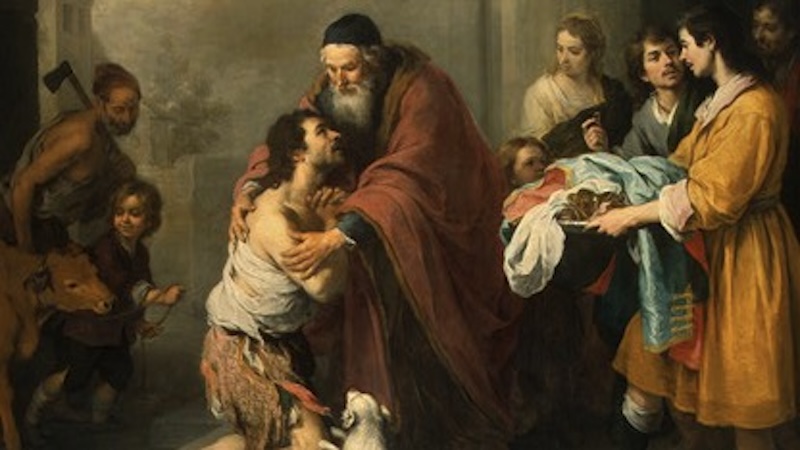
What is today’s Gospel parable really about? This story isn’t just about the generosity of God the Father, but there is a far more profound message which our Lord wishes to convey to His audience. The clue is to be found in the first three verses of the Gospel. The Pharisees were appalled at our Lord’s actions for eating with tax collectors and sinners. The strict Pharisees would not eat with sinners for this would bring about ritual contamination. And thus our Lord begins to tell a series of parables, this being the first. Mercy is clearly the central theme in this parable. The father is lavish in His mercy. The younger son receives more mercy than he expects. The elder son is guilty for thinking that the mercy shown is excessive and unfair on him. The parable expresses this maxim ‘Be merciful as your heavenly Father is merciful.’
But the parable also teaches about the relationship of mercy to justice. It reveals the true face or rather, the heart of the Father. Putting the focus on God will allow us to discover the truth about ourselves. God makes change possible, more than we sometimes dare to hope for.

Homily Excerpt
God’s mercy always gives us a second chance to encounter His Son Jesus Christ and to believe in Him. No matter how skeptical or doubtful we may be; no matter how far we have strayed from the experience of communion with Christ, in and through His Church; and no matter how seriously we have sinned, Jesus always reaches out to us with open arms. He embraces us and invites us to experience His friendship and His forgiveness. Nothing we have ever done could keep us out of the heart of our loving and all-forgiving God. Just as how the father welcomes back the prodigal son, we see the action of our Lord Jesus mysteriously hidden within the action of the father. Our Lord Jesus is the embrace of the Heavenly Father for fallen humanity as He stretched out His hands on the cross; He is the Bridegroom who weds His bride by placing a gold ring upon her finger; He is the sandal on our feet that makes our journey light; He is the fatted calf, the Lamb of God, sacrificed for our redemption. Yes, our Lord Jesus Christ is present in this tale of forgiveness, mercy and love. He is, as Pope Francis tells us, the face of the Father’s mercy.

Homily Excerpt
Tragedies and unexpected events serve as “memento mori” – they remind us of our mortality and the brevity of life. Tempus Fugit, Memento Mori – time flies, remember death!
Rather than shaking the foundation of our faith in God, such events should lead us to trust more in God rather than in ourselves and our devices. Only God alone can stave off an impending disaster or provide us with the strength and grace to push through and come out stronger.
Finally, such tragedies serve as a call to repent. In today’s gospel, our Lord refutes all speculations that the people who suffered tragedy deserved it by redirecting the attention of His audience to themselves: “unless you repent you will all perish as they did.” If we were to examine the concept of repentance in their original biblical languages, we would realise that repentance is more than just turning away from our sin but actually a turning to God, a radical reorientation of our lives to God. This is what happened to Moses in the first reading.
THE WORD THIS WEEK invites you to check out the Catholic AI assistant (located at the bottom right-hand corner), a homily preparation resource you can use to clarify or develop the insights and themes of Fr. Chua’s homilies.
Fr. Vincent Hawkswell
4th Sunday of Lent C

Homily Excerpt

2022 HOMILY – St. Thomas More warned that if we try to make a contract with God about what we will do for him and what he will do for us – as though he should be content with the service we care to allow him – God will not sign it; we shall have to provide both signatures ourselves.
From Luke 15, we know that the younger son repented; we are not told about the elder son. However, in another parable, Jesus said that the man who prayed “God, be merciful to me, a sinner” went home justified while the man who pointed out to God that he did not commit adultery, but fasted twice a week and paid tithes on all his possessions did not.
THE WORD THIS WEEK invites you to check out the Catholic AI assistant (located at the bottom right-hand corner), a homily preparation resource you can use to clarify or develop the insights and themes of Fr. Hawkswell’s homily.
Fr. Denis J. Hanly
4th Sunday of Lent C
Homily Excerpt

Someone once said if there was only one parable that was ever read out on a Sunday morning to a group of people, you should pick this one. It has everything in it. And it has everything that we ourselves sometimes forget.
Because the father, of course, that Jesus is painting his portrait, and painting the portraits of the two brothers, the father, of course, is God Himself.
And sometimes we’re afraid of God and we think, “Oh, I’ve done all kinds of things that are terribly wrong and I don’t know what to do and I’m ashamed,” and we forget that… We think that maybe God will be angry.
THE WORD THIS WEEK invites you to check out the Catholic AI assistant (located at the bottom right-hand corner), a homily preparation resource you can use to clarify or develop the insights and themes of Fr. Hanly’s homily.
Fr. Tommy Lane
4th Sunday of Lent C
- The Prodigal and his brother did not know their father. Do we know God? 2010
- Parable of the Prodigal Son - we are like each of the sons 2007
- Our Heavenly Father offers us all he has
- Other Homilies on the Parable of the Prodigal Son:
- To Err is Human, to Forgive is Divine. Begin Again! 2019
- Saints have a past, sinners have a future
- God waiting to welcome us back 2016
- Related Homilies: Homilies and stories on the Sacrament of Reconciliation
- Begin again 2022
- Joy of the Gospel 2021
- stories about God’s Mercy sin confession of sin
- Scripture Commentary on the Parable of Prodigal Son
Fr. John Kavanaugh, S.J.
4th Sunday of Lent C

When hearing the story of the Prodigal Son, we often think of the compassionate father waiting at the gate or the desperate son planning his confession in advance. But might there not be an elder child in all of us? We work hard, we manicure virtues, we collect the graces, we notch up victories. And we forget what is already ours. The gift, the grace, the kingdom, the love not earned but lavishly given. Before long, our labors become slavery; our accomplishments, chains.
I thought I would surely stop working if I would ever say a prayer like, “You know me and you love me, and it’s not because of anything I have ever done or accomplished.”
As it turned out, the next year I worked harder than I ever had before. But that year, it was less from fear and more from joy.
Luke reminds us that the parable of the prodigal was told to Pharisees who complained about Jesus eating with tax collectors and sinners. Now, in relief, I thank God for such a banquet.
This discussion guide has been generated by the WORD THIS WEEK’S Catholic AI Assistant based on Fr. Kavanaugh’s homily. NEED HELP? Copy and paste a question into the chat bot in the lower right corner of the screen and have our Catholic Assistant help you.
Introduction
– Discuss your initial impressions of the sermon. What themes or messages stood out to you?
– Reflect on personal experiences with retreat or reflection time. How are they similar or different from the speaker’s experience?
Directed vs. Preached Retreats
– How do directed and preached retreats differ? What might be the advantages and challenges of each?
– The speaker describes feeling lost after the third or fourth day of a preached retreat. Have you experienced a similar feeling during a time of reflection or spiritual retreat? How did you handle it?
The Role of Confession and Reflection on Sin
– Discuss the speaker’s reaction to meditating on sin after the sixth day. What are your thoughts on the necessity of facing one’s sins during retreats or reflection?
– Reflect on any discomfort with acknowledgments of sin or shortcomings. Why might this be challenging, yet necessary, for spiritual growth?
Struggling with the Concept of God’s Love
– The speaker wrestles with the idea that God’s love isn’t earned by accomplishments. How does this challenge commonly held beliefs about merit and reward?
– Have you, or anyone you know, experienced a similar struggle with understanding God’s unconditional love? How did you or they work through it?
The Prodigal Son Parallel
– Discuss the connection made between the elder son in the Prodigal Son parable and the speaker’s personal realization. What insights does this provide into understanding grace and forgiveness?
– How do our accomplishments sometimes become chains or burdens, as described by the speaker?
Transformation through Joy
– The speaker describes working harder, but from a place of joy rather than fear. Discuss how perspective shifts can transform efforts and motivations.
– How can we integrate the joy of knowing God’s love into our daily work and life?
Conclusion
– How can the lessons from this sermon be applied to the way you view accomplishments and spiritual growth?
– Reflect on new insights or changes in perspective you’ve gained through this discussion and how they might influence your relationship with God and others.
Action Steps
– Take a moment this week to reflect on how unconditional love plays a role in your life. Consider journaling about it.
– Set a personal goal to approach a challenging task from a place of joy rather than obligation. Share your experiences with the group in the next session.
THE WORD THIS WEEK invites you to check out the Catholic AI assistant (located at the bottom right-hand corner), a homily preparation resource you can use to clarify or develop the insights and themes of Fr. Kavanaugh’s homily.
Bishop Frank Schuster
4th Sunday of Lent C
Homily Excerpt
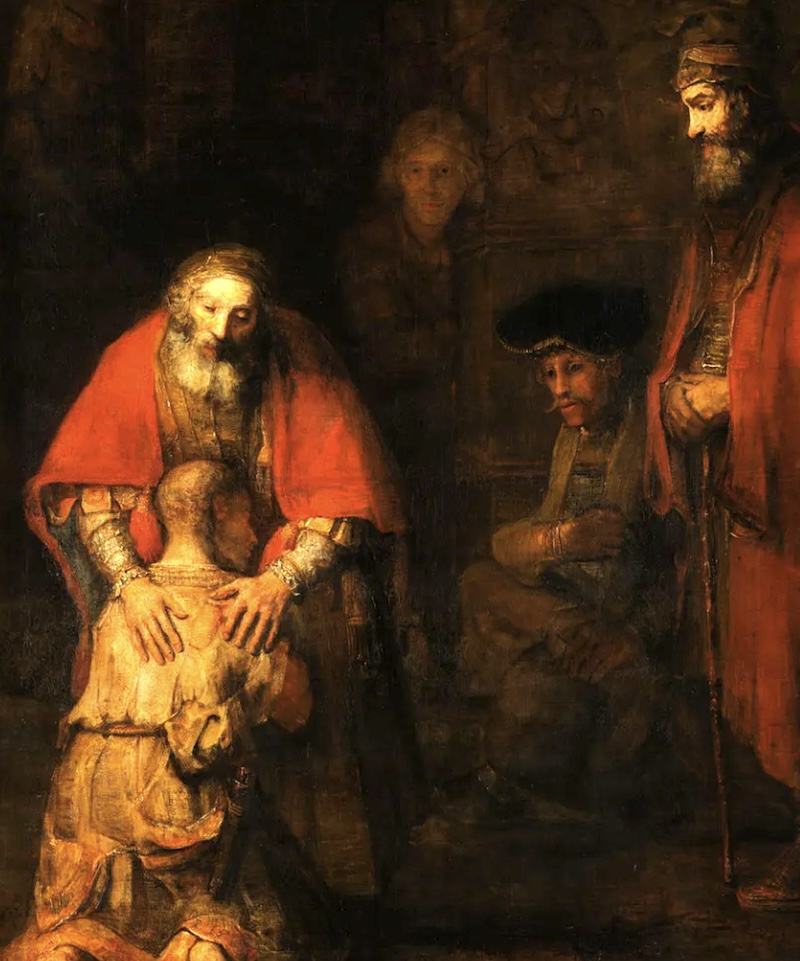
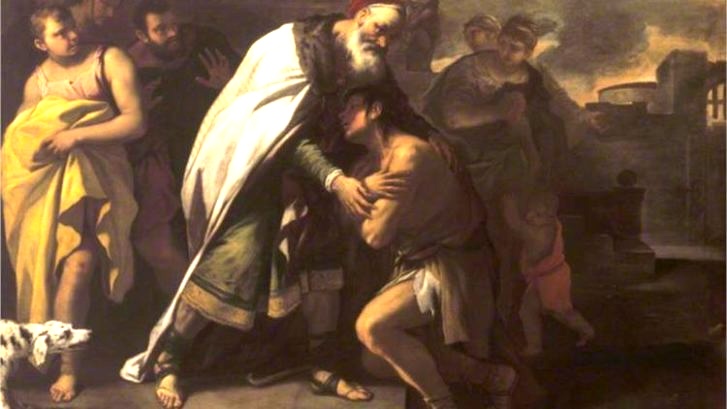
Fr. Henri Nouwen wrote a wonderful book entitled, “The return of the prodigal son”. During a particularly bleak time in his life, he had the chance to see a poster of Rembrandt’s painting. The painting captivated him because of the tenderness the father demonstrates in his loving embrace of his long lost son. Nouwen even made a trip to St. Petersburg so that he could spend some time meditating on the original painting on display at an art gallery there.
During his meditations on Rembrandt’s work, Nouwen initially identified himself with the lost son. I believe we all do this, yes? The story of the prodigal son is a parable after all. During his ministry, the Lord accentuated our need for repentance. Humanity has a whole can be compared with the lost son, squandering our divine inheritance, misusing the gifts God has given us as a race on unholy activities. One would only need to open the newspaper or turn on the television to count the ways. Through conversion, humanity can return to the father in humility and repentance. What reception could we expect from our Father in heaven? Jesus seems to be suggesting, a warm embrace and what might be described as blind love. If we stay at this level of contemplation, our time would have been well spent. Nouwen suggests much deeper levels of meaning to this parable.
THE WORD THIS WEEK invites you to check out the Catholic AI assistant (located at the bottom right-hand corner), a homily preparation resource you can use to clarify or develop the insights and themes of Bishop’s Schuster’s homily.

4th Sunday of Lent C
Prodigal Son
Just recently I heard a song by Elton John. The lyrics went like this: “What have I got to do to make you love me? What have I got to do to be heard? What do I do when lightning strikes me? It’s sad, so sad. It’s a sad, sad situation. And it’s getting more and more absurd. It’s sad, so sad that sorry seems to be the hardest word.” I think the Prodigal Son would have sung this song as he looked around at his situation that was getting more and more absurd. So let’s take a look and see what the situation was.
Remember, the young son comes to his father and says, dad, I know you are not dead yet and I cannot stand around here forever, so give me my inheritance now. This was the gravest of insults any son could be guilty of, and it must have hurt the father very deeply. And we remember what happens: he loses all of his money living like a fool, his so-called friends all disappear, and so the lad is in a far-off country with nothing. He does the only thing he can do: he looks for a job, any kind of job, to keep him from starving. He comes upon a man who sends him to feed the pigs. He ends up eating the food for the pigs. The detail to remember here is that this boy is Jewish, for whom pork was unclean, forbidden. To be sent to tend the swine was as bad as being struck by lightning as it forced the son into denying his traditions, his customs, his values. He could not have fallen any lower.

THE WORD THIS WEEK invites you to check out the Catholic AI assistant (located at the bottom right-hand corner), a homily preparation resource you can use to clarify or develop the insights and themes of Fr. Warren’s homily.
Fr. Jagodensky, SDS
4th Sunday of Lent C
Homily Excerpt

Jesus takes out his violin and does a “Henny Youngman” impression to strongly convey to us the crazy love that God has for us. I know you’re not supposed to laugh during a gospel reading but there are plenty of opportunities. All the parentheses are laugh tracks.
Jesus continued: “There was a man who had two sons.
What! No Mom, Divorced, Deceased?
The younger one said to his father, ‘Father, give me my share of the estate.’
There is no share for the youngest since all the property legally goes to the eldest.
So he divided his property between them.
Dad’s first loving mistake, or is it?
“Not long after that, the younger son got together all he had, set off for a distant country
Two miles away, just to be safe.
Please note that the provided video clips serve as additional resources to complement the homily. They may not have a direct correlation with the contributor’s original content. They aim to inspire preachers to enrich their own homilies, drawing ideas and insights from both the written material and the visual content explored.