APR 6, 2025


Homilies
Homilies
- Bishop Barron
- MORE
- 1-MINUTE HOMILY
- 2-Minute Homily
- MSGr. Peter Hahn
- Fr. Jude Langeh
- FR. RUTTIG
- FR. MCCARTHY, OSA
BISHOP
BARRON

5th Sunday of Lent C


5th Sunday of Lent C


ONE MINUTE
HOMILY

5th Sunday of Lent C


TWO MINUTE
HOMILY

5th Sunday of Lent C


MSGR. PETER
HAHN
5th Sunday of Lent C


FR. JUDE
LANGEH, CMF


FR. KEVIN
RUTTIG

5th Sunday of Lent C

FR. TOM
McCARTHY, OSA

5th Sunday of Lent C


Deacon Peter McCulloch
Deacon of the
Diocese of Broken Bay, Australia
Now Featuring Google Notebook LM Podcasts
With each edition THE WORD THIS WEEK will provide conversations between two AI hosts for selected homilies, simulating a podcast-style discussion.
Each NotebookLM discussion is based on the provided homilies. The AI hosts summarize the material, and make connections between topics.
It’s important to remember that these generated discussions are not a comprehensive or objective view of a topic, but simply a reflection of the homilies that have been uploaded.
5th Sunday of Lent C
PODCAST: Deep Dive into Deacon Peter’s 2025 Homily

On the Miracle of Divine Mercy
Click below to show/hide questions.
This discussion guide has been generated by the WORD THIS WEEK'S Catholic AI Assistant based on Deacon McCulloch's homily.

Introduction:
Begin your discussion by reflecting on the question: "If God loves us no matter what, then why should we bother being good?" Consider the implications and motivations for living a virtuous life as we delve into the Gospel story.
1. Understanding the Context (Jn. 8:1-11):
- Who were the Scribes and Pharisees, and what was their motive in bringing the woman to Jesus?
- Discuss the trap they set for Jesus and the possible outcomes they anticipated.
- Reflect on the silence of Jesus at first and how it may have affected the accusers and those present.
2. Jesus’ Response and Its Implications:
- Analyze Jesus’ statement: "Let the person who is without sin cast the first stone."
- Discuss the reaction of the Scribes and Pharisees to this statement. What does this teach us about self-awareness and judgment?
- Reflect on St Augustine’s comment about misery and mercy. How does this encapsulate the core of the story?
3. The Role of Forgiveness and Change:
- How does Jesus’ interaction with the woman highlight divine mercy and the call to transformation?
- Explore the choice given to the woman by Jesus’ advice to “Go, and from now on don’t sin anymore.”
- Discuss how this story applies to our own lives when faced with the choice between continuing in sin or seeking change.
4. Reflection on Human Nature and Divine Mercy:
- The woman and the Scribes/Pharisees represent us in different ways. Discuss how both perspectives relate to our daily life challenges.
- Reflect on the teaching of Jesus to St Faustina about the miracle of Divine Mercy. How does this shape our understanding of reconciliation and spiritual renewal?
5. The Native American Story and Our Inner Struggle:
- Relate the story of the two wolves to the struggle between good and evil within us.
- Discuss practical ways in which we can "feed" the good wolf in our lives.
- How can trusting in divine mercy help guide us in this internal battle?
6. Practical Application for Today:
- What are practical steps we can take in seeking the miracle of Divine Mercy through Reconciliation and personal transformation?
- How can we hold ourselves accountable while living a life that embraces God’s mercy and seeks happiness?
- Discuss how the themes in this Gospel encourage us to approach others with empathy and refrain from judgment.
Conclusion:
Reflect on how the miracle of Divine Mercy invites us to a renewed life, full of grace and personal growth. Encourage group members to meditate on this call to action in their own spiritual journey.
Homily Excerpt

The woman in this story represents you and me. She reminds us that when we do something wrong it hurts someone, and that can lead to misery.
But the Scribes and Pharisees also represent you and me. They remind us that when we point the finger and think we’re better than others, that’s also a sin. That also leads to misery.
Many years ago, Jesus spoke directly to St Faustina Kowalska in Poland. He reminded her of his merciful heart, and said that the miracle of Divine Mercy completely restores a damaged soul.
Jesus told St Faustina that when we go to Reconciliation, we should be aware that he himself is in the confessional. Jesus is hidden by the priest, but he himself acts in the soul. And it’s here that the misery of the soul meets the mercy of God.
Jesus said that if we trust him, we’ll be able to draw graces from his fount of mercy. If our trust is great, there’s no limit to his generosity.
All Things New Again
Click below to show/hide questions.
This discussion guide has been generated by the WORD THIS WEEK'S Catholic AI Assistant based on Deacon McCulloch's homily.
Opening Reflection
- Begin with a moment of silence to reflect on personal experiences of starting anew. Consider times when you felt trapped by past mistakes or guilt.
Scripture Exploration
- Read Isaiah 43:16-21, Philippians 3:8-14, and John 8:1-11 together.
- Discuss the ways God promises and provides new beginnings in these passages.
Corrie Ten Boom Story
- Summarize Corrie Ten Boom's story of forgiveness and transformation.
- How did Corrie initially react upon seeing the guard?
- Discuss the struggle she faced with forgiving someone who caused her so much pain.
- Reflect on the power of forgiveness.
- Have you ever experienced a moment when forgiveness brought about a new beginning in your life or someone else's?

THE INCREDIBLE JOURNEY (28:30) - When the Nazis rose to power in 1933, they began a systematic campaign to exclude, expel and separate the Jewish community from various aspects of society. In 1941, the Nazis began to murder Jews indiscriminately. In the summer of 1942, the Ten Boom family began a covert underground operation in a little watch shop in Haarlem, Holland. during WWII.
Discussion Questions
1. How do the stories from Scripture seen in the sermon demonstrate God's ability to make things new?
2. In what ways are the people in these stories released from their pasts?
3. How does the Resurrection relate to starting anew in our everyday lives?
Personal Reflection and Sharing
- Invite group members to share their own stories of experiencing renewal and starting over.
- What obstacles did you face in these experiences, and how did you overcome them?
- How does faith play a role in moving forward from the past?
Understanding Forgiveness
- Discuss the concept of forgiveness as a transformative act.
- How does forgiving others help us start anew?
- Explore the connection between receiving forgiveness (from God or others) and personal growth.
Application
- Reflect on situations in your life where you need to let go of the past.
- What steps can you take to open your heart to new possibilities?
- Share practical ways to embody the Resurrection in daily life, focusing on mercy, forgiveness, and healing.
Conclusion
- End with a prayer, asking for God’s guidance to help release past burdens and recognize the new things He is doing.
- Challenge each member to identify one area in their life where they will actively seek renewal this week.
Additional Resources
- Encourage reading "The Hiding Place" by Corrie Ten Boom for deeper insight into forgiveness and faith.
Homily Excerpt

In 1959, Joseph Gitera, a politician from Rwanda’s Hutu tribe, called for the elimination of the country’s Tutsi minority. [i]
This began a long process of dehumanisation that in 1981 led to the Blessed Virgin Mary appearing in the small town of Kibeho, warning that if the people didn’t change their ways, blood would flow.
Sadly, they didn’t change, and in 1994 almost a million Tutsis were massacred.
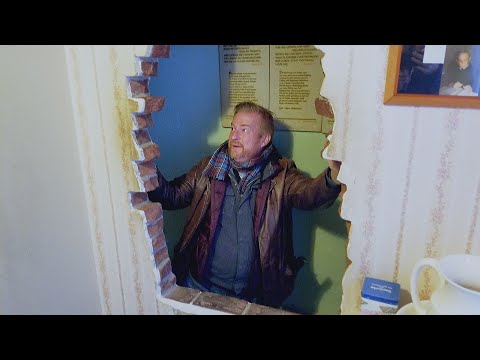
During this time, a woman named Immaculée Ilibagiza hid with seven others in her pastor’s tiny bathroom, measuring just 0.9m x 1.2m (3’ x 4’). In absolute silence and terror they hid for 91 days.

Immaculée’s Story
Click below to show/hide questions.
This discussion guide has been generated by the WORD THIS WEEK'S Catholic AI Assistant based on Deacon Peter's homily.
Background and Context
1. Historical Context of the Rwandan Genocide
- Discuss the origins of ethnic tensions in Rwanda, focusing on the roles of the Hutu and Tutsi tribes.
- Explore the political climate leading to the genocide, referencing Joseph Gitera's call for eliminating the Tutsi minority and the subsequent supernatural warning at Kibeho.
- Reflect on the importance of heeding warnings of potential violence and the implications of ignoring them.
Immaculée's Personal Journey
2. Survival Against Odds
- Describe Immaculée Ilibagiza's hiding experience in her pastor’s bathroom during the genocide.
- Discuss the emotional and psychological struggles she faced, including the conflicting inner voices about her fate.
3. Spiritual Awakening
- Explore Immaculée’s decision to seek God despite her doubts, highlighting her prayer routine and discovery of divine peace.
- Discuss the significance of her promise to God and the role of Scripture and prayer in her spiritual journey.
The Challenge of Forgiveness
4. Understanding Forgiveness
- Discuss Immaculée's struggle with forgiveness, particularly in relation to the Lord’s Prayer.
- Explore the transformative power of Jesus’ words, ‘Forgive them, Father, for they don’t know what they’re doing,’ in Immaculée’s life.
5. Embracing Forgiveness
- Analyze how Immaculée came to realize that forgiveness, rather than anger, leads to peace and healing.
- Reflect on her commitment to pray for those consumed by hate and her personal journey toward forgiving those who killed her family.
Hope and Renewal
6. Grace and Moving Forward
- Examine the changes in Immaculée’s life after emerging from hiding, focusing on her acceptance of loss and the continuation of her spiritual journey.
- Discuss the guidance and assurance she felt from God about life’s purpose and choice in living meaningfully.
7. Reflections on Forgiveness and Faith
- Address Immaculée’s plea to others to embrace forgiveness and stay close to God through prayer and worship.
- Discuss the joy and freedom that come with forgiving and the role of community in supporting individual paths to forgiveness.
Parallels to Scriptural Stories
8. God’s Redemptive Power
- Compare Immaculée’s story with various Biblical accounts where God makes things new, such as freeing the Israelites from Egypt, healing miracles, and Lazarus’s resurrection.
- Discuss the Gospel story of the woman caught in sin who Jesus saves from stoning as another example of redemption and new beginnings.
Contemporary Applications
9. Dealing with Personal Struggles
- Invite participants to identify areas in their lives where they feel trapped by fear, sin, or disappointment.
- Discuss strategies for opening one’s heart to God, allowing for healing and transformation.
10. Empowerment through Faith
- Encourage personal sharing on experiences of forgiveness or redemption and how faith has played a role.
- Reflect on how the group can collectively support each other in pursuing lives rooted in forgiveness and faith.
Conclusion
11. Encouragement to Embrace Change
- Summarize key insights from Immaculée’s story and scriptural parallels that highlight God’s unending capacity to transform lives.
- Challenge the group to think about personal actions they can take to foster compassion and forgiveness in their communities.
Homily Excerpt

In 1959, Joseph Gitera, a politician from Rwanda’s Hutu tribe, called for the elimination of the country’s Tutsi minority. [i]
This began a long process of dehumanisation that in 1981 led to the Blessed Virgin Mary appearing in the small town of Kibeho, warning that if the people didn’t change their ways, blood would flow.
Sadly, they didn’t change, and in 1994 almost a million Tutsis were massacred.
During this time, a woman named Immaculée Ilibagiza hid with seven others in her pastor’s tiny bathroom, measuring just 0.9m x 1.2m (3’ x 4’). In absolute silence and terror they hid for 91 days.
During this time, an interior voice kept telling Immaculée, ‘Open the door, end the torture! They’re going to kill you anyway.’ While another voice said: ‘Don’t open the door. Ask God to help! He can do anything.’

THE WORD THIS WEEK invites you to check out the Catholic AI assistant (located at the bottom right-hand corner), a homily preparation resource you can use to clarify or develop the insights and themes of Deacon Peter’s homilies.
Fr. Austin Fleming
5th Sunday of Lent C
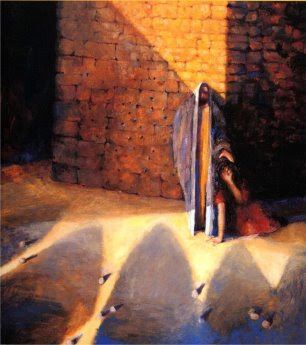

2010 HOMILY – We don’t know what Jesus wrote on the ground but we do know that back in Jesus’ day, writing on the ground in this way was a sign of being distraught. It’s clear that Jesus resisted taking the political bait to argue with the scribes and the Pharisees and it’s safe to assume that they were at least a little insulted that Jesus was ignoring their questions. But in the face of this game of “My rules are better than your rules” — Jesus chooses not to play.
That doesn’t mean that Jesus thought rules were no good. He recognizes that the woman in the story has broken an important rule: she has committed adultery. But Jesus isn’t in this just for the rules. He’s in this for the person – who is bound by the rules.
This discussion guide has been generated by the WORD THIS WEEK’S Catholic AI Assistant based on Father Austin’s homily. NEED HELP? Copy and paste a question into the chat bot in the lower right corner of the screen and have our Catholic Assistant help you.
Introduction
– Begin the discussion by reflecting on the dual themes of love and law as presented in the sermon. Consider what it means for love to be more than just an emotion, but also a binding law.
2. Understanding Jesus’ Actions
– Discuss the significance of Jesus writing on the ground. What might be the modern equivalent of showing distress or refusal to engage in fruitless arguments today?
– Reflect on the reasons Jesus chose not to engage in the “my rules versus your rules” argument with the scribes and Pharisees. What can this teach us about handling confrontational situations?
3. The Woman Caught in Adultery
– Analyze how Jesus handled the situation with the woman.
– Discuss what it means for Jesus to be “in this for the person.” How does this perspective challenge or reinforce your understanding of rules and laws?
4. The Balance Between Love and Law
– Reflect on the statement, “for Jesus, love was law,” and discuss what it means to see love as a binding force that holds us accountable to God and others.
– How can viewing love as a law affect our interpersonal relationships and responsibilities to the community?
5. The Role of Hypocrisy and Judgment
– Explore the actions of the scribes and Pharisees and Jesus’ response to them. What lesson can we derive about judgment and self-examination?
– Discuss the phrase, “Let the one among you who is without sin cast the first stone,” and its implications for personal reflection and humility.
6. Personal Responsibility and Community Welfare
– Discuss Jesus’ interest in saving the woman beyond just forgiving her sin. What does this imply about personal responsibility and communal welfare?
– Reflect on how we can prioritize the common good and the welfare of the marginalized in our communities.
7. The Demands of Love
– Explore the idea of love as demanding self-sacrifice, using the image of the Cross. How does this understanding challenge societal views of love as a self-fulfilling pursuit?
– Share experiences where love required significant personal sacrifice or compromise for the greater good.
8. The Eucharist and Love in Action
– Discuss how the love celebrated in the Eucharist can transform our daily interactions.
– Reflect on ways to embody this love in tangible acts of compassion and mercy in your community.
9. Conclusion and Personal Reflection
– Conclude with a personal reflection on how the sermon has impacted your understanding of the relationship between love and law.
– Share actionable steps you can take to live out the principle of love as law in your life.
Encourage group members to pray or meditate on the themes discussed, seeking guidance on how to apply these teachings in their personal lives and community.
THE WORD THIS WEEK invites you to check out the Catholic AI assistant (located at the bottom right-hand corner), a homily preparation resource you can use to clarify or further develop the insights and themes of Fr. Fleming’s homily.
Dominican Blackfriars

5th Sunday of Lent C
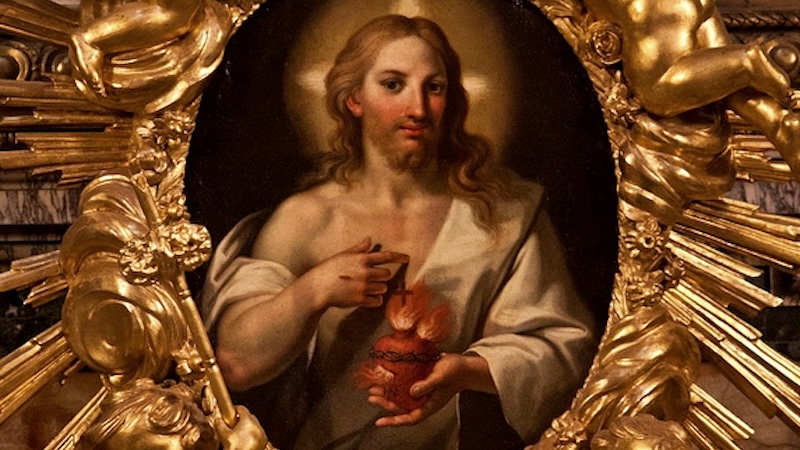
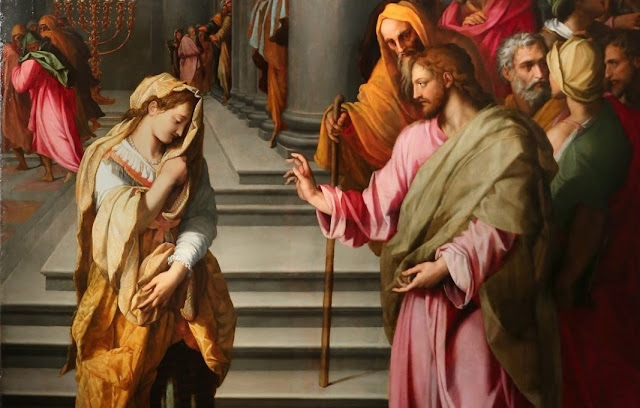
The image is from a painting in the Portuguese Church in Rome.
Click below to show/hide questions.
This discussion guide has been generated by the WORD THIS WEEK'S Catholic AI Assistant based on the Dominican Blackfriars' homily for this week. NEED HELP? Copy and paste a question into the chat bot in the lower right corner of the screen and have our Catholic Assistant help you.
The Trap Set for Jesus
- Discuss the intentions of the Scribes and Pharisees in presenting the adulterous woman to Jesus. What was their objective?
- How does this scenario illustrate the conflict between strict adherence to the Law of Moses and the spirit of mercy that Jesus embodies?
Jesus' Response
- Reflect on Jesus' action of writing in the sand. What do you think he might have written, and why does this action hold significance in the narrative?
- Why does Jesus challenge the accusers by stating, "Let the one among you who is without sin be the first to throw a stone at her"?
Mercy vs. Justice
- How does the sermon distinguish between mercy and justice, and how are they portrayed in this Gospel account?
- In what ways does Jesus’ response to the situation demonstrate a deeper understanding of both mercy and justice?
Examples of Mercy
- Consider how the Pharisees, unexpectedly, become examples of mercy. What lessons can we draw from their reaction after Jesus' challenge?
- Explore St. Thomas Aquinas’ ideas of ‘real union’ and ‘union in love’ as motivations for mercy. How do these concepts apply in today’s world?
The Mercy of Jesus
- Discuss the difference between the mercy shown by the Pharisees and the mercy shown by Jesus.
- Why is it significant that Jesus tells the woman, "Neither do I condemn you. Go, and from now on do not sin anymore"?
Application to Life
Personal Reflection
- In what ways do we encounter situations in our own lives where we are called to choose between justice and mercy?
- How can we cultivate a mindset that seeks a ‘union in love’ with others, similar to that of Jesus?
Group Activity
- Share personal experiences where mercy prevailed over judgment. What were the outcomes, and what did you learn from those experiences?
- Discuss ways in which your group can support each other in embodying both mercy and justice in your interactions with others.
Conclusion
The call to mercy is a call to love beyond measure. As we enter discussions and reflections, let us remember that Jesus' way of showing mercy is not just about forgiveness but also about transformation. Let us use this opportunity to open our hearts to change, inspired by the love Christ demonstrates.
Homily Excerpt
Fifth Sunday of Lent. Fr Nicholas Crowe shows how Jesus’ response to the woman caught in adultery is one of justice perfected through love.

Because Jesus loves the adulterous woman he wants what is best for her, and what is best for this woman is that she turns away from evil and does good. Jesus’ mercy, because it is founded on love, does not simply let this woman off but demands that she change. In this way the mercy of Jesus is ordered to the same end as His justice: both are directed towards love of God and love of neighbor, but mercy goes further in its attempts to make that love manifest. Like the adulterous woman, all of us are recipients of God’s mercy offered to us in Jesus Christ. In gratitude for this great gift, let us be converted. Let us use this season of Lent to open our hearts and minds to God that his grace might transform us, that we might become Christlike in our love and mercy.

Cropped photograph by Fr Lawrence Lew OP
Click below to show/hide questions.
This discussion guide has been generated by the WORD THIS WEEK'S Catholic AI Assistant based on the Dominican Blackfriars' homily for this week. NEED HELP? Copy and paste a question into the chat bot in the lower right corner of the screen and have our Catholic Assistant help you.
Opening Questions for Discussion:
1. What are your initial thoughts on the scene where Jesus writes in the sand? Why do you think this detail, though unexplained, is significant?
2. How does this Gospel story challenge our conventional understanding of justice and mercy?
The Role of Mercy in Justice:
- Discuss how Jesus redefines justice by incorporating mercy. How does this differ from the idea of justice as purely punitive?
- Reflect on the notion that mercy is not optional but central to justice. How can this principle change our approach to dealing with wrongdoings?
- Share examples of how mercy and rehabilitation play a role in contemporary justice systems. How does this align with or differ from the message in the Gospel?
Forgiveness and Second Chances:
- Jesus challenges us to give others multiple chances. How do you personally feel about offering forgiveness repeatedly?
- What are the potential risks and benefits of basing justice on mercy rather than on vengeance?
- Consider personal experiences where you or someone you know was given another chance. How did it impact your perspective on justice and forgiveness?
Personal Reflection:
1. How do you view your own experiences with sin and forgiveness? Do you truly believe that you can break away from your sins as suggested in the sermon?
2. When you think about confession, how do you see it influencing your future actions and decisions?
3. Reflect on your personal beliefs about the grace and power that come from being united with Christ. How does this influence your daily life and decisions?
Application: Breaking the Cycle of Sin:
- Discuss practical steps you can take to avoid actions or thoughts that harm you. Share strategies that have worked for you or seek advice from the group.
- How can the group support each other in a journey toward transformation and renewal of life?
Faith and Community:
1. How does this Gospel message encourage us to strengthen our community bonds by showing mercy and giving life to others?
2. Consider how unity with Christ and the assurance of his love can inspire us to act more compassionately and justly in our community.
Closing Reflections:
- Pray together for the courage to show mercy and the strength to break from sin.
- Share a takeaway from the discussion that you plan to incorporate into your life.
Homily Excerpt
Fifth Sunday of Lent (C) | Fr Benedict Jonak exhorts us to hope in the power of grace and God’s mercy to renew our lives and render transformative justice.
Today’s Gospel story is simply captivating, although Jesus speaks few words. He writes in the sand with his finger – a gesture which is unexplained, and uncommented by the evangelist. It all builds up the tension, which is already huge from the very first moment the woman is brought to Jesus, as the crowd stands in silent expectation of a swift judgment. To be more precise: judgment had already been made. The woman was caught in the act, and the Law prescribes, that she be stoned to death.
But Christ has not been born to bring death but life. He has become one of us to reveal God to us, but also to teach us how to live out our human lives. And today his teaching is twofold.

Image: detail from Christ and the Woman Taken in Adultery by Peter Paul Rubens
Click below to show/hide questions.
This discussion guide has been generated by the WORD THIS WEEK'S Catholic AI Assistant based on the Dominican Blackfriars' homily for this week. NEED HELP? Copy and paste a question into the chat bot in the lower right corner of the screen and have our Catholic Assistant help you.
Introduction
Begin with reading John 8:1-11 aloud to provide context for the discussion.
The Act of Stooping Low
1. How does the phrase "How low can you stoop?" usually apply in both everyday situations and in moral contexts? Reflect on examples.
2. Consider the actions of the woman caught in adultery. How does her situation illustrate stooping low in the eyes of society and the Law?
3. Discuss how the reaction of the accusers manifests a different form of stooping low.
Legal and Moral Dilemmas
1. Analyze how the accusers might have created a legal quandary. Why might they have focused solely on condemning the woman and not the man involved?
2. How does the story of the woman caught in adultery reveal the intentions of the scribes and Pharisees regarding Jesus and the situation?
3. Discuss the concept of using law as a weapon versus using it as a tool for life and justice.
Jesus Stooping Down
1. Reflect on why Jesus might have stooped down to write on the ground. What significance does the act of writing hold in this context?
2. How does Jesus’ action and response establish a “new deed,” and what might this convey about divine justice and mercy?
3. What message does this action deliver about being thoughtful and deliberate in judgment?
The Divine Act of Stooping
1. In what ways does God stooping down reach into human depravity to restore and redeem?
2. How do your personal experiences, struggles, and interactions reflect times when you’ve ‘stooped low’? Consider both positive and negative contexts.
3. In reflecting on the sermon, how can we embrace the depth of God's mercy in daily life, especially when dealing with others?
Application and Reflection
1. Identify areas in your life where you feel the need for God’s mercy due to ways you have 'stooped low.'
2. Consider practical ways to extend mercy and forgiveness to others in your life.
3. End with a moment of silent reflection followed by a group prayer, focusing on God’s unending mercy and guidance.
This guide encourages participants to reflect deeply, share personal insights, and engage in meaningful discussion about the theme of stooping low and divine mercy.
Homily Excerpt
Fifth Sunday of Lent. Fr David Rocks preaches on the woman taken in adultery.
‘How low can you stoop?’ In a playground context this might be a game, but in the world of the cliché it points to the righteous outrage that follows an act of depravity. We are oriented towards establishing justice, and putting things in order.
The woman in our Gospel passage has stooped to the low point of adultery. She has been caught in the act and her shame laid bare. Her actions shame her family and community, and flout what has been held dear for generations upon generations. She stands accused and makes no attempt to deny the charge or defend herself. The Law is very clear, and she knows her fate: this ‘teacher’ will surely know also. Death by stoning, for stooping so low. The men will be respected for ensuring that the Law is followed and society protected, and she will be no more. It couldn’t be much clearer.
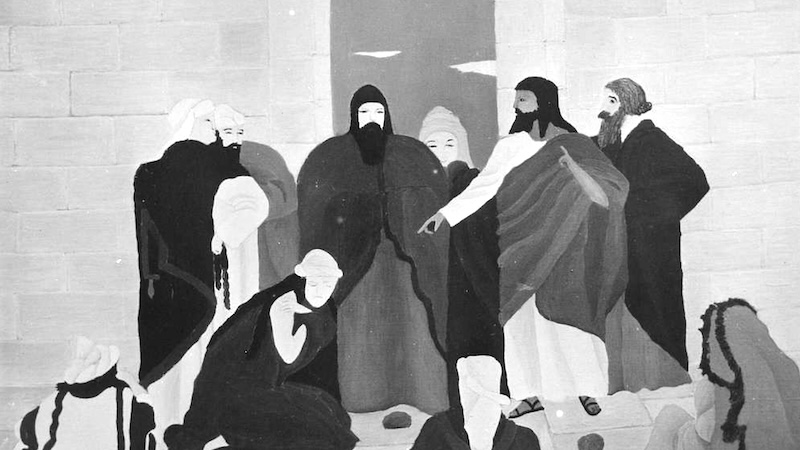
Image: ‘Woman Taken in Adultery‘ from the US National Archives and Records Administration, public domain.
Click below to show/hide questions.
This discussion guide has been generated by the WORD THIS WEEK'S Catholic AI Assistant based on the Dominican Blackfriars' homily for this week. NEED HELP? Copy and paste a question into the chat bot in the lower right corner of the screen and have our Catholic Assistant help you.
Introduction to the Theme:
- The sermon explores the concept of solidarity, particularly how Jesus demonstrates solidarity with humanity in a context of sin and accusation.
- It encourages reflection on personal sins, the nature of forgiveness, and the call to grow in solidarity with Christ and one another.
Solidarity with Humanity:
1. How does the story of the woman taken in adultery illustrate Jesus’ solidarity with humanity?
2. What does the phrase “there is a certain solidarity in sin” mean to you? Can you think of situations where you observed this dynamic in your own life or community?
The Role of Sin:
3. Reflect on how sin isolates individuals as opposed to bringing them together. Can you identify any personal experiences where sin has caused division?
4. Discuss the symbolic meaning of Jesus writing in the dust. What do you think he accomplished through this action?
Understanding Forgiveness:
5. Jesus offers forgiveness without condemnation. How does this challenge or reinforce your understanding of God's forgiveness?
6. In what ways does personal repentance play a role in the forgiveness and salvation offered by Christ?
New Life in Christ:
7. How does the phrase “Neither do I condemn you; go, and from now on sin no more” encourage believers toward transformation?
8. Consider the calling to bear the image of "the man of heaven." How can this calling be pursued in daily life?
Scriptural Connections:
9. Discuss how the referenced scriptures (Isaiah 43:16-21, Philippians 3:8-14, John 8:1-11) relate to the concept of new life and solidarity in Christ.
10. Reflect on Romans 5:8 and 2 Corinthians 5:21. How do these verses deepen the understanding of Christ’s sacrifice and solidarity with humanity?
Personal Application:
11. Identify areas in your life where you feel isolated due to sin. How can Jesus' example of solidarity help in healing and restoration?
12. What practical steps can you take to foster a community where solidarity and restoration are prevalent over condemnation and isolation?
Closing Reflection:
- Consider the transformative power of moving from a state of sinfulness to sainthood through repentance and solidarity with Christ.
- Reflect on how the message of this gospel story can influence personal and communal approaches to judgment, forgiveness, and unity.
Additional Resources for Further Study:
- Explore writings by Cardinal Basil Hume for insights on sin and solidarity.
- Delve into theological perspectives on Jesus as the New Adam and the implications for Christian life.
- Examine historical church teachings on mercy and justice as means of understanding divine and human relationships.
Homily Excerpt
Fifth Sunday of Lent. Fr Matthew Jarvis preaches on the woman taken in adultery.
Today’s gospel is a story of solidarity. It shows the solidarity with God with us and it carries a lesson to grow in solidarity with one another, as we ask for forgiveness and turn away from our sins.
Basil Hume once wrote, ‘There is a certain solidarity in sin.’ The phrasing was carefully chosen. As sinners, we know we are in the same boat; we feel solidarity in our weakness and failure. ‘For all have sinned and fall short of the glory of God’ (Rom 3:23). That’s why the raging accusers of this woman caught in adultery eventually wander off, unwilling to cast any stones, knowing themselves to be sinful too. The oldest depart first, because they see more clearly the commonality of human failure.
But Cardinal Hume spoke only of ‘a certain solidarity’, because in the end there can be no true solidarity in wrongdoing, which actually divides us. The Devil, the Diabolos, is literally the ‘Scatterer’ or ‘Divider’. Sin locks us up inside ourselves, isolates us in pride and self-centredness. It is the antithesis of relational love and communion.
THE WORD THIS WEEK invites you to check out the Catholic AI assistant (located at the bottom right-hand corner), a homily preparation resource you can use to clarify or further develop the insights and themes of the homilies above.
Fr. Charles E. Irvin
5th Sunday of Lent C
PODCAST: Deep Dive into Fr. Irvin’s Homily

There are a number of instances in the Bible when we hear of God working, the image being of Him working through His finger. In the Book of Exodus, we are told of Moses meeting God in the cloud on top of Mt. Sinai. There God gives Moses His promise to be with the Israelites throughout their journey to the Promised Land and thereafter until the end of time. At the end of that encounter God gives Moses the tablets of stone upon which He, with His finger, had written His Ten Commandments. The Book of Exodus tells us: When the Lord had finished speaking to Moses on Mount Sinai, he gave him the two tablets of the commandments, the stone tablets inscribed by God’s own finger. (Exodus 31:18)
In today’s Gospel account we hear an echo of those stupendous moment when the finger of God is at work. Here we find a woman caught in the very act of adultery. She is dragged away and dumped at the feet of Jesus by the scribes and Pharisees who thereupon demand Jesus’ judgment of the woman. The scribes and Pharisees knew what the Mosaic Law required, namely that this woman be stoned to death. They were not in the slightest bit concern with justice being done, rather they were intent on trapping Jesus so that they in turn could point their fingers and accuse Jesus of transgressing the law.
This discussion guide has been generated by the WORD THIS WEEK’S Catholic AI Assistant based on Fr. Irvin’s homily. NEED HELP? Copy and paste a question into the chat bot in the lower right corner of the screen and have our Catholic Assistant help you.
Biblical Imagery and Creation
– Reflect on Michelangelo’s depiction of the Creation of Adam. How does this image portray the concept of God granting life and an immortal soul to Adam?
– Discuss the significance of God’s finger in the painting. What does the gesture symbolize in terms of divine creation and connection?
– In what ways do you identify with Adam in the moment depicted? How does this connection influence your understanding of your own existence and soul?
The Finger of God in Exodus and the New Testament
– Analyze the moment in Exodus when God inscribes the Ten Commandments with His finger. How does this action convey God’s direct involvement in guiding His people?
– Compare the instance of God’s finger in Exodus to the New Testament narrative where Jesus writes in the sand. What parallels and differences arise from these two instances?
Jesus as a Re-Creator and Healer
– Discuss the Gospel account of the woman caught in adultery. How does Jesus’ act of writing in the sand serve as an example of His divine authority and power of re-creation?
– Examine the healing of the deaf man as reported in the Book of Mark. How does Jesus using His finger to heal demonstrate the continuity of God’s touch in the world?
The Finger of God and the Kingdom of God
– Reflect on Luke 11:20 and Jesus’ use of “the finger of God” to drive out demons. What does this reveal about the presence of the Kingdom of God in Jesus’ ministry?
– How can the symbolism of God’s finger serve as a metaphor for God’s kingdom actively working in our lives today?
Our Connection With God
– Consider the image of the electric charge in Michelangelo’s painting. How do you view the reciprocal connection between humanity and God?
– Discuss the significance of the Eucharist as the Body and Blood of Christ. How does this sacrament deepen our connection with God beyond a mere touch?
Personal Reflection and Application
– Reflect on personal experiences where you have felt the touch or presence of God in a tangible way.
– How can the concept of being temples of the Holy Spirit influence your daily life and actions?
– Discuss ways you can actively make and maintain the connection with God, just as the painting depicted Adam reaching out towards God.
Conclusion
Summarize the central themes discussed and reflect on how understanding the “Finger of God” enriches your spiritual journey. Consider closing the session with a prayer or meditation focused on inviting God’s continuous presence and connection in your life.
THE WORD THIS WEEK invites you to check out the Catholic AI assistant (located at the bottom right-hand corner), a homily preparation resource you can use to clarify or further develop the insights and themes of Fr. Irvin’s homily.
Fr. George Smiga
- Loving the Sinner - 2004
- Reading the Seasons of Life - 2007
- The Grace of Doodling - 2010
- Our Doodling God - 2013
- An Oasis for Everyone - 2016
- Mob Thinking - 2019
5th Sunday of Lent C

Mohammad Zubair, 37, is beaten by a Hindu mob in one of the most shocking images from a week of violence in Delhi.
Mob Thinking

2019 HOMILY – It is important for us to recognize that the people standing around the woman who was caught in adultery in today’s gospel are not a crowd. They are a mob.
A mob is a group of people dedicated to inflicting violence on someone they feel is guilty. Mobs are dangerous. Someone in a mob will participate in violence that he or she would never consider as an individual. Being a part of a mob generates a feeling of indisputable righteousness and unity—even though the actions of a mob are often unjust and contemptible.
This unity in group violence is as early as civilization. The people witnessing refined tortures executed upon criminals in the Roman Colosseum were not spectators. They were a mob. The same is true for those who cheered at the deaths of people in the Spanish Inquisition, the Salem Witch Trials, and the lynching of black Americans…
This discussion guide has been generated by the WORD THIS WEEK’S Catholic AI Assistant based on Fr. Smiga’s homily.
Introduction to the Parable
The parable of the Prodigal Son is traditionally viewed as a representation of God’s forgiveness. However, an alternative interpretation suggests examining it as a story of family dynamics and dysfunction.
Discussion Questions for the Traditional Interpretation
1. How does the image of the father as a figure of God influence our understanding of forgiveness in this parable?
2. What are the key elements that highlight the theme of repentance in the younger son’s return?
Alternative Interpretation
This interpretation views the father as a human parent, not representing God, thus shifting the focus from divine forgiveness to familial dysfunction.
Discussion Points for the Alternative Interpretation
1. Consider the father’s decision to divide the estate. How could favoritism play a role in this decision?
2. Examine the younger son’s return home. Could his actions be viewed as manipulative rather than repentant?
Exploring Family Dysfunction
1. In what ways does the parable depict an unhealthy family dynamic?
2. How does the elder son’s reaction highlight feelings of neglect and resentment?
Discussion Questions on Family Dynamics
1. Discuss whether the elder brother’s feelings of exclusion are justified.
2. How does the father’s interaction with the elder son reflect broader themes of familial negotiation and reconciliation?
3. What emotions might the elder son experience, knowing his brother is celebrated upon return?
Real-Life Applications
This parable prompts reflection on our personal relationships and their imperfections.
Discussion Prompts for Personal Reflection
1. Identify situations in your life where you feel neglected or unfairly treated. How can this understanding change your interactions with others?
2. Discuss how recognizing and accepting dysfunction might allow us to maintain relationships, despite their imperfections.
Concluding Thoughts
The elder son’s dilemma presents a choice many face in flawed relationships: to participate in reconciliation or stand apart in resentment. While the parable does not reveal the elder son’s decision, it underscores the wisdom in choosing to engage with others despite their shortcomings.
Actionable Reflections
1. Reflect on a relationship where you feel resentment. How might you approach it with a perspective of acceptance?
2. When might it be wiser to embrace flawed relationships rather than waiting for them to change?
This discussion guide encourages individuals to delve into personal and family dynamics, examining both traditional and alternative interpretations of the parable, and applying its wisdom to real-life scenarios.
THE WORD THIS WEEK invites you to check out the Catholic AI assistant (located at the bottom right-hand corner), a homily preparation resource you can use to further clarify or further develop the insights and themes of Fr. Smiga’s homilies.
Pro-Life Homily Resources

5th Sunday of Lent C

“See, I am Doing Something New”
“See, I am doing something new,” the Lord declares today through the Prophet Isaiah.
That is what we proclaim to the world as we build the Culture of Life, and that is what Lent prepares us for. “By your gracious gift each year, your faithful await the sacred paschal feasts with the joy of minds made pure.” (Preface 1 of Lent). The paschal mystery renews the world, and ushers in the new humanity, built on Christ and reconciled with God. That is the source of the Culture of Life.
The error of excluding entire segments of the human family, like the unborn, from personhood and protection, is an error that is old. It crops up throughout human history, and leads to genocide, holocausts, various forms of slavery, segregation and oppression.
But Christ makes all things new. As today’s Gospel passage reveals, he does not condemn us, but reveals to us the mercy that flows from his love for every human life. Yet that mercy is not permission to return to our old life of sin, but rather power that raises us up beyond the life of sin to a new way of responding to the people around us.
Some will maintain that it is not really possible to overcome the culture of death or to stop the advance of abortion, euthanasia, and other forms of violence. But if we are to celebrate the paschal mystery with mind and heart renewed, and are to hear the message, “See, I am doing something new,” then we are called to believe that it really is possible – and we are called to use our gifts and energy to make it real.
In addition to these themes, the homily today may well speak about ministries that provide healing after abortion. A good clearinghouse for such ministries is http://www.SilentNoMore.com, a joint project of Priests for Life and Anglicans for Life.
THE WORD THIS WEEK invites you to check out the Catholic AI assistant (located at the bottom right-hand corner), a homily preparation resource you can use to clarify or develop the insights and themes of Frank Pavone’s homily notes for preachers.
Msgr. Joseph Pellegrino
5th Sunday of Lent C

Blessed Are the Compassionate

The Gospel reading for this Sunday is often called the Woman Caught in Adultery. However, focusing in on the woman or on adultery misses the main point of the reading. The Lord is teaching us about the power of love and the consequence of hate. The incident took place because Jesus’ enemies were looking for a way to attack him. They set a trap using the woman. They were not concerned about her or even her sin. They were concerned about finding a way to destroy the Lord. They viewed his teaching negatively. He guided people to recognize that love had to be at the heart of all law. This was a challenge to their authority because it put people in the position of seeing through the actions of their leaders. The pharisees were not motivated by the love of God, or even, really, by their love of the law. They were motivated by their love for their positions of authority. They were motivated by their hatred for Jesus who challenged any authority that did not reflect the image of the Creator. They had stones in their hands. They really wanted to throw them at Jesus.
This discussion guide has been generated by the WORD THIS WEEK’S Catholic AI Assistant based on Fr. Pellegrino’s homily.
Introduction: Context and Main Themes
1. Overview: Begin with a summary of the sermon text, emphasizing the key theme: the power of love versus the consequence of hate, using the story of the Woman Caught in Adultery as a vehicle to explore these concepts.
2. Main Point: Identify that the story is not primarily about the woman or the act of adultery, but about demonstrating love over hatred, challenging the authority that does not reflect God’s image.
Discussion Questions:
1. Setting the Stage: Discuss the motivation of Jesus’ enemies in orchestrating the incident. How does their intention reveal the broader theme of hatred against love?
2. The Trap: Analyze the trap set for Jesus. What were the implications of Jesus’ potential responses, both in terms of Jewish law and Roman authority?
3. Jesus’ Understanding: Explore how Jesus’ awareness of the real motivations behind the actions of the Pharisees influences his response.
4. Reflection on the Pharisees’ Actions: What does the Pharisees’ eventual realization tell us about self-awareness and repentance?
5. Modern Parallels: Connect the sermon’s message about polarization to modern society. Consider how hatred is propagated in media and within religious communities.
6. Transformation of the Woman: Discuss the implications of the woman’s transformation. How might love lead to personal change and growth?
7. Personal Reflections: Encourage group members to share any personal stories where they have experienced or witnessed the transformative power of love or the destructive impact of hate.
Case Study: Family Struggle and Redemption
1. Family Story Analysis: Delve into the narrative of the family dealing with chemical dependency. How did love manifest in this situation, and what were its eventual effects?
2. Role of Patience and Perseverance: How do these virtues play into the narrative of the family’s recovery? Discuss the father’s role in maintaining stability through love.
3. Learning Outcomes: What lessons can be drawn from the children’s experience observing their father’s example of unconditional love?
Application: Personal and Communal Action
1. Forgiveness and Reconciliation: Discuss the importance of forgiveness as a step towards healing and transformation. How can members practice this in their own lives?
2. Actionable Steps: Identify specific actions individuals or the group can take to promote love and avoid hate in their community and personal relationships.
3. Reflection Practice: Encourage participants to reflect on areas in their lives where they might be holding onto stones and discuss ways to let go.
Conclusion: Embracing the Power of Love
1. Closing Thoughts: Summarize the main points discussed. Reinforce the sermon’s call to choose love over hatred.
2. Inspirational Challenge: Invite participants to commit to embodying the principles of compassion and forgiveness in tangible ways.
3. Prayer or Meditation: End the session with a prayer or moment of meditation focusing on seeking divine strength to embrace love and leave behind hatred.
THE WORD THIS WEEK invites you to check out the Catholic AI assistant (located at the bottom right-hand corner), a homily preparation resource you can use to clarify or develop the insights and themes of Msgr. Pelligrino’s homily.
Msgr. Charles Pope
5th Sunday of Lent C
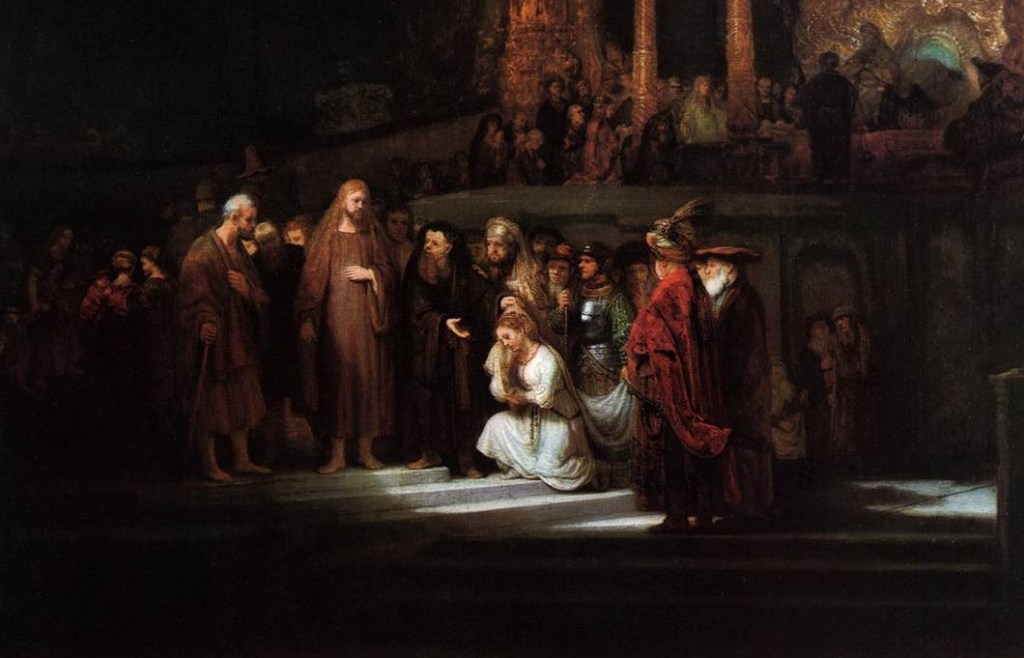
The Woman Taken in Adultery, 1644 by Rembrandt
Counting the Cost of Condemnation

This Sunday’s Mass features the well-known Gospel of the woman caught in adultery. In it, the Lord intimates to the men of His day that the severe punishment they want to mete out to this woman may be unwise given that they themselves must prepare for their own judgment.
Let’s look at this Gospel in three parts.
I. COLLABORATORS IN CONDEMNATION
II. COUNTING THE COST
III. CORRECTING WITH COMPASSION

THE WORD THIS WEEK invites you to check out the Catholic AI assistant (located at the bottom right-hand corner), a homily preparation resource you can use to clarify or develop the insights and themes of Msgr. Pope’s homily.
Fr. Jude Siciliano, OP

5th Sunday of Lent C
Woman Caught in Adultery
EXCERPT: The modern reader detects other factors in the story. At a recent scripture reflection with a group of parishioners, we read this story and no sooner had the reading and a minute of silent reflection ended than a woman spoke up, “Where’s the guy? It takes two to tango. I bet those men let him go!” (Another reason, when possible, for the preacher to get varied input on a passage: a chance to hear the scriptures from another perspective.) We noted that the woman isn’t even named. For the accusers, the woman is just a shameless “case in point” to be used as an instrument to trap Jesus. But God wants no person used, treated as a thing. Remember that in Genesis, humans were created by God and in God’s image and likeness, animated by God’s breath/Spirit. The learned religious leaders failed to see God’s image and breath in the one they called “this woman.”
THE WORD THIS WEEK invites you to check out the Catholic AI assistant (located at the bottom right-hand corner), a homily preparation resource you can use to clarify or develop the insights and themes of Fr. Jude’s homily notes.
Bishop John Kobina Louis
5th Sunday of Lent C

Sunday Homilies

Bishop John Kobina Louis, PhD, is an auxiliary bishop of the Archdiocese of Accra, Ghana. He was ordained as an auxiliary bishop on 19th April 2023.
Fr. Michael Chua
5th Sunday of Lent C

Homily Excerpt

Mercy must always put us in a true relationship with God and others. The sinner is loved, but the good that God intends, has as its purpose, the conversion of the sinner from sin, making sure that the sinner does not remain in sin, since that would be an evil. Therefore loving the sinner and calling him to conversion is how we see mercy directly reunited with justice. It has nothing to do with any sort of tolerance with respect to the sin, rather it is about seeking the conversion of the sinner. St. Pope John Paul II once wrote “According to Catholic doctrine, no mercy, neither divine nor human, entails consent to the evil or tolerance of the evil. Mercy is always connected with the moment that leads from evil to good. Where there is mercy, evil surrenders. When the evil persists, there is no mercy.”
I hope that the next time we feel like condemning someone or demanding justice be meted out to another, we should take pause and ask ourselves, “Have we not sinned ourselves?” “Have we not made mistakes too?” “Do we not require the mercy which we do not deserve and seek to avoid the punishment that we do deserve?” Well, if the answer is yes, remember that the One who could cast that first stone, the Sinless One is now looking straight into your eyes with mercy and inviting you to turn to your neighbour, to the one who has wronged you, “Neither do I condemn you, go away, and don’t sin anymore.”

Homily Excerpt
Jesus bends down and begins to write in the earth. And this is all done in silence. What does this mean?
St Thomas Aquinas, with the keenness of his mystical insight, says that this action signifies that God in His mercy is stooping down to assist sinful humanity. In fact, he says, that whenever Jesus stoops down, this signifies an act of God’s mercy, and that whenever He stands up straight, this signifies an act of God’s justice. For the Greek word for justice literally means, “uprightness.” It is the same word in the Greek for what Jesus is doing by standing upright. But what does the writing in the earth signify? The Greek word there is katagraphein. It is a hapax legomenon, which is to say that it is a unique word which appears only once in the New Testament, and that is here. It doesn’t exactly mean “write”—that would be graphein—but katagraphein means “to engrave.”
What was our Lord “engraving”? We return to the Old Testament to see how God engraves the commandments with His finger in the tablets of stone. So the Fathers of the Church say that the Lord is here writing the commandments into the earth. But according to St Thomas, this act also signifies the mystery of the Incarnation—when by the finger of God, the Holy Spirit…
Homily Excerpt
What the Lord says to this woman caught in adultery is what He says to each of us: “go away, and do not sin any more;” in other words, go away from your past and enjoy the freedom He offers you. “If the Son makes you free, you shall be free indeed.” (John 8:36) Our Lord opens up a path ahead of us, where sin had closed the door. His grace and mercy convert our slavery to guilt into freedom from sin. Just as what God had promised to do for His people through the prophet Isaiah in the first reading, when He forgives us, He is making something new, a new path in the desert will open up, where the Lord our God will put springs of living waters for His people to drink.
All of us have sinned, some worse than others. There are many of us who labour under the crushing weight of guilt in the belief that our sins are so grave and egregious that not even God would be able to forgive us. But that is Satan’s greatest lie. Pope Francis is fond of reminding us that God never tires of forgiving us, but it is we who often grow tired of asking Him for forgiveness. So, let us not tire of asking God for forgiveness, let us learn to let go of the guilt and lift up our eyes to the Lord and see a better future, a better life ahead of us, as we journey together toward Easter and one day to Eternal Life. Remember that every saint has a past, and every sinner a future.
THE WORD THIS WEEK invites you to check out the Catholic AI assistant (located at the bottom right-hand corner), a homily preparation resource you can use to clarify or develop the insights and themes of Fr. Chua’s homilies.
Fr. Vincent Hawkswell
5th Sunday of Lent C

Homily Excerpt

2025 HOMILY – Our righteousness does not come from obeying the law, as St. Paul says, but through “faith in Christ”; it is “the righteousness from God based on faith.”
Our past failures should not discourage us or tempt us to despair, for God will forgive anything if we repent. “Do not remember the former things, or consider the things of old,” he says; “I am about to do a new thing.”
Though our sins be like scarlet, he will make them as white as snow. Then, like St. Paul, we can forget what lies behind and strain forward to what lies ahead, toward “the prize of the heavenly call of God in Christ Jesus.”
THE WORD THIS WEEK invites you to check out the Catholic AI assistant (located at the bottom right-hand corner), a homily preparation resource you can use to clarify or develop the insights and themes of Fr. Hawkswell’s homily.
Fr. Denis J. Hanly
5th Sunday of Lent C

Homily Excerpt

This is a wonderful gospel. It preaches and teaches for itself. There’s no need even to comment on it. But, I’m sure, the one thing I’d like to say is you should be warned.
Because I’m sure all of you are saying, in your hearts, “Yes, we must forgive.” And this is the lesson that Jesus wants us to know: we must forgive.
But John is saying something quite different.
He wants us to put ourselves in the shoes of the lady, the lady who got lost along the way and then was dragged in and thrown in front of this group of judging people and heard the words that Moses said, she should be stoned, and that they were all going to do that so that the law would be fulfilled.
THE WORD THIS WEEK invites you to check out the Catholic AI assistant (located at the bottom right-hand corner), a homily preparation resource you can use to clarify or develop the insights and themes of Fr. Hanly’s homily.
Fr. Tommy Lane

5th Sunday of Lent C
Fr. John Kavanaugh, S.J.
5th Sunday of Lent C
PODCAST: Deep Dive into Fr. Kavanaugh’s Homily
Resenting Forgiveness

Her face is still clear in my mind, even though I haven’t seen her for fifteen years and she quite possibly might be gone from our earth by now.
She seemed to have lines that at one time had often smiled, but when I encountered her after Mass one day, her face was all scrunched up like an over salted pretzel. “You know what I hate about the Gospels,” she said, not in a question, but with the authority of more than eighty years. I didn’t know quite how to respond, other than to say, “What?”
“The eleventh hour. Those people who come in at the eleventh hour and get paid the same as those who have been working all day. It’s like sinners who loaf all their lives and then ask God’s forgiveness at the end and get into heaven.”
This discussion guide has been generated by the WORD THIS WEEK’S Catholic AI Assistant based on Fr. Kavanaugh’s homily. NEED HELP? Copy and paste a question into the chat bot in the lower right corner of the screen and have our Catholic Assistant help you.
Introduction
– Reflect on the woman’s reaction to the gospel’s depiction of forgiveness at the eleventh hour. Why might she feel this way, and does it resonate with your own thoughts on fairness and justice?
Reflection on Parables and Fairness
1. Consider the parable of the laborers in the vineyard. Why do you think it is challenging for some to accept the idea that latecomers receive the same reward as early laborers?
2. Discuss the potential danger of interpreting this parable as suggesting that good works are irrelevant. How might this shape one’s understanding of grace and salvation?
The Wondrous Surprise of Meeting Christ
1. Imagine what it might have been like for the woman to encounter Christ after her death. How does the sermon suggest she might react?
2. Explore the idea that meeting Christ offers a “stupendous surprise” beyond our earthly understanding of fairness. How might this perspective change your view of life’s injustices?
Paul’s Perspective on Faith and Works
1. Analyze Paul’s declaration in Philippians about considering all else but rubbish for the sake of knowing Christ. What does this reveal about his faith?
2. Paul continues to strive for spiritual maturity despite his belief in justification through faith. Discuss how this commitment mirrors or diverges from your own approach to faith and effort.
Judgment, Forgiveness, and Mercy
1. Reflect on how we judge others, especially in the context of perceived failures or sins. How can Jesus’ approach in the story of the adulterer inform our actions?
2. Discuss the implications of Jesus’ statement, “Neither do I condemn you. Go and sin no more.” How does this balance justice and mercy in your view?
The New Path in Christ
1. Isaiah and the psalmist speak of God doing something new. What might this “new way” look like in your life or community?
2. Consider how forgiveness and grace create a “new path” that unites people from various walks of life. How can this concept of universal grace affect your interactions with others?
Conclusion: Embracing Mercy
– Discuss the imagery of the faded laugh lines being restored. How does this symbolize the transformation brought by divine mercy?
– How do you see yourself in the parable, as those who approached Jesus early or at the eleventh hour? How has this reflection shaped your understanding of God’s grace and forgiveness?
Action Steps
– Identify one area in your life where you feel challenged by the concept of grace and discuss how you might begin to embrace forgiveness more fully.
– Reflect on a person or situation where you can practice forgiveness this week, inspired by Jesus’ teachings. Share your experience at your next study session.
THE WORD THIS WEEK invites you to check out the Catholic AI assistant (located at the bottom right-hand corner), a homily preparation resource you can use to clarify or develop the insights and themes of Fr. Kavanaugh’s homily.
Bishop Frank Schuster
5th Sunday of Lent C
Homily Excerpt
Now, it seems to me, that the significance of this story can be magnified if we consider how the whole human race could be that woman caught in adultery. Remember the Chosen People were wedded to God the Father through covenant after covenant. Israel, however, was also caught in the act of “adultery” on more than one occasion by worshiping other gods and allowing depraved foreign customs to intermingle with their culture. Israel was given the law and the prophets. The leaders of Israel found ways over time to corrupt the law and kill the prophets. What is God’s solution to the problem of Israel’s infidelity? God in the person of Jesus Christ steps in front of the flying stones by becoming our Lamb of God who takes away the sins of the world. That is the power of the cross. Grace is conveyed to us by no merit of our own. The question for us becomes how do we live our lives in response to this grace in thought, word, and action?
THE WORD THIS WEEK invites you to check out the Catholic AI assistant (located at the bottom right-hand corner), a homily preparation resource you can use to clarify or develop the insights and themes of Bishop’s Schuster’s homily.

5th Sunday of Lent C
Facing Our Own Sins
We see something radically new in Jesus. He tells us, do not be so quick to condemn, so quick to highlight the wrongdoing of others while concealing your own. Do not be so caught up only in what a person has been that you fail to see what they could become. Jesus does not say that what the sinner has done did not matter, broken laws and broken hearts always matter. Instead, Jesus points out to us that every person, no matter how sinful, has a future, as well as a past. It is not, of course, that there is no place for accountability. It is just that there is no place for condemnation. Once we face our own sins, there is no place for stoning.
We know nothing about her. We never hear of her again. She has no name. The risk for her may well have been her sense of guilt. How can a God who prizes fidelity ever forgive my infidelity? How can I expect my husband to forgive me? Above all, how can I ever forgive myself? This strange, unique, compassionate Man has told me that He does not condemn me, and that no other Jew is this area dares to condemn me, but how can I live with their leering looks? Live with my husband? Live with myself?
THE WORD THIS WEEK invites you to check out the Catholic AI assistant (located at the bottom right-hand corner), a homily preparation resource you can use to clarify or develop the insights and themes of Fr. Warren’s homily.
Fr. Jagodensky, SDS
5th Sunday of Lent C
Homily Excerpt

(whispering) I have a secret to tell you. “Publisher Clearing House” gave me their winning numbers. If you have a pen handy, you may wish to…
If anyone begins a sentence saying, “I have a secret to tell you,” please kindly smile and quickly walk away. If you tell a secret then it is no longer a secret. And I love it when they end by telling you, “Please don’t tell anyone.” When they just did.
Secret is our word but the churchy word is “mystery.” I even say it every time I have Mass, “The mystery of our faith.”
Please note that the provided video clips serve as additional resources to complement the homily. They may not have a direct correlation with the contributor’s original content. They aim to inspire preachers to enrich their own homilies, drawing ideas and insights from both the written material and the visual content explored.
Do you have a link to a homily or an excerpt you would like to share for this Sunday? Add it below.
 Highlight text or double-click a paragraph anywhere on the site to ADD TO NOTES. You can also click ASK AI to copy your selection to the clipboard with a command prompt, ready for you to paste manually into the chat above.
Sunday
My Notes
Clear Workspace?
Are you sure you want to delete all your notes? This cannot be undone.