March 31, 2024
COMMENTARIESBIBLE STUDIES
Fr. Francis MartinHector MolinaKieran O'MahonyBrant Pitre
YouTube player

SOURCE: A Word Proclaimed

KEY INSIGHTS w/ Timestamps

Jesus, as the high priest according to the order of Melchizedek, sympathizes with our weaknesses, understands our struggles, and offers eternal salvation through his obedience and sacrifice.

  • 00:00 📖 Jesus shared in our humanity to render powerless the fear of death, freeing us from captivity to the devil's power.
  • 02:35 🔥 Jesus, as the high priest, sympathizes with and understands our weaknesses, having been tempted in every way but without sin.
  • 04:11 🌟 Jesus understands and sympathizes with our struggles, allowing us to approach the throne of grace with assurance.
  • 05:28 📜 Jesus is portrayed as the high priest who offers sacrifices for sins, and his priesthood is applied to the cross and his role as a priest is according to the order of Melchizedek.
  • 07:14 📖 Jesus offered prayers and entreaties to save himself from death, and by doing so, he also saved us, living the resurrection for all eternity.
  • 09:28 📖 Jesus learned obedience through suffering, acquiring something new in his humanity, and becoming the source of eternal salvation.
  • 11:53 📖 The Hebrew expression "fill the hands" in the ordination rite means giving something to offer, and Jesus has become the source of eternal salvation as the high priest according to the order of Melchizedek.
  • 12:40 🌟 Living the resurrected life means sharing in the dying of Christ so that we can live his rising in his life sure of ourselves.
YouTube player

SOURCE: A Walk in the Word

KEY INSIGHTS w/ Timestamps

The resurrection of Jesus is the central mystery of the Christian faith and calls believers to live as resurrected people, seeking after heavenly things and being witnesses of the good news through their actions.

  • 00:00 🙌 Jesus is risen from the dead, validating the central mystery of our faith and the foundation of Christianity, as affirmed by the catechism of the Catholic church.
  • 11:30 🌅 Mary Magdalene arrives at the tomb, expecting to anoint Jesus' body, but finds it empty, leading to the belief in Jesus' resurrection.
  • 19:45 🙏 The Beloved disciple outruns Peter to the tomb, showing love and devotion to Jesus, and the disciples encounter an empty cocoon at the tomb.
  • 28:31 🌅 Jesus' resurrection is evidenced by the neatly orchestrated linen cloths and the disciples' struggle to accept the idea of a suffering savior.
  • 38:59 🙏 Jesus's resurrection and the concept of a suffering Messiah were difficult for the disciples to understand and accept, as they were expecting a conquering hero instead of a suffering servant.
  • 46:17 🙌 Jesus, crucified and raised by God, fulfills prophecy; Simon Peter preaches resurrection, forgiveness of sins, and Jesus' victory over sin and death.
  • 56:56 🌟 Live a countercultural life of holiness and righteousness, seeking after heavenly things and setting our minds on things above, as the resurrection of Christ is the source of our future resurrection and calls us to live for Christ and not for ourselves.
  • 01:04:52 🙌 Live as resurrected people in the joy, grace, and peace of Christ, and be witnesses of the good news through our actions.
YouTube player

SOURCE: Hearers of the Word

KEY INSIGHTS w/ Timestamps

The Easter story, as told in the four gospels, emphasizes the presence of women at the tomb and their encounter with Jesus, with Mary Magdalene becoming the first apostle of the resurrection and effectively proclaiming the message as a love story.

  • 00:00 🐣 Mary Magdalene finds the empty tomb, tells disciples, sees Jesus, and is instructed to tell disciples about his ascension.
  • 05:06 🐣 Different representations of the Easter story in art and the differences in the telling of the story in the four gospels, with a focus on the presence of women at the tomb and their encounter with Jesus.
  • 09:20 🐣 The Easter Sunday 2021 video discusses quest stories involving different Bible characters, including Mary Magdalene's witness to Jesus' crucifixion, burial, and resurrection.
  • 13:18 🐰 Mary Magdalene encounters Jesus at the tomb and is given a mission, while Peter and the other disciple also visit the tomb in the fourth gospel.
  • 15:48 🐣 The disciples saw the significance of the strips of linen in the tomb, connecting to the story of Jesus raising Lazarus and emphasizing one-to-one encounters.
  • 19:26 🌅 Mary Magdalene discovers the empty tomb, encounters angels, and sees Jesus, signifying a new creation and a shift from seeking a message to seeking a person.
  • 23:14 🌅 Mary recognizes Jesus, becomes the first apostle of the resurrection, and effectively proclaims the message in John's gospel, which is essentially a love story.
  • 26:18 🐣 The resurrection is the measure of God's love for us, and we pray to allow ourselves to be loved by Him.
YouTube player

SOURCE: The Mass Readings Explained

KEY INSIGHTS w/ Timestamps

The resurrection of Jesus in Christianity is not just a resuscitation or return to earthly life, but a unique and miraculous event that signifies a new mode of existence where the body will never experience death again.

  • 00:00 📖 The discovery of the empty tomb and the absence of a corpse is crucial for understanding the resurrection of Jesus.
  • 01:24 🌟 Resurrection is not just resuscitation, as seen in biblical examples of people being raised from the dead.
  • 01:48 🔑 Jesus' resurrection is fundamentally different from others because they returned to ordinary earthly life and eventually died again, while Jesus' resurrection is something fundamentally different.
  • 02:22 💀 Jesus' resurrection is not just the reunion of his soul with his body, but the beginning of a new mode of existence in which he will never die again.
  • 02:38 📖 The resurrection of the body is seen more clearly in Matthew's Gospel than in Luke's.
  • 02:58 📖 Jesus's new resurrected body passed through the stone and tomb, and he will pass through walls in his new mode of existence.
  • 03:26 📖 The resurrection is not a return to earthly life or just the immortality of Jesus's soul, but a misconception that his spirit lives on.
  • 03:49 📖 The early Christians proclaimed that something happened to Jesus's body, not just his soul, and the empty tomb is the fundamental sign of the Resurrection.

Fr. George
Corrigan, OFM

RECENT
YEAR B


Fr. Corrigan, OFM

Agape Bible Commentary

Easter Sunday B

Christ the Lord Is Risen Today!

In the Gospel Reading from the morning Mass, we relive the events surrounding Jesus’s Resurrection, as Mary Magdalene and the Apostles Peter and John discover the empty tomb on the “first day of the week” that we call Sunday.

GOSPEL
VERSES
Matthew
Mt 12:38-40; 16:21; 17:9, 23; 20:18, 19; 26:32; 27:63
Mark
Mk 8:31-9:1; 9:10, 31; 10:32-34; 14:28, 58
Luke
Lk 9:22-27
John
Jn 2:18-22; 12:34; chapters 14-16

Michal E Hunt, Copyright © 2014; revised 2023 Agape Bible Study; used with permission

LEARN MORE

Compiled by
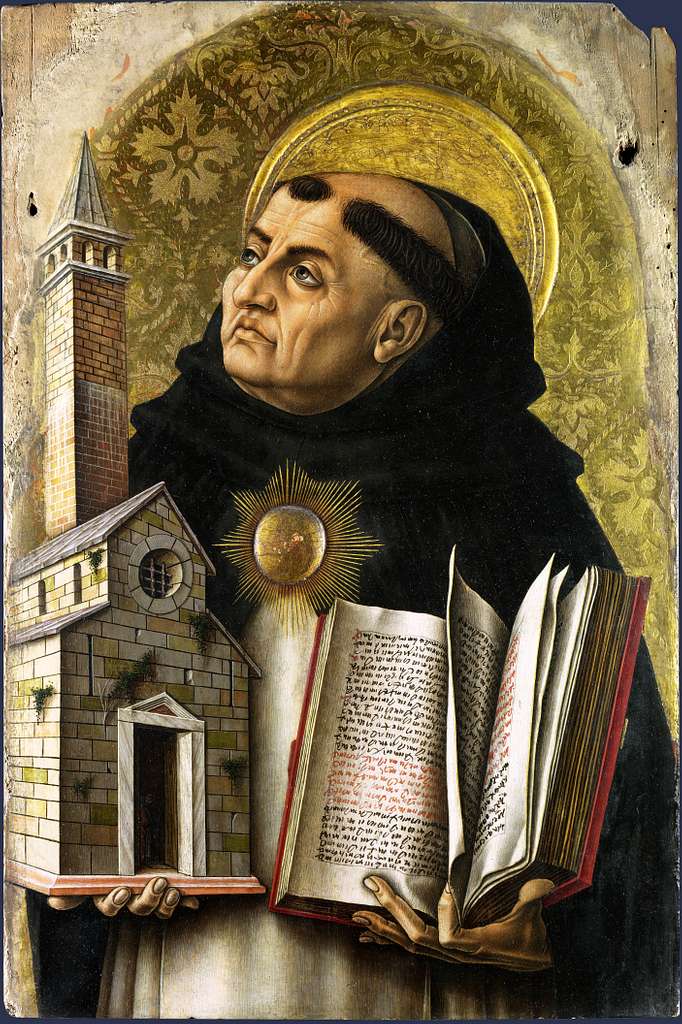
St. Thomas
Aquinas


Thomas Aquinas compiled this opus from sermons and commentaries on the Gospels written by the early Church Fathers, arranging their thoughts in such a way that they form a continuous commentary on each Gospel.

SECTION ONE

John 20"1-9

1. The first day of the week cometh Mary Magdalene early, when it was yet dark, unto the sepulchre, and seeth the stone taken away from the sepulchre.

2. Then she runneth, and cometh to Simon Peter, and to the other disciple, whom Jesus loved, and saith unto them, They have taken away the Lord out of the sepulchre, and we know not where they have laid him.

3. Peter therefore went forth, and that other disciple, and came to the sepulchre.

4. So they ran both together: and the other disciple did outrun Peter, and came first to the sepulchre.

5. And he stooping down, and looking in, saw the linen clothes lying: yet went he not in.

6. Then cometh Simon Peter following him, and went into the sepulchre, and seeing the linen clothes lie,

7. And the napkin, that was about his head, not lying with the linen clothes, but wrapped together in a place by itself.

8. Then went in also that other disciple, which came first to the sepulchre, and he saw, and believed.

9. For as yet they knew not the Scripture, that he must rise again from the dead.

CHRYSOSTOM. (Hom. lxxxv) The Sabbath being now over, during which it was unlawful to be there, Mary Magdalene could rest no longer, but came very early in the morning, to seek consolation at the grave: The first day of the week cometh Mary Magdalene early, when it was yet dark, unto the sepulchre.

AUGUSTINE. (de Con. Evang. iii. 24) Mary Magdalene, undoubtedly the most fervent in love, of all the women that ministered to our Lord; so that John deservedly mentions her only, and says nothing of the others who were with her, as we know from the other Evangelists.

AUGUSTINE. (Tr. cxx) Una sabbati is the day which Christians call the Lord’s day, after our Lord’s resurrection. Matthew calls it prima sabbati.

BEDE. Una sabbati, i. e. one day after the sabbath.

THEOPHYLACT. Or thus: The Jews called the days of the week sabbath, and the first day, one of the sabbaths, which day is a type of the life to come; for that life will be one day not cut short by any night, since God is the sun there, a sun which never sets. On this day then our Lord rose again, with an incorruptible body, even as we in the life to come shall put on incorruption.

AUGUSTINE. (de Con. Evang. iii. 24.) What Mark says, Very early in the morning, at the rising of the sun (Mark 16:1), does not contradict John’s words, when it was yet dark. At the dawn of day, there are yet remains of darkness, which disappear as the light breaks in. We must not understand Mark’s words, Very early in the morning, at the rising of the sun, ἡλίου ἀνατεέλαντος to mean that the sun was above the horizon, but rather what we ourselves ordinarily mean by the phrase, when we want any thing to be done very early, we say at the rising of the sun, i. e. some time before the sun is risen.

GREGORY. (Hom. in Ev. xxii.) It is well said, When it was yet dark: Mary was seeking the Creator of all things in the tomb, and because, she found Him not, thought He was stolen. Truly it was yet dark when she came to the sepulchre.

And seeth the stone taken away from the sepulchre.

AUGUSTINE. (Con. Evang. iii. 24) Now took place what Matthew only relates, the earthquake, and rolling away of the stone, and fright of the guards.

CHRYSOSTOM. (Hom. lxxxv. 4) Our Lord rose while the stone and seal were still on the sepulchre. But as it was necessary that others should be certified of this, the sepulchre is opened after the resurrection, and so the fact confirmed. This it was which roused Mary. For when she saw the stone taken away, she entered not nor looked in, but ran to the disciples with all the speed of love. But as yet she knew nothing for certain about the resurrection, but thought that His body had been carried off.

GLOSS. And therefore she ran to tell the disciples, that they might seek Him with her, or grieve with her: Then she runneth, and cometh to Simon Peter, and to the other disciple, whom Jesus loved.

AUGUSTINE. (Tr. cxx) This is the way in which he usually mentions himself. Jesus loved all, but him in an especial and familiar way. And saith unto them, They have taken away the Lord out of the sepulchre, and we know not where they have laid Him.

GREGORY. (iii. Mor. ix.) She puts the part for the whole; she had come only to seek for the body of our Lord, and now she laments that our Lord, the whole of Him, is taken away.

AUGUSTINE. (Tr. cxx) Some of the Greek copies have, taken away my Lord, which is more expressive of love, and of the feeling of an handmaiden. But only a few have this reading.

CHRYSOSTOM. (Hom. lxxxv) The Evangelist does not deprive the woman of this praise, nor leaves out from shame, that they had the news first from her. As soon as they hear it, they hasten to the sepulchre.

GREGORY. (xxii. in Evang.) But Peter and John before the others, for they loved most; Peter therefore went forth, and that other disciple, and came to the sepulchre.

THEOPHYLACT. But how came they to the sepulchre, while the soldiers were guarding it? an easy question to answer. After our Lord’s resurrection and the earthquake, and the appearance of the angel at the sepulchre, the guards withdrew, and told the Pharisees what had happened.

AUGUSTINE. (Tr. cxx) After saying, came to the sepulchre, he goes back and tells us how they came: So they ran both together: and the other disciple did outrun Peter, and came first to the sepulchre; meaning himself, but he always speaks of himself, as if he were speaking of another person.

CHRYSOSTOM. (Hom. lxxxv) On coming he sees the linen clothes set aside: And he slooping down, and looking in, saw the linen clothes lying. But he makes no further search: yet went he not in. Peter on the other hand, being of a more fervid temper, pursued the search, and examined every thing: Then cometh Simon Peter following him, and went into the sepulchre, and seeth the linen clothes lie, and the napkin, that was about His head, not lying with the linen clothes, but wrapped together in a place by itself. Which circumstances were proof of His resurrection. For had they carried Him away, they would not have stripped Him; nor, if any had stolen Him, would they have taken the trouble to wrap up the napkin, and put it in a place by itself, apart from the linen clothes; but would have taken away the body as it was. John mentioned the myrrh first of all, for this reason, i. e. to shew you that He could not have been stolen away. For myrrh would make the linen adhere to the body, and so caused trouble to the thieves, and they would never have been so senseless as to have taken this unnecessary pains about the matter. After Peter however, John entered: Then went in also that other disciple, which came first to the sepulchre, and he saw, and believed.

AUGUSTINE. (Tract. cxxii) i. e. That Jesus had risen again, some think: but what follows contradicts this notion. He saw the sepulchre empty, and believed what the woman had said: For as yet they knew not the Scripture, that He must rise again from the dead. If he did not yet know that He must rise again from the dead, he could not believe that He had risen. They had heard as much indeed from our Lord, and very openly, but they were so accustomed to hear parables from Him, that they took this for a parable, and thought He meant something else.

GREGORY. (Hom. xxii. in Evang.) But this account of the Evangelist1 must not be thought to be without some mystical meaning. By John, the younger of the two, the synagogue; by Peter, the elder, the Gentile Church is represented: for though the synagogue was before the Gentile Church as regards the worship of God, as regards time the Gentile world was before the synagogue. They ran together, because the Gentile world ran side by side with the synagogue from first to last, in respect of purity and community of life, though a purity and community of understanding2 they had not. The synagogue came first to the sepulchre, but entered not: it knew the commandments of the law, and had heard the prophecies of our Lord’s incarnation and death, but would not believe in Him who died. Then cometh Simon Peter, and enteredinto the sepulchre: the Gentile Church both knew Jesus Christ as dead man, and believed in Him as living God. The napkin about our Lord’s head is not found with the linen clothes, i. e. God, the Head of Christ, and the incomprehensible mysteries of the Godhead are removed from our poor knowledge; His power transcends the nature of the creature. And it is found not only apart, but also wrapped together; because of the linen wrapped together, neither beginning nor end is seen; and the height of the Divine nature had neither beginning nor end. And it is into one place: for where there is division, God is not; and they merit His grace, who do not occasion scandal by dividing themselves into sects. But as a napkin is what is used in labouring to wipe the sweat of the brow, by the napkin here we may understand the labour of God: which napkin is found apart, because the suffering of our Redeemer is far removed from ours; inasmuch as He suffered innocently, that which we suffer justly; He submitted Himself to death voluntarily, we by necessity. But after Peter entered, John entered too; for at the end of the world even Judæa shall be gathered in to the true faith.

THEOPHYLACT. Or thus: Peter is practical and prompt, John contemplative and intelligent, and learned in divine things. Now the contemplative man is generally beforehand in knowledge and intelligence, but the practical by his fervour and activity gets the advance of the other’s perception, and sees first into the divine mystery.

SECTION TWO

John 12:27–33

27. Now is my soul troubled; and what shall I say? Father, save me from this hour: but for this cause came I unto this hour.

28. Father, glorify thy name. Then came there a voice from heaven, saying, I have both glorified it, and will glorify it again.

29. The people therefore, that stood by, and heard it, said that it thundered: others said, An angel spake to him.

30. Jesus answered and said, This voice came not because of me, but for your sakes.

31. Now is the judgment of this world: now shall the prince of this world be cast out.

32. And I, if I be lifted up from the earth, will draw all men unto me.

33. This he said, signifying what death he should die.

CHRYSOSTOM. (Hom. lxvi) To our Lord’s exhortation to His disciples to endurance, they might have replied that it was easy for Him, Who was out of the reach of human pain, to talk philosophically about death, and to recommend others to bear what He is in no danger of having to bear Himself. So He lets them see that He is Himself in an agony, but that He does not intend to decline death, merely for the sake of relieving Himself: Now is My soul troubled.

AUGUSTINE. (Tr. lii. 2) I hear Him say, He that hateth his life in this world, shall keep it unto life eternal; and I am ravished, I despise the world; the whole of this life, however long, is but a vapour in My sight; all temporal things are vile, in comparison with eternal. And again I hear Him say, Now is My soul troubled. Thou biddest my soul follow Thee; but I see Thy soul troubled. What foundation shall I seek, if the Rock gives way? Lord, I acknowledge Thy mercy. Thou of Thy love wast of Thine own will troubled, to console those who are troubled through the infirmity of nature; that the members of Thy body perish not in despair. The Head took upon Himself the affections of His members. He was not troubled by any thing, but, as was said above, He troubled Himself. (c. 11:33)

CHRYSOSTOM. (Hom. lxvii) As He draws near to the Cross, His human nature appears, a nature that did not wish to die, but cleaved to this present life. He shews that He is not quite without human feelings. For the desire of this present life is not necessarily wrong, any more than hunger. Christ had a body free from sin, but not from natural infirmities. But these attach solely to the dispensation of His humanity, not to His divinity.

AUGUSTINE. (Tr. lii) Lastly, let the man who would follow Him, hear at what hour he should follow. A fearful hour has perhaps come: a choice is offered, either to do wrong, or suffer: the weak soul is troubled. Hear our Lord. What shall I say?

BEDE. i. e. What but something to confirm My followers? Father, save Me from this hour.

AUGUSTINE. (Tr. lii. 3) He teaches thee Whom thou shouldest call on, whose will prefer to thine own. Let Him not seem to fall from His greatness, because He wishes thee to rise from thy meanness. He took upon Him man’s infirmity, that He might teach the afflicted to say, Not what I will, but what Thou wilt. Wherefore He adds, But for this cause came I unto this hour. Father, glorify Thy name: i. e. in My passion and resurrection.

CHRYSOSTOM. (Hom. lxvii. 2) As if He said, I cannot say why I should ask to be saved from it; For for this cause came I unto this hour. However ye may be troubled and dejected at the thought of dying, do not run away from death. I am troubled, yet I ask not to be spared. I do not say, Save Me from this hour, but the contrary, Glorify Thy name. To die for the truth was to glorify God, as the event shewed; for after His crucifixion the whole world was to be converted to the knowledge and worship of God, both the Father and the Son. But this He is silent about.

Then came there a voice from heaven, saying, I have both glorified it, and will glorify it again.

GREGORY. (Moral. xxviii.) When God speaks audibly, as He does here, but no visible appearance is seen, He speaks through the medium of a rational creature: i. e. by the voice of an Angel.

AUGUSTINE. (Tr. lii. 4) I have glorified it, i. e. before I made the world; and will glorify it again, i. e. when Thou shalt rise from the dead. Or, I have glorified it, when Thou wast born of a Virgin, didst work miracles, wast made manifest by the Holy Ghost descending in the shape of a dove; and will glorify it again, when Thou shalt rise from the dead, and, as God, be exalted above the heavens, and Thy glory above all the earth.

The people therefore that stood by and heard it, said that it thundered.

CHRYSOSTOM. (Hom. lxvii. 2) The voice though loud and distinct, soon passed off from their gross, carnal, and sluggish minds; only the sound remaining. Others perceived an articulate voice, but did not catch what it said: Others said, An Angel spake to Him.

Jesus answered and said, This voice came not because of Me, but for your sakes.

AUGUSTINE. (Tr. lii. 5) i. e. It did not come to tell Him what He knew already, but them what they ought to know. And as that voice did not come for His sake, but for theirs, so His soul was not troubled for His sake, but for theirs.

CHRYSOSTOM. (Hom. lxvii. 2) The voice of the Father proved what they were so fond of denying, that He was from God. For He must be from God, if He was glorified by God. It was not that He needed encouragement of such a voice Himself, but He condescended to receive it for the sake of those who were by. Now is the judgment of this world: this fits on to the preceding, as shewing the mode of His being glorified.

AUGUSTINE. (Tr. lii. 6) The judgment at the end of the world will be of eternal rewards and punishments. But there is another judgment, not of condemnation, but of selection, which is the one meant here; the selection of His own redeemed, and their deliverance from the power of the devil: Now shall the prince of this world be cast out. The devil is not called the prince of this world, in the sense of being lord over heaven and earth; God forbid. The world here stands for the wicked dispersed over all the world. In this sense the devil is the prince of the world, i. e. of all the wicked men who live in the world. The world also sometimes stands for the good dispersed throughout the world: God was in Christ reconciling the world unto Himself. (2 Cor. 5:19) These are they from whose hearts the prince of this world shall be cast out. Our Lord foresaw that after His passion and glorifying, great nations all over the world would be converted, in whom the devil was then, but from whose hearts, on their truly renouncing him1, he would be cast out. But was he not cast out of the hearts of righteous men of old? Why is it, Now shall be cast out? Because that which once took place in a very few persons, was now to take place in whole nations. What then, does the devil not tempt at all the minds of believers? Yea, he never ceases to tempt them. But it is one thing to reign within, another to lay siege from without.

CHRYSOSTOM. (Hom. lxvii. 2) What kind of judgment it is by which the devil is cast out, I will explain by an example. A man demands payment from his debtors, beats them, and sends them to prison. He treats with the same insolence one who owes him nothing. The latter will take vengeance both for himself and the others too. This Christ does. He revenges what He has suffered at the devil’s hands, and with Himself He revenges us too. But that none may say, How will he be cast out, if he overcome thee? He adds, And I, if I be lifted up from the earth, will draw all men unto Me. How can He be overcome, who draws others unto Him? This is more than saying, I shall rise again. Had He said this, it would not have proved that He would draw all things unto Him; but, I shall draw, includes the resurrection, and this besides.

AUGUSTINE. (Tr. lii. 11) What is this all that He draweth, but that from which the devil is cast out? He does not say, All men, but, All things; for all men have not faith. He does not mean then all mankind, but the whole of a man, i. e. spirit, soul, and body; by which respectively we understand, and live, and are visible. Or, if all means all men, it means those who are predestined to salvation: or all kinds of men, all varieties of character, excepting in the article of sin.

CHRYSOSTOM. (Hom. lxvii. 3.) Why then did He say above, that the Father drew men? (c. 6:46.) Because the Father draws, by the Son who draws. I shall draw, He says, as if men were in the grasp of some tyrant, from which they could not extricate themselves.

AUGUSTINE. (Tr. lii. 11) If I be lifted up from the earth, He says, i. e. when I shall be lifted up. He does not doubt that the work will be accomplished which He came to do. By His being lifted up, He means His passion on the cross, as the Evangelist adds: This He said, signifying by what death He should die.

ORIGINAL: e-Catholic 2000

SECTION THREE

xxxxxxxxx

xxxxxxxxxx

xxxxxxxxxxxxxxx

ORIGINAL: e-Catholic 2000

Richard Niell
Donovan

Acts 10:34a, 37-43; Psalm 118;
Colossians 3:1-4; John 20:1-18

The Grave Clothes

• First, they provide visual evidence of Jesus’ resurrection. The body is gone, but the grave clothes remind us that Jesus body was there.

• Second, they provide evidence that Jesus’ body was not stolen. Grave robbers would not leave behind valuable linen cloth, and neither grave robbers nor Jewish authorities would take time to remove clothing from a body, delaying their escape and increasing the risk of discovery. Indeed, the orderly scene that John describes here is not what we would expect at the scene of a robbery or abduction.

• Third, they serve a theological function. When Jesus raised Lazarus from the dead, Lazarus emerged from the tomb still wrapped in his burial clothes. Jesus had to command bystanders to free him so that Lazarus might resume his normal earthly life (11:38-44). However, when Jesus emerged from the tomb, he did so unencumbered.

RICHARD NIELL DONOVAN was a Disciples of Christ clergyman who published SermonWriter, for a paid subscription, from 1997-2020. After he died, his family has generously provided his resources without subscription.