⬅️ ➡️

2023

31st Sunday of Year A

TOP-RATEDPAPAL HOMILIESFR. TONY

Lion vs. Elephant: Who is the King of the Jungle?

Thomas Jefferson at Monticello

Narcissism
YouTube player
YouTube player

VIDEO (6:39) – Stirring music, a powerful discussion and inspiring words marked the opening of restored spaces and new exhibits in Monticello’s South Wing and 25 years of the Getting Word Oral History Project.
YouTube player

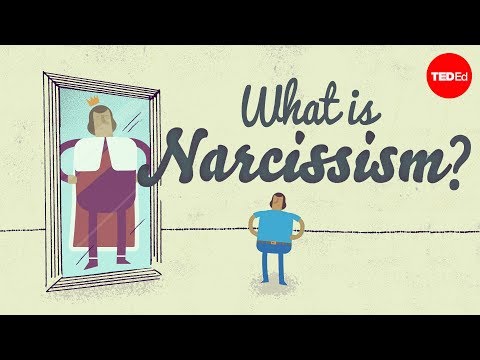
VIDEO (5:09) – Narcissism isn’t just a personality type that shows up in advice columns; it’s actually a set of traits classified and studied by psychologists. But what causes it? And can narcissists improve on their negative traits? W. Keith Campbell describes the psychology behind the elevated and sometimes detrimental self-involvement of narcissists.
Fr. Tony's Homily

Fr. Tony’s
Commentary

31st Sunday of Year A

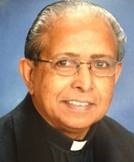
Fr. Tony started his homily ministry (Scriptural Homilies) in 2003 while he was the chaplain at Sacred Heart residence, applying his scientific methodology to the homily ministry. By word of mouth, it spread to hundreds of priests and Deacons, finally reaching Vatican Radio website. These homilies reach nearly 3000 priests and Deacons by direct email every week.

The clipart is from the archive of Father Richard Lonsdale © 2000. It may be freely reproduced in any non-profit publication.

1st ReadingMal 1:14b-2:2b, 8-10

The first reading, Malachi 1:14b-2:2b, 8-10:  In today’s Gospel, Jesus criticizes the hypocrisy of many religious leaders of his day.  The first reading prepares us for the full force of Jesus’ warning by showing Malachi pouring out God’s curses on the unfaithful priests of his time — around 450 BC, after Judah’s return from exile in Babylon and the rebuilding of the Temple.  

The priests of this period were indifferent to their rituals and their teaching responsibilities, and were often unfair in the judgments they made about people. Through Malachi, the Lord God thunders, “You have turned aside from the way and have caused many to falter by your instruction…  You do not keep my ways.” 

Further, the Lord God emphatically condemns the Temple priests for not teaching His messages and not carrying out His commands; He says to them, “I, therefore have made you contemptible and base before all the people.” Sad to say, many modern clerics of all denominations have a lot in common with the clerics of Malachi’s day.  No wonder so many of our faithful go “outside the system” we’ve created in order to discover Who God really is, and what He really wants of them.

The clipart is from the archive of Father Richard Lonsdale © 2000. It may be freely reproduced in any non-profit publication.

2nd Reading1 Thes 2:7b-9, 13

The second Reading, 1 Thessalonians 2:7b-9, 13: The itinerant teachers of religions in those days had a reputation for avarice and pride. That is why Paul frequently emphasizes his unique leadership style. He tries to convince the Thessalonians that the message they received was not just human teaching, but rather the word of God.  

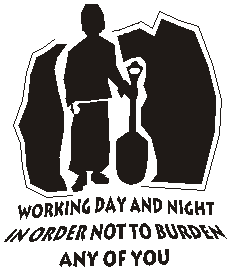
He reminds them that when he was among them, he was careful not to “sponge” on them and not even to ask them for his own livelihood.  Unlike the Pharisees and Jewish teachers, Paul wanted to be a burden to no one, so the Thessalonians and the rest of Paul’s communities, experienced Jesus’ love through Paul’s love. 

Today, many priests, deacons and lectors are faithfully, humbly, and generously carrying on Jesus’ mission to the world as Paul did, sharing the word of God with those who believe. To do this, each prays and strives for the zeal and integrity of a life lived for Jesus, like Paul’s, and for Paul’s kind of leadership (like that of a shepherd for sheep, of or a father for his children), which nurtures mutual love between him and those to whom he speaks and freely offers loving service to all of them.  

The clipart is from the archive of Father Richard Lonsdale © 2000. It may be freely reproduced in any non-profit publication.

Gospel – Mt 23:1-12

In today’s Gospel, Jesus offers a word of judgment against those religious leaders of his day who have been more concerned with self-promotion than with giving loving service to others.  Christ-like leadership calls for integrity and honesty from all those in authority, whether priests, parents, teachers or politicians.  There should be in leaders no double standards. Rather, there should grow a deep sense of equality with, and mutual respect between, leaders and those they rule. Each should seek to serve the other.  Service, not status, is the mark of this new community, and true humility is the only position its members should seek. 

CONTINUE READING - Gospel Comments

Exegesis: The context: For Jesus in Jerusalem, it was the third day of what we have come to call “Holy Week.” It was a day of controversy and personal attacks.  Jesus was under fire and challenged the religious leaders of Israel for rejecting him as Messiah.  Luke’s account records three woes Jesus called down upon the Pharisees and four He called down upon the scribes.  Matthew’s account arranges these (23:13-36) into a series of seven woes against the "scribes and Pharisees," whom Jesus calls hypocrites and publicly humbles by telling them God’s truth about their lives. The passage in Matthew consists of the seven prophetic woes and a prophetic lament over the fate of Jerusalem. In Mark’s Gospel, Jesus denounces the "scribes" for their pious pretensions, their hunger for status, and their exploitation of widows. This confrontation looks forward to the bitter conflict which would arise between Pharisaic Judaism and the Early Church where many of the faults found in Jesus’ opponents were present. To some extent, these faults are still present in the Church. In this Gospel incident, then, we are all warned of the danger and advised strongly to consider our own conduct and attitudes carefully, lest we, too, suffer these “woes.”

The basis of religious authority. The Jewish religious leaders taught the continuity of the Faith: God gave Israel the Law through Moses, and appointed him the Law’s official teacher. Moses handed this responsibility on to Joshua; Joshua transmitted it to the elders; the elders passed it down to each next generation. Meanwhile, the prophets were periodically sent as messengers of God directly to Israel to remind the chosen people of His promise of Deliverance and to warn them of the Lord God’s displeasure with their failures to keep the Law. They were also instructed to tell Israel of the wrath that would be visited upon the whole nation unless they all reformed. From these two sources, the scribes and Phariseesreceived the Law (Torah) and the authority to teach and interpret it for all Israel.  That is, they held the “seat of Moses," their duty to interpret for the people the true meaning and application of the written and oral tradition providing the link to Moses, the lawgiver.  Hence, in spite of their personal failings, these scribes and Pharisees were stewards of a great spiritual treasure and they were to be respected for their role as official teachers and interpreters of the Torah.  Jesus wanted his disciples to avail themselves of that treasure and to receive from these teachers, expert counsel on spiritual matters.  As a pious Jew, Jesus demanded that his disciples honor the office that these men occupied, to do what they taught, at least insofar as their teachings accorded with the Torah (especially in observing and applying the two principles underlying the Ten Commandments -- the principles of reverence and respect), but not to do what they did or live as they lived.    This meant that the Disciples of Christ also should have reverence for God, His name, and His day, for the parents God had given them and for a man's life, his possessions, and his good name.

 Warning to First Century Church and to future Christians:  The scribes in the time of Jesus were like today’s religious intellectuals, theologians, and professional lawyers who are adept in applying the Law to everyday life. The Pharisees formed a fraternity of highly religious laymen who joined together to observe the Mosaic Law meticulously.Matthew’s description of Jesus’ criticism of the scribes and the Pharisees was mainly directed toward elements within the Judeo-Christian community which sought to impose an extremely narrow and burdensome interpretation of the Torah on the Gentile converts.  Jesus’ condemnations were meant also as a warning to future Christian leaders about possible abuses of authority in their own ministry.  They were never to say one thing and do another.  Instead, they should faithfully follow their Master’s teaching and avoid titles and practices which would imply arrogant superiority which can lead to hypocrisy. The Holy Spirit, through Matthew’s account, emphatically reminds us that Jesus never intended His followers to divide themselves into "clergy and laity," into "superior and inferior, " but rather intended a community of mutual love and service in which the leaders and teachers were to be servants of those they led and taught. 

Catechism of the Catholic Church as servant leadership of bishops and priests: Bishops and priests have authority over the laity, given to them by Christ (CCC #876). Yet the character of their ministry must be service. “Entirely dependent on Christ who gives mission and authority, ministers are truly ‘slaves of Christ,’ in the image of him who freely took ‘the form of a slave’ for us” (CCC #876). The Catechism reminds them, “Because the word and grace of which they are ministers are not their own, but are given to them by Christ for the sake of others, they must freely become the slaves of all.” (CCC #876). The priesthood, then, “depends entirely on Christ and on his unique priesthood” and “it has been instituted for the good of men and the communion of the Church” (CCC #1551). “The exercise of this authority must, therefore, be measured against the model of Christ, who by love made himself the least and the servant of all” (CCC #1551). For the bishop or priest, concern for Christ’s flock is “proof of love for him” (CCC #1551).

Three sins of the Scribes and Pharisees:  Jesus raises three objections to the Pharisees: they do not practice what they preach, they adopt a very narrow and burdensome interpretation of the Torah, and they seek public acknowledgment of their spiritual superiority. 

(1) Hypocrisy: "They do not practice what they teach" (v. 3)) Their deeds did not match their words. They meant what they said, but they did not do what they meant. They lacked integrity of life and failed to practice what they preached.  They created a double standard -- they commanded one thing for those they taught, but lived the opposite. When parents create double standards by forbidding, or commanding, their children to avoid, or to do, what they have no hesitation in avoiding, or doing themselves, they make the same mistake.  

(2) Legalism: “They overburden the ordinary people” (v. 4).  In metaphorical language, Jesus accused Israel's religious authorities of imposing on the people heavy obligations that were difficult to obey.  The scribes and the Pharisees, in their excessive zeal for God’s laws, split the 613 laws of the Torah into thousands of rules and regulations affecting every movement of the people, thus making the observance of God’s laws a heavy burden.  Some Pharisaic Scribes distinguished "heavy" or serious commandments and "light" or less serious commandments.  The Jewish theological school led by the great rabbi Hillel typically favored a broad interpretation of the Law, while the other school, headed by Shammai, typically favored a strict or narrow interpretation.  Instead of allowing any relaxation, they "built a fence around the Law."  Thus, they failed to realize the truth that when religion becomes a depressing affair of burdens and prohibitions rather than a source of love, life, and growth, it ceases to be true religion. It dies, and its adherents either leave it to live or cling to it and die with it. Jesus also condemns the lack of compassion of religious leaders, shown in their unwillingness to interpret and apply laws in a way that would make obedience less onerous.  By contrast, Jesus offers an easy yoke, a light burden, and rest for the soul (11:29-30).  

(3) Seekers of vain glory displaying proud exhibitionism:  "They do all their deeds to be seen by others" (v. 5) As a prophetic peacemaker, Jesus challenges those who pervert religion into an opportunity to gain personal honor, glory, and power.  Jesus accuses the scribes and Pharisees of seeking  for themselves the glory that rightly belongs to God.  The real goal of the Pharisees was to dress and act in such a way as to draw attention to themselves instead of glorifying God.  In their misguided zeal for religion, they sought respect and honor for themselves rather than for God.  They expressed their love of honor in several ways, thereby converting Judaism into a religion of ostentation. 

 (i) "They make their phylacteries broad and their fringes long" (v. 5).  In order to fulfill the instruction, “The commandments of God shall be to you as a sign on your hand, and a memorial between your eyes” (Ex 13:9), the Jews wore tefillin or phylacteries.  These were small leather boxes containing four Scripture passages, including part of the Shema prayer (Dt 6:4-9), which were strapped on the wrist and the forehead.  The Pharisees, in order to draw attention to themselves, not only wore phylacteries, but wore especially large ones in order to demonstrate their obedience to the Law and their exemplary piety.  In Nm 15:37-41 and in Dt 22:12, we read that God commanded his people to make tassels or fringes on the four corners of their garments, so that when they looked at them they might remember the commandments of God and their obligation to keep them. The Pharisees made large, showy tassels meant to draw public attention to themselves.

(ii) They "love to have the place of honor at banquets and the best seats in the synagogues" (v 6).  The Pharisees liked to be given the principal places at meals, on the left and on the right of the host.  In the synagogue, the front seats actually faced the entire congregation, much as the chair of the priest does in churches today. The Pharisees chose those front seats facing the congregation in the synagogues and conducted themselves throughout the service with an exaggerated piety which the congregation could not fail to notice.

(iii) They "love to be greeted with respect in the marketplaces and to have people call them rabbi" (v 7).  The Pharisees liked to be addressed as "Rabbi" and to be treated with a respect greater than that given to parents, claiming that, as religious teachers, they were the ones who gave men   eternal life while the parents gave only physical life.  They liked to be called “father,” as Elisha called Elijah (2Kgs 2:12), and they liked to be known as the fathers of the Faith.  Jesus insists that the Christian should remember that he has one teacher only -- Christ; and one Father only -- God.  In its Aramaic form, the word Abba, "Father," expresses Jesus' unique relationship with God, a sacred Name that is every believer's privilege to use by right of Baptism.  "Avoid being called teachers."  The terms master/teacher apply only to the Messiah, the sole spiritual director and guide of our conscience.  In this regard, those who object to calling Catholic priests "Father" should note that Paul and other early Christian writers thought of themselves as fathers to their congregations (1 Cor 4:14-15; John 2:18). 

Jesus' Criticisms about religious leadership in his day summarized:  They did not practice what they taught (hypocrisy). They put heavy burdens on others but not themselves (legalism). They sought and loved public recognition (pride). Status, respect and titles, were important to them (arrogance). They locked people out of the kingdom (judgmental). They established laws to benefit themselves (greed). They neglected to emphasize justice and mercy (bias). They were accomplices to silencing the prophets (oppressive). In today’s Gospel, we see the tragedy of being religious without being the real deal, of placing primary emphasis on outer conduct rather than on inner character. Those to whom Jesus speaks did not recognize their need to be changed. These people may talk a good fight of Faith, but when they are forced to fall back upon their inner resources of Faith, they discover that the tank is empty. Jesus says, "Don't imitate them for they don't practice what they teach." All flowers, no fruit.

Christian caste system: Matthew’s account suggests that in the first century Church a Christian caste system was starting to emerge, with leaders beginning to wear distinctive clothes and demand titles like Rabbi, Teacher, Father, and Master.  According to the evangelist’s account, any religious stratification runs counter to Jesus' teachings.  Jesus condemns the coveting of titles, distinctive clothes, places of honor, and marks of public respect.  Such demands on the part of leaders make it impossible for the community to truly experience Jesus.  "The greatest among you," he reminds his community, "must be your servant.  Whoever exalts himself will be humbled; but whoever humbles himself will be exalted."  What is implied in each of Jesus' statements about the Pharisees is that Christian leaders should do the opposite. They should practice what they preach, follow Jesus in lightening the yoke of the Torah (see Mt 11:28-30), seek to forego claims to honor from other human beings (see Mt 6:1, 3, 6, 18), and prefer lower status to lording it over others.

The clipart is from the archive of Father Richard Lonsdale © 2000. It may be freely reproduced in any non-profit publication.

Fr. Tony’s Life
Messages

31st Sunday of Year A

The Church is a servant community in which the hungry are to be filled; the ignorant are to be taught; the homeless to receive shelter; the sick to be cared for; the distressed, consoled; and the oppressed, set free.  In this way, men may more fully realize their human potential and more readily enjoy life with God.  Hence, leaders should have a spirit of humble service in thought, word and deed.  “The measure of a true Christian is not how many servants he has, but how many people he serves.”


Religious people are all too often like the Pharisees, laying heavy loads on other people’s shoulders without lifting a finger to budge them.  Instead of judging the poor, we should be serving them both by helping to meet their needs and by working for and with them, practicing economic justice.  Instead of criticizing those of other races, we should value them for their gifts, treat them as our brothers and sisters, and promote racial justice by our attitudes and in our speech. Instead of ignoring the homeless, we should be serving them through efforts to supply them with adequate housing.  We need to live the Faith we profess.  Our faith tells us that we are all brothers and sisters, children of the same Heavenly Father.  The way to live this Faith is to help build a human community of love and justice, one deed at a time; the first step in doing this is to acknowledge our failings and ask God for help to do better. 


It is easy to read today’s Gospel and start pointing fingers at others.  Of course, I can point a criticizing finger at all the officials I know, political, religious or otherwise.  But let me ask myself the question: “Am I so different from them?”  It is important that I see how this applies in my own life.  The Gospel is addressed to ME.  How touchy am I about the way people treat me, especially if I have some title or responsibility, even if it is just that of a parent or teacher?  Respect cannot be demanded — it must be earned. 


Are today’s readings trying to tell us that there should be no differences among us and we should drop all titles and honors?  Actually, all such titles and polite forms are meant to remind each of us of our specific responsibilities in society.  Each of us has a name, an identity and a personality.  Today’s readings remind us that whatever we are and have is not simply a birthright, but a gift given to us by God, a loving Father.  In addition, the fruitful use of everything we are and have owes very much to the generosity and care of both God and our loving neighbors for us.  St. Francis of Assisi ceaselessly reminded his friars that if they could boast about anything as their own, it was their sins.  Hence, let us use everything we are and have in a way that brings glory to God and His family. 

HOME | FAITH SHARING QUESTIONS

Fr. Tony’s Homily

Fr. Tony’s Homily

Fr. Tony’s Homily

Fr. Tony’s Homily

Fr. Tony’s Homily