Fr. Tony’s 8-Minute Homily

30th Sunday of Year A

October 29, 2003


You're still you, and I love you

Amos 'n Andy


We are His hands

Begin w/ Anecdote

YouTube player

Actor Christopher Reeves had everything–wealth, fame, fabulous health. He was one of the most handsome, physically fit men in Hollywood. Then he fell from a horse. And suddenly he was a quadriplegic. When he awoke from his accident, his first thought was that maybe he should go ahead and die. But one thing stopped him and gave him the will to live. His wife, Dana, spoke to him firmly, yet gently. “I am only going to say this once,” she said. “I will support whatever you want to do, because this is your life and your decision. But I want you to know that I’ll be with you for the long haul, no matter what. You’re still you, and I love you.” Those words gave Christopher Reeves the strength to go on. [Jack Canfield, Mark Victor Hansen, Mark & Chrissy Donnelly, and Barbara DeAngelis, Ph.D. Chicken Soup for the Couple’s Soul(Deerfield Beach, FL.: Health Communications, Inc., 1999), pp. 104-105.]

Begin w/ Anecdote

YouTube player

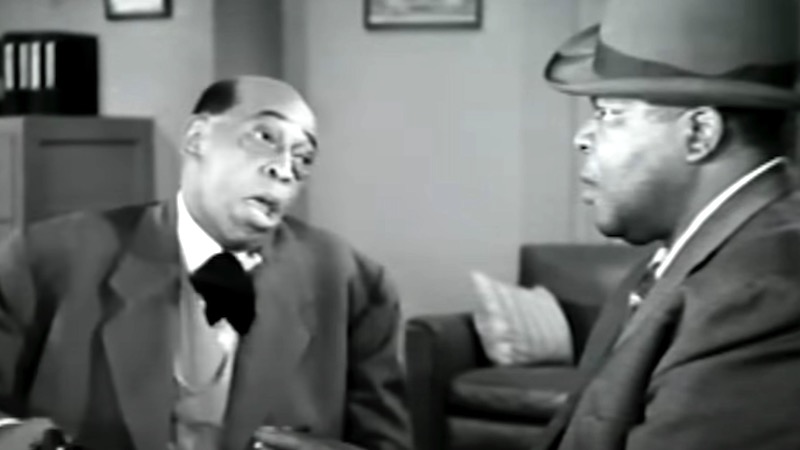
Charles L. Allen, in God’s Psychiatry, tells about a scene from Amos and Andy. “There was a big man who would slap Andy across the chest whenever they met. Finally, Andy got enough of it and said to Amos, ‘I’m fixed for him. I put a stick of dynamite in my vest pocket, and the next time he slaps me, he is going to get his hand blown off.’

The video takes a fond look at the controversial radio and television show and attempts to determine if the series was a positive first step for Blacks into the world of entertainment or not and examines the events that led to the show’s expulsion from the airwaves in 1966 after complaints from civil rights activists. Highlighted with rare clips of radio show creators Freeman Gosden and Charles Correll, and hilarious clips from the Amos n’ Andy TV series. Commentary by Alvin Childress, Ernestine Wade, Reverend Jesse Jackson, Redd Foxx, Marla Gibbs, and Henry Lee Moon.

Begin w/ Anecdote

YouTube player

There is a story about a young woman who was in great distress because she had lost a sense of God in her life.  She complained to her elderly grandmother, “Why doesn’t God let me feel His presence? If only I could feel Him and know that He has touched me.”  Her grandmother said, “Pray to God, right now.  Close your eyes and pray to him.  Ask Him to put out his hand and touch you.”  The girl closed her eyes and prayed fervently.  Then she felt a hand on her hand.  “He touched me.  He touched me,” she cried out.  Then she said, “You know, his hand felt just like your hand.”  “Of course! It was my hand,” her grandmother said.  “That’s how God works.  He takes the hand that is nearest and uses that.” (Fr. Pellegrino)
Fr. Tony's Homily

Fr. Tony’s
Commentary

30th Sunday of Year A

Fr. Tony started his homily ministry (Scriptural Homilies) in 2003 while he was the chaplain at Sacred Heart residence, applying his scientific methodology to the homily ministry. By word of mouth, it spread to hundreds of priests and Deacons, finally reaching Vatican Radio website. These homilies reach nearly 3000 priests and Deacons by direct email every week.

The clipart is from the archive of Father Richard Lonsdale © 2000. It may be freely reproduced in any non-profit publication.


1st ReadingI Thes 1:5c-10

The first reading, taken from Exodus explains the second greatest commandment, namely, loving one’s neighbors as one loves oneself, especially the underprivileged.  The chosen people of Israel should remember that once they were aliens in the land of Egypt.  Just as God protected them and treated them kindly, so they are to protect others and treat them with kindness.  Thus, they should become a humane society rooted in the basic religious concept of loving God living in their neighbor. 

CONTINUE READING - 1st Reading Comments

First reading (Ex 22:20-26) explained: The Cyrus mentioned here is Cyrus II, the Great, who founded the Persian Empire. In 539 B.C., he conquered the Babylonians who had defeated the Jews 50 years earlier and had taken many of them into captivity. He decided to liberate the Jews from their exile and allow them to go back to their home country, Judea. In this passage, the prophet Isaiah declares that Cyrus, even though a pagan, was God's instrument.  The amazing fact is that God actually used Cyrus to restore His people to their homeland.  

God is able and willing to use ungodly powers to achieve His ends because He is the God not only of the Jews, but of history and of the whole world. Hence, He anointed Cyrus as a savior of His people.  Cyrus carried out God's plan by setting the Jewish exiles free and giving them permission to go back to Judah to rebuild their Temple and city.  He also   returned to them the gold and silver vessels which Nebuchadnezzar had taken from the Temple.  And that is how a pagan emperor became, in God’s hand, the instrument by means of whom the people of Israel might return to their Promised Land. 

This passage also contains a new theological idea.  To call this pagan king, “Messiah” or “Christos” meaning "the Lord's anointed" (a title given exclusively to the kings, prophets and priests of the Chosen People), was quite revolutionary.  Like other passages from Isaiah, it was meant to challenge the Jews' parochialism and give them a more universal view of God's concern and plan.

The clipart is from the archive of Father Richard Lonsdale © 2000. It may be freely reproduced in any non-profit publication.

2nd ReadingI Thes 1:5c-10

In the second reading, St. Paul congratulates the Thessalonians on the positive effects of their example of loving one another as Jesus had commanded them to do.  Their mutual love and their loving reception of Paul and response to his preaching, he tells them, has bolstered the Faith of Christians elsewhere who have  heard about them

CONTINUE READING - 2nd Reading Comments

The Second Reading, 1 Thessalonians 1:1-5 explained: Bible scholars believe that this letter, addressed to the new Jewish and the Gentile Christians of northern Greece (Thessalonica), is the earliest document of the whole New Testament, written in Corinth in A.D. 50. There was more Faith, Hope, and Charity among the Thessalonians than Paul could credit to his own preaching; the Holy Spirit was clearly at work.  Along with 1 Thes 5:8, this is the earliest mention in Christian literature of the three "theological virtues" (see 1 Cor 13:13). From today's text it is clear that these people worked hard at being Christians, and that Saint Paul thought that praiseworthy.  Hence, he praised his converts for their fidelity to God and to Christ, assuring them of his prayers.  He hoped that they would continue to be faithful to the call God had given them, a call proved by the many gifts of the Holy Spirit bestowed on them. 

The clipart is from the archive of Father Richard Lonsdale © 2000. It may be freely reproduced in any non-profit publication.

Gospel – Mt 22:1-14

In the Gospel today, Jesus combines the commandment to love God with the commandment to love one’s neighbor and gives the result as the one Commandment of supreme importance in Christian life. Jesus underlines the principle that we are to love our neighbor as we love ourselves because, as God’s children, both of us bear God’s image, and to honor God’s image is to honor Him.  Love for our neighbor should not be a matter of feelings, but of deeds by which we share with others the unmerited love that God lavishes on us.

CONTINUE READING - Gospel Comments

Gospel exegesis: The context: A Pharisee, who believed in both the written Law and the oral tradition, seeing how Jesus had defeated the Sadducee who had tried to humiliate Him with the hypothetical case of a woman who married seven husbands, asked Jesus to summarize the most important of the Mosaic Laws in one sentence.  This was a challenge because, in the Judaism of Jesus’ day, there was a double tendency to expand the Mosaic Law into hundreds of rules and regulations and to condense the 613 precepts of the Torah into a single sentence or few sentences. [The Phariseesthemselves identified 613 commandments in the Torah (the first five books of the Bible). Two hundred forty-eight were positive (“thou shalt”) and three hundred sixty-five were negative (“thou shalt not”). Summarizing the Law, King David proposed eleven (Ps 15), Isaiah six (33:15), Micah three (6:8), and Amos only one (5:4). From the Commandments that deal with “loving our neighbor,” the Jewish scholars of the law produced 14 particular commandments about business practices, 19 about employees, servants and slaves, 36 about courts and judicial procedure, eleven about property rights, seven about criminal law, and 24 about punishment and restitution.  Yet that doesn’t exhaust the commands to “love our neighbor”!  When you turn to “loving God”, the lists of commandments are even longer, including 33 about the Temple and sacred objects, 46 about idolatry, and 102 about sacrifices and offerings!  With 613 commandments, it was easy for the average Jew to lose focus.  Jesus wanted to bring a focus to God’s command to love Him first and foremost.] Jesus’ answer teaches us that the most important commandment is to love God with all our hearts, souls, minds and strength, in Himself and in all His children, our neighbors. In other words, we are to love God and express our love by loving our neighbor because God lives in him or her. Some Bible scholars think that the original question was a trap question because the Pharisees believed that all of the 613 commands (mitzot) in the Torah were equally important and necessary to obey. Therefore, they were trying to corner Jesus into showing either ignorance about the Law, or disrespect for parts of it by choosing one command over the others.

Jesus’ contribution: Jesus gave the Pharisee a straightforward answer, quoting directly from the Law itself, startling his listeners with his profound simplicity and mastery of the Law of God and its purpose. Jesus’ answer was very orthodox, and very traditional. (“The summary of the law is not original with Jesus. Its two parts represent a combination of Dt 6:5 and Lev 19:18. Nor is the combination itself original to Jesus, for it is found in at least one earlier Jewish work, the Testaments of the Twelve Patriarchs, an amalgam of wisdom and apocalyptic materials.” Reginald H. Fuller).  Jesus citedthe first sentence of the Jewish Shema prayer: … “Therefore, you shall love the Lord, your God, with all your heart, and with all your soul, and with all your strength" (Dt 6:5).  Then He added its complementary law: “You shall love your neighbor as yourself" (Lv 19:18).  Finally, He declared that the “whole Law and the prophets” depended on the commands to love God “with all your heart, with all your soul and all your mind” and to love “your neighbor as yourself.”  Jesuscombined the originally separate commandments and presented them as the essence of true religion.  The uniqueness of Jesus’ response consisted his understanding that the two laws have equal value and so are of equal importance because they are interdependent.   We are to love our neighbor and our self as a way to love God: God gives us our neighbors and commands us to love them, and so we obey; His purpose is that in obeying, we learn to love Him better.  God contacts us daily through our neighbors. Thus, Jesus proclaims that true religion loves God both directly and as living in our neighbor.  Biblical love of God is responsive gratitude for, and remembrance of, what God has done for us, rather than an independent project we undertake for God. (“Without the love of neighbor, the love of God remains a barren emotion; and without the love of God, love of neighbor is but a refined form of self-love.” Reginald H. Fuller).

 Catechism on the greatest commandment (CCC #2083, #2196): Love of God means putting Him first, respecting His Name, and keeping His Day [the Sabbath; Sunday for us] Holy.  To love God means a dedication of the entire person to His will, placing Him first in one’s mind and the heart, speaking respectfully about Him, and keeping His Day as one of prayer and true recreation, a day to keep His Law.  Love of God transforms lives every waking moment of every day.

Love of neighbor means respect for others, their relationships, their reputations, and their property.  Dt 6:5 and Lv 19:18 indicate love in action. Loving our neighbor as ourselves means looking at and treating others with the respect God gives them.  This love begins at home with one's parents.  It then extends to others beyond our family and friends to strangers, especially to the poor, the sick, and the sinner.  Love of neighbor knows no national borders, class distinctions or barriers of any kind, because God knows no such impediments.

To love our neighbor: The English writer G. K. Chesterton once observed that “The Bible tells us to love our neighbors, and also to love our enemies; probably because they are generally the same people!” Jesus underlines the principle that we are to love our neighbor as we love ourselves because both of us bear God’s image, and to honor God’s image is to honor Him. The love of God has priority and is our source of love for neighbor. In our neighbor we see something of God, His creature, His image and likeness, and His adopted child. If we love God, then, we must also love His image, the work of His hands. God makes daily contact with us through the people around us. Love for our neighbor is a matter, not of feelings, but of deeds by which we share with others the unmerited love that God lavishes on us.  This is the love for neighbor that God commands in His law.  Since the Jews considered only their fellow-Jews as neighbors, Jesus, challenged, used the parable of the Good Samaritan, as reported in Luke’s Gospel, to show them what God means by “neighbor.”

The clipart is from the archive of Father Richard Lonsdale © 2000. It may be freely reproduced in any non-profit publication.

Fr. Tony’s Life
Messages

30th Sunday of Year A

Loving God with all our heart, soul, mind, and strength as our response to His Love for us means that we should place God’s will ahead of ours, seek the Lord’s will in all things, and make it paramount in our lives.  There are several means by which we can express our love for God and our gratitude to Him for His blessings, acknowledging our total dependence on Him.  We need to keep God’s commandments, and offer daily prayers of thanksgiving, praise and petition.  We also need to read and meditate on His word in the Bible and accept His invitation to join Him in the Mass and other liturgical functions when we can. 


God’s will is that we should love everyone, seeing Him in our neighbor.  Since every human being is the child of God and the dwelling place of the Spirit of God, we are actually giving expression to our love of God by loving our neighbor as Jesus loves him or her.  This means we need to help, support, encourage, forgive, and pray for everyone without any discrimination based on color, race, gender, age, wealth, personal attractiveness, or social status. Forgiveness, too, is vital.  We love others by refusing to hold a grudge for a wrong done to us.  Even a rebuke can be an act of love, if it is done with the right heart. We also express love through encouragement and by helping each other to grow.  We express agápe love, seeking the true good of another,  by meeting a need that God has given us the power to meet, by comforting each other, by teaching each other, and by sharing the Gospel in deeds and in words. We express our love for our neighbor by waiting upon the aged, nursing the sick, patching up quarrels, and listening to the broken-hearted. In short, loving our neighbor is feeding the hungry, sheltering the homeless, meeting the basic needs of the poor, helping the unemployed, educating the young, and taking care of the old.  


xxxxxxxx

xxxxx


xxxxxxx

xxxxxxxx

HOME | FAITH SHARING QUESTIONS

Fr. Tony’s Homily

Fr. Tony’s Homily

Fr. Tony’s Homily

Fr. Tony’s Homily

Fr. Tony’s Homily