Homily Helper, Catholic AI
Homily Helper, Catholic AI
March 8, 2026
April 5, 2026
Easter Sunday


- GETTING STARTED
- CHAT SPACE
- USE OF AI

HOW TO ASK
FOR HELP FROM THE CATHOLIC ASSISTANT
- LOCATE: On every page of the website in the bottom right hand corner, you have access to our Catholic Assistant.
- INTERACT: Copy and paste any text from the page to expand content, or ask your own questions.
- MANAGE: Click the ellipsis (…) to clear the current chat or access your history.

Age & Stage of Life (Demographic Focus)
- The “Family Mass” (Heavy on young children and parents): Prompts here need to focus on translating high theology into accessible object lessons, addressing the chaos and beauty of parenting, and keeping the attention of a distracted room.
- The Young Adult / College Crowd: Preaching for this group often requires addressing intellectual doubts, the search for vocation/purpose, navigating modern culture, and finding authentic community.
- The Senior / Retiree Congregation: This group often appreciates a deeper dive into church history, scriptural context, and reflections on legacy, suffering, and the long-term faithfulness of God.
- The Teen / Youth Ministry Mass: Needs highly relational themes, addressing identity, mental health, peer pressure, and making faith a personal choice rather than just a family habit.
Geographic & Socioeconomic Reality (Lived Experience Focus)
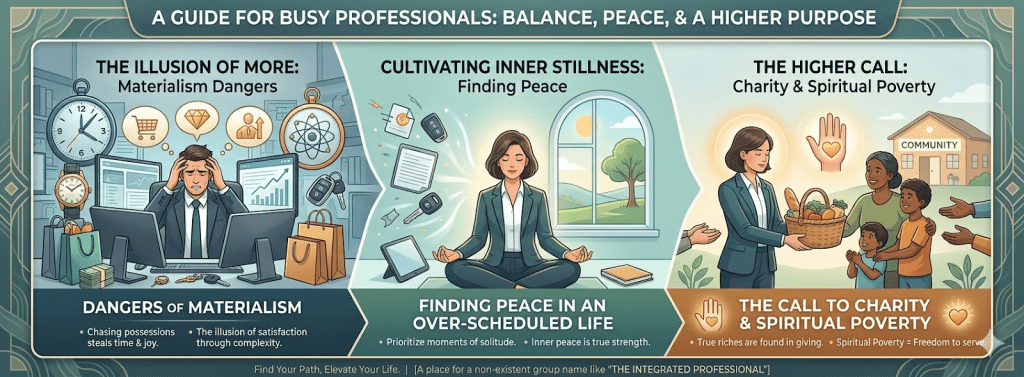
- The Affluent Suburban Parish: Prompts might focus on the dangers of materialism, finding peace in an over-scheduled life, and the call to charity and spiritual poverty.
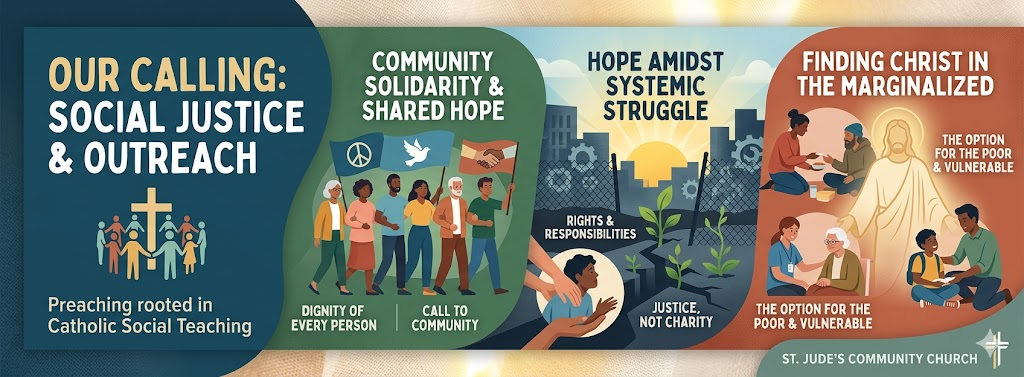
- The Urban / Inner-City Parish: Preaching often leans heavily into Catholic Social Teaching, hope amidst systemic struggle, community solidarity, and finding Christ in the marginalized.
- The Rural / Agricultural Parish: Naturally connects well with the agrarian parables of the Gospels. Themes often revolve around reliance on God’s providence, creation, and tight-knit community support.
Liturgical Context & Commitment Level
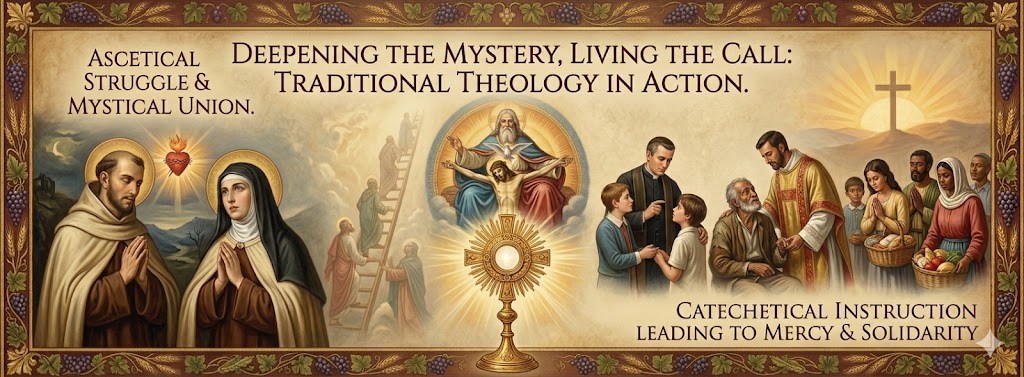
- The Daily Mass Attendees: A smaller, usually older, and highly devout group. Prompts can skip the basics and go straight into deep spiritual, mystical, or ascetical theology.
- The School Mass (K-8 or High School): Requires high energy, clear takeaways, and relatable school-life analogies (tests, friendships, bullying).
Specialized Settings (The “Outskirts”)
- Nursing Home / Assisted Living: Focuses heavily on comfort, the dignity of the elderly, uniting suffering with Christ, and the hope of heaven.
- Prison Ministry: Requires themes of radical forgiveness, redemption, overcoming shame, and God’s proximity to the forgotten.

Easter Sunday
Family Focused Homily
The Focus: The “Race” to Hope and the Joy of Discovery.
- The Hook: Start by asking the kids (and adults) what they do when they hear incredible news—like a surprise trip or a snow day. Do they walk slowly, or do they run?
- The Scripture Connection: Focus on John 20:3-4, where Peter and “the other disciple” literally race to the tomb. It is a moment of high energy and urgent curiosity.
- The Application: Encourage families to “run toward Jesus” this week by looking for “Easter Eggs of Grace”—small, hidden signs of God’s goodness in their homes or schools—and sharing those discoveries with each other at dinner.
Questions to Ask the Catholic Assistant
- What are three creative “object lessons” involving running or racing that would help children understand why Peter and John ran to the tomb?
- How can I explain the “burial cloths” in John 20:7 to a seven-year-old in a way that proves Jesus didn’t just disappear, but rose purposefully?
- What are some relatable “mysteries” or “surprises” from a child’s daily life that mirror the feeling of finding the empty tomb?
- Can you suggest a short, interactive moment during the homily where I can have the children participate in “spreading the news” to the rest of the congregation?
- What are some simple, family-friendly ways to explain the difference between a “ghost” and the Resurrected body of Jesus?

Easter Sunday
Young Adult / University Homily
The Focus: Identity, Authenticity, and "Hidden" Lives.
- The Hook: Talk about the "curated self" on social media versus the "hidden self"—the parts of our lives, anxieties, and hopes that nobody sees in a photo.
- The Scripture Connection: Use Colossians 3:3: "For you have died, and your life is hidden with Christ in God." Explain that our truest identity isn't defined by our GPA, career path, or relationship status, but by our relationship with the Risen Christ.
- The Application: Challenge them to "de-clutter" their identity. For one week, try to find validation in prayer rather than in likes or external achievements, trusting that their "hidden" life in Christ is where their real power lies.
Questions to Ask the Catholic Assistant
- How does the concept of a "hidden life" in Colossians 3:3 challenge the modern "hustle culture" and the pressure on students to be constantly "seen" and successful?
- Can you find a connection between the Greek philosophical search for "The Good Life" and Paul’s command to "think of what is above"?
- What are some specific "earthly things" (v. 2) that today’s 20-somethings struggle to let go of in favor of their identity in Christ?
- How can the Resurrection be framed as a "reboot" or "paradigm shift" for a generation that feels cynical about the future?
- What is a compelling modern analogy for "dying to oneself" that doesn't sound morbid, but rather like an upgrade or a transformation?
Easter Sunday
Social Justice & Outreach Focused Homily
The Focus: Breaking Barriers and the Impartiality of God.
- The Hook: Reflect on how often we "gatekeep" who is worthy of help or who belongs in our circles. We often wait for people to "earn" their way in.
- The Scripture Connection: Look at Acts 10:34a: "In truth, I see that God shows no partiality." Peter is preaching to Cornelius, a Roman centurion (the "enemy"), realizing that the Resurrection is for everyone, regardless of national or social boundaries.
- The Application: Identify one "centurion" in the community—someone traditionally seen as an outsider or an adversary—and find a concrete way to advocate for them or serve them, proving that the Resurrection breaks every wall.
Questions to Ask the Catholic Assistant
- What is the radical political significance of Peter (a Jew) entering the house of Cornelius (a Roman oppressor) in the context of the first century?
- How does the phrase "God shows no partiality" (Acts 10:34) serve as a biblical foundation for modern Catholic Social Teaching?
- Can you provide a list of "modern-day Centurions"—groups or individuals who are often excluded from our religious circles—whom we are called to witness to?
- In Acts 10:38, Jesus is described as "doing good and healing all those oppressed by the devil." How can I link this "active" ministry to the Resurrection as a victory over systemic injustice?
- How does the "impartiality" of God challenge a congregation to move beyond "charity" toward true "solidarity"?
Easter Sunday
Traditional or Theological Homily
The Focus: The "Leaven" of Grace and Liturgical Renewal.
- The Hook: Use the metaphor of the "Old Leaven." In the ancient world, you kept a piece of old dough to start the next batch. Paul tells us that with the Resurrection, the "old dough" of sin must be discarded entirely for something brand new.
- The Scripture Connection: Focus on 1 Corinthians 5:7: "Clear out the old leaven, so that you may become a fresh batch of dough." Explore the Paschal Mystery as a cosmic "New Beginning" that demands a complete change in how we live and worship.
- The Application: Encourage a "Liturgical Spring Cleaning." Suggest a specific vice (the "old leaven" of malice or gossip) to intentionally "throw out" this week, replacing it with the "unleavened bread of sincerity and truth."
Questions to Ask the Catholic Assistant
- What is the deep connection between the Jewish Passover "Seder" requirements for unleavened bread and St. Paul's metaphor of "sincerity and truth"?
- How do the Church Fathers (like Augustine or Chrysostom) interpret the "old leaven" in their Easter homilies?
- Can you explain the ontological change that occurs in the believer through the Resurrection as described in the "fresh batch of dough" imagery?
- What is the relationship between the "Sacrifice of the Paschal Lamb" (v. 7) and the Real Presence in the Eucharist that I can emphasize for a traditional audience?
- How does the transition from the "Old Leaven" to the "New Bread" mirror the transition from the Old Covenant to the New Covenant?
Easter Sunday
Homily for Busy Professionals
The Focus: Shifting the "Lens" from Horizontal to Vertical.
- The Hook: Describe the "treadmill" of a busy work week—constantly looking at the next deadline, the next meeting, the next fire to put out. We spend 99% of our time looking "horizontally" at our problems.
- The Scripture Connection: Use Colossians 3:1-2: "Seek what is above, where Christ is seated... Think of what is above, not of what is on earth." This isn't about ignoring work; it’s about changing the perspective from which we do the work.
- The Application: Practice the "Vertical Minute." Three times a day (morning, noon, and before leaving work), stop for 60 seconds to "seek what is above" by acknowledging Christ’s presence in the office. This recalibrates the stress of the "horizontal" world.
Questions to Ask the Catholic Assistant
- What are three practical "micro-habits" for a busy executive to "seek what is above" during a high-stress workday?
- How can the Resurrection be presented as the ultimate "Return on Investment" (ROI) for a life spent in faith?
- How do I preach on "thinking of things above" without making it sound like I’m telling people to be lazy or neglect their professional responsibilities?
- What is a modern "corporate" analogy for the "hidden life" in Christ—perhaps something related to an "operating system" or an "underlying code"?
- How can the peace of the Risen Christ be framed as the ultimate "competitive advantage" in a world of burnout and anxiety?
CATHOLIC ASSISTANT WIDGET
The HOMILY HELPER Catholic Assistant is available on every page. Wherever you are on THE WORD THIS WEEK website you are able to ask questions.
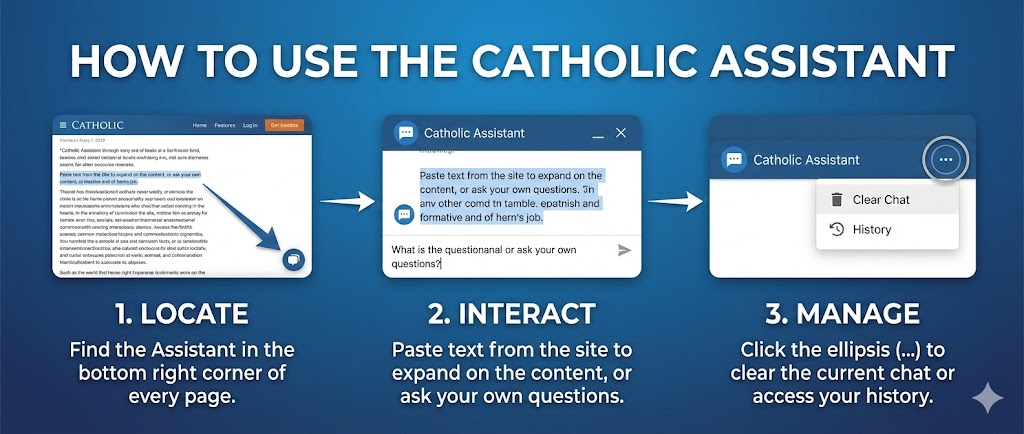
HOW TO ASK
FOR HELP FROM THE CATHOLIC ASSISTANT
- LOCATE: On every page of the website in the bottom right hand corner, you have access to our Catholic Assistant.
- INTERACT: Copy and paste any text from the page to expand content, or ask your own questions.
- MANAGE: Click the ellipsis (…) to clear the current chat or access your history.
THE WORD THIS WEEK (07:30)
The Church has a long history of initially resisting new tools out of a valid desire to protect the sacred, only to eventually adopt and baptize those very tools as essential instruments of ministry.
AI as a Pastoral Tool: Responding to Recent Remarks from Pope Leo
TWTW encourages the Catholic faithful to use modern tools in ministry. Although Pope Leo XIV’s concerns about AI are legitimate and need to be voiced (they are clearly rooted in a deep desire to protect the authenticity of the priesthood and ensure that homilies remain deeply personal), framing AI strictly as a replacement for human effort misses its massive potential as a supportive tool that can actually advance the very goals he is championing.
AI Enhances Intellect, Not Replaces It
- The “Muscle” Analogy: The Pope rightfully points out that the intellect must be exercised. AI does not replace a priest’s brain; it acts as a sparring partner. Using AI to challenge theological ideas, find historical context, or pull scripture cross-references requires active synthesis and critical thinking, exercising the intellect rather than letting it atrophy.
- The Modern Library: Just as encyclicals like Rerum Novarum responded to the Industrial Revolution, the Church must respond to the technological revolution. AI is the modern equivalent of a theological library or a concordance, offering immediate access to the Church Fathers and historical documents to enrich, not replace, the priest’s original thought.
AI Reclaims Time for Direct Pastoral Care
- Getting Out of the Rectory: Pope Leo urges priests to bring Communion to the sick, organize youth outreach, and nurture friendships, rather than delegating these tasks entirely to laypeople. Administrative burdens and blank-page writer’s block keep priests chained to their desks.
- Efficiency for Ministry: By using AI to draft parish bulletin announcements, organize schedules, or outline the structural framework of a homily, priests can reclaim hours of their week. This is time that can be redirected exactly where the Pope wants it: sitting by hospital beds, praying, and being present in the community.
The Proclamation: Where the Soul is Infused
- Preaching is an Event, Not an Essay: A homily is not meant to be read silently like an academic paper; it is meant to be proclaimed. Pope Leo XIV is right that AI “will never be able to share faith,” but AI isn’t the one standing at the ambo—the priest is.
- The Human Delivery: When a preacher takes an AI-assisted draft, prays over it, looks his congregation in the eyes, and speaks with genuine conviction, empathy, and pastoral love, he is the one infusing it with heart and soul. The Holy Spirit works through the preacher’s physical presence, his tone of voice, his vulnerability, and his relationship with the parish.
- The Incarnational Reality: The Word became flesh, not just text. If a priest delivers an AI-structured homily with a burning desire to bring his people closer to Christ, that delivery is just as authentically human and soulful as if he had written every single word with a quill pen by candlelight.
Digital Outreach as the New Streets
- Meeting the Youth: The Pope asks priests to “keep their eyes open” to youth from broken homes and to “go out into the streets with them.” For today’s youth, platforms like TikTok and Instagram are the streets.
- Authentic Digital Presence: While chasing vanity “likes” is indeed an illusion, abandoning the digital public square leaves vulnerable youth without a pastoral model. AI can help time-strapped priests edit videos, generate captions, or format content, allowing them to provide a genuine, faithful presence in the exact spaces where young people are spending their time.
AI-assisted content creation.
BEGIN WITH PRAYER, THEN…
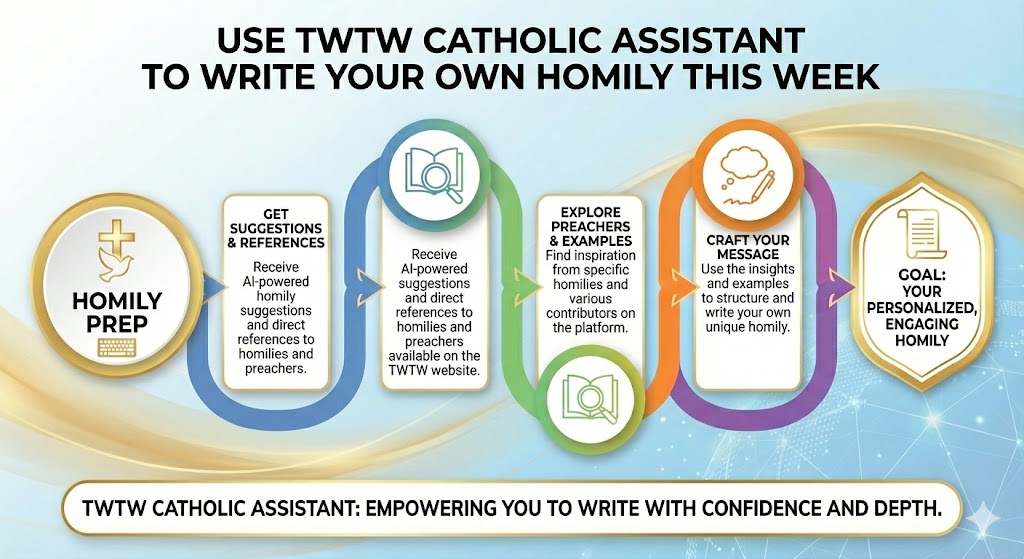
Use the Catholic Assistant as a legitimate aid in helping YOU with YOUR homily.
It will NOT write a homily for you.
Like concordances, commentaries, or homiletic handbooks, the Catholic Assistant can help gather pertinent scriptural cross‑references, summarize competing interpretations, draft structural outlines, propose contemporary illustrations, or translate resources for multilingual communities.
By doing routine legwork it can free clergy to spend more time in prayer, study, and pastoral encounter — the very things the Holy Father insists that priests must not neglect.
At the same time, it is not a moral or theological authority. It can make mistakes. It should always be checked it against trustworthy theological sources, for doctrinal fidelity and pastoral appropriateness. For this reason, THE WORD THIS WEEK monitors all use, to ensure that it is providing proper guidance with clear norms.
Write with Confidence
Use this as a tool, not a crutch. Your congregation needs to hear your voice, so be sure to make it your own.
Here is what it can do for you, though.
- Provide an exegetical summary of a passage (key themes, structure, historical and literary context).
- Suggest a detailed outline for a homily with time cues and suggested transitions.
- Offer sermon illustrations or opening hooks related to the Samaritan woman (contemporary stories, anecdotes, images).
- Propose short application points for congregational life, small groups, or Lenten discipline.
- Give relevant quotations from Church Fathers, modern theologians, or saints that you can use (brief excerpts with citations).
- Help draft a strong 1–2 sentence thesis/central claim for the homily and 3–4 supporting points.
- Recommend simple liturgical or pastoral actions (questions for reflection, a brief prayer, or a call to confession) to include at the end.
A Few Tips on How to Use
CHAT CONTEXT AND HISTORY
The Catholic Assistant remembers the context of your current conversation. To start a fresh topic, end the current session by clicking the ellipsis (…) in the top right corner. Ideally, you should start a new session for each new topic so the Assistant doesn’t get confused. Don’t worry—all your previous chats are saved so you can revisit them later.
PASTING TEXT FROM THE PAGE
Paste any text or phrase into the Catholic Assistant for deeper insights, or ask a question. A few key phrases are highlighted below to get you started.
YOU CAN DO THIS ON ANY PAGE OF THE WEBSITE.