Fr. Tony’s 8-Minute Homily


29th Sunday of Year A

October 22, 2003


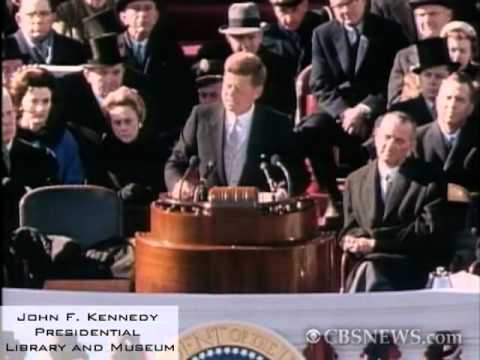
JFK's Famous Inaugural Address Passage

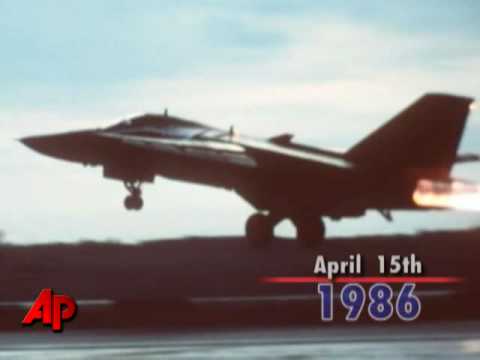
Tax Day - April 15


St. Thomas More's Final Words: A Man for All Seasons

Begin w/ Anecdote

YouTube player

In his Inaugural Address on January 20, 1961, John F. Kennedy, the newly-elected President of the United States, gave the famous challenge: 

“My fellow Americans, ask not what your country can do for you; ask what you can do for your country.  My fellow citizens of the world ask not what America will do for you, but what together we can do for the freedom of man. Finally, whether you are citizens of America or citizens of the world, ask of us here the same high standards of strength and sacrifice which we ask of you.  With a good conscience our only sure reward, with history the final judge of our deeds, let us go forth to lead the land we love, asking God’s blessing and His help, but knowing that here on earth God’s work must truly be our own.” 

Begin w/ Anecdote

YouTube player

It’s still a long time until April 15th, and I don’t mean to remind you of that prematurely, but did you know that April 15th is not only Income Tax Day? It is also the day the Titanic was sunk, and the day Lincoln was shot.  

Someone said once, “You may not agree with every department of the government, but you really have to hand it to the IRS!”

Another cynic has said, “Death and taxes may always be with us, but at least death doesn’t get worse every time Congress meets.”

Arthur Godfrey once said, “I feel honored to pay taxes in America.  The thing is, I could probably feel just as honored for about half the price.”

Most people don’t enjoy paying taxes.  We just do it. 

Begin w/ Anecdote

YouTube player

At an Evangelical church conference in Omaha, people were given helium-filled balloons and told to release them at some point in the service when they felt joy in their hearts. All through the service worshippers kept releasing balloons, but at the end of the service it was discovered that most of them still had their balloons unreleased 
Fr. Tony's Homily

Fr. Tony’s
Commentary

29th Sunday of Year A

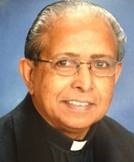
Fr. Tony started his homily ministry (Scriptural Homilies) in 2003 while he was the chaplain at Sacred Heart residence, applying his scientific methodology to the homily ministry. By word of mouth, it spread to hundreds of priests and Deacons, finally reaching Vatican Radio website. These homilies reach nearly 3000 priests and Deacons by direct email every week.

The clipart is from the archive of Father Richard Lonsdale © 2000. It may be freely reproduced in any non-profit publication.


1st ReadingIs 25:6-10

In the first reading, Isaiah the prophet foretells how, without of the great Persian Emperor Cyrus’ intention, his policies would be made part of   God’s saving plan for His chosen people.  Today’s Responsorial Psalm (Ps 96) reminds us that when people put God’s Kingdom first, everyone benefits.  

CONTINUE READING - 1st Reading Comments

The first reading (Isaiah 45:1, 4-6) explained: The Cyrus mentioned here is Cyrus II, the Great, who founded the Persian Empire. In 539 B.C., he conquered the Babylonians who had defeated the Jews 50 years earlier and had taken many of them into captivity. He decided to liberate the Jews from their exile and allow them to go back to their home country, Judea. In this passage, the prophet Isaiah declares that Cyrus, even though a pagan, was God's instrument.  The amazing fact is that God actually used Cyrus to restore His people to their homeland.  

God is able and willing to use ungodly powers to achieve His ends because He is the God not only of the Jews, but of history and of the whole world. Hence, He anointed Cyrus as a savior of His people.  Cyrus carried out God's plan by setting the Jewish exiles free and giving them permission to go back to Judah to rebuild their Temple and city.  He also   returned to them the gold and silver vessels which Nebuchadnezzar had taken from the Temple.  And that is how a pagan emperor became, in God’s hand, the instrument by means of whom the people of Israel might return to their Promised Land. 

This passage also contains a new theological idea.  To call this pagan king, “Messiah” or “Christos” meaning "the Lord's anointed" (a title given exclusively to the kings, prophets and priests of the Chosen People), was quite revolutionary.  Like other passages from Isaiah, it was meant to challenge the Jews' parochialism and give them a more universal view of God's concern and plan.

The clipart is from the archive of Father Richard Lonsdale © 2000. It may be freely reproduced in any non-profit publication.

2nd ReadingPhil 4:12-14, 19-20

In the second reading, Paul praises his converts in Thessalonica for their fidelity to God and to Christ His Son, “our Lord Jesus Christ,” and for their practice, with the help of the Holy Spirit, of the Theological virtues of Faith, Hope and Charity.

CONTINUE READING - 2nd Reading Comments

The Second Reading, 1 Thessalonians 1:1-5 explained: Bible scholars believe that this letter, addressed to the new Jewish and the Gentile Christians of northern Greece (Thessalonica), is the earliest document of the whole New Testament, written in Corinth in A.D. 50. There was more Faith, Hope, and Charity among the Thessalonians than Paul could credit to his own preaching; the Holy Spirit was clearly at work.  Along with 1 Thes 5:8, this is the earliest mention in Christian literature of the three "theological virtues" (see 1 Cor 13:13). From today's text it is clear that these people worked hard at being Christians, and that Saint Paul thought that praiseworthy.  Hence, he praised his converts for their fidelity to God and to Christ, assuring them of his prayers.  He hoped that they would continue to be faithful to the call God had given them, a call proved by the many gifts of the Holy Spirit bestowed on them. 

The clipart is from the archive of Father Richard Lonsdale © 2000. It may be freely reproduced in any non-profit publication.

Gospel – Mt 22:1-14

In the Gospel, Jesus escapes from the trap in the question, “Is it lawful to pay the census tax to Caesar or not?” by instructing those who questioned him, “Repay to Caesar what belongs to Caesar and to God what belongs to God.” With this answer, Jesus reminds his questioners that, if they are so concerned and careful about paying taxes to the state, they should be much more concerned and careful about their service to God and their obligations to Him as their Creator and Lord. We fulfill our duties to our country by loyally obeying the just laws of the State and working for the welfare of all citizens. We become good Heavenly citizens by obeying God’s laws.

CONTINUE READING - Gospel Comments

Gospel exegesis: The context: The Pharisees, Sadducees and Herodians were the three prominent Jewish sects of Jesus’ day.  The Pharisees were rabid nationalists, totally anti-Roman, while the Herodians were willing to collaborate with the Romans, hoping to benefit from them.  Together with the chief priests, these three groups accused Jesus of “associating” with sinners and challenged his authority to teach in the Temple.  The three “parables of judgment” were Jesus’ calculated reply to their accusations.  After the first two parables, "the chief priests and the Pharisees ... realized that he was speaking about them" (21:45-46).  Hence, they resumed their counter-attack in an attempt to destroy Jesus' influence with the people, either by discrediting him in the presence of the crowds or by causing him to make statements that would get him into trouble with the Romans.  The question put to Jesus in verse 17 is actually the first in a series of four "test questions" recorded in Mt 22:15-46.  Besides today's question on the legality of paying taxes, there are three  other questions – two asked by the Sadducees and Pharisees of Jesus and one asked by Jesus of them. First, the Sadducees asked Jesus' opinion on the details of the resurrection of the dead (vv. 23-28) and Jesus’ response silences them. Second, the Pharisees to ask Him what the greatest commandment is (vv. 34-39, silencing them as well. While they were conferring among themselves, Jesus set for them the problem of the relationship between the Messiah and King David, asking them, “What is your opinion about the Messiah? Whose son is he?”   When they answered, “David’s,” Jesus responded, ‘How, then, does David, inspired by the Spirit, call Him ‘Lord,’ saying, The Lord said to my Lord, ‘Sit at My right hand until I place Your enemies under Your feet’?”  (vv.  41-45).  They had no answer, and that ended their test questions.

The tax issue: The Jews were forced to pay three types of tax to the Roman Emperor: the ground tax, the income tax, and the census tax or poll tax. As ground tax, a man must pay to the government one tenth of the grain and one fifth of the oil and wine which he produced. This tax was paid partly in kind and partly in money equivalent. There was income tax which was 1% of a man’s income. There was a census, or poll tax. This tax, which amounted to one denarius, must be paid yearly for every male person from the age of fourteen to the age of sixty-five and for every female person from the age of twelve to sixty-five. This question concerned the census/poll tax.  A census tax implied that, if one were a citizen, one owed the money to the Emperor.  The Jews believed that they had only one Lord and Ruler and that was their God.  Taxes, or any form of submission, should be made to Yahweh alone.  Hence, the question which the Pharisees asked Jesus was intended to create a very real dilemma for him. If he were to say that it was unlawful to pay the tax, the Herodians and their allies would report him to the Roman officials, who would then arrest him as a revolutionary.  If he were to say that it was lawful to pay the tax, the insurgents and their supporters would turn against him and he would be discredited in the eyes of the people who were against paying taxes to a pagan emperor.  In other words, to state that tax should be paid would have made Jesus appear a traitor to his country, while a denial would have left him behind the bars as an enemy of Rome. “The trap thus consisted in putting together an alliance of convenience [Pharisees and Herodians] in which both would ask Yeshua’s opinion, hoping his response would alienate him from one group or another.” (Jewish New Testament Commentary, p.65)

 Defense as Challenge: Jesus defeated their scheme by asking his challengers to show him “the coin of tribute” – the coin they would give to the tax-gatherer.  In those days, all secular money was thought to belong to the Emperor. [The Temple had its own coinage, not used in paying secular debts.] Thus, the Emperor’s image was on each secular coin.  The money belonged to him and   he simply permitted people to use it.  (“Jewish Palestine circulated its own copper coins, omitting the image of the deified emperor, which was offensive to Jewish tastes … But foreign coins, which bore the emperor’s image and mention of his divine status, were in common circulation in Palestine, where neither gold nor silver coins were permitted to be struck. The [Roman] silver denarius … was required to pay taxes in Palestine, as elsewhere in the Empire, and Jewish people had to use it, whether they liked it or not1]. Revolutionaries in A.D. 6 had violently protested the use of such coins and incurred terrible Roman retaliation. If Jesus’ questioners here are concerned about paying Roman taxes, they obviously ought not to be carrying this coin!” (IVP Bible Background Commentary: New Testament, pp.105-106). By having a Roman coin in their possession, complete with Caesar's image and Caesar's inscription, the challengers had already shown where their loyalties lay. They had, in effect, answered their own question.  Jesus, rather than answering their question directly, asked them a question, thus turning their trap inside out and upside down: “Whose image (eikon in Greek) and inscription are these?” (The census tax was paid with a denarius coin, which contained the image of the Emperor on one side with the inscription “Tiberius Caesar, Son of the Divine Augustus”—and on the other his title “Pontifex Maximus” (high priest).  Thus, Caesar claimed not only political sovereignty but also Divine attributes.  Therefore, the Jews considered the image idolatrous and the inscription blasphemous. Since no Pharisee would possess this coin, it had to be a Herodian who carried this coin onto the Temple Mount and showed it to Jesus). “Caesar’s,” they said.  Jesus then said, "Give back to Caesar what belongs to Caesar -- and to God what belongs to God."  In other words, we give to the Emperor the coin because his image is on it, and we give to God our own selves because we are created in the image of God (Gn 1:26).  Jesus’ answer acknowledges our obligation as citizens to the state but affirms our larger obligation to God.  Both the state and God require certain loyalties from us, but we owe God our very lives.  The question Jesus was asked could have been phrased, “Whose side are you on?  Israel’s or Rome’s?”  Jesus’ answer was, “On God’s side,” in other words, taxes are Caesar’s, so pay them; but your heart and your soul are Yahweh’s; give those to God! (If the image of Caesar stamped on a coin means that the coin belongs to Caesar, then the image of God stamped on each human being means that each one belongs to God). The Catechism of the Catholic Church clarifies: If that authority serves the common good of the people, then the choice of the type of political regime is left up to the citizenry (CCC #1901). When the demands of an authority violate the upright conscience of the people, (e.g., when that authority “legalizes” immorality, i.e., abortion, euthanasia, cloning, etc.)  the refusal of obedience is acceptable (CCC #2242). (CCC #1897-1917: participation in the social sphere; CCC # 2238-2244: duties of citizens).

Dual citizenship and dual obligations: This doctrine is sometimes called the “doctrine of the two powers,” or the “two realms,” meaning that the life of a Christian involves a twofold allegiance: to the ruling government in civil and secular issues, and to God and the Church as regards spiritual and religious issues. By birth, we become the citizens of the country of our birth, and by Baptism we become the citizens of Heaven.  In every age, Christians are faced with balancing the demands of Caesar with the commands of God. Jesus’ answer forms the guiding principle in solving the problems that arise from our dual citizenship, belonging to God and to our country.  As Christians, we are to obey the government, even when it is pagan and non-Christian.  A loyal Christian is always a loyal citizen.  Failure in good citizenship is also failure in Christian duty.  We fulfill our duties to our country by loyally obeying the just laws of the State, by paying all lawful taxes, and by contributing our share, whenever called on, toward the common good.  Both St. Peter (1 Pt 2:13-14), and St. Paul (Rom 13:1-7), stressed the obligation of the early Christians to be an example to all in their loyalty as citizens of the state. Similarly, we fulfill our duties to God by being faithful, loyal, active members of the spiritual Kingdom of God, the Church, which Christ established on earth.  Thus, a real Christian is, at one and the same time, a good citizen of his country and a good citizen of the Kingdom of Heaven, but his priority is his allegiance to God.  As the famous martyr St. Thomas More said of himself: "I die the King's good servant, but God's first."  Cooperation with secular authority may not interfere with our primary duty of "giving back to God" our whole selves, in whose image - like the stamp on the coin - we are made.  Consequently, we give taxes to the government, but we give ourselves to God. 

The modern approach: As citizens in a multicultural, multi-religious country, we respect other religious traditions.  We take care not to mix religion and politics.  Americans tend to see in Jesus’ answer an argument for the separation of Church and state with the presumed slogan: ‘Priests, stick to the sacristy’.  But such an idea made no sense in first-century Mediterranean culture. (Hence as a faithful Jewish believer, what Jesus was saying in his reply was: “Give to Cæsar what belongs to Cæsar (i.e., his material coin, nothing) and give to God what belongs to God (i.e., his very being – everything). It is true that there are times when the demand for the separation of Church and state appears to leave our civil life without moral direction, but we, who belong to Jesus have in His Church an unchanging moral compass and the guidance of the Holy Spirit to shape our lives. In our fidelity to God, then, we model for our brothers and sisters the loving, humble mutual, loving service, flowing from our union with and worship of the Living God in His own Church, in which alone, the world will find His Peace. Further, the experience of two thousand years of political history since the time of Jesus makes it clear that combining Church and State jeopardizes civil liberty as well as religious freedom.  

 Modern Caesars, represented by rulers who are, in effect Dictators, demand our faith and moral practice, our hopes and dreams, our consciences, our labor, our children. In a democracy, the citizens do not serve the state -- the state serves the people.  The elected government officials are public servants.  Hence Christians, like other citizens, are free to criticize their government, to seek to change its policies, to remove officeholders whose representation is invalid, and to seek new benefits and protections for the welfare of the people.  Our political liberty also secures our freedom from religious tyranny and unwonted political interference in religious matters.  

There is no reason why the state and the Church cannot work together to improve the lives of their citizens.  There is usually no conflict -- unless the government forces people to act in a way contrary to God’s law.  Then we must act in accordance with God’s law and not man’s because, while the state only exists in this world, God’s law exists in this world and the next. This means that sometimes we have to refuse to obey our government.  In South Africa's apartheid system, many Christians were forced to violate the immoral laws of their government.  In the United States, both the black and the white people violated the segregation laws of many states.  Wherever there is immoral or unjust behavior, there has to be conflict, which paves the ground for society’s progress. (CCC # 1897-1917: participation in the social sphere; CCC # 2238-2244: duties of citizens). 

The clipart is from the archive of Father Richard Lonsdale © 2000. It may be freely reproduced in any non-profit publication.

Fr. Tony’s Life
Messages

29th Sunday of Year A

Like it or not, it’s a reality that our ancestors created the kind of government that relies on a portion of its citizens’ income to function.  Hence, it is the duty of Christians to pay for the services and the privileges that government provides –- like paved roads, police and fire departments, banks, schools, and other necessities.  If we refuse to pay taxes, how will these needs be fulfilled?  Another way of “giving to Caesar what is Caesar’s” is to participate actively in the running of the government, electing the most suitable candidates, and influencing them through frequent contacts.  Third, we must submit to the civil authorities and respect the laws of our country in order to live in peace.  As loyal citizens, we must also see to it that our elected representatives are faithful in maintaining law and order in the country and in promoting the welfare of its citizens.  When the state oversteps the mark and puts itself in the place of God, Christians are, as a last resort, absolved from obedience.  We must give to Caesar the things that are Caesar’s.


Since everything is God’s, we must give ourselves to Him 100%, not just 10% on Sundays.  We should be generous in fulfilling our Sunday obligations, and we should find time every day for prayer and worship in the family, for the reading of the Bible, and for the proper training of our children in Faith and morals.  St. Augustine teaches that when we truly succeed in “giving to God what is God’s,” we are “doing justice to God.”  This requires that we return to God, with dividends, that which God has entrusted to us, remembering that we are mere managers or stewards of God’s gifts.  Every year, we are invited to make the stewardship pledge of our financial offering to our local Church for the coming year.  Our contribution to the parish Church   should be an expression of our gratitude to God, giving back to God all that He has given us.  This will help us to combat the powerful influence of materialism in our lives and enable the Church to do God’s work.  Our cash offerings signify our commitment to the ministries of the Gospel, which are the activities of the Risen Lord!  Every pledge fulfilled enables and empowers ministry.  Every pledge fulfilled, every dollar contributed, touches a human life and brings it closer to God.  Every pledge fulfilled, every dollar given, is transformed into love for someone else and for ourselves.  Active participation in the various ministries of the parish is the offering to God of our time and talents, yet another way of giving to God his due, our whole self.  


When Jesus says, “Give to Caesar what is Caesar’s and to God what is God’s,” the command really asks us whether we have invested our heart in the right place, in something worthy of our life’s blood, something that will yield a return that’s worthy of a whole human life. There is only one way to find out where our hearts are. Let us check our daily choices, the little ones as well the big ones, and look for the patterns: What do we  usually do when decision time comes for where we will spend our prime time and our best energies? These are the infallible indicators of what we truly value, and what we don’t. Whose image do others see when they look at our life? When people see us, do they see Jesus engraved upon us? To the extent that they do, we are making visible the extent to which we belong to the Kingdom of God.


xxxxxxxx

xxxxx


xxxxxxx

xxxxxxxx

HOME | FAITH SHARING QUESTIONS

Fr. Tony’s Homily

Fr. Tony’s Homily

Fr. Tony’s Homily

Fr. Tony’s Homily

Fr. Tony’s Homily