Fr. Tony’s 8-minute Homily

HOMILIESCONNECTIONSPAPAL HOMILIESFR. TONY

Jesse Owens vs. Hitler

Viva Cristo Rey!

The Vatican Obelisk
YouTube player

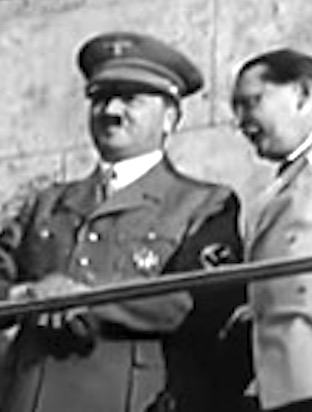
VIDEO (0:59): Jesse Owens Wins 100m Olympic Gold in front of Hitler at 1936 Olympics. Jesse Owens was an American track and field athlete who won international fame by winning 4 gold medals at the 1936 Summer Olympics in Berlin, Germany. These Olympics were especially significant because Adolf Hitler was using the the games to show the world a revival of Nazi Germany.
YouTube player

VIDEO (2:00)

YouTube player

ROME REPORTS (2:29) โ€“ Rome has more obelisks than any other city in the world. There are thirteen of these tall monuments that help make up the history of ancient Rome. One of the most well known, stands in the middle of St. Peterโ€™s Square, measuring 82 feet tall and weighing 320 tons.
Fr. Tony's Homily

Fr. Tony’s
Commentary

34th Sunday of Year A

Fr. Tony started his homily ministry (Scriptural Homilies) in 2003 while he was the chaplain at Sacred Heart residence, applying his scientific methodology to the homily ministry. By word of mouth, it spread to hundreds of priests and Deacons, finally reaching Vatican Radio website. These homilies reach nearly 3000 priests and Deacons by direct email every week.

The clipart is from the archive of Father Richard Lonsdale ยฉ 2000. It may be freely reproduced in any non-profit publication.

Todayโ€™s Scripture Readings revolve around the Last Judgment scene of Jesus Christ coming in glory and power. It was Pope Pius XI who brought the Feast of Christ the King into the liturgy in 1925 to bring Christ as Ruler, and Christian values, back into lives of Christians, into society, and into politics. The Feast was a reminder to the totalitarian governments of Mussolini, Hitler and Stalin that Jesus Christ is the only Sovereign King.  Although Emperors and Kings now exist mostly in history books, we still honor Christ as the King of the Universe by enthroning Jesus in our hearts, surrendering our lives to God. This feast challenges us to see Christ the King in everyone, especially those whom our society considers the least important, and to treat each person with the same love, mercy, and compassion Jesus showed. 

1st Reading

The first reading, taken from the Prophet Ezekiel, introduces God as the Good  Shepherd, reminding us of Christโ€™s claim to be the Good-Shepherd-King, leading, feeding and protecting his sheep. In todayโ€™s Responsorial Psalm (Ps 23), we rejoice in Jesus, who is our Good Shepherd.  

CONTINUE READING

The First reading (Ezekiel 34:11-12, 15:17) explained: The prophet Ezekiel was consoling the Jews exiled in Babylonia, explaining that their exile had been caused by infidelity and disloyalty to God on the part of their Kings and religious leaders who had used their power and authority to exalt themselves.  In this passage, Ezekiel prophesies that God will eliminate the โ€œmiddlemen,โ€ the unfaithful shepherds of His People of Israel, and will Himself become Israelโ€™s Shepherd, leading, feeding, healing, and protecting His sheep.  Though the prophet originally was talking about a specific point in Israelโ€™s history in which Yahweh would come to shepherd the Chosen People, Jesus' disciples believed that the risen Jesus was with the early Christians and was fulfilling Ezekielโ€™s prophecy of God, as the Divine  Good Shepherd, rescuing, pasturing, seeking, bringing back, and healing his sheep.  No longer limited to His earthly body, the risen Jesus continues His loving ministry through such saving actions as we, his Mystical Body, perform in Him and with His power.Since King David had originally been a shepherd and, since the coming Messiah was widely believed to be a descendant of David, there was already an association of shepherd images with the Messiah.

The clipart is from the archive of Father Richard Lonsdale ยฉ 2000. It may be freely reproduced in any non-profit publication.

2nd Reading

In the second reading, St. Paul presents Christ as the all-powerful Ruler-King Who raises the dead and to Whom every form of power and authority must eventually give way.

CONTINUE READING

The Second Reading (1 Corinthians 15:20-26, 28)  explained: In his letter to the Corinthian Church, Paul answered the question: "If Jesus is alive among us by his Resurrection, how does he affect our lives?"  Many of the Corinthians believed in Platoโ€™s doctrine that human beings were originally pure spirits or souls who lived in the presence of God.  They sinned and as punishment they had to carry a human body which they shed at death and thus were liberated to return to their state of happiness.  So those Corinthians could not understand how Jesus had been raised with his glorified body. Paul explained to the Corinthians that as God the Father had raised Jesus from the dead, Jesus too would raise those who believed in him.  In other words, the first mission of the risen Christ as King is to give us eternal life by raising us from death, thus undoing the primary consequence of the first Adamโ€™s sin.  The final mission of Christ the King is to subject all cosmic powers to himself, and then to God his Father.

The clipart is from the archive of Father Richard Lonsdale ยฉ 2000. It may be freely reproduced in any non-profit publication.

Gospel
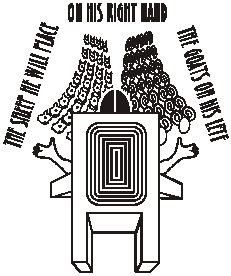
Todayโ€™s Gospel describes Christ the King coming in Heavenly glory to judge us, based on how we have shared our love and blessings with others through genuine acts of charity in our lives. Jesus is present to us now, not only as our Good Shepherd leading, feeding, and healing his sheep, but also as dwelling in those for whom we care.  In the parable of the separation of the sheep from the goats at the Last Judgment, every person to whom we give ourselves, “whether hungry, thirsty or a stranger, naked, sick or in prison,” is revealed to us as having been the risen Jesus.  Our reward or punishment depends on how we have recognized and treated this risen Jesus in the needy. 

CONTINUE READING

Gospel Exegesis: The Gospel of Christ the Kingโ€™s Last Judgment. As John P. Meier (Matthew, Michael Glazier, Inc., Wilmington: 1983) has noted, โ€œthe scene of Last Judgment described [in Mt 25:31-46] is not a parable but the unveiling of the truth which lay behind all the parables of chapters 24-25.โ€ For this reason, readers should recognize the scene as one of judgment but also of revelation. Here, Jesus is being revealed as Son of Man in Glory, as the King who judgesjustly, and the criterion of  his judgment is given. The Gospel passage teaches us that the main criterion of the Last Judgment will be the works of Christian charity, kindness, and mercy we have done for others, in whom we have actually served Christ, knowingly or unknowingly. The account tells us that Christ, the Judge, is going to ask us six questions, and all of them are based on how we have cooperated with Godโ€™s grace in performing acts of charity, kindness, and mercy for others, because Jesus actually dwells in them. The first set of questions: โ€œI was hungry, thirsty, homeless. Did you give me food, drink, accommodation?โ€ The second set of questions: โ€I was naked, sick, imprisoned. Did you clothe me? Did you help me by visiting me in my illness or in prison?โ€ If the answers are yes, we will be eternally rewarded because we have cooperated with Godโ€™s grace by practicing charity. But if the answers are no, we will be eternally punished.

Kingship of Jesus the Messiah in Old Testament. In most of the Messianic prophecies given in the Old Testamentbooks of Samuel, Micah, Isaiah, and Jeremiah, Christ the Messiah is represented as a King.  Seven hundred years before the birth of Jesus, the Prophet Micah announced His coming as King:  "But you, O Bethlehem Ephrata, who are little to be among the clans of Judah, from you shall come forth for me one who is to be ruler in Israel, whose origin is from of old, from ancient days" (Mi 5:1).  Daniel presents "One coming like a son of man ... to him was given dominion and Glory and Kingship, that all peoples, nations, and languages should serve him.  His dominion is an everlasting dominion that shall not pass away and his Kingship is one that shall never be destroyed" (Dn 7:3-14). 

Kingship of Jesus in New Testament. The New Testament tells us that Jesus is the long-awaited King of the Jews.  In the account of the Annunciation, we read: โ€œThe Lord God will make him a King, as his ancestor David was, and he will be the King of the descendants of Jacob forever and his Kingdom will never endโ€ (Lk 1:32-33).  The Magi from the Far East came to Jerusalem and asked the question, โ€œWhere is the baby born to be the King of the Jews?  We saw his starโ€ฆ and we have come to worship himโ€ (Mt 2:2).   During the royal reception given to Jesus on Palm Sunday, the Jews shouted โ€œBlessed is the King, who comes in the name of the Lord!โ€ (Lk 19:38).   When Pilate asked the question, โ€œAre you the King of the Jews?" (Jn 18:33).  Jesus, in the course of their conversation, made his assertion, โ€œYou say that I am a King.  For this was I born, and for this I came into the world, to testify to the Truth. Everyone who belongs to the Truth listens to My Voiceโ€ (Jn 18:37). That Truth, as we know, is that He is God and Sovereign King of all Creation. The Gospels tell us that the board hung over Jesusโ€™ head on the cross read: โ€œJesus the Nazarene, King of the Jews,โ€ (Mt 27:37; see also, Mk 15:26; Lk 23:36; Jn 19:19-20), and that, to the repentant thief on the cross who made the request: โ€œJesus, remember me when you come into your Kingdom,โ€ Jesus promised that the repentant thief would be in Paradise with Him that very day. (Luke 23:39-43).  Before His Ascension into Heaven, the Risen Jesus declared: โ€œI have been given all authority in Heaven and on earthโ€ (Mt. 28:18). The Catechism of the Catholic Church tells us that โ€œIn the Lordโ€™s Prayer, โ€˜thy kingdom comeโ€™ refers primarily to the final coming of the reign of God through Christโ€™s return.โ€ (CCC #2818, cf. Titus2:13)

A unique King with a unique Kingdom: Jesus Christ still lives as King in thousands of human hearts all over the world.  The cross is his throne and the Sermon on the Mount is his rule of law.  His citizens need obey only one law: โ€œLove others as I have loved you" (Jn 15:12).  His love is selfless, sacrificial, kind, compassionate, forgiving, and unconditional.  That is why the Preface in todayโ€™s Mass describes Jesusโ€™ Kingdom as "a Kingdom of truth and life, a Kingdom of holiness and grace, a Kingdom of justice, love, and peace."  He is a King with a saving and liberating mission: to free mankind from all types of bondage, so that we may live peacefully and happily on earth and inherit Eternal Life in Heaven. His rule consists in seeking the lost, offering salvation to those who call out to him, and making friends of enemies.

The Kingdom of God is the central teaching of Jesus throughout the Gospels.  The word Kingdom appears more than any other word throughout the four Gospels.  Jesus begins His public ministry by preaching the Kingdom.  "The time is fulfilled, and the Kingdom of God is at hand; repent and believe in the Gospel" (Mk 1:14). In Christ's Kingdom, โ€œwe are all a royal priesthood, a holy nationโ€ (1 Pt 2:9; see also Ex 19:6; Is 61:6). According to the teachings of the New Testament, the โ€œKingdom of Godโ€ is a three-dimensional reality:  the life of grace within every individual who does the will of God, the Church here on earth, and Eternal Life in Heaven.  The Catechism of the Catholic Church explains that the Church is the Kingdom of Christ already present in mystery.  It is the mission of the Church to proclaim and establish the Kingdom of Christ in human souls. This mission takes place between the first coming (the Incarnation), and the second coming (the end of this word, with His Final Judgment of all mankind), of Jesus into this world. The Church helps us to establish in our hearts and souls, Christโ€™s Kingdom, into which we were incorporated at Baptism by means Sanctifying Grace -- that sharing in Divine Life which allows us to participate in God's inner life. This supernatural Life of Grace, lived out in our daily lives, comes to fulfillment in the Eternal Life of Heaven (CCC #758-780). 

The clipart is from the archive of Father Richard Lonsdale ยฉ 2000. It may be freely reproduced in any non-profit publication.

Fr. Tony’s Life
Messages

34th Sunday of Year A

Since Christ, our King, lives in our hearts with the Holy Spirit and His Heavenly Father and fills our souls with His grace, we need to learn to live in His Holy Presence, doing His will by sharing His forgiving love with others around us. We need to be constantly aware of His Presence in the Bible, in the Sacraments, and in the worshipping community. 


Terrorism has affected the entire world, including Christโ€™s Kingdom on earth.   These terrorists are people who slaughter the unborn; engage in a frontal attack on the modern family through provocative television shows, movies, music, and pornography; eradicate any recognition of God from public display and public schools; they include those priests and the religious who abuse children.  Hence, Jesus, the King, needs convinced apostles who are prepared and ready to fight against these enemies, first by prayer, then by accepting willingly the sufferings that come our way and offering them to God with Jesus, our King, in reparation for our sins and the sins of the world, and finally by living lives of loving, humble service, using our gifts generously for all.  The battlefield is the heart, the home, the school, the place of employment, the neighborhood, and the parish.  These   provide new and exciting challenges, new opportunities for us to do, ourselves, what is right and to live out the Truth of Jesus Christ our King, neither compromising with sin nor passing judgment on the motives or guilt of any of our brothers and sisters, but loving and praying for all of us. To ensure that Jesus is always the King of our hearts, we need to make a permanent, total commitment to Him and to live out that commitment with the necessary sacrifices, conviction, hard work, and daily, serious prayer. 


This feast is an invitation to all those who have power or authority in the government, in public offices, in educational institutions and in the family to use it for Jesus.  Are we using our God-given authority so as to serve others with love and compassion as Jesus did?  Are we using it to build a more just society rather than   to boost our own egos? As parents are we  using our God-given authority to train our children in Christian ideals and  the committed Christian living we faithfully model for them? 


By allowing Him to be King and center of our heart through prayer, receiving the Sacraments and freely entering a personal relationship with Him; Familial: By creating a proper rule and servant-leadership in the family โ€“  let us have a “king,” a “queen,” “prince” and “princesses” in our home; Social: By not divorcing ourselves  from the state, from legislation and from affecting the social order; and Cultural: By bringing Christ and His Beauty and Radiance into the living traditions of our community. (Fr. Lombardi).

HOME | FAITH SHARING QUESTIONS
Fr. Tony’s Homily

Fr. Tony’s Homily

Fr. Tony’s Homily

Fr. Tony’s Homily

Fr. Tony’s Homily