Fr. Tony’s 8-minute Homily

แŠVIDEOSHOMILIESCONNECTIONSHOLY SEEFR TONYแ…
Fr. Tony's Homily

Fr. Tony

5th Sunday of Year B

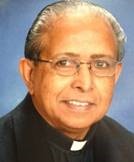
Fr. Tony started his homily ministry (Scriptural Homilies) in 2003 while he was the chaplain at Sacred Heart residence, applying his scientific methodology to the homily ministry. By word of mouth, it spread to hundreds of priests and Deacons, finally reaching Vatican Radio website. These homilies reach nearly 3000 priests and Deacons by direct email every week.

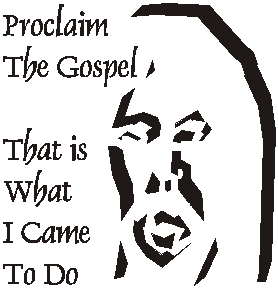
The clipart is from the archive of Father Richard Lonsdale ยฉ 2000. It may be freely reproduced in any non-profit publication.

The readings today challenge us to go courageously beyond peopleโ€™s expectations by doing good as Jesus did, instead of brooding over all the pain and suffering in the world that we cannot end. They invite us to explore the importance of work in our lives and to learn a lesson in work ethics from Job, Paul and Jesus.

SOURCE: Fr. Tony’s Homilies / Used with permission

1st Reading Explained

The first reading details Jobโ€™s attitude in striking contrast: in the midst of his long suffering, Job speaks of the tedium and futility of life.  Job’s words describe the miseries of human existence. Eventually, Job arrived at a place in his life where, in trust and in Faith, he surrendered himself, his suffering, his work and everything he had had and lost to the greater wisdom of God (Job 42:1-6).

CONTINUE READING

First Reading, Job 7:1-4, 6-7, explained: The book of Job is a long didactic poem intended to refute the ancient Jewish belief that God rewards the good and punishes the wicked in this life. The book describes Godโ€™s permitting Satan to test the commitment of His servant Job.  A prosperous and God-fearing man, Job suddenly experienced the successive, catastrophic losses of wealth, family and health. The only explanation the author offers for Godโ€™s permitting the innocent Job to suffer these losses is that He had allowed Satan to test Jobโ€™s trusting commitment and fidelity to God, even under extreme pressure. Only in the light of Christ's sufferings and cruel execution, can we see the value of suffering in this life.   Jobโ€™s detailed account of the miseries of human existence contrasts with Jesusโ€™ work of healing as described in the Gospel.  In Jobโ€™s account, he claims that the entire human condition is sad and hopeless, and he compares himself to a farm laborer who is  forced to do degrading work for wages that barely keep him alive and who yearns for relief from the scorching sun.  There is no peace, Job says, even in sleep!  Instead, there is only a restless expectation of a return to toil at dawn.  But continued suffering, monotony and isolation make Job aware of the emptiness of life without God and the hope of ultimate union with God.  We learn from this reading that God listens to every human cry, even to the anger and dismay of the lament. We also learn that there is no struggle so great, no suffering so intense that it cannot be surrendered with confidence into Godโ€™s capable, powerful hands.

Of course, Job is right.  Left to our own resources, we cannot escape the ultimate meaninglessness of life.  Fleeting joys are obliterated by suffering and inevitable death.  We are reassured by Faith, however that God gives life a purpose.  He permits pain in order to serve His saving will and to teach us appreciate His gift of Life to the full.  The Good News we proclaim is that, through the death and Resurrection of Jesus, God has joined us to Himself, now and forever.  Job eventually realizes that those who choose to give themselves to God will find that life has meaning.  Modern psychology teaches us that it is only our totally free actions that bring us real fulfillment in life.  If our life is filled with drudgery and our days are without hope, it may be because we have never dared go beyond the security of other people's approval and acceptance.  Jesus shows us that we can reach perfection only by allowing the risk of suffering into our lives, and submitting ourselves to Godโ€™ Wisdom and His loving Will in all things.

SOURCE: Fr. Tony's Homilies / Used with permission

2nd Reading Explained

The second reading, on the other hand, reveals Paul as a true and dynamic follower of Jesus, ready to do something extra for his Lord. Paulโ€™s conviction about the Good News and his commitment to Christ were so intense that preaching the Gospel had become a compulsion for him. Knowing that he had been called to do more than just โ€œpreachโ€ the Gospel, he resolved to preach it without recompense. 

CONTINUE READING

Second Reading, 1 Corinthians 9:16-19, 22-23, explained: Corinth was a center of philosophical and religious ferment, filled with new and bizarre ideas.  There were many in Corinth who considered Christianity to be merely one of many cults, this one initiated by a Jewish teacher named Jesus of Nazareth.  They also knew that Paul was a former persecutor of Christians. So, in Chapter Nine of this letter Paul explained his authorization to preach the Good News of Jesus to the Corinthians.  He exercised his authority modestly, making himself "a slave to all" and affirming that he had โ€œno reason to boast.โ€  His preaching ministry went beyond what Jesus demanded.  First, Paul made no use of his Gospel-given right to accept support from the community.  He gave up rights and privileges, which he had the right to claim, in order to give himself fully to the spreading of the Gospel.  He was determined to be seen as free from any desire for personal praise or gain. Paul emphasized that giving up his legitimate rights for the sake of a higher ideal gave him true freedom.  He could remain respectful of others but never patronizing.  Like Jeremiah, Paul saw his preaching not merely as a job but as a divine commission, a vocation. He also knew that he by accepting poverty for the Gospelโ€™s sake, he also had a share in the blessing of the Gospel.  Paul thus encouraged his Corinthian converts to be ready always to forgo their own rights when the spiritual welfare of a neighbor was at stake.  Paulโ€™s freedom to serve was rooted in the free choices he had made as a preacher of the Gospel.  The purpose of his ministry was not to gain personal profit, but to draw people closer to God.est earthly cares and worries.

SOURCE: Fr. Tony's Homilies / Used with permission

Gospel Explained

Pointing out the spontaneous response of Peterโ€™s mother-in-law after she had been healed by Jesus โ€“ โ€œโ€ฆthe fever left her and she waited on themโ€ (Mark 1:31)”-– todayโ€™s Gospel teaches us that true discipleship means getting involved in giving selfless service to others. Jesusโ€™ first day of public ministry at Capernaum was a Sabbath day.  During the day, he had taken part in the synagogue worship, taught with authority, exorcised a demon and healed Simonโ€™s mother-in-law.  After all that, when the sun had set, he โ€œcured many who were sick with various diseases and drove out many demons.โ€ Thus, Jesus spent himself and most of his time ministering to the needs of others, bringing healing, forgiveness and a new beginning to many. Yet, he was well aware that even the most important work had to be continually refueled and evaluated before God his Father.  Hence, Jesus rose early the next morning and went off “to a deserted place” to pray in order to assess his work for his Fatherโ€™s glory and to recharge his spiritual batteries. 

CONTINUE READING

Gospel Exegesis:  Unrestricted preaching and healing ministry of Jesus: Capernaum was a small port town located on the north shore of the Sea of Galilee, mostly serving fisherman and the fishing industry.  The Sea of Galilee (or the Lake of Tiberius, or the Lake of Gennesaret), is a freshwater lake, 13 miles long at its longest, and 8 miles wide at its widest, with a maximum depth of a hundred and fifty feet. It is surrounded by small mountains.  In the section of Mark's Gospel, we read for today, we find the description of a typical Sabbath day in the ministry of Jesus.  Having attended the synagogue service, Jesus exorcised a demon and eased the fever of Simonโ€™s mother-in-law.  After sundown of that same day, he "cured many who were sick with various diseases and drove out many demons."  Whether the people whom Jesus healed were really possessed by the devil or not, they were mentally disturbed, and they were fully healed. Jesus worked miracles as signs that Godโ€™s healing love was at work in the world. His disciples were excited at seeing their master becoming a local hero and attracting huge crowds, like John the Baptist.  They felt that this would increase their reputation and prosperity.  So, when they found Jesus the next day, very early in the morning, at prayer in a deserted place, they suggested that he return to the place where he had been so successful.  Jesusโ€™ answer, "Let us move on to the neighboring villages, so that I may proclaim the Good News there also,โ€ shows that his mission had an entirely different objective from the one his disciples expected. 

Jesus gave importance to preaching and teaching: Jesus had no interest in being the center of attraction, of being popular, or of being โ€œsuccessful.โ€  He simply wanted to be where he could tend to the needs of the people to whom he had come in order to bring spiritual salvation and blessing to them and to all people.  That is why, for the remaining two years of his life, Jesus went from town to town preaching the Kingdom of God.  Traveling to neighboring villages and throughout the whole of Galilee (and beyond), Jesus remained continually on the move so that everyone could benefit from his saving words and works. He used his energies to bring healing and wholeness into the lives of the people.  Jesus' purpose was to teach, to serve, to give, and to share.  Since nobody can be saved who has not first believed (Mark 16:16), it is the first task of priests, as co-workers of the bishops, to preach the Gospel of God to all men (2 Corinthians 11:7). In the Church of God, all of us should listen devoutly to the preaching of the Gospel, and we all should feel a responsibility to spread the Gospel by our words and actions.  It is the responsibility of the hierarchy of the Church to teach the Gospel authentically--on the authority of Christ.  By leaving the relative safety and security of Capernaum and going to other towns and villages, Jesus risked opposition and even death.  It is precisely by going beyond what people expected of him that Jesus accomplished his saving mission.  If, as Christโ€™s disciples, we are tempted to use only a part of our gifts, we may hesitate to take risks for Christ, lest this create problems for us.  Jesus shows us that we reach perfection only by allowing the element of risk into our lives.

Jesus recharged his spiritual batteries every day: Jesus was convinced that if he were going to spend himself for others by his preaching and healing ministry, he would repeatedly have to summon spiritual reinforcements.  He knew that he could not live without prayer, because his teaching and healing ministry drained him of power. For example, after describing how the woman who had touched Jesusโ€™ garment was instantly healed, Mark remarks: โ€œJesus knew that power had gone out of himโ€ (5:30).  The โ€œdeserted placeโ€ to which Jesus went to pray was not actually a desert. Rather, it was a place where he he could be free from distractions -- a place where he could give himself unreservedly to prayer.  He went there, not so much to escape the pressures of life, as to refresh himself for further service. Jesus' prayer is a prayer of perfect praise and thanksgiving to the Father; it is a prayer of petition for himself and for us; and it also a model for the prayer of His disciples. Our daily activities also drain us of our spiritual power and vitality.  Our mission of bearing witness to God requires spiritual energy which comes to us through daily anointing by the Holy Spirit.  Hence, we, too, need to be recharged spiritually and rejuvenated every day by prayer โ€“ listening to God and talking to Him.

SOURCE: Fr. Tony's Homilies / Used with permission

Fr. Tony’s
Life
Messages

5th Sunday of Year B

Bringing healing and wholeness is Jesusโ€™ ministry even today, He continues it through the Church and through the Christians. In the Sacrament of the Anointing of the Sick, the Church prays for spiritual and physical healing, forgiveness of sins, and comfort for those who are suffering from illness. We all need the healing of our minds, our memories and our broken relationships.  Jesus now uses counselors, doctors, friends or even strangers in his healing ministry.   Let us look at today’s Gospel and identify with the mother-in-law of Peter.  Let us ask for the ordinary healing we need in our own lives.  When we are healed, let us not forget to thank Jesus for his goodness, mercy, and compassion toward us by our own turning to serve others.  Our own healing process is completed only when we are ready to help others in their needs and to focus on things outside ourselves. The Old Testament book of Ecclesiastes 7:39 instructs us: โ€œBe not slow to visit the sick; because by these things you shall be confirmed in love.โ€  Letus also be instruments for the exercise of Jesusโ€™ healing power by visiting the sick and praying for their healing. But let us remember that we need the Lordโ€™s strength, not only to make ourselves and others well, but to make ourselves and others whole. 

SOURCE: Fr. Tony’s Homilies / Used with permission


Jesus was a man for others, sharing what he had with others.  In his life there was time for prayer, time for healing and time for reconciliation.  Let us take up this challenge by sharing love, mercy, compassion and forgiveness with others.  Instead of considering life as dull and boring let us live our lives as Jesus did, full of dynamism and zeal for the glory of God.

SOURCE: Fr. Tony’s Homilies / Used with permission


Teachers are powerful because they change lives. They have, within their hands, power terribly to hurt or wonderfully to heal young lives. Most of us are deeply, forever indebted to some caring teacher in our past. Some people never get over the damage done to them by some cruel or uncaring teacher. So today, when we hear that Jesus entered the synagogue at Capernaum and began to teach, we need to take note. Jesus was a teacher. They never called him โ€œReverend,โ€ or โ€œFather,โ€ or โ€œPriest.โ€ They called him โ€œRabbi,โ€ which means โ€œteacher.โ€ Let us all become good teachers and use our authority to mould young lives in the right way.   

SOURCE: Fr. Tony’s Homilies / Used with permission

HOME | QUESTIONS | TOPICS | CONNECTIONS
Fr. Tony’s Homily

Fr. Tony’s Homily

Fr. Tony’s Homily

Fr. Tony’s Homily

Fr. Tony’s Homily