
Homilies from the National Basilica Shrine, Fr. Jude Langeh, Fr. Peter Hahn, and the Sunday Sermon by Bishop Barron have moved to the VIDEO HOMILIES page. Click here or on tab above.
Dominican Blackfriars
5th Sunday of Year B

Fifth Sunday of the Year B. Fr Allan White, O.P. suggests that Jesus came to do more than heal the sick.l
Bishop Robert Barron
5th Sunday of Year B


The Spirituality of Pain
PODCAST: Why would an all-powerful and all-loving God allow his people to suffer so much? That’s one of the oldest and most difficult theological questions. Our first reading from Job and our Gospel from Mark provide some fascinating answers. (2015)
RELATED SERMONS:
The Compulsion to Evangelize (2006)
How to Evangelize (2021)
Homiletic Pastoral Review
5th Sunday of Year B

The Trial of God

In his 2021 homily, Fr. Linton reflects on Elie Wiesel’s play, “The Trial of God,” which explores the struggles of a Holocaust survivor trying to make sense of his experience. Fr. Linton explains how the play sheds light on the unhelpful and dishonest aspects of pious and orthodox discourse in our conversations with God. He emphasizes the importance of engaging in honest and transparent conversations with God, discussing life’s difficulties without glossing over them. Fr. Linton also underscores the need for friends who will listen without offering advice or correcting, similar to Jesus, who listens to our troubles and encourages us. He concludes by affirming that God is big enough to handle our honest responses and that Jesus is our faithful listener and savior.
Fr. Edward Linton, O.S.B., a monk of Saint Meinrad Archabbey, was ordained in 1991. He currently serves as Director of the Institute for Continuing Theological Education (ICTE) at the Pontifical North American College in Rome, Italy.
Why are you here?

In his 2018 homily, In this homily, Fr. Kartje reflects on the question of purpose in our lives. He explores the various layers of interpretation in response to this question, highlighting how often our purpose is defined by external factors and roles we play. Fr. Kartje uses the example of Job, who had a clear sense of purpose until he experienced loss and saw his life as devoid of meaning. In contrast, Jesus had a firm conviction and clarity of purpose throughout his ministry. Fr. Kartje underscores the importance of prayer in cultivating a deep understanding of our purpose, emphasizing the need to actively let ourselves be loved by God. He concludes by suggesting that the answer to the question of purpose lies in recognizing and accepting God’s love for us.
Fr. John Kartje, a priest of the Archdiocese of Chicago, has served in both parishes and campus ministry. He is the rector of Mundelein Seminary.
Hope in Suffering

It is in suffering that our faith is truly tested. By persevering through the darkest times we realize the importance of hope, and this will inform our lives in good times as well. It is when we abandon ourselves to God’s providence that we find peace.
Fr. Joseph Scolaro is a priest of the Diocese of Rockville Centre, New York.
Association of Catholic Priests
5th Sunday of Year B

Learning from Job and from Jesus
The story of Job explores the roller-coaster of life and the human condition. Despite his virtuousness, Job experiences intense suffering and finds no solace in religious comfort. We are reminded of the pain and misery in the world, prompting us to listen and respond to those in need, following Jesus’ example.
Signs of God’s Healing
The debate over whether individuals healed by Jesus were possessed or mentally disturbed is inconsequential. The focus should be on the fact that these troubled individuals were healed, showing God’s love in action. Miracles are not meant to prove anything, but rather demonstrate divine healing. Similarly, a study on the power of prayer showed positive effects, challenging the limitations of science
Faith and the Cross
Suffering is a universal experience, and it can often lead to a crisis of faith. Job, C.S. Lewis, and Jesus himself all faced dark times of suffering, questioning the presence of God. However, through these experiences, faith can be purified and deepened, ultimately leading to a fuller life._
Fr. Charles E. Irvin
5th Sunday of Year B

Life can often feel burdensome and full of suffering, leaving us questioning the existence of God and the presence of evil in the world. While philosophical and theological discussions can delve into the “why,” it is more productive to take action and address the challenges before us. By examining ourselves, casting out our own demons, and surrendering to God’s love and power, we can overcome our struggles and participate in the establishment of His kingdom on earth.
Fr. Jim Chern
5th Sunday of Year B
A campus ministry’s instrumental help to others leads to a realization of hidden miracles. A child’s battle with Leukemia culminates in a successful bone-marrow transplant. Despite skepticism, the power of these healing stories reminds us of God’s presence and the choice to follow Jesus Christ
Fr. Austin Fleming
5th Sunday of Year B

Between Moments of Faith and Doubt
Job expresses his deep despair, feeling abandoned by God. However, in the gospel, Jesus displays a different image of God by healing the sick and reaching out to those in need. We often oscillate between moments of doubt and faith, wondering where God is in our lives. Yet, God is always present, even in our most difficult times. Sometimes God calms our storms, but other times He gives us the strength to ride them out. By gathering at the Lord’s table, we find solace and nourishment, knowing that God is with us in all weather conditions of our hearts.
Fr. Joe Jagodensky, SDS
5th Sunday of Year B
No Homily Available
Fr. George Smiga
5th Sunday of Year B

Keeping the Demons Quiet
So what is it with Jesus and these demons? This is the second weekend in a row in which Jesus tells the demons to be quiet because they knew who he is. While the crowd and even Jesus’ disciples are trying to figure out his identity, the demons get it right. They understand that Jesus is the holy one of God. So why doesn’t Jesus let them say it? They know the truth. Why not let them proclaim it? Would it not be good marketing for Jesus’ ministry to have the endorsement of his enemies that he was truly the Son of God? But Jesus tells the demons to be quiet. He does so because he understands that truth in itself is not enough. As essential as truth is, it is not the whole of discipleship. This is because truth, at times falls short, and it can fall short in at least two different ways. Truth can fall short by being too narrow, and it can fall short by being too isolated.
Fr. Anthony Ekpunobi, C.M.
5th Sunday of Year B

Msgr. Joseph Pellegrino
5th Sunday of Year B

Pray for Healing

The reading from Job reminds us of the struggles and suffering in the world, but also reminds us that there is more to existence than the physical. Jesus lived in a world of problems and sickness, and before healing people, he prayed. We may not know the reasons for suffering, but if we stay connected to God, we can see difficulties as temporary and find strength in prayer. Jesus heals and is always with us, giving us courage to face life’s challenges
Msgr. Charles Pope
5th Sunday of Year B
n life we face many difficulties; they challenge us and our faith. Deep struggle can lead us to question God, His love, or even His existence. The readings today speak to us of these sorts of difficulties and prophetically interpret them for us. Let’s take a look at these readings in three stages.
Bishop John Louis
5th Sunday of Year B

Fr. Michael Chua
5th Sunday of Year B

Priests spend years in seminary but still have much to learn. The idea of acting pastorally can sometimes be an excuse for breaking rules and pursuing personal convenience. Jesus resisted the temptation to focus solely on the needs of others, emphasizing the importance of following God’s will and praying for guidance. True pastoral care should prioritize the salvation of souls above all else
In the first reading, Job’s words of despair resonate with those weighed down by the monotonous routine of daily life. Finding purpose in life is the antidote to drudgery, and as Christians, our purpose is to preach the gospel and work for the salvation of souls. Our motivation comes from aligning our will with God’s, rooted in prayer, and orienting our activities towards the salvation of souls. Anything less will lead to disillusionment and fatigue.
Fr. Tom Lynch
5th Sunday of Year B

Clergy E-Notes
“…if the family is the sanctuary of life, the place where life is conceived and cared for, it is a horrendous contradiction when it becomes a place where life is rejected and destroyed. So great is the value of a human life, and so inalienable the right to life of an innocent child growing in the mother’s womb, that no alleged right to one’s own body can justify a decision to terminate that life, which is an end in itself and which can never be considered the “property” of another human being.”
— Pope Francis
Fr. Phil Bloom
5th Sunday of Year B

Take up your Burden
Fr. Bloom’s homily reflects on the concept of drudgery in life and the need to discover one’s purpose to overcome it. He uses the metaphor of a backpack, representing the burden and purpose specific to each individual. The disciples in the Gospel are examples of those who have found their purpose in following Jesus and serving others. Fr. Bloom also discusses the choices of the devoted single life or marriage, emphasizing the importance of discerning one’s call. He recounts personal stories of individuals who have embraced their burdens, such as a friend with ALS and a dedicated pastor. In conclusion, Fr. Bloom encourages young people to take up their burdens as missionary disciples and quotes the verse “I have become all things to all, to save at least some.”
Fr. Vincent Hawkswell
5th Sunday of Year B
Fr. Tommy Lane
5th Sunday of Year B

Turn to Jesus when Suffering
In this homily, Fr. Lane discusses the story of Job and his unwavering faith in the face of extreme suffering. Despite losing everything, Job remained faithful and praised God. However, as his suffering continued, Job began to question why he was experiencing such hardship. God eventually responds by asking Job questions about the universe and creation, revealing that the mystery of suffering is beyond human comprehension. The psalm that follows the reading from Job encourages us to continue praising God even in the midst of suffering.
Fr. Lane emphasizes the importance of turning to God in times of trouble and seeking solace in His presence. He cites the Gospel passage of Jesus healing the sick as an example of how Christ is the answer to our questions about suffering. In sharing in Jesus’ suffering and turning to Him in our own pain, we can find meaning and purpose in our hardships. Fr. Lane concludes by urging us to trust in God and seek comfort in His loving embrace.
Fr. John Kavanaugh, S.J.
5th Sunday of Year B

The Ways of Jesus
In this homily, Fr. Kavanaugh, S.J. explores the idea that a lack of passion and purpose in our lives can lead to feelings of boredom and stagnation. He compares this to the story of Job, highlighting that while most of us may not experience the extreme suffering that Job endured, we can still feel unfulfilled. Fr. Kavanaugh suggests that this may stem from viewing our faith as merely a way to get by or maintain a relationship with God, rather than being driven by a powerful message like St. Paul. He argues that if our faith does not have a significant impact on our lives, it is understandable that it might seem boring or uninteresting to others, especially young people. Fr. Kavanaugh emphasizes the importance of expressing our faith and sharing it with others, comparing it to the passionate communication of love. He asserts that faith must be allowed into our real world and not confined to mere ritual or tradition. Drawing from the Gospel of Mark, Fr. Kavanaugh explains how Jesus was present in various aspects of human experience, including relationships, pain, and solitude. He believes that our discipleship and practice of faith should also encompass these dimensions, as Jesus not only transforms our personal moments but also resides within them. Fr. Kavanaugh concludes by highlighting the significance of the Eucharist in reminding us of this truth and reinforcing our connection to God and others, ultimately giving purpose and meaning to our lives._
Bishop Frank Schuster
5th Sunday of Year B
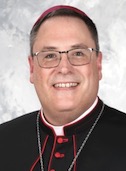
Job and the Problem of Suffering
Bishop Frank Schuster’s homily addresses the question of why there is suffering and pain if God is all-powerful and all-good. He uses the story of Job to illustrate that suffering is not always a result of our actions but can be a test of our faithfulness.
Bishop Schuster highlights that Jesus’ presence in the midst of suffering shows that God is in solidarity with us. He suggests that the purpose of suffering is to deepen our capacity to love and appreciate our relationships. He proposes that the meaning of life lies in our ability to love and that uniting our suffering with Jesus’ can provide answers and meaning in our lives.
Fr. Michael Cummins
5th Sunday of Year B
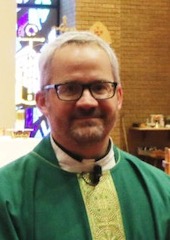
Suffering as a “Thin Place”
In this homily, Fr. Cummins shares a story about Mother Teresa and a reporter who witnesses her selfless act of caring for a dying man. The reporter expresses astonishment at what Mother Teresa is doing, to which she responds that she wouldn’t do it for a million dollars either. Fr. Cummins then introduces the concept of “thin places” in different cultures, which are supposed to be locations where the visible and invisible realities of the world come close together. He explains that these places help us recognize our true selves and motivations.
Fr. Cummins connects suffering to being a “thin place” as well. Suffering, whether physical, emotional, or spiritual, has a way of stripping away distractions and revealing our true selves. He references the story of Job as an exploration of the mystery of suffering. The gospel reading tells of Jesus healing Simon’s mother-in-law, demonstrating God’s compassion and care for those who suffer.
Fr. Cummins emphasizes the importance of recognizing God’s presence in our lives and understanding that God cares about our pain and suffering. He suggests that we need God’s help and intervention in our lives, and that Jesus serves as the embodiment of God’s care and love. Mother Teresa’s work, as Fr. Cummins notes, was motivated by her belief in a caring and loving God._
