
Fr. Tony’s 8-minute Homily
This Week’s
Theme
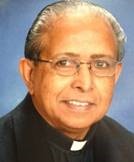
Fr. Tony
Palm Sunday Year B
Fr.Tony’s homilies reach nearly 3000 priests and Deacons by direct email every week.
The clipart is from the archive of Father Richard Lonsdale © 2000. It may be freely reproduced in any non-profit publication.

Homily starter anecdotes:
1) Two processions: “Two processions entered Jerusalem on a spring day in the year 30 … One was a peasant procession, the other an imperial procession. From the east, Jesus rode a donkey down the Mount of Olives, cheered by his followers. Jesus was from the peasant village of Nazareth, his message was about the kingdom of God, and his followers came from the peasant class …On the opposite side of the city, from the west, Pontius Pilate, the Roman governor of Idumea, Judea and Samaria, entered Jerusalem at the head of a column of imperial cavalry and soldiers. Jesus’s procession proclaimed the kingdom of God; Pilate’s proclaimed the power of empire. The two processions embody the central conflict of the week that led to Jesus’ crucifixion. As Mark tells the story in 11:1-11, Jesus’ procession is a prearranged ‘counter-procession.’ The meaning of the demonstration is clear, for it uses symbolism from the prophet Zechariah in the Jewish Bible. According to Zechariah, a king would be coming to Jerusalem (Zion), ‘humble, and riding on a colt, the foal of a donkey’ (9:9). Jesus’s procession deliberately countered what was happening on the other side of the city. Pilate’s procession embodied the power, glory, and violence of the empire that ruled the world. Jesus’ procession embodied an alternative vision, the Kingdom of God. The king, riding on a donkey, will banish war from the land—no more chariots, warhorses, or bows. Commanding peace to the nations, Jesus will be a king of peace. Pilate’s military procession was a demonstration of both Roman imperial power and Roman imperial theology — worshipping the emperor as a god. It was the standard practice of the Roman governors of Judea to be in Jerusalem for the Jewish festivals … to be in the city in case there was trouble … The mission of the troops with Pilate was to reinforce the Roman garrison permanently stationed in the Fortress Antonia, overlooking the Jewish Temple and its courts. No wonder, the Roman governor assumed that the peasant procession was a threat to his government and, hence, its leader should be exterminated.” (Marcus Borg and John Dominic Crossan, The Last Week: A Day-by-Day Account of Jesus’ Final Week in Jerusalem.
2) Welcome to the triumph and the tragedy of the Holy Week: On Palm Sunday, April 9, 1865, Confederate General Robert E. Lee surrendered to Ulysses S. Grant, General of the Union Army, at the Appomattox Court House, Appomattox, Virginia. This surrender ended the bloodiest war ever fought on American soil. State against state, brother against brother, it was a conflict that literally tore the nation apart. Five days later, on Good Friday, April 14, 1865, America’s most revered president, Abraham Lincoln, was shot and mortally wounded by John Wilkes Booth in Ford’s Theatre. It was Lincoln who wrote the 1863 Emancipation Proclamation that ended slavery in the U.S. forever. It was Lincoln who wrote and gave The Gettysburg Address. Lincoln hated war, but he was drawn into this one because he believed it was the only way to save the nation. On Palm Sunday, the war ended. Triumph. On Good Friday, Abraham Lincoln became the first U.S. president to be assassinated. Tragedy. — Welcome to Holy Week. Welcome to the triumph and the tragedy of the six days preceding Easter. (Surrender location corrected by Fr. Richard W. Frank, richardwfrank1@yahoo.com)
3) The cross and the crucifix down through the centuries: Until the fifth century AD, the early Christians generally avoided representing the Cross with the body of Jesus; in fact even bare crosses were rarely depicted until the fourth century AD. As J. H. Miller (op. cit.) explained, there were many reasons for the Church’s reluctance to openly represent the cross as its symbol. For many Jews and Gentiles, the cross underscored the seemingly irreconcilable contradiction of Christian belief, viz. that a crucified man could also be God. As various early heresies attacked either the divinity or humanity of Christ, the symbol of the cross, which seemed to exacerbate the conflict, was avoided, Not until the fourth century (during the reign of Constantine) did the cross begin to appear everywhere in public places as the pre-eminent symbol of Christianity. Despite the frequency of its representation in Christian art and architecture, the cross remains an ambivalent symbol. In its crossbeams meet death and life, sin and salvation, conquest and victory, immanence and transcendence. The cross represents both the basest aspects of the human condition and the most sublime reflection of divinity. As Karl Rahner once explained, “the cross of the Lord is the revelation of what sin really is. The cross of Christ mercilessly reveals what the world hides from itself: that it, as it were, devours the Son of God in the insane blindness of its sin — a sin in which Godless hate is truly set on fire upon contact with the love of God” (The Content of Faith, Crossroad Press, New York: 1992). 12:32). — As the dual revelation of the sinfulness of humanity and the love of God, the cross is unparalleled. (Sanchez Files).
3)”What did the Christian’s God do then? On Marco Polo’s celebrated trip to the Orient, he was taken before the great and fearsome ruler, Genghis Khan. Now what was Marco Polo supposed to do before this mighty pagan conqueror? One false move could cost him his life. He decided to tell the story of Jesus as it is recorded in the Gospels. It is said that when Marco Polo related the events of Holy Week, describing Jesus’ betrayal, His trial, scourging, and crucifixion, Genghis Khan became more and more agitated, more engrossed in the story, and more tense. When Marco Polo pronounced the words, “Then Jesus bowed his head and yielded up His spirit,” Genghis Khan could no longer contain himself. He interrupted, bellowing, “What did the Christian’s God do then? Did He send thousands of angels from Heaven to smite and destroy those who killed his Son?” — What did the Christian’s God do then? He watched His beloved Son die, that’s what the Christian’s God did then. For that was the way God chose for Jesus to ascend the throne of His Kingdom and to establish His Lordship for all time. Not at all the way we would expect God to demonstrate His might and power, but that’s the way it was, and that is how we know what our God is like. In practical terms, that means that this suffering King who rules in love comes to lay His claim on our life. Our entire life is subject to His Lordship, not just a portion of it. To have Christ for our King means that we must rely on Him for everything, most of all the forgiveness of sins.
4) “Either give up Christ or give up your jobs.” Constantine the Great was the first Christian Roman emperor. His father Constantius I who succeeded Diocletian as emperor in 305 AD, was a pagan with a soft heart for Christians. It is said that when he ascended the throne, he discovered that many Christians held important jobs in the government and in the court. So he issued an executive order to all those Christians: “Either give up Christ or give up your jobs.” The great majority of Christians gave up their jobs rather than disown Christ. Only a few cowards gave up their religion rather than lose their jobs. The emperor was pleased with the majority who showed the courage of their convictions and gave their jobs back to them while he dismissed those who were willing to give up their allegiance to Christ to keep their jobs, saying to them, “If you will not be true to your God you will not be true to me either.” — Today we join the Palm Sunday crowd in spirit to declare our loyalty to Christ and our fidelity to His teachings by actively participating in the Palm Sunday liturgy. As we carry the palm to our homes, we are declaring our choice to accept Jesus as the King and ruler of our lives and our families. Let us express our gratitude to Jesus for redeeming us by His suffering and death. We do so best by our active participation in the Holy Week liturgy and our reconciliation with God and His Church, as we repent of our sins and receive God’s pardon and forgiveness from Jesus through his Church.
5) Passion Sunday and the shadow of the cross: The Bishop of Notre Dame Cathedral in Paris during the early part of the last century was a great evangelizer who tried to reach out to unbelievers, scoffers, and cynics. He liked to tell the story of a young man who would stand outside the cathedral and shout derogatory slogans at the people entering to worship. He would call them fools and other insulting names. The people tried to ignore him but it was difficult. One day the parish priest went outside to confront the young man, much to the distress of the parishioners. The young man ranted and raved against everything the priest told him. Finally, the priest addressed the young scoffer, saying, “Look, let’s get this over with once and for all. I’m going to dare you to do something and I bet you can’t do it.” And of course the young man shot back, “I can do anything you propose, you white-robed wimp!” “Fine,” said the priest. “All I ask you to do is to come into the sanctuary with me. I want you to stare at the figure of Christ on His cross, and I want you to scream at the very top of your lungs, as loudly as you can. ‘Christ died on the cross for me, and I don’t care one bit.” So the young man went into the sanctuary, and looking at the figure, screamed as loudly as he could, “Christ died on the cross for me, and I don’t care one bit.” The priest said, “Very good. Now do it again.” And again the young man screamed, with a little more hesitancy, “Christ died on the cross for me, and I don’t care one bit.” “You’re almost done now,” said the priest. “One more time.” The young man raised his fist, kept looking at the crucifix, but the words wouldn’t come. He just could not look at the face of Christ and say those words any more. The real punch line came when, after he told the story, the bishop said, “I was that young man. That young man, that defiant young man was I. I thought I didn’t need God but found out that I did.” (World Stories for Preachers and Teachers by William J. Bausch).
6) In the footsteps of Jesus, the donkey rider: There is a biography of a man who was one of the most learned people of his generation. He had two PhDs – one in philosophy, another in theology. Further, he was a world-class musician, and concert halls around the world were sold out when he went on tour. Then, to the surprise of everyone, he decided he wanted to go to a medical college to earn yet another doctoral degree in medicine. As soon as he had his medical degree, he left the comfortable surroundings of Western Europe and went into the jungles of Africa. There he cleared away part of the jungle and began building a clinic and a hospital. Once these were built, he started providing medical care to the young and old of Africa. Many years later, Dr. Albert Schweitzer won the Nobel Peace Prize for his ministry of healing in the jungles of Africa. When he accepted the Nobel Peace Prize, he shared with that distinguished crowd in Stockholm the reason he had built a hospital in Africa. The reason was summed up, he stated in the first words he always said to his native patients as they awakened from an operation. He would say: “The reason that you have no more pain is because the Lord Jesus told the good doctor and his wife to come to the banks of Ogooue River and help you. If you owe thanks to anyone, you owe it to the Lord Jesus.” He accepted the challenge to be a humble servant of Jesus Christ. –And this is our challenge – this is your challenge – this is my challenge in this Holy Week! When we look beyond our own needs to the needs of others, we will be walking the road to becoming a humble servant of Jesus Christ.
7) “Welcome home Mr. President.” A number of years ago, Newsweek magazine carried the story of the memorial service held for Hubert Humphrey, former Vice-President of the United States. Hundreds of people came from all over the world to say good-bye to their old friend and colleague. But one person who came was shunned and ignored by virtually everyone there. Nobody would look at him much less speak to him. That person was former President Richard Nixon. Not long before, he had gone through the shame and infamy of Watergate. He was back in Washington for the first time since his resignation from the presidency. Then a very special thing happened, perhaps the only thing that could have made a difference and broken the ice. President Jimmy Carter, who was in the White House at that time, came into the room. Before he was seated, he saw Nixon over against the wall, all by himself. He went over to [him] as though he were greeting a family member, stuck out his hand to the former president, and smiled broadly. To the surprise of everyone there, the two of them embraced each other, and Carter said, “Welcome home, Mr. President! Welcome home!” Commenting on that, Newsweek magazine asserted, “If there was a turning point in Nixon’s long ordeal in the wilderness, it was that moment and that gesture of love and compassion.” — The turning point for us is Palm Sunday. It is our moment of triumph. It was a triumph because God, Jesus, decided to ignore our miserable state and act on our behalf.
8) Hosanna leading to the cross: Some years ago, a book was written by a noted American historian entitled When the Cheering Stopped. It was the story of President Woodrow Wilson and the events leading up to and following World War I. When that war was over, Wilson, the 28th president of the United States was an international hero. There was a great spirit of optimism abroad, and people actually believed that the last war had been fought, and the world had been made safe for democracy. On his first visit to Paris after the war, Wilson was greeted by cheering mobs. He was actually more popular than France’s own heroes. The same thing was true in England and Italy. The cheering lasted about a year. Then it gradually began to stop. At home, Woodrow Wilson ran into opposition in the United States Senate, and his League of Nations was not ratified. Under the strain of it all, the President’s health began to break. In the next election his party was defeated. So it was that Woodrow Wilson, a man who barely a year or two earlier had been heralded as the new world Messiah, came to the end of his days a broken and defeated man. — It’s a sad story, but one that is not altogether unfamiliar. The ultimate reward for someone who tries to translate ideals into reality is apt to be frustration and defeat. It happened that way to Jesus. When He emerged on the public scene, He was an overnight sensation. On Palm Sunday, leafy palm branches were spread before Him and there were shouts of “Hosanna.” But before it was all over, a tidal wave of manipulated opposition had welled up that brought Jesus to the cross.
9) Christ-less donkey arrested and handcuffed on a Palm Sunday: The light turns green, but the man doesn’t notice that the light has changed. The woman behind him begins pounding on her steering wheel and yelling at the man to move! The man doesn’t move! The woman is going ballistic, ranting and raving at the man, pounding on her steering wheel. When the light turns yellow, the woman begins blowing her car’s horn and screaming curses at the man. Finally, the man looks up, sees the yellow light, and accelerates through the intersection just as the light turns red. While she is still ranting, she hears a tap on her window and looks up into the barrel of a gun held by a very serious looking policeman. The policeman tells her to pull her car to the side, shut off the engine, come out and stand facing the car, while keeping both hands on the car roof. She is quickly cuffed, and hustled into the patrol car. The woman is too bewildered to ask any questions, and she is driven to the police station, where she is fingerprinted, photographed, searched, booked, and locked up in a cell. After a couple of hours, a policeman approaches the cell, and opens the door. The policeman hands her the bag containing her things, and says, “I’m sorry for this mistake, but you see, I pulled up behind your car while you were blowing your horn, and cursing at the car in front of you. I noticed the “Choose Christ” license plate holder, and the “Follow Me To Sunday School” bumper sticker, and Palm Sunday palm leaves inside the back windshield. So naturally I assumed you had stolen the car because such a nice Christian, who courageously displays Christian symbols in her car, would never act as you did.”
10) A donkey at Kentucky Derby? Church tradition tells us (though none of the Gospels report it), that this wasn’t Jesus’ first donkey ride. Matthew’s text doesn’t detail how Joseph traveled with Mary to Egypt and back to Nazareth again. Nor does Luke’s Gospel describe how Mary and Joseph journeyed to Bethlehem. But all of us have in our heads the picture of a pregnant Mary perched on the back of a sturdy donkey. Our mind’s eye puts her back on that beast for the escape to Egypt and the homeward trek to Nazareth after Herod had died. Church tradition has long suggested that in honor of the donkey’s humble service to Jesus, the animal was rewarded with a permanent “sign of the cross,” for most donkeys do show a distinctive black cross pattern across their sturdy shoulders. — Despite this lip service from Church tradition, the donkey still remains far beyond the pale of glory. Little girls don’t dream of riding across summer fields on a little donkey. The Kentucky Derby doesn’t blow the herald horn for a herd of dinky donkeys to race around the track. And everyone from Shakespeare to Pinocchio knows that fools and dolts are depicted as donkeys. Of course, the donkey’s other common name says it all: a donkey is just an . . . well, you know what that word is. Yet if the mission of the Church is to carry Christ into the world, then each of us is called to be a donkey. There’s no particular glory in being a donkey. There are only long trails, steep roads, heavy loads, and little or no recognition for a completed job.
11) An angry Christ: A Catholic priest in Dayton, Ohio defied his archbishop by denying Communion to worshipers who did not observe a dress code. For several years he had denied the Sacraments to anyone who came to Church in “shorts, bare midriffs, tank tops, jeans, and sweatshirts.” Finally, the Archbishop retired the 73-year-old priest for defying his authority. The priest said: “I do not hate the Archbishop. I have only pity for him, since he will have to face an angry Christ in judgment.” (Christian Century, January 24, 1990, page 73). — Whatever we may think of the good priest’s sartorial preferences, we must be shocked awake by his words: “an angry Christ.” Yes, according to the Gospel record, Christ did get angry. And He got angry over something a whole lot more important than a dress code. In fact, it might be argued that the attitude expressed by the good father in Dayton was precisely the sort of attitude that made Jesus really angry-putting roadblocks in front of people who wished to come to Him. The first place where it says He got angry was when He was forbidden to heal on the Sabbath. (Mark 3:5) In another place, anger is not mentioned, but implied. That was when He came to the Temple on the Monday of Passion Week. There, His passion burst forth against the moneychangers in the Temple.
12) A parade of humility: A pastor was once asked to speak at a banquet for a charitable organization. After the meeting, the program chairman handed the pastor a check. “Oh, I don’t want this,” the pastor said. “I appreciate the honor of being asked to speak. Keep the check and apply it to something special.” The program chairman asked, “Well, do you mind if we put it in our special fund?” “Of course not!” the pastor replied. “Could you please tell me what your special fund is for?” The chairman answered, “It’s so we can get a better speaker for next year.” — Life is full of humbling experiences. But, when we look at Jesus’ parade through the Holy City, we sense that it was an act of humility. He did not choose to ride into the city upon a stallion, but a donkey. He was not coming in the might and power of a conquering king, but as a humble servant.
13) “The Hero’s Quest.” Some of you will remember the name of Joseph Campbell. Campbell taught in relative obscurity for many years until Bill Moyers discovered him, did a series on public television about Campbell’s ideas about mythology and comparative religions, and thus elevated him into celebrity, most of it posthumous since Campbell died shortly after that television series. What caught Moyers’ attention was Campbell’s book entitled, The Hero with a Thousand Faces. Incidentally, it also caught George Lucas’s attention and was the inspiration for his film, Star Wars. The thesis of that book is that the same story appears over and over again in all the world’s literature, including the Bible. He called that story, “The Hero’s Quest.” He said that the plot is always the same. A hero must make a solitary journey, sometimes to climb a mountain to get the prize, sometimes to go to the cave to slay the dragon, sometimes to journey the gates of the forbidden city. The hero is the person who faces hostile powers, enters the struggle, prepared to give his or her life, and then comes out of it a new person, with a new life. — Those stories are everywhere. They are a part of every culture. In Greece, we see it as the Golden Fleece. In Britain, it is the Arthurian legends and the Holy Grail. And in the Bible, it is the story of Abraham leaving Ur of Chaldees, the most civilized part of the world in those days, and journeying through many “dangers, toils, and snares” to a promised land. Or it is Moses, leaving the comfort and security of shepherding in Midian to go to Egypt and confront Pharaoh. Or it is David, leaving the simple life of a shepherd boy and going out to meet the giant Goliath. But unparalleled in history is Jesus’ leaving the safety of Galilee and heading for Jerusalem to accomplish His mission of redeeming mankind by His suffering, death and Resurrection. That is the story of Palm Sunday.
14) “Sir, I just know I love Jesus.” In a Sociology of Religion class at the University of Virginia, the professor asked the students in the first class to tell about their religious background and commitments. One young woman named Barb said she was a Christian. The professor asked, “What tradition of the Christian faith do you identify with? The northern European or English pietism or another?” The student did not understand his question. Finally, she said, “Sir, I don’t know exactly what you mean; I just know I love Jesus.” — Right there in a classroom, Jesus was declared to be King and perhaps attracted more followers. One of my favorite golfers on the pro tour is Tom Lehman. He often says, “I think of myself as a Christian who plays golf, not as a golfer who is a Christian.” What about you? Are you first a Christian and then secondarily a banker or a teacher or a salesperson or a Republican or a white person or a husband or a mother? Is the word “Christian” your most important adjective? When you declare, “Jesus is Lord!” have you revealed the essential you? This Jesus is still marching down the streets of the world, calling people to decision. Jesus is the unidentified King who has no crown to wear or kingdom to command…until one person at a time declares by Faith, “Jesus is Lord for me. He will reign in my life.”
15) The myth of redemptive violence: “In a period when attendance at Christian Sunday schools is dwindling, the myth of redemptive violence has won children’s voluntary acquiescence to a regimen of religious indoctrination more extensive and effective than any in the history of religions. Estimates vary widely, but the average child is reported to log roughly 36,000 hours of television by age 18, viewing some 15,000 murders. What church or synagogue can even remotely keep pace with the myth of redemptive violence in hours spent teaching children or the quality of presentation? (Think of the typical “children’s sermon” – how bland by comparison!)” With that kind of insight as a background, perhaps we should EXPECT what happened to Jesus in the Holy Week. (“The Myth of Redemptive Violence”http://www.biblesociety.org.uk/exploratory/articles/wink99.doc ).
16) After the shouts of Hosanna we should walk to Golgotha: Bishop Kenneth Carder (Tennessee) wrote: “The Church of today has become an institution in which even belief in God is optional or peripheral. Marketing techniques for a multiple option institution have replaced response to the Gospel of Jesus Christ as the means of membership enlistment. The basic appeal is to self-defined needs rather than a call to radical discipleship. The Church’s mission, all too often, is to meet its members’ perceived needs rather than to serve God’s need for a redeemed, reconciled, and healed world.” — Our concept of consumerism has crept into the Church. To recruit persons and to be marketable we think that we need to be able to say: “Look what our Church can offer you.” In this atmosphere of a sorority rush party, talk of discipleship is muted. Discipleship means knowing Who Jesus Christ is and following the Revelation made known to us in His teaching, death, Resurrection, and presence. Commitment means that, after the shouts of Hosanna, we walk to Golgotha carrying His cross of suffering.
17) And Superman ducked! Jesus rides upon a donkey fulfilling an ancient prophecy, but clearly in total control. He knows what will happen to Him in Jerusalem. Still, He rides on. He does not seek to avoid the task to which He has been called. It reminds me of a routine comedian David Brenner used to do about Superman in the movies. Go back with me in your minds. Picture this scene. Superman is confronting one of the bad guys. The bad guy would fire at Superman with a gun. Superman would smirk and throw his chest out. The bullets would bounce harmlessly away. But did you ever notice what happened next? Brenner said, “And then when the guy ran out of bullets, he would throw the gun at Superman. And Superman ducked.” He ducked! — I’ll bet you never thought about that before. Bullets bounced off of him, but when a gun was thrown at him, Superman ducked. — Perhaps that amusing insight will serve to remind us that Jesus did not have to enter Jerusalem on Palm Sunday. He could have ducked His mission. But still He rode on.
18) King for a day: Once upon a time, before television, there was radio. One of the most popular daytime radio programs in those days was called Queen for a Day. Each day four or five women from the studio audience would tell the host what they would like to do if they could be “Queen for a Day.” Then, on the basis of applause, one woman was chosen, and insofar as they were able, the sponsors fulfilled her wildest desires. She was given a number of valuable prizes and for one day she reigned as “Queen.” — That sounds like what happened to Jesus, doesn’t it? Jesus was crowned “King for a Day” on that first Palm Sunday.
19) The humble king versus proud kings: The dictator Sulla during the time of the Roman republic invented the “proscription”, by which he would just announce whom he wanted dead. This would be read out in public places and he then would reward anyone who would kill that particular person. Caligula abandoned himself to cruelty and lust. He declared himself to be a god and would often go through the streets of Rome dressed as Bacchus, Venus, or Apollo. The Romans were compelled to worship him, and he made the wealthiest citizens his priests. Having exhausted Rome and Italy, in AD. 39 Caligula led a large army across the Alps for the purpose of plundering Gaul, where the richest citizens were put to death and their property confiscated. — The crowd that cheered Jesus was familiar with such cruelties of the Kings and Emperors. Contrary to their experience, they found a new procession where the king was adorned with humility. (Fr. Bobby Jose).
20) “Help! Help!” There is an old story about a preacher who was having problems and decided to leave the ministry. But he ran into trouble finding another job. Finally, in desperation, he took a job at the local zoo. The gorilla had died, and since it had been the children’s favorite animal, the zoo officials decided to put someone in a gorilla costume until a real replacement could be found. To the minister’s surprise, he liked the job. He enjoyed ministering to children as the donkey on Palm Sunday carried Jesus. He got lots of attention and could eat all he wanted. There was no stress: there were no deadlines, complaints or committees. And he could take a nap anytime he wanted. One day he was feeling particularly frisky. So he began swinging on the trapeze. Higher and higher he went. But suddenly he lost his grip, flipped a couple of times, and landed in the next cage. Stunned and dazed, he looked up and saw a ferocious lion. In his panic he forgot he was supposed to be a gorilla and yelled, “Help! Help!” That ferocious lion turned in his direction and said, “0h, shut up, man, I’m a minister too.” — Unlike these gorilla and lion ministers, all of us are supposed to be donkey ministers by becoming donkey-givers like the man Jesus met long ago, who loaned his donkey to Jesus to ride as He entered Jerusalem for the last time. We become donkey-givers when we give something that promotes Jesus and His Kingdom. Five hundred years from now as we delight in the glory of God’s Kingdom, we will not even remember how much money we earned on earth or how big our houses were or whether we had much status or popularity. But we will celebrate forever every single donkey we gave to the Master in the form of little things we have done for others in Jesus’ name for God’s glory.
21) Speaking Donkey: Ever wonder why the donkey is the only animal in the Bible that speaks? Karl Barth at his 80th birthday party offered this testimony: “In the Bible there’s talk of a donkey, or to be quite correct, an ass. It was allowed to carry Jesus to Jerusalem. If I have achieved anything in this life, then I did so as a relative of the ass who at that time was going his way carrying an important burden. The disciples had said to its owner: ‘The Master has need of it.’ And so, it seems to have pleased God to have used me at this time. Apparently, I was permitted to be the ass which was allowed to carry as best I could a better theology, a little piece” [as quoted by John Robert McFarland’s Preacher’s Workshop in “The Illustration is the Point,” The Christian Ministry, (January-February, 1988), 21.]
22) “The Traveler”:Richard Matheson wrote a science-fiction story called “The Traveler.” It’s about a scientist called Paul Jairus, who is part of a research time that has developed an energy screen to permit people to travel back into time. The first trip is scheduled to take place a few days before Christmas and Jairus has been picked to make the trip. He decided to go back in time to the crucifixion of Jesus on Calvary. Jairus is a non-believer and anticipates finding the crucifixion different from the way the Bible describes it. When the historic moment comes, Jairus steps into the energy screen and soon finds himself soaring back into time -100 years, 1000 years, 2000 years. The energy screen touches down on target and Calvary is swarming with people, everybody’s attention is focused on three men nailed to crosses about 100 feet away. Immediately Jairus asks the Command Centre for permission to move closer to the crosses, they grant it, but tell him to stay inside the energy screen. Jairus moves closer and as he does, his eyes come to rest on Jesus. Suddenly something remarkable begins to happen, Jairus feels drawn to Jesus, as a tiny piece of metal is drawn to a magnet. He is deeply moved by the love radiating from Jesus, it’s something he’d never experienced before. Then contrary to all his expectations, events on Calvary begin to unfold exactly as the Gospel described them. Jairus is visibly shaken. — The Command Centre realizes this and fears he’s becoming emotionally involved. They tell him to prepare for immediate return to the 20th century. Jairus protests, but to no avail. The trip back goes smoothly. When Jairus steps from the energy screen, it’s clear he’s a changed man. (Mark Link )
23) Victory of St. Polycarp: In Christian art, the martyrs are almost always shown holding palm branches as symbols of victory over temptation and suffering. These martyrs are our older brothers and sisters in the Faith — God wants us to learn from and be encouraged by them. Take the example of St Polycarp, Bishop of Smyrna. • In the year 155, Polycarp was condemned to death for refusing to give idolatrous worship to the Roman Emperor. As he was a well-known Christian leader, even though he was already in his 80s, his execution was made into a large public spectacle. • He was burned to death in the city stadium. • Normally, criminals executed that way were actually fastened to the pile of wood, so that they wouldn’t climb out of the fire. • But not Polycarp. • He told his guards: “He who gives me strength to endure the fire will also grant me to stay on the pyre unflinching even without your making sure of it with nails.” • According to eye witnesses, his last words were a prayer of blessing and thanksgiving to God for giving him the honor of sharing Christ’s cup of suffering. • Those same eye witnesses tell us that when the fire was lit, • a great flame blazed up, • but instead of burning Polycarp right away, • it surrounded him like a fiery force field; • his face was serene and his body glowed like gold being refined in a furnace. • As he peacefully breathed his last, the onlookers perceived a fragrant smell, as if incense were being offered. — This is the paradox of Palm Sunday, which God wants us all to experience: that Christ’s limitless love • can strengthen us to resist even the greatest temptations, • and fill us with interior peace and joy even amidst the flames of suffering that torment us here on earth.(E- Priest)
24) Helplessness of a terminal cancer patient: The renowned spiritual writer Henri Nouwen, shares how he once went to a hospital to visit a man dying of cancer. The man was still relatively young and had been a very hardworking and generative person. He was the father of a family and provided well for them. He was the chief executive officer in a large company and took good care of both the company and his employees. Moreover, he was involved in many other organizations, including his Church, and, because of his leadership abilities, was often the one in charge. But now, this once-so-active man, this person who was so used to being in control of things, was lying on a hospital bed, dying, unable to take care of even his most basic needs. As Nouwen approached the bed, the man took his hand. It’s significant to note the particular frustration he expressed: “Father, you have to help me! I’m dying, and I am trying to make peace with that, but there is something else too: You know me, I have always been in charge—I took care of my family. I took care of the company. I took care of the Church. I took care of things! Now I am lying here, on this bed and I can’t even take care of myself. I can’t even go to the bathroom! Dying is one thing, but this is another! I’m helpless! I can’t do anything anymore!” Despite his exceptional pastoral skills, Nouwen, like any of us in a similar situation, was left rather helpless in the face of this man’s plea. The man was undergoing an agonizing passivity. He was now a patient. He had once been active, the one in charge; and now, like Jesus in the hours leading up to his death, he was reduced being a patient, one who is ministered to by others. Nouwen, for his part, tried to help the man see the connection between what he was undergoing and what Jesus endured in his passion, especially how this time of helplessness, diminishment, and passivity is meant to be a time where we can give something deeper to those around us. (Quoted by Fr. Ron Rolheiser). — Among other things, Nouwen read the Passion narratives of the Gospels aloud to him because what this man was enduring parallels very clearly what Jesus endured in the hours leading up to his death, a time we Christians entitle, “the Passion of Jesus.” What exactly was the Passion of Jesus?
25) Obediently accepting death on a cross: Andy lived in Jersey City. His father worked for the great meat-packing firm of Swift and Company. Andy’s dad used every opportunity to educate his son along practical lines. One day when the boy was about ten, he took him on a tour of the Swift packinghouses in Newark to show him how they killed animals for the meat-markets. Swift called these places their “abattoirs.” The French word abattoir sounds a little less gross, but it means the same as the English “slaughter-house.” What the butchers did there was a necessary but bloody business, not always easy for a visitor to stomach. Andy noticed in particular the way in which the different types of animals reacted to impending death. The beef cattle and calves struggled and bellowed with fear. Pigs squealed and squirmed and tried to escape. But the sheep were different. They simply stood there meek and silent, offering no resistance to their slayers. When Andy grew up, he became a priest. He never forgot the way he had seen sheep behave in the face of death, and he often pointed out in his Holy Week sermons how appropriately the Christ who died for us is called “the Lamb.” The Jews of Bible times knew very well how sheep acted under these circumstances. Sheep and goats were their main livestock. Isaiah spoke out of experience when he foretold in vision how the Messiah would die: “Like a lamb led to the slaughter or a sheep before the shearers, he was silent and opened not his mouth.” (Is 53:7) — Today as we enter upon Passion Week, let us bear in mind this symbol of Christ as a lamb, and during the narrative of His passion and death see how well it was fulfilled. (Father Robert F. McNamara). L/21
26) Added in 2021: Conversion experience of actress who played Veronica: Now in the movie, “The Passion of the Christ” by Mel Gibson the actress who imitated the actions of St. Veronica had a conversion experience, right there in the midst of filming the scene. Sabrina Impacciatore is an Italian actress and although she had grown up Catholic, she had long ago stopped practicing her faith. At the time when they began filming, she was at a spiritual low point in her life. She later explained that she really wanted to believe in Jesus, but she just couldn’t do it. Her scene in the movie is quite memorable. Jesus is carrying his cross to Calvary and he falls again for the third or fourth time. The crowds surge in around him, abusing him as he lies on the ground. Without much success the soldiers try to control the crowds. And gliding through the middle of all this confusion is Veronica. She looks at Jesus with love and devotion. She kneels down beside him and says, “Lord, permit me.” She takes a white cloth and wipes his face which is covered with blood, dirt, and sweat. She then offers him a drink. It’s a brief moment of intimacy in the middle of violent suffering. Sabrina said it was a very hard scene to film. The churning crowd kept bumping into her and disrupting the moment of intimacy. And so they had to film it over and over again. Twenty times they had to film it before getting it right.
And that was providential. Because after twenty times of kneeling before the suffering Christ, looking into his eyes, and calling him Lord, the actress felt something start to melt inside her. She wasn’t seeing the actor pretending to be our Lord; she was seeing our Lord himself. Later, she explained that while she looked into his eyes, she found that she was able to believe. “For a moment,” she said, “I believed!” That experience lit the flame of hope in her darkened heart. Sabrina finally understood the words Jesus spoke from the Cross when he said, “Father, forgive them, they know not what they do.” The brutality of the scene made a big impression on her. She found herself thinking, “Jesus is someone I can trust, he went through this for me.” Even when we reject him, scourge him, crown him with thorns, betray him, and finally crucify him, our Lord still continues to love us. The Passion is God saying to us, I will keep loving you.
The name Veronica comes from the two words vera and icon and these two words mean true image. This true image refers to the image of Jesus’ face that was left on the cloth that was used to wipe his face. This relic is kept at the Vatican and scientists can’t explain it. Vera icon, the true image, eventually became Veronica, the name given to the anonymous woman who loved Jesus. As Christians all of us are supposed to be a Veronica, a true icon, a true image of Jesus. Because it’s only in him, only when we live in his image, living as a true icon of our Lord, that we can truly be happy. When we pray the Stations of the Cross, right before station number six we sing of Veronica. We sing, “Brave but trembling came the woman,/ none but she would flout the Roman,/ moved by love beyond her fear.” So, as we enter into Holy Week, like Sabrina that actress, like St. Veronica herself, let us look into the eyes of our Lord, giving ourselves to Jesus in all things, praying for the grace to not be afraid to love, praying for the grace not to be afraid to bring Him all of our sins, our hurts, our doubts, our troubles, our hardness of hearts, our everything — trusting Him in everything. In doing this our Lord will transform us, making us into a true image of Himself. (Fr. Christopher J. Ankley) https://stjeromebc.org/pastors/palm-sunday-of-the-passion-of-the-lord/

The Church celebrates this sixth Sunday of Lent as both Palm Sunday and Passion Sunday. This is the time of year we stop to remember and relive the events which brought about our redemption and salvation. What we commemorate and relive during this week is not just Jesus’ dying and rising, but our own dying and rising in Jesus, which will result in our healing, reconciliation, and redemption. Attentive participation in the Holy Week liturgy will deepen our relationship with God, increase our Faith, and strengthen our lives as disciples of Jesus. Today’s liturgy combines contrasting moments, one of glory, the other of suffering: the royal welcome of Jesus in Jerusalem, and the drama of the trial, culminating in crucifixion, death and burial for the Christ.
SOURCE: Fr. Tony’s Homilies / Used with permission
1st Reading Explained
Today’s first reading, the third of Isaiah’s four Servant Songs, like the other three, foreshadows Jesus’ own life and mission. The Refrain for today’s Responsorial Psalm (Ps 22),” My God, My God, why have You abandoned Me?” plunges us into the heart of Christ’s Passion.
First Reading,Isaiah 50:4-7 explained: In the middle section of the book of the prophet Isaiah, chapters 40-55, there are four short passages which scholars have called the Songs of the Suffering Servant. Today’s first reading is the third Servant Song. These four songs are about a mysterious figure whose suffering brings about a benefit for the people. In the original author’s mind, the servant was probably a figure for the people of Israel, or for a faithful remnant within the people. The Songs portrayed the antithesis of Israel’s messianic expectations, because Israel expected a triumphant Messiah, while the prophet foresaw a “suffering servant” Messiah. Jesus saw aspects of his own life and mission foreshadowed in the Servant Songs, and the Church refers to them in this time of solemn meditation on the climax of Jesus’ life. These songs foretell Jesus’ conscious, active choice to remain faithful to his saving mission no matter what the cost: “I have not … turned back” and “I gave my back to those who beat me.” The kingship of Jesus was to mean suffering and humiliation, not just publicity and grandeur. In today’s Responsorial Psalm, (Ps 22), the Psalmist puts his trust in Yahweh for deliverance and salvation. The context of this day’s worship also conveys Jesus’ confidence in God’s protection in the midst of His trial and crucifixion. The passage encourages us to be companions of Jesus in suffering by offering our own sufferings in union with the redemptive sufferings of Christ, so that we may become collaborators in that suffering. The passage also challenges us to accept what we cannot change, so that we may endure the difficulty for as long as it is necessary, just as Christ did.
SOURCE: Fr. Tony's Homilies / Used with permission
2nd Reading Explained
The Second Reading, taken from Paul’s letter to the Philippians, is an ancient Christian hymn representing a very early Christian understanding of who Jesus is, and of how his mission saves us from sin and death. The first part of today’s Gospel describes the royal reception Jesus received from his admirers, who paraded with him for a distance of two miles: from the Mount of Olives to the city of Jerusalem.
Second Reading, Philippians 2:6-11 explained: This section of Paul’s Letter to the Philippians is an ancient Christian hymn representing a very early Christian understanding of Who Jesus IS and how his mission saves us from sin and death. It is a message that Paul received from those who had been converted to Christ. “Have this mind among yourselves, which was in Christ Jesus, who, though He sas in the form of God did not count equality with God a thing to be grasped, but emptied Himself, taking the form of a servant, being born in the likeness of men. And being found in human form, He humbled himself and became obedient unto death, even death on a cross” (Phil 3:5-8). Palm Sunday of the Lord’s Passion clarifies this contrast: kingship of splendor/fame versus kingship of service to others. God showed that the greatness of Kingship consists of love that is willing to pour itself out for others. Because Jesus accepted human condition even to death by crucifixion, “Therefore God has highly exalted Him and bestowed on Him the Name which is above every name, that at the Name of Jesus every knee should bow, in Heaven, on earth, and under the earth, and every tongue confess that Jesus Christ is Lord, to the glory of God the Father” (Phil 2:9-11). Christians reading this passage today are joining the first people who ever pondered the meaning of Jesus’ life and mission. We’re singing their song and reciting their creed during this special time of the year when we remember the most important things Our Lord did. God humbled himself for us! Jesus’ triumph was his self-giving on the cross to open for us the road to the Father. All we can do in response is to bow our heads in awe, and present our loving, contrite hearts to God, begging for mercy. God wants our heart to be humbled, contrite, and truly repentant because only is that condition is it open, and so able, to receive His Mercy and His Love.
SOURCE: Fr. Tony's Homilies / Used with permission
Gospel Explained
In the second part of today’s Gospel, we listen to/participate in a reading of the Passion of Christ according to Mark. We are challenged to examine our own lives in the light of some of the characters in the Passion story – like Peter who denied Jesus, Judas who betrayed Jesus, Herod who ridiculed Jesus, Pilate who acted against his conscience as he condemned Jesus to death on the cross, and the leaders of the people who preserved their position by getting rid of Jesus.
Gospel Exegesis:
Exegetical notes on part I of today’s Gospel: 1) Jesus rides on a lowly donkey: In those days, kings used to travel in such processions on horseback during wartime but preferred to ride a donkey in times of peace. Since the sign of a king was humility, the customary mount for a king in procession in Israel was a donkey. I Kgs 1:38-41 describes how Prince Solomon used his father David’s royal donkey for the ceremonial procession on the day of his coronation. Jesus entered the Holy City as a King of peace, fulfilling the prophecy of Zechariah. The Gospel specifically mentions that the colt Jesus selected for the procession was one that had not been ridden before, reminding us of a stipulation given in I Samuel 6:7-8 (“Now, then, take and prepare a new cart, and two milch cows upon which there has never come a yoke, and yoke the cows to the cart, but take their calves home, away from them. And take the ark of the Lord and place it on the cart …” concerning the animals that were to transport the Ark of the Covenant.
2) The mode of reception given: Jesus was given the royal reception usually reserved for a King or military commander. I Mc 13:51ff describes such a reception given to the Jewish military leader Simon Maccabaeus in 141 BC. A similar celebration had occurred December 14, 164 BC, when another military general, Judas Maccabaeus, after he and his men had defeated three Greek armies, purified the Temple (desecrated on 167 BC by order of Antiochus IV Epiphanes), built a new altar, and reconsecrated the Temple to the Lord God. On that day they first offered sacrifice on the new altar of holocausts, “with songs, harps, fluted, and uymbals. All the people prostrated themselves and adored and praised Heaven, Who had given then success” (1 Mc 4: 52-55).
3) The slogans used: The participants sang the “Hallel” Psalm (Psalm 118), and shouted the words of Psalms 25 and 26. The Greek word “hosiana” originally meant “save us now” (II Sm 14:4). The people sang the entire Psalm 118 on the Feast of the Tabernacles when they marched seven times around the Altar of the Burnt Offering. On Palm Sunday, however, the people used the prayer “Hosanna” as a slogan of greeting. It meant “God save the King of Israel,” or “Save us, O God!”
4) The symbolic meaning of the Palm Sunday procession: Nearly 25,000 lambs were sacrificed during the feast of the “Pass-Over,” but the lamb which was to be sacrificed by the High Priest was taken to the Temple in a procession four days before the main feast day. On Palm Sunday, Jesus, the true Paschal Lamb, was also taken to the Temple in a large procession.
5) Reaction of Jesus: Before the beginning of the procession, Jesus wept over Jerusalem (Lk 19:41-42), and when the procession was over, He cleansed the Temple (Lk 19:45-46). On the following day, He cursed a barren fig tree.
SOURCE: Fr. Tony's Homilies / Used with permission
Fr. Tony’s
Life
Messages
Palm Sunday Year B
There is a Jewish saying, “Heaven rejoices over a repentant sinner and sheds tears over a non-repentant, hardhearted one.” Are we ready to imitate the prodigal son and return to God, our loving Father, through the Sacrament of Reconciliation during this last week of Lent and participate fully in the joy of Christ’s Resurrection?
SOURCE: Fr. Tony’s Homilies / Used with permission
We know that the world owes everything to people who have spent their time and talents for God and for their fellow human beings. Mother Teresa, for instance, gave up her comfortable teaching career and, with just 5 rupees (17 cents) in her pocket, began her challenging life for the “poorest of the poor” in the crowded slums of Calcutta. Thus, she became, in the words of the Secretary General of the U.N., “the most powerful woman in the world.” We see similar cases in the history of great saints, scientists, and benefactors of mankind in all walks of life.
SOURCE: Fr. Tony’s Homilies / Used with permission
Am I ready to surrender my life to Him during this Holy Week and welcome Him into all areas of my life as my Lord and Savior, singing “Hosanna”? Today, we receive palm branches at the Divine Liturgy. Let us take them to our homes and put them in a place where we can always see them. Let the palms remind us that Christ is the King of our families, that Christ is the King of our hearts, and that Christ is the only true answer to our quest for happiness and meaning in our lives. And if we do proclaim Christ as our King, let us try to make time for Him in our daily life; let us be reminded that He is the One with Whom we will be spending eternity. Let us be reminded further that our careers, our education, our finances, our homes, all of the basic material needs in our lives are only temporary. Let us prioritize and place Christ the King as the primary concern in our lives. It is only when we have done this that we will find true peace and happiness in our confused and complex world.
SOURCE: Fr. Tony’s Homilies / Used with permission
Are we willing to follow Jesus, not just to Church but in our daily life? Are we willing to entrust ourselves to Him even when the future is frightening or confusing, believing God has a plan? Are we willing to serve Him until that day when His plan for us on earth is fulfilled? These are the questions of Palm Sunday. Let us take a fresh look at this familiar event. It could change us forever, because the Passion of Jesus shows us that, though we are sinners who have crucified Jesus, we are able, by His gift, to turn back to Jesus again and ask for his mercy in the Sacrament of Reconciliation. It is through the Passion of Jesus we receive forgiveness: “But He was wounded for our transgressions, He was bruised for our iniquities; upon Him was the chastisement that made us whole, and with His stripes we are healed.” (Is 53:5)
SOURCE: Fr. Tony’s Homilies / Used with permission
HOME | QUESTIONS | TOPICS | CONNECTIONS
 Highlight text or double-click a paragraph anywhere on the site to ADD TO NOTES. You can also click ASK AI to copy your selection to the clipboard with a command prompt, ready for you to paste manually into the chat above.