MAR 9, 2025

SOURCE: Hearers of the Word by Fr. Keiran O'Mahony


Homilies
Homilies
- Bishop Barron
- MORE
- 1-MINUTE HOMILY
- 2-Minute Homily
- MSGr. Peter Hahn
- Fr. Jude Langeh
- FR. RUTTIG
- FR. MCCARTHY, OSA
BISHOP
BARRON

1st Sunday of Lent C


1st Sunday of Lent C


ONE MINUTE
HOMILY

1st Sunday of Lent C


TWO MINUTE
HOMILY

1st Sunday of Lent C


MSGR. PETER
HAHN

1st Sunday of Lent C


FR. JUDE
LANGEH, CMF


FR. KEVIN
RUTTIG

1st Sunday of Lent C


FR. TOM
McCARTHY, OSA

1st Sunday of Lent C


Deacon Peter McCulloch

Deacon of the
Diocese of Broken Bay, Australia
Unlock Inspiration with Google Gemini AI Links
Enhance your homily preparation with our newest addition: Google Gemini AI Links are now integrated within THE WORD THIS WEEK’s homily excerpts. By harnessing the potential of the Google AI Gemini ecosystem, the pop-up links✨ will revolutionize your research experience, connecting you to valuable resources, insights, and inspiration from across the web.
1st Sunday of Lent C

On the Mystical Desert
Click below to show/hide questions.
This discussion guide has been generated by the WORD THIS WEEK'S Catholic AI Assistant based on Deacon McCulloch's homily.
Opening Reflection
- Begin with a moment of silence to center your thoughts and prepare for the discussion.
- Consider what the season of Lent means to you personally. How do you usually observe it?
Understanding the Concept of Lent and the Desert
- Reflect on the meaning of 'Lent,' both as a time of spring (Old English) and a period of slowing down ('Lente' in Latin). What feelings or thoughts does this duality evoke in you?
- Discuss the symbolism of the desert in the Bible. Why do you think the desert is repeatedly portrayed as a place for purification and transformation?

Biblical References and Personal Reflection
- Consider the journeys of the Israelites (Deut. 26:4-10) and Jesus (Lk. 4:1-13) in the desert. What was the purpose of their desert experience, and how did it prepare them for their respective missions?
- Have you ever experienced your own 'desert' moment—a time of emptiness or silence that led to personal growth or renewal?
The Role of Silence and Solitude
- Discuss Fr Ron Rolheiser's idea that emptiness is necessary before being filled by God. How can intentional silence and solitude bring about spiritual transformation?
- Meister Eckhart mentions that silence resembles the language of God. How comfortable are you with silence in your everyday life? What barriers do you face in seeking solitude?
Facing Inner Chaos
- In Lent, we are encouraged to confront inner chaos—selfishness, anger, jealousy, etc. How often do you face these issues in yourself, and how do you usually deal with them?
- How does our modern secular society promote distraction over self-reflection? Discuss the ways technology and media might impede your spiritual journey.
Practical Steps for Observing Lent
- What are some practical ways to 'stop for a while' and enter your mystical desert during Lent? How can you incorporate fasting, prayer, and charity into your routine?
- Reflect on the metaphor of sitting in the ashes before experiencing the joy of Easter. How can embracing humility and simplicity enrich your Lenten practice?
Group Reflection and Sharing
- Share any personal Lenten goals with the group. How can the group support each other in this sacred journey?
- Conclude with a prayer or meditation, focusing on the themes of renewal, transformation, and preparation for the joy of Easter.
Homily Excerpt
Sometimes it helps to know where a word comes from. The word ‘Lent’ comes from an Old English word meaning ‘springtime’.✨ And in Latin, ‘Lente’ means ‘slowly’. So Lent really is an invitation to us, to slow down and prepare ourselves for the new growth of spring.
Before any spring, of course, there must be some kind of winter, so the Bible often talks about the desert as a place of emptiness and silence where people go to be shaped and purified.
In Exodus, before the Israelites enter the Promised Land, they wander in the desert for forty years. Jesus does something very similar✨ in today’s Gospel. Before he begins his ministry, the Spirit leads him into the Sinai Desert for forty days to pray, fast and reflect. There he’s tormented by demons, but ultimately his relationship with his Father is strengthened and he finds himself ready for his great mission.

Forty Days, Forty Ways
Click below to show/hide questions.
This discussion guide has been generated by the WORD THIS WEEK'S Catholic AI Assistant based on Deacon McCulloch's homily.
Introduction to the Significance of ‘40’ in the Bible
- Discuss the frequency and significance of the number 40 in biblical texts. What does this number often represent?
- Examine examples of when the number 40 precedes new beginnings: Jesus in the desert (Lk.4:1-13), Noah’s flood (Gen.7:17), Israelites in the desert (Dt.8:2-5), Moses on Mt Sinai (Ex.34:28), and Jesus’ ascension (Acts 1:3).
- How do these stories highlight the preparation and cleansing that occurs before a significant change or new beginning?
Lent: A Time of Preparation
- Reflect on the relationship between Lent and the number 40. How do the 40 days of Lent prepare us for Easter?
- Consider the metaphor of spending 40 weeks in the womb. What parallels can you draw between this and the Lenten preparation?
Deepening Our Spiritual Lives
- Define the purpose of Lent in your life. How can Lent help you to enrich your experiences of meaning, purpose, and love?
- Discuss the importance of creating a spiritual ‘desert’ in our lives today for personal reflection and growth. What might this look like for each group member?
The Three Pillars: Fasting, Almsgiving, and Prayer
- Examine the traditional Lenten pillars found in Matthew 6:1-6,16-18. How do each of these practices assist in spiritual growth?
- Discuss modern challenges to observing these pillars faithfully. How might we reframe these practices to resonate more deeply today?
Practical Suggestions for Lenten Practices
- Explore different suggestions for Lenten practices, including daily prayer, fasting, and almsgiving. What ideas seem most feasible and impactful for you?
- Share opinions on practical activities such as '40 Items in 40 Days' or engaging with a saint's story daily.
- How can you incorporate modern ideas like reducing electronic media or wearing purple as a family into your Lenten journey?
Family and Community Activities for Lent
- Discuss the importance of family-oriented Lenten activities like meatless menus, shared prayers, and discussions about Biblical stories.
- How can family activities during Lent promote spiritual unity and understanding?
Looking Forward: A Deeper Relationship with Jesus
- Reflect on how the completion of this Lenten journey might open doors to new spiritual insights and relationships.
- Encourage group members to set personal intentions for deepening their relationship with Jesus over the 40 days of Lent.
Homily Excerpt

Traditionally, the focus of Lent has always been on the three ‘pillars’ of fasting, almsgiving and prayer (Mt.6:1-6,16-18). These are excellent ways for us to look beyond ourselves and to strengthen our relationship with Jesus Christ.
But these words may be too vague for some people today. Perhaps that’s why they’ve found past Lents unfruitful. Here, Marcellino D’Ambrosio’s book Forty Days, Forty Ways: A new Look at Lent, could be helpful.
In it, he offers us forty practical suggestions for things to do in Lent, including Lenten resolutions, fasting and prayer, learning, works of mercy and refocusing our priorities. Some people have found this book very helpful.
But if you Google ‘40 ideas for Lent’, you’ll find many other creative things to do, as well. One suggestion, called ‘40 Items in 40 Days’, challenges us to find one thing each day that we really don’t need, and to either give it away or throw it away. Clearing our cupboards helps us clear our minds, and by detaching ourselves from ‘things’, we can much better attach ourselves to God.

40 Days in the Desert
Click below to show/hide questions.
This discussion guide has been generated by the WORD THIS WEEK'S Catholic AI Assistant based on Deacon McCulloch's homily.
Introduction
As we enter the season of Lent, lasting 40 days, we reflect on past events and biblical narratives that utilize the significance of the number 40. These stories prompt us to prepare for new beginnings and spiritual renewal.
1. The Significance of the Number 40
- Biblical References: Explore where the number 40 appears in the Bible (Jesus’ fasting, Noah's flood, Israelites' journey, Moses on Mt. Sinai).
- New Beginnings: Discuss how each of these periods led to a transformative beginning.
- Reflection Question: How does the period of 40 days serve as a time for preparation in your own life?
2. Lent as an Invitation
- Inner Yearnings: Consider the universal desire for a life full of meaning and contrast this with distractions in secular society.
- Self-Examination: Lent invites honest self-reflection and working through personal challenges.
- Preparation for New Life: How can the weeks of Lent be used to prepare oneself for spiritual renewal?
3. The Desert Experience
- Symbolism of the Desert: Discuss the metaphor of the desert as a place of silence and clarity.
- Transformation in Silence: Reflect on how withdrawing from distractions for spiritual contemplation can lead to personal transformation.
- Reflection Question: How can you create a 'desert experience' in your daily life to connect with God?
4. Lent as a Season of Joyful Penance
- Pope Francis’ Perspective: Recognize Lent as a period for penance that's full of joy and not mourning.
- Conversion and Renewal: Discuss the ongoing need for conversion and renewal in one’s relationship with God.
- Trust in God’s Plan: How can trusting in God’s goodness lead to true happiness and fulfillment?
5. The Purpose of Lent
- Lenten Practices: Discuss how prayer, fasting, and almsgiving help prepare for the celebration of Easter.
- A Time for Reflection: What are some ways to engage deeply in Lenten practices?
- Personal Invitation: Identify personal steps you are inspired to take during Lent to foster spiritual growth.
Conclusion
Reflect on Lent as a gift and an opportunity to enter into a spiritual desert for transformation and preparation for the joy of Easter. Discuss how you will use this time to seek renewal and a deeper connection with God.
Homily Excerpt

The number 40 is mentioned over 150 times in the Bible, so one would think it must be significant. Some say that 40 is Biblical code for ‘a very long time,’ but if you look carefully, you’ll see that it’s often connected with an experience of hardship or trial and preparing for something new.
Certainly, Jesus fasted and prayed in the desert for 40 days and nights before starting his public ministry (Mt.4:2). And he ascended to heaven 40 days after his resurrection (Acts 1:3).
But going further back into history, Noah’s flood lasted for 40 days (Gen.7:17), the Israelites wandered in the desert for 40 years (Dt.8:2-5), and Moses waited for 40 days and nights on Mt Sinai for the Ten Commandments (Ex.34:28).
Fr. Austin Fleming
1st Sunday of Lent C
Lent is a time to look at ourselves honestly
and take a personal inventory
to see ourselves as God sees us, to stand in the light of God’s truth,
to see our own faults and weaknesses,
to see how we’ve failed God,
how we’ve failed our neighbor,
and how we’ve failed ourselves.
Lent’s a time to discover our need for mercy
and confess what needs pardoning,
that God might clothe us in his heartfelt mercy
and free us from our sins.
This discussion guide has been generated by the WORD THIS WEEK’S Catholic AI Assistant based on Father Austin’s homily. NEED HELP? Copy and paste a question into the chat bot in the lower right corner of the screen and have our Catholic Assistant help you.
1. Understanding Mercy
– Reflect on the synonyms provided for mercy: benevolence, blessing, charity, etc. How do these words deepen our understanding of mercy?
– Discuss how these qualities are evident in God’s actions and character. How does the Crucifix serve as a reminder of God’s mercy?
2. Receiving God’s Mercy
– Why is it challenging to acknowledge our need for mercy? What are the barriers?
– Discuss the importance of self-reflection during Lent to recognize personal weaknesses, faults, and sins.
– How can standing in the light of God’s truth assist in accepting and seeking God’s mercy?
3. Identifying the Need for Personal Transformation
– Why are we often quicker to judge others rather than ourselves?
– How can an honest personal inventory during Lent help us realize the areas in our lives that require change?
– Discuss personal experiences of recognizing and admitting mistakes, and how it led to personal growth.
4. Sharing Mercy with Others
– Discuss the dual meaning of “clothe yourself in heartfelt mercy”: receiving and giving mercy.
– Reflect on how well the synonyms for mercy fit you personally. Which qualities do you find challenging to embody?
– Who in your life might need the gift of your heartfelt mercy? Consider relationships within your family, workplace, school, and community.
5. Practical Steps to Clothe Ourselves in Mercy
– What “garments” do you currently wear that mask or burden your heart? How could you replace them with garments of mercy?
– Identify practical actions you can take to embody mercy in your interactions with others this Lent.
– Discuss strategies for maintaining a heart of mercy and kindness beyond the Lenten season.
6. Living on the Gift of God’s Mercy
– Reflect on the reminder that “we don’t live on bread alone, but on the gift of God’s mercy.”
– How does worshipping and serving God first help us to embody His mercy in our lives?
– Discuss how acknowledging our need for God’s mercy prevents us from presuming upon it.
Reflection and Commitment
– Spend a moment in silent reflection to consider how you can better clothe yourself in mercy.
– Are there any specific commitments you feel called to make for the Lent season based on today’s discussion?
– Share your commitment with the group if comfortable, and consider praying together for the strength to live it out.
Dominican Blackfriars

1st Sunday of Lent C
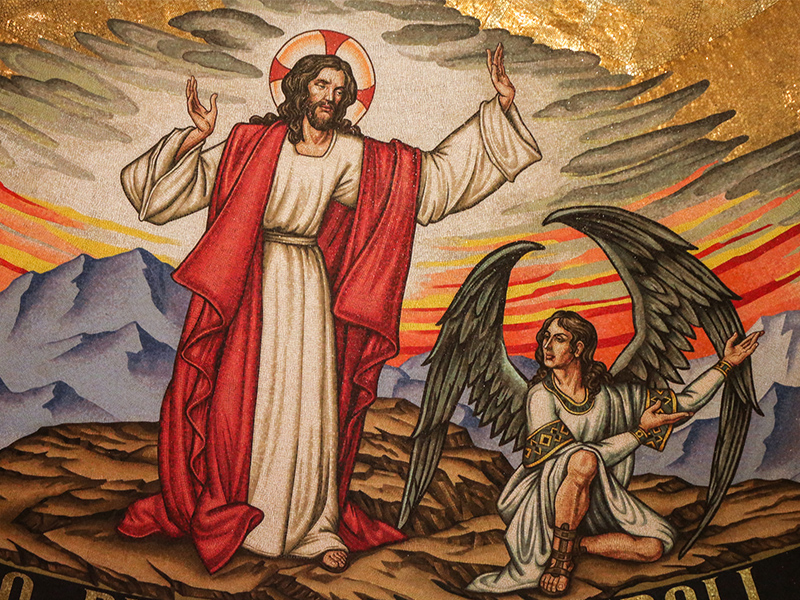
Photograph by Fr Lawrence Lew OP of a mosaic in the dome of the Basilica of the National Shrine of the Immaculate Conception in Washington DC.
Click below to show/hide questions.
This discussion guide has been generated by the WORD THIS WEEK'S Catholic AI Assistant based on the Dominican Blackfriars' homily for this week. NEED HELP? Copy and paste a question into the chat bot in the lower right corner of the screen and have our Catholic Assistant help you.
1. Introduction to the Desert as a Spiritual Metaphor
Discussion Points:
- Discuss the significance of the desert for Jewish people during Biblical times. Why was it considered both a place of challenge and growth?
- Reflect on how the desert experience serves as a metaphor for spiritual trials and growth.
- In what ways is the desert experience relevant to the observance of Lent today?
2. The Trials in the Desert
Discussion Points:
- Contrast the experiences of the Israelites under Moses with Jesus’s time in the desert. What were the main outcomes for each?
- Identify and discuss the three temptations faced by Jesus. How did He respond to each, and what do these responses teach us?
- Discuss the significance of quoting from the Book of Deuteronomy. How did these scriptures fortify Jesus during his trials?
3. The Role of Satan in the Temptation of Jesus
Discussion Points:
- Discuss the purpose of Satan’s temptations. What was Satan trying to achieve, and why was it significant?
- Reflect on how Jesus’s divine nature influenced this trial, and what, if any, costs might have been involved for Jesus during or after these temptations.
- How do Jesus’s temptations and responses inform us about the nature of power and obedience?
4. Lessons from the Trials
Discussion Points:
- How did Jesus’s successful navigation of the temptations shape his public ministry and his ultimate sacrifice on the cross?
- What parallels can be drawn between the temptations Jesus faced and the challenges we experience in our daily lives?
- How can we use Jesus’s responses to guide us in spiritual growth and combat against personal, worldly, and spiritual trials?
5. Applying the Desert Experience During Lent
Discussion Points:
- Discuss the personal significance of entering a “desert experience” during Lent. How can this be done without physically going to a desert?
- What roles do fasting, prayer, and almsgiving play in this spiritual journey? How do they help cultivate intimacy with God?
- In what practical ways can we “put on the mind of Jesus” to enhance our spiritual discipline and growth during Lent?
- Reflect on how this Lenten journey can lead to a deeper understanding of Jesus’s compassion and an increased capacity to love and serve others.
6. Conclusion and Reflection
Discussion Points:
- What insights from Jesus’s time in the desert can be integrated into your daily life beyond the Lenten season?
- How can this experience guide you in responding to modern challenges with a mindset rooted in trust and obedience to God?
Closing Reflection:
Reflect on how Jesus’s desert experience offers a model for entering your “desert” during Lent, and how it can shape your journey of faith, helping you to grow in intimacy with the Lord. Consider how embracing spiritual discipline can result in greater alignment with God’s will and a deeper love for others.
Homily Excerpt
First Sunday of Lent (C) | Deacon Andrew Brookes says that Lent can be a desert experience in which we grow in intimacy with the Lord.

Jesus shared his temptation experience with his disciples. It was then written down to help other disciples, including us, in our combat with the flesh, Satan and the world. What God did for us though the cross of Jesus, he wants to do in us. That requires us to put on the mind of Jesus and take up our cross and follow him. That is a daily task but we are invited to do it in a particularly focussed way in Lent, a season of desert grace. The tempted Lord, who fasted for us and contested with Satan for us, is with us to help us, a compassionate high priest who knows our struggles. So, at the beginning of Lent let us ask him to show each of us how to discipline our body and restrain our physical needs; how to worship God better in prayer; and, rather than grumble against him or test him, how to serve him by generously obeying his call to love others, dying to our selfishness in the process.
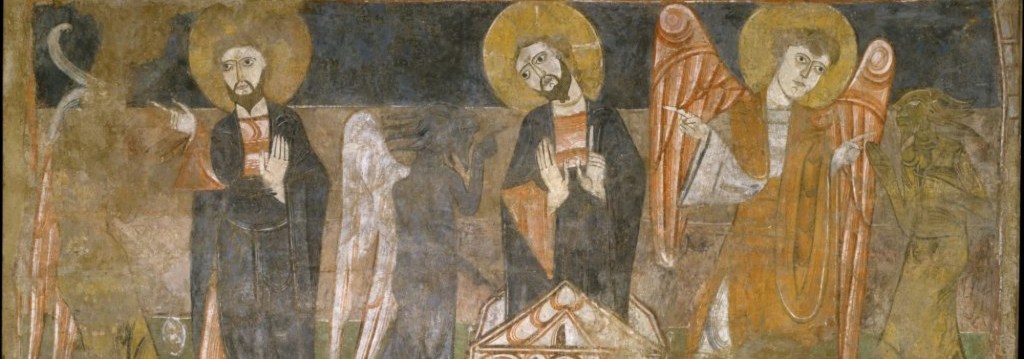
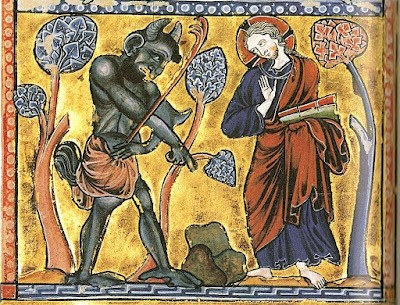
Detail from a Spanish fresco of the temptation of Christ by the devil at the Metropolitan Museum of Art
Click below to show/hide questions.
This discussion guide has been generated by the WORD THIS WEEK'S Catholic AI Assistant based on the Dominican Blackfriars' homily for this week. NEED HELP? Copy and paste a question into the chat bot in the lower right corner of the screen and have our Catholic Assistant help you.
Old Testament Reference: Moses and the First Fruits (Deuteronomy 26:1-11)
- Discuss the significance of bringing the first fruits to God as a form of gratitude.
- Reflect on the importance of remembering where you came from and how God has transformed your life.
- Talk about how remembering God's goodness can impact your daily life.
New Testament Reference: St. Paul's Call to Bear Witness (Romans 10:9-13)
- Explore St. Paul's message about salvation and how confessing God's work in our lives plays a role in spiritual healing.
- Discuss the idea of salvation as spiritual health and how it begins in this life.
- Consider why bearing witness is beneficial both personally and communally.
Gospel Reference: Jesus in the Desert (Luke 4:1-13)
- Examine how Jesus's focus on God allows him to resist temptation in the desert.
- Discuss how Lent is a time to emulate Jesus's intentional focus through prayer, fasting, and almsgiving.
Discussion Questions
- Why do you think Moses and St. Paul place such importance on bearing witness and remembering God's deeds?
- How can recalling past blessings influence your present circumstances and decisions?
- Share a story from your life where remembering God's work or promises helped you navigate a difficult situation.
- How can you incorporate the practice of testimony into your Lenten journey this year?
- What distractions might prevent you from focusing on God, and how can you overcome these?
Practical Exercise
- Reflection Exercise: Encourage group members to spend a few moments in silent reflection. Have them think about where they were, where they are now, and the blessings they’ve received.
- Writing Exercise: Ask members to write down a personal testimony or a passage that resonates with their experience.
- Sharing Exercise: Invite volunteers to share their testimonies with the group, fostering a supportive and faith-building environment.
Homily Excerpt
First Sunday of Lent. Fr Nicholas Crowe suggests an exercise for us to begin Lent.
In this season of Lent we follow Jesus into the desert for forty days and forty nights. Like Jesus we go on the front foot and we confront the sources of sin and temptation in our lives empowered by the Spirit and making full use of the tools that the Spirit gives us for this struggle: prayer, fasting, and almsgiving. All of these things are meant to help us remember the Lord and his Goodness. They are meant to help us bring what is most important, our friendship with God, to the front of our minds.
But our readings this Sunday remind us that there is one further tool put at our disposal by the Spirt: the healing and saving power of testimony. So I challenge you this Lent: carve out some time to follow the advice of Moses and St. Paul. Perhaps take a pen and paper and remind yourself of where you have come from, the changes and blessing that God has worked in your life, and the good things that you have now. Perhaps look through your Bible, think about whether there is a story or a verse that illuminates or resonates with your experience of God. Bring the remembrance of God to the front of your mind this lent where it can shape your thoughts, emotions and choices. And once you have brought this story to mind, share it with someone else. Tell your husband, your wife, your brothers, sisters, friends. Be strengthened by the memory of the goodness of God working in your life; and strengthen someone else by sharing that story.
Click below to show/hide questions.
This discussion guide has been generated by the WORD THIS WEEK'S Catholic AI Assistant based on the Dominican Blackfriars' homily for this week. NEED HELP? Copy and paste a question into the chat bot in the lower right corner of the screen and have our Catholic Assistant help you.
1. Introduction: Understanding the Reality of Evil
- Discuss the contemporary perception of the devil as symbolic versus the scriptural portrayal of a real entity. Why might our modern minds be inclined to see evil as symbolic rather than real?
- Consider the symbolism of scattering introduced in the sermon. How is this linked to our understanding of evil and sin?
2. The Concept of Scattering by Sin
- Reflect on the ways sin leads to scattering in individual lives and society. How do personal sins isolate us, and how do societal sins undermine common humanity?
- What are the temptations associated with embracing a "scattered" existence, and why might they seem alluring?
3. The Centrifugal Force Away from God
- Explore the metaphor of centrifugal force in the context of being pushed away from our true center, which is communion with God.
- How does this scattering result in feelings of disorientation and isolation?
4. Jesus’ Temptation and the Lenten Journey
- Discuss the significance of Jesus encountering temptation in the wilderness rather than in a paradise setting.
- How does Jesus' experience guide us in our practice of Lent and confrontation with our personal temptations?
5. The Purpose of Lent: A Return to the Center
- Identify how Lent serves as a time for returning to God and reflecting on our relationship with Him. What practices are emphasized in the sermon for doing this?
- What role does honest self-examination play in overcoming personal weaknesses during Lent?
6. The Incompleteness of Human Nature
- Reflect on the idea that we are not finished works of art and that our choices continually shape us. How does this notion influence your approach to Lent?
- In what ways do prayer, fasting, and almsgiving help in drawing closer to the ‘Christ-shaped’ answer to our identity?
7. The Power of Remembrance
- Discuss the importance of remembrance as highlighted in the sermon. How does recalling God's past deeds aid us during Lent?
- Consider the parallel between the journey of the Israelites, as mentioned in the sermon, and our personal Lenten journeys.
8. Conclusion: Embracing Incompleteness and Redemption
- How do we reconcile our ongoing incompleteness with the hope and salvation offered by God?
- What practical steps can be taken individually and as a group to ensure that our Lenten disciplines lead us back to the center, back to communion with God?
Homily Excerpt
First Sunday of Lent. Fr Albert Robertson preaches about the scattering effect of sin.
In a creation where evil seems obvious, real, and tangible, our modern minds don’t much like the idea of the reality of the devil. We prefer to see him as merely symbolic. The difficulty is that we can see his footprints (or should that be hoofprints?) throughout the Scriptures. From his slithering in the Garden to the final cry as he is finally shut up in the underworld in Revelation, the devil is definitely present, and no mere figment of our imagination. Not only do the Scriptures testify to the reality not just of evil, but to the Evil One, but even the possibility of the Devil being a symbol is flawed: a symbol draws things together, but as Jesus tells us in Matthew’s Gospel, ‘Whoever is not with me is against me, and whoever does not gather with me scatters’ (Matthew 12:30).
Our fallen nature, which succumbed to the devil’s lie and temptation, tends towards this scattering. The waste and decay of ageing and sickness speak of this scattering. The sins of our lives isolate us into scattered individuals. The sins of our society seek to undermine our common humanity. And this sin of scattering can be tempting for sure. After all it has a certain allure to it, far from seeming isolating, we can set ourselves up in a kind of isolated splendour, looking after ourselves without another encroaching on our thoughts. We satisfy our wants, needs, and desires.
Fr. Charles E. Irvin
1st Sunday of Lent C


Oscar Wilde was a much-celebrated Anglo-Irish literary figure, very witty… and very worldly. He once wrote: “I can resist everything but temptation.” He lived in total self-indulgence, ridiculed Victorian moral norms, and died in Paris of meningitis in the year 1900. His view of life aptly ushered in the 20th century, particularly the cultural rebellions of the 1960’s and 1970’s.
There are many today who live as Oscar Wilde lived. They regard temptations as irrelevant, things representing what they regard as hypocritical middle class moral norms, norms that constrict us and deny us our freedom. We are to live, many claim, with only one self-indulgent moral norm: “If it feels good, do it. Anything is all right so long as it doesn’t hurt anybody.”
This discussion guide has been generated by the WORD THIS WEEK’S Catholic AI Assistant based on Fr. Irvin’s homily. NEED HELP? Copy and paste a question into the chat bot in the lower right corner of the screen and have our Catholic Assistant help you.
Introduction and Context
– Discuss the life and philosophy of Oscar Wilde. How did Wilde’s view on temptation and self-indulgence reflect the cultural shifts of his times, particularly those seen in the 1960s and 1970s?
– Reflect on how these attitudes toward temptation are still present today. Can you think of modern examples where societal norms encourage self-indulgence?
2. Understanding Temptation
– What is the speaker’s perspective on temptation and its relation to evil? Do you agree with the idea that evil is a corruption of what is good?
– Discuss why temptations often appear as something good. Have you experienced situations where something seemed good at the onset but revealed negative consequences?
3. Theological Perspectives
– Examine St. James’s notion that God does not tempt us. How does this perspective shape your understanding of temptation and free will?
– Share your thoughts on the idea that each person is tempted when lured by their own desires. How can self-awareness aid in overcoming temptations?
4. The Three Temptations of Christ
– Analyze the first temptation about turning stones into bread. What does this suggest about how we handle our appetites and desires? How do you balance physical needs with spiritual needs?
– Discuss the second temptation about surrendering to the world’s evils. Is despair over the state of the world common today? How can belief in goodness counteract this temptation?
– Evaluate the third temptation regarding making God act. What are the risks in treating faith and prayer as transactional? How can prayer be reframed as a form of relationship rather than obligation?
5. Lent as a Spiritual Practice
– What is the significance of Lent in combating modern temptations? How can fasting and self-restraint lead to spiritual growth?
– Explore ways to use the Lenten period to foster selflessness and spiritual renewal. Can you plan personal or community activities that align with these goals?
6. Application and Reflection
– Share your personal experiences with Lent. How have fasting and other Lenten practices impacted your spiritual life?
– Reflect on how the lessons from the sermon can be applied beyond Lent. In what ways can incorporating these practices into daily life enhance your faith journey?
7. Closing Thoughts
– How can one maintain the spirit of Lent throughout the year? Discuss strategies to continually prioritize spiritual development over self-indulgence.
– Consider how your relationship with God can be deepened through the insights gained from this discussion. What commitments will you make to sustain this growth?
Fr. George Smiga
- Another Purpose for Lent (2004)
- Stewards of God's Gifts (2007)
- A Time to Become Real (2010)
- The Battle with the Devil (2013)
- The Long Struggle (2016)
- The Devil's Agenda (2019)
- The Devil's Deception (2022)
1st Sunday of Lent C
Each week, THE WORD THIS WEEK presents an excerpt from Fr. Smiga’s homily archive. To access all of the homilies for this Sunday, click on the title above. Then scroll down the page to find the text of this homily.

2004 HOMILY – There is nothing like a conversation with the devil to seize your attention. A confrontation with the Prince of Darkness certainly breaks the routine of life. The story of Jesus’ temptation is the only scene in the gospels where Jesus and the devil have a conversation.✨ It stands apart from every narrative in the gospels. It is unique. The church has wisely chosen to use this story each year on the first Sunday of Lent because its very uniqueness points to an important aspect of the 40 days we are beginning. This story reminds us that Lent is different from every other time of the year.
There are of course many ways to understand the purpose of Lent. We can view Lent as a time to turn away from sin, as a time to grow as a person, as a time to deepen our relationship with the Lord. All these approaches are valid. But I would like to suggest to you this morning another purpose for this season.
The Devil’s Agenda
2019 HOMILY – The devil’s focus is not to encourage our individual faults. But the devil is deeply committed to seeing that our world remains enslaved to injustice, violence, and every other kind of evil✨. We can see this clearly in today’s gospel. The devil presents all the kingdoms of the world before Jesus in a single instant and then he boasts, “I will give you all this power and glory; for it has been handed over to me and I may give it to whomever I wish.” The devil knows that his power extends to the four corners of the earth, and he wants to keep it that way.
This discussion guide has been generated by the WORD THIS WEEK’S Catholic AI Assistant based on Fr. Smiga’s homily.
Introduction and Context
Fr. Smiga’s homily begins with highlighting the unique conversation between Jesus and the devil during His temptation, emphasizing how this event shakes the routine and underscores the distinct nature of Lent. The story helps to remind us that Lent is a time set apart, unlike any other season in the church calendar.
Purpose of Lent
While Lent can be seen as a period for turning away from sin, personal growth, and enhancing one’s relationship with God, the sermon introduces a different perspective: Lent as a means to disrupt the routine of daily life.
The Dangers of Routine
Routine can often lull us into a shallow existence. Many fall into a cycle where our actions become habitual and automatic, reducing life to mere responses to daily patterns. This repetition can lead to a lack of depth and reflection, causing opportunities for growth to slip away unnoticed.
The Unsettled as Exceptions
The sermon acknowledges that not everyone is susceptible to the dangers of routine. For those facing uncertainty or upheaval due to new beginnings or tragedies, routine is not their primary concern. However, for those settled in life’s routines, this sermon is a call to awareness.
The Role of Lenten Practices
Lenten practices serve to disrupt our daily rhythms, akin to placing a “stone in your shoe”: a tool to remind and prompt reflection. Whether through engaging in spiritual disciplines, acts of service, or personal sacrifices, these actions aim to prompt introspection and refocus on life’s significant questions.
Reflection and Actions
This Lenten season is an opportunity to ask oneself critical questions: Who am I? What do I value? What changes are necessary? What am I ignoring? The sermon encourages selecting personal steps—adding or removing activities, serving others, or taking time for personal reflection—to break life’s routine.
Conclusion and Call to Action
Fr. Smiga’s homily concludes with an invitation to dare to alter routines and listen for God’s voice. By crafting a space for divine communication, one can expect a transformative word from God—a message of grace, forgiveness, and re-creation, revealing routine’s shallowness and inviting deeper living.
Discussion Questions
1. Reflect on the story of Jesus’ temptation. How does it serve as a reminder of Lent’s significance for you?
2. What routines in your life might be limiting deeper reflection and growth?
3. Consider the different purposes of Lent discussed. Which resonates most with you and why?
4. How can Lenten practices serve as effective “stones in your shoes” to awaken introspection?
5. Are there specific actions or changes you feel called to make this Lenten season to disrupt routine?
6. Share an experience when breaking a routine led to personal growth or a deeper connection with God.
7. What challenges do you anticipate in carving out space for reflection and listening to God’s voice?
8. Discuss ways your group can support each other in maintaining commitment to Lenten practices and goals.
Pro-Life Homily Resources

1st Sunday of Lent C

Penitence
The themes of Lent provide powerful opportunities to preach on the sanctity of life and the tragedy of abortion. The season of Lent prepares the faithful, through a special emphasis on penitence, to celebrate the Paschal Mystery and to renew the vows of their baptism. It is also a time of final preparation of catechumens to receive the new life in water and the Holy Spirit. This double meaning of Lent incorporates and illumines why the Church is pro-life and provides a liturgically consistent way of preaching about it throughout this time of year.
Msgr. Joseph Pellegrino
1st Sunday of Lent C

Forty Days towards the Eucharist

We begin Lent this week as we do every year with the gospel on the Temptation of the Lord. This Gospel is chosen by the Church because it begins with the 40 days of fasting of the Lord, followed by his being tempted by the devil.
40. 40 days of Lent. Today I want to begin with a brief reflection on the number 40 and then concentrate on the Paschal Gift, the Eucharist.
First of all, in the Bible 40 is always used to point out a period of time before a major event. Moses spent 40 days on Mt. Sinai before giving the people the Law of God. The Hebrew people spent 40 years in the desert before entering the Promised Land. Elijah spent 40 days journeying to Mt. Horeb to receive instructions from God appointing kings and his successor, Elisha. Jesus spent 40 days in the desert before beginning his earthly ministry. So, the number 40, be it in days or years denotes a time of preparation.
This discussion guide has been generated by the WORD THIS WEEK’S Catholic AI Assistant based on Fr. Pellegrino’s homily.
1. The Significance of the Number 40
– How does the number 40 function as a period of preparation in Biblical events, according to the sermon?
– Can you think of other examples in Scripture or your own life where a period of 40 days or years has been significant?
2. Understanding Lent
– What are the key practices during Lent as mentioned in the sermon? Why are they important?
– Discuss the idea presented in the sermon that the preparation of Lent should be focused on its goal. How can this shape your approach to Lent?
3. The Paschal Event and the Eucharist
– How does the sermon describe the Paschal Event, including Holy Thursday, Good Friday, and Easter Sunday?
– Reflect on the statement: “The Eucharist is more than a communion service.” What does this mean to you?
4. Challenges to the Faith
– The sermon discusses challenges such as people leaving the Church and the impact of the COVID-19 pandemic on faith practices. How have these challenges affected your understanding or practice of receiving the Eucharist?
– What are some common reasons people might leave the Church or the Eucharist, according to the sermon? How does the sermon suggest responding to these reasons?
5. Deepening Understanding of the Eucharist
– How can we deepen our understanding of the Eucharist during this Lent?
– Discuss the significance of the quote from Flannery O’Connor: “Well, if it’s just a symbol, to hell with it!” Why is this perspective important?
6. Personal Reflection and Actions
– How do you personally experience the Eucharist? What meaning does it hold for you?
– What specific actions or reflections will you undertake this Lent to enhance your relationship with the Eucharist?
Reflection and Prayer
– Reflect on the statement: “When we receive communion, we are receiving the Lord offering up Himself for us on the Cross.” How does this awareness affect your spiritual life?
– Spend a moment in silent prayer, asking for a deeper hunger for the Eucharist and a greater understanding of its significance in your life.
Msgr. Charles Pope
1st Sunday of Lent C
Cross or Couch

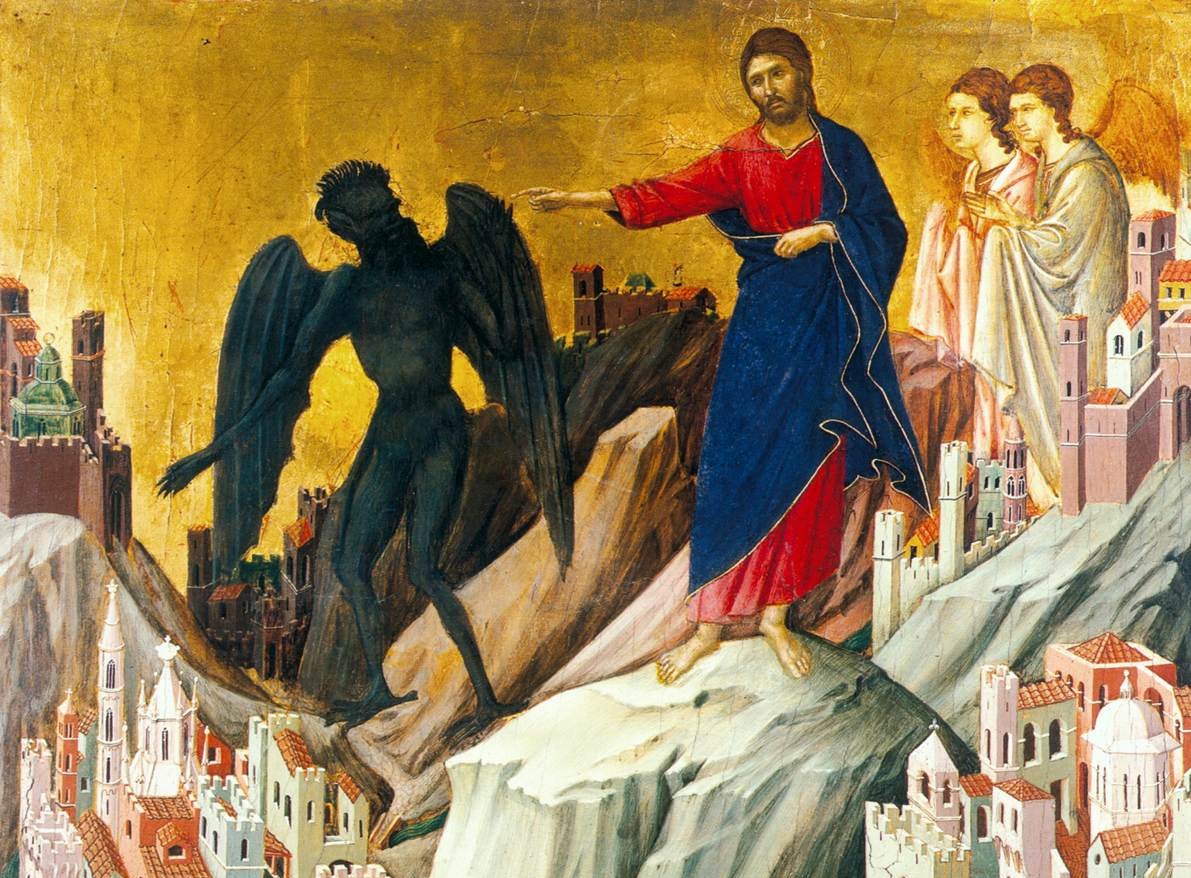
In this desert scene, the Lord Jesus faces down three fundamental areas of temptation, all of which have one thing in common: they seek to substitute a couch for the cross.
In a way, the devil has one argument: “Why the cross?” His question is a rhetorical one. He wants you to blame God for the cross, and in your anger, to reject Him as some sort of despot.
Well, pay attention, Church! The cross comes from the fact that you and I, ratifying Adam and Eve’s choice, have rejected the tree of life in favor of the tree that brought death. We, along with the devil, may wish to wince at the cross and scornfully blame God for it, but in the end the cross was our choice.
I. Pleasures and Passions
II. Popularity and Power
III. Presumption and Pride
Fr. Jude Siciliano, OP

1st Sunday of Lent C
Spiritual Amnesia
EXCERPT: Imagine how awful it would be to forget our past; not to remember who we are and where we have come from. How painful and disorienting it would be to live in a cloud of forgetfulness; to have forgotten the experiences and relationships that have formed us; to forget who our parents and friends were, those who loved us and helped make us into the people we are. Such a serious amnesia would, of course, obliterate our past. But more. What good would the present be with no history and experience to draw upon? And what value would the future have without the past that equipped us to make wise choices about our future?
In some ways amnesia would be the very worse sickness to have because it would seriously damage our awareness of self and our knowledge of who we are. I don’t know if such a serious or profound amnesia exists in the medical journals. But today’s scriptures certainly address another kind of amnesia: the forgetting of who God is and what God has done for us. In the Deuteronomy reading Moses addresses the Israelites and tries to help them not have willful amnesia. He calls the faith community to remember God and keep alive the memory of the great deeds God did to deliver them.
Bishop John Kobina Louis
1st Sunday of Lent C
Sunday Homilies

Bishop John Kobina Louis, PhD, is an auxiliary bishop of the Archdiocese of Accra, Ghana. He was ordained as an auxiliary bishop on 19th April 2023.
Fr. Michael Chua
1st Sunday of Lent C

Homily Excerpt

Ultimately, when we choose the temptation of pragmatism over that of God’s way, we end up with a lie. We want victory with limited commitment. We want heaven without sacrifice. We want a crown without the cross. As we begin this penitential season of grace, let us not just merely rely on our meagre strength and resources. In our eagerness to perform Lenten practices of self-denial, let us not forget that the end of all these acts is to expand the space in our hearts for God. They are not performed as if they are goals or achievements in themselves. Conversion is impossible without the grace of God. As we contend with our usual list of habitual sins, we often fail to recognise that one of our greatest temptations is to begin to rely on ourselves rather than on the power of God. To be a Christian is to be dependent upon God for everything, in battling temptations and growing in virtue. So does the end justify the means? Not if that end does not end in God and the means lead us nowhere closer to Him, for as St Thomas Aquinas reminds us, “the ultimate end of each thing (including man) is God.”
Homily Excerpt
Although Lent begins with this meditation on the temptations of Christ and invites us to contemplate our own proclivity to choose sin, we should not be contented to just remain here. A hurdler soon learns that if he starts looking at the hurdles, he is going to fall right on his face. He must fix his gaze on a point at the finish line, and the hurdles will seem to just pass by his eyesight almost unnoticed as he focuses intently on the goal. Well, that’s the essence of Lent. The goal of Lent and our Lenten penitential practices, is not Lent. It is to prepare for the triumph of Christ over temptation, sin and death. Our gaze must be fixed on Easter because our Lord’s resurrection is irrefutable proof that sin and death will not have the last say. And so, as we allow ourselves to follow our Lord into the spiritual wilderness of these forty days, we are assured that despite the temptations to turn our backs on God and pretend to be like gods, we have the assistance of the Holy Spirit to guide us back to acknowledge that there is only one God and that “you must worship the Lord your God, and serve him alone.”
Homily Excerpt
People have often noted that our society has become increasingly Godless or more atheistic. Is this true? There are countless of studies done in the West that seems to support this proposition. When surveyed, the majority of individuals state that they don’t identify with any religion. As Chesterton said, “He who does not believe in God will believe in anything.” Just recently, Lady Gaga when receiving her Grammy award, proudly declared: “music is love,” perhaps a deliberate spin on St John’s declaration that “God is love.”
We may be tempted (forgive the obvious pun) to focus merely on the temptations of Christ on this First Sunday of Lent, but the readings actually take us along another path of reflexion – what do we really believe in – the faith which we profess. You will notice that during the season of Lent and Easter, it is strongly recommended that the longer Nicene Creed is substituted with the shorter Apostles’ Creed. The reason for this substitution is not due to the brevity of the latter since our liturgies of Lent are typically lengthened by the Rites associated with the RCIA. The real reason is that the Apostles’ Creed is the creed used at baptism and the focus of both Lent and Easter is the Sacrament of Initiation, which begins with Baptism.
Fr. Vincent Hawkswell
1st Sunday of Lent C

Homily Excerpt

Why is Lent so necessary?
By our first parents’ sin, the devil acquired “a certain domination” over us, says the Catechism of the Catholic Church. It entails “captivity under the power of him who thenceforth had the power of death: that is, the devil.”
In other words, the whole world is now in the power of the evil one. Accordingly, our life is “a battle,” says the Catechism. “The whole of man’s history has been the story of dire combat with the powers of evil, stretching, so our Lord tells us, from the very dawn of history until the last day.”
“Scripture witnesses to the disastrous influence of the one Jesus calls a murderer from the beginning, who would even try to divert Jesus from the mission received from his Father,” as we hear in this Sunday’s Gospel reading.


Fr. Tommy Lane
1st Sunday of Lent C
- Lent: consecration to Jesus 2022
- Jesus our model for Lent 2013
- Overcoming sin during Lent like Jesus in the desert 2007
- Related Homilies: First Sunday of Lent Year A First Sunday of Lent Year B
- Stories for Lent
- Old Testament Readings during Lent
Fr. John Kavanaugh, S.J.
1st Sunday of Lent C

How shall we deal with the awesome contingency of our lives? We so much want to make a difference, to leave our mark. Yet we know we disappear into the vast reaches of space and time. We die and go to ashes. Such is our creaturehood.
Ernest Becker wrote in The Denial of Death that the preeminent human temptation is to escape or repress the truth of our frail skin. We avoid the desert, the loneliness, the loss of familiar support, the grand stillness. If we go into the wilderness, we will be reminded of the great hunger. We will be dwarfed by the earth’s mighty movements.
Enter distraction. If we keep ourselves ceaselessly preoccupied, we might be spared the pain and the pained. We need not pay attention to the terrible precariousness of our condition. We need not embark on the quest for an answer to our absolute lack. Perhaps if we entertain ourselves to death, we may be able to divert our way through life.
This discussion guide has been generated by the WORD THIS WEEK’S Catholic AI Assistant based on Fr. Kavanaugh’s homily. NEED HELP? Copy and paste a question into the chat bot in the lower right corner of the screen and have our Catholic Assistant help you.
Introduction:
– Begin the session by introducing the main theme of the sermon: the awesome contingency of life and the struggles we face in accepting our creaturehood.
1. Understanding Contingency
– What does the term “awesome contingency” mean in the context of this sermon?
– How do we typically respond to the idea that we are temporary beings with limited control over our fate?
2. Human Temptations
– Reflect on Ernest Becker’s view from The Denial of Death. How do people commonly deny or repress their mortality?
– In what ways do we use distractions to avoid confronting the “terrible precariousness” of our condition?
3. Jesus’ Temptations
– What parallels can be drawn between Jesus’ temptations in the desert and our modern-day temptations?
– Discuss the symbolism of turning stone into bread, and how it represents the desire to fulfill needs superficially.
4. Power and Control
– Analyze the temptation of power. How does the sermon suggest it offers an illusion of security?
– Why is the desire for control over our lives so alluring, yet ultimately unsatisfying?
5. Magic and Spectacle
– How do magical solutions and spectacles distract us from confronting our human limitations?
– Discuss the impact of choosing spectacle over substance in our personal spiritual journeys.
6. Jesus’ Example
– How did Jesus’ choice to embrace the hunger and wilderness symbolize acceptance of humanity?
– Why is his decision portrayed as an act of humility and solidarity with us?
7. Free Will and Faith
– Reflect on Dostoyevsky’s Grand Inquisitor story. Why is the freedom offered by Christ seen as a challenging gift?
– How does the sermon suggest true faith requires accepting our wounds rather than escaping them?
8. Acceptance and Trust
– What does it mean to enter into “Christ’s own act of total trust and abandonment”?
– Discuss how faith is depicted as a journey through human vulnerabilities rather than around them.
Bishop Frank Schuster
1st Sunday of Lent C
Homily Excerpt

We begin the season of Lent with the Spirit of the Lord leading Jesus into the desert for fasting and prayer. And I think this is an important detail Luke points out: it wasn’t an evil spirit that drove Jesus into the desert, it was the Holy Spirit. I think this is the best way for us to approach the season of Lent. God leads us here intentionally. The desert is an interesting metaphor for Lent because a desert has a way of stripping away our usual daily concerns. Any of you who enjoy backpacking in the cascades can probably relate. The backcountry is a place where we are truly tested. Just like we might test out our gear in a safe environment before we find ourselves relying on it for survival, Lent feels like an opportunity to test our souls every year. You see the quality of our discipleship isn’t always discernable when we are comfortable and well fed. It is only when we make our way into that spiritual desert that we learn what our discipleship is made of.

1st Sunday of Lent C

Good News of Lent
For many of us, Lent is the season of gloom and giving up, of ashes and lashes. When it is gray outside, and purple inside. When we feel guilty about not feeling guilty.
I would like to accent the positive in Lent. On Ash Wednesday, we heard the Kingdom of God is at hand, repent and believe in the Gospel. The question is, how can we, the baptized, get people to believe in the Gospel?
So our agenda for Lent is to be good news. How do we do this? I am not going to suggest something complicated or obtuse. What I am suggesting is a simple act that we can all try, whether we are children or adults: every day of Lent, look to do the noble thing, no matter how small. Do the better thing, the nice thing, the small but kindly thing.
Fr. Jagodensky, SDS
1st Sunday of Lent C

Homily Excerpt

Temptation. Cue the old Perry Como song to get its meaning. Side note, I think Perry’s the least likely person to sing that song. Frank, yes. But “Wholesome-Married-Once-Perry?” Number 68-married-years for Perry and four wives for that saloon singer. (Mia Farrow! Two years! You’ve got to be kidding!) If you’re under 50, you can find Perry’s song on YouTube. But if you’re under 50, you may wish to first find out who Perry Como is.
The song begins, “You came, I was alone…” No community, few trusted friends as though the saloon guy was singing his selfish, self-centered signature song “My Way” like he’s “king of the hill.” Oh, wait. That’s in another Frank song, and sung twice in once verse. The “Temptation” song continues, “I should have known, you were temptation!” Of course, you should have known. That’s why we study world history, examine our consciences before and during each Mass and celebrate God’s mercy when receiving communion.
Please note that the provided video clips serve as additional resources to complement the homily. They may not have a direct correlation with the contributor’s original content. They aim to inspire preachers to enrich their own homilies, drawing ideas and insights from both the written material and the visual content explored.