MAR 9, 2025


ROME REPORTS IN ENGLISH (1:40) - The POPE'S MESSAGE for Lent is dated February 6 meaning it was made before his admission to the hospital in it. He asked the faithful to make an examination of conscience and overcome what he calls the temptation to self-referentiality or to think that God does not truly forgive one's sins. He also proposes as an exercise to get to know more closely the reality of a migrant. He says that it can be useful to discover what God asked of us to be better travelers on our way to the father's house.


Papal Homilies
TIP: You can rewind the livestream up to twelve hours, allowing you to catch up on any events or addresses you may have missed.

SOURCE: Vatican News – English
This livestream allows viewers to witness the Pope’s addresses during Papal Audiences, as well as other Vatican events and news. The livestream is part of the Vatican Media Center’s efforts to share the latest updates on Pope Francis, the Holy See, and the Church worldwide with a global audience.

Fr. Gaetano Piccolo (SI)
The Dicastery for the Clergy deals with everything that concerns the priests and deacons of the diocesan clergy with regard to their persons, their pastoral ministry and what is necessary for its fruitful exercise. In these matters it offers the Bishops appropriate assistance.

Creeds
1st Sunday of Lent C
It is not difficult to detect in today’s three readings a confession of faith or a small “creed”.
[In the FIRST READING] there is the creed of the Israelite people, proclaimed in the temple, during the feast of first-fruits. “My father was a wandering Aramean… He brought us here and has given us this country, a country flowing with milk and honey. Hence, I now bring the first-fruits of the soil that you, Yahweh, have given me”.
The three answers that Jesus gives to Satan in the GOSPEL text are a proclamation of existential faith on the part of Jesus: “Man does not live on bread alone,” “You must do homage to the Lord your God,” and “Do not put the Lord your God to the test.”
Finally, in the SECOND READING we find a very concise and ancient formula of the Christian profession of faith, “Jesus is Lord,” whom God has risen from the dead.
P. Antonio Izqeuirdo, L.C., © Dicastery for the Clergy A | B | C
Doctrinal Messages
1st Sunday of Lent C
VATICAN
DAILY
BULLETIN
The Vatican Daily Bulletin is the official news source for the Pope’s activities and statements, providing accurate and up-to-date information. Published daily, it keeps the public informed about the Church’s activities and decisions.
Pastoral Suggestions
1st Sunday of Lent C

Pope Francis
1st Sunday of Lent C

Devil Tempts Jesus
6 March 2022 | Saint Peter’s Square
- TEXT
- DISCUSSION GUIDE
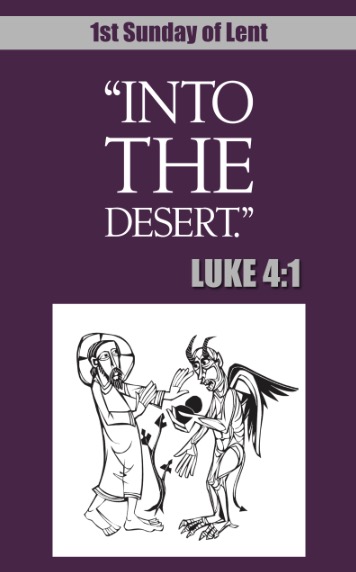
The Gospel of today’s Liturgy, the first Sunday of Lent, takes us into the desert, where Jesus is led by the Holy Spirit, for 40 days, to be tempted by the devil (cf. Lk 4:1-13). Jesus too was tempted by the devil, and He accompanies us, every one of us, in our temptations. The desert symbolizes the fight against the seductions of evil, in order to learn to choose true freedom. Indeed, Jesus lives the experience of the desert just before beginning his public mission. It is precisely through this spiritual struggle that he decisively affirms what type of Messiah he intends to be. Not this type of Messiah, but that one: I would say that this is indeed the declaration of Jesus’ messianic identity, of the messianic way of Jesus. “I am the Messiah, but on this path”. Let us then look closely at the temptations he is battling.
Twice the devil addresses him, saying: “If you are the Son of God…” (Lk 4:3, 9). He is thus proposing to him to exploit his position: first to satisfy the material needs he feels, hunger (cf. Lk 4:3), then to increase his power (cf. Lk 4:6-7); and, finally, to have a prodigious sign from God (cf. Lk 4:9-11). Three temptations. It is as if he were saying, “If you are the Son of God, take advantage of it!”. How often this happens to us: “But if you are in that position, take advantage of it! Don’t lose the opportunity, the chance”, that is, “think of your benefit”. It is a seductive proposal, but it leads you to the enslavement of the heart: it makes us obsessed with the desire to have, it reduces everything to the possession of things, power, fame. This is the core of the temptations: the “poison of the passions” in which evil is rooted. Let us look within ourselves, and we will find that our temptations always have this mindset, always this way of acting.
But Jesus opposes the attractions of evil in a victorious way. How does he do this? By responding to temptations with the Word of God, which says not to take advantage, not to use God, others and things for oneself, not to take advantage of one’s own position to obtain privileges. Because true happiness and true freedom are not found in possessing, but in sharing; not in taking advantage of others, but in loving them; not in the obsession of power, but in the joy of service.
Brothers and sisters, these temptations also accompany us on the journey of life. We must be vigilant — not be afraid, it happens to everyone — and be vigilant, because they often present themselves under an apparent form of good. In fact, the devil, who is cunning, always uses deception. He wanted to make Jesus believe that his proposals were useful to prove that he was really the Son of God.
And I would like to emphasize something. Jesus does not converse with the devil: Jesus never converses with the devil. He either banishes him, when he healed the possessed, or in this case, when he has to respond, he does so with the Word of God, never with his own word. Brothers and sisters, never enter into dialogue with the devil: he is more cunning than we are. Never! Cling to the Word of God like Jesus, and at most answer always with the Word of God. And on this path, we will never go wrong.
The devil does this with us: he often comes “with gentle eyes”, “with an angelic face”; he even knows how to disguise himself with sacred, apparently religious motives! If we give in to his flattery, we end up justifying our falsehood by disguising it with good intentions. For instance, how often have we heard this: “I have done odd deals, but I have helped the poor”; “I have taken advantage of my role — as a politician, a governor, a priest, a bishop — but also for doing good”; “I have given in to my instincts, but in the end, I did no harm to anyone”, these justifications, and so on, one after the other. Please: no compromises with evil! No dialogue with the devil! We must not enter into dialogue with temptation, we must not fall into that slumber of the conscience that makes us say: “But after all, it’s not serious, everyone does it”! Let us look at Jesus, who does not seek compromises, he does not make agreements with evil. He opposes the devil with the Word of God, which is stronger than the devil, and thus overcomes temptation.
May this time of Lent also be a time of the desert for us. Let us take time for silence and prayer — just a little, it will do us good — in these spaces let us stop and look at what is stirring in our hearts, our inner truth, what we know cannot be justified. Let us find inner clarity, placing ourselves before the Word of God in prayer, so that a positive fight against the evil that enslaves us, a fight for freedom, may take place within us.
Key Themes for Discussion
- The Significance of the Desert: Discuss why the desert is a fitting metaphor for spiritual trials and the fight against temptation. How does this setting prepare Jesus for his public mission?
- The Nature of Temptations: Explore the three temptations Jesus faces: satisfying material needs, seeking power, and asking for a sign from God. How do these temptations relate to our daily lives?
- Jesus’ Response to Temptation: Analyze how Jesus counters these temptations using the Word of God, rather than engaging in dialogue with the devil. Why is this an essential strategy?
- The Illusions of Good Intentions: Reflect on the notion that temptations often come disguised as good intentions. Consider how we might justify questionable actions by claiming they lead to positive outcomes.
Questions for Personal Reflection and Group Discussion
- Have you ever experienced a time in your life that felt like a ‘desert,’ a period of trial or temptation? How did you navigate it?
- Which of the temptations Jesus faced do you find most relevant to your current life situation, and why?
- How can we better equip ourselves with the Word of God to resist temptation in our own lives?
- What are some modern examples of situations where good intentions might disguise morally questionable actions?
- How can we ensure we do not fall into the trap of rationalizing behavior that compromises our values?
Practice & Application
- Reflection and Prayer: Set aside time during Lent for silence and prayer. Focus on what stirs in your heart and seek inner clarity.
- Scripture Engagement: Choose a passage from the Bible that addresses struggles or temptations you currently face. Meditate on these words and consider how they can guide your actions.
- Accountability Partner: Pair up with someone in your small group to discuss your challenges and help each other resist temptations.

Benedict XVI
1st Sunday of Lent C
Lent is a Long “Retreat”
21 February 2010 | Saint Peter’s Square
- TEXT
- DISCUSSION GUIDE
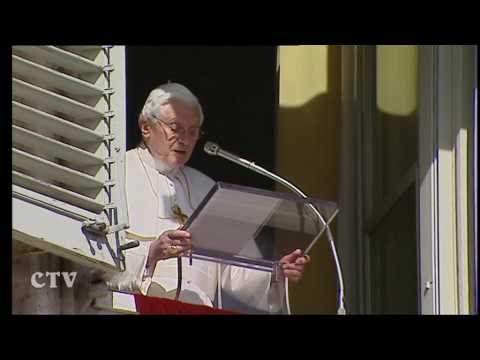
Last Wednesday, with the penitential Rite of Ashes we began Lent, a Season of spiritual renewal in preparation for the annual celebration of Easter.
But what does it mean to begin the Lenten journey? The Gospel for this First Sunday of Lent illustrates it for us with the account of the temptations of Jesus in the desert. The Evangelist St Luke recounts that after receiving Baptism from John,
“Jesus, full of the Holy Spirit, returned from the Jordan, and was led by the Spirit for forty days in the wilderness, tempted by the devil” (Lk 4: 1).
There is a clear insistence on the fact that the temptations were not just an incident on the way but rather the consequence of Jesus’ decision to carry out the mission entrusted to him by the Father to live to the very end his reality as the beloved Son who trusts totally in him. Christ came into the world to set us free from sin and from the ambiguous fascination of planning our life leaving God out. He did not do so with loud proclamations but rather by fighting the Tempter himself, until the Cross. This example applies to everyone: the world is improved by starting with oneself, changing, with God’s grace, everything in one’s life that is not going well.
The first of the three temptations to which Satan subjects Jesus originates in hunger, that is, in material need:
“If you are the Son of God command this stone to become bread”.
But Jesus responds with Sacred Scripture:
“Man shall not live by bread alone” (Lk 4: 3-4; cf. Dt 8: 3).
Then the Devil shows Jesus all the kingdoms of the earth and says: all this will be yours if, prostrating yourself, you worship me. This is the deception of power, and an attempt which Jesus was to unmask and reject:
“You shall worship the Lord your God, and him only shall you serve” (cf. Lk 4: 5-8; Dt 6: 13).
Not adoration of power, but only of God, of truth and love.
Lastly, the Tempter suggests to Jesus that he work a spectacular miracle: that he throw himself down from the pinnacle of the Temple and let the angels save him so that everyone might believe in him. However, Jesus answers that God must never be put to the test (cf. Dt 6: 16). We cannot “do an experiment” in which God has to respond and show that he is God: we must believe in him! We should not make God “the substance” of “our experiment”. Still referring to Sacred Scripture, Jesus puts the only authentic criterion obedience, conformity to God’s will, which is the foundation of our existence before human criteria. This is also a fundamental teaching for us: if we carry God’s word in our minds and hearts, if it enters our lives, if we trust in God, we can reject every kind of deception by the Tempter. Furthermore, Christ’s image as the new Adam emerges clearly from this account. He is the Son of God, humble and obedient to the Father, unlike Adam and Eve who in the Garden of Eden succumbed to the seduction of the evil spirit, of being immortal without God.
Lent is like a long “retreat” in which to re-enter oneself and listen to God’s voice in order to overcome the temptations of the Evil One and to find the truth of our existence. It is a time, we may say, of spiritual “training” in order to live alongside Jesus not with pride and presumption but rather by using the weapons of faith: namely prayer, listening to the Word of God and penance. In this way we shall succeed in celebrating Easter in truth, ready to renew our baptismal promises. May the Virgin Mary help us so that, guided by the Holy Spirit, we may live joyfully and fruitfully this Season of grace. May she intercede in particular for me and for my collaborators of the Roman Curia, who begin the Spiritual Exercises this evening.
Discussion Questions
1. Understanding Lent
– What are the traditional practices and purposes of Lent in the Christian faith?
– How does the Rite of Ashes signify the beginning of Lent and what does it symbolize for believers?
2. The Temptations of Jesus
– Describe how Jesus was tempted in the wilderness according to St. Luke’s account.
– How do Jesus’ responses to Satan’s temptations serve as a model for resisting temptation in our own lives?
3. Spiritual Renewal
– How does Lent serve as a period of spiritual “training” or “retreat”?
– Discuss the significance of prayer, listening to the Word of God, and penance during Lent. How can these practices aid in spiritual renewal?
4. The Role of Scripture
– How did Jesus use Scripture to counteract temptation, and what does this teach us about the power of Scripture in confronting challenges in our lives?
– In what ways can immersing ourselves in Scripture strengthen our faith and help us resist the temptations we face?
5. Themes of Obedience and Humility
– How is Jesus’ obedience to God contrasted with Adam and Eve’s disobedience in the Garden of Eden?
– Why are obedience and humility important virtues to cultivate during Lent and beyond?
6. The Importance of Community
– What role does the larger Christian community play during Lent, both in terms of support and accountability?
7. The Role of the Virgin Mary
– How does devotion to the Virgin Mary assist believers during Lent? Discuss the significance of seeking her intercession and guidance.
Practical Application
– Reflect on your own life and identify areas where you feel temptation or where there’s room for spiritual growth; discuss practical steps you could take this Lent to address these.
– As a group, plan a small Lenten project, such as a weekly Scripture study, prayer circle, or community service activity, to deepen your collective spiritual journey.
– Share one personal spiritual goal for Lent and discuss ways the group can support each other in achieving these goals.