September 21, 2025
September 21, 2025


Homilies
Homilies



25th Sunday of Year C

ENGLISH STORIES FOR KIDS (5:27) – A bat’s attempt to side with both birds and beasts during their war leads to its isolation, serving as a reminder that honesty and loyalty are essential for earning respect. (Aesop’s Fable)
The Dishonest Steward


Click on infographic to enlarge it
The reflection questions and infographics featured in this section have been created with the help of Google Gemini 2.5 AI tools, using Chart.js and Tailwind CSS. THE WORD THIS WEEK is happy to offer these resources to any non-profit ministry for use, and kindly request that you provide credit to the website and the respective contributors whose content is illustrated.
THE HYPOCRITE'S DILEMMA
- In the fable, why was the bat's strategy so offensive to both the birds and the beasts? What does this story teach us about the consequences of hypocrisy and trying to "play both sides"?
- The bat tried to align himself with whoever was winning at the moment. In what areas of modern life do people try to live with "opposing priorities," shifting their values based on the situation?
- Where in your own life do you feel a tension between serving God and serving a worldly priority (like success, reputation, or comfort)?
SHREWDNESS FOR ETERNAL LIFE
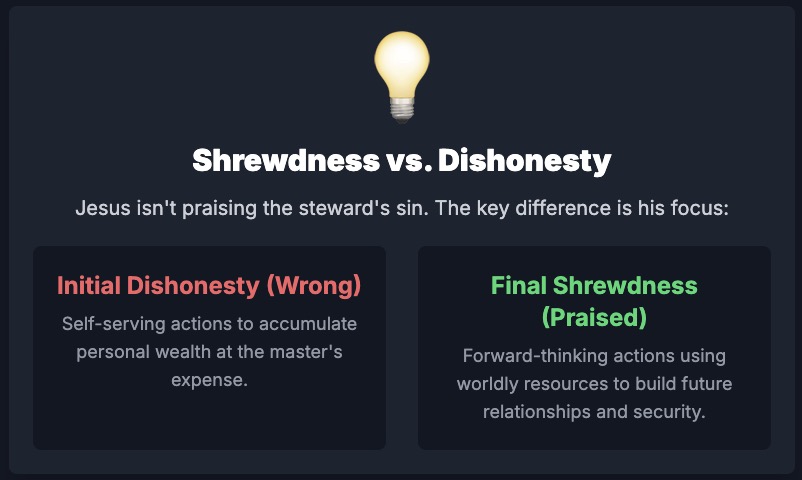
- Deacon Peter stresses that Jesus is not praising the steward's dishonesty. What is the key difference between the steward’s initial dishonesty (which was wrong) and his final shrewdness (which was praised)?
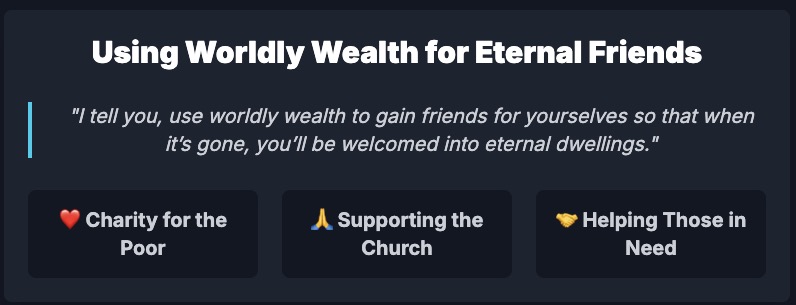
- What are some practical, modern ways a person can "use worldly wealth to gain friends" for eternal life? How does this concept challenge our typical view of money and possessions?
- Deacon Peter quotes a Jewish saying: "The rich help the poor in this world, but the poor help the rich in the world to come." What does this saying mean, and how does it change our perspective on charity and who is truly "helping" whom?
SERVING THE RIGHT MASTER
- What tragic mistake did Cardinal Wolsey realize he had made at the end of his life? What does his story teach us about the danger of giving absolute priority to a worldly master?
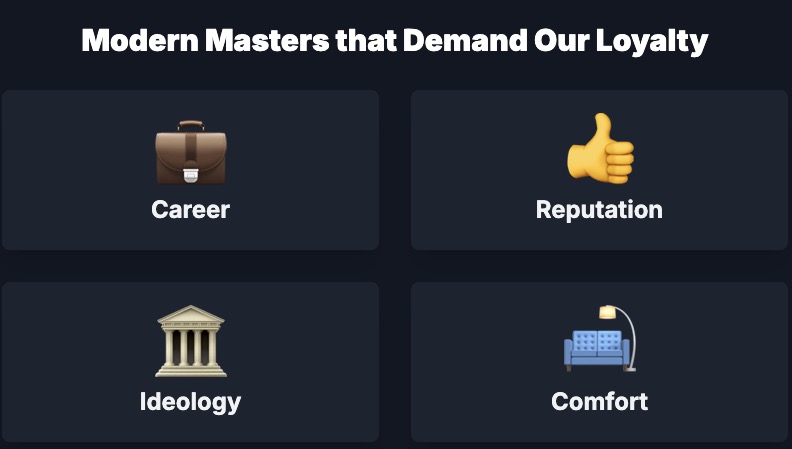
- The homily says we can become "slaves to our worldly obsessions." Besides a king or money, what are some modern "masters" (e.g., career, reputation, political ideology, personal comfort) that can demand our primary loyalty over God?
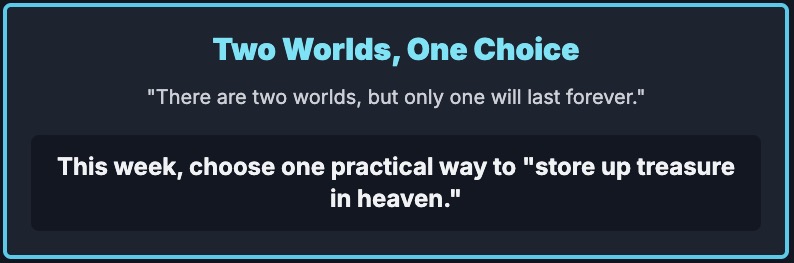
- The homily concludes, "There are two worlds, but only one will last forever." What is one specific, practical choice you can make this week to "store up treasure in heaven" and invest more in the world that lasts?

Do you remember Aesop’s fables? This week Deacon Peter begins his homily with one about birds, beasts and a bat. The moral to this story is that you cannot commit to two opposing priorities at once. Or as Jesus tells us, you cannot serve two masters.
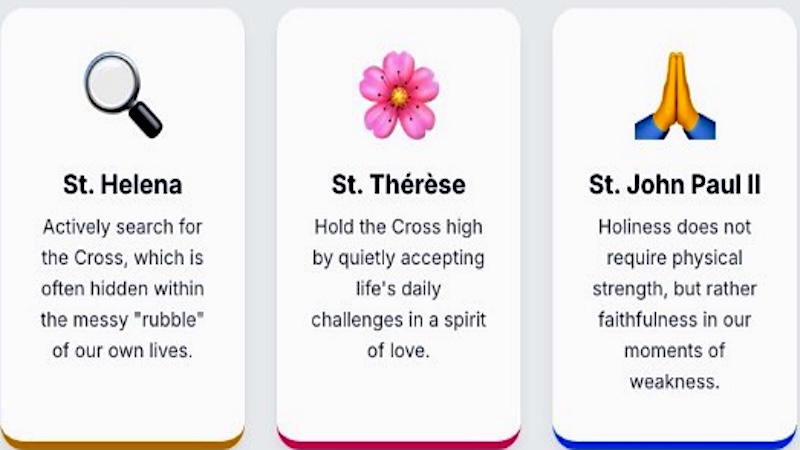
Exaltation of the Cross
Click on infographic to enlarge it

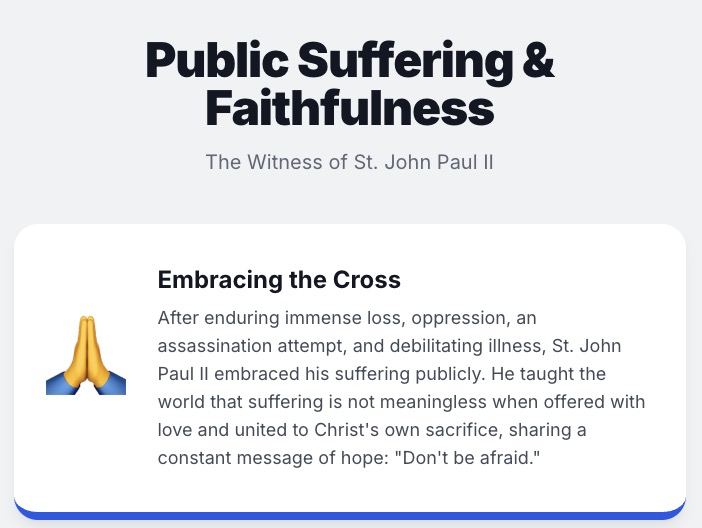
- St. Helena had to demolish a pagan temple to find the Cross. What "temples" (e.g., worldly priorities, false beliefs, attachments) might we need to clear away in our own lives to find the true meaning of the Cross?
- What does it mean to "search for the Cross" in your life today? Where might you find it hidden?
- How does venerating the Cross differ from treating it like a "souvenir or a relic"?


Click on infographic to enlarge it

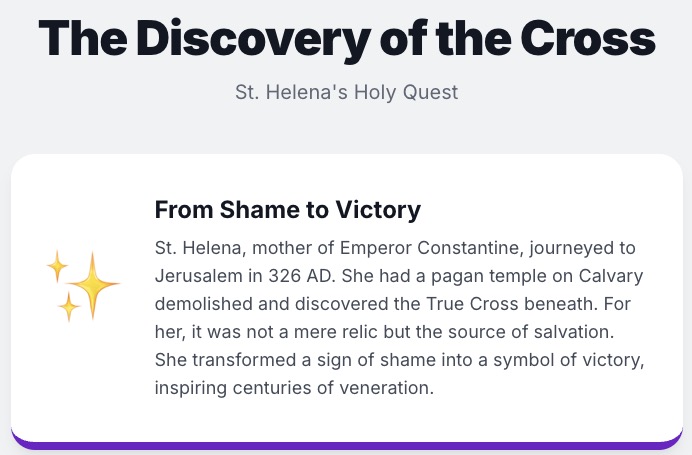
- What are some of the "little crosses" you face regularly in your daily life (e.g., frustrations at work, annoying habits of others, small discomforts)?
- St. Thérèse said, "To pick up a pin for love can convert a soul." Do you believe that small, ordinary actions done with great love can have a real spiritual impact? Why or why not?
- How does the "Little Way" make the profound mystery of the Cross more accessible and less intimidating?
Click on infographic to enlarge it
- In a world that often values strength and hides weakness, why was St. John Paul II's public suffering so powerful?
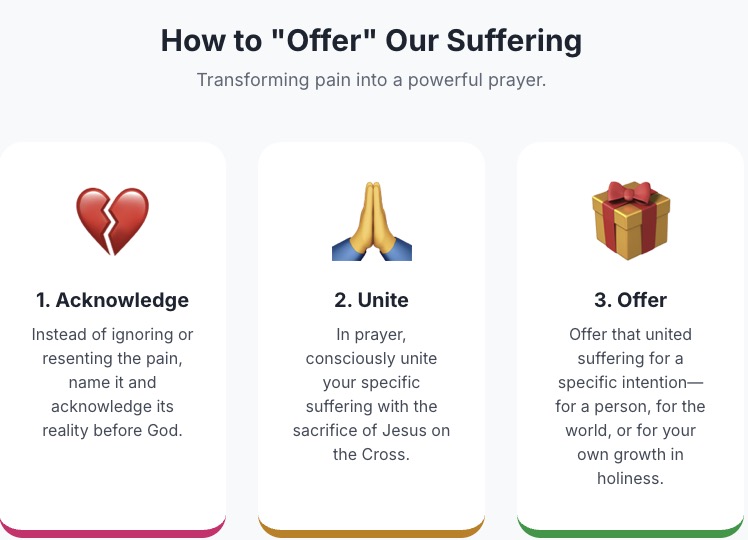
- The homily states that he taught suffering is not "meaningless when it is offered with love and united to Christ." How does one practically "offer" their suffering?
- Reflect on a time you felt weak. How can the message of St. John Paul II change your perspective on that experience? What does it mean to be "faithful in your weakness"?
Click on infographic to enlarge it
Discussion guides and Infographics on this page have been created using AI generative tools (i.e. GOOGLE'S AI Gemini 2.5 Flash LLM, Chart.js and Tailwind CSS). They are free to use for any non-profit ministry. THE WORD THIS WEEK kindly requests that you show your appreciation by sharing a link to the website.

Life is full of paradoxes, of things that seem self-contradictory or absurd but still remain true. Like in social media, where the more connected you are, the less connected you become. Or the truism that if you want to succeed, then expect to fail.
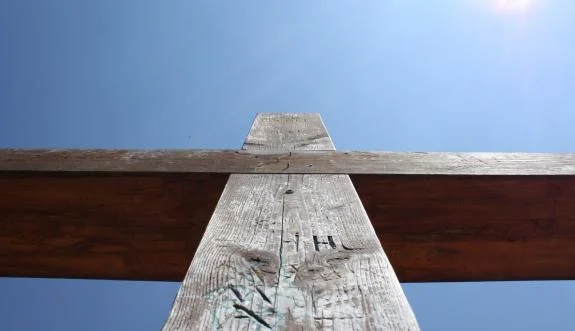
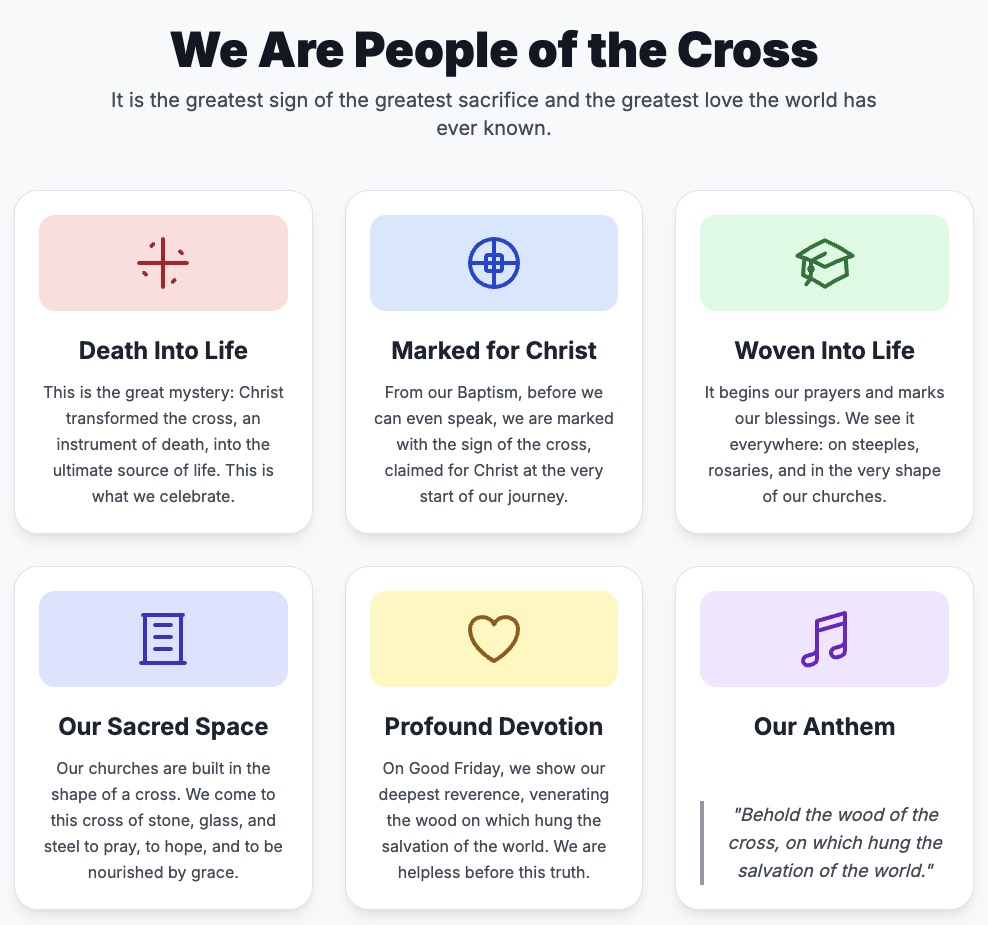
Today we celebrate the greatest paradox of all – the Cross of Christ. It’s the most brutal instrument of torture and death, and yet it’s also the tree of life. It’s a symbol of utter human weakness and failure, but also the ultimate proof of God’s power and love.
────── ⋆⋅☆⋅⋆ ──────
Fr. Jude Langeh, CMF

25th Sunday of Year C

Nothing Should Replace God
────── ⋆⋅☆⋅⋆ ──────

25th Sunday of Year C
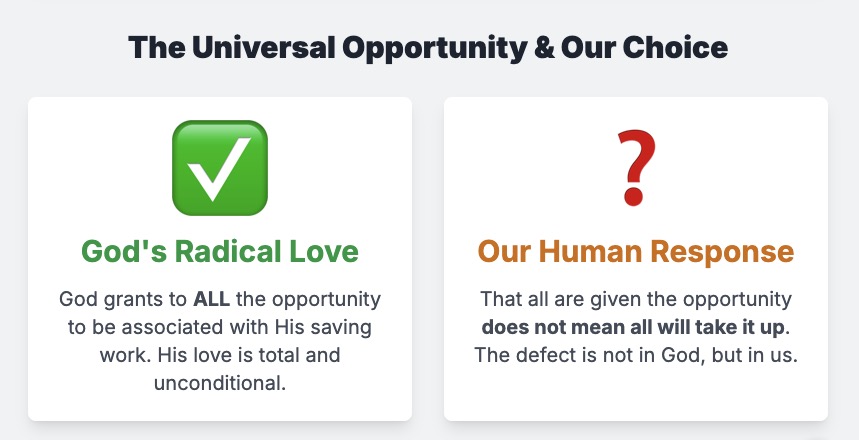
Click on infographic to enlarge it
The reflection questions and infographics featured in this section have been created with the help of Google Gemini 2.5 AI tools, using Chart.js and Tailwind CSS. THE WORD THIS WEEK is happy to offer these resources to any non-profit ministry for use, and kindly request that you provide credit to the website and the respective contributors whose content is illustrated.
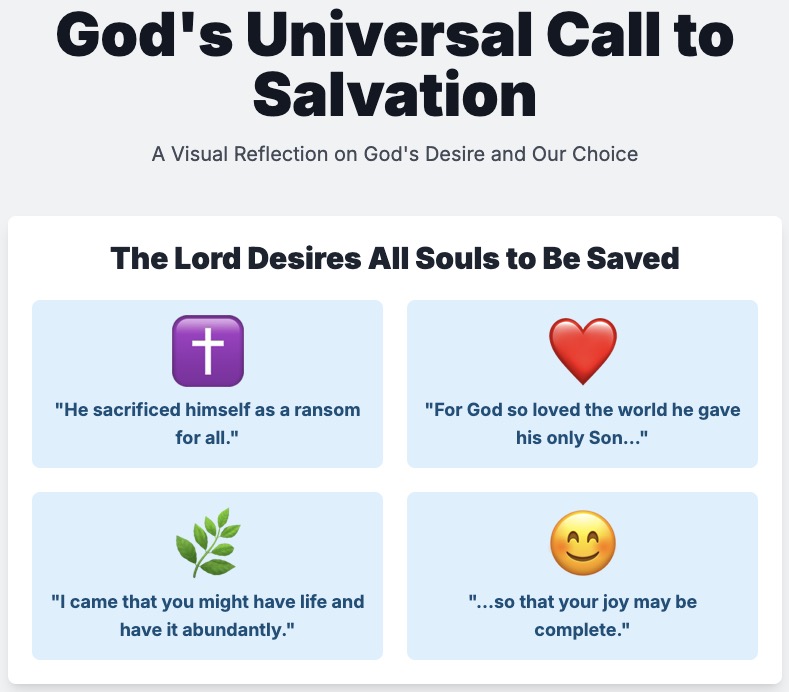
GOD'S INVITATION AND OUR PARTICIPATION
- Brother Thomas says God gives all the "opportunity to be associated with the Paschal mystery." What does it mean to you to be "associated with" Christ's saving work in your daily life?
- How does the idea that we are "real causes of good things" and partners in our own salvation change your perspective on your daily actions and choices?
- Brother Thomas notes that while God's love is total, we can still reject it. In what practical ways do people choose not to participate in the life of God?
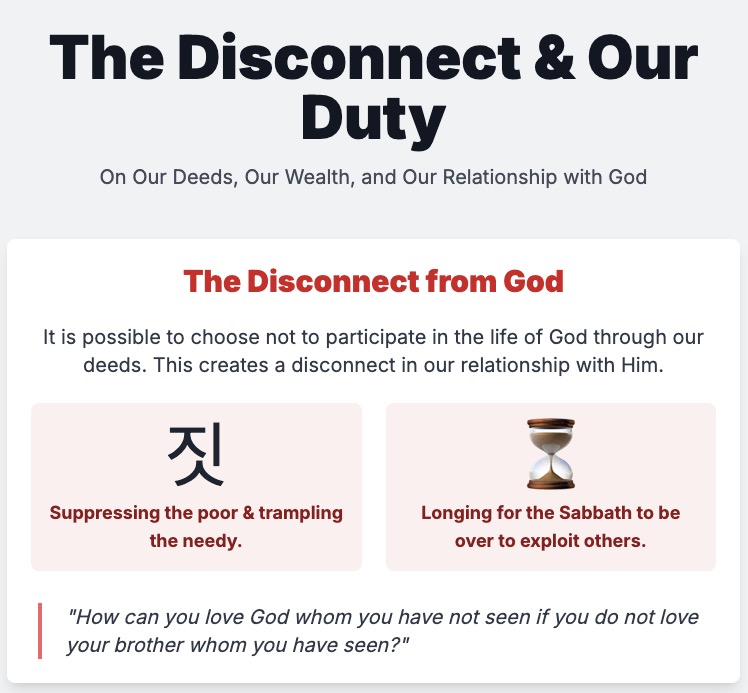
THE DISCONNECT BETWEEN FAITH AND ACTION
- What are some modern equivalents of longing for the Sabbath to be over so one can get back to exploitative practices? Where do you see this "disconnect" in the world today?
- The homily quotes 1 John: "How can you love God whom you have not seen if you do not love your brother whom you have seen?" How does our treatment of others, especially the poor, serve as a true measure of our love for God?
- The Gospel hammers home that "you cannot be a slave both of God and of Money." What are the signs that money, rather than God, is becoming the master in a person's life or in a society?
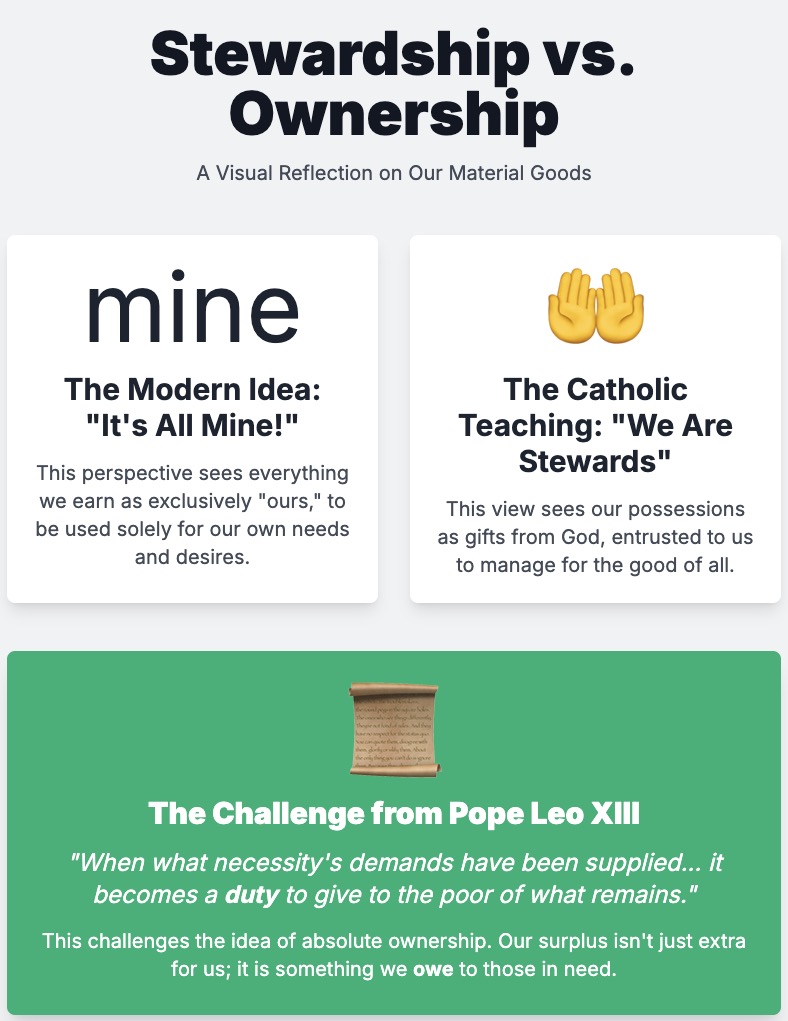
STEWARDSHIP, JUSTICE, AND SALVATION
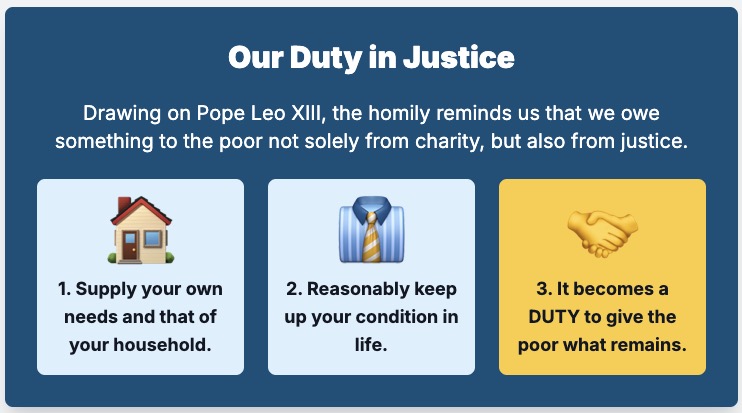
- Pope Leo XIII teaches that after our own needs are met, it becomes a "duty to give to the poor of what remains." How does this challenge the modern idea that everything we earn is exclusively "ours"?
- What is the difference between giving to the poor out of "charity" versus giving out of "justice"? Why is this distinction important?
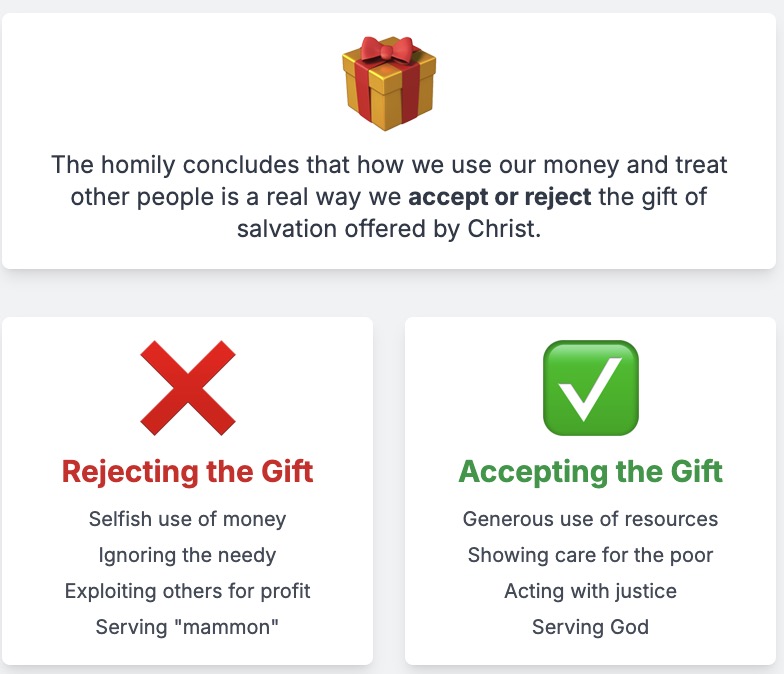
- The homily concludes that how we use money and treat others is a way we "accept or reject the gift of salvation." How can you be more intentional this week in using your resources to actively

Twenty-Fifth Sunday of the Year. Br Thomas Thérèse Mannion suggests that our attitude to wealth is related to our acceptance of salvation.
Today’s Gospel hammers home the point: you cannot be a slave both of God and of Money. It is not so much that material possessions are evil, in fact they can be very useful but that is the point we use money not persons – whether those persons be human persons or divine persons! Material possessions are entrusted to us so that we can express love and thereby become more like God. It is God who is at the heart of our lives not money.
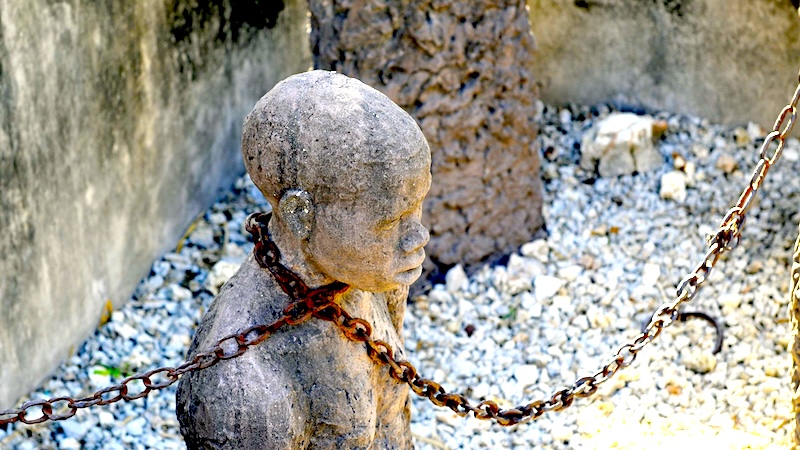
Image: ‘Stone Town Slave Trade 5’ by Son of Groucho (CC BY 2.0)

Click on infographic to enlarge it
Part 1: The Uncomfortable Silence on Slavery
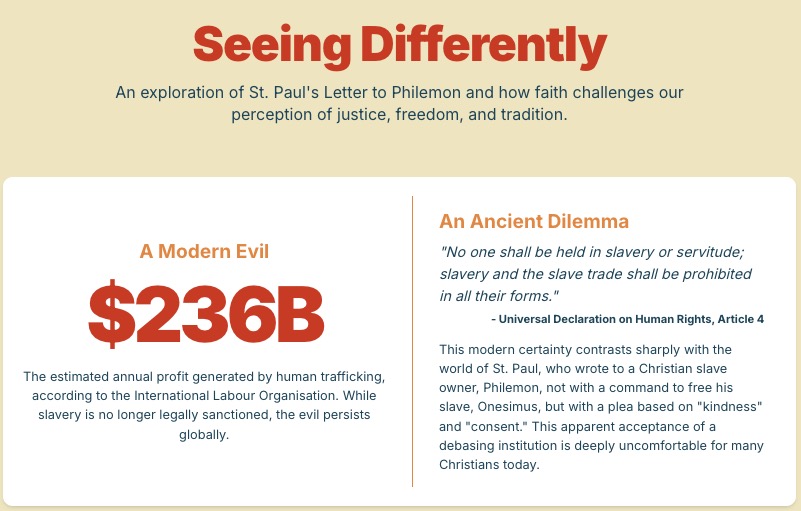
The author begins by contrasting the modern, universal condemnation of slavery with St. Paul's approach, noting Paul "does not insist that Philemon set Onesimus free."
- Why do you think St. Paul handles the situation with such diplomacy and deference to Philemon, the slave owner? Was this a strategic choice, a moral blind spot, or something else?
- Fr. Mullens suggests Paul is "like the man in Jesus’s parable" who assembles the right reasons but is "unable to ‘finish the work’ and draw the necessary conclusion." Do you agree with this assessment? Is Paul's failure to explicitly condemn slavery a weakness of the letter?
- How does it affect our view of scripture when we encounter passages that seem to conflict with our deeply held moral convictions?

Part 2: The Slow Progress of Tradition
Fr. Mullens argues that "the gradual unmasking of slavery as an inherently debasing institution is an example of the long and slow progress of tradition." He quotes, "How long the Gospel takes to permeate the human spirit!"
- What does Fr. Mullens mean when he says slavery "exercised a kind of deceit over the enslavers"? How do deeply ingrained social structures, even unjust ones, become normalized?
- Can you think of other examples in history where the Church's moral understanding has evolved significantly over time?
- Does this idea of a "slow progress" of tradition challenge your view of faith and morality? Does it imply that the Church can be "wrong" about a moral issue for centuries?

Part 3: A New Way of Seeing
The homily's core argument is that "the Gospel often teaches by changing our perspective." It redefines "natural" institutions like the family and slavery by creating a new, spiritual reality.
- Fr. Mullens connects Jesus's shocking command to "hate" one's family with Paul's vision for a spiritual family where a master (Philemon) and his slave (Onesimus) are now "brothers in Christ." How does this new spiritual identity completely change the dynamic between them?
- Fr. Mullens states that Paul gives Onesimus a way to see beyond his circumstances, so that he "can no longer think of himself a slave." How powerful is this "inner" or spiritual freedom if one's physical reality remains unchanged?
- History doesn't record Philemon's decision. The author presents two possibilities: freeing Onesimus or keeping him in chains. What are the theological implications of each choice, according to the article? Which outcome do you think is more powerful as a lesson?
Part 4: Connecting to the Modern World
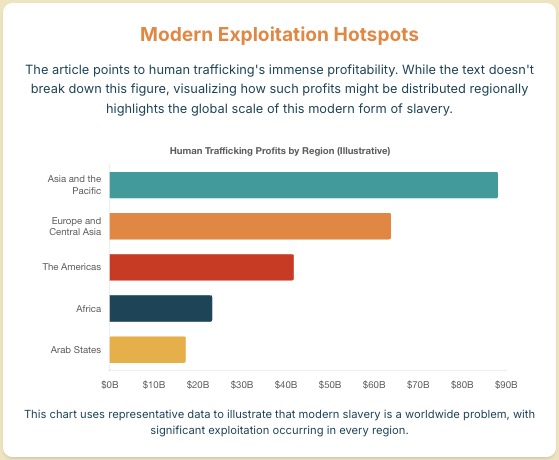
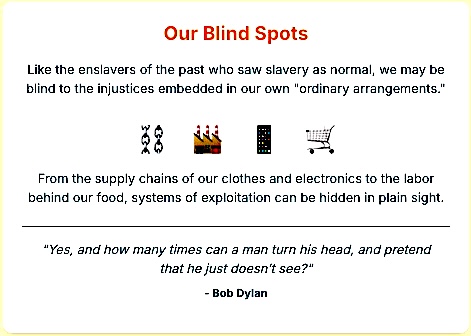
The article concludes by linking the historical blindness to slavery with modern injustices and our own potential blind spots, quoting Bob Dylan's "Blowin' in the Wind."
- The author points to the modern-day evil of human trafficking. In what ways do we, like the British investors in West Indies plantations, participate in systems of exploitation without ever meeting the people who are harmed?
- The Dylan lyrics ask, "how many times can a man turn his head, and pretend that he just doesn’t see?" What are some of the injustices in our society today that we might be pretending not to see?
- After reading this article, what does it mean to you to "see differently" as a person of faith? How can we actively try to see the world through the lens of the Gospel rather than through the lens of our culture's "ordinary arrangements"?
Twenty-Third Sunday of the Year. Fr Bede Mullens considers the difficulties raised by the Letter to Philemon..
History does not record Philemon’s final decision. If he freed Onesimus, it was all for the best. If he insisted on keeping Onesimus in chains, he was only calling down judgment on himself, by making Onesimus even more clearly the image of Paul in prison, the image of Christ crucified. How often we fail to learn except from the scars we inflict, and the Spirit of Wisdom blows unpredictably to straighten out the paths of those on earth.
────── ⋆⋅☆⋅⋆ ──────
Fr. Austin Fleming
25th Sunday of Year C
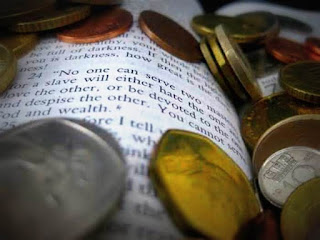
No One Can Serve Two Masters
Click on infographic to enlarge it
The reflection questions and infographics featured in this section have been created with the help of Google Gemini 2.5 AI tools, using Chart.js and Tailwind CSS. THE WORD THIS WEEK is happy to offer these resources to any non-profit ministry for use, and kindly request that you provide credit to the website and the respective contributors whose content is illustrated.
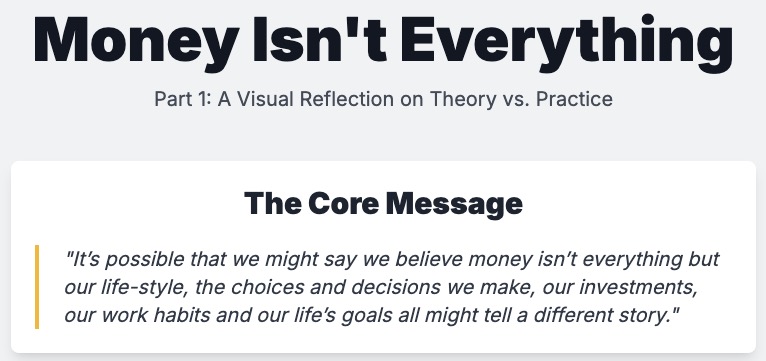
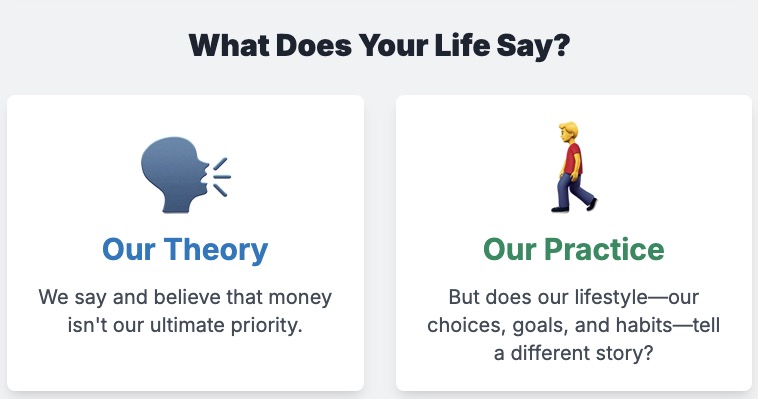
MONEY ISN'T EVERYTHING: THEORY VS. PRACTICE
- Fr. Fleming says the proof of our beliefs is in practice, not theory. What are some specific examples of a person's "life-style" or "choices" that might reveal money is more important to them than they say?
- Jesus spoke in the terms of his own culture. What aspects of our modern culture make it especially difficult to live like "money isn't everything"?
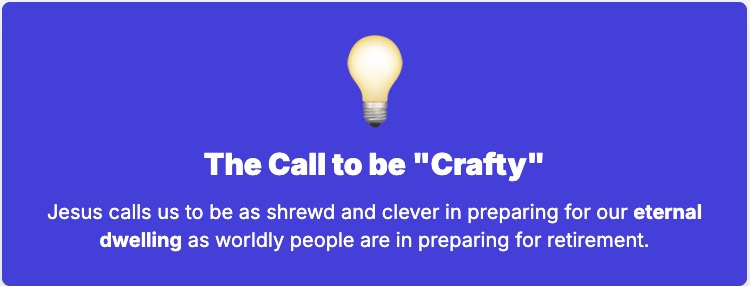
- Fr. Fleming suggests we need to be "crafty" in preparing for our eternal dwelling. What is one "crafty" or shrewd step you could take this week to prioritize your spiritual future?

INVESTING IN THE RIGHT FUTURE
- Honestly answer the homilist's question for yourself. What does your answer reveal about where you are more "fully, carefully invested"?
- What are some practical ways a person could "track the stability and health" of their spiritual life with the same care they might track their finances?
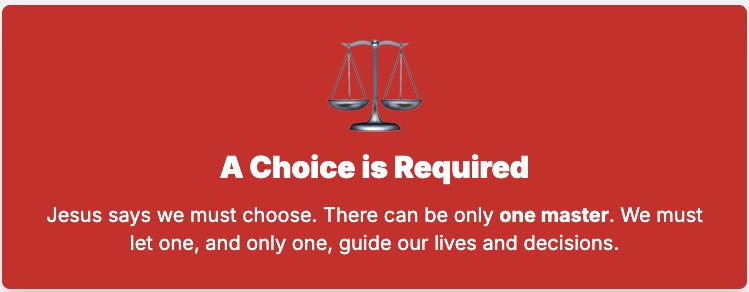
- Fr. Fleming emphasizes we must choose only one master. Why do you think Jesus makes no provision for "co-masters or partnerships" when it comes to God and wealth?


THE ULTIMATE INVESTMENT
- What does the phrase "don't lose your soul" mean to you in the context of your daily work, decisions, and ambitions?
- How does the Eucharist, as the homilist suggests, give us "a taste and a sip of that peace... that depends not on the stock market’s variables but only on the grace of God"?
- Fr. Fleming concludes that our greatest wealth is God's love, which can only be "treasured, served and shared." What is one way you can better treasure, serve, or share this wealth this week?
2016 HOMILY — This homily deciphers the Parable of the Shrewd Steward, revealing its core message for our time: Money Isn’t Everything. It challenges us to compare our investment in our financial future with our spiritual future.
────── ⋆⋅☆⋅⋆ ──────
Fr. Jude Siciliano, O.P.

25th Sunday of Year C
The Dishonest Steward
THE PRUDENT STEWARD'S CRISIS
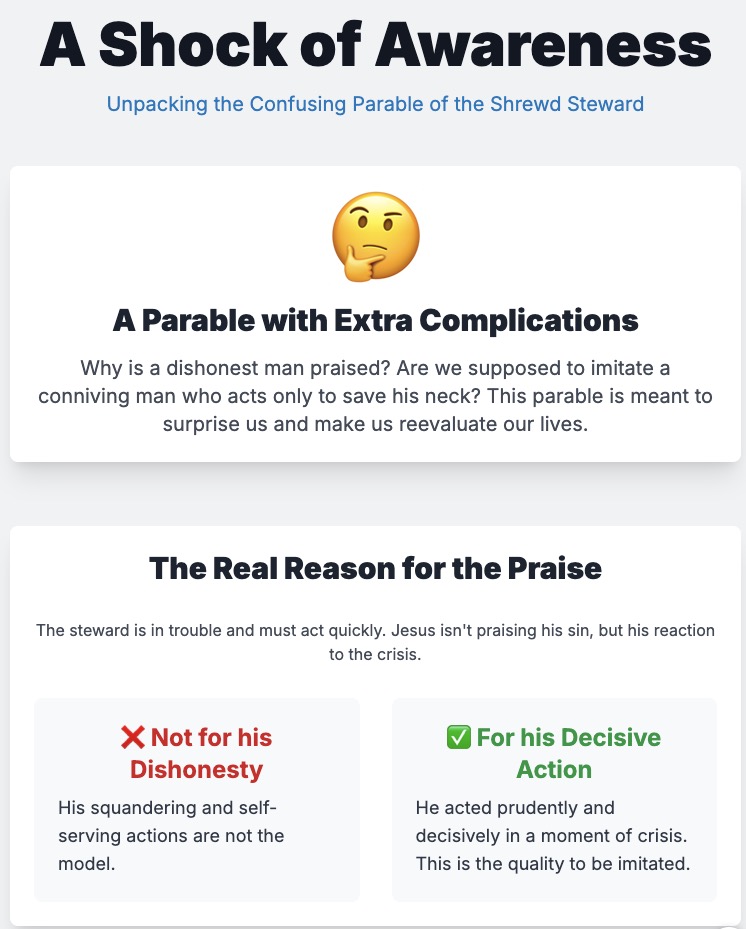
- Fr. Jude suggests Jesus praises the steward not for his dishonesty, but for his decisive and prudent action in a crisis. Why do we often find it hard to act decisively when facing our own spiritual or personal crises?
- Jesus was heading toward his own crisis in Jerusalem. How does this context change your understanding of his call for his followers to be "prudent" and prepared?
- Fr. Jude asks if we will be "children of light" or "children of the world" in a crisis. What does it look like to respond to a modern-day crisis (personal, financial, health) as a "child of light"?
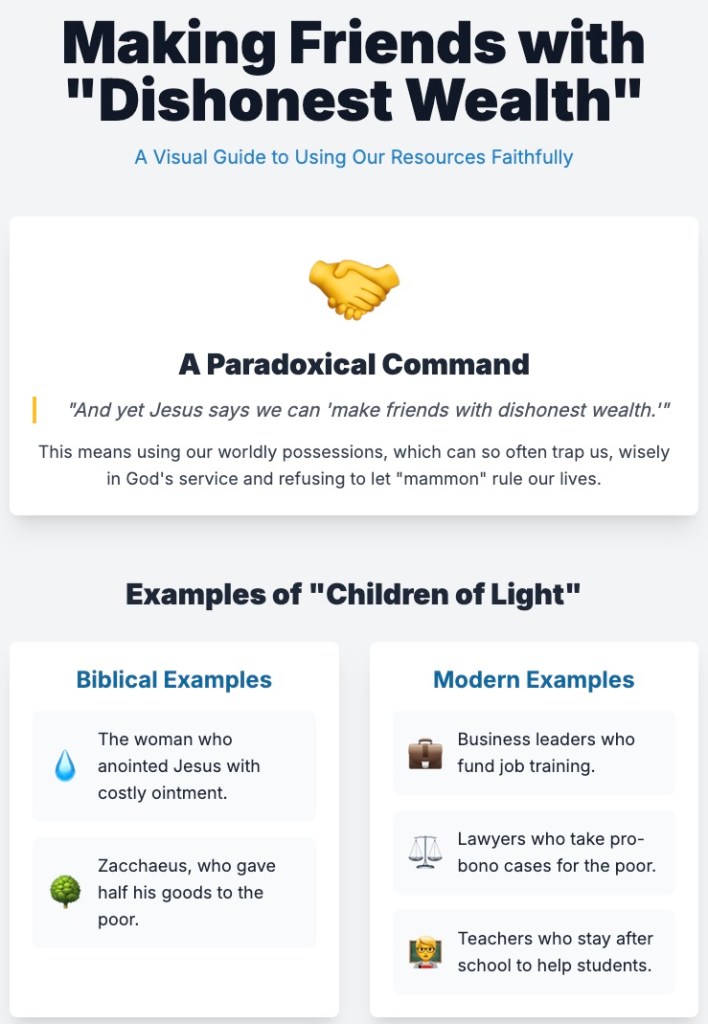
USING OUR RESOURCES FAITHFULLY
- Jesus says we can "make friends with dishonest wealth." What does this paradoxical phrase mean to you? How can something potentially dangerous be used for good?
- Fr. Jude gives several modern examples of using resources faithfully (business leaders, lawyers, teachers). Can you think of other practical, everyday ways people can use their skills, time, and money to serve God instead of "mammon"?
- Fr. Jude notes that material things can "trap us and distract us from what truly matters." What is the biggest distraction that wealth or the pursuit of it creates in your own life?
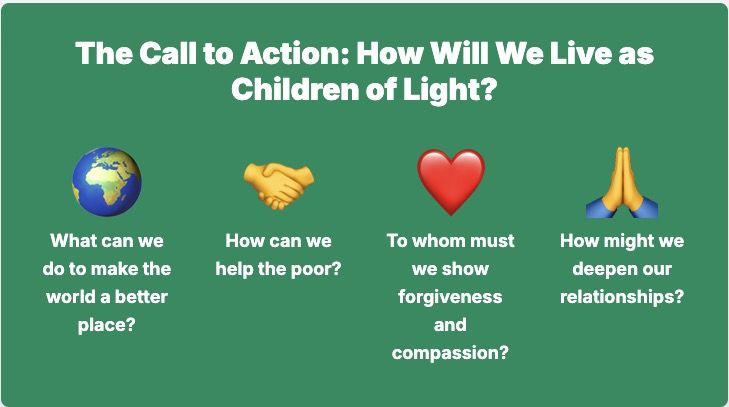
OUR FUNDAMENTAL LOYALTIES
- Fr. Jude connects the parable to the prophet Amos, who condemned those who profit at the expense of the poor (e.g., through sweatshops). In what ways might we unknowingly participate in or benefit from systems that are unjust to others?
- What does it mean to be a "steward" of our possessions rather than an "owner"? How does this change our perspective on everything we have, including our income and our talents?
- Fr. Jude ends with a blunt call to action: "God's business... must come first." What is one specific area of your life where you feel called to more urgently prioritize "God's business" over the world's?
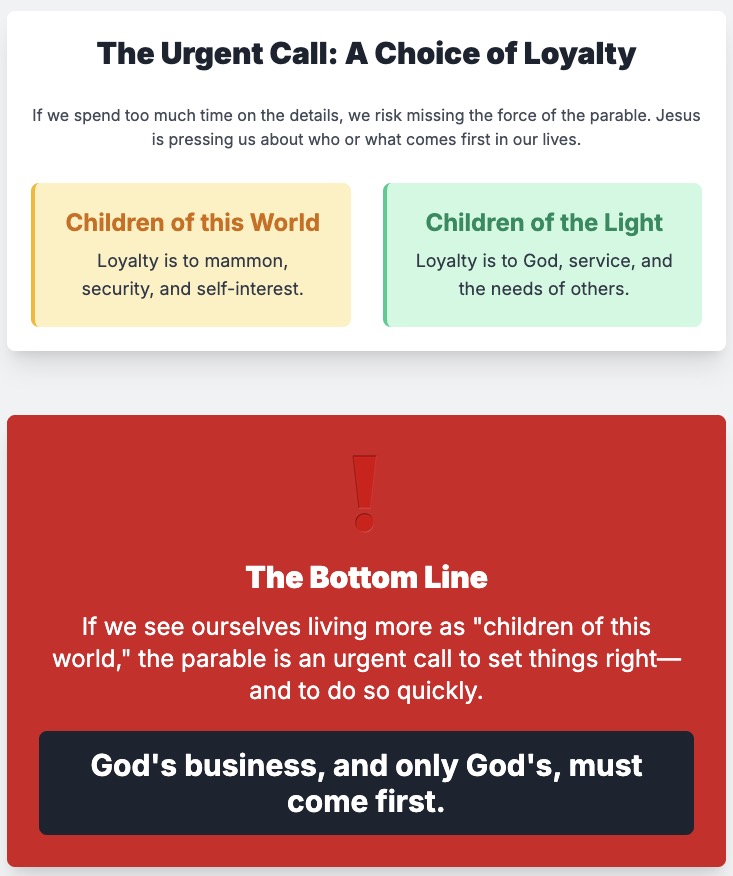
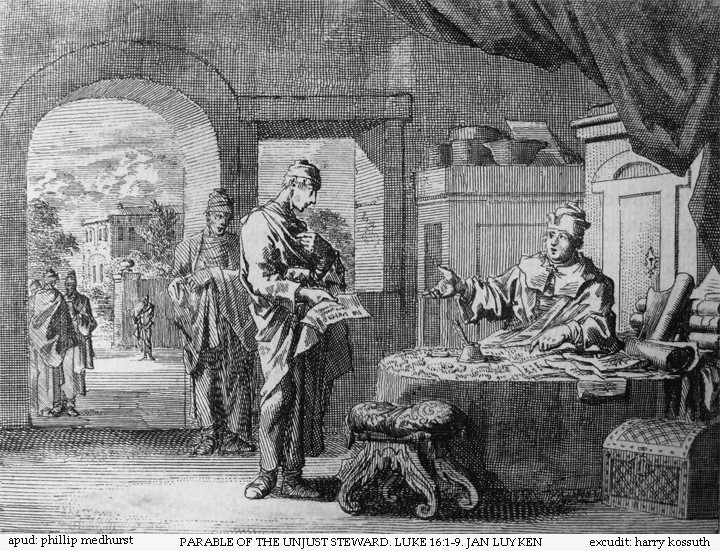
Today’s parable brings extra complications both for the preacher and for those who will hear it proclaimed this Sunday. The difficulties appear quickly. What exactly was the steward’s “squandering” of the master’s property? Why would the rich man praise him for actions that seem dishonest and self-serving? Is the parable really suggesting we imitate a conniving man who acts only to save his neck?
Today’s gospel has two segments: the parable itself (vv. 1–8a) and the sayings that follow (vv. 8b–13), both tied together by the theme of money. To keep the focus clear, I would suggest preaching on just one section, not both. Let the other wait until it comes around again in the Lectionary.
────── ⋆⋅☆⋅⋆ ──────
Fr. Charles E. Irvin
25th Sunday of Year C
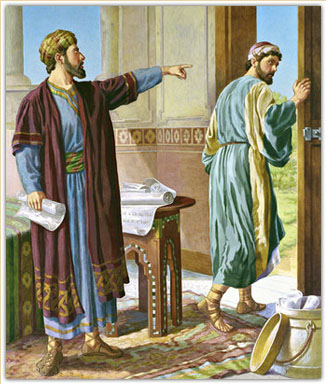
Planning Ahead
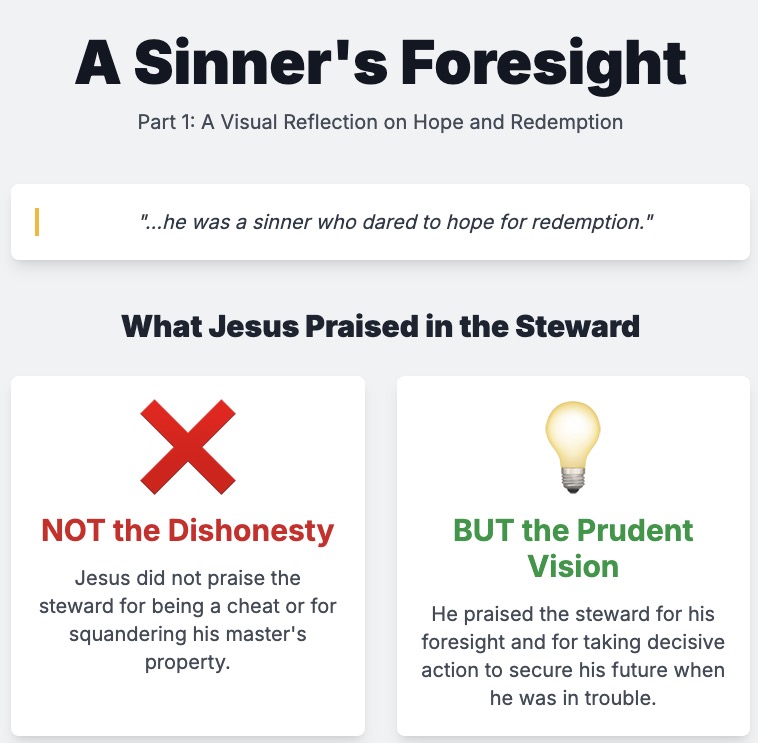
Click on infographic to enlarge it
The reflection questions and infographics featured in this section have been created with the help of Google Gemini 2.5 AI tools, using Chart.js and Tailwind CSS. THE WORD THIS WEEK is happy to offer these resources to any non-profit ministry for use, and kindly request that you provide credit to the website and the respective contributors whose content is illustrated.
A SINNER'S FORESIGHT
- Fr. Irvin explains that the steward wasn't praised for his dishonesty, but for his foresight. What is the key difference between these two things? Why is it so easy to confuse them?
- The steward, like the prodigal son, realized he was in trouble and took immediate, decisive steps to secure his future. What does this teach us about the connection between acknowledging our sinfulness and taking action for our own salvation?
- Have you ever had a "moment of clarity" after making a mistake where you knew you had to act decisively to fix things? How is this similar to the "prudent vision" the homily describes?
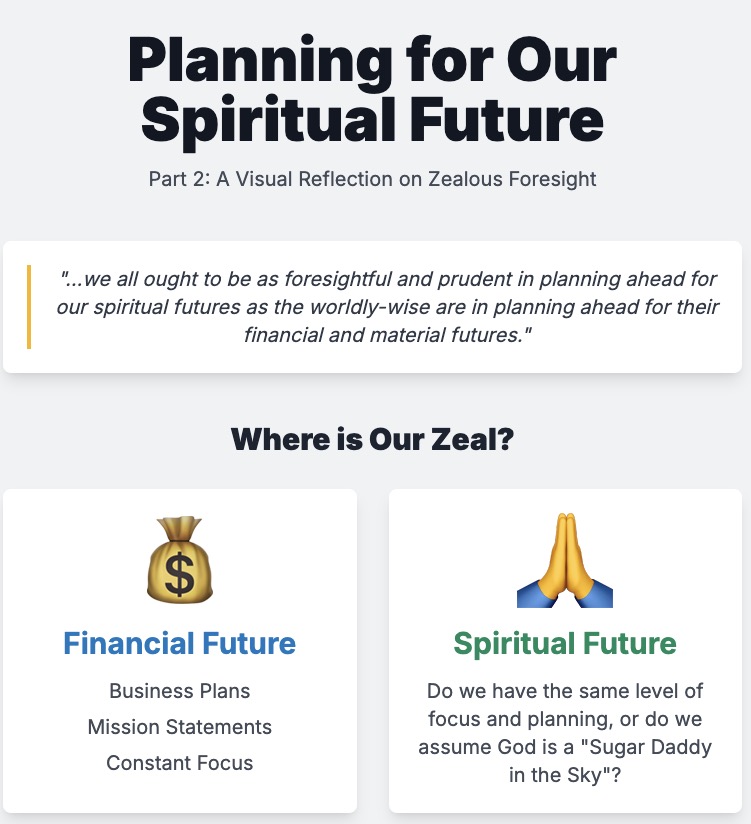
PLANNING FOR OUR SPIRITUAL FUTURE
- Fr. Irvin asks if we treat God like a "Sugar Daddy in the Sky," assuming He will take care of everything regardless of our actions. In what ways can this attitude be an insult to God's gift of free will?
- If you were to create a "Mission Statement" or "Business Plan" for your spiritual life, what would be its primary goal? What key actions would it include?
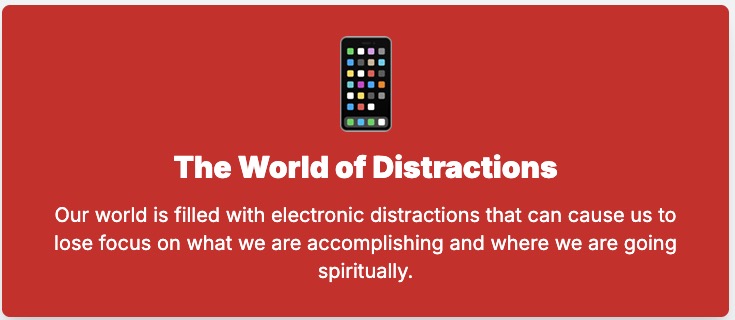
- Fr. Irvin mentions the many distractions from our electronic devices. What is one practical change you could make to reduce these distractions and create more focus for your spiritual future?

THE DECISION TO ACT
- Fr. Irvin asks, "What do you see in your own spiritual future?" When you honestly consider this question, what hopes and fears come to mind?
- He suggests that making a retreat isn't just a "nice thing to do" but a "very necessary thing to do." Why is intentional time alone with God so essential for our eternal destiny?
- How does viewing your ultimate destiny as an "eternal love relationship" with God change the way you think about planning for your spiritual future?
This week’s homily is from Fr. René J. Butler, M.S.

The point Jesus making is that we all ought to be as foresightful and prudent in planning ahead for our spiritual futures as the worldly-wise are in planning ahead for their financial and material futures. Jesus, clearly, is not commending the wicked steward for his deviousness. He was, after all, establishing a conspiracy to defraud the owner of the interest on his loans while at the same time returning the master’s principal amount on his loans, making friends with his mater’s debtors, and securing his own future along the way. Jesus was presenting His followers with the example of the zealous foresightfulness of the wicked steward and wishing that His own followers would be at least as enterprising in caring for the future of their souls.
────── ⋆⋅☆⋅⋆ ──────
Fr. George Smiga
25th Sunday of Year C


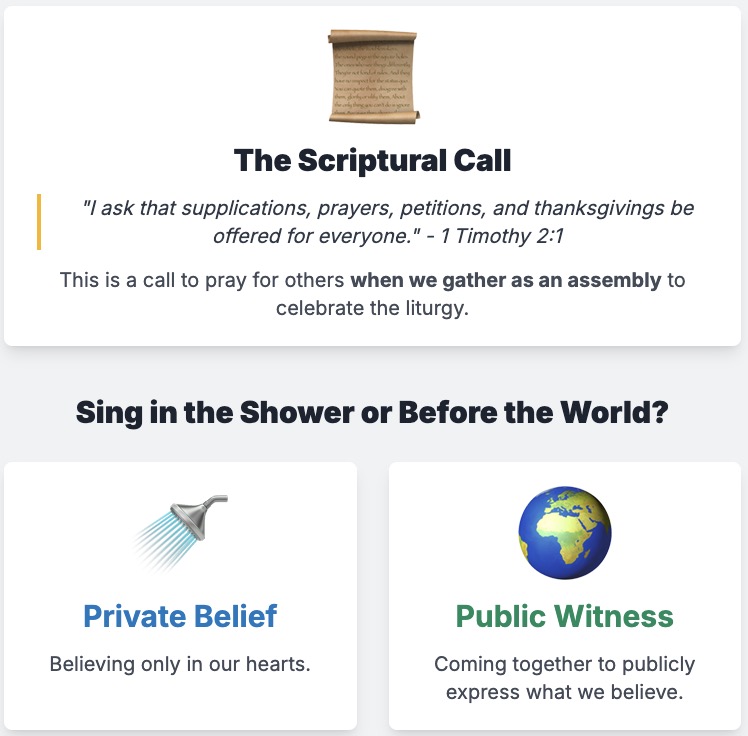
A Homily Based On 1 Timothy 2:1-8
Click on infographic to enlarge it
Worship as Power
WHEN WE CANNOT PRAY
- The man in the story felt numb, abandoned by God, and completely unable to pray. Have you ever experienced a time of crisis or sorrow where prayer felt impossible? What did that feel like?
- The turning point for the man was not the sermon or a private prayer, but hearing the community sing the psalm. Why do you think the collective, sung prayer of the assembly had such a powerful healing effect on him?
- Think of a time when the faith, words, or actions of another person or a community helped carry you through a difficult period. What was it that they did or said that made a difference?
LEAN ON US
- The homily connects this story to St. Paul’s call to offer prayers "for everyone." How does this story change your understanding of what it means to pray for others during the liturgy?
- Fr. Smiga contrasts coming to Mass as part of a "dull routine" versus being an "active voice." What are some practical differences between these two approaches to worship?
- How does the realization that the person next to you might be carrying an immense, hidden burden change your perspective on your own participation—your singing, your responses, and your prayerfulness?

THE DAY THEY MUST PRAY FOR ME
- In what way is actively participating in Mass each week an "investment" in your own future spiritual well-being?
- It can be difficult to admit when we are weak and need others. Why is it so important to have a community that we know we can depend on to "pray for us" when we are at our lowest?
- After hearing this homily, what is one specific change you can make to participate more fully and deeply in the liturgy?

2007 HOMILY – Fr. Smiga shares a powerful story about a man whose son was in a coma. Numb and unable to pray, the man came to Mass and was moved to tears when the congregation sang, “In every age, O Lord, you have been our refuge.” Their voices became his prayer, restoring his hope. The homily emphasizes that our active, public worship is not just a personal duty but a charitable act. We pray and sing for each other, offering strength to those who are struggling and cannot pray for themselves, fulfilling St. Paul’s call to offer prayers for everyone.
────── ⋆⋅☆⋅⋆ ──────
────── ⋆⋅☆⋅⋆ ──────
25th Sunday of Year C

True Success

What makes someone a success? The swindlers of the first reading and those in our society that make money any way possible, have bought into the lie that success is measured by net worth. I remember hearing someone tell me that he wanted to have a certain amount of money accumulated before he died. Then his life would be a success. How sad. Others will say that a person’s intelligence and skills should lead him or her to make as much money as possible. Also sad. Following that reasoning, a teacher is not as successful as other professionals because other professionals make a lot more money. You know as well as I know that this is not true. But that is the way that many people of the world measure success.
────── ⋆⋅☆⋅⋆ ──────
25th Sunday of Year C
On Being Faithful in a Few Things before Being Ruler over Many Things
In this Sunday’s Gospel, the Lord Jesus gives a penetrating analysis of the state of the sinner and some very sobering advice to us would-be saints. Let’s look at the Gospel in two stages:
I. ANALYSIS OF THE SINNER
A. DELUSION (of the sinner)
B. DISSIPATION (of the sinner)
C. DEATH (of the sinner)
II. ADVICE TO THE SAINTS
A. Principle of INTENSITY
B. Principle of INVESTMENT
C. Principle of INCREASE
D. Principle of INDIVISIBILITY
────── ⋆⋅☆⋅⋆ ──────
Fr. Michael Chua
25th Sunday of Year C

“So clever! So clever” so says the astute Fr Dominic. He is of course referring to how some people (priests included) are able to wrangle themselves out of work commitments by the flimsiest of excuses. What augments their “cleverness” is that they often push the buck to others, and poor Fr Dominic often ends up “covering” for them, which makes him lament his own condition, “So stupid! So stupid!”
The “cleverness” of the steward in today’s parable seems apparent and yet for us Christians, seem utterly disturbing and even scandalising. The steward who was called to account for having wasted his rich landlord’s property chooses fraud as the “clever” way out.

All three readings, if read separately, would have had their own respective appeal and would have seemed reasonable had each been judged by their own internal logic. The problem is when we juxtapose them, as the lectionary does this week, and attempt to reconcile the seemingly divergent messages, we may end up having to do theological acrobatic somersaults. Or at least it would seem to be so.
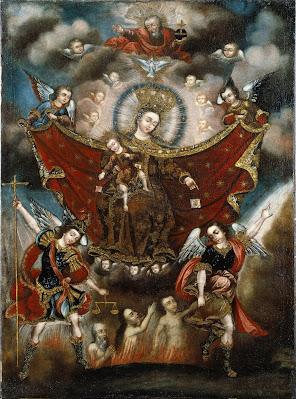
When Protestants ask Catholics if they have been saved, the question would most likely be met with a stunned look on the part of the Catholic or an admission that he has never thought about this before. This comes as good news to the Protestant as he can now confidently proselytise the Catholic and ensure that the latter is saved by becoming a Bible believing, faith professing Protestant Christian. For many Protestants, one becomes a Christian by merely making a confession of faith in Jesus as Saviour and Lord. Baptism comes later but isn’t necessary for our salvation. I guess the reason why most Catholics are not prepared with an answer to that question is that salvation or rather, heaven, is something they often take for granted. Why worry about this moot issue when we can all get to heaven?
25th Sunday of Year C
Faith Shedding Light on Economics and Politics
When we studied literature, such as Shakespeare, not every character was one to emulate or copy. Likewise, when we watch a movie, we know that not every character is worthy of imitation. But nevertheless, these characters reflect life, and we can also learn from them. It is the same in the parables that Jesus taught. Not every character is a model for living. But Jesus employed such characters in his parables to teach us what is important for living and, as in the prodigal son, to teach us about the love and mercy of God.
────── ⋆⋅☆⋅⋆ ──────
25th Sunday of Year C
A young man once asked God how long a million years was to him. God replied, “A million years to me is just like a single second to you.” The young man asked God what a million dollars was to him. God replied, “A million dollars to me is just like a single penny to you.” Then the young man got his courage up and asked, “God, could I have one of your pennies?” God smiled and replied, “Sure, just a second.” –Anonymous
That joke is brought to you by Professor Anonymous. He is a funny guy, Professor Anonymous. I share it with you because, in our Gospel reading this weekend, Jesus says that we cannot serve both God and mammon. Jesus is asking us to make God the first priority in everything. Of course, mammon is commonly misunderstood as referring to just money. The idea of mammon is a little more complex. Mammon is defined by Webster’s as “riches, greed, and worldly gain personified as a false god in the New Testament.” Mammon is defined as “riches considered as an evil influence of object or worship.” Instead of the question, what do I own, the question becomes, what owns me? That’s mammon.
The reflection questions and infographics featured in this section have been created with the help of Google Gemini 2.5 AI tools, using Chart.js and Tailwind CSS. THE WORD THIS WEEK is happy to offer these resources to any non-profit ministry for use, and kindly request that you provide credit to the website and the respective contributors whose content is illustrated.