September 28, 2025
September 28, 2025


Homilies
Homilies
Deacon Greg’s blog has garnered some 20 million readers from around the world since its inception in 2007.
26th Sunday of Year C
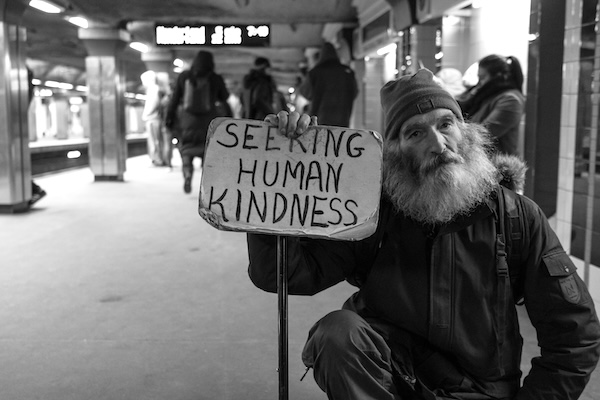
The Sin of Indifference
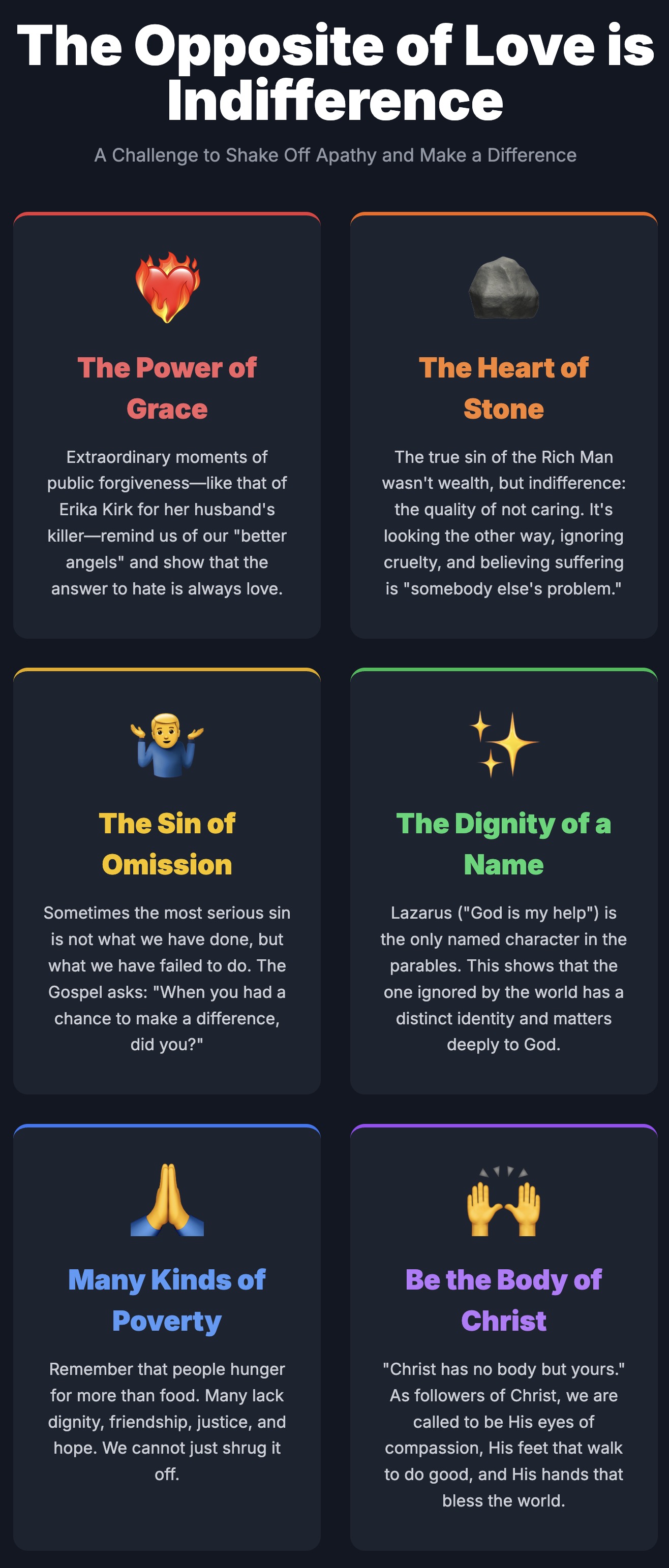
2025 HOMILY— In the parable of the rich man and Lazarus, we are reminded that sometimes the most serious sin is not a sin of commission, but a sin of omission.
At the start of every Mass, we pray for forgiveness “for what I have done and what I have failed to do.”
This Gospel points to each of us and asks, “What have you failed to do? What could you have done, but didn’t? When you had a chance to make a difference, did you?”
────── ⋆⋅☆⋅⋆ ──────
Deacon Peter McCulloch
26th Sunday of Year C


The Parable of Dives and Lazarus


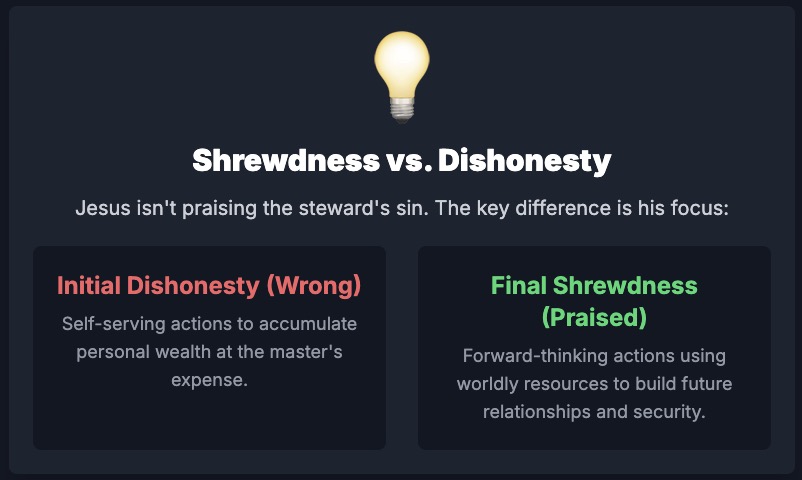
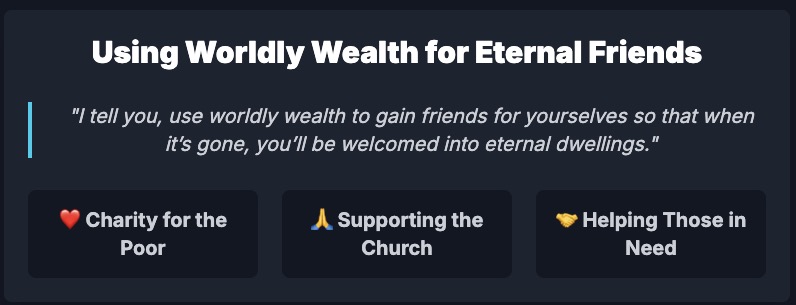



How do we respond to such suffering? There’s so much hardship and pain in our world today. Every family, community, school and workplace has people who struggle. They might need friendship, encouragement or some kind of practical support, but they are all Jesus Christ himself.
And secondly, this parable warns us that hell is real. Jesus often talks about hell in the Gospels (e.g., Mk.9:43, 48; Mt.10:28; 13:42; 25:30, 41). In fact, he talks more often about hell than about heaven.
Today, he’s telling us to choose, because once we cross over that threshold into eternal life, it will be too late to change our minds.
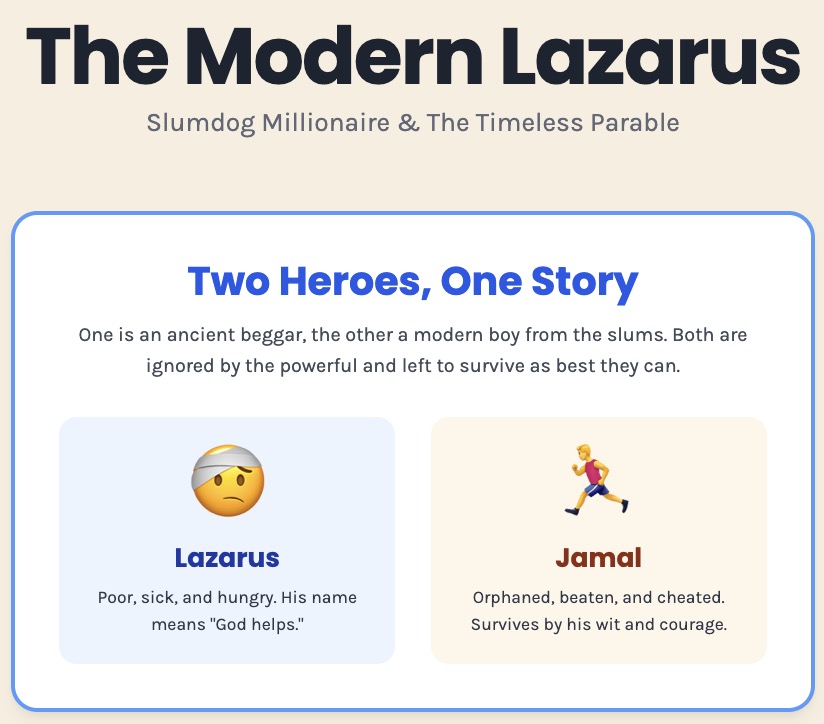
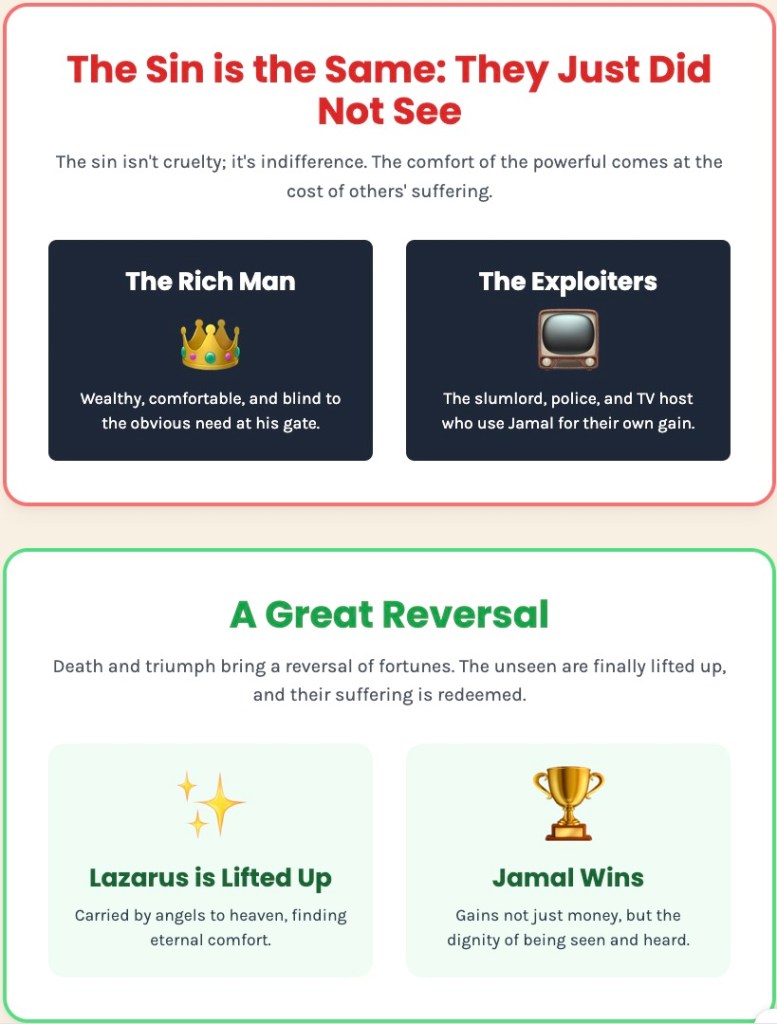
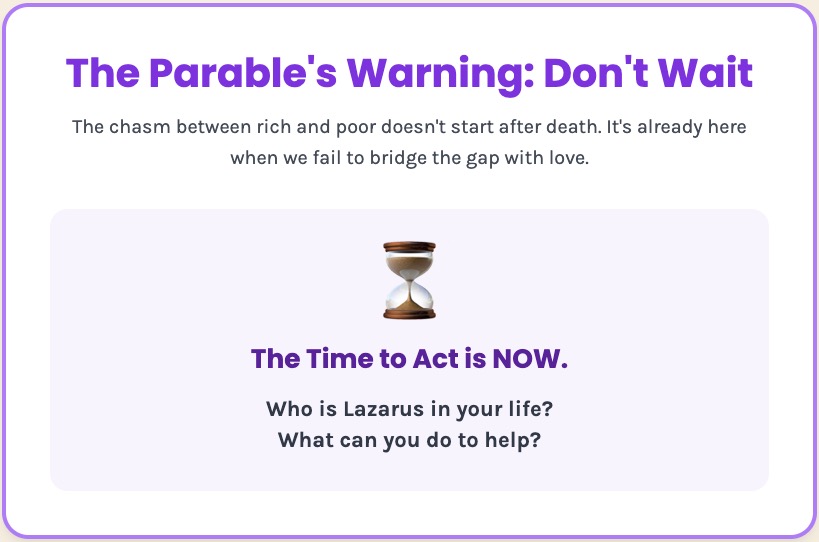
Click on infographic to enlarge it
Infographics on this page have been created using AI generative tools (i.e. GOOGLE'S AI Gemini 2.5 Flash LLM, Chart.js and Tailwind CSS). They are free to use for any non-profit ministry. THE WORD THIS WEEK kindly requests that you show your appreciation by sharing a link to the website.

Deacon Peter’s homily frames the parable of Lazarus and the rich man as a timeless warning against indifference. Using the film Slumdog Millionaire as a modern parallel, he argues that the rich man’s sin was not cruelty, but a failure to see the suffering at his gate. This “great chasm” between the comfortable and the afflicted exists on earth now. Citing Albert Schweitzer’s life-changing response to the parable, the homily issues an urgent call: we must identify the “Lazarus” in our own lives and bridge the gap with compassion before it becomes eternally too late.
RELATED: Homily Starters – Slumdog Millionaire
────── ⋆⋅☆⋅⋆ ──────

26th Sunday of Year C


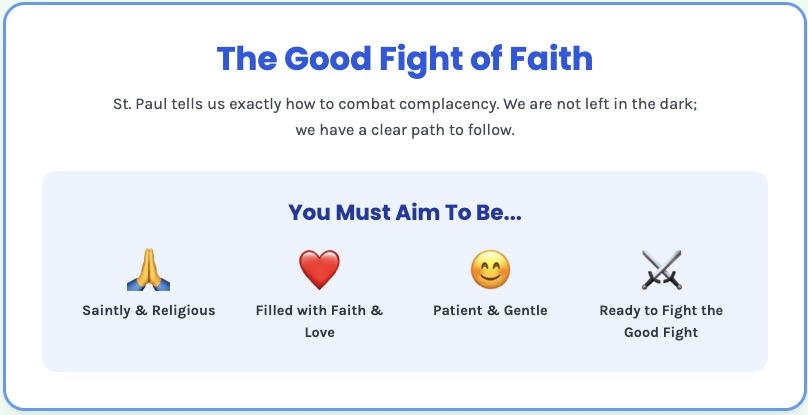

Click to enlarge

Twenty-Sixth Sunday of the Year. Fr Joseph Bailham warns us not to be distracted by the desire for a quiet life.
‘If only’ – these two words are a great get-out clause that we may often use in life to absolve us of responsibility. ‘If only I didn’t have so much work, I’d be able to pray more’ … ‘if only someone had told me, I would have done things differently.’ Life does indeed have many distractions, many of which can be out of our hands to some extent. But sometimes there are distractions in life which we enable and facilitate. The problem is we don’t think of them as distractions in the moment; we tell ourselves that they’re something else.

Image: Works of Mercy with Dives and Lazarus
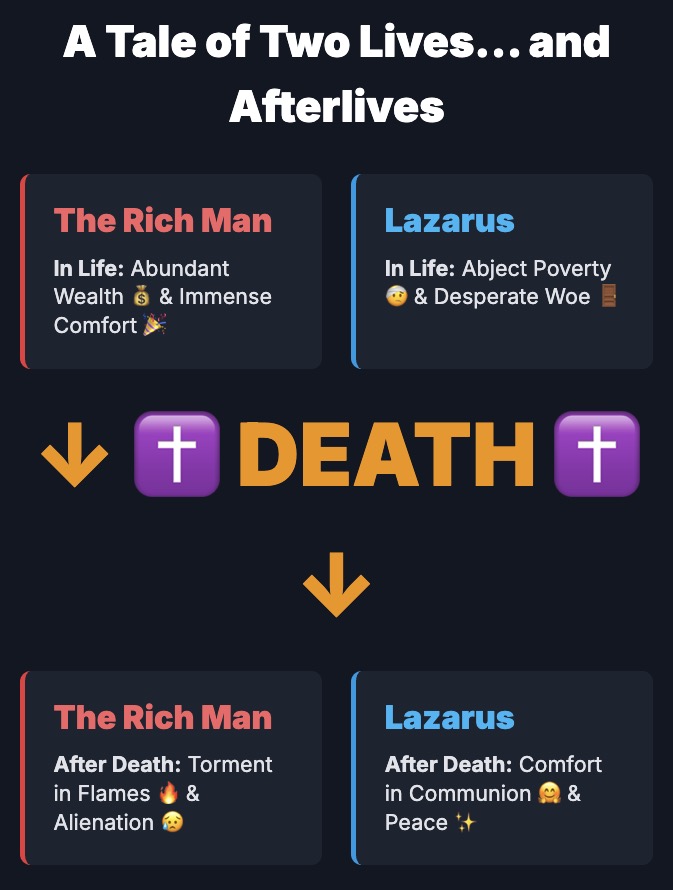

Twenty-Sixth Sunday of the Year. Fr John Bernard Church preaches on the parable of Lazarus and the rich man.
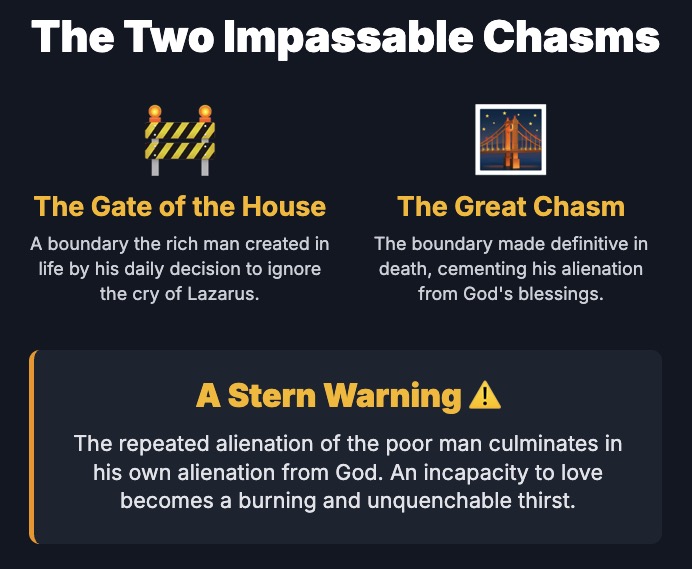
The ‘great reversal’ that Jesus proclaims throughout the Gospel is not a singular moment, like the flick of a switch. It is, rather, the transformation of a whole life. Just as the rich man’s daily failures alienated him from God, so too our every act of love is already a sharing in God’s own life. Every decision to expand the reach of our love, especially to those we find hardest to embrace, is already a movement into divine communion. And it is these decisions, we pray, that will be made definitive for us at the hour of our death.
────── ⋆⋅☆⋅⋆ ──────
Fr. Austin Fleming
26th Sunday of Year C
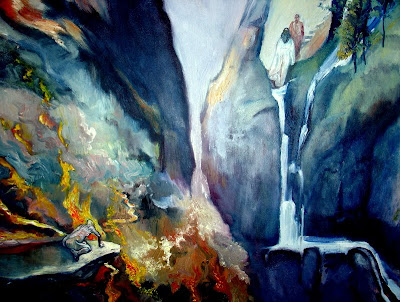
A Judgment on Our Lives and Our Lifestyles

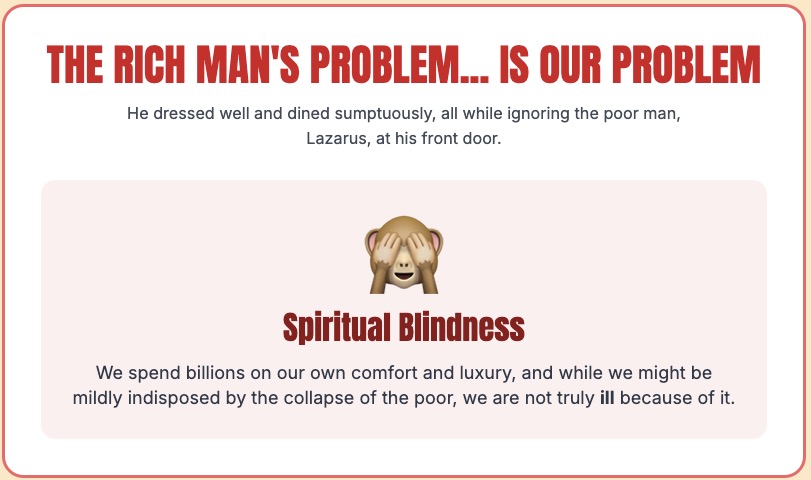


2016 — Fr. Fleming’s homily warns against modern complacency, equating our comforts like memory-foam mattresses and fine wines with the “beds of ivory” condemned by the prophet Amos. Like the rich man in the parable, our sin is not wealth itself, but allowing it to blind us to the suffering “Lazarus” at our gate. The sermon powerfully redefines our “front door,” arguing that distance does not diminish our responsibility to the poor, whether they are in our own community or across the globe.
Jesus’s resurrection is presented as an urgent wake-up call to overcome this spiritual inertia. The core challenge is that our generosity to the needy must be measured in proportion to our generosity to ourselves with comforts and luxuries. We are judged not by our nice things, but on whether they lead us to a damning complacency about those who are in need of our help.
────── ⋆⋅☆⋅⋆ ──────
Fr. Jude Siciliano, O.P.

26th Sunday of Year C

The Call to Social Justice
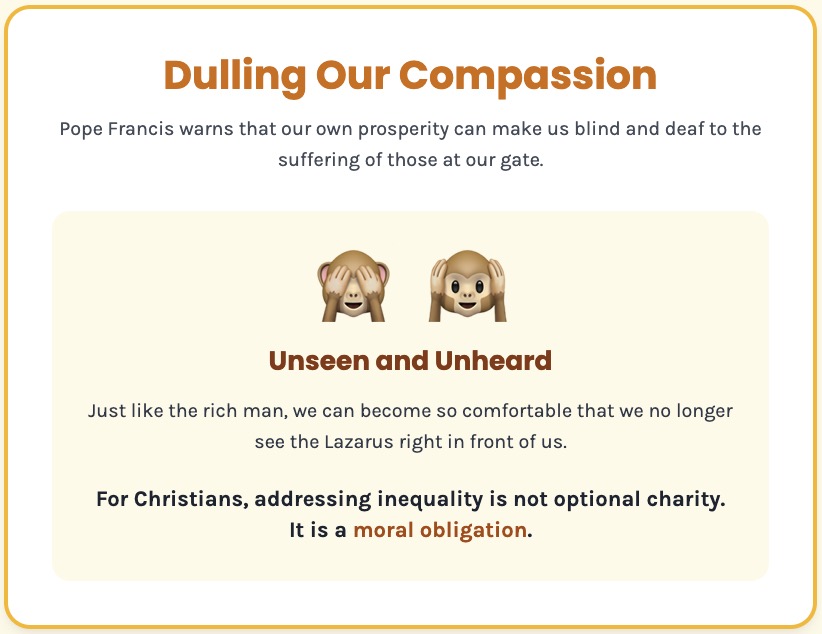
Fr. Siciliano’s notes frame the Parable of Lazarus as a pressing modern challenge, not an ancient tale. The rich man’s sin was not his wealth, but his damning indifference—failing to see the beggar at his very doorstep. That Jesus names Lazarus is a crucial detail, calling us to get close enough to the poor to know their names, moving beyond distant pity.
This “globalization of indifference,” as Pope Francis calls it, is evident today in the widening gap between the rich and poor worldwide. Lazarus is not just a figure in the news but is present in our own workplaces, schools, and homes. The parable is an urgent demand to recognize the “outsiders” in our midst and actively bridge the “chasm of relationship” with personal compassion and care. We must act now, because after death, the chasm becomes eternally fixed.
Click to enlarge
────── ⋆⋅☆⋅⋆ ──────
Fr. Charles E. Irvin
26th Sunday of Year C
Our Struggle Against Complacency

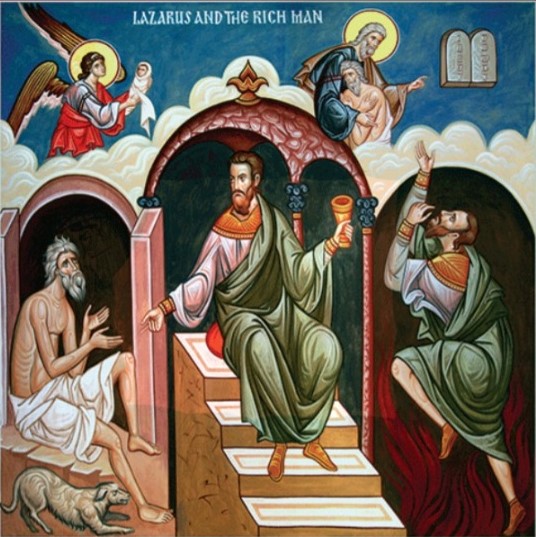
You and I share this common struggle against spiritual inertia and smugness in the loneliness of our hidden souls as we strive to have a modest share and portion of the goodness of God. It’s never easy because the devils we fight against in our souls jam and clog our efforts with the sticky, gooey substance of cotton-candy rationalizations. The devils that beset us are always hiding their vices under the appearances of things that seem attractive and tasteful, in many cases the feeling that we deserve the abundance that is ours. The devil always seeks to mire us down and lead us into the morass of comfortable complacency and to lull us into spiritual sleep, giving us a special narcotic, the drug called self-ism, in order to control our souls.


Click to enlarge
Fr. George Smiga
26th Sunday of Year C
Click to enlarge
Lazarus at Our Gate

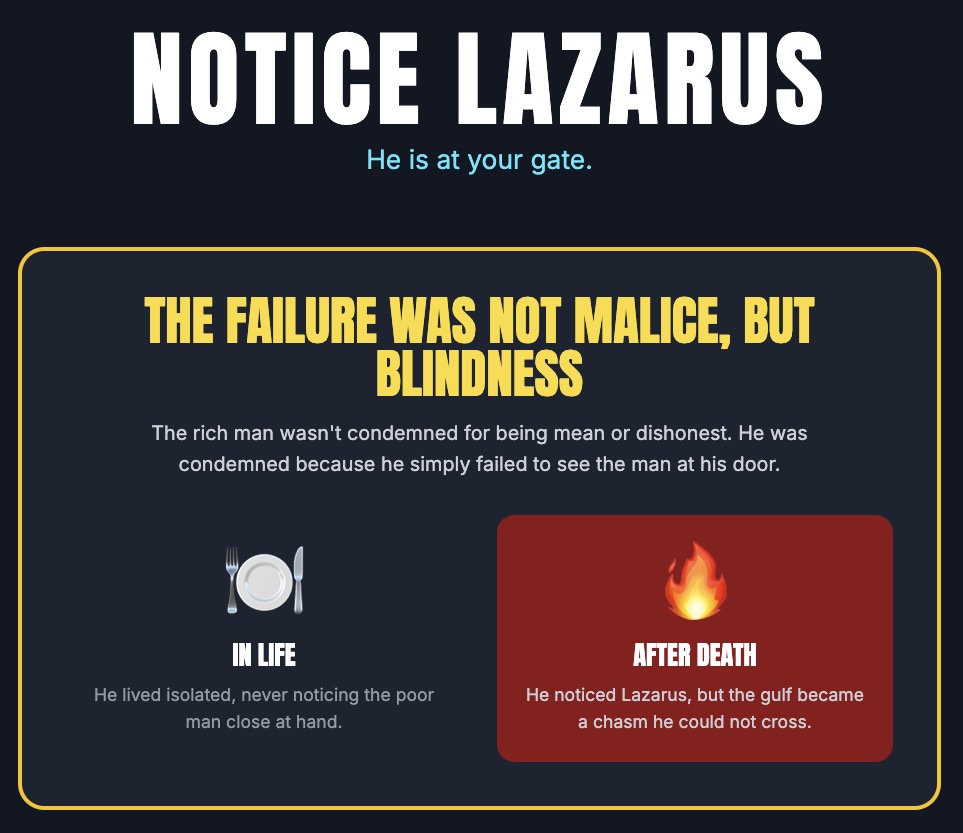
2004 HOMILY – Lazarus is at our door. He is the person in our school or in our office that cries out for respect but must face ridicule every day. She is the person struggling with mental illness who comes off a bit odd and is discounted as a person of value. He is our next door neighbor who recently lost his wife of forty years and hangs around the driveway as we come home, looking for company.

Click to enlarge
────── ⋆⋅☆⋅⋆ ──────
Fr. Jude Langeh, CMF

26th Sunday of Year C

Responsibility to the Underprivileged
The Christian faith calls for a commitment to prioritize the poor and address their suffering, highlighting the moral obligation of the wealthy to promote justice and equitable resource distribution in a world where over a billion people live in poverty.
More Top-Rated Videos
Infographics & Discussion Questions
Bishop Barron | Fr. Kevin Rettig | Msgr. Peter Hahn
Fr. Geoffrey Plant | Priests for Life
26th Sunday of Year C

Blind, Isolated and Faithless, or Wise…?

The Gospel of Luke, the Gospel of God’s compassion, the Gospel of the lowly being raised up, challenges us today with the parable of Lazarus and the Rich Man. The parable is not meant to defame those who have worked long and hard for their financial position in life. It is not meant to dump on the rich. The parable is meant to help us all to recognize the responsibilities our positions in life demand. The parable presents three areas of concern: blindness, being isolated, and faithlessness.
────── ⋆⋅☆⋅⋆ ──────
26th Sunday of Year C
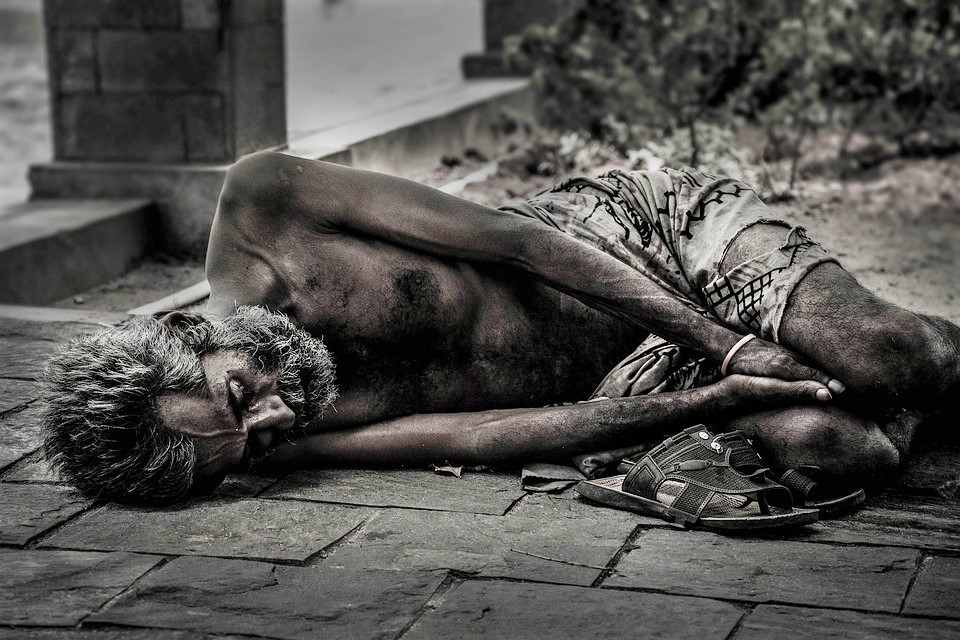
Ignoring the Poor Is a Damnable Sin

This Sunday’s Gospel about the rich man and Lazarus contains some important teachings on judgment and Hell. We live in times in which many consider the teachings on Hell to be untenable. They struggle to understand how a God described as loving, merciful, and forgiving could assign certain souls to Hell forever. Despite the fact that the Doctrine of Hell is taught extensively in Scripture as well as by Jesus Himself, it does not comport well with many modern notions and so many people think that it has to go.
I. The Ruin of the Rich Man
II. The Rigidity of the Rich Man
III. The Reproof for the Rest of Us
────── ⋆⋅☆⋅⋆ ──────
Fr. Michael Chua
26th Sunday of Year C


very now and then, it’s good for us on this journey to sainthood to be reminded that we’re still pretty much sinners. We have feet of clay. Every time I’ve gotten just a little too comfortable with the correctness of my words, or the correctness of my deeds, it’s good to be reminded that my heart is always in need of transformation. Every time I’ve started to think it’s about me – about my words, and my deeds, and my efforts, and my intentions, I’m reminded that it’s about God – about what God is doing and how I need to make myself available to the ways God is working and moving through me. If it were all about me, I think the hope for the world would be slim indeed. What does most vital, however, is our personal openness to the grace and mercy of God. With such powerful help, even the most tawdry or sordid past can be forgotten and forgiven. For those of us who look back at countless failures and who labour under the heavy burden of a past littered with mistakes, this parable gives hope and encouragement.
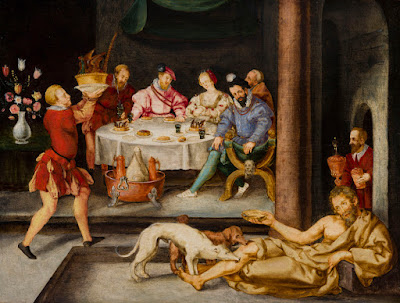
Get Off your Comfy Couch!
All three readings, if read separately, would have had their own respective appeal and would have seemed reasonable had each been judged by their own internal logic. The problem is when we juxtapose them, as the lectionary does this week, and attempt to reconcile the seemingly divergent messages, we may end up having to do theological acrobatic somersaults. Or at least it would seem to be so.

God’s desire is not to give you a life of comfort; He desires to be your comfort. In the first reading, the prophet Amos warns the people of Judah and Israel against feeling so comfortable that they have insulated themselves from the suffering and poverty of those around them and for this reason they have also insulated themselves from God’s Word. In the second reading, St Paul reminds the young bishop Timothy of the need to strive in making progress in Christian virtue and sanctity, “to fight the good fight.” Christianity is not about lazing around like spiritual couch potatoes waiting for the next blessing to drop on our laps without any effort on our part. Faith can’t be manipulated via remote control.

26th Sunday of Year C
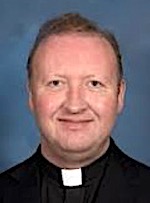
The Rich Man and Lazarus
Now is the time for conversion, when we die it will be too late to convert. That is what the rich man in Jesus’ parable in today’s Gospel painfully learned (Luke 16:19-31). How we live now has consequences for all eternity. There are riches that last into the next life and there are riches that are only for now. The rich man in the parable learned when he died that he only had the riches that are for now whereas the poor beggar whom he had ignored possessed the riches that endure into eternity. The rich man learned that so much of life which is just hoopla and show and good image, or bella figura as the Italians would say, is not real. What is real is what is in our heart where God sees, our love of God and neighbor. I wonder if the rich man were really happy. I wonder if all that feasting every day was just his way of running from the pain of emptiness in his life. Perhaps he even knew he really was poor inside – had nothing – and his feasting was just comfort eating. When he died, in an instant everything became painfully clear.
────── ⋆⋅☆⋅⋆ ──────
26th Sunday of Year C
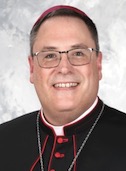
For those of you who went to Catholic school or read the catechism, you may remember that the Church distinguishes between sins of commission and sins of omission. Remember that? The rich man’s sin was that he was so self absorbed in his own life that he did not care to even notice poor Lazarus suffering at his doorstep. That was his sin. It was a sin of omission, and a glaring one at that. When Lazarus died for lack of love and compassion, the rich man didn’t notice what happened to Lazarus, but God noticed. God noticed. The point of our Gospel reading today is, although all our religious disciplines and practices are important and necessary, we must really watch out for sins of omission, sins demonstrating the failure to act. After all our necessary pious observances, we miss the whole point of these practices if we fail to love our neighbor, especially the most vulnerable around us.
The reflection questions and infographics featured in this section have been created with the help of Google Gemini 2.5 AI tools, using Chart.js and Tailwind CSS. THE WORD THIS WEEK is happy to offer these resources to any non-profit ministry for use, and kindly request that you provide credit to the website and the respective contributors whose content is illustrated.