May 11, 2025


Homilies
Homilies
- FR. MCCARTHY, OSA
- MORE
- Bishop Barron
- 1-MINUTE HOMILY
- 2-Minute Homily
- MSGR. Peter Hahn
- Fr. Jude Langeh
- FR. RUTTIG
FR. TOM
McCARTHY, OSA

4th Sunday of Easter C


4th Sunday of Easter C


BISHOP
BARRON
4th Sunday of Easter C

For Easter Season (2022), Bishop Barron preached each Sunday on the Second Reading from the Book of Revelation.

ONE MINUTE
HOMILY

4th Sunday of Easter C


TWO MINUTE
HOMILY

4th Sunday of Easter C


MSGR. PETER
HAHN
4th Sunday of Easter C


FR. JUDE
LANGEH, CMF


FR. KEVIN
RUTTIG

4th Sunday of Easter C


Deacon Greg Kandra
Deacon Greg’s blog has garnered some 20 million readers from around the world since its inception in 2007.
4th Sunday of Easter C
Listen Up!
This discussion guide has been generated by the WORD THIS WEEK'S Catholic AI Assistant based on Deacon Greg's homily.

Introduction:
- Begin with a reflective moment on the setting of the sermon: a Trappist monastery near the Basilica of St. Paul Outside the Walls in Rome, where silence and listening are emphasized.
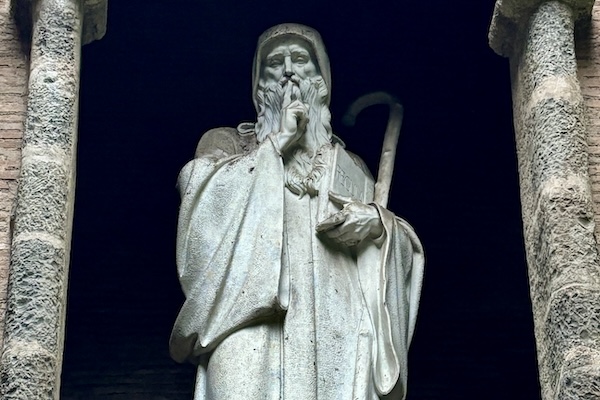
- Explore the significance of the statue of St. Benedict and its symbolic gesture of silence, tied to the Rule of St. Benedict.
Understanding the Message of Listening:
- Discuss the importance of the word "Listen" in St. Benedict’s Rule and its relevance to Christian life.
- Reflect on the Gospel message: “My sheep hear my voice, and they follow me.” What steps can we take to truly listen amidst life's distractions?
- Consider how moments in history, such as the recent election of Pope Leo XIV, remind us of the importance of listening to God's call.
Case Study: Pope Leo XIV (Robert Francis Prevost):
- Analyze the life of Robert Francis Prevost. How did listening shape his journey from a boy in Chicago to becoming Pope Leo XIV?
- Discuss his vocational discernment, choosing to become an Augustinian missionary over other potential careers.
- Explore the qualities and actions of Pope Leo XIV that exemplify someone who is a listener and a servant leader.
Our Shared Vocation:
- Reflect on the concept of vocation as something shared by all baptized Christians, not just clergy or religious figures.
- Discuss what it means to be missionaries in daily life. How can we live out our mission in our workplaces, families, and communities?
Applications of the Message: Building Bridges:
- Consider Pope Leo XIV's call to be missionaries and bridge-builders, fostering peace and unity in a divided world.
- Discuss practical ways to engage in dialogue and encounter with others, embodying the mission to bring Christ's light to the world.
Personal Reflection and Sharing:
- Share personal experiences where listening to God’s voice led to meaningful changes in life choices or circumstances.
- Discuss times when silence and reflection have enhanced spiritual growth or understanding of one's vocation.
Prayer and Commitment:
- Conclude with a group prayer, asking for guidance in becoming better listeners to God's voice and for strength in fulfilling our shared mission.
- Commit to specific actions in the coming week that reflect the call to live the Gospel and make Christ known through our actions and love.
Conclusion:
- Reflect on the significance of listening in a noisy world, remembering the gentle reminder of St. Benedict and the words of Pope Leo XIV: “Christ goes before us.”
- Encourage ongoing communication and support within the group to continue the journey of listening and living out one’s vocation.
Homily Excerpt
In Rome, not far from the Basilica of St. Paul Outside the Walls, there’s a Trappist monastery, built on the site where St. Paul was martyred. Part of the ancient Roman road that Paul would have walked to his execution is still there, preserved behind a chain fence.
Near the entrance is a remarkable statue. It’s St. Benedict, larger than life, greeting all those arriving with a simple gesture: he is holding his finger to his lips. The universal call for quiet, for silence. Hush.
I thought it was a not-so-subtle reminder that a monastery is a place for silence. But a friend of mine, a Benedictine oblate, saw it differently.
“It’s the first word of the Rule of St. Benedict,” she said — citing a rule that is one of the most read, most treasured, most influential pieces of literature in all Christianity. It begins with this simple command.
“Listen…”
If you were anywhere near a radio or a television of a computer screen Thursday afternoon at 3 pm, and were listening, you heard something the world had never heard before.
It felt like time stood still. People around the world held their breath. We listened. And then we heard it.
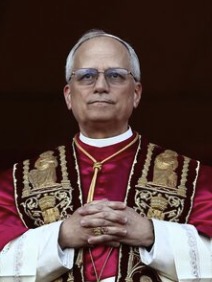
Robert Francis Prevost. A boy from Chicago they called Rob…

THE WORD THIS WEEK invites you to check out the Catholic AI assistant (located at the bottom right-hand corner), a homily preparation resource you can use to clarify or develop the insights and themes of Deacon Greg’s homily.
Deacon Peter McCulloch
4th Sunday of Easter C


On the Good Shepherd
This discussion guide has been generated by the WORD THIS WEEK'S Catholic AI Assistant based on Deacon Peter's homily.
Introduction
- Begin by reflecting on the brevity of the Gospel reading (John 10:27-30) and its profound message about Jesus as the Good Shepherd leading his sheep to eternal life.
- Discuss personal perceptions of being compared to sheep and explore any preconceived notions about the intelligence and behavior of sheep.
2. Understanding Sheep
- Explore the intelligence of sheep as described in the sermon.
- Include scientific insights mentioned: sheep's ability to recognize colors, symbols, and facial expressions, and their knack for navigating complex mazes.
- Compare these qualities to spiritual discernment and recognition of Jesus' voice.
3. Historical Context of Shepherding
- Discuss the cultural context of shepherding in Jesus' time.
- Explain how shepherds shared enclosures and how sheep could distinctively recognize their own shepherd’s voice.
- Reflect on the metaphor of Jesus as our shepherd and what it means to "hear his voice."
4. Emery's Reflection
- Discuss the account from Allen C. Emery's "A Turtle on a Fencepost" about sheep focusing on the shepherd during danger.
- Reflect on the symbolism of sheep looking toward the shepherd for safety and relate it to believers keeping their spiritual focus on Jesus during life's challenges.
5. Sheep as Noble Creatures
- Dive into the comparison between sheep and honorable men in ancient times, drawing parallels to family honor and silent suffering.
- Discuss Isaiah's description of the Lord's servant (Isaiah 53:7) and relate it to the behavior of sheep and Jesus' silent suffering.
6. Qualities of the Good Shepherd
- Discuss the three key roles of Jesus as the Good Shepherd: knowing his sheep, keeping them safe, and leading them to eternal life.
- Share thoughts on how Jesus knows each of us personally and the significance of being known and loved by him.
7. Recognizing Jesus’ Voice
- Explore the challenges of hearing Jesus' voice in today's noisy world.
- Discuss practical ways to develop the ability to recognize and follow Jesus’ voice amid life's distractions.
8. Reflection and Prayer
- Encourage group members to share personal experiences of hearing Jesus’ voice or following his lead.
- Conclude with a prayer asking for the grace to consistently recognize and respond to the Good Shepherd’s call.
9. Actionable Steps
- Suggest practical steps and commitments group members can make to better listen for Jesus’ voice in their daily lives.
- Encourage setting aside quiet time for reflection and prayer to deepen one’s relationship with Jesus.
Homily Excerpt

Today’s Gospel is short – very short. It only has 8 lines and 63 words, but its message is deep: Jesus tells us he’s the good shepherd who leads his sheep to eternal life.
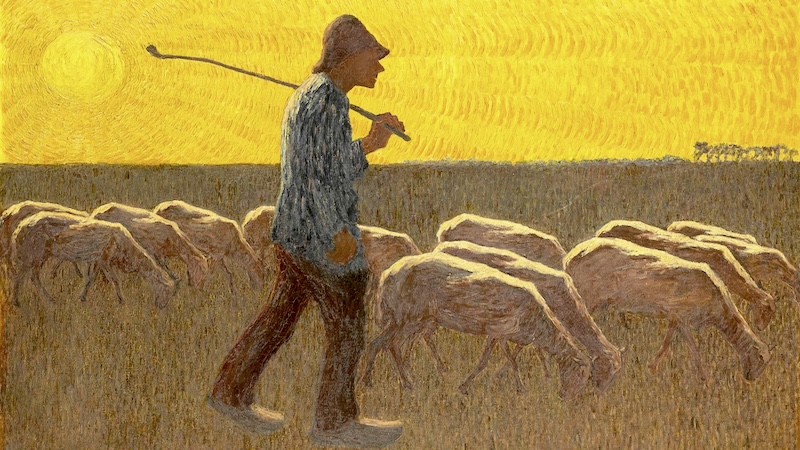
Some people don’t like being called sheep; they think they’re stupid animals. But sheep are smarter than we think. Yes, they do have a strong flocking instinct, but that’s how they’ve learnt to protect themselves from predators.
In fact, scientists tell us that sheep are sometimes smarter than monkeys. They can recognise colours and symbols, as well as faces and facial expressions. They can also navigate complex mazes.
When Jesus said ‘My sheep hear my voice; I know them and they follow me’, he knew what he was talking about. Every night in Palestine, shepherds gathered their animals into folds to protect them from danger. Quite often several shepherds used the same enclosure, but the sheep never got mixed up. Each morning they really did recognise their shepherd’s voice. The shepherd would walk off, talking to them or calling them by name, and they’d follow. The sheep would never follow a stranger.
To Be a Good Shepherd
This discussion guide has been generated by the WORD THIS WEEK'S Catholic AI Assistant based on Deacon Peter's homily.
Scriptural Context
1. Acts 13:14,43-52
- Discuss the significance of Paul's mission and how it relates to being a shepherd to the early Christian communities.
2. Revelation 7:9,14-17
- Explore the imagery of the multitude and how it connects to the shepherd’s role in caring for a diverse flock.
3. John 10:27-30
- Analyze the passage where Jesus describes himself as the Good Shepherd and discusses eternal security for his sheep.
Understanding the Shepherd’s Role
1. The Historical Importance of Shepherding
- Reflect on how the shepherding metaphor was a familiar concept in biblical times and discuss its application in scripture.
2. Biblical Figures as Shepherds
- Identify key biblical figures who were shepherds and discuss how their roles as shepherds influenced their leadership.
Characteristics of a Good Shepherd
1. Compassion and Care
- Discuss how Jesus exemplifies the Good Shepherd by knowing and protecting his flock and how this applies to us today.
2. Qualities of Effective Shepherds
- Kindness and humility (Phil.2:7)
- Being a good listener (Jas.1:19)
- Building trust (Jn.10:4)
- Sacrificial love (Jn.10:12-13)
Application to Daily Life
1. Examining Our Shepherding Roles
- Are there situations in your life where you can act as a shepherd to others? Discuss.
2. Acts of Compassion
- Share examples of how you have been or could be a shepherd to someone in need.
Modern-Day Examples
1. St. Oscar Romero
- Explore how St. Oscar Romero embodied the qualities of a good shepherd through his advocacy for justice and care for the oppressed.
2. Contemporary Shepherds
- Discuss modern figures like Martin Luther King and others who have acted as shepherds to their communities.
Good Shepherd Sunday and Vocations
1. Reflection on Vocation
- What does it mean to have a vocation as a shepherd in today’s world? How can we better support each other?
2. Practical Steps for Shepherding
- Identify actionable steps you can take to support those around you.
Discussion Questions
1. Why do you think Jesus chose the metaphor of a shepherd to describe his relationship with us?
2. How can understanding the role of a shepherd help us in our daily interactions with others?
3. In what ways can we demonstrate the qualities of a good shepherd in our communities today?
4. Reflect on how the stories of St. Oscar Romero and other figures resonate with you personally. Can you relate these stories to your life?
Homily Excerpt
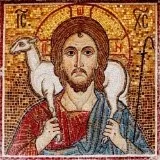
What are the marks of a good shepherd?
- Firstly, good shepherds are kind and humble (Phil.2:7). Their first priority is their sheep. They make sure that they’re always safe, well-nourished and well-cared for (Mt.20:28).
- Secondly, good shepherds are good listeners (Jas.1:19). They always listen patiently for the cry of their sheep and respond when they need help.
- Thirdly, good shepherds are trusted. Their sheep know them, and their shepherd knows them by name. The flock will always follow their shepherd because they know his voice and trust his actions (Jn.20:4).
- And finally, good shepherds do all this for love, not money. As Jesus tells us, a hired hand will run when the wolf appears, because he’s not committed to his job. But good shepherds are prepared to sacrifice everything for their sheep (Jn.10:12-13).

Mum Shirl
This discussion guide has been generated by the WORD THIS WEEK'S Catholic AI Assistant based on Deacon Peter's homily.
1. Understanding the Sermon:
- Who was Mum Shirl, and what were some of the key challenges and accomplishments in her life?
- How did Mum Shirl embody the qualities of a Good Shepherd as described in the sermon?
- In what ways did Mum Shirl's faith and personal experiences influence her actions and commitments?
2. Themes of Service and Sacrifice:
- Reflect on the examples of well-known shepherds like Mother Teresa and St. Francis Assisi. How do their lives and actions compare with those of Mum Shirl?
- Discuss the importance of sacrificing for others, as demonstrated by Mum Shirl's dedication. What are some sacrifices you're willing to make for the well-being of others?
- What role does faith play in motivating individuals to serve others? Use examples from Mum Shirl's life or other figures mentioned in the sermon.
3. Injustice and Advocacy:
- How did Mum Shirl address issues of injustice in her community? What were some specific actions she took?
- Discuss ways in which you can advocate for marginalized and disadvantaged groups in your own community.
- In what ways can the church today emulate Mum Shirl’s efforts to support and advocate for underserved populations?
4. Legacy and Impact:
- Mum Shirl was declared “one of Australia’s living treasures.” What might this recognition have meant for her and for the indigenous communities she served?
- Consider the long-term impacts of Mum Shirl’s work. How can you measure success and meaningful change in community-focused endeavors?
- How can Mum Shirl’s story inspire current and future generations to take up similar roles of guidance and support?
5. Personal Reflection:
- Reflect on Jesus' words, ‘I was hungry and you fed me; thirsty and you gave me a drink; naked and you clothed me; sick and you cared for me.' How do these words resonate with your personal experiences or call to action?
- In what ways do you see yourself as a Good Shepherd in your everyday interactions and responsibilities?
- Identify personal or community actions you can take to provide support, protection, or hope to others following Mum Shirl’s example.
Action Points
- Encourage group members to identify at least one practical step they can take this week to support someone in need.
- Plan a group activity or partnership with a local organization that aligns with the kind of work Mum Shirl advocated for, such as supporting the homeless, indigenous services, or legal assistance.
Closing Reflection
Reflect on Mum Shirl's legacy and the enduring message of love and service from the sermon. How can we each use our unique strengths and resources to shepherd others in our lives?
Homily Excerpt
Ever since Jesus first revealed himself as the Good Shepherd, countless people have tried to follow him by guiding, protecting and nurturing other vulnerable souls.
Some of these good shepherds are widely known, like Mother Teresa and St Francis Assisi, who gave up everything to care for the poor, the sick and the outcast. And Florence Nightingale, who helped wounded soldiers and transformed the nursing profession.
Other shepherds are less well-known, but no less good. Like ‘Mum Shirl’, who devoted her life to caring for poor, lost and homeless indigenous Australians.
Mum Shirl was born Coleen Shirley Perry in Cowra, NSW, in 1924, into a large and very poor family. Because her parents were cattle drovers, she was raised by her grandfather, who taught her to ‘first love yourself, then spread it around’.
THE WORD THIS WEEK invites you to check out the Catholic AI assistant (located at the bottom right-hand corner), a homily preparation resource you can use to clarify or develop the insights and themes of Deacon Peter’s homilies.
Fr. Austin Fleming
4th Sunday of Easter C
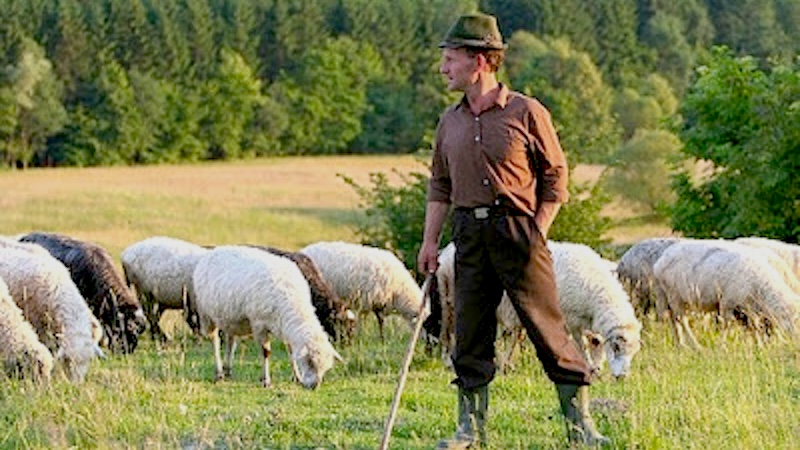
2016 HOMILY – What do you think you would need to be happy in the week ahead of you? Perhaps you came to church today to pray for whatever it is you’d need to be happy this week. Perhaps that’s something you’ve been praying for – for a long time…
Perhaps what you need to make you happy is a thing: something physical, something you want to have, to own; or perhaps it’s a person, a relationship you want to have or one you want to deepen, or mend – or end; or perhaps it’s something we want for someone else: healing of an illness, peace in a troubled family, a job for someone unemployed; or perhaps it’s something emotional: maybe you’re praying for some peace of mind, some serenity, some contentment to make you happy.
I suspect we all have a wish list, long or short, of what’s wanting in our lives of what we believe would make us happy. And it’s probably fair to say that when most of us come to church, we come with that prayer in our hearts and minds.
This discussion guide has been generated by the WORD THIS WEEK’S Catholic AI Assistant based on Father Austin’s homily. NEED HELP? Copy and paste a question into the chat bot in the lower right corner of the screen and have our Catholic Assistant help you.
Personal Reflection Questions:
1. Think about a time when you came to pray for something specific you thought would make you happy. How did that experience turn out?
2. Consider the distinction between wanting something for yourself versus wanting something for someone else. How does that affect your sense of happiness?
Scriptural Context:
– Read Psalm 23 together: “The Lord is my Shepherd; there is nothing I shall want.”
– Discuss initial reactions and feelings about this passage.
Key Themes & Discussion Questions:
1. Desires vs. Needs:
– Discuss the difference between what we desire and what we truly need. How do these align or conflict in your life?
2. The Voice of the Shepherd:
– How do you perceive the voice of Jesus in your life? Through scripture, prayer, or other means?
– Share experiences of feeling guided by this ‘voice’ and the outcomes.
3. Being Known by the Shepherd:
– What does it mean to be fully known and loved despite our flaws?
– Discuss personal challenges in accepting love and forgiveness from Jesus.
4. Promise of Eternal Life:
– How does the promise of eternal life reshape your understanding of current needs and desires?
– In what ways can this promise bring comfort during difficult times?
5. Security in the Shepherd:
– What assurance do you find in knowing nothing can “snatch us from His hand”?
– Share personal stories where you felt secure in your faith despite external circumstances.
Closing Reflection:
– Conclude by contemplating what it truly means to ‘want for nothing’ when Jesus is your Shepherd.
– Offer gratitude for the promises and assurances brought by faith.
Practical Application:
– Encourage each participant to identify one area in their life where they can more fully rely on the promise of Jesus, the Good Shepherd, and share how they plan to do so in the coming week.
THE WORD THIS WEEK invites you to check out the Catholic AI assistant (located at the bottom right-hand corner), a homily preparation resource you can use to clarify or further develop the insights and themes of Fr. Fleming’s homily.
Dominican Blackfriars

4th Sunday of Easter C

The image above is from the stalls of the Thisle Chapel in Edinburgh’s St Giles Cathedral.
This discussion guide has been generated by the WORD THIS WEEK'S Catholic AI Assistant based on the Dominican Blackfriars' homily for this week.
Introduction
- Discuss the significance of Good Shepherd Sunday and its recurring theme in the Fourth Sunday of Easter.
- Reflect on the imagery of the Good Shepherd found in John 10.
The Role of Shepherd in Palestine Versus Britain
- Compare and contrast shepherding practices in ancient Palestine and modern-day Britain.
- Highlight the challenges faced by shepherds in Palestine and how this relates to Jesus's analogy.
Understanding the Imagery of Shepherd and Sheep
- Explore the deeper meaning behind Jesus's description of himself as the Good Shepherd.
- Discuss how the sentimental image of a shepherd in culture contrasts with the reality of a shepherd's life.
- Reflect on the implications of being referred to as 'the sheep of God’s pasture'.
The Shepherd and the Sheepfold
- Examine the role of the doorkeeper and its symbolic representation of Israel's leaders.
- Discuss the importance of recognizing the shepherd's voice and the dangers of following a stranger.
Jesus's Role as the Door
- Analyze Jesus’s statement: 'I am the door for the sheep', and what it signifies in providing true pasture and safety.
- Consider how Jesus controls the path to nurturing pasture and safety.
Distinguishing Between the Good Shepherd and the Hired Hand
- Review the contrast between the Good Shepherd and the hired hand, focusing on their commitment to the flock.
- Reflect on Ezekiel’s criticism of selfish shepherds and apply this to contemporary leadership.
The Sacrificial Nature of the Good Shepherd
- Discuss how Jesus’s act of laying down his life demonstrates his dedication as the Good Shepherd.
- Reflect on the relationship Jesus describes: knowing the sheep and being known by them.
Nourishment and Protection
- Explore what it means to be nourished and protected by Jesus, our Shepherd.
- Discuss how this relates to Jesus’s death and resurrection, conveying God’s self-sacrificing love.
Reflection Questions
1. What aspects of the Good Shepherd analogy resonate most with you and why?
2. How do the differing realities of shepherding practices enhance your understanding of the Gospel’s message?
3. In what ways does Jesus being both the shepherd and the door influence your faith journey?
4. How might we embody the qualities of the Good Shepherd in our lives today?
5. Discuss the significance of Jesus's self-sacrifice in the context of his role as the Good Shepherd.
Homily Excerpt
Fourth Sunday of Easter. fr Fabian Radcliffe explains how Jesus is the Good Shepherd.

A friend who knows me too well once gave me a fridge For some people, the image of Jesus as the Good Shepherd may come from pictures in children’s books or in stained glass windows: Jesus as a benign shepherd in long flowing robes, surrounded by cuddly lambs and golden-haired children in a soft grassy field. It’s a sentimental picture, and quite unlike the reality of both shepherds and sheep. In real life, shepherding is always hard work, often boring and sometimes dangerous and risky. And though the sheep themselves produce valuable meat and wool, they are often stubborn and difficult to handle. It certainly implies no compliment to us when Scripture calls us ‘the sheep of God’s pasture’.
There is a big difference between shepherding in Britain and in Palestine. Here the sheep are left to graze in large enclosures: fields or wide expanses of moorland. They don’t need a shepherd with them all the time. But in Palestine there are no enclosed areas for grazing, and good pasture may be less plentiful than here…
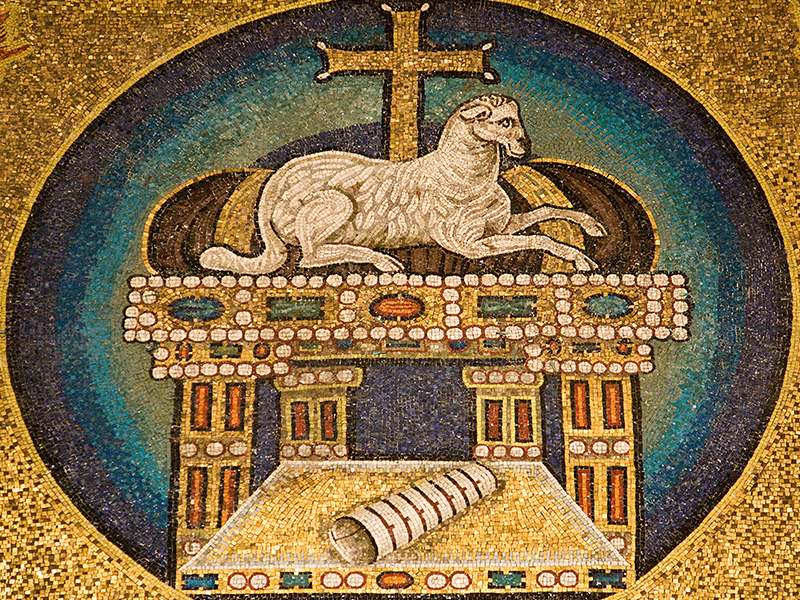
Photograph by Fr Lawrence Lew OP of a 6th-century mosaic in the basilica of St Cosmas and St Damian in Rome.
This discussion guide has been generated by the WORD THIS WEEK'S Catholic AI Assistant based on the Dominican Blackfriars' homily for this week.
1. Reflection on Authority:
- How do the various readings portray the concept of authority within the Church?
- What does it mean for the Church to "speak with authority," and why might this be both attractive and off-putting to different people?
2. Paul and Barnabas in Antioch:
- Discuss the implications of Paul and Barnabas's leadership in Antioch. How does this event contribute to the idea of a Church that is inclusive to all?
- How does the reaction of the Jewish congregation contrast with that of the Gentiles, and what does this say about leadership and acceptance?
3. The Good Shepherd:
- How is Jesus as the Shepherd depicted differently from worldly leaders?
- Reflect on the biblical use of the Shepherd imagery and why it's significant in understanding Christian leadership.
4. The Paradox of the Lamb and the Throne:
- Explore the paradox of the Lamb, a symbol of powerlessness, seated at the throne of power. What does this reveal about the nature of true leadership and authority in Christianity?
- What does the idea that "power is made perfect in weakness" mean to you personally?
5. Jesus Washing the Disciples' Feet:
- Why is Jesus's act of washing his disciples' feet pivotal, and what does it teach about leadership and service?
- Discuss how this act challenges traditional views of authority and status.
6. Mutual Service and Leadership:
- Consider the balance of giving and receiving in leadership. Why is mutuality important in Christian service?
- How can we identify people in our own lives who provide support and care to us, and how can we reciprocate that care?
7. Eternal Servant:
- Reflect on the assertion that Jesus is eternally both Lord and Servant. How does this dual role influence your understanding of Christian leadership?
- In what ways can this model of leadership be applied to your own life and community?
Homily Excerpt
Fourth Sunday of Easter (C) | Fr Robert Eccles ponders Jesus’s example of authority and leadership in today’s readings.
A moment’s reflection on our three readings and the psalm for today, brings us to the thought that one issue all these very different writers are interested in, is that of authority and leadership. There’s a theme for Vocations Sunday! This matters for the Church: by what authority does she do these things? And it matters for us now. Many people are attracted to the Church because she claims to speak with authority, and of course plenty of others are put off joining her for just the same reason.
In our first reading, from the Acts of the Apostles, St Luke tells you how Paul and Barnabas descend on Antioch and take the lead there, giving a strong line to the preaching of the gospel in that town and incidentally, making their own situation too hot to handle. It’s at Antioch that the offer of the good news, refused by the Jewish congregations, is gladly accepted by the Gentiles, the non-Jews.

Image: detail from ‘The Good Shepherd’ mosaic, Mausoleum of Galla Placidia photographed by Petar Milošević
This discussion guide has been generated by the WORD THIS WEEK'S Catholic AI Assistant based on the Dominican Blackfriars' homily for this week.
God's Providence and Our Difficulties:
Reflect on the times you have asked God to remove difficulties in your life. How did you see God’s grace working through the situation, whether or not the difficulty was removed?How can we balance our prayers for relief with praying for strength and grace to endure through struggles?What does it mean to you personally when St. Paul is told, "My grace is enough for you"?
The Image of the Good Shepherd:
Discuss how the image of Christ as the Good Shepherd is comforting. Why do you think this imagery has persisted within Christian tradition?In what ways does this image challenge us to act as part of Christ's flock?Consider the earliest Christian artifacts depicting Christ as the shepherd. What significance does this hold, and why might this have been important to early Christians?
Hope and Realism in the Christian Life:
How can Christian hope coexist with a realistic understanding of the world’s difficulties?Have there been situations where facing the reality of a situation has strengthened your hope and helped you overcome obstacles?Discuss how "ventures of faith" and taking risks for Christ have been a part of your spiritual journey.
Challenges to Faith and Witness:
Reflect on the readings from Acts, Apocalypse, and John. How do these passages illustrate the challenges to faith and the perseverance required in the Christian journey?How does the story of Paul and Barnabas inspire you to proclaim your faith in the face of opposition?What can we learn from those who have overcome great tribulation in their pursuit of faith?
Personal Reflection:
Consider the question posed by St. John Henry Newman: "What have we ventured for Christ?" What are some personal ventures of faith you have taken or feel called to take?In what areas of your life do you find you are shutting your eyes to the truth, as Newman suggests some people might?How can recognizing the presence of those who would "steal the sheep" help strengthen your resolve and reliance on Christ’s love?
Homily Excerpt
Fourth Sunday of Easter. Fr Robert Ombres preaches on Christ the Good Shepherd.
As Christians, when we face difficulties we may well ask God to remove them. But God’s loving providence could have other plans for our lives. So in addition to praying that God’s grace will put an end to some difficulty or suffering we may need to pray for God’s grace in our struggles with those difficulties and that suffering. St Paul pleaded three times with the Lord that the thorn in his flesh might be removed from him. He was told by the Lord ‘my grace is enough for you’. His will be done, not ours.
This truth makes the Christian realistic about the human condition whilst reliant on hope. One of the images that comforts us and keeps our hope alive is that Christ is the good shepherd of us his flock. In today’s gospel Jesus speaks of the sheep that belong to him and, just a few lines earlier in St John’s gospel, Jesus describes himself precisely as the good shepherd. This image of Christ as our shepherd means, and has meant, a lot to believers. In fact, one of the earliest surviving objects decorated with Christian imagery is a clay lamp showing Christ as shepherd. He carries a sheep on his shoulders and is surrounded by other sheep.
Image: detail from ‘The Good Shepherd’ mosaic, Mausoleum of Galla Placidia photographed by Petar Milošević
This discussion guide has been generated by the WORD THIS WEEK'S Catholic AI Assistant based on the Dominican Blackfriars' homily for this week. NEED HELP? Copy and paste a question into the chat bot in the lower right corner of the screen and have our Catholic Assistant help you.
1. Introduction: Understanding Vocation
- What new insights did the Archbishop of Liverpool share about the concept of vocation as he prepares for his retirement?
- Why is Good Shepherd Sunday significant in the context of this reflection on vocation?
2. The Broader Concept of Vocation
- How does St. John Paul II's idea of “the universal call to holiness” expand the traditional understanding of vocation?
- Discuss St. John Henry Newman's idea of being called to 'some definite service'. What does this mean in a practical sense for everyday Christians?
3. Missionary Discipleship
- Explore Pope Francis’s concept of “missionary disciples”. How do you interpret this term and what does it mean for your own spiritual journey?
- Discuss the relationship between being “called” and being “sent” as described by the Archbishop. Why is this distinction important?
4. Challenges of Living Out Our Vocation
- What challenges do you face in living out your baptismal calling in today’s world?
- How can we remain aware of our spiritual purpose amidst everyday distractions and pressures?
5. Synodality and the Church’s Mission
- Define synodality based on the Archbishop’s explanation. How does this concept relate to our baptismal vocation?
- Discuss the method of “conversations in the spirit” mentioned in the sermon. How can this approach be applied in our local church communities?
6. Listening to the Call of Holiness
- Reflect on Jesus's words, ‘My sheep hear my voice, and I know them, and they follow me.’ How do these words guide us in listening to God’s call?
- In what diverse ways might Jesus be calling each of us to holiness today? Share personal examples if comfortable.
7. Conclusion: Embracing Our Vocation
- How can we better cultivate a mindset that listens for God’s call in our lives?
- What steps can we take to align our actions with our understanding of vocation, as discussed in the sermon?
Group Activities
- Share a personal story where you felt guided by your sense of vocation. How did this align with the idea of being a missionary disciple?
- Engage in a “conversation in the spirit” by discussing a current challenge within the church or community, emphasizing deep listening and openness to the Holy Spirit.
Homily Excerpt
Fourth Sunday of Easter. The Archbishop of Liverpool reflects on the concept of vocation as he prepares for retirement.
Good Shepherd Sunday has a special meaning for me this year as I will be handing over my responsibilities as a shepherd to my successor as Archbishop of Liverpool. This will take place during the Mass of Installation and Archbishop John Sherrington will sit in the cathedra and receive the pastoral staff from me. My impending retirement has led me to reflect on the idea of vocation. In the past the emphasis on this Sunday was to pray and appeal for vocations to the priesthood and religious life – and this is still the case as there is an enormous need for people to offer their lives in service of others. Our prayer is that the Holy Spirit will stir the hearts of men and women to ask themselves whether God is calling them to be priest or women and men religious. But here is more to the idea of vocation than this rather narrow view.
St John Paul II helped Christians understand that it was by baptism that we all receive a call from God, and he described this in a wonderful phrase, ‘the universal call to holiness’. …
THE WORD THIS WEEK invites you to check out the Catholic AI assistant (located at the bottom right-hand corner), a homily preparation resource you can use to clarify or further develop the insights and themes of the homilies above.
Fr. Charles E. Irvin
4th Sunday of Easter C
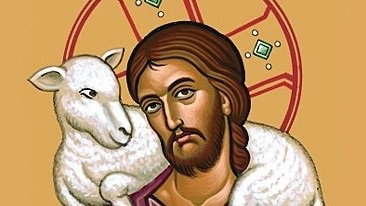

It’s not news that we have liberals and conservatives. We have them in both the Church and in our American body politic. The fact what we have both liberals and conservatives ought not be threatening to us. One has only to study history and the origins of the Church to realize that the dialectic, with the resulting tension, has brought us good in many instances.
Unity is not uniformity. Diversity, per se, is not destructive divisiveness. Indeed, our Church in its infancy struggled with the issue of whether or not Gentiles could be members of Christ’s flock as well as observant Jews. Down through the centuries our Church has struggled with inclusiveness, all the while attempting to be in the world while remaining not of the world. The task has been remarkable. The result points to the guidance of God’s Holy Spirit.
Centuries ago someone gave us a maxim that still applies today. We are not sure who first spoke it but it tells us: “In necessary things, unity; in doubtful things, liberty; in all things, charity.” It’s a lovely principle but it becomes demanding when we together attempt to agree on what things are necessary.
In that struggle and in all of our efforts, let us always remember the last of the three points: “… in all things, charity.” As always, love is the bond of unity.
This discussion guide has been generated by the WORD THIS WEEK’S Catholic AI Assistant based on Fr. Irvin’s homily.
Opening Reflection:
– Begin by considering words and phrases used frequently in religious practice. How often do we pause to contemplate their deeper meaning? Reflect on the term “Our Father” in the Lord’s Prayer. What implications does “our” have regarding inclusion and exclusion?
The Good Shepherd’s Flock:
– Discuss the metaphor of “Christ as the Good Shepherd.” What characteristics might this flock exhibit?
– Explore the duality of unity and diversity within the flock. Why might Jesus seek “other sheep” outside the existing flock?
Unity and Diversity: National and Religious Contexts:
– Compare concepts of unity and diversity in the U.S. and the Catholic Church.
– Debate current definitions of who is considered “in” and “out” in both circles. Consider political and religious dimensions, such as nationality and genuine Catholic identity.
National Issues:
– Discuss “United We Stand” and contradictions in dealing with issues like war, immigration, and terrorism. Who decides what it means to be “un-American?”
– Consider the role of diversity in political discourse. How do definitions and policies affect national unity?
Ecclesiastical Challenges:
– What does the diversity of beliefs about Jesus and his teachings suggest for the Church’s unity?
– Examine the historical tension between ordained leaders and laity in the Church. How has this dialogue shaped the Church?
Second Vatican Council:
– Reflect on the impact of Vatican II on the Church’s understanding of itself and the roles of clergy and laity.
– Why is Vatican II still relevant, and how can its vision continue to guide the Church today?
Ideological Spectrum within Church and Politics:
– Identify how the presence of liberals and conservatives in Church and politics shapes discourse.
– Discuss the constructive potential of this tension. Can it lead to positive outcomes?
Historical Struggles and Guidance:
– Reflect on historical struggles with inclusivity and maintaining faith while engaging with the world.
– How can the Holy Spirit’s guidance be understood in these contexts?
Closing Reflection:
– Contemplate the maxim: “In necessary things, unity; in doubtful things, liberty; in all things, charity.”
– Discuss the challenges in agreeing on what is considered “necessary.” Emphasize the goal of acting with charity and love in all pursuits.
Final Thought:
– How can love remain the strongest bond in our efforts toward unity, within religious practice and beyond?
THE WORD THIS WEEK invites you to check out the Catholic AI assistant (located at the bottom right-hand corner), a homily preparation resource you can use to clarify or further develop the insights and themes of Fr. Irvin’s homily.
Fr. George Smiga
- A Serious Proposition - 2004
- No Homily - 2007
- Hearing the Voice of Our Shepherd- 2010
- Boston Bombings and God - 2013
- Anointing of the Sick - 2016
- A Love to Be Trusted - 2019
- What Heaven Is Like - 2022
A Serious Proposition

2004 HOMILY – What it means to be a Christian or a Catholic is not simply that we show up for church on the week-end or engage in a number of pious devotions. It is not simply giving mental ascent to a series of theological truths. It is not that we accept John Paul II as our Pope or you accept me as your pastor. It is not even primarily about living a good moral life, because millions of people do exactly that without any religious conviction whatever. What it comes down to, what is at the heart of our religion is that we know that we are daughters and sons of God. We believe that we have a personal relationship with Christ. We trust that regardless of who we are or the mistakes we have made, God will remain faithful to us and protect us. We believe that Jesus knows the pitch of our voice and knowing everything about us, still freely chooses to love us and protect us. Outside of that relationship, faith is simply a matter of words and religion a system of ideas. Words and ideas are not going to save us. Only love can save us. This is why we must be grounded in a relationship of love with Christ. We need the strength that flows from that love because we live in world where there are all kinds of threats. We face the threat of terrorism, the threat of illness, the threat of rejection or prejudice from others, the threat of addiction, of violence, of injustice. How do we expect to cope with the fears that these threats can destroy us? How do we expect to gain the strength by which we can oppose the evil in our world and work towards God’s Kingdom? How do we expect to remain optimistic and positive, believing that life is worth living?
This discussion guide has been generated by the WORD THIS WEEK’S Catholic AI Assistant based on Fr. Smiga’s homily.
1. Understanding the Analogy:
– How does the initial story of Joe and his date illustrate the concept of sincerity in communication?
– In what ways do you see similar misunderstandings occurring in your daily interactions?
2. Interpreting the Word of God:
– What challenges do we face when it comes to taking God’s words literally in our lives?
– How can the analogy of the shepherd and the sheep deepen our understanding of our relationship with God?
3. Personal Relationship with Christ:
– Why is it crucial to move beyond religious rituals and to develop a personal connection with Christ?
– How does recognizing ourselves as daughters and sons of God change the way we approach our faith?
4. Reliance on Words vs. Love:
– What are the risks of relying solely on religious words and ideas without a foundation of love?
– In what ways can a sincere love for Christ influence our ability to face life’s challenges?
5. Facing Life’s Threats:
– Discuss how grounding oneself in Christ’s love provides strength to confront modern-day threats.
– How can a strong relationship with God contribute to optimism and positivity in life?
6. Actionable Faith:
– What practical steps can individuals take to deepen their personal relationship with Christ?
– How can we encourage sincerity in our community and communication?
THE WORD THIS WEEK invites you to check out the Catholic AI assistant (located at the bottom right-hand corner), a homily preparation resource you can use to further clarify or further develop the insights and themes of Fr. Smiga’s homilies.
Pro-Life Homily Resources
4th Sunday of Easter C

The Good Shepherd
The first and second readings today illumine the meaning of Jesus’ title “Good Shepherd,” and the meaning of his assertion in the Gospel that he knows his sheep and they follow him. This does not simply refer to following his teachings in this life. The Good Shepherd, who died for the sheep, shepherds them through death and beyond its grasp to the life that conquers all death. “I know them,” he says. He knows our life and the pain of our death. “They follow me,” he says. We follow him to the exalted glory of a life, in our human body and soul, that will be freed from the corruption of sin and death, and indeed that will include our own resurrection from the dead.
THE WORD THIS WEEK invites you to check out the Catholic AI assistant (located at the bottom right-hand corner), a homily preparation resource you can use to clarify or develop the insights and themes of Frank Pavone’s homily notes for preachers.
Msgr. Joseph Pellegrino
4th Sunday of Easter C

Washing Our Robes White in Blood

We all have to wash out robes white in the blood of the Lamb. Sure, we would like a religion that was not demanding, one that would not effect our personal lives. But then we really would not be “tied to God,” as the word religion is defined etymologically. Nor would we be allowing the Good Shepherd to protect us from the lure of evil. Folks, and I speak particularly to myself here, when are we going to realize that there is a cost to discipleship? When are we going to realize that if we are sincere in our desire to follow Christ, it is going to cost us? We will be bloodied. We will all have to wash our robes white in the blood of the Lamb.
Most likely we will not have our lives threatened if we refuse to renounce our Christianity. We will not be burned to death like Lawrence or Polycarp, we will not be thrown to the wild beasts like Ignatius of Antioch or Perpetua and Felicity. We will not have our heads severed like Thomas More or those sixteen Carmelite nuns killed during the reign of terror in France. But there is a high probability, 100% in fact, that every single one of us, every person here, has had to or will have to choose to live the Way of the Lord, the New Way, will have to choose to believe that there is more than the here and now, and will have to sacrifice present pleasure for eternal gain. Every single one of us will have to choose to be bloodied, to feel hurt of some sort, because we are committed to following Jesus Christ.
This discussion guide has been generated by the WORD THIS WEEK’S Catholic AI Assistant based on Msgr. Pellegrino’s homily.
Section 1: Understanding Frank’s Story
Discussion Questions
1. What were the pressures that Frank faced in the workplace? How did they affect his career progress?
2. Why did Frank choose not to participate in the activities his colleagues engaged in during business trips?
3. Discuss the implications of Frank’s choices on his professional life and his family life.
4. How do you interpret the phrase “washing his robe white in the Blood of the Lamb” in the context of Frank’s story?
5. What values and convictions guided Frank’s decision-making process?
Activities
– Role Play: Have participants role-play a conversation between Frank and a colleague who persuades him to join the group’s activities. Discuss potential responses and outcomes.
– Reflective Writing: Encourage participants to write a letter as Frank explaining his choices to his boss or a family member.
Section 2: Exploring Sally’s Experience
Discussion Questions
1. What challenges did Sally encounter in her social group? How did these challenges impact her personally?
2. Why do you think gossip and negativity became prevalent in Sally’s quilting group?
3. Discuss the internal conflict Sally faced in choosing whether to stay in the group or leave.
4. How does Sally’s decision reflect her personal integrity?
5. What lessons can we learn from Sally’s situation about maintaining personal values in social settings?
Activities
– Group Reflection: Have participants share personal experiences of dealing with negativity in social groups and how they handled the situation.
– Discussion on Integrity: Discuss what integrity means and how it can guide decision-making in complex situations.
Section 3: The Cost of Discipleship
Discussion Questions
1. The sermon states, “There is a cost to discipleship.” What does this mean?
2. Discuss examples of how everyday discipleship might require personal sacrifices.
3. How does the metaphor of “washing our robes white in the blood of the Lamb” apply to modern Christian life?
4. Why is it essential to recognize the challenges of living a life committed to following Christ?
Activities
– Case Studies: Analyze different scenarios where individuals might face ethical or moral dilemmas due to their beliefs. Discuss possible resolutions.
– Commitment Pledge: Encourage participants to reflect on their current challenges and make personal commitments to uphold their values.
Section 4: Personal Reflection and Application
Discussion Questions
1. Reflect on a time when you had to make a difficult choice between personal gain and integrity. What was the outcome?
2. How can we support each other in a community when faced with the costs of discipleship?
3. What steps can we take to reinforce our commitment to living according to our faith while navigating societal pressures?
Activities
– Sharing Stories: Invite participants to share testimonies of times when their faith guided them through tough decisions.
– Action Plan: Develop a plan for how participants can prepare for and overcome challenges to their faith in everyday life.
THE WORD THIS WEEK invites you to check out the Catholic AI assistant (located at the bottom right-hand corner), a homily preparation resource you can use to clarify or develop the insights and themes of Msgr. Pelligrino’s homily.
Msgr. Charles Pope
4th Sunday of Easter C

What Did Jesus Call Us?
he Lord says, “My sheep hear my voice.” That’s right, He called us sheep. Get a little indignant with me here! The Lord is comparing us not to majestic eagles, beautiful gazelles, swift horses, mighty lions, or clever doges, but to sheep. While reality may hurt, the truth can liberate. Although sheep are considered somewhat lowly animals, they are valuable as well. Let’s consider today’s Gospel in three stages.
II. THE SIGN OF THE SHEEP
II. THE SAFETY OF THE SHEEP
III. THE SALVATION OF THE SHEEP
THE WORD THIS WEEK invites you to check out the Catholic AI assistant (located at the bottom right-hand corner), a homily preparation resource you can use to clarify or develop the insights and themes of Msgr. Pope’s homily.
Fr. Jude Siciliano, OP

4th Sunday of Easter C
The Good Shepherd Promises Us Eternal Life
Our lives, too, are rarely spent in a peaceful garden. They are often filled with chaos, disrupted plans, disappointments, and setbacks. We aren’t always spotless lambs either. We have histories. We’ve taken detours, gotten lost, and strayed. Still, this Good Shepherd Sunday is for us – those who are sincerely trying to hear the Shepherd’s voice amidst the clamor and confusion of life. Many voices claim to speak for our good, but they often lead us astray and disappoint us. The Good Shepherd never will.
The Good Shepherd promises his followers “eternal life.” And even now, we catch glimpses of that life in those around us who have clearly heard and responded to his call: They…
- don’t return anger for anger.
- forgive, even before being asked.
- gather regularly with their faith community, like we are doing today.
- serve the poor.
- set an example of faith and love in their homes.
- are unafraid to speak about their faith.
- put aside their own plans to help those in need.
THE WORD THIS WEEK invites you to check out the Catholic AI assistant (located at the bottom right-hand corner), a homily preparation resource you can use to clarify or develop the insights and themes of Fr. Jude’s homily notes.
Society of African Missions

4th Sunday of Easter C

Good Shepherd Sunday
EXCERPT – The Good Shepherd is Pope Francis’ favourite model for priests and all Church leaders. He calls on priests to model themselves on Christ, the Good Shepherd, and to bring the healing power of God’s grace to everyone in need, to stay close to the marginalized, and to be ‘shepherds living with the smell of the sheep’. He contrasts Church leaders who care deeply for those entrusted to their care with those who are just going through the motions, those motivated more by concern for themselves and their privileges than by the needs of those they serve. When people see that their leaders are prepared to pour out their lives in loving and caring service, they, too, will be inspired and empowered to serve one another in love.
Bishop John Kobina Louis
4th Sunday of Easter C

Sunday Homilies

Bishop John Kobina Louis, PhD, is an auxiliary bishop of the Archdiocese of Accra, Ghana. He was ordained as an auxiliary bishop on 19th April 2023.
Fr. Michael Chua
4th Sunday of Easter C
Homily Excerpt

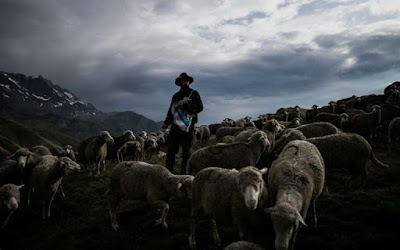
We tend to overlook the fact that shepherds are also fighters. Shepherds must be prepared to kill to protect the sheep in their charge. For of such is the “Good Shepherd.” The shepherd does not flee the scene at the slightest indication of danger or risk to himself. The shepherd does not sit down for a meal over roasted lamb with a bandit who has only one intent in mind – the stealing and killing of his charges. The shepherd does not hand over his flock to the wild beasts in order to appease them and to save his own skin. As “nice” as the image of a benign and friendly shepherd may be, he does not have his sheep’s best interest in mind. His job is to protect and guard them from their enemies. His job is not to invite the enemies in, to feast on his flock.
No, the life of a shepherd and his flock is one marked by danger and strife. In fact, all life is a struggle from start to finish. At no time is life not in the conflict of struggle. And the struggle to survive is a fraction of the total struggle in which life is engaged at all times and places. The heart struggles to beat, the lungs to function, families to love, enterprises to exist. Man’s ineffable, ineluctable and interminable destiny in this world is conflict (war as Heraclitus puts it). Someone once said, “Time is war. Space is conflict. Land is violence.”
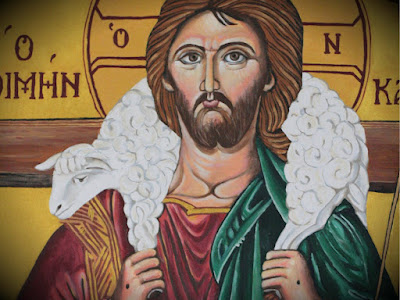
Homily Excerpt
it is not enough that the Lord’s sheep should “listen” to His voice. He also calls them to follow, wherever He lovingly leads them. The mark of true disciples is that they follow their shepherd. This theme is sounded in the call of the very first Apostles. He said to them, “Follow Me, and I will make you fishers of men” (Matt. 4:19). Our Lord also emphasised that “if anyone wishes to come after Me, he must deny himself, and take up his cross daily and follow Me” (Luke 9:23). We begin to see that the cross is not just something which the Good Shepherd embraced for the sake of His sheep but also something which the sheep must be willing to accept, if they truly wish to belong to Him. Where the Shepherd goes, the sheep must follow.
It is here that we come to realise that being a sheep of the Good Shepherd is no benign image exuding cuteness and cuddliness. Rather, it carries a highly subversive connotation which may end in rejection, alienation and persecution from those who oppose the Shepherd….

Homily Excerpt
One phrase that captures this principle of listening to the voice of the Shepherd through His Church is, “to think with the Church;” or, in St Ignatius of Loyola’s formulation, sentire cum ecclesia. “Sentire”, of course, is not simply “to think,” which in English is often meant in a cold, rational way. Other words that are used to translate sentire are sense, feel, and perceive. “Feel” is a great translation that can also carry connotations of “think” except that “feel” can also imply the lack of rational thought.
What does it really mean to “think with the Church”? For one thing, thinking with the Church means giving a unique respect to our bishops and to the Pope. A filial love for our shepherds is a necessary expression of wanting to listen intimately to the voice of the Good Shepherd. We must, however, acknowledge that sometimes shepherds speak with their own voices rather than with that of Christ and the Holy Spirit. And this is the reason why confusion, heresy and even schism can break the unity of the Church and disrupt her mission.
THE WORD THIS WEEK invites you to check out the Catholic AI assistant (located at the bottom right-hand corner), a homily preparation resource you can use to clarify or develop the insights and themes of Fr. Chua’s homilies.
Fr. Vincent Hawkswell
4th Sunday of Easter C

Homily Excerpt

2025 HOMILY – In this Sunday’s Gospel, Jesus says he will give all who hear him “eternal life.” That promise, says the Second Reading, includes “those who have come out of the great ordeal,” having washed their robes and made them white “in the blood of the Lamb.” The First Reading makes it clear that this group includes Gentiles — non-Jews.
This was a vital message for the first Christians, who were themselves Jews — members of the people specially chosen by God, whose race God had assumed in becoming man.
THE WORD THIS WEEK invites you to check out the Catholic AI assistant (located at the bottom right-hand corner), a homily preparation resource you can use to clarify or develop the insights and themes of Fr. Hawkswell’s homily.


Fr. Tommy Lane
4th Sunday of Easter C
- Jesus, the Good Shepherd: we are in his hand 2016
- Related Homilies: Jesus carries us and lays down his life for us
- Homilies on Vocation
- Second Reading Related: Revelation/Apocalypse (Saints in Heaven)
Fr. John Kavanaugh, S.J.
4th Sunday of Easter C

As lively and supple as our imaginations may be, some of us draw blanks when we entertain the possibility of heaven. We are so time- and matter-bound that all our visions of another world are necessarily chained to images of this one.
“Will there be ice cream in heaven?” Thus might gradeschoolers echo the question put to Jesus: “Will there be marriage in heaven?
In the Book of Revelation, the imagery is more grand and ambitious. Whether visionary or dreamer, the narrator awes us with a scale that embraces every nation, race, and tongue, arrayed in long white robes, bearing palms before the throne and the Lamb.
“These are the ones who have survived the great period of trial; they have washed their robes and made them white in the blood of the lamb. … Never again shall they know hunger or thirst. … He will lead them to springs of life-giving water, and God will wipe every tear away from their eyes.”
But how can we adequately conceive of life everlasting, the destiny of those embraced by Christ’s life and death? The Acts of the Apostles announces the promise of an afterlife but does not give much description of what it might be like. And Jesus, in many passages in the fourth Gospel, reminds us: “I give them eternal life and they shall never perish.”
This discussion guide has been generated by the WORD THIS WEEK’S Catholic AI Assistant based on Fr. Kavanaugh’s homily.
Starting Questions:
1. What are some common images or ideas you have about heaven?
2. How do earthly perspectives influence our understanding of heaven and the afterlife?
Exploring the Imagery
– Revelation’s Vision: Discuss the imagery from the Book of Revelation, including the depiction of people from every nation in white robes before God.
– What emotions or thoughts does this imagery evoke?
– How does this vision compare to your personal perception of heaven?
– The Elusive Nature of Eternity: Reflect on the difficulty of conceiving eternal life beyond earthly experiences.
– Why do you think it’s challenging to imagine life without physical constraints?
– How does one’s faith influence the understanding of eternal life?
Philosophical Considerations
– The Question of Continuity: Examine the philosophical concerns raised regarding continuity between this life and a potential afterlife.
– How do our brain-based experiences challenge the idea of an afterlife?
– What does Aquinas’s idea of embodied souls suggest about personal immortality?
– Thought Experiment: Consider the thought experiment presented in the sermon.
– How does the analogy of fetuses in a womb help explain the concept of life beyond our current understanding?
– In what ways does this analogy comfort or challenge your views on the afterlife?
Personal Reflections and Insights
– Experiencing Glimpses: Reflect on moments in your life that might hint at a greater existence beyond.
– Have you had experiences or feelings that seem to suggest a reality beyond this life?
– How do moments of love and insight shape your view of eternity?
THE WORD THIS WEEK invites you to check out the Catholic AI assistant (located at the bottom right-hand corner), a homily preparation resource you can use to clarify or develop the insights and themes of Fr. Kavanaugh’s homily.
Bishop Frank Schuster
4th Sunday of Easter C
Homily Excerpt
On Good Shepherd Sunday it is good that we remember that we are all called by our baptism to follow the one true Shepherd. His name is Jesus. This week, we are also invited to count the ways that our lives are closely following Jesus’ guidance and rejoice in that. This week, we would do well to also count the ways we are like that sheep in the middle of the road, stubbornly refusing to follow the Lord to our own peril. Perhaps, most of all, we can give thanks that our Good Shepherd gathers us into a flock, which we call the Church. Because we are all sinners, we are so much stronger together than we are by ourselves. To illustrate, if we are trying to make our way through life to a heavenly pasture, are we safer together or our we better off by ourselves when the terrain gets perilous, and the wolves start circling? When it comes to going to heaven, the Gospel makes it clear that it is foolish to try it alone. We cannot save ourselves. Only the Good Shepherd can save us. He does so through personal encounter and by gathering us into the flock he shepherds. We trust him because he is the Good Shepherd who lays down his life for his sheep, nourishing us with his very self as food for the journey to our everlasting home.
THE WORD THIS WEEK invites you to check out the Catholic AI assistant (located at the bottom right-hand corner), a homily preparation resource you can use to clarify or develop the insights and themes of Bishop’s Schuster’s homily.

4th Sunday of Easter C
A Story About Lorraine
The gardener who spoke softly to the grieving Mary Magdalen in the garden. The stranger who walked with the despairing Disciples on the road to Emmaus. The appearance that startled the fearful Apostles hiding behind closed doors in the upper room. The cook who appeared on the shore of the lake and prepared fish for incredulous Disciples. The shepherd who pursued with determined love the lost lamb.
We hear all these earthy and descriptive titles used in the Gospels after Easter. They are the Gospel writer’s attempt to convey one truth: that Jesus, in many disguises, is alive here and now. And He is active in the everyday-ness of our lives.
I want to tell you a story about Lorraine Murray. She is a young married woman who is struggling with cancer. She wrote a book called Grace Notes. In the introduction, she writes of her sense of God’s presence. She says, “These essays were born of my desire to know Christ in a more heartfelt way. I longed to dance with Him at a wedding, and weep with Him in the Garden. I wanted to know the gentle Man who loved fishing, eating with His friends, and praying in the desert.”
THE WORD THIS WEEK invites you to check out the Catholic AI assistant (located at the bottom right-hand corner), a homily preparation resource you can use to clarify or develop the insights and themes of Fr. Warren’s homily.
Fr. Jagodensky, SDS
4th Sunday of Easter C
Homily Excerpt
We all know about being a shepherd and tending sheep, so I should just stop right here.
Of all the titles given to Jesus, I think we’d all agree that that of “shepherd” is the most enduring and tender of the list. “Son of God” has an authoritative ring to it and “Messiah” has a triumphant sound to it. But “shepherd?” That one has a gentleness to it. The picture of Jesus carrying one around his neck touches the hearts of everyone. Even atheists might whisper to themselves, “There something to this man.”
Homily Excerpt
Mother. There is only One God and there is only one mother. God knew you before you were born and so did she. She carries you through the grocery store waddling down aisle after aisle looking for food that you need. She carefully gets into the car and fastens a seat belt around the two of you.
Please note that the provided video clips serve as additional resources to complement the homily. They may not have a direct correlation with the contributor’s original content. They aim to inspire preachers to enrich their own homilies, drawing ideas and insights from both the written material and the visual content explored.